Cooking in Cappadocia hits different.
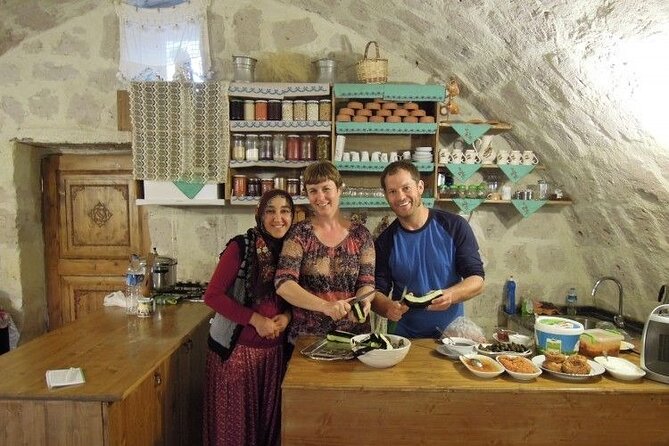
In Goreme, this family-run class happens in a restored stone arch house, where you cook regional Turkish dishes using ingredients grown on their own garden. You’ll learn by doing, not by watching, and you’ll also hear how village life works while your food comes together around you.
I especially love the fresh ingredient flow from garden to cutting board, and the hands-on cooking time that ends with a real meal you made yourself. It’s also small by design (up to 12 people), which helps the class stay personal instead of rushed.
One consideration: the experience needs good weather, so plan for the fact that the schedule could shift if conditions aren’t right.
In This Review
- Key things to know before you book
- Entering a restored stone arch house in Goreme
- The organic garden visit: where your meal starts
- The 3-hour cooking flow: soup to dessert without the chaos
- The dishes you’re likely to cook and what to expect from them
- Pickup, small groups, and value at $114.39
- Who should book this home cooking class (and who might skip it)
- Should you book this Cappadocia home cooking experience?
- FAQ
- How long is the Cappadocia home cooking experience?
- Where does the experience take place?
- Is pickup and drop-off included?
- What language is the class offered in?
- What’s included in the price?
- How many people are in the group?
- What if the weather is bad?
Key things to know before you book
- Garden picking first: you’ll visit their organic garden and choose produce and herbs for your meal.
- Cook multiple courses: soup, entrée, main, and dessert all happen within about 3 hours.
- Family-style hospitality: the hosts share village stories while you cook and eat.
- Small group size: a maximum of 12 people keeps the pace friendly.
- Included meal and ingredients: pickup/drop-off, coffee or tea, snacks, and cooking products are part of the price.
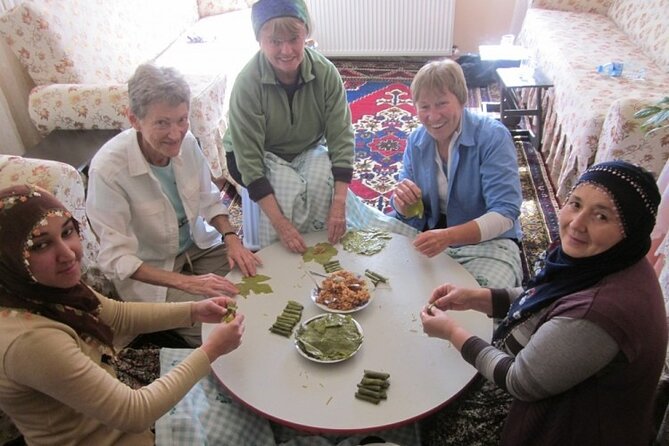
- Real-dish variety: expect classics like Yaprak Sarma, Mantı, Börek, and Kadayıf.
Entering a restored stone arch house in Goreme
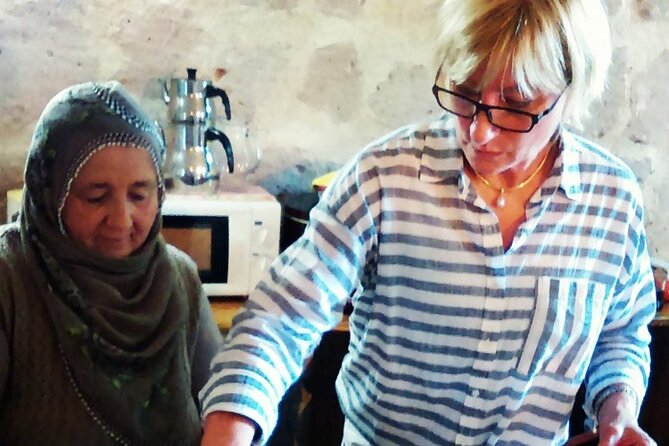
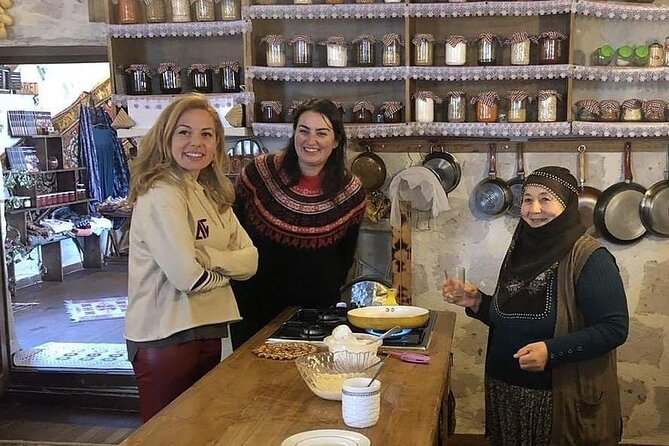
This class is built around a simple idea: you’re not just tasting Turkish food, you’re making it in a home kitchen that’s been carefully restored. You’ll be picked up and brought to a charming village setting near Goreme, in a traditional stone arch house that feels warm and lived-in rather than staged.
The vibe is straightforward. You’ll meet your hosts, get oriented, and then get to work. The group size matters here. With up to 12 people, there’s enough attention for basic cooking steps and enough breathing room to actually enjoy the process instead of feeling like you’re part of a cooking assembly line.
Timing is also a big deal. The experience runs about 3 hours, which is long enough to do real prep and cook multiple dishes, but short enough that you don’t lose the day. Since the class includes food, you can treat it like your main meal moment rather than a quick snack stop.
One small practical note: the exact pickup point may be provided as a specific address, or you may meet at a known location in the area. If you’re the type who likes a clear plan, make sure you have your confirmation details handy the day of.
The organic garden visit: where your meal starts
One of the best parts is the lead-in: you’ll be shown their organic garden and invited to pick fresh vegetables and herbs for the dishes you’ll cook. Even if you don’t think you care about farm-to-table, you’ll feel the difference here because you’re working with ingredients at their peak.
You’ll also learn what the family grows and how they use it in regional home cooking. That context matters because Turkish dishes are often built on flavor layers: the right herb at the right moment, or the difference between a fresh green and a dried one. When you pick it yourself, you start paying attention to those small choices.
This garden step also changes the whole tone of the class. Instead of arriving and instantly chopping, you start with a mini lesson that makes the cooking make sense. It’s one reason this feels more like a village home experience than a generic workshop.
And yes, the food is tied to their routines. One guest noted the honey used in the dessert came from the family’s own hives, which fits the wider pattern: homegrown where possible, home-prepared always.
The 3-hour cooking flow: soup to dessert without the chaos
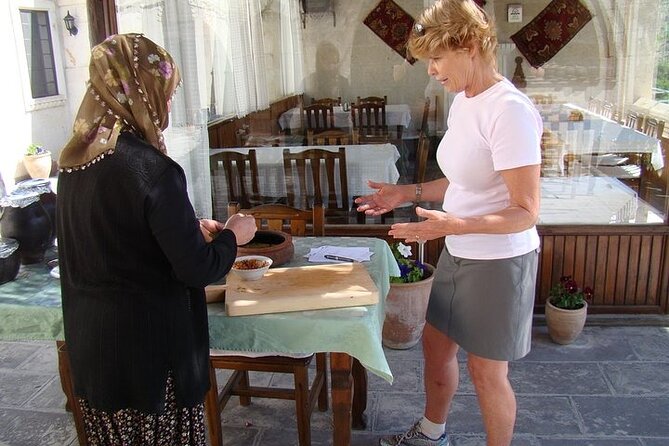
The structure of the class is designed to be manageable. You’ll cook as you go, guided by instructors in English, and you’ll rotate through tasks so you’re not stuck on only one thing. The overall rhythm goes like this:
First, you’ll settle in and get your ingredients and station organized. Then comes prep work for starters and main dishes. Midway through, you’ll work on soup/entrée steps (depending on the course flow for the day). Finally, you’ll finish with dessert, usually while you’re winding down from the heavier cooking tasks.
At the same time, you’ll be served traditional Turkish tea. It’s not just a nice extra; tea gives you a calm reset during active cooking. It also makes the learning feel less like a class and more like a shared household meal.
Here’s what I think you’ll appreciate most: you actually produce multiple dishes in a short window. The menu examples include Yaprak Sarma, Mantı, and Börek, plus a soup and a dessert. In most cooking classes, you might handle one dish well. In this one, you’ll practice several core techniques—rolling, stuffing, shaping, and finishing—so you leave with practical confidence, not just a full stomach.
If you have a vegetarian preference, there’s good evidence this family can adapt. One guest said they were accommodated. Still, don’t wait until the last moment—send dietary notes when you book so expectations match.
The dishes you’re likely to cook and what to expect from them
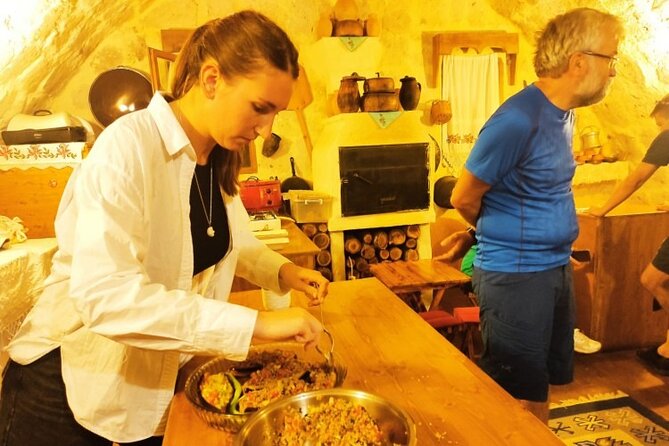
The sample menu gives you a strong sense of where the class aims: classic Turkish comfort food with a mix of fresh, savory, and sweet.
Common starters and sides you may cook include:
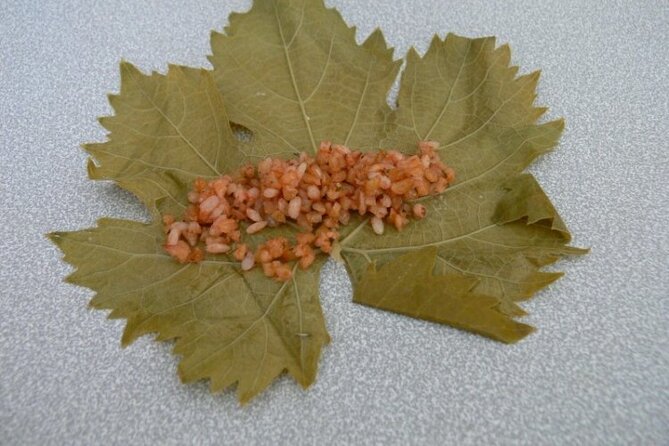
- Yaprak Sarma (stuffed vine leaves)
- Salata (salad)
- Pilav (rice)
For mains, the examples include:
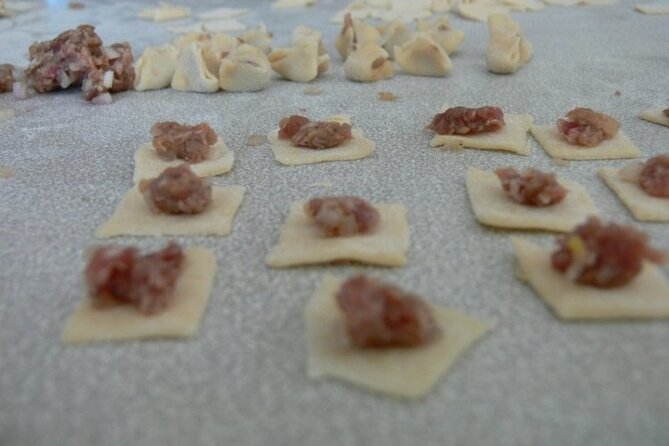
- Mantı (small dumplings, often served with yogurt and sauce)
- Karnıyarık (beef stuffed eggplant)
Dessert is listed as:
- Kadayıf (shredded dough dessert, typically served with syrup or honey-style sweetness)
In real terms, what does this mean for you at the table? It means you’ll get both variety and repetition. Stuffed dishes teach you how to balance filling and wrapping. Dumplings and dough-based items teach you how to manage texture. And dessert gives you a sweeter finish that doesn’t require complicated equipment.
A detail I like: some dishes connect to the family’s own food systems. If the honey comes from their hives (as one guest described), that’s the kind of small story that makes the flavor feel more personal. You’re not just following a recipe; you’re learning where the ingredients come from.
One more practical point: because the dishes are substantial, you should treat this as a full meal experience. The class includes lunch/dinner, plus coffee or tea and snacks, so plan your day around that. If you try to eat a big breakfast and also load up afterward, you’ll feel it.
Pickup, small groups, and value at $114.39
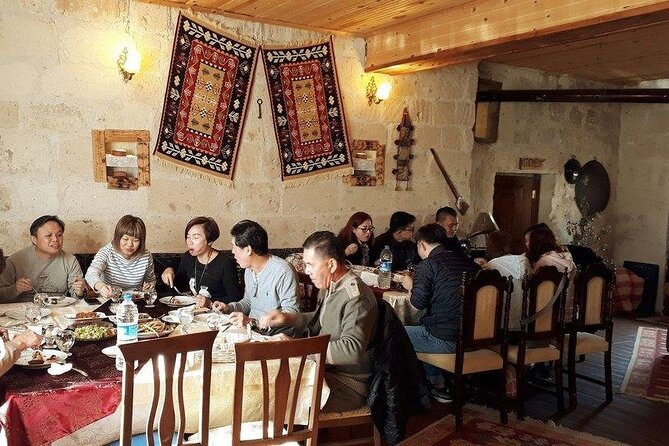
At $114.39 per person for about 3 hours, you’re paying for more than a cooking lesson. You’re buying a package: pickup and drop-off, snacks, coffee or tea, the cooking ingredients/products, and a meal made by your own hands.
That bundled value matters in Cappadocia, where travel time can eat into your day. Pickup helps you arrive relaxed, and drop-off means you don’t have to solve logistics in the middle of a busy itinerary.
The small group size (maximum 12) also helps justify the price. You’re more likely to get hands-on guidance and practical attention when people aren’t packed shoulder-to-shoulder. In a class like this, attention isn’t a luxury—it directly affects how confident you feel cooking and how smooth the experience stays.
Language is listed as English, which is important because cooking instructions need clarity. If you’re not confident with Turkish, you’ll likely still be fine as long as you can follow the instructor’s steps and ask quick questions when needed.
Also, because this is a home cooking school in a village setting, you’re not just seeing sights. You’re doing something real: cooking in a functioning kitchen with real household rhythms. That’s where the value really shows up.
Who should book this home cooking class (and who might skip it)
This experience is a great fit if you want hands-on food learning, not a quick tasting. It’s also ideal if you like cultural context that you can actually connect to the meal: village traditions, family routines, and how ingredients get used.
You’ll probably enjoy it if:
- you want to cook multiple Turkish dishes in one session
- you like learning through doing
- you enjoy small-group experiences where the hosts actually talk to you
It might not be the best choice if:
- you’re looking for a food tour that focuses only on tasting without cooking
- you need a highly structured, step-by-step itinerary with rigid timing blocks (the class is organized, but it’s still a family-run home setting)
- you’re very sensitive to schedule changes from weather (the experience requires good weather)
If you’re traveling on a tight schedule in Cappadocia, it’s smart to book early. On average, this gets reserved about 22 days in advance, and with a max of 12 people, availability can tighten.
Should you book this Cappadocia home cooking experience?
Yes, you should strongly consider it if you want a genuine, practical taste of Turkish home cooking. The combo of garden picking, multiple dishes cooked in one sitting, and pickup/drop-off makes it feel like a full experience, not a half-hour detour.
If you’re debating, here’s the simplest way to decide: ask yourself whether you’d rather come home with a story and a meal you made, or with only a list of foods you sampled. If you want the first, this class fits.
FAQ
How long is the Cappadocia home cooking experience?
It’s approximately 3 hours.
Where does the experience take place?
It’s in the Goreme area, in a village home cooking school setting.
Is pickup and drop-off included?
Yes. Pickup and drop-off are included.
What language is the class offered in?
The class is offered in English.
What’s included in the price?
Lunch/dinner, pickup and drop-off, coffee and/or tea, snacks, and products for cooking are included.
How many people are in the group?
The class has a maximum of 12 travelers.
What if the weather is bad?
This experience requires good weather. If it’s canceled due to poor weather, you’ll be offered a different date or a full refund.