REVIEW · GOREME
Crafting Clay: A Journey into Pottery Artistry
Book on Viator →Operated by Cappadocia.Help · Bookable on Viator
Clay makes sense fast. Your hands start working immediately. In this one-hour pottery session in Cappadocia, I like that you’re not just watching pottery happen—you shape it. You’ll work with clay fundamentals like pinching, coiling, and slab building, and you get access to an authentic kick wheel setup that turns the experience from a quick craft into a real hands-on lesson.
What I especially like is the mix of practical making time plus a relaxed pace where you can focus on the feel of the material, not some rigid “watch and copy” routine. You’ll also get Turkish coffee and/or Turkish tea, and a local red wine option is on the menu when you’re 18+. One drawback to keep in mind: some sessions can feel brief on instruction, and there’s often a lot of attention on the shop after the class—so I’d set expectations for a short, experience-led workshop rather than a long, deep technical course.
In This Review
- Why This Pottery Workshop Feels Worth It (Even for Beginners)
- Key Highlights You’ll Care About
- From Göreme to Avanos: Where This Workshop Actually Happens
- The Clay Techniques: Pinching, Coiling, and Slabs (What You’ll Learn)
- Pinching
- Coiling
- Slab building
- The Kick Wheel Moment: Why This Part Stays With You
- Coffee, Tea, and Red Wine: Included Comfort During the Making
- The Real Value of $5: What You’re Buying (and What You Might Not)
- What You Should Expect During the One-Hour Flow
- Taking Home a One-of-a-Kind Piece: The Good Part
- Price vs. Shop Prices: How to Avoid a Surprise
- Who This Workshop Is Best For (and Who Might Want More)
- Practical Tips So You Leave Happy (Not Muddy)
- Should You Book Crafting Clay in Avanos?
- FAQ
- How much does Crafting Clay cost?
- How long is the pottery workshop?
- Where do I meet for the workshop?
- What’s included in the price?
- Are snacks included?
- Can I drink the included wine if I’m under 18?
- Is this a private tour?
- What if I need to cancel?
Why This Pottery Workshop Feels Worth It (Even for Beginners)
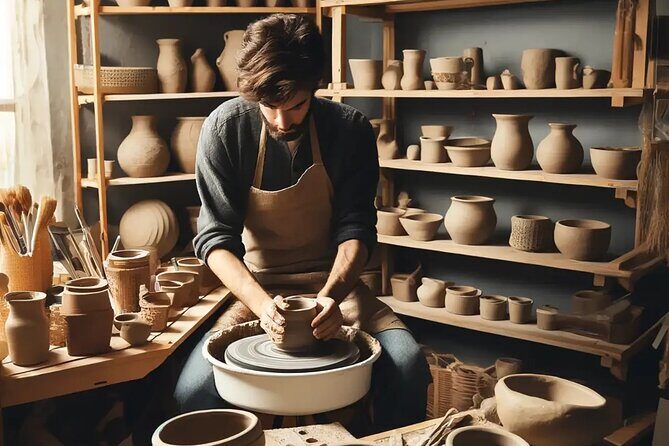
You’ll walk in with a lump of clay and leave with a piece that’s yours. That simple swap—lump to object—is the magic trick. The class is designed around getting comfortable with shaping methods you can use again later, even if this is your first time.
Here are the two things I’d point to right away:
- You get to try real techniques: pinching, coiling, and slab building, not just one demo step.
- You’ll have time with an authentic kick wheel, which is the most memorable moment for most people because it feels different from hand-building.
One consideration: at this price point, the workshop may not be heavy on step-by-step teaching time. If you want lots of guidance, you’ll want to ask direct questions early—before the focus shifts to browsing or buying.
Key Highlights You’ll Care About

- Kick wheel time: you can make something on a wheel, not just hand-shape.
- Multiple hand-building methods: pinching, coiling, and slab work show up in the session.
- Coffee/tea included: Turkish tea or coffee comes with the experience.
- Red wine option (18+): local red wine is included if you meet the minimum age.
- One-of-a-kind results: you leave with something created through your own hands.
You can also read our reviews of more tours and experiences in Goreme.



From Göreme to Avanos: Where This Workshop Actually Happens

Even though this experience is associated with Göreme, your meeting point is in Avanos, at Kybele Boutique Ceramic on Alaaddin Sanayi Cd. No:33, 50500 Avanos/Nevşehir, Türkiye. Expect it to be easy to reach using public transport, since the activity is noted as being near transit.
The session runs about one hour, and it ends back at the meeting point. That timing matters. A short workshop can be great if you want a fun creative stop without losing your whole day. It’s also why expectations are important: you’ll likely move fast from clay basics to making, then toward whatever viewing or shop time is part of the visit.
If you’re staying around Göreme and want a hands-on break from sightseeing, Avanos is the kind of place that fits. It’s known for pottery culture in the region, so showing up here feels like the right setting—not a random craft stop.
The Clay Techniques: Pinching, Coiling, and Slabs (What You’ll Learn)
This workshop is built around three classic methods. The best part is that you don’t need previous skills—you just need willingness to get messy.
Pinching
Pinching is the earliest pottery skill because it teaches you control. You start with clay and work it inward with your fingers. You’ll learn how pressure changes the shape and how thin walls can collapse if you’re too aggressive. Even if your first attempt isn’t perfect, you’ll understand the basics of thickness fast.
Coiling
Coiling is about building form with rolled clay ropes. This technique helps you create height and curves. In a short class, coiling is often where you’ll feel the most progress because you can see the vessel or shape grow step by step.






Slab building
Slab building teaches shape through flat pieces. You’ll learn how thickness affects strength and how edges need attention to connect properly. It’s also visually satisfying—flat clay becomes structure quickly, even in limited time.
What you should take away: these three methods are the backbone of much of what you see in pottery. The value here isn’t that you become a potter in one hour. It’s that you understand the language of clay—how it responds to touch, pressure, moisture, and time.
The Kick Wheel Moment: Why This Part Stays With You
You’ll use pottery equipment that includes an authentic kick wheel. That’s a big deal. A kick wheel forces a different mindset than hand-building because the clay and wheel motion interact in real time. Your hands guide the form while your feet control the wheel’s pace.
If you’ve only seen pottery on TV, this is the reality check—in a good way. The wheel doesn’t magically do everything for you. You still have to learn pressure and centering habits, even for a small piece.
Even when instruction time is limited, wheel time tends to be the highlight because it feels like a genuine craft practice. It’s also the easiest part to photograph and remember, since it’s visually obvious what you’re doing.
Tip: wear clothing you don’t mind getting marked. Wheel work can be a little splashy, even if the studio keeps things tidy.
Coffee, Tea, and Red Wine: Included Comfort During the Making
Included in the price is coffee and/or tea, plus local red wine. That beverage mix changes the vibe of the workshop. Instead of feeling like a bare-bones “hands only” session, you get a small pause that makes the workshop feel more like a local craft visit.
A few practical notes:
- Wine is included, but the minimum age to consume alcoholic drinks is 18.
- Snacks are not included, so if you tend to get hungry during activities, eat beforehand.
I like that this makes the experience feel social. Even in a private setting, a drink helps you settle in while you wait for your turn and focus on the clay.
The Real Value of $5: What You’re Buying (and What You Might Not)

At $5 per person, the value can be impressive—if you match your expectations to the format. The price includes equipment access, all fees and taxes, and the included drinks. You’re not paying extra for the studio space or for the basic making session.
Where people’s experiences can diverge is instruction intensity. Some sessions can feel like a short introduction where you do a little making, take a quick photo, and then spend time in the shop area. If what you want is a long, detailed lesson with heavy coaching, this may not satisfy that goal.
There’s also the shop factor. The experience description emphasizes taking home your own piece, but some visits seem to include more time on sales and browsing than on instruction. If the workshop is brief, the shop portion can take up more mental space than you expect.
Here’s how I’d handle it:
- Decide ahead of time whether your priority is making or buying.
- Go into the session expecting hands-on time and a wheel try, but be ready for the visit to include browsing afterward.
- If you want instruction, ask early for clarity on what you’re making and how to improve it.
With that mindset, the cost can be a steal. Without it, you might feel like the price is too low for the kind of “learning outcome” you wanted.
What You Should Expect During the One-Hour Flow

A typical flow looks simple, and that’s not a bad thing. In a short workshop, the goal is to get you creating quickly.
Here’s what you can plan for:
- You meet at the ceramics shop location in Avanos.
- You start with clay basics and the hand-building technique(s) for the session.
- You may do wheel time with the kick wheel, often as the standout segment.
- You’ll likely spend some time looking at the shop space and ceramics display area after you make your piece.
The session ends where it starts: back at the meeting point.
Because the time window is tight (about one hour), the studio’s priority is often “experience over lecture.” You’ll learn through doing—hands first, explanations second.
Taking Home a One-of-a-Kind Piece: The Good Part
The workshop promises unique creations and you do end up making something that reflects your touch. That’s the real souvenir here: it’s not just a store-bought mug with a Cappadocia tag. It’s something you shaped yourself.
That matters when you’re traveling, because handmade items carry story. They also work better as gifts than mass-produced ceramics, especially if you take a moment to package it carefully and plan how you’ll transport it.
One practical point: the class mentions taking your creation home, but it doesn’t spell out technical finishing steps (like how it’s fired or handled after). So ask on the spot about what happens next and how to care for the piece when you leave.
Price vs. Shop Prices: How to Avoid a Surprise
Some people have felt that after the workshop, the shop atmosphere can shift quickly toward selling, and the items offered may feel pricey compared to other ceramic options in the region. The ceramics display and shop quality may be high—but your reaction depends on what you’re hoping to do after you finish the hands-on part.
My advice is simple:
- Go in ready to buy only if something genuinely fits your budget.
- If you only want a workshop piece and not extra shopping, treat browsing as optional.
- If you do want to buy, ask for prices early and compare before you commit.
The key: the workshop is about the clay experience. If you want to shop, plan for it. If you don’t, stay focused on the making time you paid for.
Who This Workshop Is Best For (and Who Might Want More)
This is a great fit if:
- You want a short creative stop with real hands-on making.
- You’ve never worked with clay and want the fundamentals in an hour.
- You’d enjoy a casual, studio-style experience with tea/coffee—and maybe wine.
It might not be the best fit if:
- You want a long, technical ceramics class with lots of instructor time.
- You need heavy coaching on wheel skills or advanced glazing and firing details.
- You’re sensitive to sales pressure once the class ends.
Also, since the experience is noted as private (only your group participates), it can feel more personal than crowded “tour group” craft sessions. That’s a plus if you’re traveling with friends or family and don’t want to share instructions.
Practical Tips So You Leave Happy (Not Muddy)
A one-hour pottery workshop moves fast. Here are the things I’d do to avoid frustration:
- Wear old clothes. Clay and water can leave marks.
- Bring an attitude for mess. The point is shaping, not staying pristine.
- Ask one clear question early: what should you focus on to make your piece hold its shape?
- Drink timing: if you want the most focused making time, have tea or coffee, then decide about wine during the workshop.
- Plan your transport. If you’re on foot or using transit after, think about how you’ll carry your finished piece.
If you’re the type who likes control and long explanations, compensate by asking for clarification early. If you’re flexible and enjoy learning by doing, you’ll likely have a fun hour.
Should You Book Crafting Clay in Avanos?
Book it if you want a budget-friendly pottery experience in the Avanos area with real clay methods and at least some kick wheel time. The included drinks, the low price, and the chance to create a one-of-a-kind souvenir make it a strong option—especially if you’re already in Göreme and want a change of pace.
Hold off or choose a different option if your main goal is a long, instructor-led pottery course or if you’re worried about short instruction time. In that case, you might spend the session wishing it were more technical.
My bottom line: if you approach it as a hands-on taste of pottery culture—clay in your hands, wheel time if available, then a finished piece—you’ll probably feel good about what you paid.
FAQ
How much does Crafting Clay cost?
It’s listed at $5.00 per person.
How long is the pottery workshop?
The duration is about 1 hour.
Where do I meet for the workshop?
You’ll start at Kybele Boutique Ceramic, Alaaddin, Sanayi Cd. No:33, 50500 Avanos/Nevşehir, Türkiye.
What’s included in the price?
Coffee and/or Turkish tea are included, along with local red wine. The price also includes use of pottery making equipment (including an authentic kick wheel) and all fees and taxes.
Are snacks included?
No, snacks are not included.
Can I drink the included wine if I’m under 18?
The minimum age to consume alcoholic drinks is 18.
Is this a private tour?
Yes. Only your group will participate.
What if I need to cancel?
You can cancel for a full refund up to 24 hours in advance of the experience’s start time (local time). If you cancel within 24 hours, the amount paid isn’t refunded.