REVIEW · GOREME
Full-Day Private Cappadocia Tour ( Guide & Car )
Book on Viator →Bookable on Viator
One day can change how you see rocks. This private day pairs a professional guide with an air-conditioned car, then moves fast between cave life, early Christianity, and fairy chimneys. It is the kind of route that helps you connect the dots between geology, survival, and art, without feeling like you are just checking boxes.
What I like most is the balance: big set-piece sights like Uçhisar and Paşabağ, plus hands-on time in Avanos pottery. I also appreciate the way the guide explains the purpose of places, from underground defense in Kaymaklı to why frescoes mattered in the Open-Air Museum.
One heads-up: some admissions are not included, and lunch is on your own during the planned hour, so plan for extra spending beyond the tour price.
In This Review
- Key points worth planning for
- A private 8-hour circuit from Göreme: what the day really feels like
- Uçhisar Castle: caves, pigeon houses, and the region’s highest rock
- Kaymaklı Underground City: 12 levels of safety thinking
- Göreme Open-Air Museum: rock churches and frescoes that taught without words
- Avanos pottery workshop: a hands-on break from sightseeing
- Paşabağ fairy chimneys and Monks Valley context
- Devrent Valley and the Göreme panorama: from animal shapes to quick awe
- Bazaar 54 carpets: weaving technique as a cultural lesson
- Guide quality makes or breaks the day
- Price and value: a private day with some extras to budget
- Who should book this Cappadocia tour
- Should you book this Full-Day Private Cappadocia Tour?
- FAQ
- What’s the duration of the Cappadocia tour?
- Is this a private tour?
- Do you pick me up from my hotel?
- Is the tour offered in English?
- What’s included in the price?
- Are museum admissions included?
- Is lunch included?
- Can I cancel for a full refund?
Key points worth planning for
- Private, car-based pacing: short stops built for an easy full-day circuit.
- Kaymaklı’s practical details: narrow tunnels, rock ladders, and rooms for daily survival.
- Göreme’s fresco logic: church-by-church paintings tied to monastic life and what people needed to learn.
- Avanos pottery time: a real try-it moment in a ceramics town, not just a photo stop.
- Paşabağ close-up fairy chimneys: mushroom-shaped formations with Monks Valley context.
- Carpets with craft explanations: Bazaar 54 focuses on weaving process and meaning, not only shopping.
A private 8-hour circuit from Göreme: what the day really feels like
This tour is designed for a full day, roughly 8 hours, with pickup from your hotel in the Göreme area. You get a private group experience, and the price is set per group (up to 14), so you are not stuck in a big crowd or dragged along at someone else’s pace.
Because most stops are about 20 to 45 minutes, the day has a rhythm: drive, brief orientation, then enough time to look around and take photos before you move on. The car is air-conditioned, which matters in Turkey when temperatures swing.
You will also get a mobile ticket, which is convenient when you are hopping from one site to another. And since this is guided, you can ask questions that make the sights click, like why underground cities were built the way they were or what those church paintings were trying to teach.
I do suggest you keep expectations realistic: this is not a slow, stay-all-day museum crawl. It is a well-paced overview day with guide-led storytelling, plus small windows to wander on your own.
Uçhisar Castle: caves, pigeon houses, and the region’s highest rock
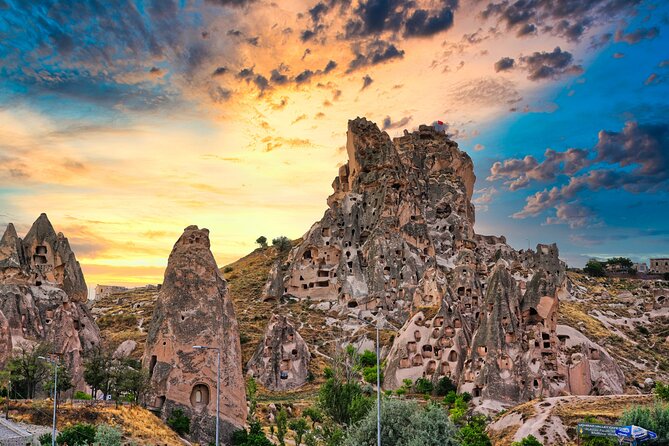
Uçhisar Castle sits above the town on the highest rock formation in the area. When you arrive, you are not just looking at a viewpoint. You’re also seeing how people shaped life into rock—old caves and the famous pigeon houses that are part of Uçhisar’s history.
Your guide will talk about how the landscape formed, connecting the rock layers to what you see today. Then you get a solid chunk of free time to explore at your own speed. The stop is about 20 minutes, and admission is free for this part of the route.
What makes this stop valuable is that it gives you context for the whole day. After Uçhisar, the underground tunnels in Kaymaklı feel less random. And when you later see fairy chimneys, you’ll already be thinking about erosion and volcanic rock—not just cute shapes.
Practical tip: wear shoes with good grip. You’ll likely move over uneven stone surfaces and small slopes, even in a short stop like this.
Kaymaklı Underground City: 12 levels of safety thinking
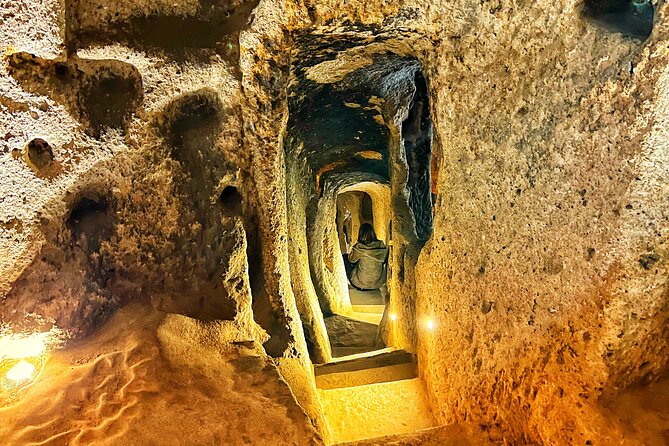
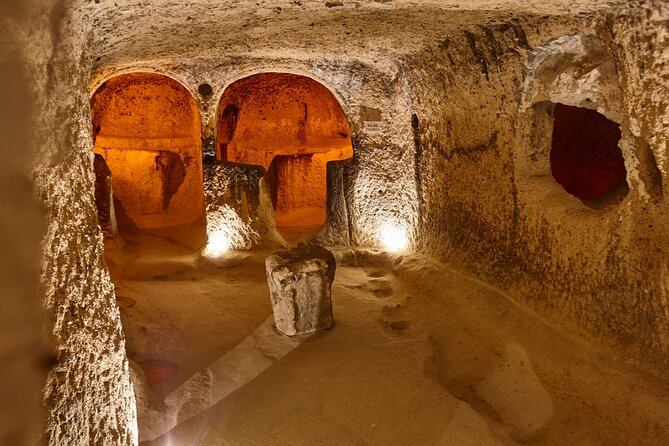
Kaymaklı Underground City is the biggest underground settlement discovered so far, and the scale shows. You are looking at a system built for hiding when things turned dangerous: narrow tunnels, rock ladders, and multiple connected levels.
Even though the city has 12 levels, visitors typically see areas across about 5 levels. You will visit spaces such as animal stalls and storage areas for food and weapons, plus a church, winery, oil press, kitchen, and classrooms. That variety matters. It’s not just a bunker. It is a functioning community layout designed to keep life going underground.
The guide’s job here is especially important. The best tours explain not only what the rooms are, but why they exist and how people used the layout for security. You get about 50 minutes at Kaymaklı, and admission is not included in the tour price, so it is worth budgeting for tickets.
A consideration: underground sites can feel tight. Even if you can handle stairs and uneven paths, plan to move steadily and give yourself time to adjust to darker corridors and lower ceilings.
If you want to get the most out of this stop, ask your guide how the city’s layout helped people manage space during emergencies. That question usually turns a “cool caves” visit into a real understanding moment.
Göreme Open-Air Museum: rock churches and frescoes that taught without words
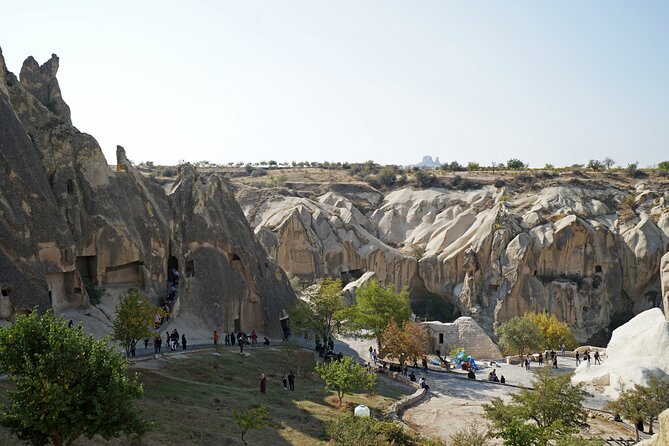
The Göreme Open-Air Museum is built into a hidden valley of rock-cut churches and their attached buildings. Here the story shifts from survival to faith and learning.
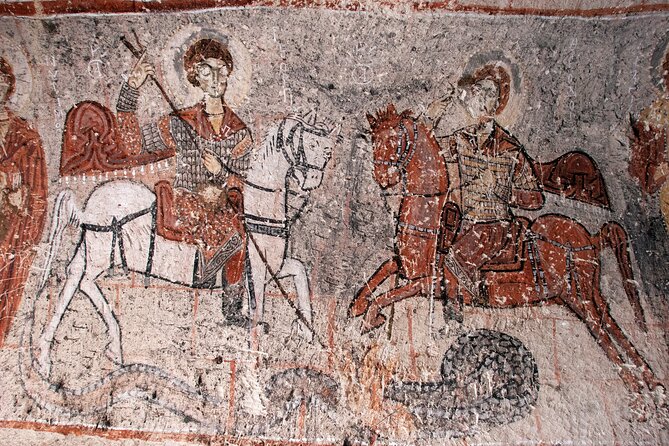
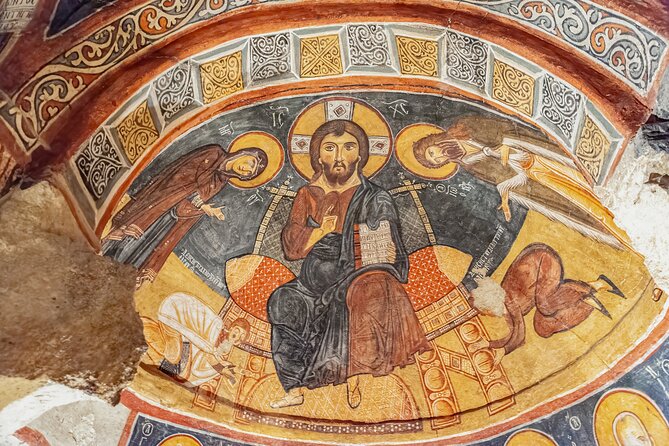
You’ll see churches with associated dining and kitchen spaces from the 10th to 12th centuries. Some church complexes include refectories and kitchen areas, showing how monastic communities ate, worked, and lived. The murals are a major focus: the frescoes painted on walls and ceilings are tied to Christian life in Cappadocia, and each church has different artwork.
One detail I think you should know before you go: the paintings were used as an information system. Many people at the time could not read or write, so the visuals helped communicate messages through images rather than text. Your guide can connect the art to the way monastic communities thought and taught.
You’ll spend about 1 hour here, and admission is not included. So, yes, this is one of the places where you should expect extra ticket costs.
Practical tip: bring patience for viewing. Frescoes can be hard to spot at first, especially if you’re rushing. Take a slow look, then use your guide’s pointers to find the scenes that relate to monastic routines and Christian themes.
Avanos pottery workshop: a hands-on break from sightseeing
After the heavy storytelling of underground life and church art, Avanos is a fun shift. Avanos is known for ceramics, and this tour includes a pottery workshop where you get to try the craft yourself for about 45 minutes.
The value here is simple: you’re not only watching history or geology. You’re making something. That kind of activity breaks up the day and makes the rest of the tour easier to remember later.
Admission for this workshop is listed as free, which is a nice bonus. Just keep in mind that you may have to follow basic workshop rules, like staying aware of tools and keeping things tidy while you work.
Then you have about 1 hour for lunch in Avanos. Lunch is not included in the tour price, so you’ll choose a meal on your own. Since your time is limited, I recommend picking a spot close to where you stop rather than walking too far.
If you want a smooth lunch break, aim to use that hour strategically: eat, hydrate, then return ready for the next drive and another short outdoor viewing stop.
Paşabağ fairy chimneys and Monks Valley context
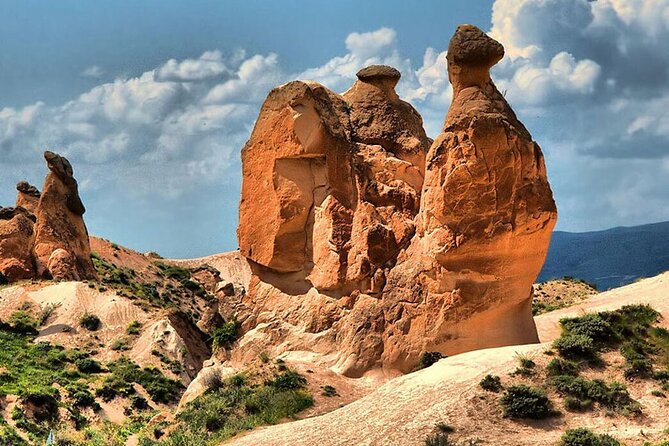
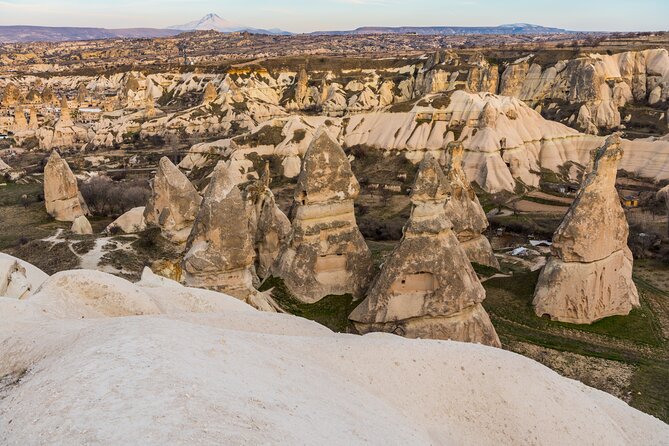
Paşabağ is where you get the classic fairy chimneys up close. You will see mushroom-shaped rock formations, often associated with Cappadocia’s most recognizable “odd rock” look.
This stop is about 40 minutes, and it is also connected to religious history. Paşabağ is called Monks Valley because of the chapel of Saint Simeon located here. That link adds meaning. Without the context, fairy chimneys can feel like just a visual stunt of nature. With it, they connect back to how early people used the terrain and built spiritual spaces in these rock formations.
Admission is not included here, so this is another place where you may pay separately.
Practical tip: for photos, give yourself a moment to look for angles where multiple chimneys line up. Then let your guide know if you want viewpoints with less crowding or better sightlines. A good guide can steer you toward the best look within the time you have.
Devrent Valley and the Göreme panorama: from animal shapes to quick awe
Next you hit Devrent Valley, also known as Imagination Valley. This is a “look and see” kind of stop. The rocks are strangely shaped and mostly red in color, and they resemble animals and objects—camel, lizard, owl, snake, chicken, a hand, and even a penguin.
The key is that your brain does the work. Walk a little, slow down, and let shapes register. Your guide may point out likely forms, but the fun is in your own discoveries. You’ll have about 20 minutes here, and it is listed as free for admission.
Then comes Göreme Panorama, a short 20-minute viewing break meant to give you a clean look at fairy chimneys. This is where you step back from the “close-up interpretation” and just absorb the scenery from a distance.
What I like about this pairing is the pacing. One stop uses imagination. The next gives you a simple, wide view that helps you understand scale.
Practical tip: if it’s sunny, bring sunglasses and keep your camera lens clean. Bright light can flatten color, and clean glass helps you capture the textures that make Cappadocia special.
Bazaar 54 carpets: weaving technique as a cultural lesson
After geology and churches, you get craft. Bazaar 54 is focused on hand-woven carpets, and the emphasis is on how the weaving works and what details mean in the process.
You’ll spend about 45 minutes here. The value is not only the product, but the explanation of technique and why this craft matters in the culture. Each woven carpet is presented as an art piece, and the session aims to help you look with understanding rather than just scanning price tags.
Admission is listed as free, which is helpful. Still, this stop may be longer than some people expect if you just want photos. If shopping is not your thing, treat it as a cultural demonstration and keep an eye on time so you don’t miss the last parts of your day.
Practical tip: if you do browse, ask basic questions about patterns and weaving steps. Even a short conversation can turn this from a retail stop into a real learning moment.
Guide quality makes or breaks the day
This is one of those tours where the guide is not a background detail. The stops are short, and the sites can feel like a series of impressive photos unless someone puts them into words.
The experience is led by a professional guide, and there’s a clear pattern in the best days: strong explanations and friendly pacing. One guide name you may hear associated with this route is Erdi, and the praise around him points to how informative the day can feel when you get someone who connects the dots.
Here’s how you can get more out of your guide, no matter who leads you:
- Ask for one key takeaway at each stop, like what problem Kaymaklı solved or what the frescoes communicated.
- Tell them what you care about (geology, churches, everyday life, crafts) so they can steer your attention.
- Use your free time wisely by asking what to look for before you wander off.
Because this tour is private, you can also move the day toward what fits you. If you want to linger an extra minute at a viewpoint, ask early rather than at the last second when everyone is ready to go.
Price and value: a private day with some extras to budget
The price is $216.86 per group (up to 14). That’s a group rate, so the true value depends on how many people you bring. For a small private group, this can be a smart way to get a car plus a guide for a full day without splitting into multiple tours.
What’s included is a lot of the “moving parts”:
- Professional tour guide
- Air-conditioned vehicle
- GST and parking fees
- Private transportation
What is not included is where you should plan ahead. Lunch is not included, and admission fees apply at key sites like Kaymaklı Underground City and Göreme Open-Air Museum. Fairy chimneys also falls into the category of admissions not included.
So the best way to think about value is: you are paying for a smooth, guided day with convenience and most logistics handled, then you budget separately for the ticketed parts and your meal.
If your group wants a tight route and someone to explain what you’re seeing, this pricing structure can feel fair. If you prefer DIY pacing and would rather pay only for individual tickets, then the savings might not be as strong.
Who should book this Cappadocia tour
This tour fits best if you want:
- A guided overview day across several top Cappadocia sites
- A private car pickup from your hotel
- Short stops with just enough time to look and learn, not a slow multi-day plan
- A hands-on workshop moment in Avanos
It may be less ideal if you want deep time in one place, like hours inside museums, or if you hate paying separate admission fees for the underground city and Open-Air Museum.
It is also a good choice for people who don’t want to coordinate transport between scattered sites. Since the day is set up with a vehicle and guide, you spend less mental energy on logistics and more time actually taking in the sights.
Should you book this Full-Day Private Cappadocia Tour?
I’d book it if you want a smart, efficient Cappadocia day where the guide helps you understand what you’re seeing at each stop. The mix is strong: Uçhisar for rock-life context, Kaymaklı for survival design, Göreme for church art and monastic meaning, Avanos for making something, Paşabağ for fairy chimneys with Monks Valley context, and the added craft lesson at Bazaar 54.
Book it with extra budget awareness. Admission fees and lunch are not included, so you’ll pay those costs on top. If you can handle that, you’re likely to end the day feeling like Cappadocia makes more sense as a connected story.
One last tip: wear comfortable shoes and keep your phone charged. You’ll be moving through rock steps, viewpoints, and darker indoor spaces, and you’ll want both comfort and photos that capture textures and scale.
FAQ
What’s the duration of the Cappadocia tour?
It runs about 8 hours (approx.).
Is this a private tour?
Yes. It is private, and only your group participates.
Do you pick me up from my hotel?
Yes. Pickup is offered from your hotel, and you need to let the provider know your hotel in advance.
Is the tour offered in English?
Yes, it is offered in English.
What’s included in the price?
A professional tour guide, an air-conditioned vehicle, GST, parking fees, and private transportation are included.
Are museum admissions included?
No. The admission fee for Kaymaklı Underground City and Göreme Open-Air Museum is not included. Other non-included admissions may also apply at certain stops.
Is lunch included?
Lunch is not included. There is a lunch stop during the day, but you’ll cover the meal yourself.
Can I cancel for a full refund?
Yes. You can cancel up to 24 hours in advance for a full refund.