REVIEW · ISTANBUL
Turkey Biblical Tour (Private)
Book on Viator →Operated by Turkey Private Tours · Bookable on Viator
Biblical Turkey moves fast, yet it stays organized. You’ll get a local guide and a private vehicle, so the story of Acts and Revelation keeps making sense as you move city to city, mosque to palace, and church ruins to cliffside cave homes.
I especially like that this is truly all-inclusive, with entrances included, plus lunch built into the days you’re out touring. The one drawback to plan for is the pace: 10 days with flights, long drive legs, and lots of walking, so a moderate fitness level and flexible expectations help a lot.
In This Review
- Key things to know before you go
- Istanbul day 2: Hippodrome, Blue Mosque, Hagia Sophia, Topkapi, Grand Bazaar
- A practical way to do Day 2 without burning out
- Byzantine landmarks: Blue Mosque and Hagia Sophia make the setting click
- Topkapi Palace and the Grand Bazaar: Ottoman details you can actually use
- Day 3: Bosphorus boat + Spice Market, then flying to Izmir
- Days 4 to 7: The Aegean sites of Paul and the Seven Churches theme
- Pergamon, Sardis, Laodicea: Revelation places that feel more real
- Pamukkale and Hierapolis: the Roman spa break you didn’t know you needed
- Ephesus day 8: Artemis, Mary’s House, and St. John’s Basilica
- The guide factor matters here
- Cappadocia days 9–10: Goreme, Pasabag, Avanos, underground cities, and valleys
- Day 10: Kaymakli Underground City plus the valley walk finale
- Transport, pace, and the “private” reality
- Price of $3,604.57 per person: where the value actually comes from
- Who should book this tour
- Should you book this private Biblical Turkey tour?
- FAQ
- How many days is the Turkey Biblical Tour (Private)?
- Is this tour private or group-based?
- What languages is the tour offered in?
- What’s included in the price?
- Are entrance fees included?
- Are flights included during the trip?
- Is the hot air balloon included in Cappadocia?
- Where do you meet the guide?
- Can I cancel and get a full refund?
Key things to know before you go
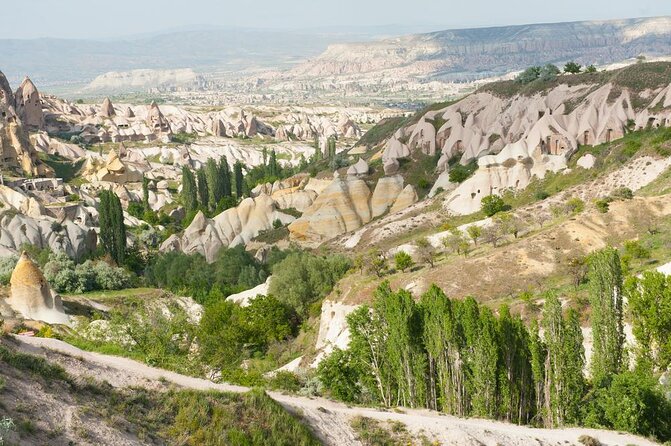
- Private by design: just your party with a guide/driver, not a mixed group shuffle.
- Entrances handled: you won’t feel stuck budgeting every gate stop.
- Bible locations with real context: expect Acts/Revelation connections tied to what you’re seeing.
- Two big regions in one trip: Istanbul and the Aegean, then Cappadocia, without you piecing it together.
- Time-efficient travel days: boat time on the Bosphorus and flight legs keep the itinerary moving.
Istanbul day 2: Hippodrome, Blue Mosque, Hagia Sophia, Topkapi, Grand Bazaar
Istanbul is where you get your bearings fast. Even though this trip is built around biblical sites across Turkey, Day 2 sets the stage with Byzantine and Ottoman landmarks that shaped how Christianity and Islam visually “read” the city.
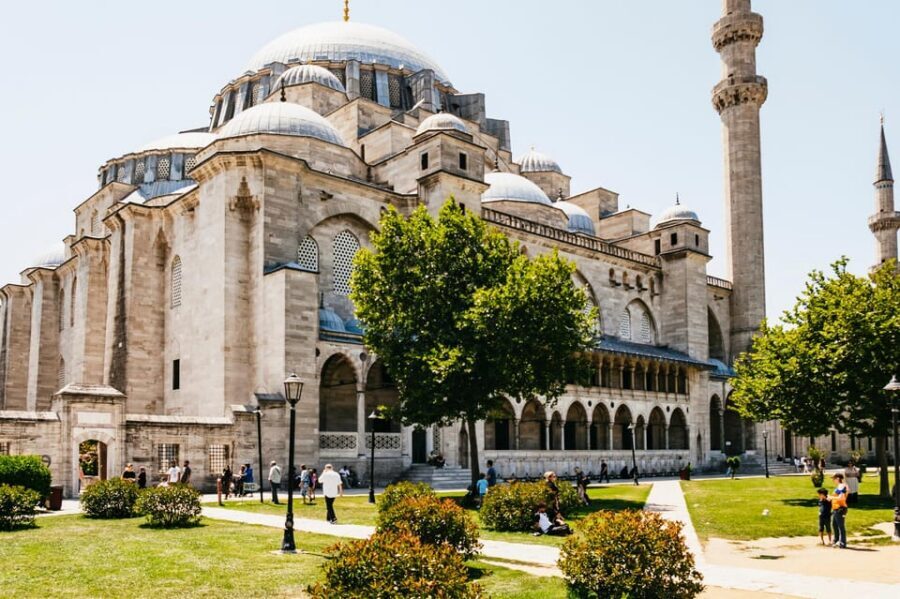
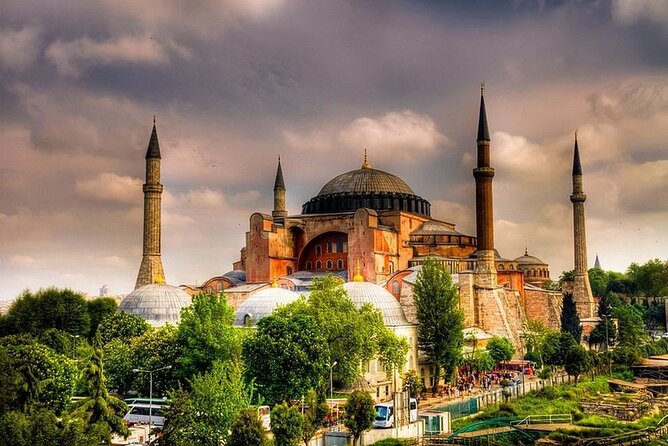
You start at the Byzantine Hippodrome, used for public entertainments in imperial times. From there it’s straight into the romance of Istanbul’s mosques: the Blue Mosque with its signature blue tiles, and Hagia Sophia, which has lived multiple lives—church, museum/mosque—yet still hits you with the scale of its architecture.
Then comes the Ottoman power story at Topkapi Palace, followed by the sensory overload of the Grand Bazaar. The bazaar stop isn’t just shopping time; it’s a look at how trade worked here for centuries, under one roof, with thousands of tiny stalls.
A practical way to do Day 2 without burning out
Go into the day knowing it’s a sprint through major hits. If you’re sensitive to crowds (especially around the mosques), lean on your guide for timing and movement so you spend time looking instead of waiting.
Byzantine landmarks: Blue Mosque and Hagia Sophia make the setting click
The Blue Mosque and Hagia Sophia are not “small” stops. Even when you only spend around an hour at Hagia Sophia, the building does what the best museums do: it teaches you how the city thinks.
I like the way this day pairs art and engineering. You’ll see handmade tile work at the Blue Mosque, then switch to Hagia Sophia’s monumental interior—so you get texture on one side and geometry on the other. That contrast matters in Istanbul, because the city’s layers are the whole point.
Hagia Sophia also gives you a strong historical anchor for early Christianity in the region. Whether you’re visiting with faith, curiosity, or both, the emotional effect is similar: you’re standing in a place that mattered to millions of people over centuries.
Topkapi Palace and the Grand Bazaar: Ottoman details you can actually use
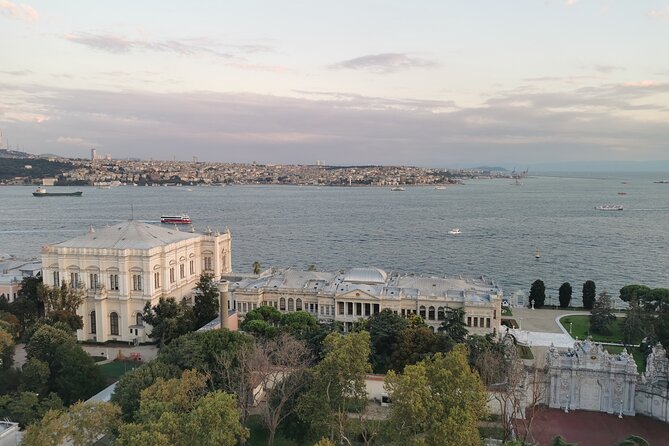
Topkapi Palace is a smart inclusion because it’s Ottoman, not “just Istanbul.” It’s the kind of site where you’ll notice how rulers displayed authority—through design, space, and access—long before modern museums existed.
Afterward, the Grand Bazaar feels like the city’s daily rhythm. Yes, it’s shopping. But it’s also history you can walk through: a covered market that once handled real commerce at real scale. If you want souvenirs that feel connected to the place (not just generic), this is the easiest on-ramp.
Tip for your time here: budget your energy for walking. The bazaar is compact only on maps. Inside it can feel like a maze, so you’ll appreciate having a guide to keep you from wandering in circles.
Day 3: Bosphorus boat + Spice Market, then flying to Izmir
Day 3 is your reset from Istanbul’s skyline to Turkey’s Bible route. The Bosphorus Strait boat trip is one of those “this should be standard” moments because the strait explains Istanbul. You get bridges, palaces, fortresses, and the coastline in one continuous view without traffic stress.
Then you pivot to the spice world at Misir Carsisi (Spice Market). This stop is brief, but it’s memorable. It gives you a concrete sense of trade networks that fed cities like Istanbul and supported travel and pilgrimage routes across the region.
After that, you move by flight to Izmir, with arrival in Kuşadası for your overnight. This is where the tour’s private setup helps: you’re not trying to find transport alone after a full day.
Days 4 to 7: The Aegean sites of Paul and the Seven Churches theme
This is the heart of the tour’s concept: you’re tracing the early Christian story through physical geography. And unlike many “drive-by” itineraries, the stops are spaced enough that each place gets meaning.
You begin with Troy (Truva) and the Homer legend connection, then go to Alexandria Troas, tied to Acts—Paul’s sailing and the story around Eutychus. From there you head to Assos, which connects to Paul’s third missionary journey in the Acts narrative.
Pergamon, Sardis, Laodicea: Revelation places that feel more real
As you move through Pergamon, Sardis, Philadelphia/Alasehir, and then Laodicea, you start to see the Seven Churches theme as more than names on paper. These weren’t random towns; they were centers with architecture, civic life, and regional influence.
- Pergamon brings in the full mix: acropolis, temples, library, theater, and major altar remains. You can see why it appears in Revelation and why it would have shaped local identity.
- Sardis (Sardes) gives you a chance to connect Revelation’s message with actual city remains like the gymnasium, synagogue, and temple area.
- Philadelphia (often associated with “brotherly love”) adds a post-189 BC founding story and a different feel from the older ruins around it.
- Laodicea rounds out the theme with Christian ruins and Roman civic structures, like the aquaduct, stadium, and city gates.
A detail I appreciate: the tour doesn’t treat these locations as just “photo stops.” Your guide is expected to connect the setting to the scriptural theme tied to each city, so the day’s story sticks.
Pamukkale and Hierapolis: the Roman spa break you didn’t know you needed
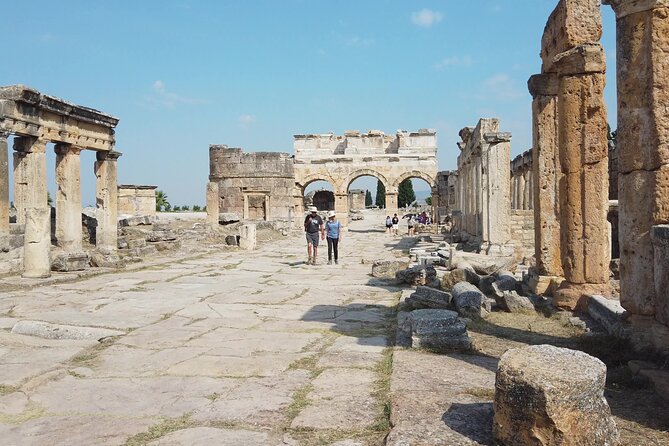
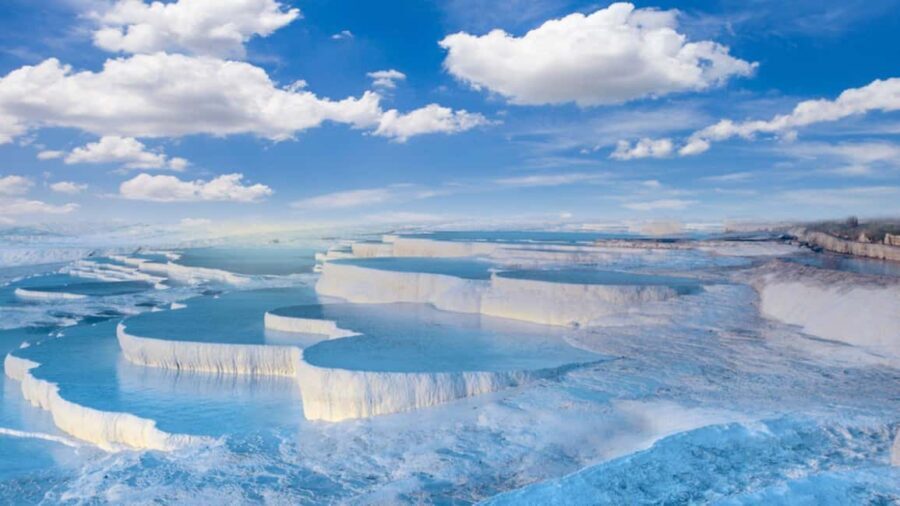
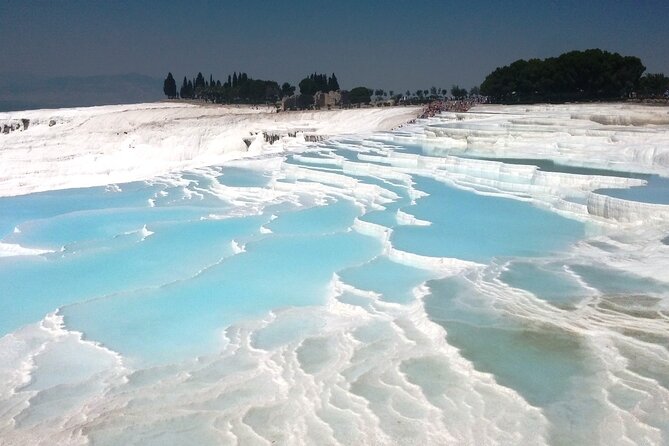
In a tour packed with churches and sermons, Pamukkale works as a breathing space. You’ll see white travertine terraces fed by mineral-rich thermal waters and visit the nearby Roman area of Hierapolis.
The stop isn’t just scenery. You can visit places like the Gate of Domitian, the Arcadian Way, the Necropolis, and Apostle Philip’s tomb. That creates a rare combo day: spiritual geography plus a very physical sense of how people lived in the Roman world.
One consideration: Pamukkale can be hot. Bring a hat and plan your water breaks. Even when you’re on a schedule, smart pacing keeps the day enjoyable instead of exhausting.
Ephesus day 8: Artemis, Mary’s House, and St. John’s Basilica
Ephesus is where you’ll start feeling the tour’s educational tone. You get the major ruins and also the places that connect to Christian tradition—so the site feels like a full story, not disconnected ruins.
In Ephesus, you’ll see stops like the Library of Celsus, Baths of Scholastica, the Theater, and the Temple of Artemis, one of the ancient world’s famous wonders. You also have a Temple of Hadrian stop, which helps you understand how layered the city was across different eras.
Then comes a very personal-feeling transition: Meryemana (the Virgin Mary’s House). Even if you’re not focused on tradition, the setting gives the day emotional weight. After that you visit the Basilica of St. John, built by Justinian I in the 6th century over the believed burial site of the Apostle John.
The guide factor matters here
This is the day where guides’ styles show. In real-world experiences from this tour style, Umut has been praised for tying specific passages such as Acts 19 to what you’re looking at, and connecting Revelation material to the seven-church theme as you go. If you care about scriptural context, this is the stop to lean into.
After Ephesus and St. John, you transfer to Izmir airport for your Cappadocia flight, so it’s not a slow day. Keep that in mind if you like long museum-style browsing.
Cappadocia days 9–10: Goreme, Pasabag, Avanos, underground cities, and valleys
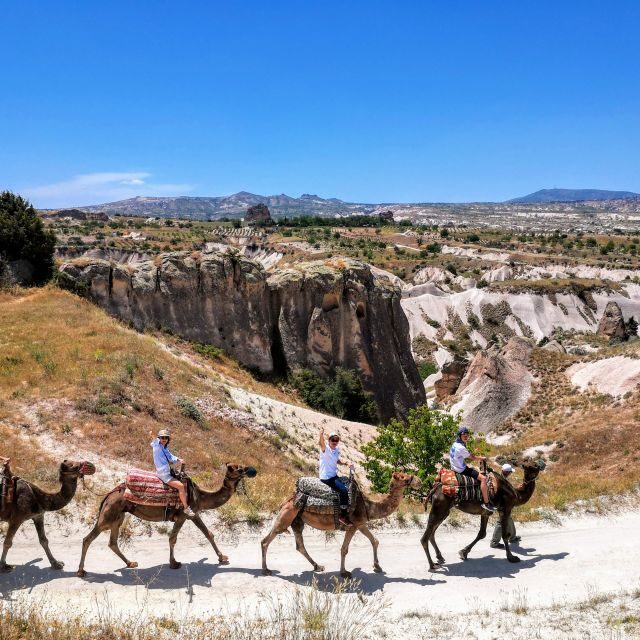
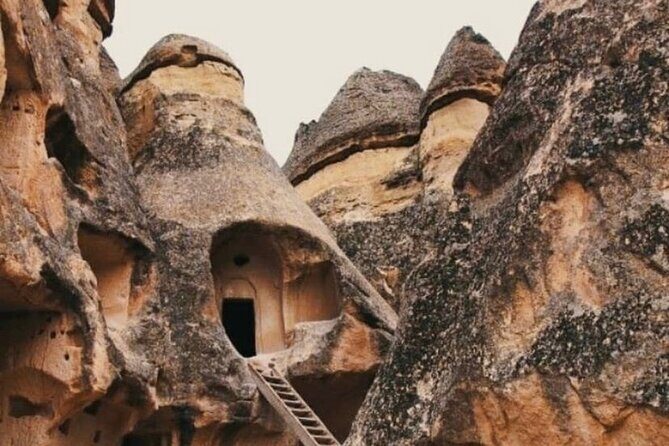
Cappadocia changes the tone of the trip. One day you’re in Roman marble and church ruins; the next you’re standing among fairy chimneys and carved rock churches.
You start with Goreme Panorama, then visit the Goreme Open-Air Museum, a UNESCO site tied to centuries of monastery life. Next is Pasabag (Monks Valley) for those dramatic fairy chimneys. You’ll also stop in Avanos, where pottery workshops and the Kızılırmak river link the landscape to local crafts.
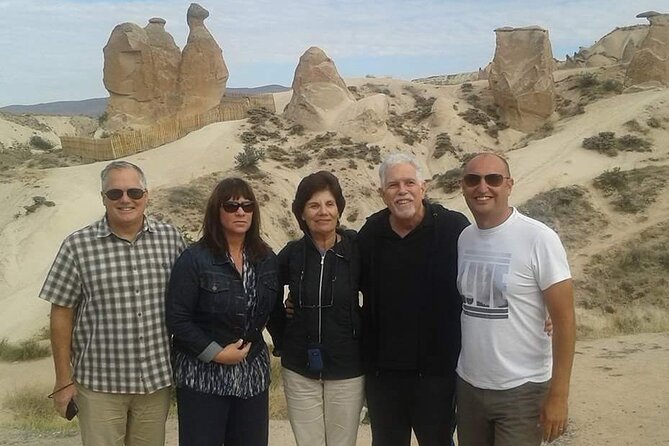
Then there’s Devrent Valley for rock formations that people associate with animal shapes. It’s not a “fact museum” stop; it’s a place to look and interpret, which can be a welcome change from archaeology-heavy days.
Day 10: Kaymakli Underground City plus the valley walk finale
You end with Kaymaklı Underground City—an impressive multi-level defensive system where only part is open to the public. Even with just an hour, you’ll understand how seriously people planned for survival here.
After that, you have short valley stops: Red Valley (vineyards and gardens), Cavuşin (a Greek village with a church of St. John and views into the valleys), Pigeon Valley (dovecotes carved into tuff), and finally Love Valley, a scenic wrap-up with tower-shaped rock formations.
It’s a lot of short, scenic walking rather than one huge trek, which is a good way to end a busy trip.
Transport, pace, and the “private” reality
Private tours sound simple. In practice, what you want is predictable movement and fewer handoffs. This itinerary is built around that: pickup from your hotel lobby or the airport, private guiding, and a driver who handles the logistics while your guide focuses on the story.
You’ll also notice the itinerary is structured to keep momentum. Long drives exist (especially across western Anatolia), but flights and boat time break the monotony. Some roads are winding, and timing can shift with weather, so it helps to keep plans flexible and travel light where you can.
Meals are practical: lunch is included for 8 days. Dinners are not included, so if you’re the type who likes a sit-down evening, you’ll want to check what’s nearby when you arrive each night.
Price of $3,604.57 per person: where the value actually comes from
At $3,604.57 per person, this isn’t a budget trip. But value isn’t only about “cheap.” It’s about what you avoid.
You’re paying for:
- Private transport and guiding throughout
- All entrance fees included
- Luggage-friendly transfers and parking
- A flight into and out of Cappadocia (the package explicitly includes Cappadocia–Istanbul flight tickets)
- Eight included lunches
If you tried to build this yourself, the cost would rise fast—especially once you factor in entrance fees across multiple major sites, intercity transfers, and getting the scriptural context right at each stop.
So the real question is: do you want to spend your energy on the sites, or on figuring out logistics? If you want the first one, this price starts to look more reasonable.
What’s not covered also matters. You’ll pay separately for the hot air balloon (not included), and you’ll handle dinners and gratuities.
Who should book this tour
This works best if you:
- Care about the biblical geography of Paul and the Seven Churches of Revelation
- Want a private guide who ties places to scripture and local context
- Prefer having entrances and transport handled rather than managing tickets and routes
It’s also a good fit for couples or small families who want a calmer experience than a bus tour, while still hitting big-name sites like Topkapi and Ephesus.
If you hate early starts, dislike flights, or want hours of slow museum wandering with no pressure, this may feel too structured.
Should you book this private Biblical Turkey tour?
I’d book it if your priority is clarity and story. You’re not just checking boxes; you’re moving through Istanbul, the Aegean, and Cappadocia with a guide who can connect what you see to what you read.
I’d think twice if you’re looking for a relaxed pace or you want everything at your own rhythm. The itinerary is packed, and even with private comfort, you’ll be on your feet and moving from place to place.
If you’re ready for a well-run, guide-led journey with entrances included, lunch covered, and a strong emphasis on Paul’s and Revelation’s settings, this tour fits that goal very well.
FAQ
How many days is the Turkey Biblical Tour (Private)?
It runs for about 10 days.
Is this tour private or group-based?
This is a private tour. Only your group participates, with a guide/driver.
What languages is the tour offered in?
The tour is offered in English.
What’s included in the price?
The package includes a private tour with transport, guiding, entrances, parking fees, and lunch (8 lunches). It also includes Cappadocia–Istanbul flight tickets. Hotel options vary.
Are entrance fees included?
Yes. The tour is listed as all-inclusive, with all entrance fees included.
Are flights included during the trip?
The package explicitly includes Cappadocia–Istanbul flight tickets, and the itinerary includes flights on travel days to move between regions.
Is the hot air balloon included in Cappadocia?
No. Hot air balloon is not included.
Where do you meet the guide?
Pickup is available from your hotel lobby or from the airport.
Can I cancel and get a full refund?
Yes, you can cancel up to 24 hours in advance for a full refund. If you cancel less than 24 hours before the start time, the amount paid is not refunded.