REVIEW · 3-DAY EXPERIENCES
3 Days Ephesus, Pamukkale, Priene, Miletus and Didyma Tour from Istanbul
Book on Viator →Operated by Puerto Travel Turkey · Bookable on Viator
Ephesus at dawn is a different world. This 3-day Western Turkey tour strings together Ephesus and Pamukkale plus the quieter ancient sites of the Ionian coast, so you get variety instead of one long ruin-fest. I like that the pacing is guided with clear “what matters here” stops, and you’re dropped into each place at the right time of day for photos and breathing room.
I also like the human side: you’ll travel with a pro guide in a group capped at 15, and guides named Güfte, Ogun, and Yavuz come up for being organized and flexible about what you care about. The one drawback to plan for is the walking and heat: you’ll cover steep and uneven ground, and some highlights (like Terrace Houses and swimming at the Cleopatra pool area) cost extra.
In This Review
- Key highlights that make this tour worth your time
- Why this 3-day Western Turkey route feels efficient
- Day 1: From Istanbul to Selçuk and a full Ephesus day
- Virgin Mary’s House on Mt. Koressos (a calm opener)
- Walking the Upper Gate to the Great Theatre in Ephesus
- Terrace Houses: the best “elite life” stop, with a ticket add-on
- Ephesus Experience Museum: how the tech helps the ruins make sense
- Temple of Artemis: one column with a lot of history layered in
- Dinner and hotel time in Kuşadası: where to recharge
- Day 2: Priene and Miletus for the quieter side of Western Anatolia
- Priene: the Pompeii of Anatolia feeling, plus big views
- Miletus: fortress-like theatre, Faustina baths, and St. Paul’s goodbye
- Didyma lunch break with Temple of Apollo in the background
- Temple of Apollo at Didyma: huge columns and a dark inner route
- Day 3: Pamukkale and Hierapolis from Kuşadası
- Hierapolis Necropolis and the best views over the white terraces
- Hierapolis Archaeology Museum: Roman baths as a display hall
- Cleopatra Pools: the story, the warm water, and the extra ticket
- Pamukkale Thermal Pools: barefoot on the Cotton Castle
- Lunch in Pamukkale and the flight back to Istanbul
- Price and value: what $1,017.48 buys you in real terms
- What to expect on your feet: walking, steps, and moderate fitness
- Who this tour is best for
- Should you book this 3-day Ephesus and Pamukkale tour?
- FAQ
- What’s included in the tour price?
- Are flights included from Istanbul and back?
- Is lunch or dinner included during stops?
- Do I need extra tickets for Terrace Houses or Cleopatra Pool swimming?
- How many people are in the group and what language is the tour?
- How does hotel pickup and meeting work?
Key highlights that make this tour worth your time
- Early-start Ephesus flow: you begin at the Upper Gate and walk downhill, which helps with comfort and crowds
- Terrace Houses glass walkways: a rare look at elite Roman domestic life, but you’ll need extra tickets
- Ephesus Experience Museum: immersive tech that helps ruins “click” after you’ve walked them
- Priene and Miletus as a smarter detour: you get the big ideas of the region beyond the famous main site
- Didyma’s Temple of Apollo: massive scale plus a darker inner route with the famous Medusa Head
- Pamukkale barefoot terraces: walk on warm limestone “cotton” and finish the day with Hierapolis views
Why this 3-day Western Turkey route feels efficient
This tour is built around a smart geographic loop: Istanbul to Izmir, ancient sites near Selçuk/Kuşadası, then south to Pamukkale/Denizli and back to Istanbul by flight. Instead of spending half your time in transit with nothing to show for it, you get major stops with actual “you’re standing in history” moments.
The value angle is not just the sites. You’re paying for a single team to handle the private transfers, a professional guide, and the entrance fees that would otherwise eat up your time at ticket lines. On top of that, breakfast is included twice, which helps when you’re up early and trying to beat the crowd timing.
Day 1: From Istanbul to Selçuk and a full Ephesus day
Day 1 starts with private logistics that matter. You meet your driver at your Istanbul hotel lobby at least 3 hours before your flight, then ride to the airport in an air-conditioned vehicle. On arrival in Izmir, you’ll be met with a driver holding your name and taken about 60 minutes to Selçuk to meet the guide and group.
Once you’re settled, the schedule is about gentle-to-big history, starting with a quiet sacred stop and building into the scale of Ephesus.
Virgin Mary’s House on Mt. Koressos (a calm opener)
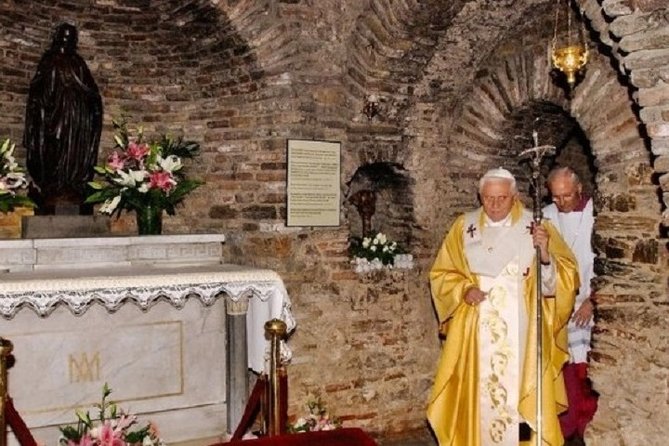
Your first major stop is the House of the Virgin Mary. The tour drives you up to Mt. Koressos before crowds arrive, and you get free time to soak in the quiet atmosphere, light a candle for your intentions, and leave a note on the Wishing Wall.
What I like about this start is the reset. After a morning of travel, you get a slower, reflective moment before your brain has to switch into “Roman urban planner” mode for Ephesus. It’s also a good place to take a breath, because later the day involves downhill walking and concentrated sightseeing.
Practical note: you get about 45 minutes here. That’s enough for the main experience, but don’t expect a long meditation session if you’re the kind of traveler who likes to linger.
Walking the Upper Gate to the Great Theatre in Ephesus
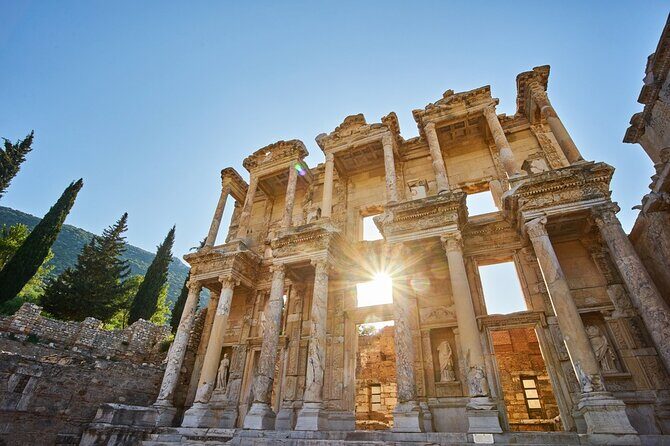
Ephesus is the main draw, and the route they use is a smart one: start from the Upper Gate and walk downhill through marble streets. You’ll see the Celsus Library, the Temple of Hadrian, and the Great Theatre, where St. Paul is associated with preaching.
I love how Ephesus is organized visually. The downhill flow helps your stamina and also gives your eyes a natural path. By the time you reach the big open structures, you’re already warmed up to the scale.
Expect about 3 hours in Ephesus with admission included. This is the part of the tour where you’ll want comfy shoes and a hat, because the walkways can be hot and the stone can be slick if there’s morning dew.
Terrace Houses: the best “elite life” stop, with a ticket add-on
One of the most memorable parts is the Terrace Houses, sometimes called a museum within a museum. These are private villas of the Ephesian elite, with mosaics, frescoes, and features you don’t usually see in other major ruins.
You’ll walk on glass walkways and look down over protected rooms, and there’s a realistic sense of how people lived inside those homes. But there’s a key consideration: it requires walking up steps inside the structure, and the admission ticket is not included.
If you’re the type who likes daily-life details (heating systems, floor mosaics, how space worked), this is worth buying separately. If steps are a problem for you, just know you may want to focus your energy on the main open-site landmarks.
Ephesus Experience Museum: how the tech helps the ruins make sense
Right inside the ancient city area, you’ll stop at the Ephesus Experience Museum. It’s an award-winning immersive setup with 360-degree screens, 3D audio, and sensory effects that help reconstruct temples and streets from the period when the city was in its prime.
This is a good finale because it turns “I saw columns and walls” into “I can picture the full street scene.” If your brain likes visuals and storytelling, you’ll probably find this museum helps connect the dots after a dense walk.
You get about 30 minutes here, with admission included. It’s short, but it’s designed to give you a strong mental snapshot rather than a full museum day.
Temple of Artemis: one column with a lot of history layered in
You end the Ephesus day at the Temple of Artemis, one of the Seven Wonders of the Ancient World. The tour notes that only one column remains standing today, but you’re also set up for a unique photo moment: you can see three eras in the same frame, including the Pagan Temple, the Isa Bey Mosque, and the Basilica of St. John.
This stop is more about perspective than volume. It’s a reminder that sites change roles over time, and religion and architecture can stack in surprising ways in the same location.
You’ll have about 30 minutes here, with admission free.
Dinner and hotel time in Kuşadası: where to recharge
After the archaeology-heavy day, you drive to Kuşadası and check into a 4-star hotel. The evening is free, so you can relax, stroll the promenade, or go for sunset seafood by the Aegean Sea.
Since lunch and dinner aren’t included in the package, this is where you’ll likely spend your cash. I like having a free evening here because it gives your body time to recover before Day 2’s more spread-out route.
Day 2: Priene and Miletus for the quieter side of Western Anatolia
Day 2 is where the itinerary earns its keep. Ephesus gets all the attention, but Priene and Miletus are the places where you see how Ionian cities were planned and how ancient leaders and thinkers shaped the region.
You’ll start with a drive to Priene, then continue onward to Miletus and finish with Didyma before returning to your hotel in Kuşadası.
Priene: the Pompeii of Anatolia feeling, plus big views
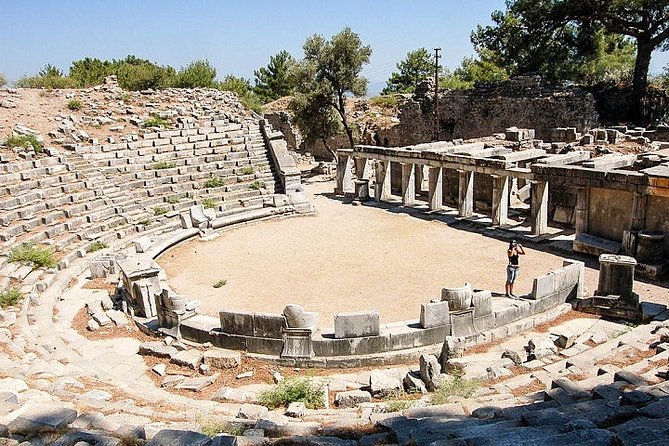
Priene is often described as a peaceful alternative to Ephesus, set among pine trees and steep slopes near Mount Mycale. You’ll walk original grid streets about 2,500 years old, visit the Bouleuterion (Senate House), and stand near the Temple of Athena, funded by Alexander the Great.
One reason I’d pick Priene for your second day is the setting. The city feels calmer, so your brain gets a break from sheer scale. You also get a breathtaking view over the Meander Plain from the Temple of Athena area.
Time is about 1.5 hours, and admission is included.
Miletus: fortress-like theatre, Faustina baths, and St. Paul’s goodbye
Next is Miletus, once a major maritime power and tied to early Western philosophy through Thales. The Grand Theatre rises above the flat plains like a fortress, and you’ll also explore the Baths of Faustina.
If you care about biblical history, this stop has an added layer: it’s associated with St. Paul’s farewell speech to the elders of Ephesus in Acts 20. It’s one more example of how the region’s history is both civic and spiritual at the same time.
Plan about 1 hour with admission included.
Didyma lunch break with Temple of Apollo in the background
You’ll arrive in Didyma for a meal break at a local restaurant, and many spots offer views toward the Temple of Apollo. Lunch is free-time and not included in the tour price, so you’ll want to use it as a recharge stop.
The area is known for seafood, plus Turkish classics like pide and kebab. Even if you don’t go heavy on seafood, just treat this as your mid-day fuel before the biggest sight.
Temple of Apollo at Didyma: huge columns and a dark inner route
Didyma isn’t just ruins of a town. It was an oracle center second only to Delphi, and that’s part of why the Temple of Apollo feels so serious. The scale is the main wow: standing near massive columns makes you feel small fast.
You’ll walk through dark tunnels to reach the inner sanctuary and see the famous Head of Medusa sculpture. It’s a strong finale because you get both size and detail.
You’ll have about 1 hour here, with admission included.
Afterward, the day winds down with a scenic drive back through cotton fields and olive groves to Kuşadası, leaving you time to relax at the end of the day.
Day 3: Pamukkale and Hierapolis from Kuşadası
Day 3 begins with pickup from your Kuşadası hotel. The drive to Pamukkale takes about 2.5 to 3 hours, passing through the Meander Valley and villages, with cotton fields and fig orchards along the way.
This is the practical day: you’re traveling farther, but every stop is visually rewarding, and you’ll get time to slow down at the thermal areas.
Hierapolis Necropolis and the best views over the white terraces
Hierapolis is called the Holy City because of its many religious sites. Your walk starts at the large Necropolis, the biggest ancient cemetery in Anatolia, then you move through the Frontinus Gate and visit the Theatre.
The Theatre gives panoramic views of the white terraces below, which helps you understand Pamukkale as a whole system, not just a set of cliffs.
You’ll have about 2 hours here, with admission included.
Hierapolis Archaeology Museum: Roman baths as a display hall
Next you’ll visit the Hierapolis Archaeology Museum, located inside a restored Roman Baths structure. You’ll see sarcophagi, statues, and friezes from Hierapolis and nearby Laodicea, with the Hall of Statues as a highlight.
This stop is shorter, about 30 minutes. It’s a nice counterbalance to the outdoor scenery because you can look at carved details in a calmer setting.
Cleopatra Pools: the story, the warm water, and the extra ticket
One of the most talked-about stops is the Cleopatra Pools. The legend says Cleopatra swam here, and the pool area contains warm thermal water with submerged ancient marble columns that fell in during an earthquake.
Important detail: entrance to the pool area is free, but swimming requires an extra ticket. If you want that champagne-water feeling in the warm mineral pools, budget for the add-on. If you just want to see and take photos, you can often enjoy the area without the swimming upgrade.
You’ll have about 45 minutes for this part.
Pamukkale Thermal Pools: barefoot on the Cotton Castle
Finally, you reach Pamukkale Thermal Pools, also called the Cotton Castle. The terraces are white limestone formed over millennia by calcium-rich thermal springs.
You’ll take off your shoes and walk barefoot on the warm terraces, with about 45 minutes allocated. This is where you’ll get your most iconic photos, and it’s also where the experience turns from history into something physical and sensory.
Bring a plan: protect your feet if you have sensitive soles, and keep your camera ready. The best images come when you stop and let the scene soak in.
Lunch in Pamukkale and the flight back to Istanbul
After the terraces, you’ll have a break at a selected local restaurant in the town of Pamukkale for lunch. Lunch is not included in the tour price, so this is another place to budget.
Then you drive to Denizli Cardak Airport (DNZ) for your flight back to Istanbul, about a 1-hour drive. You’ll be dropped at the departure gate with time for check-in, then you’re met at the Istanbul meeting point outside the terminal and taken to your hotel door.
This is the kind of finish that works well if you want to end with a clear plan instead of trying to squeeze in a late-night bus ride.
Price and value: what $1,017.48 buys you in real terms
At $1,017.48 per person, you’re paying for a tight itinerary with fewer moving parts on your end. That price includes hotel accommodation, air-conditioned transfers, a professional guide, and entrance fees to most key sites and museums.
Breakfast is included twice, and you also get private transfer service tied to flights. Domestic flights are not included, so you should factor in the cost of getting to Izmir on Day 1 and back to Istanbul on Day 3.
The two biggest “check before you pay twice” items are:
- Terrace Houses in Ephesus (admission not included)
- Swimming at the Cleopatra pool area (extra ticket required)
If you’re the kind of traveler who would otherwise rent a car or spend extra time coordinating buses, the package price starts to make sense fast. You’re not just buying tickets. You’re buying a schedule that keeps you moving and keeps you out of guesswork.
What to expect on your feet: walking, steps, and moderate fitness
This tour lists a moderate physical fitness level. That’s reasonable because you’ll do downhill and uphill walking, plus there are steps inside the Terrace Houses structure. Pamukkale also asks you to walk barefoot on warm terraces, which can feel very different from regular sightseeing ground.
If you have knee issues or you get tired quickly on uneven stone, plan for slower moments. The good news is your time is guided, so you’re not stuck roaming without a plan.
A small group also helps. With a maximum of 15 travelers, you’re less likely to feel swallowed by crowd movement.
Who this tour is best for
This works especially well for you if you want:
- A balanced mix of major icons and less-famous ancient cities (Priene, Miletus, Didyma)
- A guided day that helps the ruins feel connected, especially with the Ephesus Experience Museum
- A trip with mostly built-in logistics, so you spend time seeing rather than organizing
It’s also a strong choice if you like the idea of practical flexibility. Guides with names like Güfte and Yavuz are described as adapting to interests, including adjusting the flow for what you want to do during the day.
Should you book this 3-day Ephesus and Pamukkale tour?
I think you should book this if you want a high-impact ancient route without the stress of planning flights, transfers, and ticketing in three different regions. The mix is the main selling point: Ephesus gives you the big stage, while Priene and Miletus help you understand the broader Ionian world, and Pamukkale adds a sensory natural finale.
I’d hesitate if you know you struggle with steps or long walking days, or if you hate the idea of buying extra tickets for Terrace Houses and Cleopatra swimming. If those sound manageable, this is a very solid way to see a lot of Western Turkey with a guide handling the hard parts.
FAQ
What’s included in the tour price?
The package includes accommodation in local hotels, all transfers with an air-conditioned vehicle, entrance fees to sites and museums, a professional tour guide, and breakfast (2). Lunch, dinner, drinks, tips, and personal expenses are not included.
Are flights included from Istanbul and back?
No. Domestic flight tickets are not included. You’ll be assisted in booking the most appropriate flights based on the tour schedule, and you’ll travel by flight as part of the itinerary.
Is lunch or dinner included during stops?
No. Lunch, dinner, and drinks are listed as not included. The itinerary includes time at selected local restaurants, but you’ll pay your own meals.
Do I need extra tickets for Terrace Houses or Cleopatra Pool swimming?
Yes. Terrace Houses admission in Ephesus is not included. At Pamukkale, entrance to the Cleopatra pool area is free, but swimming requires an extra ticket.
How many people are in the group and what language is the tour?
The tour has a maximum of 15 travelers and is offered in English.
How does hotel pickup and meeting work?
You meet your driver at your Istanbul hotel lobby at least 3 hours before your flight. In Izmir, you’ll look for the driver holding a sign with your name at the exit gate. At the end in Istanbul, you’ll be met outside the terminal at a designated meeting point and taken by private transfer to your hotel door.