REVIEW · ISTANBUL
Best of Istanbul 1, 2 or 3-Day Private Guided Istanbul Tour
Book on Viator →Operated by Guided Istanbul Tours · Bookable on Viator
Istanbul can feel huge, fast. This private guided tour helps you get your bearings quickly, walking the Old City highlights with an expert who can explain what you’re actually looking at. I especially like the flexibility to shape the day around your pace and interests, and the way it mixes iconic landmarks with street-level wandering so the city doesn’t stay in postcard mode. One thing to watch: several major sights have tickets not included, and skip-the-line perks are limited at a couple of key places.
The best part is that you can scale it from a first-day crash course to a deeper 2- or 3-day introduction. I like that it’s built for real timing—morning starts help you avoid the worst security bottlenecks, and the Bosphorus portion is set up to show both sides of Istanbul. Your potential drawback is logistical: pickup works best at central hotels, and if you’re farther out you may need a van (extra) or rely on public transport and walking between areas.
In This Review
- Key highlights you’ll feel right away
- A smart way to start: private time with Istanbul’s main storylines
- Pickup and getting around: where the tour saves you time
- Day 1 on foot in Sultanahmet: Hagia Sophia, Blue Mosque, Topkapi, Grand Bazaar
- Sultanahmet Square, Hippodrome, and the German Fountain
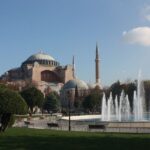
- Hagia Sophia: incredible inside, and timing matters
- Blue Mosque: massive scale, elegant proportions
- Topkapi Palace: plan for your ticket budget
- Grand Bazaar: the classic shopping maze (with an exception)
- Day 2: Bosphorus ferry views plus Dolmabahce Palace (when it’s open)
- Bosphorus cruise: ferry vs private cruise
- Dolmabahce Palace: beautiful interior, but respect the rules
- Modern Istanbul on day 2: Taksim Square, Istiklal Street, and Cicek Passage
- Day 2 back in the old-to-new middle: Spice Market, Galata Tower exterior, Süleymaniye
- Spice Market (Mısır Çarşısı): smell-first sightseeing
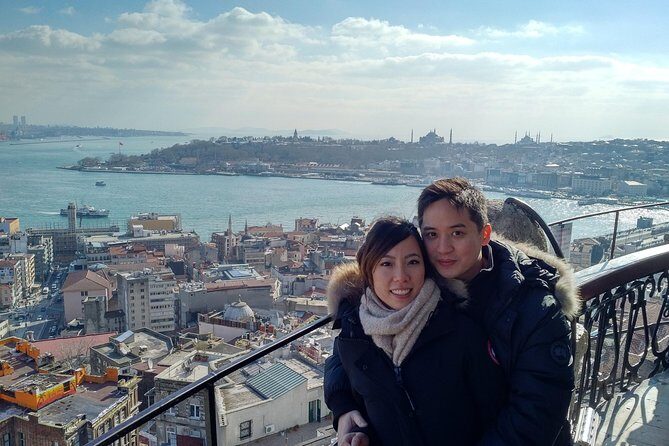
- Galata Tower: exterior view only, and that’s intentional
- Süleymaniye Mosque: big inside, great skyline from the terrace
- Day 3 on the Golden Horn: Fener and Balat streets, St. Stephen, and Pierre Loti
- Balat: steep streets, laundry lines, and old houses
- Fener Rum Patrikhanesi and Church of St. George
- Pierre Loti Hill cable car: views as a finale
- Art and church highlights: Chora Museum and the Iron Church
- Chora Museum (Kariye Mosque): mosaics and frescoes
- St. Stephen Church: the iron church on the shore
- Price and ticket budgeting: where your money actually goes
- Who this tour fits best (and how to pick 1 vs 2 vs 3 days)
- Should you book it?
- FAQ
- Is this tour private or shared?
- Where does the guide meet you?
- Are transportation and tickets included?
- Which sites have closures that can change the plan?
- Is skip-the-line access included for Hagia Sophia or Galata Tower?
- What’s the cancellation policy?
Key highlights you’ll feel right away
- One guide, private pace: you’re not stuck with a crowd rhythm.
- Old City walking plan: Sultanahmet sights plus storytelling that connects Byzantine, Ottoman, and modern Istanbul.
- Bosphorus views with the right transport: public ferry is used to show the shoreline and skyline.
- Modern Istanbul for balance: Taksim Square, Istiklal Street, and Cicek Passage add contrast to the historic areas.
- Golden Horn neighborhoods on day 3: Fener and Balat backstreets, plus major churches.
- Big-ticket sights are optional but common: Dolmabahce Palace, Chora Museum, and cable car can be added depending on the day and closures.
A smart way to start: private time with Istanbul’s main storylines
If this is your first trip to Istanbul, you’ll love how this tour gives you structure without turning the city into a checklist. A private guide matters here because Istanbul is a maze of neighborhoods, hills, and competing “must-sees.” With your own licensed guide, you can ask questions and adjust on the fly.
This tour also works well if you hate spending vacation time figuring out routes. You’ll start with a walk-focused day in the Historic Areas of Istanbul, then expand to Bosphorus, Dolmabahce, and modern districts when you choose a 2- or 3-day option. The payoff is that you finish with a mental map that helps you explore on your own the rest of the trip.
You can also read our reviews of more guided tours in Istanbul


Pickup and getting around: where the tour saves you time
Your guide meets you at a central Istanbul hotel. If your hotel isn’t centrally located or isn’t accessible by public transportation, the meeting point can shift to the German Fountain, and pickup may be on foot for the closest meeting spot. If you book private van service, pickup is offered from central hotels, with a surcharge if your hotel is outside the city center or on the Asian Side.
Between sights, transportation is not automatically included unless you’ve booked a van. The good news: the tour is designed so most of it can be managed using public transport and short walks, especially if you’re staying near the Old City or along convenient transit lines. That means you’re not paying for a vehicle you won’t need.
Practical tip: if you’re trying to maximize museum and mosque time, pick a hotel location that makes the walking day easy. The “best” choice is the one that reduces friction on the morning you want to leave quickly.
Day 1 on foot in Sultanahmet: Hagia Sophia, Blue Mosque, Topkapi, Grand Bazaar
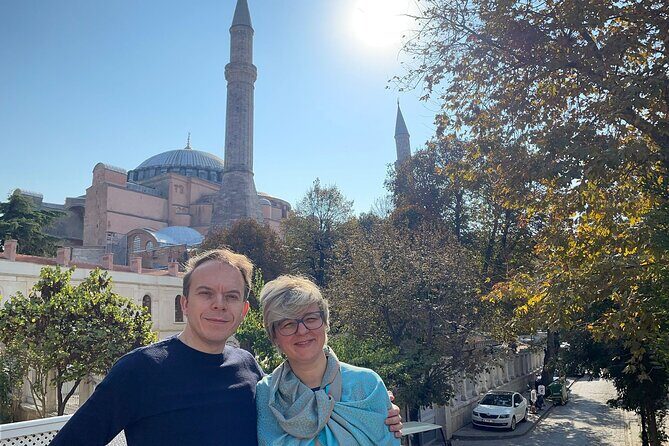
Day 1 is built around the Sultanahmet District and the UNESCO Historic Areas—meaning you’ll be in the core where the main layers of Istanbul show up. Expect a classic Old City loop, with time for landmark exteriors, short landmark stops, and enough walking to feel the neighborhood instead of just passing through.
Sultanahmet Square, Hippodrome, and the German Fountain
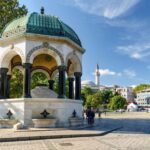
You start in the Sultanahmet area and pass through key historic landmarks around Sultanahmet Square. Nearby is the Hippodrome Square (Atmeydanı)—a site tied to chariot races in Roman times, plus visible reminders like the Egyptian Column and German Fountain. These stops are short, but they matter because they explain why the area became such a stage for empire power.
I like these quick segments because they set context before you enter the big indoor stops. If you tend to feel overwhelmed by Istanbul’s long timelines, this ordering helps.
Hagia Sophia: incredible inside, and timing matters
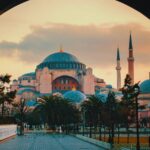
Next comes Hagia Sophia, which has shifted roles over centuries—built in the 6th century under Emperor Justinian, later altered under Ottoman rule, and then operating again as a mosque. The tour notes an important reality: it’s not a museum right now, and tour guides do not have skip-the-line priority there. You may need to wait in security.
That’s why the tour recommends starting around 8:30am or 9:00am to reduce queue stress. If you hate lines, this is the day and time you should care about most.
You can also read our reviews of more private tours in Istanbul


Blue Mosque: massive scale, elegant proportions
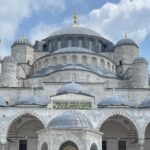
Then it’s the Blue Mosque (Sultanahmet Camii). It’s described as an early 1600s masterpiece built for Sultan Ahmet I, with delicate architectural proportions relative to its huge scale. Admission is listed as free.
This stop is one of the easiest wins for first-time visitors: you get a landmark that instantly feels special, and your guide’s explanations help you notice details that you’d miss if you just walked in and out.
Topkapi Palace: plan for your ticket budget
Topkapi Palace Museum is next, and entry is own expense. The tour positions it as much more than a palace—it served as a seat of Ottoman administration and supreme councils for centuries. Also, it’s not always available: Topkapi is closed on Tuesdays, and your guide can substitute with other nearby options like the Turkish and Islamic Arts Museum, the Archaeological Museum, or Basilica Cistern if needed.
If you’re doing just one day, this is a solid add-on, but it does mean you should budget for tickets.
Grand Bazaar: the classic shopping maze (with an exception)
You finish with the Grand Bazaar, one of the largest and oldest covered markets in the world. It’s huge—thousands of shops—and the tour notes lots of product categories, from ceramics and leather to rugs, handicrafts, and gold.
Timing matters: the Grand Bazaar is closed on Sundays and replaced with the Spice Market option in that case. This is still a win because Spice Market gives you strong sensory payoff and easier browsing than the busiest bazaar lanes.
Day 2: Bosphorus ferry views plus Dolmabahce Palace (when it’s open)
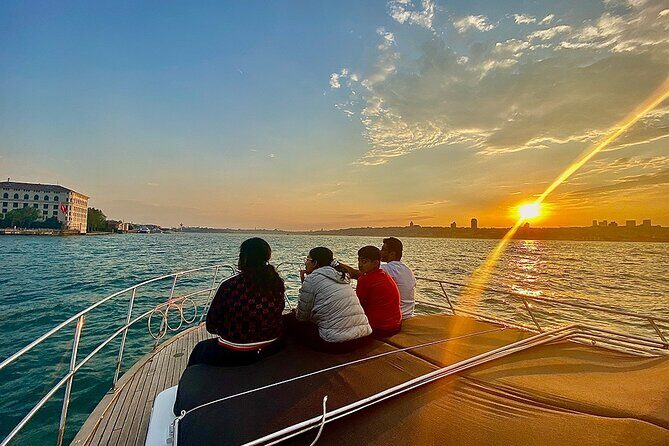
If you choose a 2-day plan, you’ll add a Bosphorus cruise. The tour suggests using the public ferry to see both the European and Asian sides, with views that typically include Galata Tower, Dolmabahce Palace, Beylerbeyi Palace, Rumeli Fortress, Ottoman villas, the Bosphorus bridges, and shoreline mosques. This is a smart transport choice because you’re seeing the city as it actually sits on the water, not just from one side.
Bosphorus cruise: ferry vs private cruise
The tour offers either public ferry (included in the plan as the default) or a private cruise if you choose it. Public ferry is also a great value play: you get the scenery without the private-boat price.
Practical note: ferry and palace tickets are not included, so plan for that cost.
Dolmabahce Palace: beautiful interior, but respect the rules
Dolmabahce Palace is right on the Bosphorus and is known in this description for luxury details like chandeliers, rugs, crystals, ceramic fireplaces, and grand furnishings. Tickets are not included.
There’s also a big scheduling consideration: Dolmabahce Palace is closed on Mondays, and the tour adds that live guide service isn’t available at Dolmabahce Palace due to museum regulations. Your guide can still help with key context before or after, but the inside experience may feel more self-paced than other sites.
Modern Istanbul on day 2: Taksim Square, Istiklal Street, and Cicek Passage
After the water, you’ll pivot to Istanbul’s modern center. Taksim Square is described as a defining spot for modern Turkey, tied to major historical moments and located near embassies. It’s also close to Istiklal Street (Istiklal Caddesi).
Istiklal Street is where you feel the city’s everyday mix: churches, modern art galleries, pubs, cafes, and lots of shopping. Then comes Cicek Passage, a smaller spot with a mix of traditional and modern construction and lots of cafes and shops.
I like this shift because Istanbul can feel like only monuments. Here, you get a taste of how people actually move through the city today.
Day 2 back in the old-to-new middle: Spice Market, Galata Tower exterior, Süleymaniye
Day 2 also includes a step back toward historic texture, without going all the way back to the densest tourist loop.
Spice Market (Mısır Çarşısı): smell-first sightseeing
Spice Market is described as a colorful covered market with spices, flavored teas, Turkish delight, nuts, and souvenirs like ceramics. It sits in the Eminönü area, linked to Bosphorus and the Golden Horn.
Even if you don’t buy anything, it’s worth it for the chaos-with-purpose feeling. Your guide can point out what to look for and how to avoid getting pulled into overpriced impulse buys.
Galata Tower: exterior view only, and that’s intentional
The tour plans to see the Galata Tower from the outside only, and it explains why: regulations limit guide access and there’s no skip-the-line priority, which means long queue time. You’ll still get an explanation from your guide, which helps the exterior view feel purposeful.
If you’re the type who hates lines, this “skip inside” approach might actually be a relief.
Süleymaniye Mosque: big inside, great skyline from the terrace
Süleymaniye Mosque is listed as the largest mosque in Istanbul and impressive both inside and out. The tour also notes that the garden terrace behind the mosque offers lovely views of the Golden Horn and Bosphorus.
This stop is a great “breather” from nonstop walking. Even short mosque visits can reset your attention and help you notice the city’s scale.
Day 3 on the Golden Horn: Fener and Balat streets, St. Stephen, and Pierre Loti
Day 3 is where you go beyond the famous monuments and into neighborhoods that feel lived-in. You’ll spend time in the Fener and Balat area and follow a backstreet walk with stops tied to religious landmarks.
Balat: steep streets, laundry lines, and old houses
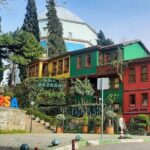
The tour describes Balat’s steep, winding streets where you’ll see Ottoman houses leaning against each other, often in red-blue-green color combinations, plus art galleries and design shops near the water.
This is the day for slow looking. You don’t just see buildings; you see how the city holds everyday life on top of deep time.
Fener Rum Patrikhanesi and Church of St. George
The tour includes the Orthodox Patriarch stop at Fener Rum Patrikhanesi, plus a mention of the Church of St. George. The Church of St. George is connected in this description to the Ecumenical Patriarchate of Constantinople.
These stops tend to feel quiet compared with the big-bus Old City crowds, and they’re valuable if you want to understand Istanbul’s religious geography.
Pierre Loti Hill cable car: views as a finale
The day caps with Pierre Loti Hill and a cable car ride. The guide will help you get up to the viewpoint, where you can enjoy the scenery with Turkish coffee or tea. Cable car tickets are not included.
Expect this to be popular. If you’re sensitive to waiting, go when your guide suggests and treat it as the set-piece finale rather than a casual detour.
Art and church highlights: Chora Museum and the Iron Church
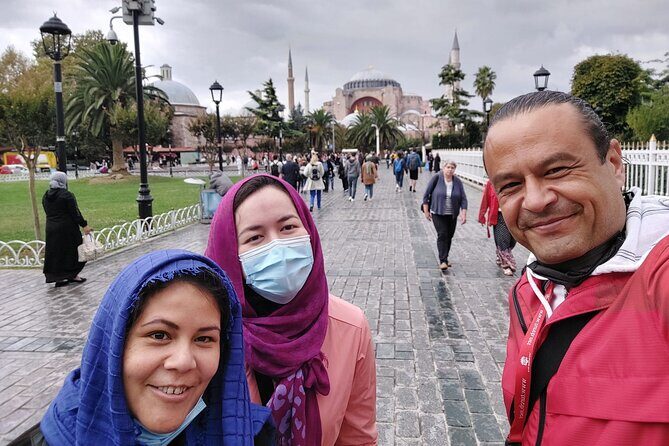
If you choose the 3-day option, you may add two major Golden Horn area cultural stops described here: Chora Museum and Bulgarian Orthodox Church of St. Stephen.
Chora Museum (Kariye Mosque): mosaics and frescoes
Chora Museum is described as internationally famous for its well-preserved mosaics and frescoes, showing East Roman painting in its final period. The tour notes depth effects in the mosaics and the moving style of the figures.
This one can be emotionally rewarding if you like art more than crowds. Also, tickets are not included, so budget ahead.
St. Stephen Church: the iron church on the shore
The tour includes the Bulgarian Orthodox Church, also known as the Iron Church, because it’s described as made entirely of prefabricated cast iron in the 19th century. It’s on the shore of the Golden Horn and is listed as a free admission stop.
If you like odd-but-true architecture stories, this is a fun counterpoint to the larger imperial monuments.
Price and ticket budgeting: where your money actually goes
The listed price is $100 per person, and what you’re buying is a private tour experience with a professional licensed guide and pickup from central hotels. That value is real in Istanbul, where independent navigation plus interpretation can be hard and time-consuming.
But you should budget for what’s not included:
- Museum, ferry, and cable car tickets
- Transportation between sites unless you booked a van
- Lunch
- Tips/gratuity
Also pay attention to skip-the-line limitations. Hagia Sophia is explicitly a situation where tour guides don’t have skip-the-line priority. Galata Tower is handled as exterior-only for the same reason. That means your best savings come from showing up at the recommended time and letting your guide manage pacing.
One more practical warning: a past customer said they wished ticket costs were clearer and felt asked for a large amount in cash per person when arriving. You don’t need to panic, but you should be ready to pay on-site at ticketed stops and to carry payment options that work quickly.
Who this tour fits best (and how to pick 1 vs 2 vs 3 days)
Choose the 1-day option if you want the big foundations: Hagia Sophia, Blue Mosque, and the Old City core, plus Ottoman power at Topkapi and the Grand Bazaar feel. It’s the best move if your time is short and you want to spend later days exploring on your own.
Pick 2 days if you want Istanbul’s two-sided identity: the Bosphorus ferry and Dolmabahce, plus modern landmarks around Taksim and Istiklal. This is ideal if you like variety and don’t want your trip to feel stuck in one neighborhood.
Go 3 days if you want the city’s neighborhood personality and architectural oddities: Fener and Balat backstreets, St. Stephen’s Iron Church, Chora’s mosaics, and the Pierre Loti viewpoint finale. This is also the best option if you’re comfortable walking and want a slower, more human feel.
Should you book it?
I’d book this private tour if you want your first Istanbul trip to start with a solid map, clear context, and realistic pacing. The guide-led format helps you connect sights to the eras that created them, and the option to expand to Bosphorus and Golden Horn neighborhoods makes it feel like more than a single-day sprint.
I’d reconsider if you hate paying separate ticket costs or if you’re hoping for guaranteed fast entry everywhere. Hagia Sophia and Galata Tower come with queue realities, and the tour is honest about tickets not being included.
If you’re flexible, budget for tickets, and plan to start around 8:30am or 9:00am on the Old City day, this is a strong value way to see the essentials without getting lost in Istanbul’s complexity.
FAQ
Is this tour private or shared?
This is a private tour/activity. Only your group participates.
Where does the guide meet you?
Your guide meets you at a centrally located Istanbul hotel. If your hotel isn’t centrally located or isn’t accessible by public transportation, the meeting point can be the German Fountain if the hotel isn’t accessible.
Are transportation and tickets included?
Transportation between sites is not included unless you book a private van. Museum, ferry, and cable car tickets are not included.
Which sites have closures that can change the plan?
Topkapi Palace is closed on Tuesdays. Blue Mosque is visited in the afternoon on Fridays. Grand Bazaar is closed on Sundays (Spice Market replaces it). Dolmabahce Palace is closed on Mondays.
Is skip-the-line access included for Hagia Sophia or Galata Tower?
No. Hagia Sophia is not a museum currently, and tour guides don’t have skip-the-line priority there. Galata Tower is typically viewed from the outside because of regulations and queue time.
What’s the cancellation policy?
You can cancel up to 24 hours in advance for a full refund. If you cancel less than 24 hours before the experience start time, the amount paid is not refunded.
![Troy Tour from/to Istanbul [incl. lunch] - Getting to Eceabat for lunch and the first reset](https://tour.theistanbultraveler.com/wp-content/uploads/troy-tour-from-to-istanbul-incl-lunch-400x267.jpg)