REVIEW · ISTANBUL
Istanbul: Basilica Cistern Fast-Track Entry and Audio Guide
Book on GetYourGuide →Operated by Cosmic Tickets & Audios · Bookable on GetYourGuide
Lines are the real boss in Istanbul.
This Basilica Cistern ticket gives you fast-track entry with an all-day, skip-the-ticket-queue setup, so you’re not stuck waiting just to get inside. Once you’re there, you’ll walk through the underground Byzantine-era space with a smartphone audio guide that explains what you’re seeing, including the famous Medusa heads.
I especially love how flexible the timing is. Your skip-the-line ticket works all day, so you can come when it fits your day (not when the next tour starts). Second, I like that the audio guide is built for practical use: it’s available in 11 languages, and it’s designed to run on your phone while you move through the cistern.
One thing to consider is that the experience depends on your tech. Internet coverage is limited inside, so you need to download the audio content before you descend. Also, this is mostly a self-paced walk, so if you want lots of staff interaction, this may feel a bit hands-off.
In This Review
- Key things to know before you go
- Skip-the-line entry at Basilica Cistern: what it changes for your day
- Smartphone audio guide in 11 languages: your best move before you descend
- Inside the cistern: columns, water reflections, and the Medusa heads
- How long to plan, and when to arrive for the best visit
- Hagia Sophia add-on: worth pairing on the same day
- Price and value: is $44 per person a good deal?
- Who this works best for (and who should pass)
- Should you book this Basilica Cistern fast-track ticket?
- FAQ
- FAQ
- How do I get the tickets for the Basilica Cistern?
- Is the skip-the-line ticket valid only for a specific time?
- What languages are available in the audio guide?
- Do I need headphones for the audio guide?
- Will the audio guide work inside the cistern?
- Is Hagia Sophia included or optional?
Key things to know before you go
- Skip-the-line entry, all-day validity: use it anytime during official opening hours without rushing.
- 11-language audio guide app: instructions are for your smartphone, so bring charged power and headphones.
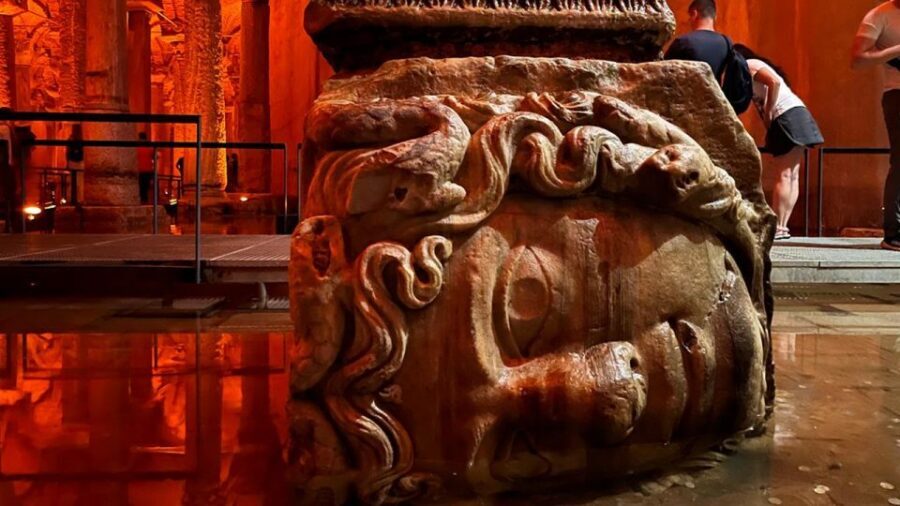
- Medusa heads photo moments: plan your photos around the lighting and the famous carvings.
- Short, efficient visit: most people finish in about 30–45 minutes if you don’t linger.
- Download first, listen underground: expect weak or no service once you’re below street level.
- Smooth walking is not guaranteed: the floor can be slippery, so watch your step.
Skip-the-line entry at Basilica Cistern: what it changes for your day
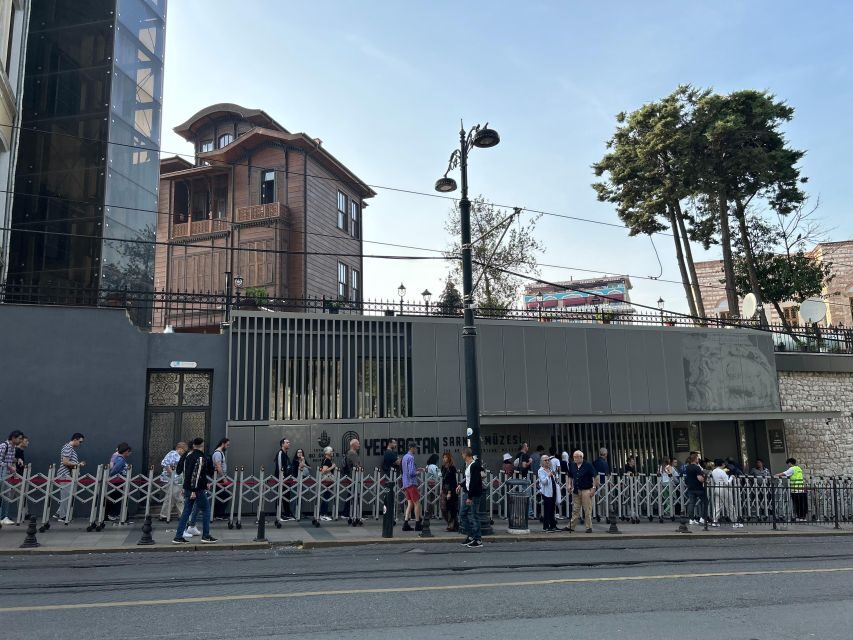
The Basilica Cistern is one of those Istanbul sights where demand is high and lines can get long. The big value of this ticket is simple: you spend less time waiting for entry and more time actually looking up, around, and down at the water and columns.
With online ticket entry and a dedicated fast-track setup, you should be able to avoid (or at least greatly reduce) the worst of the queue. Many people comment on the time savings, with reports that it can cut the wait by a couple hours compared to buying tickets in person during peak times.
That matters because Basilica Cistern visits are short by nature. Even though you can stay inside as long as you want, most people end up walking the full route in around 30–45 minutes. If you arrive with a long ticket line hanging over your morning or afternoon, it’s easy to feel rushed. With fast-track entry, you keep more control over your pacing and photo timing.
Practical take: if you have only a day or two in Istanbul, this is a smart “protect my time” purchase. If you’ve got a flexible schedule and you don’t mind waiting, you might decide to skip the extra cost.
You can also read our reviews of more guided tours in Istanbul



Smartphone audio guide in 11 languages: your best move before you descend
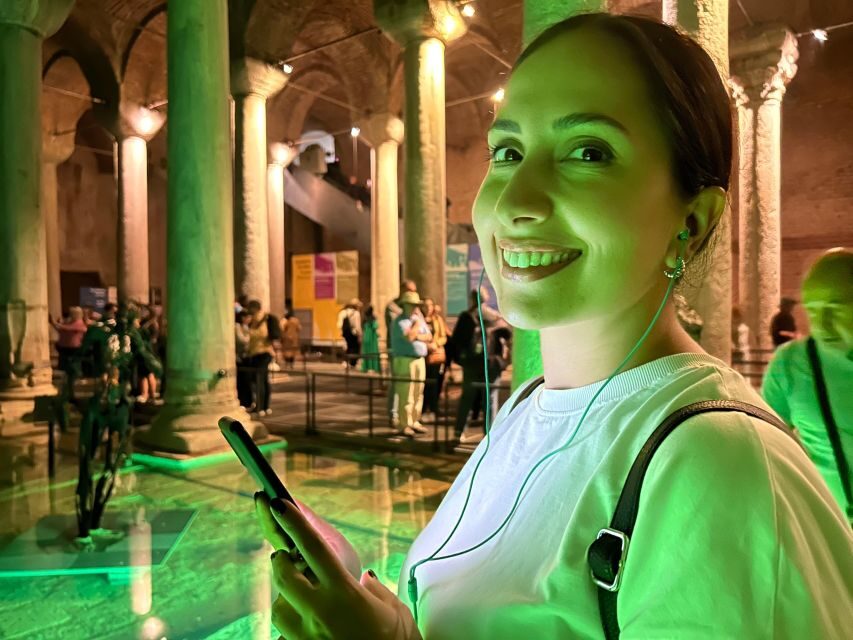
The audio guide is included and runs on your phone. That’s a great match for Basilica Cistern because it’s self-paced. You can pause for photos, wait for a gap in the crowd, and then continue when you’re ready.
Here’s what you need to make it work smoothly:
- Bring headphones. The app is phone-based, and you’ll want to hear it clearly over the ambient noise.
- Keep your smartphone charged. You’re going underground and moving around, so you’ll be using the screen and audio.
- Do the download before you go. The venue has limited internet access, and you may not get service once you’re inside.
The instruction set you’ll get by email emphasizes downloading ahead of time. I strongly recommend doing it on Wi-Fi before leaving your hotel, then testing playback once you’re ready. It’s an easy way to avoid the most common frustration: standing among the columns while your phone just sits there silently.
Language coverage is wide: English, German, French, Italian, Spanish, Portuguese, Japanese, Korean, Chinese, Russian, Romanian, and Turkish. So even if your group has different comfort levels, you can still keep everyone on the same visit without splitting up.
If you like context as you travel, the audio guide is the feature that turns the cistern from a photo stop into a real “I understand what I’m seeing” experience. It explains the Byzantine story behind the reservoir space and helps connect the art details to the bigger picture.
Inside the cistern: columns, water reflections, and the Medusa heads
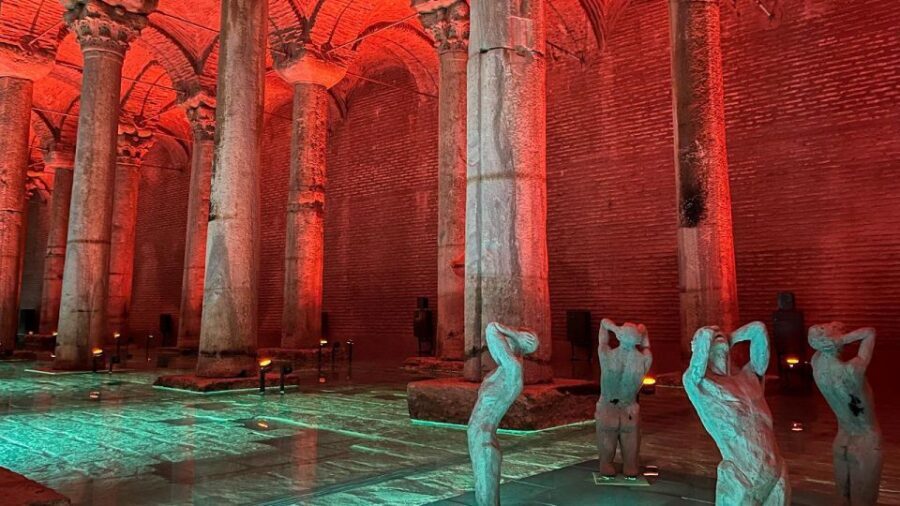
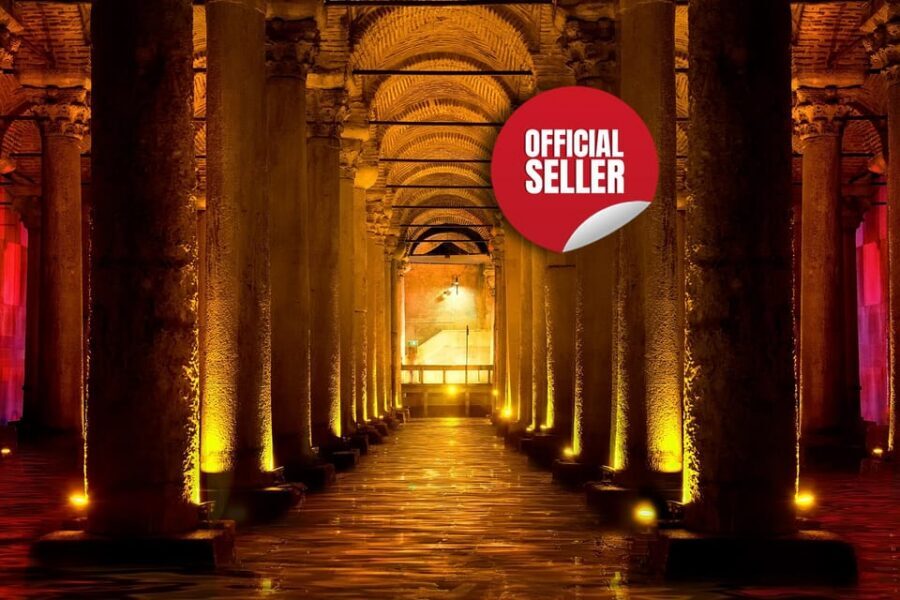
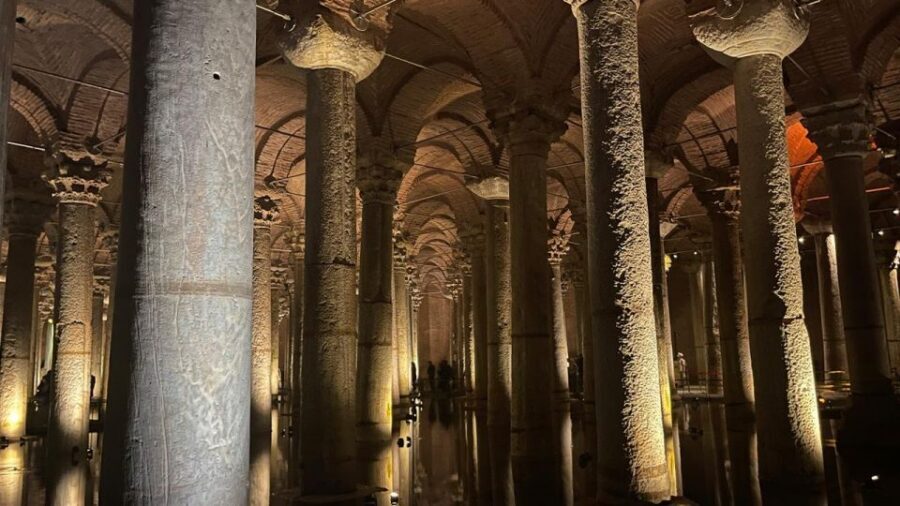
Down the stairs, the Basilica Cistern feels like stepping into a different planet. You’re beneath Istanbul’s streets, surrounded by long rows of columns and a low, theatrical light setup designed for the space.
What makes it memorable is how your eyes adjust. At first, you notice the scale: the height of the columns, the symmetry of the walkways, and the water surface stretching through the floor. Then you start seeing details—architectural patterns on the columns and the way the lighting changes as you move.
The audio guide adds value here by pointing out what you’re looking at, instead of leaving you to guess. It also helps you catch the key highlight: the Medusa heads.
You’ll see these carvings used as part of the cistern’s interior arrangement. Even if you’ve seen photos before, they look different in person—less like an image and more like a physical artifact sitting in the water-shadow world of the cistern. They’re also a strong photo target because you can frame them with the columns and the reflections.
One more practical note: lighting in the cistern can shift during your visit. Some people note that the lights can shut down briefly, which can slow you down if you’re mid-step. If you’re planning careful shots, it helps to keep one eye on your footing and one eye on the shot.
How long to plan, and when to arrive for the best visit
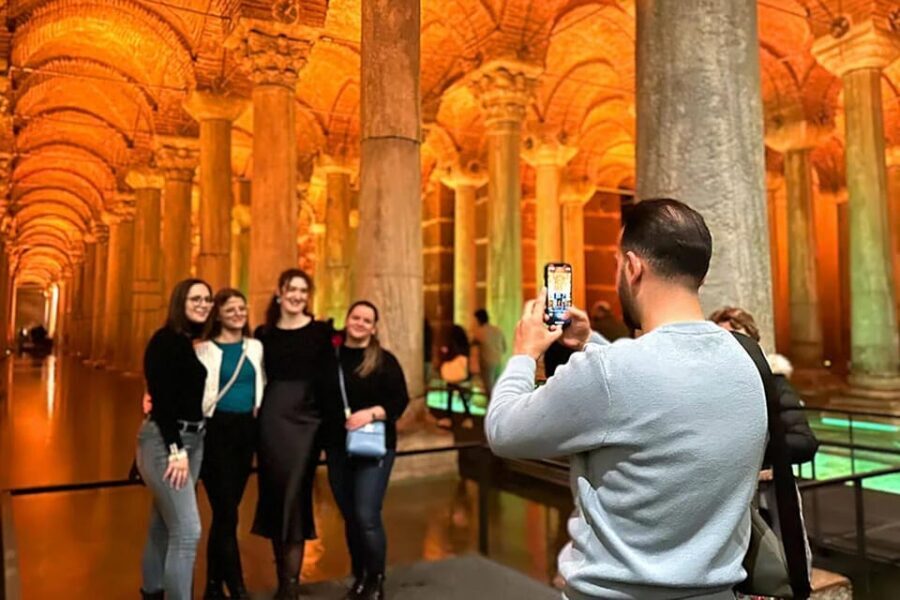
Most people keep the Basilica Cistern visit tight, around 30–45 minutes, especially if they download the audio and follow the main route without wandering off-script. That’s why entrance speed matters. If your entry is slow, you burn your limited time before you even start seeing.
A smart strategy is to arrive early, ideally right near opening. When you do, you often get a calmer first segment. That’s when you can walk in with space around you and take photos without constant foot traffic crossing your frame.
Comfort tip: wear shoes that can handle slick stone. One review mentioned a slip and accident, which is a reminder that the floor can be slippery. Slow down on the stairs and the wet sections, especially if you’re wearing sneakers with questionable grip.
Also, keep your expectations realistic: the cistern doesn’t “change” in the way an art museum does. You’re seeing the same architectural room from slightly different angles. The experience is about atmosphere, scale, and details—so it’s worth planning to enjoy it slowly but not endlessly.
Hagia Sophia add-on: worth pairing on the same day
This experience can include a Hagia Sophia skip-the-line ticket if you select that option. If you’re doing both on the same Istanbul day, pairing them can save time because you avoid repeating the ticket-buying hassle.
One helpful way to think about it: Basilica Cistern is an underground architectural stop. Hagia Sophia is the big above-ground “wow” with the dome and iconic interior spaces. Put together, they give you two different sides of Istanbul’s story—water engineering underground, and imperial scale above.
If you choose the add-on, make sure you don’t overload your day. Both sites are popular, and you’ll be doing a lot of walking. A good rhythm is to do cistern first if you want a quieter start, then move up to Hagia Sophia later when the day is fuller.
You can also read our reviews of more tours and experiences in Istanbul


Price and value: is $44 per person a good deal?
At $44 per person, this isn’t a “cheap attraction.” Some people feel the price is high, especially because the cistern visit can feel short. That’s a fair point: if you’re paying for convenience and you don’t actually value time, you may not feel great about the cost.
But the value math changes depending on your situation:
- If you’re on a short trip and want to protect your schedule, fast-track entry can be worth it because you avoid a long line.
- If you’re visiting during busy hours, the difference between waiting and going in fast becomes more dramatic.
- If you’ll actually use the audio guide (headphones ready, download done), you’re getting more than just admission.
Think of it like this: you’re not paying for a live guided tour. You’re paying for skipping the queue and getting an audio explanation that makes the experience easier to follow.
A balanced recommendation from me: book it if you have limited time or you hate waiting. Skip it if you’re staying several days and you can comfortably absorb some waiting for tickets at a relaxed pace.
Who this works best for (and who should pass)
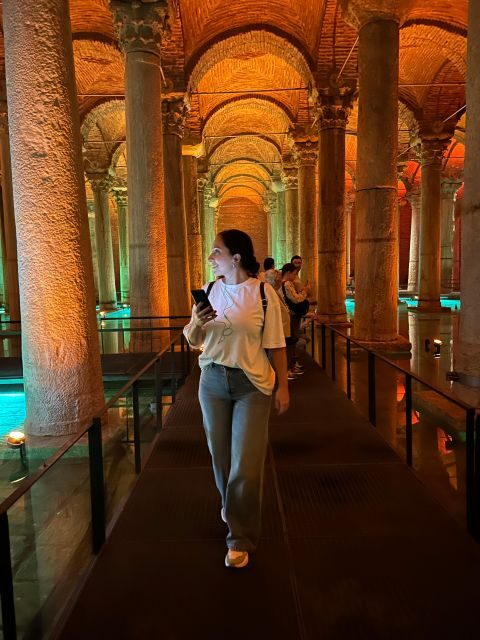
This ticket suits you if you want a smooth, self-paced experience with less queue pressure. It’s also ideal if your group includes people who don’t want to stay with a fixed tour group schedule.
It may not fit as well if:
- You’re expecting a guide walking with you through the cistern in real time.
- You’re not comfortable relying on a smartphone audio app.
- You can’t download the audio content ahead of time (because limited internet inside can cut you off).
If you’re a photo person, it also helps. The fast entry lets you spend more time at the best angles and around the Medusa head spot without feeling like the clock is chasing you.
Should you book this Basilica Cistern fast-track ticket?
If you want a practical Istanbul win, I’d book it. The combination of fast-track entry and a built-in 11-language audio guide is exactly what you want for a high-demand, self-paced attraction.
I’d pause only if you’re on a very long Istanbul trip with time to spare, or if you know you’ll struggle with phone setup (no headphones, low battery, or no chance to download before you go). In those cases, you might prefer standard entry and accept a slower start.
FAQ
FAQ
How do I get the tickets for the Basilica Cistern?
You receive your QR code ticket directly from the supplier Cosmic Tickets after 6 PM the day before your visit. If you book on the same day, the tickets are sent immediately.
Is the skip-the-line ticket valid only for a specific time?
No. The skip-the-line ticket is valid all day, as long as you visit during the official opening hours.
What languages are available in the audio guide?
The audio guide app is available in English, German, French, Italian, Spanish, Portuguese, Japanese, Korean, Chinese, Russian, Romanian, and Turkish.
Do I need headphones for the audio guide?
Yes. You should bring headphones to listen to the audio guide on your smartphone.
Will the audio guide work inside the cistern?
You may have limited internet access at the venue, so you should download the audio guide before going. Once underground, you can’t count on signal.
Is Hagia Sophia included or optional?
Hagia Sophia skip-the-line entry with all-day validity is included only if you select that option during booking.