REVIEW · PAMUKKALE HOT SPRINGS
From Selcuk/Kusadasi/Izmir: Pamukkale Full-Day Tour
Book on GetYourGuide →Operated by Crowded House Tours · Bookable on GetYourGuide
White cliffs meet Roman ghosts.
This full-day outing pairs Pamukkale’s famous warm travertines with Hierapolis, a UNESCO World Heritage site packed with ruins you can actually place in context. You’ll go from guided history and big views down to the surreal white terraces fed by mineral-rich thermal water.
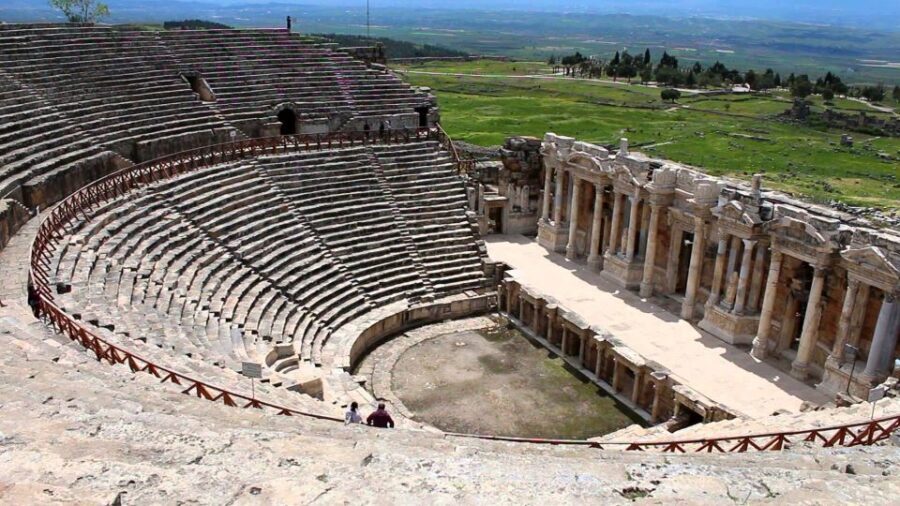
I like how the tour handles the headache parts: hotel pickup/drop-off and the “don’t worry about tickets” approach for the main sites. And once you’re at Hierapolis, the format is great for first-timers because you see the big anchors like the Theatre, the Apollo area, and the Necropolis instead of wandering blind.
The main thing to plan around is time and timing. You might feel the day is long thanks to bus time (especially if you’re coming from Izmir), and Cleopatra’s Pool may be closed depending on renovation schedules.
In This Review
- Key things that make this tour worth your time
- From Selcuk and Kusadasi to Pamukkale: the long-day logistics that matter
- Hierapolis UNESCO ruins: how the Theatre, Apollo, and Necropolis fit together
- Pamukkale travertines and the warm terraces: what you should plan for on foot
- Cleopatra’s Pool and the Roman Bath museum: optional fun with a timing risk
- Included lunch in Pamukkale: good value, but watch the drinks
- Tickets, skip-the-line convenience, and why this tour can feel easy
- The Turkish handcraft stop (and the onyx factor): interesting or distracting?
- Who this tour fits best (and who should consider alternatives)
- Should you book this Pamukkale full-day tour?
- FAQ
- How long is the Pamukkale full-day tour?
- Where do I get picked up, and how does pickup work?
- Is lunch included?
- Are entrance tickets included?
- Is Cleopatra’s Pool included, and can I swim there?
- What languages are the guides?
- What should I bring with me?
- Can I cancel for a full refund?
Key things that make this tour worth your time
- Guides with names like Tijen, Yigit, and Guray can turn ruins into a story you can follow, not just stones to photograph.
- UNESCO Hierapolis is the day’s backbone, with stops like the Necropolis, Theatre, and major gates.
- Pamukkale’s travertines run on warm water year-round (around 35°C), so it’s a place that feels alive even when you’re standing still.
- Cleopatra’s Pool is optional but not guaranteed, since it can be closed for renovation on your dates.
- Lunch in Pamukkale is included, which keeps the day from turning into an expensive scavenger hunt for food.
- There’s a Turkish handcraft stop (often tied to onyx), which can be interesting or a sales-y detour, depending on your taste.
From Selcuk and Kusadasi to Pamukkale: the long-day logistics that matter
This is a serious full-day plan: you’re looking at 11–13 hours door-to-door. The big benefit is that you don’t have to research bus schedules, ticket timing, or how to connect ruins to the hot springs. The tradeoff is simple: you’re spending real time on the road.
If you’re starting in Selcuk or Kusadasi, the drive is usually more manageable. If you’re starting in Izmir, expect the day to feel stretched—some departures build in multiple pickup stops, and the drive time can run long both ways. One review summed up the vibe well: you may sit on the bus a while before things even start moving.
What I’d do: pack this like a day trip that includes commuting, not just sightseeing. Bring a light snack for the road (lunch is included, but drinks usually aren’t), and plan your energy for two main zones: Hierapolis ruins, then Pamukkale terraces.
You can also read our reviews of more tours and experiences in Pamukkale Hot Springs
Hierapolis UNESCO ruins: how the Theatre, Apollo, and Necropolis fit together
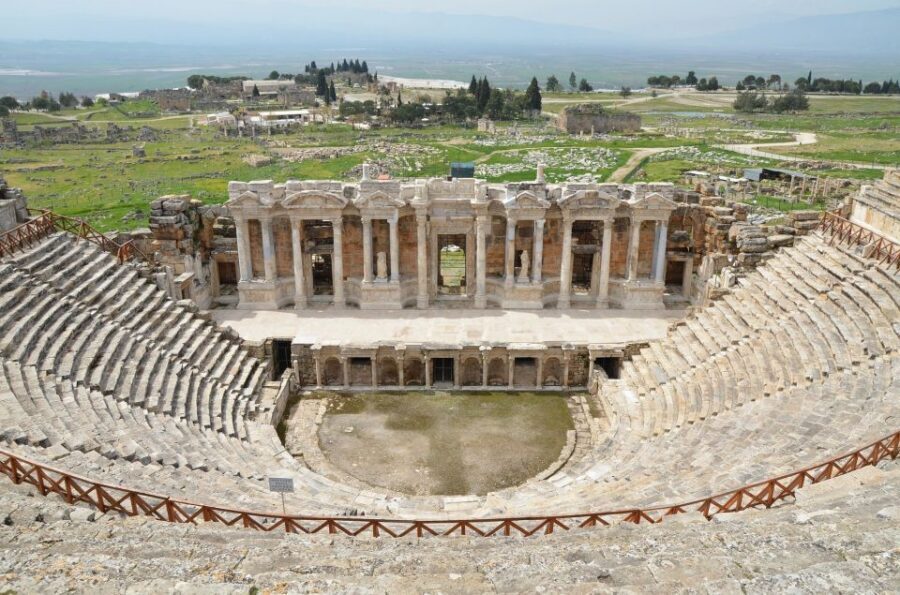
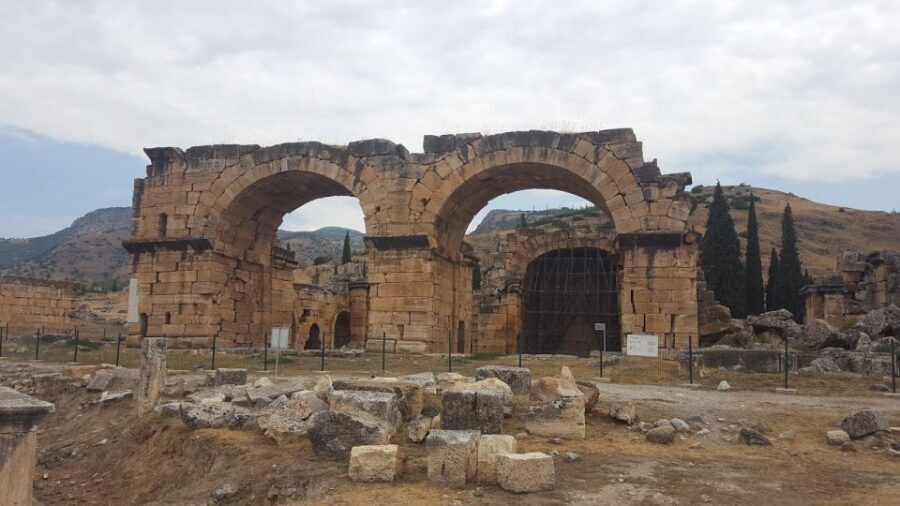
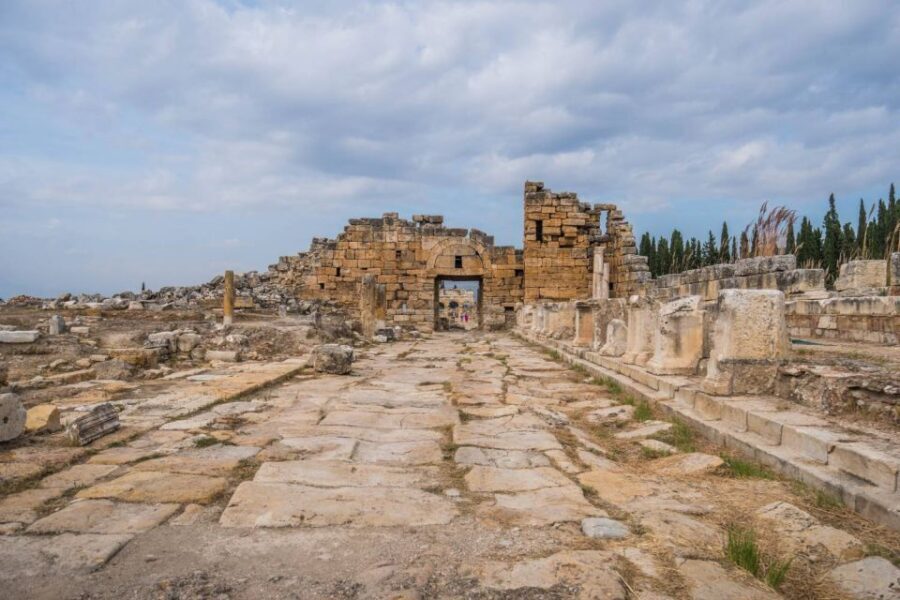
Hierapolis isn’t one ruin. It’s a whole sacred city spread across a plateau, and the guide format helps you see the logic. You’ll get the big picture first, then the specific sites make more sense when you connect them in your head.
The Necropolis (the cemetery area) is one of the standout parts of the site. It’s enormous, and even if you’re not a history superfan, the scale gives you a strong sense of how major this city was. You’ll also see major Roman-era and later landmarks such as the Theatre, the Temple of Apollo, the Gate of Domitian, a Roman bath (noted as a museum stop with separate entry), the main street, and the Byzantium Gate.
A key value of going with a guide here is pacing. Hierapolis can feel small at first glance, but it rewards attention when someone points out what you’re looking at—how the city was laid out, what each area was for, and why those gates still matter even after all this time. Guides like Tijen, Yigit, Guray, and Muharrem (names you may hear on different dates) are the kind who also help you hit good photo angles without turning the day into a frantic sprint.
One practical note: there can be opportunities for extra paid transport within the site (like golf-cart style rides), and if you want that, it’s smart to ask how it works before you reach the relevant spot. Otherwise, you can lose a few minutes sorting it out on arrival.
Pamukkale travertines and the warm terraces: what you should plan for on foot
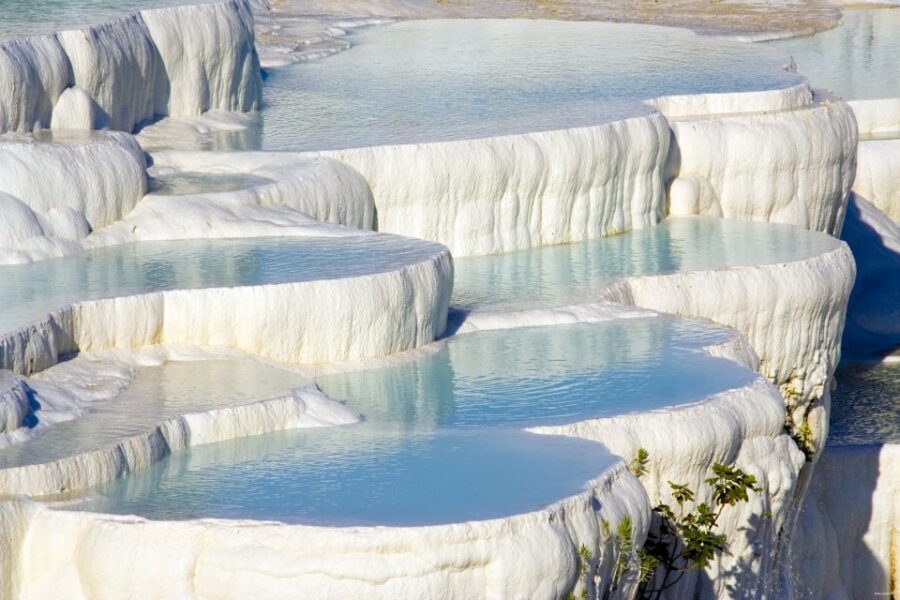
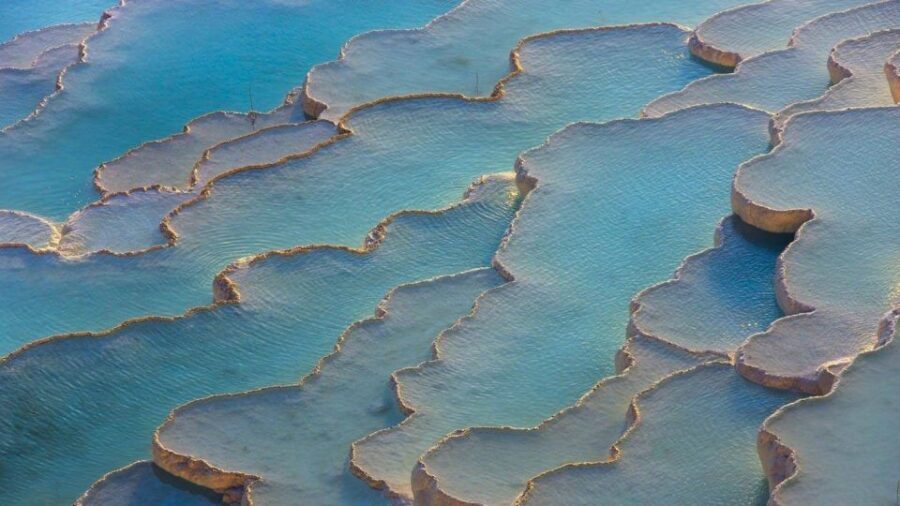
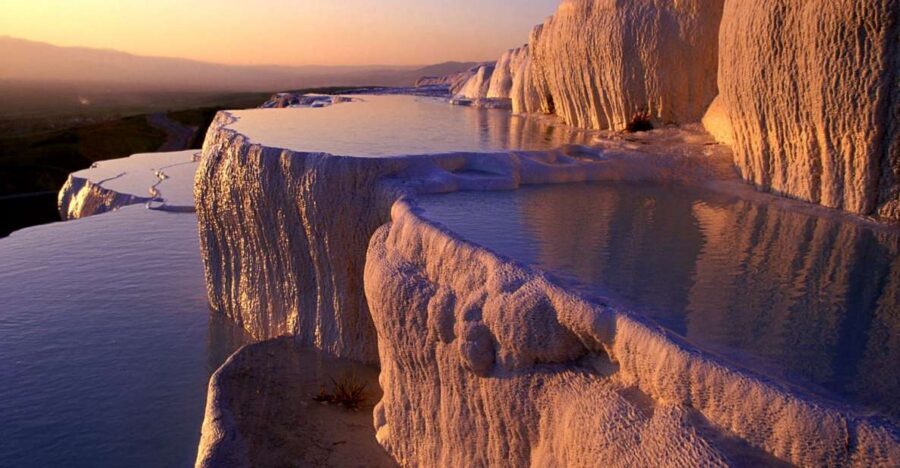
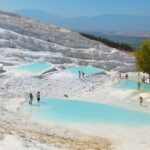
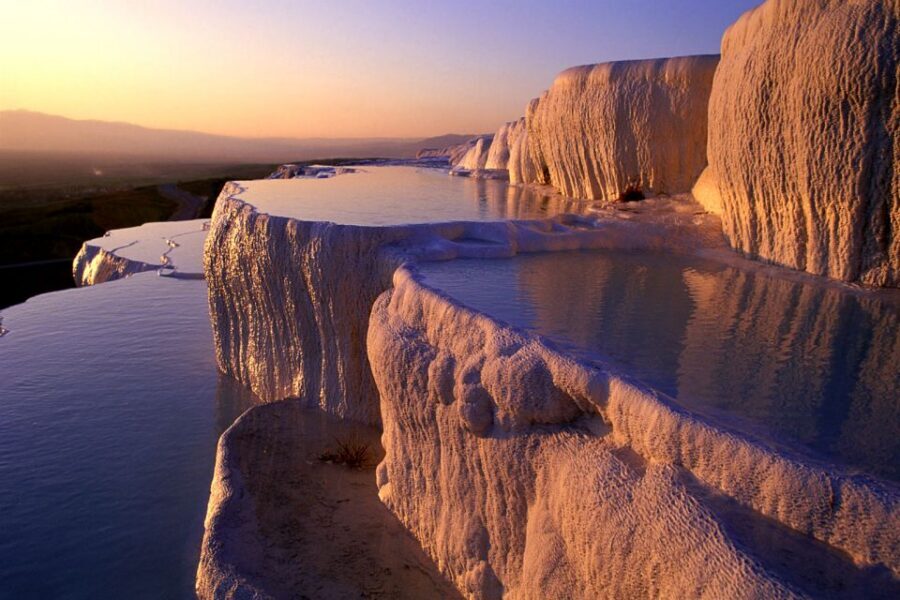
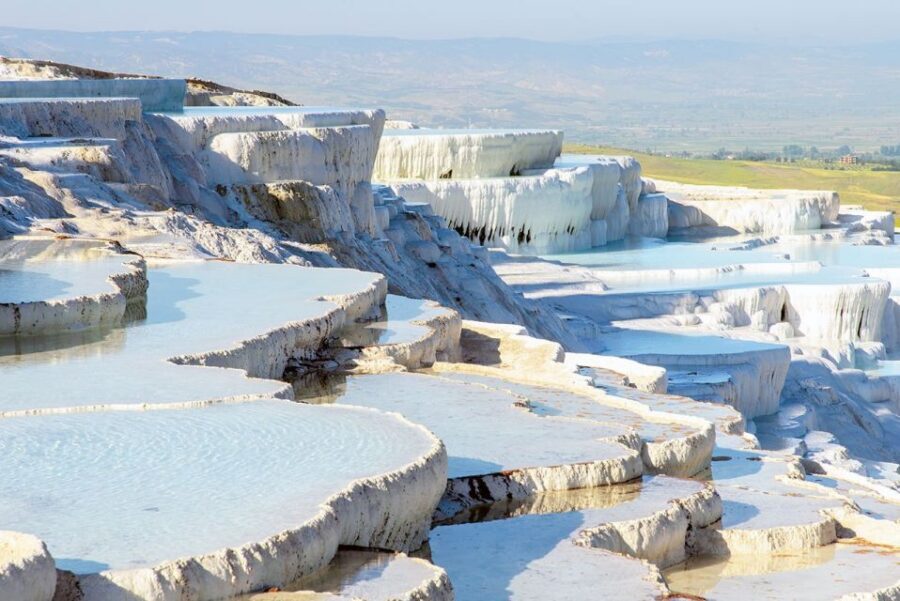
Once you leave the ruins, Pamukkale hits you with a totally different texture. The white terraces aren’t paint or plaster—they’re the result of calcium-rich mineral water flowing and cooling over time. You’ll walk toward areas where the warm water feeds those cascading-looking steps.
The temperature is part of the appeal: the water sits around 35°C year-round. That doesn’t mean you’ll want to stand in it the whole time, but it does mean the site feels comfortable to experience even when the air is cooler. It’s also why the terraces stay a “living” place instead of just a dry viewpoint.
A reality check: the ground can be hard and sharp, so flip-flops alone may not cut it. I strongly suggest you wear shoes that can handle rough stone—and ideally have some grip. Pack towel + swimwear if you plan to step into any thermal areas, and bring a hat. You’ll want shade because the terraces can be bright and exposed.
Also, don’t expect every “pool-looking” spot to be equally walkable. Some areas are deeper or more crowded than others, and the number of step-in areas can vary depending on water flow at the time you go. The good news: even without swimming, the travertines are still the main event.
Cleopatra’s Pool and the Roman Bath museum: optional fun with a timing risk
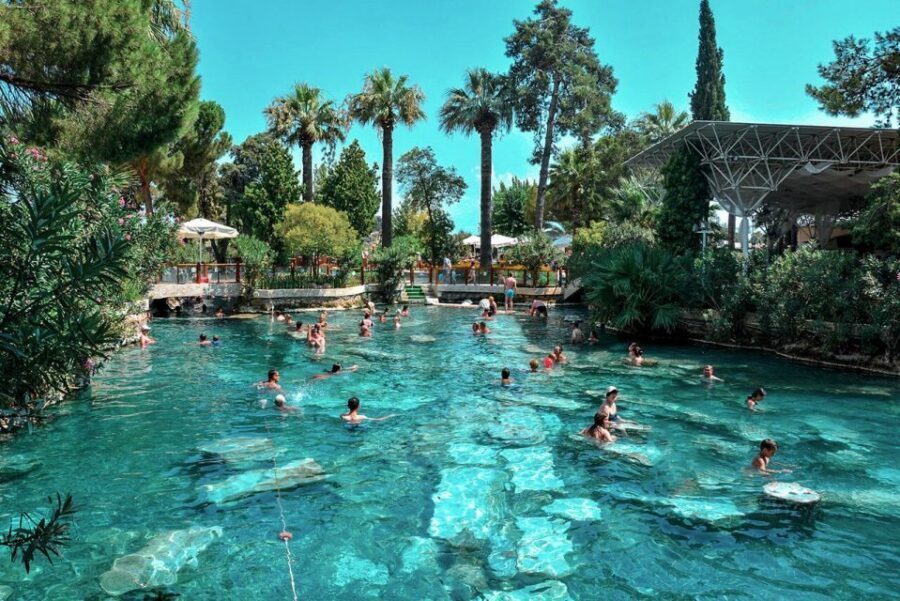
This tour offers an optional chance to swim in Cleopatra’s Pool. The catch is baked in: the pool can be closed temporarily for renovation, and it’s specifically flagged as under renovation in the tour info. So you should treat it as a bonus, not a guarantee.
If Cleopatra’s Pool is open on your date, you’ll likely get some free time to try it. If it’s closed, your day won’t collapse—you’ll still have the travertines—but you should adjust expectations. Some people were disappointed when the swimming time ended up feeling limited or when water levels were lower than hoped.
Then there’s the Roman Bath, now operating as a museum-style stop with separate entry. Entrance fees for the Roman Bath aren’t included, so budget a little extra if you want to go inside. If you’re the type who likes to trade photos for a bit of indoor context, it’s a worthwhile add-on. If you prefer the outdoors only, you can skip it and focus on walking the terraces and ruins.
Included lunch in Pamukkale: good value, but watch the drinks
Lunch in Pamukkale is included, and that matters because it keeps the day efficient. The meal is described as a restaurant lunch, and from the experience pattern here, it tends to be filling rather than a tiny snack that disappears in one minute.
A practical point: drinks are not included. People also note that water may not be part of the meal, so if you’re prone to getting dry in heat or sun, plan to buy water. Also, if you’re sensitive to salty foods after a lot of walking, consider grabbing a bit of water before you sit down to eat.
If you’re trying to keep your day comfortable, lunch is also your reset. Use that short break to check your feet, rehydrate, and decide where you’ll spend your free time around Pamukkale.




Tickets, skip-the-line convenience, and why this tour can feel easy
A big reason this tour scores well is simple: entrance tickets to the main sites are handled and you skip the ticket line. That means less queue stress and fewer chances to lose time figuring out where to buy what.
This is the kind of “value” that isn’t flashy. It’s the difference between:
- a day where you arrive, follow your guide, and keep moving, versus
- a day where you’re juggling receipts, entrance fees, and the risk of missing your next time window.
You still have a couple of paid items depending on your choices: Cleopatra’s Pool and the Roman Bath museum entrance fees are not included. But for most people, the combination of guided UNESCO ruins + Pamukkale terraces + lunch + transport is the sweet spot for a first visit.
The Turkish handcraft stop (and the onyx factor): interesting or distracting?
Part of the plan includes a chance to look at Turkish traditional handcrafts. In practice, this often turns into an onyx-related workshop or factory-type visit. For some people, it’s a fun contrast—seeing how a local material is made and used.
For others, it can feel like a sales detour. Expect some attention from staff once you walk in. If you’re not in the mood for shopping pressure, go in with a simple mindset: look, take a minute if something catches your eye, and then keep your time expectations realistic.
I’d treat it like a short cultural pause, not a must-see highlight. The core value of the day is still Hierapolis + Pamukkale.
Who this tour fits best (and who should consider alternatives)
This tour is a strong pick if:
- it’s your first time in the area and you want the big UNESCO sites handled with a guide,
- you’d rather pay once and show up than piece together buses and entry tickets,
- you want a single-day plan that covers both history and the thermal terraces.
It’s less ideal if:
- you hate long bus days (Izmir can make this feel like a grind),
- you’re traveling very slowly and want lots of time to roam on your own without a schedule,
- the idea of swimming in Cleopatra’s Pool is the reason you booked—because renovation closures can wipe that plan.
If you’re optimizing for comfort, ask yourself how you handle 11–13 hours with multiple stops. If you’re okay with that tradeoff, you’ll probably feel it was worth it once you reach the white terraces.
Should you book this Pamukkale full-day tour?
I’d book it if you want a guided, low-stress way to see Hierapolis and Pamukkale in one day and you’re okay with the commute. The best parts are the organized flow: the guided ruins that make sense, then the thermal terraces that feel almost unreal.
Don’t book it only for Cleopatra’s Pool swimming. Since it can be closed for renovation, treat that as a bonus. And if you’re coming from Izmir, mentally budget for the long ride—this tour is for people who can handle a full, packed day.
FAQ
How long is the Pamukkale full-day tour?
The duration is listed as 11 to 13 hours.
Where do I get picked up, and how does pickup work?
You get hotel pickup and drop-off. You’ll be ready at your hotel (or the arranged meeting point) and should be there about 5 minutes before the departure time. The exact pickup time and place should be confirmed one day prior.
Is lunch included?
Yes. A restaurant lunch in Pamukkale is included.
Are entrance tickets included?
Entrance tickets to the sites are taken care of, with the exception of Cleopatra’s Pool and the Roman Bath museum. Those two have separate entrance fees.
Is Cleopatra’s Pool included, and can I swim there?
Swimming in Cleopatra’s Pool is optional, but the tour notes that Cleopatra’s Pool is under renovation and closed temporarily.
What languages are the guides?
The guide is available in English or Spanish.
What should I bring with me?
Bring a hat, swimwear, a towel, and your passport or ID card (a copy is accepted).
Can I cancel for a full refund?
Yes. You can cancel up to 24 hours in advance for a full refund.