REVIEW · CAPPADOCIA
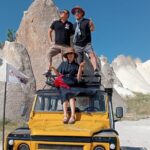
Goreme: Cappadocia Jeep Safari
Book on GetYourGuide →Operated by Stoneland Travel Cappadocia Turkey · Bookable on GetYourGuide
Jeep rides in Cappadocia move fast. This 2-hour Goreme jeep safari in Central Anatolia lets you bounce between valleys where cave homes, Roman-era details, and whitewashed pigeon dwellings explain how people shaped this soft rock world.
I love the quick hit of the Pigeon Valley area and learning why some caves were painted white—to attract birds for their valuable droppings. I also love the Ortahisar stop, with its restored castle-like rock, a staircase to the top, and big panoramas over the fairy chimneys of Hallacdere and the snowy peak of Mount Erciyes.
The main drawback is simple: time. With no included food and just two hours on the clock, you’ll want to manage snacks and water so each valley pull-off feels unrushed instead of stop-and-sprint.
In This Review
- Key things to notice on this Goreme Jeep Safari
- Why this jeep safari works in Cappadocia (even if you’re short on time)
- The route rhythm: hotel pickup, valley stops, and fast photo angles
- Pigeon Valley (Guvercinlik Vadisi): the story behind the white caves
- Ortahisar valley and Ortahisar Castle: viewpoint time you can actually use
- Stirrup Valley (between Ortahisar and Ürgüp): springs, names, and slow curiosity
- Mustafa Pasa Village: Sinasos history, tuff geology, and a cliff of pigeon houses
- Love Valley: getting the reputation before you judge the view
- Red Valley timing: a possible 5 km walk and the sunset edge
- What $165 per person buys you (and when it’s a good value)
- Who this Goreme jeep safari suits best
- Should you book the Goreme: Cappadocia Jeep Safari?
- FAQ
- How long is the Cappadocia Jeep Safari?
- What does the tour cost?
- What stops are included?
- Is food and drinks included?
- What’s included in the price?
- Do I need a passport?
- Does the tour include free cancellation?
- Can I reserve and pay later?
- Is there any hiking time?
Key things to notice on this Goreme Jeep Safari
- White-painted cave dwellings in Pigeon Valley: the bird-attracting reason is part of the story you’ll hear.
- Ortahisar’s castle rock + staircase access: the viewpoint matters, and you’ll understand what you’re looking at.
- Hallacdere fairy chimneys + Mount Erciyes view: the best photos come from the right angle.
- Stirrup Stream mineral springs: you’ll learn the local health lore tied to the three springs.
- Mustafa Pasa Village (former Sinasos): you’ll connect geology and human history, including pigeon houses on a white tuff cliff.
- Love Valley reputation: you’ll get the background so the stop makes sense, not just looks cool.
Why this jeep safari works in Cappadocia (even if you’re short on time)
Cappadocia can swallow a whole day fast. This tour gives you the opposite: a tight loop that mixes geology, village history, and valley viewpoints in a short 2-hour window.
The value here isn’t an all-day trek. It’s the combination of a driver-guide who can put labels on what you see and transportation that gets you out to multiple areas without long self-planning.
You can also read our reviews of more tours and experiences in Cappadocia
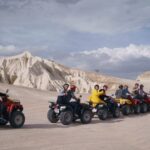
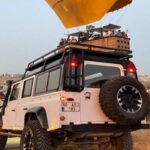
The route rhythm: hotel pickup, valley stops, and fast photo angles
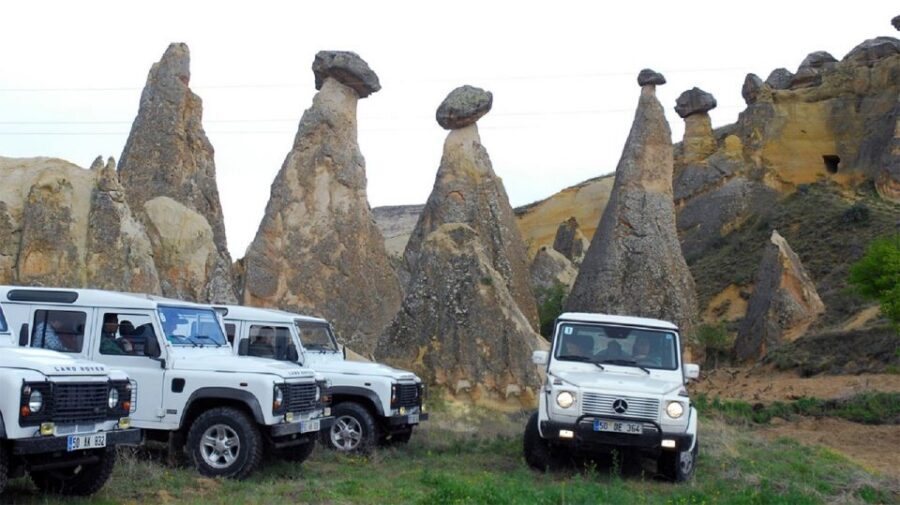
You start with hotel pickup and drop-off, so you’re not stuck figuring out rides between Göreme-area valleys. The plan is built for motion: you’ll spend most of your time at lookouts and small stop-ins rather than long, slow walks.
You’ll also skip the ticket line, which matters in Cappadocia. When you’re only here for two hours, minutes feel expensive, so any line avoidance helps your actual viewing time.
Pigeon Valley (Guvercinlik Vadisi): the story behind the white caves
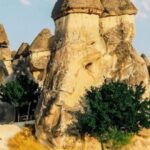
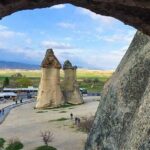
Pigeon Valley is where Cappadocia history gets practical. In this area, some cave dwellings were painted white to attract birds—because those droppings were valuable.
This stop also connects to a bigger theme you’ll hear throughout the region: people used the same rock formations for different purposes. The fairy chimneys around Uçhisar—on the west, east, and north sides—were hollowed out and used as graves during the Roman period, which gives the valley a layered feel beyond just views.
I like that the details here are specific. You’re not just “in a valley.” You’re learning why these caves look the way they do and what the names used to be—Pigeon Valley’s old name was Babayan, and it’s now associated with Ibrahimpasa.
Tip for your photos: look for the contrast between the white-painted cave areas and the darker tuff around them. The bird-related detail makes the scene make more sense once you see how the color changes the reading of the rock.
Ortahisar valley and Ortahisar Castle: viewpoint time you can actually use
Ortahisar has a reputation for being friendly and walkable, with narrow streets, stone houses, and churches. Even from a jeep, you’ll feel the town’s “human scale” compared to the bigger fairytale panoramas people chase.
The headline feature is the castle-like rock formation after which Ortahisar is named. What I like here is that it’s not just a view from afar: the peak is restored and accessible by a staircase, which turns it into a real photo moment rather than a quick stop.
From the top, you get a powerful overview. You can see fairy chimneys of Hallacdere and—on the right day—the snowy peak of Mount Erciyes.
Consideration: if you don’t love stairs, plan for short-but-steep effort. The tour duration is tight, so you’ll want to decide early whether you’re going up or staying at the lower viewpoints.
Stirrup Valley (between Ortahisar and Ürgüp): springs, names, and slow curiosity
Between Ortahisar and Ürgüp sits Stirrup Valley, and the tour uses it as a bridge between “big wow” scenery and grounded local details. You’ll hear about both natural and historical beauty here, which helps you stop treating the valleys like separate attractions.
A standout detail is Stirrup Stream running parallel to the valley. Along it are three springs, where natural mineral water emerges.
There’s also local lore attached to those springs: they’re said to help with recovery from digestion disorders and kidney diseases. I’d treat that as traditional belief rather than a medical guarantee, but it’s still interesting context for why people care about this spot.
How to enjoy this stop: slow down just enough to watch how the water and rock shapes look together. Even when you’re moving fast overall, Stirrup Valley is the place where a little patience makes the details click.

Mustafa Pasa Village: Sinasos history, tuff geology, and a cliff of pigeon houses
Mustafa Pasa Village is where the tour’s history lesson gains real physical proof. This was a former Greek town where “Rums” lived until 1924, and it was known as Sinasos by its Ottoman Greek residents.
What I find useful is that the name still lingers locally. Even today, many people still call it Sinasos, so the village doesn’t feel like a dead chapter—it feels like living memory in local speech.
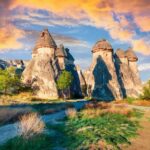
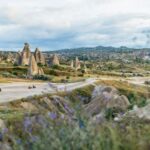
Then comes the geology. Millions of years ago, tuff formed from volcanic material: lava, ash, and mud. Over time, erosion shaped this soft stone into rock formations that look like they belong to a fantasy world.
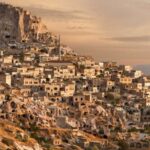
One of the most striking details described for this area is a high cliff of white tuff with thousands of pigeon houses. That pigeon connection loops back to Pigeon Valley—but here it’s on a bigger, more intense scale, and it ties the bird story to village life more directly.
Practical note: these areas can feel visually “busy,” so pick one landmark feature and let everything else become background. If you try to read every detail at once, you’ll miss the parts that actually make the place memorable.
Love Valley: getting the reputation before you judge the view
The tour doesn’t treat Love Valley as just a name. The goal is to help you understand the reputation, so when you’re there, the stop feels meaningful instead of random.
Because the tour is only two hours long, you won’t have time to research on your own or wander indefinitely. Instead, you’ll get context quickly, and then you can spend your time on what matters most to you: photos, viewpoints, and soaking in the valley atmosphere.
How to get more out of it: listen for the explanation, then compare what you’re told with what you can see. That quick back-and-forth is often where the “click” happens in Cappadocia.
Red Valley timing: a possible 5 km walk and the sunset edge
Red Valley gets its name from the colors of its rock, and it’s also known as a great spot to watch the sunset. The tour data notes that it’s possible to hike about 5 kilometers (roughly 3 miles) along the valley.
Here’s the honest reality for a jeep safari that lasts about two hours: if you want a proper 5 km walk, you’ll likely need to treat it as an add-on rather than the core plan. But even if you only get a short stretch, Red Valley’s color story is still worth catching.
If sunset timing lines up with your visit, this is where you’ll appreciate having moved through the valleys during daylight. Watching light change on tuff formations is part of what makes Cappadocia feel special, and Red Valley is one of the places where that effect gets described as natural color.
What $165 per person buys you (and when it’s a good value)
At $165 per person for a 2-hour tour, you’re paying for three things: local driving, a guide’s context, and convenience.
The included hotel pickup and drop-off is a big part of that value. If you tried to stitch together multiple valley stops on your own, you’d spend time coordinating rides and losing flexible viewing minutes.
The skip the ticket line benefit also contributes to value. When you’re in a tight schedule, shaving off small frictions can turn into more actual “time on site” for pictures and viewpoints.
Food and drinks are not included, though. For me, that’s a clear planning point: bring water. If you get hungry easily, grab a snack before you go, because the tour isn’t built around stopping for meals.
Who this Goreme jeep safari suits best
This is a strong option if you want variety without committing to a full day. You’ll get a mix of cave history (Pigeon Valley), a town viewpoint with stairs (Ortahisar), mineral springs lore (Stirrup Valley), village history tied to Greek community roots (Mustafa Pasa Village), and valley reputation context (Love Valley).
It’s also a good fit if you like photos but don’t want to spend your trip doing “photo scavenger hunting” alone. The route is structured so you can collect angles and details quickly, without wandering yourself into time trouble.
If you hate stairs, hate mineral-spring trivia stops, or you want long hikes as your main goal, you might feel the tour is too short for what you want. But if you’re open to quick stops and guided explanations, it’s a practical way to get a lot in less time.
Should you book the Goreme: Cappadocia Jeep Safari?
Book it if you like an efficient, view-heavy route and you want the “why” behind what you see—especially the Pigeon Valley bird story, the Ortahisar castle viewpoint, and the Mustafa Pasa Village history tied to Sinasos and tuff geology.
Skip it if you’re expecting a relaxed half-day with no time pressure, or if you’re hoping for lots of hiking length during the 2-hour window. Also, plan for snacks and water since food and drinks aren’t included.
If you want a fast Cappadocia sampler that still includes meaningful details, this safari is one of those trips that can make your short visit feel longer—because you’ll leave with clearer context, not just photos.
FAQ
How long is the Cappadocia Jeep Safari?
It lasts 2 hours.
What does the tour cost?
The price is $165 per person.
What stops are included?
The highlights include Pigeon Valley, Ortahisar valley, Mustafa Pasa Village history, and the reputation of Love Valley.
Is food and drinks included?
No. Food and drinks are not included.
What’s included in the price?
A driver/guide is included, plus hotel pickup and drop-off. You also skip the ticket line.
Do I need a passport?
Yes, the activity lists a passport as what to bring.
Does the tour include free cancellation?
Yes. You can cancel up to 24 hours in advance for a full refund.
Can I reserve and pay later?
Yes. The tour offers reserve now & pay later.
Is there any hiking time?
The Red Valley area is described as possible to hike about 5 kilometers (about 3 miles) along the valley.