Clay time beats most souvenirs.
This short, hands-on class in Avanos is a real window into how Cappadocia’s pottery culture grew up around local clay. I like that you get wheel time with friendly instruction (often led by the workshop team like Davut and Hasan), and I like that you leave with a piece you personally shape to take home. The setting is low-pressure and practical, with a clean workshop and help on the moments that matter.
One thing to consider: the hands-on making can feel faster than you expect. Even if the overall experience is about 45 minutes, you may spend only part of that time at the wheel, then wait briefly for your pottery to dry enough to move.
In This Review
- Key Things I’d Plan Around
- Avanos Pottery: Why This Part of Cappadocia Matters
- Getting Oriented Fast: Where You Start and What Timing Feels Like
- What Happens Inside the Workshop (From Clay to a Finished Keepsake)
- The People Running It: Funny, Patient, and Focused on Your Result
- Making Something You’ll Actually Want to Keep
- Air-Conditioned Transfers and Group Size: Why It Feels Easy
- How to Plan for Drying, Packing, and Optional Firing
- The $13 Price: Value That Adds Up Fast
- Who Should Book This Workshop in Cappadocia?
- Should You Book This Avanos Pottery Making Class?
- FAQ
- How long is the pottery making experience?
- Where does the class start, and where does it end?
- Is transportation included?
- What’s included in the price?
- Can I get the pottery fired?
- Is free cancellation available?
Key Things I’d Plan Around
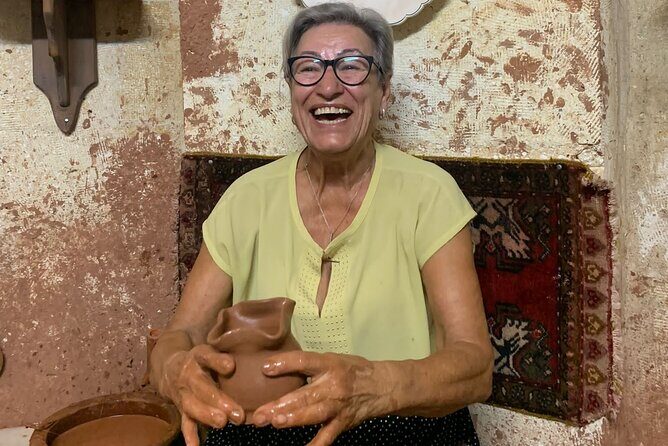
- Avanos pottery tradition by the Kızılırmak River: the clay story here isn’t a lecture, it’s in the materials and the routine.
- Small group, up to 4 people: the pace stays personal, not like a factory line.
- Wheel basics plus real help: instructors guide your hands, fix mistakes, and keep things fun.
- You can take your pottery home: typically air-dried, with packing help like bubble wrap mentioned by many.
- Optional firing takes extra time: if you want it fired, plan for a later timeline (5–10 days is mentioned).
- Photos and a souvenir-worthy result: you’ll get plenty of moments to document the process.
Avanos Pottery: Why This Part of Cappadocia Matters
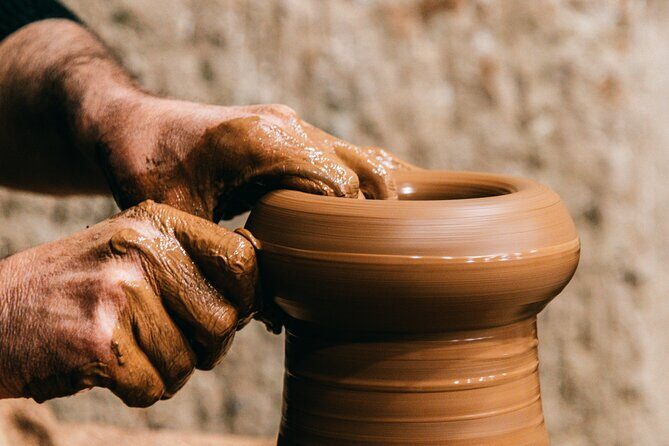
If you’re spending time in Cappadocia, you’ll notice the region isn’t just about caves and fairy chimneys. It’s also about crafts—especially pottery. Avanos is the “pottery place” people connect to immediately, because it sits along the Kızılırmak River and clay from the area has been used for centuries.
What makes this workshop appealing is that it treats pottery like a living skill, not a tourist act. You’re working with red clay, and you’re learning in a family-run workshop atmosphere where the craft gets passed along. That changes the feel of the experience. It’s not just about taking a class; it’s about understanding why the pottery matters to people who live here.
And yes, you’ll see ceramics for sale in the shop. But the best part is you’re not forced into buying anything. You can buy if you want, or you can focus on making your own piece that marks your visit.
You can also read our reviews of more historical tours in Goreme



Getting Oriented Fast: Where You Start and What Timing Feels Like
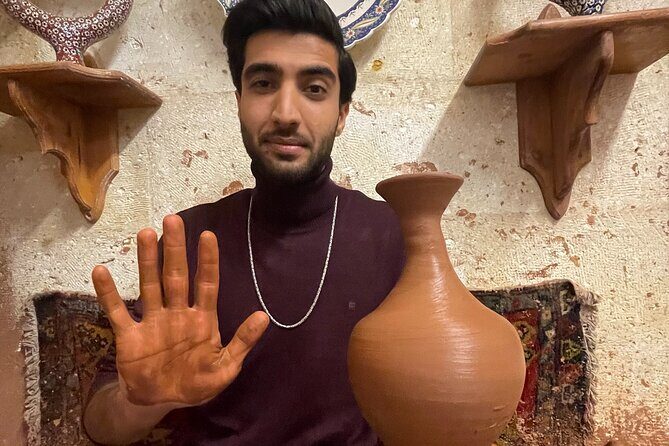
This experience centers on Avanos, not the cave zones of Goreme. Your meeting point is at the workshop in Avanos:
Avanos Pottery Workshop, Orta, Atatürk Cd. 92/A, 50500 Avanos/Nevşehir, Türkiye
The activity ends back at the meeting point, so you’re not dealing with an awkward “drop-off somewhere random” situation later.
The duration is listed at about 45 minutes. In real terms, that usually means a short intro, time at the wheel, and then a brief wait so your item is workable enough to take away. Some people find it feels closer to a quick, efficient session—around 20 minutes at the wheel—with extra time used for drying before you go.
So here’s my practical advice: don’t schedule this as a “race between flights” moment. Pick a time when you can relax afterward and handle the pottery safely. If you’re trying to squeeze it into a travel day, it can still work—but plan for it to be tighter than you’d expect.
What Happens Inside the Workshop (From Clay to a Finished Keepsake)
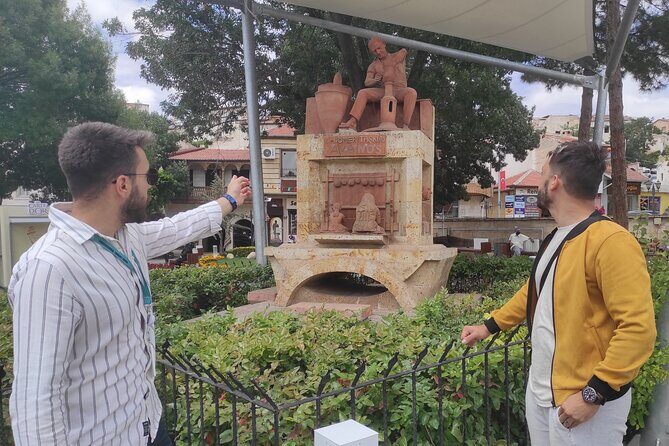
The flow is simple, and that’s part of the charm.
You start by getting set up in the workshop. Many classes like this can feel confusing if you’ve never touched clay before. Here, the approach is structured: you’ll get explanations and demonstrations, then guided hands-on practice.
Most people don’t need pottery experience. The workshop team helps with the technique so you can create something that looks good even if you start from zero. Reviews repeatedly highlight how instructors correct errors on the spot—so you’re not stuck staring at a lumpy lump of clay wondering what went wrong.
You’ll learn the basics of working on the potter’s wheel: shaping, smoothing, and pulling the form into what you chose to make. People mention making items like:
- a mug
- a bowl
- a vase (including decorative shapes)
The workshop also provides a practical setup for comfort. A lot of people mention protective clothing to keep things manageable. That matters because clay gets everywhere, and you’ll feel more relaxed when you know your clothes are covered.
At the end, you don’t just walk away with wet clay in your hands. You get a little time for it to firm up or dry enough to transport. That’s when your day plan starts to matter.
The People Running It: Funny, Patient, and Focused on Your Result
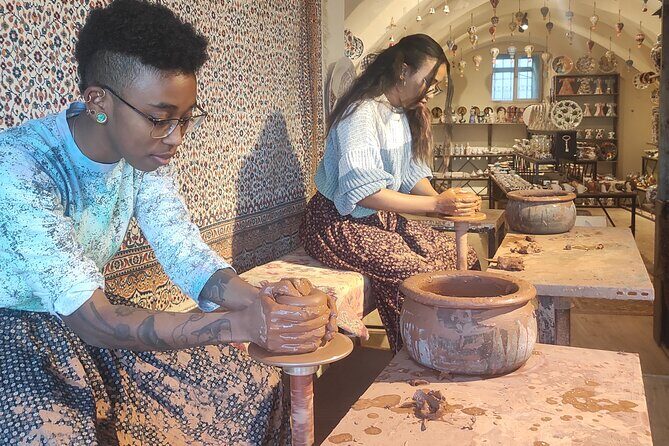
In a short class, your instructor makes or breaks the experience. The workshop team consistently gets praised for being upbeat and helpful. Names that show up often include Davut and Hasan (and in some cases Mustafa).
What’s important isn’t just the humor—though plenty of people say the instructors keep the class laughing. It’s the way the help is delivered:
- clear steps you can follow
- patience when your first attempt doesn’t match the plan
- hands-on assistance that keeps your piece from going sideways
One detail I really like: many people mention how the team helps with photos and memories. It’s a small thing, but it means you aren’t stuck asking a stranger to take pictures while you’re half-covered in clay.
Making Something You’ll Actually Want to Keep
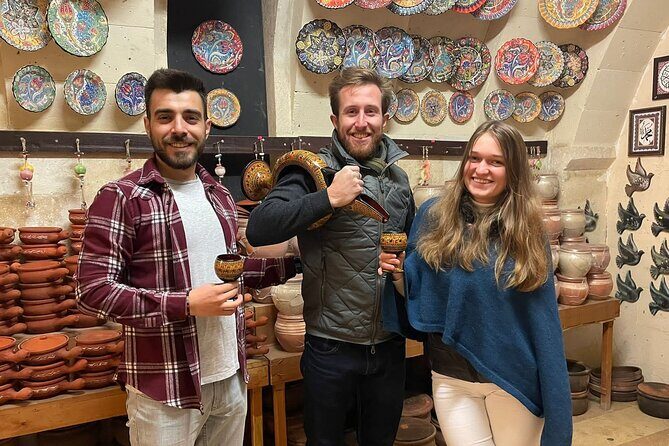
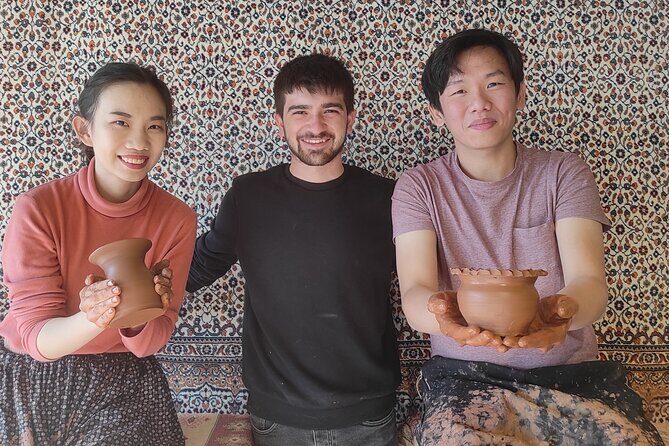
A lot of “craft experiences” end with a souvenir that looks like it was made by someone else, somewhere else, and then handed to you. This workshop aims for the opposite. You’ll create your own piece, and you get to choose what you make—at least within what the instructors guide you toward.
The value here is emotional as much as physical. When you shape a mug or vase yourself, you remember the feeling: the wheel turning, the resistance of clay, the moment your piece starts to take form. That’s why this is such a popular activity for couples, families, and solo travelers who want something tangible.
It also helps that the shop itself looks like a real business, not a staged showroom. You can browse ceramics across a range of prices, and you can compare the store pieces to what you made. That contrast gives you a quick “wow” moment about skill and craft.






Air-Conditioned Transfers and Group Size: Why It Feels Easy
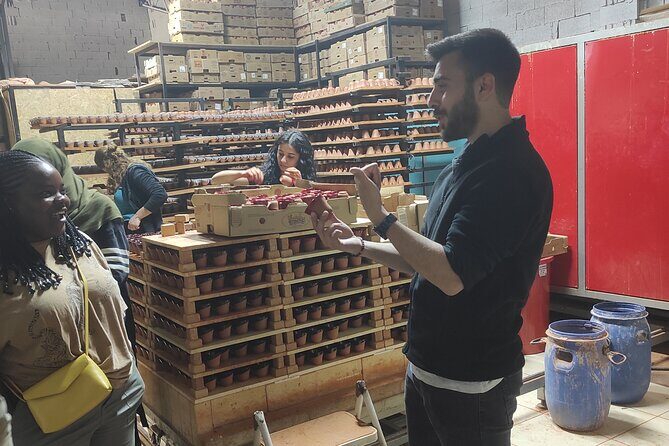
Even though the workshop is in Avanos, the tour experience is designed to be simple. Highlights include air-conditioned round transfers available, which is a big deal in this part of Turkey where summer heat can be real.
Private transportation isn’t included, so if you’re used to hiring your own driver, this might feel different. Still, the class is small (maximum 4 travelers), and the experience keeps moving at a comfortable pace.
Small group size is more than a nice-to-have. It means you’ll get attention when you need it. In a group of 4, the instructor can actually correct your form instead of giving tips like a broadcast message.
Also, the class is in English, so you’re not stuck translating pottery words in your head while the wheel spins.
How to Plan for Drying, Packing, and Optional Firing
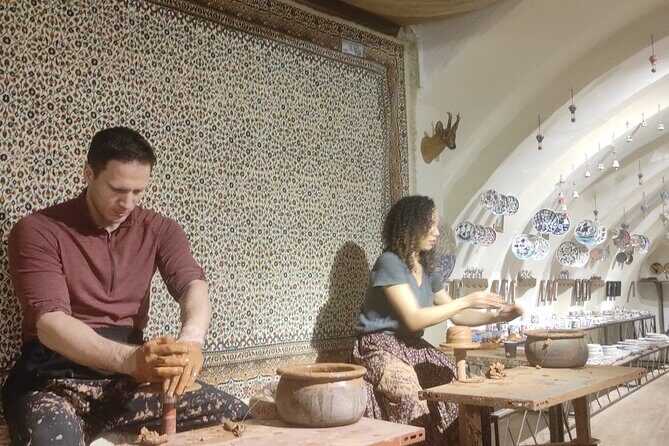
This is the part people don’t always think through, so it’s worth getting right.
After shaping, your piece needs time to dry enough to move. Some classes let you carry it right away; others require a short wait in the workshop so it holds its shape. Many people say they waited about 30 minutes for drying before taking it back.
Transport is handled with practical support. Reviews mention bubble wrap being provided and that pieces can air dry for days afterward. One common approach described is drying at your hotel for a few days, then packing.
There’s also an option to fire the pottery. One review mentions that firing requires 5–10 days after class. Another mentions a longer follow-up option if you’re staying longer, like getting it cooked and then painting later. The key point: if you want fired results, think of it as a next-step service, not an instant take-home.
So what should you do?
- If you want a keepsake for your trip photos and memory, make your piece and plan a careful air-dry plan.
- If you want it fired, plan for the wait time and how you’ll receive it (the class setting suggests a later timeline).
Either way, don’t treat pottery like a fragile trophy you can toss into a suitcase without thought. It’s clay. Pack it like clay.
The $13 Price: Value That Adds Up Fast
For $13 per person, this feels like strong value—mostly because you’re paying for instruction, wheel time, and an experience that produces a personal item you can take home.
Here’s what you’re getting for the money:
- a short class with real guidance at the wheel
- a small group (up to 4)
- bottled water included
- refreshment is mentioned in the experience highlights (tea or coffee)
- the shop setting includes the option to buy pottery, but not the pressure to do so
What’s not included is private transportation, and that’s the only “gotcha” to watch for. If your schedule needs a taxi at odd hours, you’ll handle that. But if you can work with the included-style transfers or your own public transport plans, the cost stays very reasonable.
Also, the time investment is small. You’re not spending half a day. You’re buying a compact skill session plus a souvenir you made with your own hands. At this price point, that’s a pretty fair deal.
Who Should Book This Workshop in Cappadocia?
I’d book this if you:
- want an indoor activity that doesn’t feel like a museum
- like hands-on travel where you leave with something real
- enjoy learning a craft, even if you’re a first-timer
- want a small-group experience with personal attention
- travel as a couple, family, or small group and want to do something different
You might skip it if:
- you’re very sensitive to having your day feel slightly rushed after the wheel time
- you only want “perfect” professional-level results (the class aims for good and guided, not factory-perfect)
The workshop is described as suitable for most travelers, and service animals are allowed. It’s also near public transportation, which helps if you’re navigating independently.
Should You Book This Avanos Pottery Making Class?
Yes, if you want a practical cultural stop that turns into a memory you can hold.
This is the kind of activity where your final result actually matches the effort. The workshop team, including instructors like Davut and Hasan, is praised for being friendly, funny, and supportive. You get guided wheel time, protective clothing, photos, and help transporting your piece afterward.
My main caution is timing. The hands-on part can be short, so plan the rest of your day with a little breathing room for drying and packing. If you’re trying to catch another bus immediately, you may feel stressed.
If you’re the type of traveler who likes experiences that turn into keepsakes, this is one of the best odds-per-minute options in the Avanos area.
FAQ
How long is the pottery making experience?
The experience is listed at approximately 45 minutes.
Where does the class start, and where does it end?
It starts at the Avanos Pottery Workshop (Orta, Atatürk Cd. 92/A, 50500 Avanos/Nevşehir, Türkiye) and ends back at the same meeting point.
Is transportation included?
Private transportation is not included. The highlights mention comfortable air-conditioned round transfers.
What’s included in the price?
Bottled water is included. Tea or coffee refreshments are mentioned in the highlights.
Can I get the pottery fired?
There is an option to fire the pottery, and one review mentions it takes about 5–10 days after the class.
Is free cancellation available?
Yes. Free cancellation is available up to 24 hours in advance for a full refund.