Ankara rewards slow walking, and this tour is a smart way to start. You’ll connect major Roman-era relics, a classic city fortress, and Anıtkabir in one guided route, with a tempo that you can adjust as you go. It’s a city walk built for understanding, not just checking sites off.
I especially like the private guide angle. You get real back-and-forth, including big-picture context, and guides I learned from (like Ertuğ and Kutlukan) also know how to handle day-of changes without derailing your plan. I also like the hotel pickup option, because Ankara’s spread-out neighborhoods can be annoying if you’re relying on your own navigation and schedules.
One drawback to plan for: it’s a city tour, not a monuments-only inside tour. You’ll spend most of your time outdoors and on the grounds/exteriors, and since transportation and any extra tickets aren’t included, you’ll want to budget for local transit if your pickup isn’t right at your door.
In This Review
- Key things to know before you go
- Why this private Ankara walk is a smart first move
- Pickup, drop-off, and pacing (2–8 hours can mean a lot)
- Temple of Augustus: the Roman inscription you can still read
- Column of Julian (Belkıs Minaresi): a Roman obelisk with a Persian storyline
- Ankara Castle: why the walls feel older than the city around them
- Anıtkabir: Atatürk’s mausoleum and the Peace Park walk
- Roman Baths open-air museum: ruins that explain how cities worked
- The private guide experience: names you can remember, tips you’ll actually use
- What you should plan for (and what the tour won’t cover)
- Who this tour fits best
- Should you book this Ankara private walking tour?
- FAQ
- How long is the Ankara private walking tour?
- Where does pickup happen?
- What languages are the guides offered in?
- Are tickets or entrance fees included?
- Is this tour inside monuments?
- Can I cancel for a full refund?
Key things to know before you go
- Private means just your group: you won’t be squeezed into someone else’s timeline.
- Hotel pickup is included in Ankara: if you’re outside the city, you’ll meet at a convenient center point.
- Five headline stops, mostly free entry: the listed sights are marked as admission-ticket free.
- It’s mostly outdoors: wear walking shoes and expect sun, shade, or wind depending on the day.
- Your guide can adjust the route: even with schedule shifts, you’ll keep moving and stay informed.
- No food is included: bring water or plan a quick break during the walk.
Why this private Ankara walk is a smart first move
This itinerary is built for orientation. You hit Roman Ankara (Temple of Augustus and the Column of Julian), then the old city’s defensive spine (Ankara Castle), then you pivot to the modern center of Turkish identity at Anıtkabir. In a single day, you get the story arc from ancient empire to 20th-century nation-building.
The value is in the guide time. At $36.05 per person, you’re paying for a real human explanation that helps you see patterns instead of isolated monuments. And because it’s private, your questions can steer the pace, which matters a lot in a city where layers overlap.
You’ll also like the flexibility in length. The tour runs roughly 2 to 8 hours, so you can choose a tighter version or stretch it out depending on how much you want to read into each stop.
You can also read our reviews of more walking tours in Ankara

Pickup, drop-off, and pacing (2–8 hours can mean a lot)
The tour starts with pickup from your hotel if you’re staying in Ankara. If your hotel is outside the city, you’ll meet at a centrally located spot the guide selects for you. That small detail saves time and makes the first hour much easier.
Drop-off might not be the same as the pickup point unless you request otherwise in advance. This is common in walking tours, and it can be a plus if you end near a dining or transit option. Just plan your day with the assumption that you may not return exactly to where you began.
Because it’s a walk, pacing matters. You’ll move from stop to stop for about 30 minutes at most locations, with Roman Baths lasting around 40 minutes. If you like to take photos slowly or ask history questions, you’ll likely drift toward the longer end of the time range.
Temple of Augustus: the Roman inscription you can still read
Your first major stop is the Temple of Augustus (an augusteum) in the Altındağ district. This site is tied to the Monumentum Ancyranum, a famous inscription connected to Augustus and the works of the first Roman emperor. It’s described as one of the most important Roman-period ruins in Ankara.
What makes this stop worth your time is the way it links text to place. The inscription you’ll hear about is the most complete copy of Res Gestae Divi Augusti that survives today, while the original in Rome disappeared. Your guide’s job here is to help you understand why that matters: someone preserved Augustus’ public message, and you can still encounter that same message on the ground in Ankara.
A practical point: since this stop is marked as free admission, you’re not paying extra just to look. You’re paying for clarity—how the Romans used monuments and inscriptions to shape public memory.
Column of Julian (Belkıs Minaresi): a Roman obelisk with a Persian storyline
Next up is the Column of Julian (people also call it Belkıs Minaresi), an obelisk in the Ulus district. This is connected to Julianus, described as the last pagan Roman emperor. The big historical anchor is his war planning against the Persians in 362 and the route that would pass through Ankara.
In plain terms: this stop is a shortcut to understanding Ankara’s position in imperial travel routes. You’re not just looking at a tall stone—you’re seeing how the city sat on a map that mattered to big decisions. If you ask questions, a good guide will connect the obelisk to the broader idea of borders, strategy, and movement in late antiquity.
This stop is also marked as free entry and is about a 30-minute stop. That makes it ideal for a “tight but meaningful” visit, especially if you’re balancing more time at Anıtkabir or the castle viewpoints.
Ankara Castle: why the walls feel older than the city around them
Ankara Castle is where the walk starts to feel physical. The fortification on the site is said to be constructed in or after the 7th century, but the history runs much deeper than that. The earliest fortification is described as being built by the Phrygians in the 8th century BC, and it was rebuilt by the Galatians around 278 BC.
That layered timeline is exactly what you want a guide for. From the outside, castle walls can blur together visually, but with context they become a timeline you can walk through. Your guide can point out the idea of rebuilding—how later powers didn’t erase what came before, they reused and modified it.
You’ll likely spend about 30 minutes here. If you’re sensitive to stairs or incline, keep comfortable shoes a top priority. The payoff is the chance to get your bearings and see Ankara’s old-city layout from the fortification zone.
You can also read our reviews of more guided tours in Ankara
Anıtkabir: Atatürk’s mausoleum and the Peace Park walk
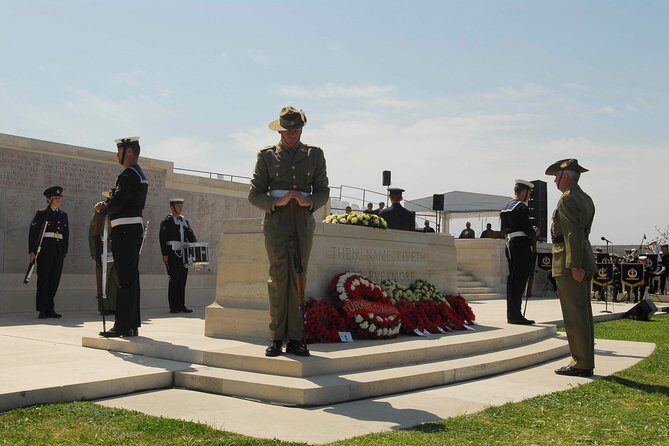
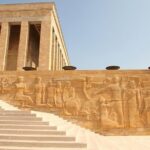
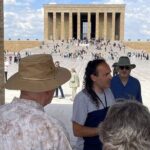
Then you pivot to Anıtkabir, in the Çankaya district. This complex includes the mausoleum of Mustafa Kemal Atatürk, designed by Emin Onat and Orhan Arda, with construction beginning in 1944 and finishing in 1953. The complex isn’t just one building either; it also includes various monuments and a wooded Peace Park area.
If you want a guide who can explain not only what you’re seeing but why it matters, this is the stop. In my experience-style planning, this is where the tour’s storytelling becomes most important. It’s also where your timing can shift, because dignitaries and special events can affect access and routing.
One of the best things about having a private guide is flexibility. I saw an example of Ertuğ handling a small schedule change due to visiting dignitaries without turning it into a scramble. That’s what you’re really paying for: problem-solving, plus interpretation so the site doesn’t feel like just another solemn stop.
The listed visit time is around 30 minutes, and the tour is described as a city tour rather than a monuments-inside experience. So expect you’ll cover the key grounds and atmosphere, but you shouldn’t treat it like a long museum session.
Roman Baths open-air museum: ruins that explain how cities worked
Your final set piece is the Roman Baths of Ankara, an open-air museum formed from ruins. These were uncovered in excavations carried out between 1937 and 1944, and then opened to the public after that. The stop is listed as about 40 minutes, which is longer than the other stops and signals that there’s more to notice.
Roman baths aren’t just about soaking. They were social spaces and a piece of urban infrastructure, and even as ruins they can show how a city organized daily life. Your guide can help you “read” the remains: where the flow might have been, how rooms might have related, and how the bath complex fit into the broader Roman footprint of Ankara.
Like the other stops, admission is shown as free for this attraction. That’s great for value, because it lets you focus your money on the guided explanations rather than ticketing. Weather matters here more than you might expect, since you’ll be seeing stone in open air—so plan for sun, wind, or a chilly evening depending on your travel month.
The private guide experience: names you can remember, tips you’ll actually use
A tour like this lives or dies on the guide’s ability to connect dots. This one is led by an in-person guide available in English, Spanish, French, and Italian, and the private format makes it easier for you to ask follow-ups.
I’ve seen real examples of guides doing more than just reciting dates. Ertuğ, for instance, was praised for helping visitors learn about Atatürk in a way that tied into both ancient history and more current topics. Another example is Kutlukan, who was described as punctual, attentive to comfort, and flexible when schedules shifted.
I also like that the guide style can be different. Han, for example, was noted for showing Ankara with a youthful approach. And Sarah is an example of a guide who helped highlight the city’s older neighborhoods near the center, with a focus on the “salient” places rather than an info dump.
One practical bonus: guides in this format often end up giving small local tips that make the next day easier. In at least one case, a guide even helped with bargaining at a nut shop, plus offered suggestions for restaurants, useful spots, and shopping. You don’t need that every day, but when you do, it’s gold.
What you should plan for (and what the tour won’t cover)
This is where you’ll keep your expectations realistic.
First, food and drinks aren’t included. If you’re doing a longer version of the walk, bring water or plan a break. Your guide can likely suggest a place, but you’re the one paying for it.
Second, transportation isn’t included. Pickup is offered, but getting between far points on your own may require local transit. The cost of public transport is on you. If you’re staying near the center and can walk between stops comfortably, your out-of-pocket transit cost may be low.
Third, tickets to attractions aren’t included. That sounds worrying, but the itinerary stops listed here are marked as admission-ticket free. Still, if you add extra places on top of the plan, you should expect to handle those tickets separately.
Finally, it’s a city tour, not a tour inside the monuments. So if your dream day is mostly indoor museum time, you’ll want a different style of tour. This one is about walking, seeing, and understanding.
Who this tour fits best
This is a great match if you want a first-time orientation day. You get Roman anchors, then the city’s historic walls, then the modern heart at Anıtkabir. It’s also ideal if you like asking questions while you walk rather than reading labels alone.
It’s also a strong pick for groups who want one plan that still feels personal. Since it’s private and you can customize the tour, you can move at a pace that works for kids, older adults, or people who prefer slower photo stops.
Where it might not be the best fit is if you want long indoor time at multiple museums. This route keeps you moving and focuses on outdoor sights and grounds.
Should you book this Ankara private walking tour?
If your goal is to understand Ankara quickly—and you like the idea of a guide translating stones into stories—yes, this is worth booking. The combination of Temple of Augustus, the Column of Julian, Ankara Castle, Anıtkabir, and Roman Baths gives you a full sense of the city’s layers in one walking day. Plus, the guide format (with English and other languages) helps you get context rather than just sights.
I’d skip it or choose a shorter plan if you dislike walking or if you’re expecting long indoor monument time. And because food and transportation aren’t included, plan for small practical costs like water and any local transit you may need.
Overall, for $36.05 per person, the value comes from the private guidance, the flexible pacing, and the way the route connects ancient Ankara to modern Turkey without making the day feel like a checklist.
FAQ
How long is the Ankara private walking tour?
The tour duration is listed as 2 to 8 hours (approx.), depending on how you pace the walk and how you customize the route.
Where does pickup happen?
If your hotel is located in Ankara, the local guide will pick you up there. If your hotel is outside the city, you’ll select a convenient meeting point in the city center. The tour may end at a different location unless you request otherwise in advance.
What languages are the guides offered in?
Guides are offered in English, Spanish, French, and Italian.
Are tickets or entrance fees included?
Tickets to attractions are not included. The specific listed stops are marked as admission-ticket free, and the tour includes help from the team to book tickets if you want to visit other places.
Is this tour inside monuments?
It’s described as a city tour and not a tour inside the monuments, so you should expect mostly walking and visiting the sites/grounds.
Can I cancel for a full refund?
Yes. Free cancellation is available up to 24 hours in advance for a full refund. If you cancel less than 24 hours before the start time, the amount paid is not refunded.