REVIEW · ISTANBUL
Best of Istanbul: Private Guided Istanbul Tour
Book on GetYourGuide →Operated by Moira Travel Agency · Bookable on GetYourGuide
One day in Istanbul, tightly connected.
This private tour is interesting because it chains the city’s biggest Byzantine and Ottoman landmarks into a single walking route. I especially like the way a live guide explains Hagia Sophia beyond the postcard view, and I like the Grand Bazaar time that lets you shop at a human pace. One catch: entrance fees are not included, so your final bill can creep up fast.
You start in Sultanahmet at the German Fountain (Alman Çeşmesi), which makes it easy to orient yourself before the sightseeing starts. You also get skip-the-ticket-line help, plus a proper guide instead of just audio narration.
Do pay attention to timing. The Blue Mosque pauses for a prayer window each day, and some top sites close on specific weekdays, so your exact experience can shift.
In This Review
- Key takeaways before you go
- Alman Çeşmesi meeting point: a simple start in Sultanahmet
- Basilica Cistern stop: 30 minutes underground worth it
- Hagia Sophia: the dome, the layers, and what to look for
- Blue Mosque (Sultanahmet Mosque): tiles, power, and prayer timing
- Topkapi Palace: Ottoman splendor with a break built in
- Hippodrome: Roman entertainment bones still sticking out
- German Fountain of Wilhelm II: small stop, satisfying detail
- Grand Bazaar: shopping time that doesn’t feel rushed
- Price and entry fees: where value can rise or fall
- What makes the guide experience work (and who to look for)
- Wheelchair notes: double-check before you book
- Who this private tour fits best
- Should you book Best of Istanbul: Private Guided Istanbul Tour?
- FAQ
- Where is the meeting point?
- How long is the tour?
- Is this a private tour?
- What sights are included?
- Are entrance fees included?
- Which days are key sites closed?
- Is it wheelchair accessible?
Key takeaways before you go
- Hagia Sophia + Blue Mosque context: you’ll get the Byzantine and Ottoman story, not just photos.
- Topkapi with a break built in: gardens view, photo stop, and time to tour the palace highlights.
- Hippodrome relics you can actually point at: Egyptian Obelisk, Serpentine Column, and Constantine Column.
- Grand Bazaar with real shopping time: about two hours to wander and bargain for carpets and handicrafts.
- Smart start at Alman Çeşmesi: meeting at the German Fountain helps you find the group without guesswork.
- Private or small groups: still personal, without the chaotic feel of huge bus tours.
Alman Çeşmesi meeting point: a simple start in Sultanahmet
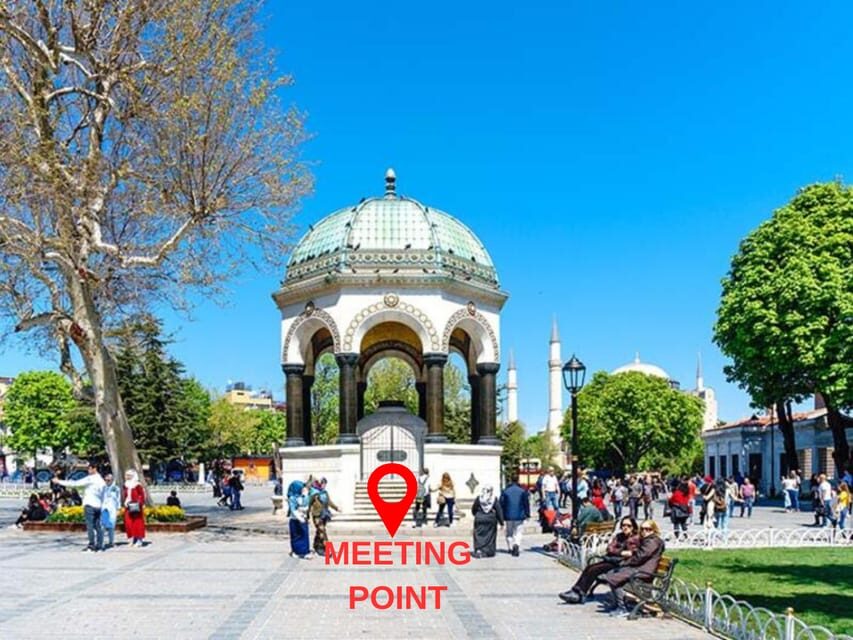
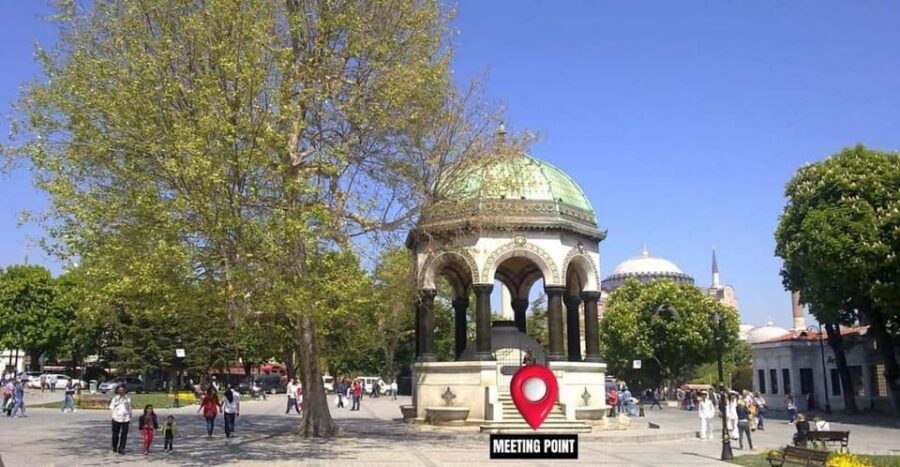
The day begins at the German Fountain of Wilhelm II, also called Alman Çeşmesi. That’s a smart pick for a meeting point: it’s recognizable, and it sits right in the Sultanahmet area where you’ll be spending most of your time.
From there, you’re on foot. Expect a full-day rhythm: short walks between major stops, guided time inside major sights, and brief pauses to reset. This matters because Istanbul’s center can feel crowded, and moving as a group keeps you from losing an hour trying to find the next entrance.
I also like that the tour is designed around the classic cluster of landmarks. You’re not bouncing across the city just to tick boxes. Instead, the day is planned like a walking loop through the heart of the old city.
You can also read our reviews of more guided tours in Istanbul


Basilica Cistern stop: 30 minutes underground worth it
Before you jump into the headline churches and palaces, you’ll get a quick stop at the Basilica Cistern. It’s the kind of place that makes the rest of the day feel more grounded. You’re not only seeing power and religion; you’re also seeing the practical engineering side of old Istanbul.
Thirty minutes is tight, but it’s enough time to walk through, notice the mood, and catch the details a guide can point out. If you’re the type who likes atmosphere as much as history facts, this is a helpful warm-up.
If you prefer to spend more time inside, remember this is a highlight-day schedule. You’ll get longer guided time at the bigger sites later, so treat the cistern as a focused intermission, not the main course.
Hagia Sophia: the dome, the layers, and what to look for
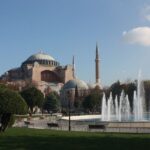
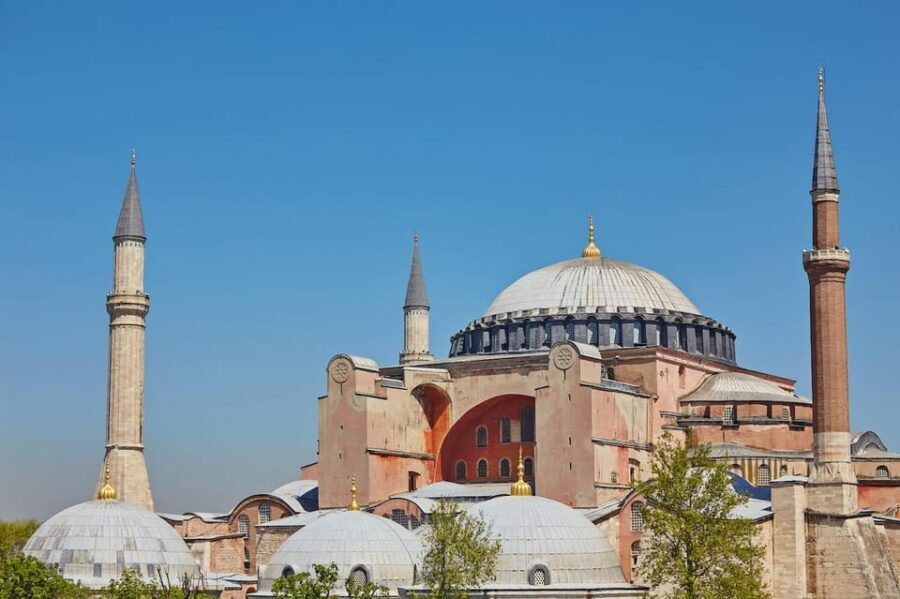
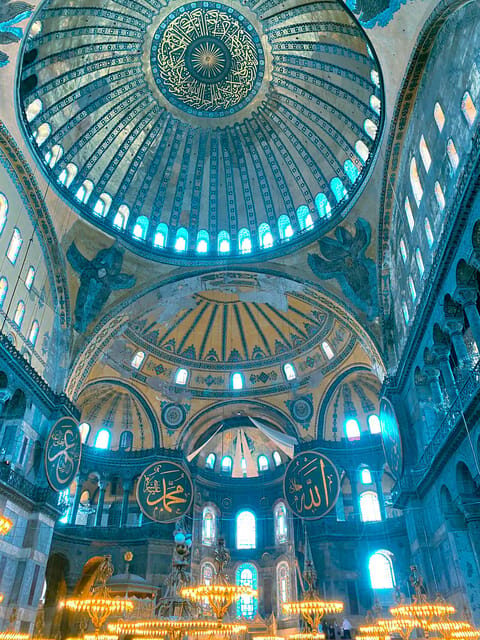
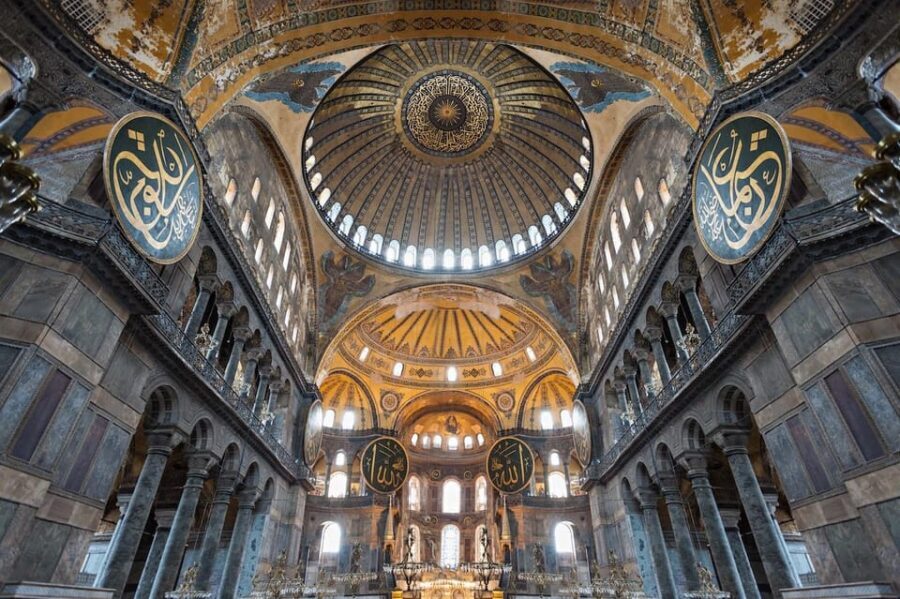
Hagia Sophia is the reason many people come to Istanbul, and the real win of a guided stop is learning how to see it. A good guide connects what you’re looking at to the building’s long life—first a major Byzantine church, later adapted during the Ottoman period.
This matters because the building doesn’t read as one simple story. It’s a layered monument: architecture, religion, and empire in the same footprint. You’ll also hear about why it was once considered the largest church in the world for centuries, plus how it still ranks among the world’s biggest domes.
Even if you’ve seen pictures, you’ll want to slow down here. Take a moment to orient yourself visually before you chase details. From the scale alone, you’ll understand why people called it divine wisdom—and why the building still feels like a big deal in the skyline.
Watch for weekday closures: Hagia Sophia is closed on Mondays. If your trip lands on a Monday, your guide may have to adjust the plan so you don’t lose the entire day.
Blue Mosque (Sultanahmet Mosque): tiles, power, and prayer timing
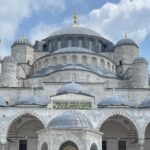
Next up is the Blue Mosque, also known as the Sultanahmet Mosque. This stop is about more than blue. The distinctive color comes from the interior tiles, but the guide adds the bigger picture: why the mosque is so important in Istanbul and what it represents as a supreme imperial mosque.
Here’s a practical tip: plan your timing around daily prayer pauses. The Blue Mosque can close to non-worshippers for about half an hour during five daily prayers. That can affect how quickly you get inside and how long you have for photos or browsing.
I like that this is clearly flagged. It saves you from the annoying moment of arriving, expecting full access, and finding the gates temporarily shut.
If you’re visiting with kids or anyone who gets restless indoors, you can use this reality strategically. Arrive with patience. If there’s a wait, it’s often short, and it’s still worth taking in the building’s exterior while you reset.
Topkapi Palace: Ottoman splendor with a break built in
Topkapi Palace is where the day shifts from religious monuments to imperial life. The palace sits on a promontory overlooking the Golden Horn and sits within tranquil gardens. That setting changes how you experience the palace: you’re not just rushing through rooms, you’re moving through a larger world.
The visit includes guided time, plus a break and photo stop. That’s valuable. Topkapi is a palace complex, and even a well-paced visit can feel like information overload without a moment to breathe.
Inside, you’ll see standouts such as Iznik tiles and ornate harem staterooms. Iznik tile work is one of those things that photographs don’t fully explain. Up close, the patterns and colors make more sense, especially once your guide points out what you should notice.
Important timing note: Topkapi Palace is closed on Tuesdays. If your tour date is Tuesday, expect the experience to change—either by reducing palace time or swapping the emphasis elsewhere.
You can also read our reviews of more private tours in Istanbul


Hippodrome: Roman entertainment bones still sticking out
After the palace, you’ll head to the Hippodrome, the former entertainment venue built in 203 AD by Emperor Septimus Severus. It’s a great “human scale” stop in a day full of huge monuments: this was where crowds came to watch and react, and the setting makes the ancient energy feel less abstract.
While the original structure is gone, several monuments remain, and you’ll visit key survivors:
- Egyptian Obelisk
- Serpentine Column
- Constantine Column
A guide helps you see these as more than random statues. They’re leftovers that connect the Roman-era world to what came later in Istanbul. You’ll likely also learn how the placement and symbolism mattered to people at the time.
If you like when guides help you understand what you’re looking at without turning it into a lecture, this is usually a good stop. It gives your feet a small break after the palace interiors.
German Fountain of Wilhelm II: small stop, satisfying detail
You’ll also circle back to the German Fountain of Wilhelm II, the meeting point and a distinct landmark. It’s made from eight marble columns, and it’s such a clear visual reference point that it helps you anchor the whole day.
This is one of those moments where the tour quietly does something useful: it gives you a landmark you can remember, so the rest of the walking route feels less like a blur. Once you’ve seen it once, it’s easier to tell where you are in Sultanahmet.
Grand Bazaar: shopping time that doesn’t feel rushed
The day ends at the Grand Bazaar, one of the world’s largest and oldest covered markets. You’ll have guided time and then free time, with about two hours to wander.
This is where you can get something real instead of buying a souvenir that looks like it came from a vending machine. You’ll pass stalls selling items like carpets and handicrafts, and the market’s atmosphere is part of the experience.
A private or small-group guide also makes this more practical. If you want to ask about quality, materials, or fair pricing, you can do it in plain language instead of guessing. And if you’re not shopping seriously, you can still enjoy the architecture and the sheer variety of stalls.
Watch the day-of-week rule: the Grand Bazaar is closed on Sundays. If your schedule includes Sunday, you may have to swap your ending plan.
Price and entry fees: where value can rise or fall
At $48 per person for a full-day private guided route, this tour can be good value—especially if you want someone to explain what you’re seeing while you skip the ticket line process.
But here’s the part to budget for: entrance fees are not included. Big monuments in Istanbul don’t come cheap, and tickets stack up quickly. This is why the final value depends on how many paid entries you actually use on your visit day.
Also, your day can tighten if a major site is closed. Topkapi is closed on Tuesdays, Hagia Sophia on Mondays, and the Grand Bazaar on Sundays. If your dates line up with one of those closures, you may end up with less time at a high-ticket site, and the day can feel shorter than you expected.
So my practical advice is simple:
- Check the weekday closures for your exact travel dates.
- Budget extra for entry fees.
- If you care most about one specific place, choose dates that keep it open.
What makes the guide experience work (and who to look for)
The biggest strength here is the live guide. The format is private or small groups, and that changes everything: you get the chance to ask questions, and you can usually get clearer explanations instead of getting lost in a group.
I’ve seen guides associated with this kind of tour—people like Ozgur, Hasan, and Ayla—known for clear explanations and adjusting to what you want on the day. That matters most at the big-ticket stops like Hagia Sophia and the Blue Mosque, where a little context turns a visit from sightseeing into understanding.
You’ll also get guided time structured around the big monuments, so you aren’t left guessing what to prioritize.
One more note: the tour is recommended for comfortable walking shoes. It’s not a sit-and-watch day. You’ll spend plenty of time on your feet, and that’s part of why it can feel so efficient.
Wheelchair notes: double-check before you book
The details you’re given include both wheelchair accessibility and a note that it’s not suitable for wheelchair users. That contradiction is important. Before you book, confirm with the provider how access works in real conditions for your specific needs (and whether all key stops are workable).
If you use a wheelchair or mobility aid, don’t rely on the generic label. Ask directly what parts of the route and interiors can be accessed.
Who this private tour fits best
This is a strong choice if you:
- Want a single-day plan that hits the big Istanbul classics in a tight route.
- Like learning the why behind the what, especially at Hagia Sophia and the Blue Mosque.
- Prefer a private or small-group guide over large crowds and confusing meetups.
- Are okay doing a lot of walking and using your own energy for the Grand Bazaar wandering.
It’s less ideal if you want a super flexible pace all day without any scheduled guided time, or if you’re visiting on a weekday when one of the main sites is closed and you’d rather not have the plan shift.
Should you book Best of Istanbul: Private Guided Istanbul Tour?
I’d book it if you value expert guidance and want a well-paced full-day loop through Sultanahmet. The combination of Hagia Sophia, the Blue Mosque, Topkapi, the Hippodrome, and Grand Bazaar is exactly the kind of “big hits” day that benefits from having someone point out what matters.
I wouldn’t rush to book it if you’re trying to keep total costs low, because entrance fees aren’t included and closures can change how much you can do on your exact weekday. Also, if mobility is a concern, confirm accessibility details before committing.
If you match those checkboxes, this tour is one of the simplest ways to get the core Istanbul story in a single, guided day.
FAQ
Where is the meeting point?
You meet your guide at the German Fountain (Alman Çeşmesi).
How long is the tour?
The tour runs about 7 to 8 hours.
Is this a private tour?
Yes. It’s a private guided experience, with private or small groups available.
What sights are included?
The tour covers Hagia Sophia, the Blue Mosque, Topkapi Palace, the Hippodrome (with the Egyptian Obelisk, Serpentine Column, and Constantine Column), the Grand Bazaar, plus a stop at the Basilica Cistern and the German Fountain of Wilhelm II.
Are entrance fees included?
No. Entrance fees for museums are not included, even though the tour includes skip-the-ticket-line help.
Which days are key sites closed?
Topkapi Palace is closed on Tuesdays, Hagia Sophia is closed on Mondays, and the Grand Bazaar is closed on Sundays.
Is it wheelchair accessible?
The activity details list wheelchair accessible, but it also notes it is not suitable for wheelchair users. You should confirm access directly with the provider before booking.