REVIEW · ISTANBUL
Istanbul: Hagia Sophia Skip-the-Line Ticket with Live Guide
Book on GetYourGuide →Operated by City Of Sultans · Bookable on GetYourGuide
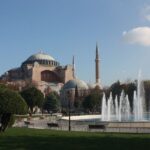
Hagia Sophia feels big until someone guides you. This small 2-hour outing pairs skip-the-line priority with an English live guide, so you spend more time looking up and less time stuck at the entrance. I especially like how you get a guided walk focused on the building’s Byzantine-to-Ottoman transformation, and how the tour keeps you moving toward the dome and mosaics instead of wandering lost in the grandeur. One thing to consider: Hagia Sophia may close during prayer times or special events, and guide quality can vary from departure to departure.
Plan on meeting at the Hagia Sophia entrance gate and getting back there when you’re done. Inside, you’ll have a photo stop plus about 75 minutes with your guide, and if your group is over 12, you’ll get a headset so you can actually hear the explanations.
In This Review
- Key things to know before you go
- Why Hagia Sophia feels different with a guide
- Meeting at the Hagia Sophia entrance gate (and why it matters)
- The 75-minute guided visit: where you should focus your eyes
- Byzantine to Ottoman: the story your guide will connect for you
- What you’ll see inside: dome, mosaics, and the small details
- Price and value: $59 isn’t paying for the mosque ticket
- Timing, group size, and how well you’ll hear explanations
- Prayer times and special events: the closure reality
- Who this tour suits best
- Should you book this Hagia Sophia skip-the-line guided tour?
- FAQ
- How long is the Hagia Sophia skip-the-line guided tour?
- Where do we meet for the tour?
- Does the ticket include entry to Hagia Sophia?
- What language is the tour guide?
- Are headsets provided?
- Can the site close during the tour?
Key things to know before you go
- Separate entrance for skip-the-line entry means less waiting outside
- Live English guide gives meaning to what you’re seeing
- Headsets for groups over 12 help you hear clearly without crowd noise eating the details
- 75 minutes inside is enough time for the dome and mosaics without turning into a marathon
- English audio guide included gives you a backup layer of context as you move around
Why Hagia Sophia feels different with a guide
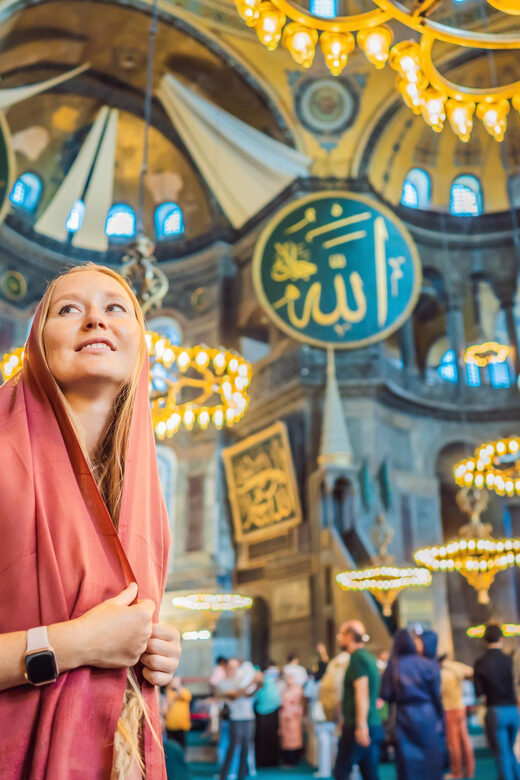
Hagia Sophia isn’t just a pretty building. It’s a project that keeps changing jobs depending on who’s in charge. A good guide helps you notice that shift with your eyes—where the Byzantine emphasis lives, where later Ottoman layers take over, and why the whole place works so well even though it was built for different eras.
What I like most is that the tour doesn’t treat Hagia Sophia like a museum object behind glass. You’re walking through a functioning mosque space, and your guide frames what you’re seeing as an argument between empires: what one power built, and what another power kept, adapted, or reinterpreted. That lens makes the experience more satisfying than just naming features.
Also, time matters here. Hagia Sophia can be crowded, and the line situation can be a headache. Priority entry buys you sanity. Even if you love figuring things out on your own, you’ll probably appreciate that you get right into the flow.
You can also read our reviews of more tours and experiences in Istanbul


Meeting at the Hagia Sophia entrance gate (and why it matters)
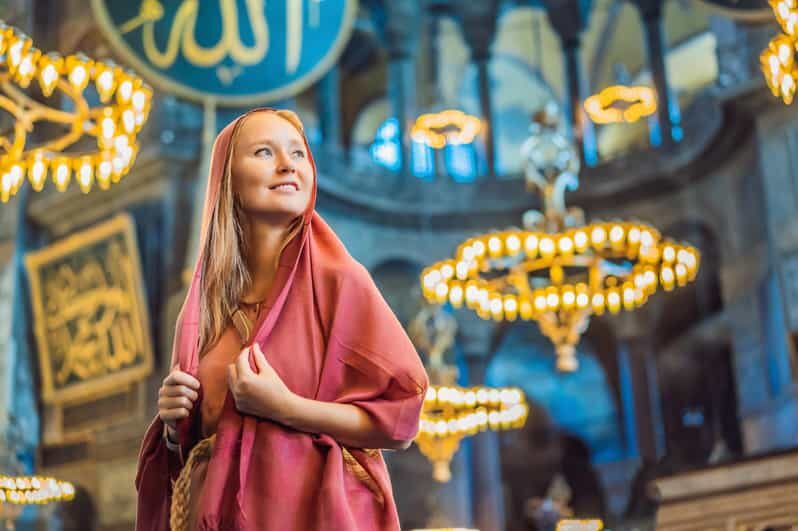
Your tour starts at the Hagia Sophia entrance gate. That detail sounds basic, but it’s one of the best parts of the setup: you’re not hunting for a hidden office or waiting for complicated pickup logic.
Once you’re there, you should expect to be routed through a separate entrance to use the skip-the-line priority. That matters because “Hagia Sophia waiting time” can balloon. Getting inside fast helps you see more of the interior before crowds thicken and before your attention starts to fatigue.
If you’re arriving early, use that time wisely: get your bearings, locate your photo spots, and be ready to move. If you arrive late, you’re more likely to lose the smooth rhythm of the tour.
The 75-minute guided visit: where you should focus your eyes
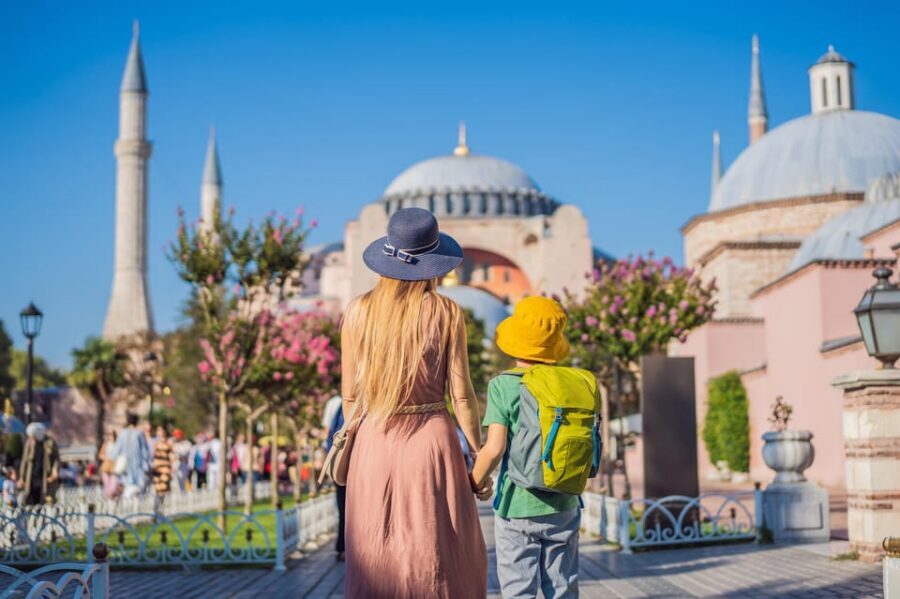
The heart of this experience is the time inside. The flow is straightforward: you’ll do a photo stop, then your guided visit lasts about 75 minutes, and you return to the meeting point at Hagia Sophia.
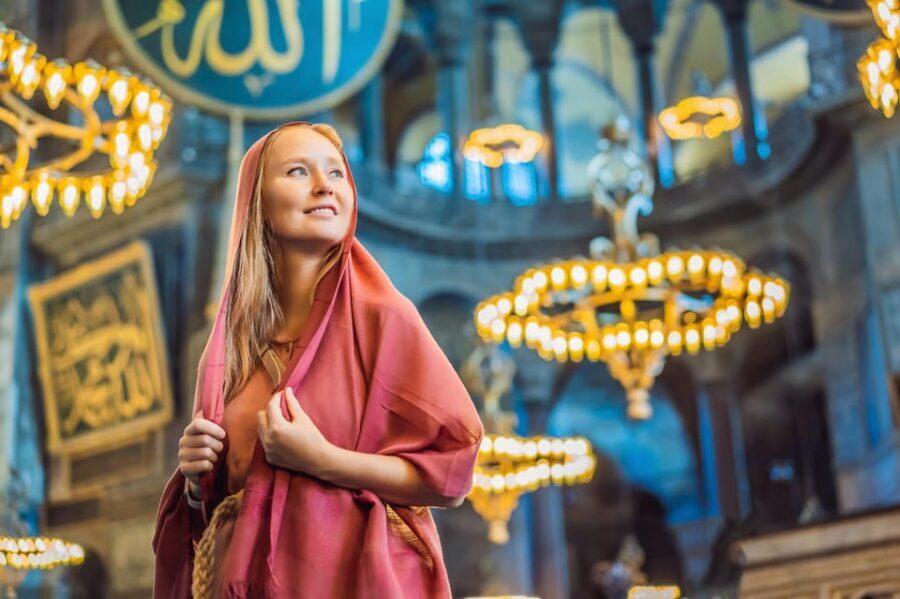
During that guided window, your focus should be two things: the tower-top feeling of the dome and the color-and-detail work of the mosaics. Your guide is there to help you see them in context—what makes the dome so iconic, and why the mosaics matter as more than decoration.
Practical tip: once you find a spot where you can look upward without craning your neck too much, stay there for a minute or two. The dome does not reward speed. Let your eyes adjust, then follow what your guide points out. That small pause can turn a quick glance into a real moment.
Also, keep your camera ready. The tour includes a photo stop, but the best “real” photos often happen when you understand what you’re photographing. A guide helps you aim rather than just shoot.
Byzantine to Ottoman: the story your guide will connect for you
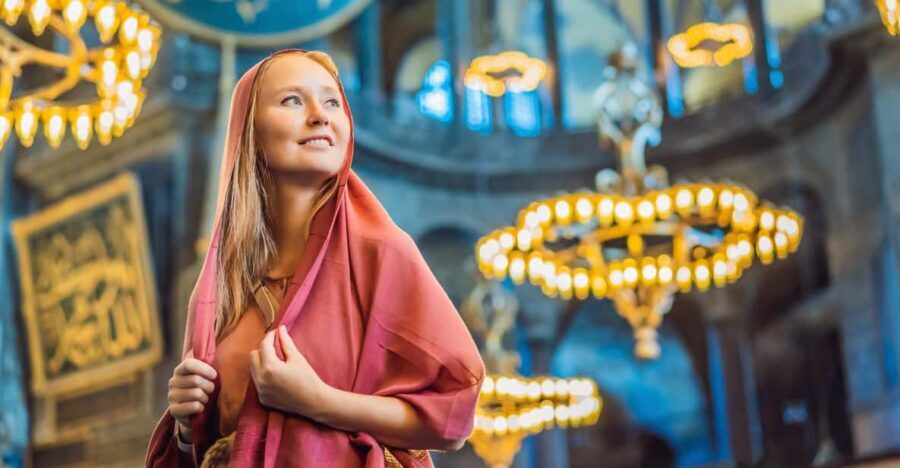
Hagia Sophia dates back to 537 AD, and that date is not just trivia. It’s the backbone of the building’s identity. Your guide will walk you through why this site became so significant to both the Byzantine and Ottoman empires.
Here’s how to think about it while you’re inside:
- Look for continuity: what remains recognizable even after changes in rule.
- Look for adaptation: what gets reinterpreted to fit a new religious and political role.
- Look for symbolism: why the same architecture can support different messages across time.
One guide name specifically mentioned as a standout is Mr. Baris, praised for deep, interesting explanations and for being patient with questions. That’s exactly the kind of guiding style that works here, because Hagia Sophia has tons of details and your brain will want to ask why something looks the way it does.
A balanced note: I’ve also seen situations where a guide seemed to drift from the point or added unnecessary friction. That doesn’t mean the tour is always like that, but it does mean you should value the chance to learn from an experienced guide—and be ready to ask questions early if you want the tour to stay focused.
What you’ll see inside: dome, mosaics, and the small details
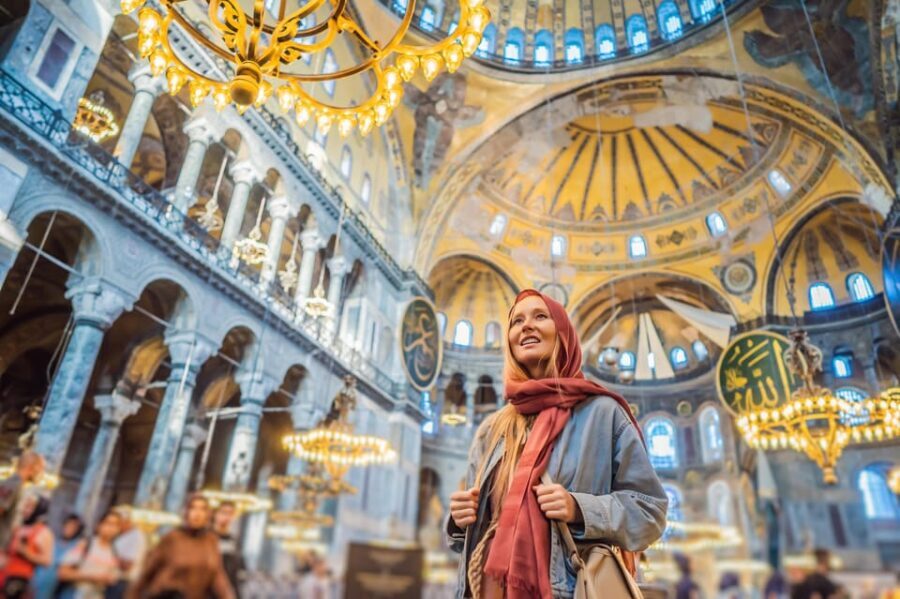
This tour is built around the most memorable visual hits: the towering dome and intricate mosaics. But the best part is how your guide encourages you to notice smaller elements along the way.
You’ll likely move through key areas where the architecture shows off its engineering, then shift to zones where the surface storytelling becomes obvious—especially in mosaic work. The mosaics are not only beautiful; they’re evidence. They show how different eras wanted this space to communicate.
If you’re the type who always says you’ll “just walk and read the signs,” this is where a live guide saves you. Many signs only tell you what something is. A good guide helps you understand why it mattered, why it survived, and what changed.
And because the tour is only about 2 hours total, you’re not stuck for half a day. It’s enough structure to see the big highlights and enough time to breathe.
You can also read our reviews of more guided tours in Istanbul



Price and value: $59 isn’t paying for the mosque ticket
The price is listed at $59 per person, but Hagia Sophia entry fees are not included. You’ll need to pay an entry fee of 25 € to your guide to use the skip-the-line arrangement.
So what are you actually paying for?
- Priority entry handling so you don’t spend your trip time trapped in a line
- A live English guide to make sense of Byzantine and Ottoman layers
- Headsets for groups larger than 12, which helps if you’re near the back or in a noisy cluster
Is it worth it? Usually, yes—especially if you value explanation over self-guided wandering. The “cost” isn’t only the money; it’s your time and attention. Priority access protects both.
If you’re the kind of traveler who loves independent museum pacing, you might question the fee. But if you’re aiming for the best use of limited time in Istanbul, the guide + expedited entry combination tends to feel like good value.
Timing, group size, and how well you’ll hear explanations
The tour duration is about 2 hours, with the guided visit lasting around 75 minutes inside. That timing works well for a site as intense as Hagia Sophia. You get enough structure to feel oriented, but you don’t end up exhausted before you’ve even finished the dome.
Language coverage is English, and there’s also an English audio guide included. For groups over 12 people, you’ll be given headsets. That’s a small detail that can make a big difference. At crowded heritage sites, sound is often the first thing to fall apart, and headsets help you avoid the frustrating experience of watching a guide talk while you guess what they said.
If you prefer asking questions, this setup also helps. You can listen clearly, then raise your hand without having to repeat yourself five times.
Prayer times and special events: the closure reality
One key “know before you go” item: Hagia Sophia might be closed during prayer time or special events. That can affect your ability to enter or move around as planned.
What you should do with this info:
- Keep some flexibility in your schedule if possible
- Plan your day so you won’t feel rushed if timing shifts
- If you’re traveling during a period with lots of religious observances, treat that as normal—not as something that ruins your trip
This is one of those places where rules can change quickly. Build in a little buffer mindset and you’ll handle surprises better.
Who this tour suits best
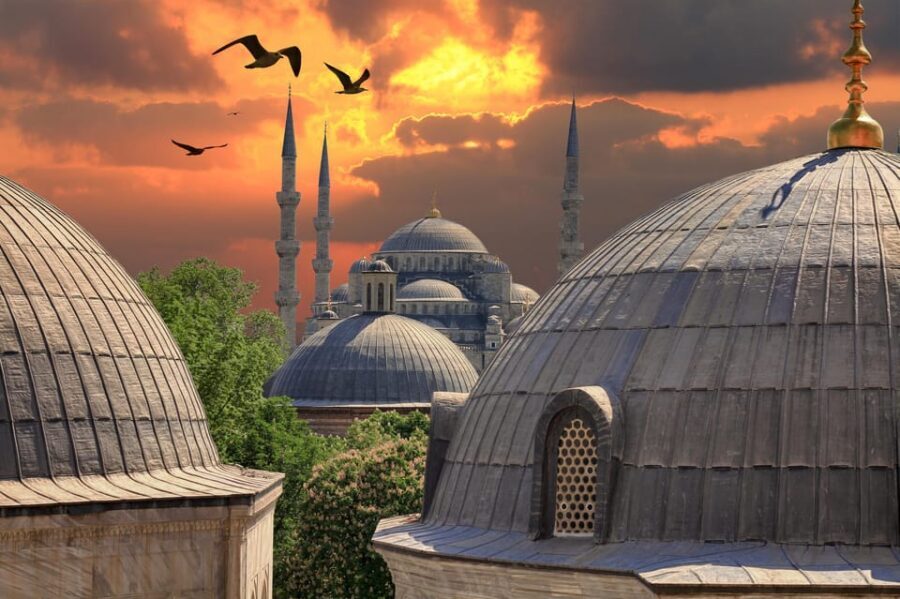
This experience is a strong fit if you want:
- A guided focus on the dome and mosaics (not just a photo spree)
- English explanations of why Hagia Sophia mattered to both Byzantine and Ottoman empires
- Skip-the-line convenience so you can spend your energy actually looking
It may be less ideal if you already know the subject well and you prefer to move at your own tempo without group pacing. The tour is short and structured, so you won’t have hours to linger in one corner until you feel satisfied.
Also, if you’re sensitive to guide quality, the smartest approach is to pay attention to your comfort level during the first minutes. If the guide isn’t matching your needs, ask questions right away and steer the conversation toward what you care about—dome engineering, mosaics, or the empire shift.
Should you book this Hagia Sophia skip-the-line guided tour?
If your goal is to see Hagia Sophia efficiently and leave with understanding—not just photos—then yes, you should seriously consider booking. The main reasons are practical: skip-the-line priority reduces wasted time, and the live English guide helps you connect the most famous visuals (the dome and mosaics) to the building’s deeper story.
I’d book it especially if you want a guided explanation style that can handle questions—like the best-case experience credited to Mr. Baris. The one caution is that guide quality can be uneven, and Hagia Sophia can close during prayer or special events. If you’re flexible and you care about context, that risk usually doesn’t outweigh the value.
If you’re visiting with limited time in Istanbul, treat this tour as a “get the essentials with meaning” option. Hagia Sophia is too important to rush, and this setup helps you do it faster—without doing it shallow.
FAQ
How long is the Hagia Sophia skip-the-line guided tour?
The tour lasts about 2 hours total, with the guided visit inside lasting about 75 minutes.
Where do we meet for the tour?
You meet at the Hagia Sophia entrance gate, and the activity ends back at the meeting point.
Does the ticket include entry to Hagia Sophia?
Skip-the-line priority is included, but Hagia Sophia entry fees are not included. The entry fee is listed as 25 € and should be paid to the guide to skip the lines.
What language is the tour guide?
The live tour guide is English, and an English audio guide is also included.
Are headsets provided?
Headsets are provided for groups of more than 12 people.
Can the site close during the tour?
Yes. Hagia Sophia might be closed during prayer time and special events, so your visit may be affected.