REVIEW · ISTANBUL
Chora Museum Skip-the-Ticket-Line Entry with Audio Guide
Book on GetYourGuide →Operated by Istanbul Tourist Pass® · Bookable on GetYourGuide
Two hours here can change your Istanbul. The Chora Church Museum, also called Kariye Mosque, is a slow-looking kind of stop: mosaics and fresco scenes that reward your pace, plus a 25-language audio guide so you don’t have to guess what you’re seeing.
I love the way the building’s story is written into the place itself, from Byzantine church to Ottoman mosque. One possible drawback: you can skip the ticket line, but you still have to go through security, and on some arrivals the QR codes have not scanned cleanly.
In This Review
- Key Things I’d Plan For
- Chora’s Church-to-Mosque Story: Why This Museum Hits
- Entering the Museum: Getting to Edirnekapı Without Losing Time
- Skip-the-Line Entry: What You Can Skip (and What You Can’t)
- The Audio Guide in 25 Languages: How to Use It for Real Value
- What You’ll See Inside: Mosaics, Frescoes, and the “Look Up” Moment
- A Visit That Works: Suggested Pace and Flow
- Friday Closures and Restoration Surprises: Real-World Timing Advice
- Price and Value: Is $35 Worth It?
- Who Should Book This, and Who Might Want Another Format
- Should You Book This Chora Museum Entry?
- FAQ
- What does the skip-the-line ticket actually skip?
- Is the audio guide included, and what languages are available?
- Where does the museum reopen if it’s closed on Fridays?
- How do I get the QR codes and audio guide access?
- How do I reach Chora Museum from Istanbul transport?
- What’s the cancellation policy and can I pay later?
Key Things I’d Plan For

- Skip-the-line ticket QR helps you get in faster, but security lines still exist
- 25-language audio guide lets you read the art without waiting for a group tour
- Church-to-mosque transformation is part of the visit, not just background
- Byzantine mosaics and frescoes are the main event, especially if you love Christian icon scenes
- Friday closure means you must build your schedule around opening days
- Restoration can affect access, so give yourself a timing buffer
Chora’s Church-to-Mosque Story: Why This Museum Hits

Chora Church Museum is one of those Istanbul stops where the art and the architecture explain each other. The complex has roots going back to a 4th-century monastery area, and it became famous for its Late Byzantine decoration after a major reconstruction in the 14th century. That’s when the walls and ceilings filled with Bible scenes, saint stories, and detailed Byzantine designs.
Then comes the big plot twist: the Ottoman period. When the site became a mosque, certain elements connected to Christian worship were covered or altered to fit Islamic traditions. Today, you’re walking through a single structure that holds Christian and Islamic layers in the same rooms. If you like history, this is the kind you can see with your own eyes, not just read about later.
I also like that the museum experience is self-directed. You’re not forced to “keep up.” You can pause, look up, and take your time with small details. That matters here, because the best parts are often the ones you only notice after you’ve been standing still for a minute.
You can also read our reviews of more tours and experiences in Istanbul



Entering the Museum: Getting to Edirnekapı Without Losing Time
The museum sits in the Edirnekapı district on Istanbul’s European side, in an area that feels more local than center-stage. The most common route is the T4 tram to Edirnekapı station, followed by a short walk. If you prefer buses, lines that stop nearby include 31E, 37E, 38E, and 36KE.
From the Asian side, a simple strategy is to ferry to Eminönü from Kadıköy or Üsküdar, then connect to the tram or nearby buses. You don’t need a private ride to make this work, and that’s a big deal if you’re trying to keep costs down and avoid traffic stress.
Practical tip: plan to arrive with enough margin to handle lines at the entrance. The ticket part can be fast, but the overall flow still depends on what security is doing that day.
Skip-the-Line Entry: What You Can Skip (and What You Can’t)
This ticket is designed for skip-the-ticket-line entry. In plain terms: you’re using an online QR code, so staff can process you quicker than if you show up trying to buy at the desk.
But two important cautions:
- Security lines can’t be skipped. This is stated clearly, and it’s realistic for any museum entrance.
- There can be a line at the entrance even with the skip option, because everyone still has to pass the same mandatory checks.
One more thing I’d take seriously: some people have reported QR codes being rejected on arrival, which forced a last-minute purchase on site. I can’t promise it will happen to you, but the smart move is to be ready for a backup plan. That means having your confirmation details accessible and being mentally prepared to possibly buy another ticket if scanning fails.
The Audio Guide in 25 Languages: How to Use It for Real Value
The audio guide is one of the best parts of this experience because you can match the museum to your learning style. You get a link and can listen in a long list of languages, including English, German, Russian, Persian, Arabic, French, Italian, Chinese, Dutch, Spanish, Hindi, Romanian, Ukrainian, Korean, Turkish, Bulgarian, Polish, Swedish, Japanese, Indonesian, Greek, Hungarian, Portuguese, Urdu, and Croatian.
Here’s how to get more out of it:
- Start by using the audio guide to orient yourself to what a room is telling you. When you know whether you’re looking at Bible stories versus saint scenes, the art stops being “pretty wallpaper” and becomes a readable program.
- Keep it flexible. You don’t need to play everything. For Chora, it’s often better to listen for the parts tied to the mosaics and frescoes you care about most.
- If you’re traveling with someone who speaks a different language, you can each choose your guide language—so you’re not stuck agreeing on one.
One detail that’s worth knowing: on at least one occasion, an Italian visitor reported audio guides in Italian being available even though it wasn’t clearly reflected in the written language list. So if you’re set on a specific language, don’t assume it’s impossible—have your audio link ready and check it before you judge.
What You’ll See Inside: Mosaics, Frescoes, and the “Look Up” Moment
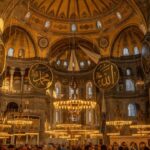
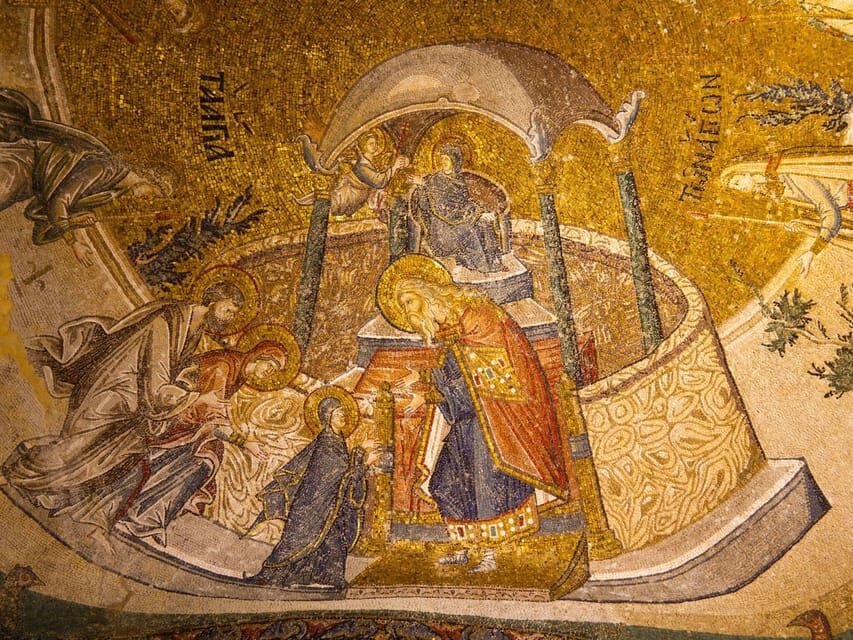
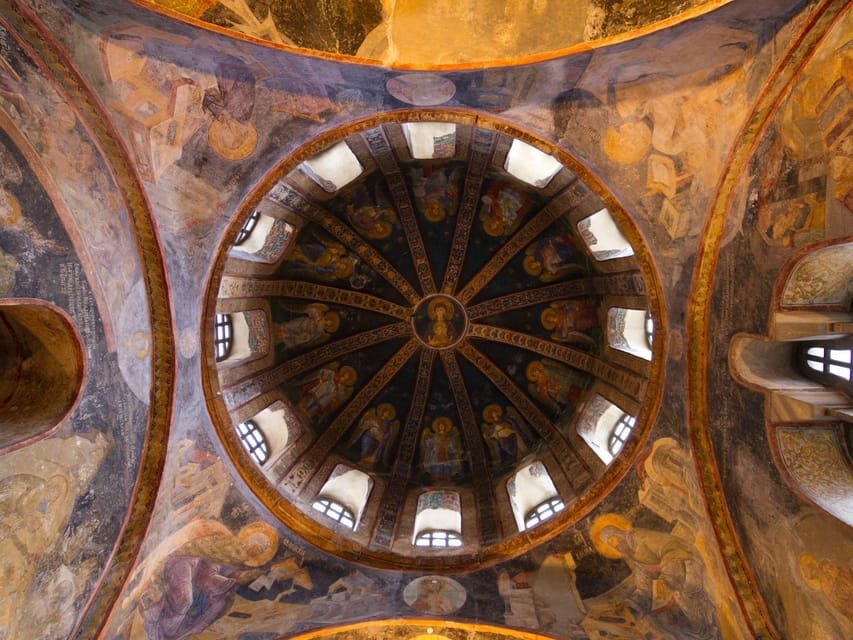
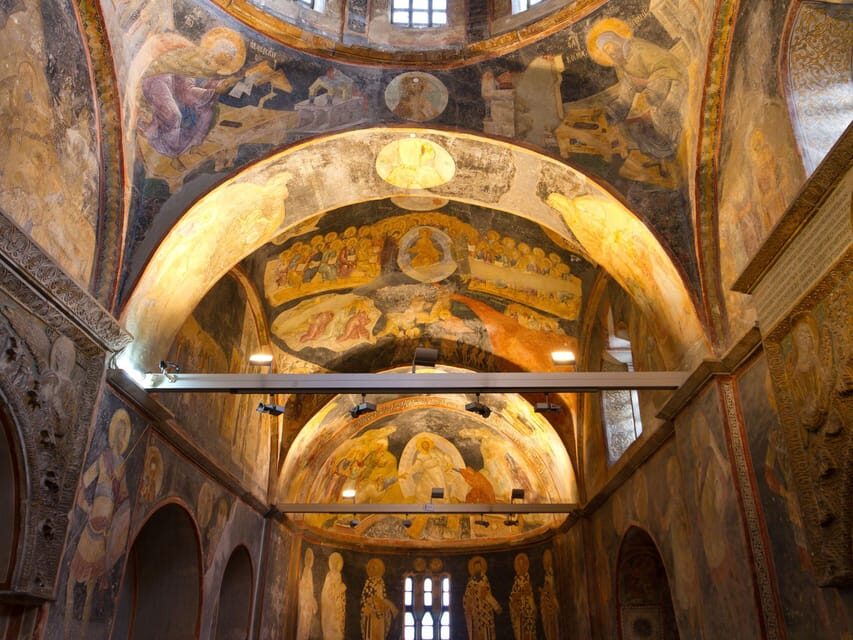
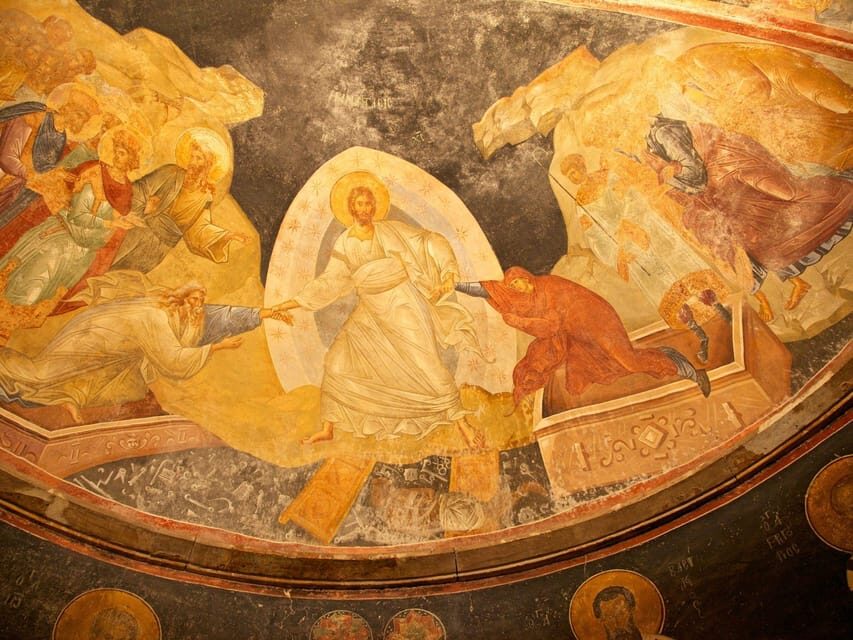
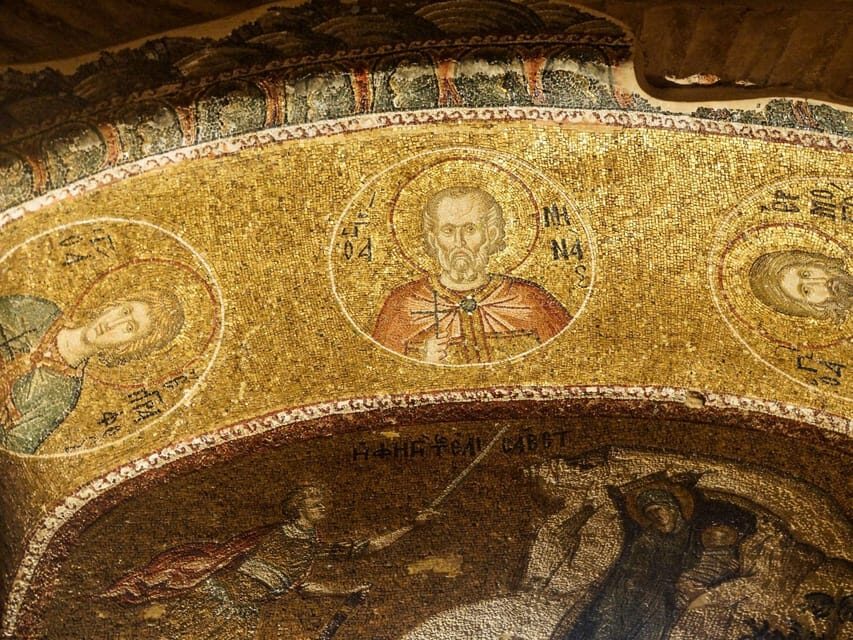
The museum’s big draw is the decoration: stunning Byzantine mosaics and frescoes across walls and ceilings. The artwork is known for strong color work and careful, intricate detail. Many scenes follow religious themes, including Biblical narratives and the lives of saints.
You’ll also see how the building’s long history shaped what’s visible. Some elements were covered or altered during the Ottoman mosque period. That means certain surfaces may feel different from what you might expect in a purely Christian church interior. Instead of a contradiction, it’s part of the point: Istanbul didn’t wipe the slate clean. It reused, adapted, and layered.
What to look for when you’re there:
- Ceiling sections: this is where the museum’s “main story” style shows up, with scenes laid out for a viewer who’s used to reading from above.
- Facial expressions and gesture: Byzantine art often tells the story through posture and eyes, even before you fully process the text.
- Patterns and border work: even when a central scene catches your eye, the surrounding designs are usually where the craftsmanship reveals itself.
Because you’re there for a 1-day ticket, you can build your own rhythm. If you’re the type who likes to move room to room quickly, you can. If you’re the type who stops every few minutes, you can do that too.
You can also read our reviews of more guided tours in Istanbul




A Visit That Works: Suggested Pace and Flow
This activity doesn’t come with a guided itinerary, and that’s actually a plus for Chora. You can make the museum match your interests instead of the other way around.
A simple approach:
- First pass (navigation): Use the audio guide lightly just to understand what each area is.
- Second pass (focus): Go back to the rooms or ceiling zones that pulled you in.
- Final pass (history connections): Spend time thinking about the church-to-mosque shift and where the building’s changes show up in what you can see.
If you feel yourself getting tired, slow down rather than rush. The mosaics and frescoes reward patience. You don’t need to “power through” to get the main impact.
Friday Closures and Restoration Surprises: Real-World Timing Advice
Chora Museum is closed to visitors on Fridays. That’s a hard rule, and it affects your planning. If your trip includes Friday, you’ll want to schedule this earlier or later.
Also, keep a flexible mindset. There have been cases where visitors had to give up a planned visit due to closure tied to restoration work. That doesn’t mean you should panic, but it does mean you should:
- Check opening status close to your visit date, and
- Don’t schedule this as your only Istanbul museum plan on a single, fragile day.
If this matters to you a lot, adding a day of buffer is smart. Istanbul is great, but it runs on real-world schedules, not just your calendar.
Price and Value: Is $35 Worth It?
At $35 per person, you’re paying for two things: skip-the-line ticket entry plus an audio guide in 25 languages. You’re not paying for a guided group. You’re also not paying for transportation.
So the value equation depends on you:
- If you want the art and the history explained, the audio guide helps you get far more than you would from just wandering.
- If you hate ticket lines and prefer getting in quickly, the skip option is money well spent.
- If you’re traveling with someone who learns visually and likes self-paced browsing, this format is efficient.
Where the price can feel less attractive is if you end up having to resolve a QR code scanning issue on site, or if you arrive and face longer-than-expected entrance delays due to security flow. That said, the overall structure is still designed to reduce waiting time.
In other words: for independent travelers who care about Byzantine art, this is a decent value. For people who only want a quick glance and plan to wing it with no guide, the audio price value may be lower.
Who Should Book This, and Who Might Want Another Format

This works best if:
- You want independent museum time rather than a strict group schedule
- You care about Byzantine art and want context for mosaics and frescoes
- You want language support that doesn’t force you to rely on English-only explanations
- You’re trying to reduce line time in a busy city
You might consider another option if:
- You strongly prefer a live guide who can adapt on the spot
- You’re traveling on a tight day that can’t absorb surprises like restoration pauses
- QR processing and self-entry tech makes you nervous (in that case, you’ll want your email confirmations ready and easy to access)
Should You Book This Chora Museum Entry?
Yes, I’d book it if you’re coming to Chora for the art and want context in your own language. The combination of skip-the-line entry and a 25-language audio guide is exactly the kind of setup that lets this museum be what it is: a place you read slowly.
But I’d also be strategic. Plan around Friday closure, give yourself buffer time, and make sure your QR and audio link emails are accessible the day you go. With those basics covered, you’ll get more out of Chora than you would from a rushed, first-look visit.
FAQ
What does the skip-the-line ticket actually skip?
The ticket is set up to help you skip the ticket line for Chora Museum entry. You should still expect to go through security, and there could be a line at the entrance that all visitors must pass.
Is the audio guide included, and what languages are available?
Yes. The audio guide is included and is available in 25 languages, including English, German, Russian, Persian, Arabic, French, Italian, Chinese, Dutch, Spanish, Hindi, Romanian, Ukrainian, Korean, Turkish, Bulgarian, Polish, Swedish, Japanese, Indonesian, Greek, Hungarian, Portuguese, Urdu, and Croatian.
Where does the museum reopen if it’s closed on Fridays?
Chora Museum is closed to visitors on Fridays. The audio guide is available on other visiting days.
How do I get the QR codes and audio guide access?
You receive both your entry ticket QR codes and your audio guide link by separate e-mail from the supplier, Istanbul Tourist Pass.
How do I reach Chora Museum from Istanbul transport?
A common route is the T4 tram to Edirnekapı station, then a short walk to the museum entrance. Buses near the area include 31E, 37E, 38E, and 36KE.
What’s the cancellation policy and can I pay later?
Free cancellation is available up to 24 hours in advance for a full refund. You can also reserve now & pay later, meaning you can book your spot and pay nothing today.