REVIEW · ISTANBUL
Colors of Istanbul: 1, 2 or 3-Day Guided Private Istanbul Tours
Book on Viator →Operated by Turkey Tours Company · Bookable on Viator
Istanbul can feel like a maze. This private tour helps you get your bearings fast, with a licensed guide and a route built around the city’s big classics and a few lesser-seen streets. I especially like the hotel pickup convenience and the chance to learn the why behind landmarks like Hagia Sophia and the Blue Mosque. The main thing to consider is that it’s a lot of walking, even when vehicle service is selected, so plan for comfortable shoes and breaks when you need them.
You’ll also like that the guide shapes the day around your group and your interests. In my view, this is a smart way to avoid “hit-and-run” sightseeing and instead connect the dots between Byzantine and Ottoman Istanbul—without making you do all the planning.
In This Review
- Key things to know before you go
- Private Istanbul starts with smart logistics (and real walking)
- Sultanahmet’s big hitters: Hippodrome, Hagia Sophia, and the Blue Mosque
- Basilica Cistern and Topkapi: the hidden water and the imperial machine
- Grand Bazaar, Misir Çarşısı, and the shopping reality check
- Istiklal Caddesi and Süleymaniye: the Ottoman skyline meets everyday city life
- 2-day option: Bosphorus by shared public boat (and the palaces from the water)
- Balat, Fener, and Galata Tower: colorful streets and faith history in plain sight
- Guide quality is the real value: names you might match with
- Price and time: is $240.30 per group good value?
- If your goal is history plus variety, this fits
- Should you book Colors of Istanbul?
- FAQ
- Is this tour private?
- Do I get hotel pickup?
- Is the tour conducted in English?
- How long does the tour take?
- Are tickets included in the price?
- What is Hagia Sophia’s admission fee?
- What is Topkapi Palace’s admission fee?
- What days are the big sights closed?
- Will I enter Galata Tower?
- What if plans change last minute?
Key things to know before you go
- Hotel pickup from Sultanahmet (or Galata Port) saves time on a tight schedule.
- Skip-the-line is not guaranteed for Hagia Sophia, so start early to handle security lines.
- Open/closed day swaps keep the tour on track when big sites are shut.
- Bosphorus is included on the 2-day option via shared public boat.
- Balat and Fener add the human-scale Istanbul you don’t get from postcards.
- Galata Tower is outside-view only unless you pay to enter.
Private Istanbul starts with smart logistics (and real walking)
This experience is set up as a private tour for your group only, with a professional licensed local guide and English offered. Pickup is designed to work for most visitors staying around Sultanahmet, plus the option to meet at Galata Port if you’re not in the main historic area.
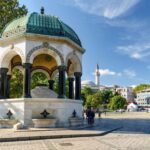
If your hotel isn’t centrally located, you’ll meet the guide at the German Fountain area. Even with vehicle service, you should expect plenty of steps between sights and sidewalks that are more practical than smooth—one more reason good shoes matter.
I also like that the timing is flexible enough to handle site closures. The day your tour falls on can affect opening hours—especially around Fridays—so it helps that the plan can shift without turning into a scramble.
You can also read our reviews of more guided tours in Istanbul


Sultanahmet’s big hitters: Hippodrome, Hagia Sophia, and the Blue Mosque
You kick things off in Sultanahmet, the historic heart where the city’s layers show up fast. The Hippodrome stop is short, but it sets context for what Constantinople used for sports and public life, including monuments like the Egyptian Obelisk and the Serpentine Column.
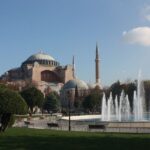
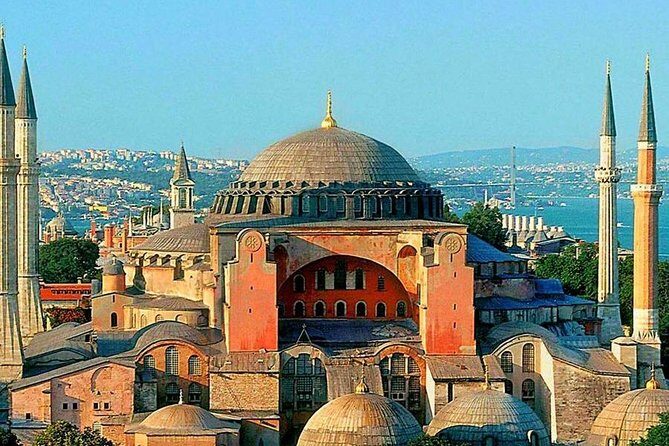
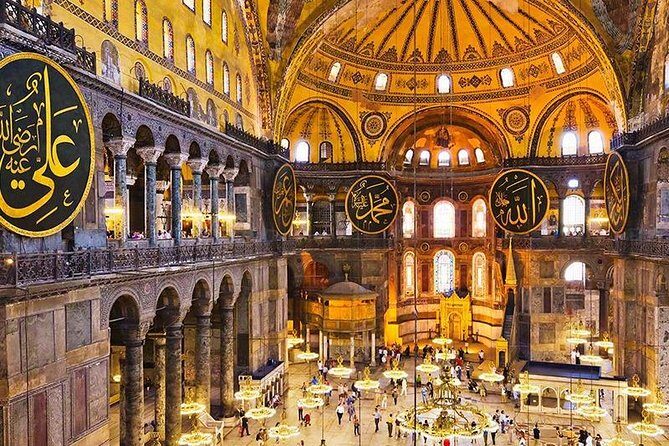
Then comes Hagia Sophia Grand Mosque. It’s one of Turkey’s most famous sites for a reason: built as a church in the 6th century, converted into a mosque after 1453, and later used as a museum—now it functions as a mosque again. The ticket for Hagia Sophia is not included, and you’ll want to budget for the admission fee (listed as 25 € per person).
Here’s the practical part. Hagia Sophia doesn’t come with skip-the-line priority from a guide, so you may need to wait through security. The tour’s own advice is to aim for an early departure, around 8:30am or 9:00am, to reduce queue time.
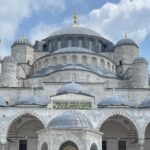
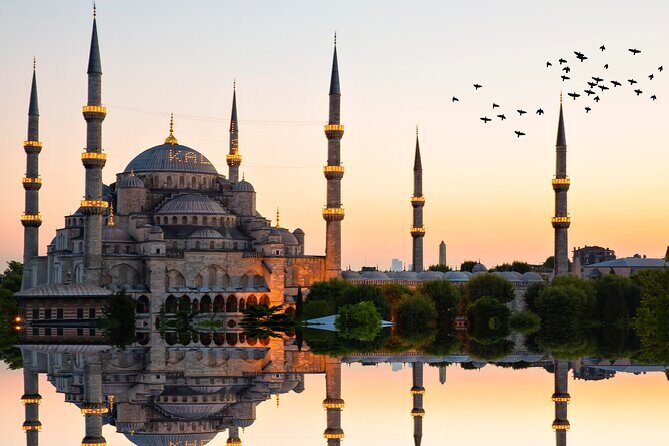
Next up is the Blue Mosque (Sultanahmet Mosque). It’s free to enter, but it’s closed on Fridays, and Hagia Sophia/Blue Mosque have special timing around that day too. If your tour lands on a Friday, plan for an afternoon visit; that’s when you’ll see the major mosque sights.
If you’re visiting Istanbul for the first time, this block of stops is the best “first principles” learning path. You’ll go from public monuments (Hippodrome) to a building that changed faith roles across centuries (Hagia Sophia) to Ottoman architecture at its height (Blue Mosque).
Basilica Cistern and Topkapi: the hidden water and the imperial machine
After the mosques, you switch gears to an underground Istanbul moment: the Basilica Cistern. It was a water storage system for the Byzantine Empire, built to supply clean drinking water to the city—especially during siege. It’s one hour on the plan and the admission fee isn’t included, so you’ll want to check what you’re paying versus what’s covered.
I like this stop because it slows you down. You’re not just seeing monuments—you’re learning how the city worked, how it survived, and how power used infrastructure. It’s also a great reset if the mosques have you standing in sun or in line.
Then you head to Topkapi Palace, a centerpiece of Ottoman rule. This part is structured as about 1.5 hours, and the big detail is that Topkapi’s admission fee is not included. The listing notes the Topkapi fee as 2750 TRY per person, and there’s an option to pay the guide for skip-the-line tickets.
Topkapi has a day-of-week issue: it’s closed on Tuesday. If your day falls on Tuesday, the tour says it will swap to alternatives. That’s important, because you don’t want a “we’ll be outside and hope” situation.
If you care about how empires ran daily life, Topkapi is the place. The palace functioned as an educational and administrative center and served as an art hub for the state, with highlights like the imperial treasury’s sacred Islamic relics, the palace kitchens, and weapons. It’s architecture plus administration, not just pretty rooms.
Grand Bazaar, Misir Çarşısı, and the shopping reality check
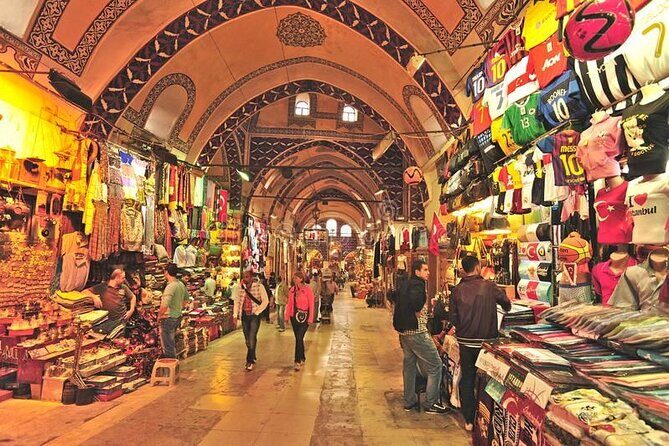
By the time you reach the markets, your feet should be tired and your shopping brain should be awake. The Grand Bazaar is included as a stop with about one hour. Entrance is listed as free, but the market itself has a closure rule: it’s closed on Sunday, and the tour can replace it with the Spice Market.
Grand Bazaar is described as huge, and that tracks with what you’ll experience on the ground: carpets, leather, jewelry, Turkish delight, gold, antique tiles—everything under one roof, with many sellers ready to help you spend. If you’re not shopping, you can still enjoy it as a cultural stop, but set expectations: it’s a market designed to move you from stall to stall.
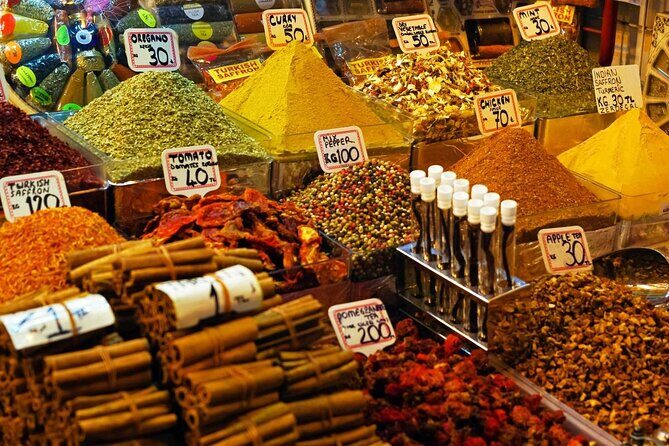
Misir Çarşısı (Spice Bazaar) is the next market-style stop. It’s also listed as free for the visit portion and gives you a chance to pick up smaller gifts and snacks. If you enjoy aromas, this is one of those places where the smell is half the experience.
One caution from the tour’s own pattern: some days include time tied to retail stops such as carpets or Turkish delight, and there may also be a lunch venue included in the flow. If you hate sales pressure, you can still handle it—just be clear about what you want (or don’t want) and use the guide to steer you back to the sights.
Istiklal Caddesi and Süleymaniye: the Ottoman skyline meets everyday city life
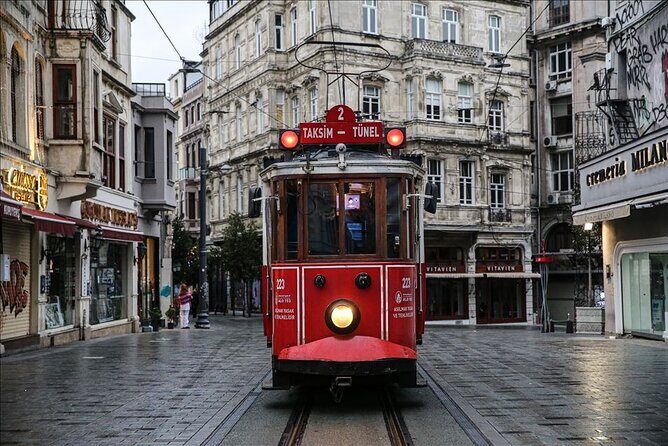
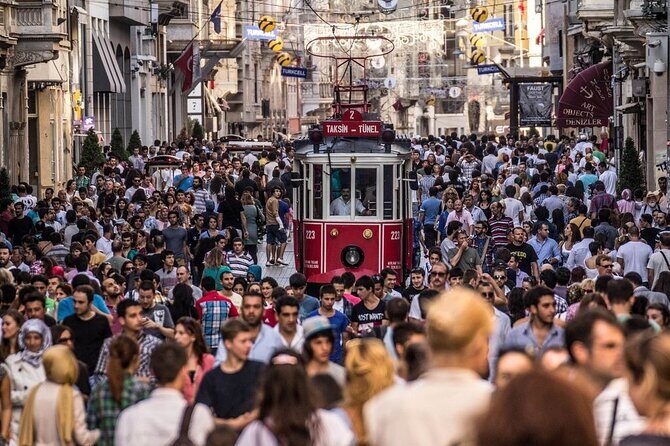
When you move away from Sultanahmet, the tone changes from museum pace to city pace. Istiklal Street (Istiklal Caddesi) is one of the main pedestrian corridors, and the tour gives you a short block of time for a walking look. Expect boutiques, bigger international stores, embassies, hotels, churches, and museums, plus cafes and bars that keep things active after dark.
This stop is only about 30 minutes, so treat it as orientation. It’s a place to see where locals go, where neighborhoods meet, and where the city’s energy lives beyond the monuments.
Then you visit Süleymaniye Mosque, built in the 16th century by Mimar Sinan for Sultan Süleyman the Magnificent. It’s listed as about an hour and is free to enter. If you’ve already seen the Blue Mosque, this is a helpful comparison point: you’ll notice different Ottoman design priorities without needing a separate “architecture tour.”
You can also read our reviews of more private tours in Istanbul


2-day option: Bosphorus by shared public boat (and the palaces from the water)
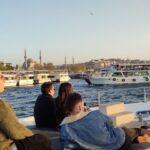
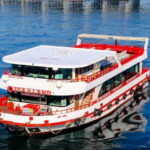
If you choose a 2-day option, you get a Bosphorus Strait boat tour via shared public boat. The plan is about two hours and it’s focused on the shoreline views.
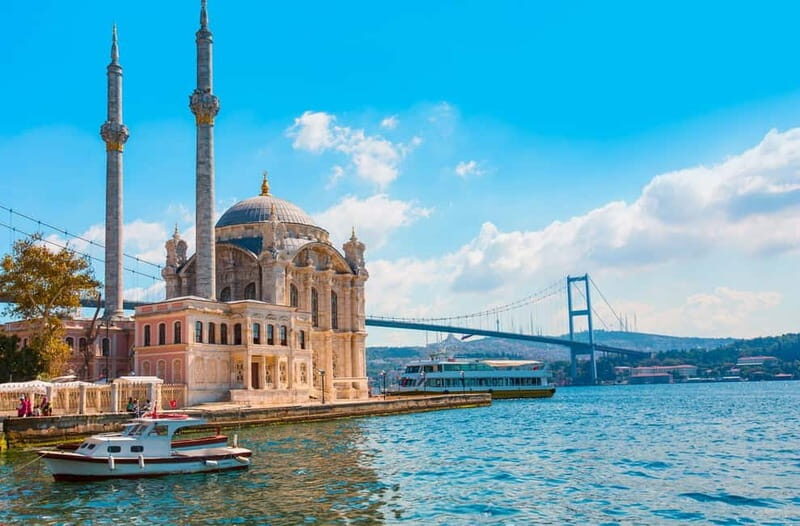
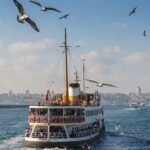
From that boat ride, you’ll see places like Dolmabahçe Palace, Beylerbeyi Palace, Çırağan Palace, Ortaköy Mosque, Rumeli Fortress, and more. This is a good way to understand Istanbul’s layout without paying for a private charter.
A boat day also changes your mental pace. Landbound monuments can blur together, but water views give you scale—how far the city stretches and how the palaces relate to the empire’s geography.
Balat, Fener, and Galata Tower: colorful streets and faith history in plain sight
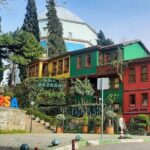
Now you get the “everyday Istanbul” layer. Balat is described as a walk through colorful streets with washing lines on crumbling buildings, local street life, synagogues and churches, and cobblestone lanes full of kids playing. You’ll also learn the neighborhood’s background: starting in 1492, Balat grew as a cultural melting pot shaped by Sephardic Jews from Spain alongside Greek and Armenian Christians and Muslims.
This section includes a break to watch people go about daily life. I like that touch because it’s not forced. It’s just observing the neighborhood from the inside out—so you remember streets, not just buildings.
Fener follows, with stops tied to Greek Orthodox sites. The tour specifically points out the Greek Orthodox Patriarchate area and mentions a column believed to have been used for binding and flogging of Jesus in Jerusalem. It also discusses why Mehmed II let the site remain in Istanbul, and what it means in the Christian world and how it relates to the Catholic Church. That’s a heavy topic, delivered in a way that helps you understand why this location matters.
Then you see Galata Tower from the outside. The tour frames it as a structure built by the Genoese colony in 1348, called the Tower of Christ at the time. It stays an outside-view stop unless you want to pay an entrance fee.
This final stretch works well at the end of the day because you’re walking through atmosphere. It’s also a nice contrast to Sultanahmet—less monumental, more lived-in.
Guide quality is the real value: names you might match with
The headline feature is a professional licensed local tour guide, and guide style matters a lot on a day like this. Based on past experiences, you might get guides such as Aisha, Serkan Mert, Cem, Abdülhamit, Erdemm, or Serkan—each praised for being patient, organized, and able to tailor the day.
What I like about this setup is that you’re not just collecting photos. A good guide helps you connect what you’re seeing to why it happened—especially across Byzantine and Ottoman Istanbul.
If you care about food too, one of the guides you could meet has helped people choose dinner spots during the tour. That’s not a small thing. A guide who knows how to pace the day usually knows where to send you after.
Price and time: is $240.30 per group good value?
The price is listed as $240.30 per group (up to 12), with durations around 7 to 14 hours depending on which option you pick. That’s a big point: you’re paying for a private guide and a planned route, not just entry tickets.
What’s not included is the admission cost for some big-ticket sites: Hagia Sophia (25 € per person) and Topkapi (2750 TRY per person). Other major sights have free admission listed for the tour portion, but you should still assume you may pay for specific entrances not covered in the package.
So the value question comes down to math plus your tolerance for lines. If you’re traveling as a small group, paying for your own guide can beat the cost of multiple individual tours—especially when you’d otherwise spend your day figuring out what’s open and where to start. Also, hotel pickup reduces the time cost of getting organized.
One more cost/effort factor: walking. A review pattern notes that even with a car, it can still be a lot of walking. That doesn’t mean the tour is bad—just that you should plan for it so you don’t spend your best Istanbul hours feeling wiped.
If your goal is history plus variety, this fits
This is a strong choice if you want:
- Major landmarks handled in a logical order (Sultanahmet into the imperial layer, then markets, then neighborhoods).
- A private guide who can explain the context behind what you see.
- A plan that accounts for closures like Grand Bazaar on Sunday and Topkapi on Tuesday.
- Optional Bosphorus views if you’re doing the 2-day version.
It might be less ideal if:
- You hate walking and want a mostly seated day.
- You expect guaranteed skip-the-line entry at Hagia Sophia.
- You want a totally retail-free day with zero shopping stops. Some days build in shop time, including places like carpet and Turkish delight.
Should you book Colors of Istanbul?
Yes, if you’re the type who likes to understand what you’re looking at, not just check boxes. I’d especially recommend it for first-timers staying near Sultanahmet, because pickup and the location of the landmarks work together.
I’d think twice if you’re extremely line-averse at Hagia Sophia. The tour doesn’t promise skip-the-line priority there, so your best strategy is timing—aiming for an earlier start if you can.
If you’re on the fence, use this rule of thumb: if you want a guided day that connects Byzantine and Ottoman Istanbul with markets and neighborhood streets, this is the kind of private route that makes the city click.
FAQ
Is this tour private?
Yes. It’s listed as a private tour/activity, meaning only your group participates.
Do I get hotel pickup?
Pickup is offered. The guide meets you at Sultanahmet hotels or Galata Port, and if your hotel is not centrally located, the meeting point may be in front of the German Fountain. If vehicle service is not selected, the guide picks you up from Sultanahmet hotels by foot.
Is the tour conducted in English?
Yes, English is offered.
How long does the tour take?
It runs about 7 to 14 hours depending on the option you choose.
Are tickets included in the price?
Some are not. Hagia Sophia and Topkapi Palace admission fees are not included, while other listed stops have admission ticket free for the visit portion.
What is Hagia Sophia’s admission fee?
The admission fee is listed as 25 € per person.
What is Topkapi Palace’s admission fee?
The admission fee is listed as 2750 TRY per person.
What days are the big sights closed?
Grand Bazaar is closed on Sunday (it can be replaced with Spice Market). Topkapi Palace is closed on Tuesday (it can be replaced with alternatives). Blue Mosque and Hagia Sophia have special closure timing on Fridays and are noted as closed until 2 pm on Fridays.
Will I enter Galata Tower?
Galata Tower is visited from outside unless you would like to pay the entrance fee.
What if plans change last minute?
Free cancellation is offered up to 24 hours in advance for a full refund. If you cancel less than 24 hours before the experience starts, the amount paid is not refunded.