REVIEW · ISTANBUL
Dolmabahçe Palace and Sunset Tour on Luxury Yacht
Book on Viator →Operated by Tour Book Turkey · Bookable on Viator
Istanbul at sunset hits different. This combo pairs a guided run through Dolmabahçe Palace with a Bosphorus sunset cruise past the city’s waterfront icons. I like how you get the big-story context inside the palace, then glide along the Bosphorus with included snacks keeping the pace easy. I also like that it’s capped at 20 people, which makes it simpler to hear your guide. The one catch: Dolmabahçe admission isn’t included, so plan extra cost for entry.
One standout guide name is Celil, praised for handling both the palace portion and the yacht portion with real clarity. Expect about 5 hours total, with around 3 hours at Dolmabahçe, then cruising for the sunset lights. On board you’ll have cookies, baklava, lemonade, fruit plates, water, and Turkish tea, plus there’s a restroom on the yacht.
In This Review
- Key things I’d bet you’ll care about
- Why this Dolmabahçe + yacht combo makes sense
- Dolmabahçe Palace: Ottoman power, museum rooms, and a personal story
- What to expect inside
- A couple practical considerations
- The Bosphorus sunset yacht: small group, big views
- Group size and hearing the guide
- Motion and comfort notes
- Ciragan Palace, Ortaköy, and the European shoreline at golden hour
- Çırağan Palace: marble, power, and long confinement
- Ortaköy: waterfront neighborhood energy
- Bosphorus Bridge feet: a small detail that anchors the big map
- Bebek: mansions, university, and Bosphorus views
- Fortresses and bridges: Rumeli Hisarı and the narrowing Bosphorus story
- Rumeli Hisarı: built fast, built to watch
- Fatih Sultan Mehmet Bridge: modern steel in an ancient corridor
- Anadolu Hisarı and the Kucuksu/Beylerbeyi palaces: Asia-side perspective
- Anadolu Hisarı: walls, fortress remnants, and a museum you can see
- Kucuksu Palace: a small summer retreat
- Beylerbeyi Palace: a multi-style imperial complex under the bridge
- Maiden’s Tower legend: why this silhouette keeps getting retold
- What’s included on board (and what isn’t)
- Included
- Not included
- Price and value: is $78.10 fair for what you get?
- Where you’ll meet and where you’ll end
- Who should book this Bosphorus sunset yacht tour
- Who should skip it or think twice
- Final call: should you book?
- FAQ
- How long is the Dolmabahçe Palace and luxury yacht sunset tour?
- Is Dolmabahçe Palace admission included in the price?
- What snacks and drinks are included on board?
- Is alcohol included on the yacht?
- Is there a restroom on board?
- Where do I meet the tour, and where does it end?
- What language is the tour offered in?
- How big is the group?
- Can I cancel for a full refund?
Key things I’d bet you’ll care about
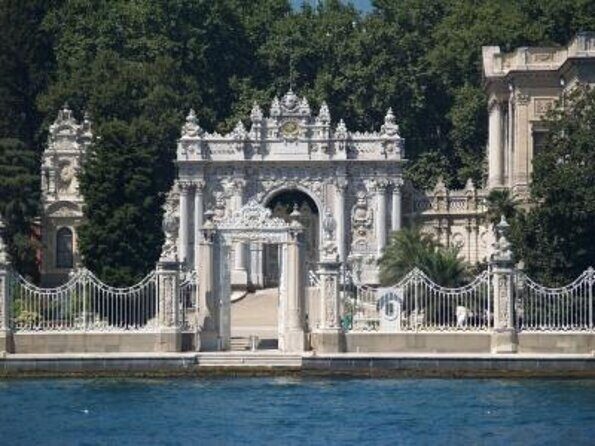
- Dolmabahçe Palace with a guide: You’re not just looking at rooms; you’re getting the story behind what you’re seeing.
- A guided Bosphorus sunset route: You pass major landmarks from the water with commentary as the light changes.
- Classic sweets and tea on board: Baklava and Turkish tea are included, not an optional add-on.
- Small-group experience: Maximum 20 travelers helps the experience stay calm and readable.
- Icon views you can’t get the same way on foot: Bridges, fortresses, and palaces along both shores.
Why this Dolmabahçe + yacht combo makes sense
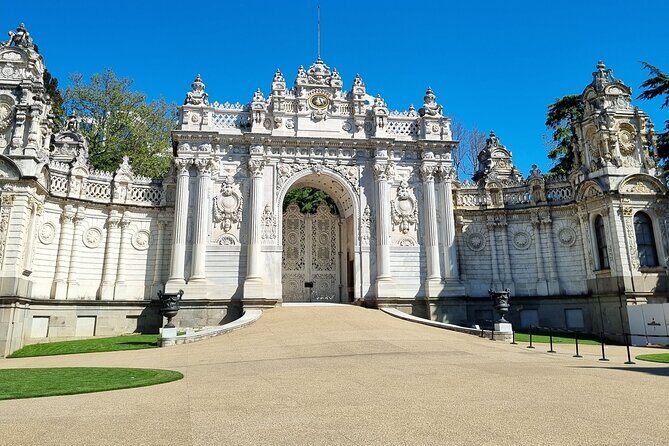
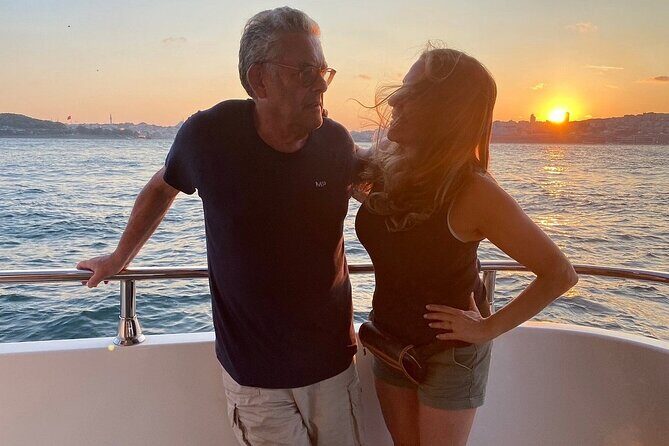
This tour is a smart match of two Istanbul “modes.” First you go heavy on indoor imperial grandeur at Dolmabahçe Palace, then you switch to wide-open views on the Bosphorus right as the city softens into evening light.
I like that the day is paced. Dolmabahçe gets you about three hours to take it in, and then the cruise portion gives you momentum without constant walking. You’ll also get a guide’s framing at two scales: the close-up details inside the palace, then the big geographic story of how Istanbul spreads across continents.
You can also read our reviews of more boat tours in Istanbul

Dolmabahçe Palace: Ottoman power, museum rooms, and a personal story
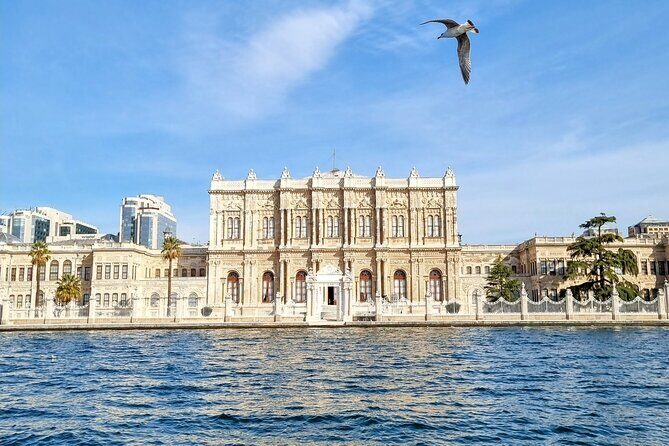
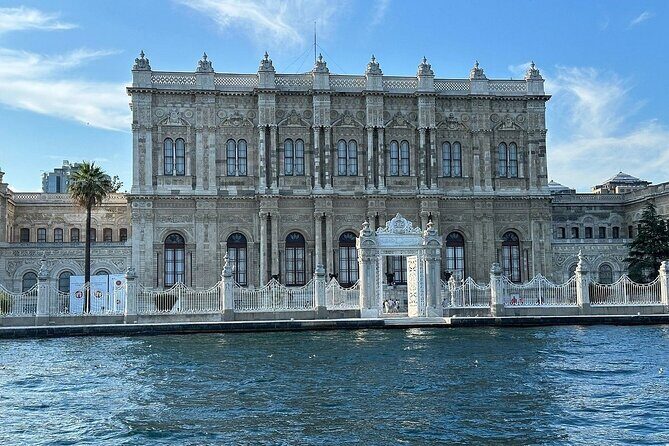
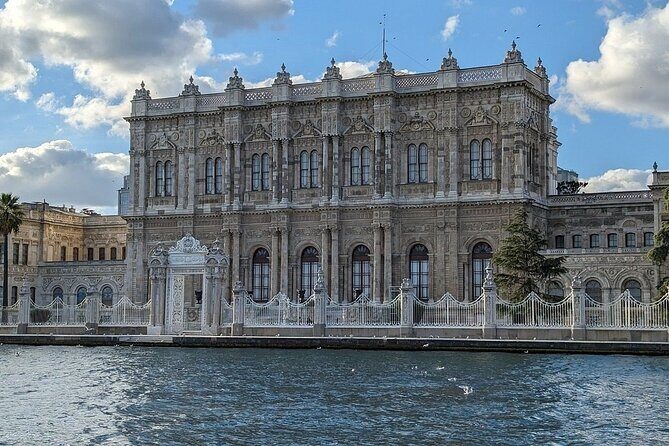
Dolmabahçe Palace is where Ottoman-era politics and luxury intersect, and a good guide makes the difference. You start with a guided visit through the palace’s grand halls and opulent interiors, then you move through areas tied to the palace’s earlier role as an administrative center of the Ottoman Empire.
What I’d focus on here is the human thread your guide brings in. The tour specifically calls out the place connected with where a beloved leader passed away. That kind of detail turns “big palace rooms” into something more grounded—less like a checklist, more like a chapter in Istanbul’s modern identity.
What to expect inside
Plan for a structured, guided walkthrough. The palace visit is about 3 hours, and it’s the main ticketed component of the tour day.
Also note the entry reality: Dolmabahçe admission is not included. That means you should budget extra and expect that you’ll need to handle entry separately from the tour price.
A couple practical considerations
Because the palace visit is indoors with set routes, it’s not the time to wander off chasing every corner. You’ll get more out of it by staying with your guide and listening for the context—names, purposes, and what each room was built to impress.
If you have mobility limits, it’s still a palace complex, so there may be stairs and uneven surfaces. The tour data doesn’t spell out accessibility specifics, so you’ll want to check with the operator if that’s a concern.
The Bosphorus sunset yacht: small group, big views
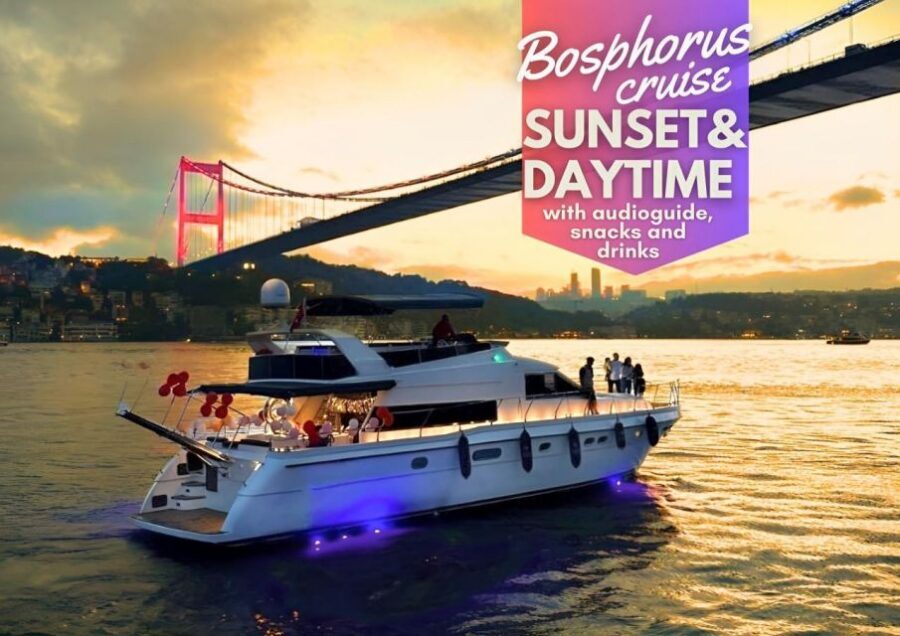
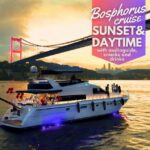
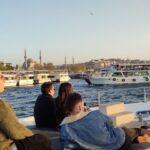
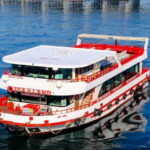
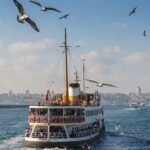
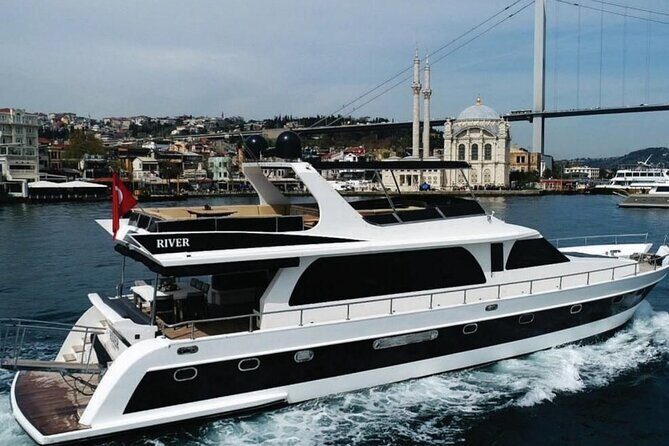
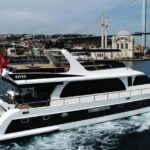
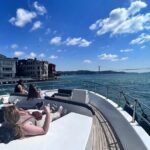
Once you shift onto the luxury yacht, the vibe changes fast. Instead of museums and hallways, you get open deck time and a moving vantage point—perfect for Istanbul’s signature photo moment, where the city stretches along the water.
This matters because Bosphorus landmarks are designed for sightlines. From the water, you can actually see why palaces and fortresses were built where they were: they were watching the strait and announcing status to anyone approaching.
You can also read our reviews of more tours and experiences in Istanbul


Group size and hearing the guide
The tour caps at 20 people. That’s a real quality-of-experience detail. Smaller groups mean fewer muffled questions and better odds you can follow the story while the boat is moving and the scenery is changing.
Motion and comfort notes
The tour isn’t recommended if you have vertigo, and it also isn’t recommended for people prone to sea-sickness. If either applies, this is the point to think twice before booking, because the cruise portion is a core part of the value.
Ciragan Palace, Ortaköy, and the European shoreline at golden hour

Your yacht route moves along the European side with a sequence of recognizable neighborhoods and landmarks. Even when you’re only passing by, the commentary helps you connect names to the city geography.
Çırağan Palace: marble, power, and long confinement
Çırağan Palace was commissioned by Sultan Abdulaziz and designed by architect Sarkis Balyan. It’s described as marble, spread over a massive 80,000 square meters—and that scale isn’t just trivia. It signals how seriously the Ottoman court treated architectural presence.
The story portion here is intense. After Abdulaziz was deposed, he was imprisoned here for years with his family. The same pattern is noted for Murat V after his deposition, with a similarly long confinement. Later, after the Second Constitutional Monarchy in 1908, the palace became the House of Parliament—then it was damaged by fire in 1910.
You’ll also hear how the grounds changed hands: transferred to Besiktas Sports Club, used as Seref Stadium, then restored in the early 1990s and reopened as a luxury hotel. That’s a lot of history for one shoreline stretch, and it’s exactly the kind of context that turns a passing view into understanding.
Ortaköy: waterfront neighborhood energy
Ortaköy is a district on the European side, built on slopes opening to the coast. It’s especially known for the Ortaköy Bazaar, with shops and cafes clustered right in the district. The tour notes that it can be more active later in the day, with movement starting after 10:00 am.
At sunset, you’ll get the waterfront vibe rather than the morning market scene. What you’ll benefit from is the sense of where Istanbul’s everyday life meets the big monuments along the Bosphorus.
Bosphorus Bridge feet: a small detail that anchors the big map
You pass the Bosphorus Bridge area, and the tour points out where the bridge’s suspension structure relates to the shores: Ortaköy on the European side and Beylerbeyi on the Anatolian side. That’s useful, because it helps you understand the bridge as a connector, not just a skyline icon.
Bebek: mansions, university, and Bosphorus views
Bebek sits along the European shore and is described as a historic residential district since Ottoman rule. The name Bebek is linked to the idea of an attractive “positioning” on the water, and today it’s associated with waterside mansions and a prominent view corridor.
If you like a gentler, more residential slice of Istanbul’s waterfront (instead of fortress drama every minute), Bebek is one of the calming parts of the route.
Fortresses and bridges: Rumeli Hisarı and the narrowing Bosphorus story
When the yacht hits the areas around Rumeli Hisarı and the surrounding strait, the scale shifts. Fortresses become the theme, and you feel how the Bosphorus was once a chokepoint.
Rumeli Hisarı: built fast, built to watch
Rumeli Fortress (Rumeli Hisarı) was built directly across from Anadolu Hisari at the narrowest point of the Bosphorus. Construction started in 1453 at the order of Sultan Mehmet the Conqueror and was completed in three months—an eye-opening timeline if you’re the kind of person who wonders how things were pulled off that quickly.
Before the conquest of Istanbul, it was used to protect against naval attacks. After the conquest, it served as an inspection point for maritime traffic on the Bosphorus. From the water, you’ll see why that mattered: controlling the passage meant controlling trade, movement, and defense.
Fatih Sultan Mehmet Bridge: modern steel in an ancient corridor
You also pass the Fatih Sultan Mehmet Bridge, the second Bosphorus bridge. It began construction in 1986 and opened July 3, 1988, and it’s described as the 14th largest steel suspension bridge in the world.
The tour also emphasizes something practical: along with the Bosphorus Bridge and ferries, it carries a significant portion of trans-Bosphorus traffic. So while it looks like a skyline photo prop, it’s also part of Istanbul’s daily engine.
Anadolu Hisarı and the Kucuksu/Beylerbeyi palaces: Asia-side perspective
The cruise continues around the Anatolian side with places that make Istanbul’s “two continents” claim feel real.
Anadolu Hisarı: walls, fortress remnants, and a museum you can see
Anadolu Hisari is located in Beykoz on the Asian side. It was built in 1395 by Beyazit I, with a citadel and exterior walls. After the conquest, its strategic importance faded and it was converted into a military hospital.
During restoration from 1991 to 1993, it became a museum, though the tour data notes it is not open to the public. It’s described as an open-air museum where only outer walls can be visited, and the road passes just through it. From the yacht, you won’t be walking there, but you’ll get a view that helps you understand what a “fortress footprint” looks like along the water.
Kucuksu Palace: a small summer retreat
Kucuksu Palace is a small Ottoman summer palace ordered by Sultan Abdulmecit and designed by Nikogos Balyan. It’s specifically tied to Bosphorus views and was used by sultans for relaxation.
The tour also notes that it later opened as a museum during the Republican period, helped by the fine quality of furniture, paintings, carpets, and delicate details. Even if you can’t step inside from the yacht, the passing views plus the story help you see it as a retreat—not just another shoreline building.
Beylerbeyi Palace: a multi-style imperial complex under the bridge
Beylerbeyi Palace (meaning Lord of Lords) sits on the Bosphorus shores in the 1860s era. It lies right under the Bosphorus Bridge, which gives it a powerful visual contrast: Ottoman palace under modern suspension structure.
The design is described as blending elements from both East and West, including renaissance and baroque influences. It includes 6 halls, 24 rooms, and even a hamam (Turkish bath), plus a bathroom, spread across two storeys.
If you’re the kind of person who likes architecture that signals taste and politics at the same time, this is one of the stops you’ll think about afterward.
Maiden’s Tower legend: why this silhouette keeps getting retold
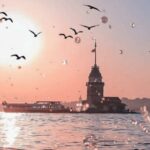
Kız Kulesi, or Maiden’s Tower, is one of Istanbul’s most recognizable silhouettes, and it comes with a legend that the tour includes.
The story goes like this: an oracle prophesied that a sultan’s daughter would die from snakebite on her 18th birthday. To protect her, the sultan had the tower built on a tiny island about 200 meters from the shore of Üsküdar, keeping her hidden from the world.
On her 18th birthday, the sultan brings her a basket of fruits as a gift. The hidden snake is inside, and she’s bitten—ending the story in the sultan’s arms. That legend is exactly why the tower’s shape matters. It’s not just a landmark; it’s a symbol of fate, fear, and the limits of control.
The tour data also notes the tower has served different roles through history, including a fire observatory and a jail. So as you pass it, you can look at the tower as both myth and function.
What’s included on board (and what isn’t)
This is one of the more practical parts of the experience, because small things matter during a cruise.
Included
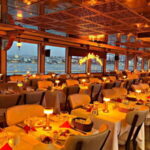
You get snacks and drinks on board: cookies, baklava, Turkish tea, lemonade, fruit plates, and water. There’s also a restroom on board, and you’re traveling with a guide.
This snack setup is a big part of the value because it keeps you from having to scramble for food during the transition between palace and yacht.
Not included
Alcoholic beverages are not included. Transfers services aren’t included either, so you’ll need to get yourself to the start point and then make your own way from the end pier.
Price and value: is $78.10 fair for what you get?
At $78.10 per person for about 5 hours, the pricing feels positioned for value if you’re buying both a guided museum visit and a guided yacht ride in one package.
Here’s how the math works in plain terms:
- You’re getting a guide-led Dolmabahçe visit (the tour states admission isn’t included, but the guided experience is part of the deal).
- You’re getting a luxury sunset cruise portion with guided commentary as you pass major Bosphorus sites.
- You’re getting a real included onboard snack/drink setup: cookies, baklava, tea, lemonade, fruit plates, water.
- You’re getting a small group (maximum 20), which matters more than it sounds.
The main reason price might feel “less” than you expect is the Dolmabahçe admission ticket isn’t included. If you arrive needing entry solved on the spot, that extra cost and time can affect your overall day.
Where you’ll meet and where you’ll end
You start at Saat Kule Kafeterya, Vişnezade, Meclis-i Mebusan Cd. 38 A, 34357 Beşiktaş, Istanbul. The tour ends at Kabataş pier at Dentur, Mavi Marmara, Ömer Avni, 34427 Beyoğlu, Istanbul.
Knowing the end point helps. Kabataş is a common transportation hub area, so it’s a workable spot to continue your evening plans.
Who should book this Bosphorus sunset yacht tour
This is a strong pick if you want:
- A guided palace experience, not a self-paced museum fog
- A sunset cruise with commentary as you pass major waterfront icons
- Included snacks and tea so your day stays smooth
It’s also especially appealing if you like clear stories. The tour includes background about palaces, fortresses, and bridges, and it doesn’t treat the Bosphorus like just a scenic wallpaper.
Who should skip it or think twice
Skip or reconsider if:
- You have vertigo (the tour explicitly says it’s not recommended)
- You’re prone to sea-sickness
- You hate the idea of paying museum admission separately
And if you’re someone who wants full independence—wandering exactly where you want for as long as you want—this tour’s guided structure might feel restrictive. The route is set, and the experience is built around that flow.
Final call: should you book?
If you want an Istanbul afternoon that mixes imperial interiors with real Bosphorus views, I think this is worth booking. The guided pairing is the real strength, and the onboard snack setup makes the cruise feel like part of the experience, not a chore you have to survive.
Just go in knowing the one big extra cost: Dolmabahçe entry isn’t included. If that’s not a surprise, you’re set up for a day that feels efficient, story-driven, and very Istanbul—especially once the sun drops and the waterfront turns into silhouette.
FAQ
How long is the Dolmabahçe Palace and luxury yacht sunset tour?
The tour lasts about 5 hours.
Is Dolmabahçe Palace admission included in the price?
No. Dolmabahçe admission is not included.
What snacks and drinks are included on board?
Cookies, baklava, Turkish tea, lemonade, fruit plates, and water are included.
Is alcohol included on the yacht?
No. Alcoholic beverages are not included.
Is there a restroom on board?
Yes, the tour includes a restroom on board.
Where do I meet the tour, and where does it end?
You start at Saat Kule Kafeterya in Beşiktaş and end at Kabataş pier.
What language is the tour offered in?
The tour is offered in English.
How big is the group?
The experience has a maximum of 20 travelers.
Can I cancel for a full refund?
Yes. You can cancel up to 24 hours in advance for a full refund.