REVIEW · ISTANBUL
Exclusive Luxury Yacht Bosphorus Sightseeing Cruise in Istanbul
Book on Viator →Operated by Travel See Life · Bookable on Viator
That first stretch of water is pure magic.
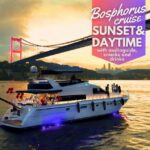
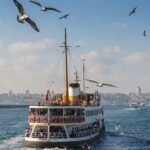
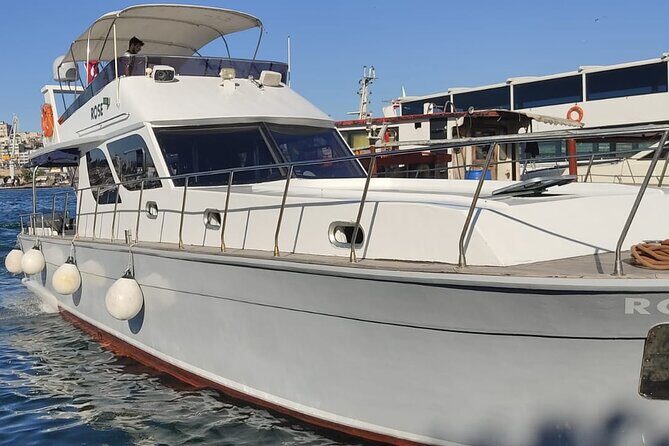
This Bosphorus sightseeing cruise turns Istanbul’s postcard views into an easy, moving experience with a private yacht feel for a group up to 8, and a smooth, simple flow that keeps your time focused on the scenery. I especially like the way you get both European and Asian shore highlights in about 2 hours, with well-known landmarks like Galata Tower, Dolmabahçe Palace, Ortaköy, and fortress and palace stops along the strait. One thing to keep in mind: this cruise is weather-dependent, so plan for a day when conditions are cooperative.
What makes it feel extra good is how the logistics are handled for you. The tour includes hotel pickup and drop-off and comes with a mobile ticket, so you’re not stuck figuring out how to get to the dock. The crew is described as friendly and the whole outing has a relaxing, private tone, which matters when you’re trying to see a lot without feeling rushed. The main drawback is simple: you’re limited to an approximate 2-hour window, so you’ll enjoy the viewpoints from the water more than you’ll do deep, on-foot exploring.
In This Review
- Key highlights to clock before you go
- Why a luxury yacht route beats standing on the shore
- Getting to the dock: pickup, mobile ticket, and a private feel
- The Bosphorus strait at cruise speed: Europe meets Asia, minus the stress
- Galata Tower (Christea Turris) from the water: medieval stone, modern city
- Dolmabahçe Palace: gardens along the shore you can actually enjoy
- Ortaköy Mosque by the pier square: waterfront life at Beşiktaş
- From Bebek to Rumelihisarı: fortress strategy at the narrowest point
- Fatih Sultan Mehmet Bridge and crossing the strait’s second big moment
- Anadoluhisarı Fortress: across the water, a romantic castle with a Turkish landmark role
- Beylerbeyi Palace: a 19th-century royal house viewed from the water
- Kızkulesi (Maiden’s Tower / Leander’s Tower): the legend check
- Price and value: what $383.27 gets your group
- Who should book this cruise (and who might skip it)
- Should you book this Bosphorus yacht cruise?
- FAQ
- How long is the Bosphorus sightseeing cruise?
- What is the price for this private yacht tour?
- Is this tour private?
- What’s included in the price?
- What’s the meeting point and where does the tour end?
- What do I need to know about tickets and weather?
Key highlights to clock before you go
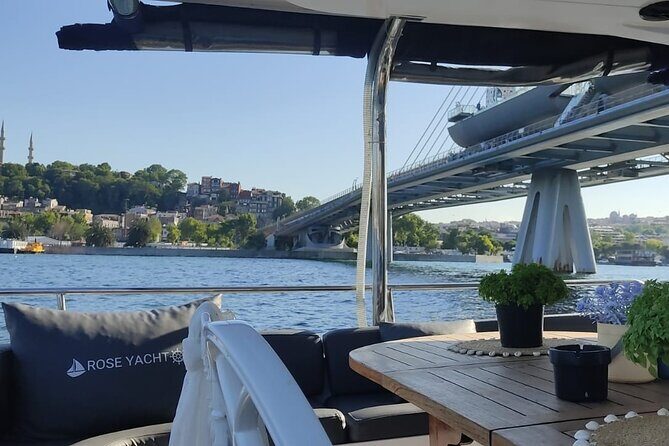
- Private group up to 8 so it feels calmer than big-group sightseeing
- Hotel pickup and drop-off included which keeps the morning (or afternoon) stress low
- A two-shore Bosphorus route with forts, palaces, and famous towers in one trip
- Iconic waterfront stops like Galata Tower, Dolmabahçe Palace, Ortaköy, Rumelihisarı, and Beylerbeyi
- Mobile ticket for an easier start
- Value for small groups since the price is per group, not per person
Why a luxury yacht route beats standing on the shore
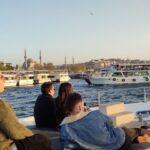
I like this kind of cruise because it treats Istanbul like a city you watch, not a city you chase. When you’re on the water, your eyes automatically organize what you see: towers, palaces, and bridges line up in a way that’s hard to recreate from land.
The Bosphorus also has a “living” reputation in the way it’s described. It’s not just a strip of water between two coasts. It’s presented as busy, full of movement, with palaces and villages sliding by, shaded by forest trees, and changing scene after scene. That matters because you’re not bored by repetition. Each stretch feels like a new page.
And yes, the cruise route is packed with landmarks. But the key is pacing: with a 2-hour cruise, you’re not stuck committing to long museum time. You get the big visual hits and keep your energy for later.
You can also read our reviews of more boat tours in Istanbul

Getting to the dock: pickup, mobile ticket, and a private feel
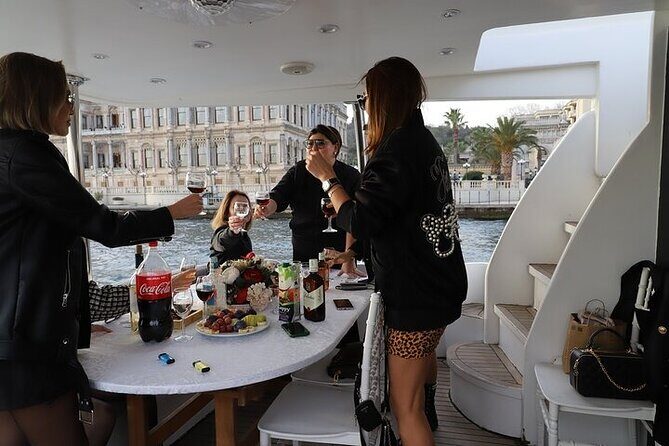
The meeting point is Kadirhas Üniversitesi Mini Futbol Sahası in Cibali (Kadir Has Ünv. No:134, 34083 Fatih/İstanbul). The tour ends back at the same meeting point, after your return to the yacht.
I like that hotel pickup and drop-off are included. In Istanbul, that can be the difference between enjoying your day and spending it negotiating traffic, stops, and directions. Since the cruise is private, you’re not weaving through crowds just to find the group.
Your ticket is a mobile ticket, and you’ll get confirmation at booking time. That’s a small thing, but it helps your start stay simple. You can focus on the view, not the paperwork.
One practical note: the tour says it’s near public transportation and that most travelers can participate. If you’re unsure about your comfort level on a boat, it’s worth thinking about what you’re used to. A short cruise can still feel like a boat, and that’s not everyone’s favorite.
The Bosphorus strait at cruise speed: Europe meets Asia, minus the stress
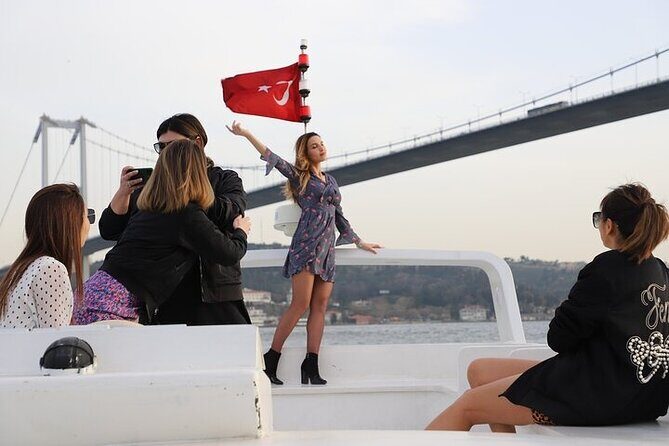
The experience starts by getting you onto the Bosphorus itself, sometimes spelled Bosporus/Bosphorus in travel materials. The description leans poetic and myth-flavored, tracing the name back to ancient times and telling a story of the mistress of Jupiter passing over the strait as a cow. It’s a fun opener because it frames the waterway as more than geography.
From a practical viewpoint, the most valuable part of this early stretch is how clearly the strait divides Europe from Asia—and how quickly you can see that split from your seat. The water is described as resembling the Dardanelles in length, breadth, and current, but with distinctive local character: it’s winding, not straight, and it presents “a body of water full of life and animation.”
This is where you’ll likely get your best “first glance” photos. You’ll also start noticing how the shores feel layered: palaces and villages, wooded areas, and constant changes in what’s around each bend.
If you’re someone who needs to understand the layout fast, this segment helps. You get the sense of direction without having to read a map in the middle of a busy city.
Galata Tower (Christea Turris) from the water: medieval stone, modern city
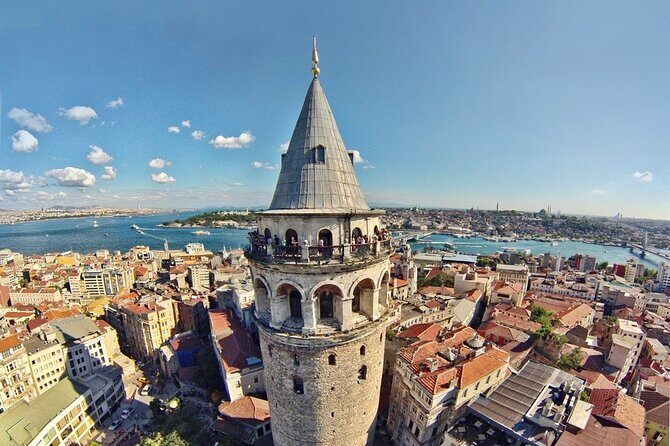
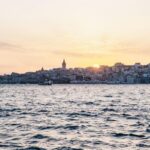
Next up is the Galata Tower, called Christea Turris by the Genoese. The important details for your planning are very specific: it’s a medieval stone tower located in the Galata/Karaköy quarter, just north of where the Golden Horn meets the Bosphorus.
From the yacht, you’ll likely see how the Golden Horn junction shapes the skyline. Even without walking there, you can understand where the waterways “meet” and why Istanbul’s views feel so dramatic from this side of town.
The appeal here is contrast. You’re getting an older stone silhouette while everything around it is modern city life. If you want one landmark where the history-feel is easy to spot visually, this is it.
A small consideration: towers and skyline views depend on angle and weather. If the day is cloudy, it’s still worthwhile, but you may lose some of that crispness that makes photos pop.
Dolmabahçe Palace: gardens along the shore you can actually enjoy
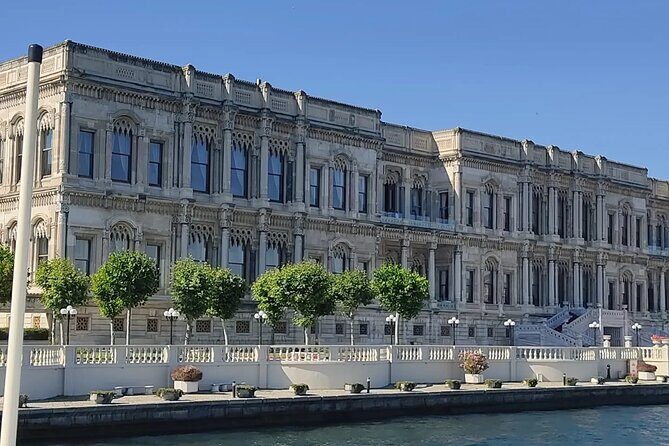
Dolmabahçe Palace is described as sitting on the European shore of the Bosphorus, with dependencies that form almost a little town. The gardens run for a mile or more along the water’s edge, which is the detail I’d pin on this stop.
On a boat, long garden lines are easier to appreciate. From land, you might only see a portion at a time. From the water, the waterfront reach becomes obvious, and it helps you grasp the scale without needing to tour every building.
The draw here is pace. You’re not committing to a full palace visit on foot. You’re seeing the waterfront presence and the way the complex stretches along the shoreline, which is the part that suits a cruise format.
You can also read our reviews of more tours and experiences in Istanbul

Ortaköy Mosque by the pier square: waterfront life at Beşiktaş
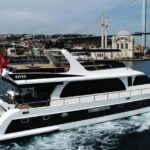
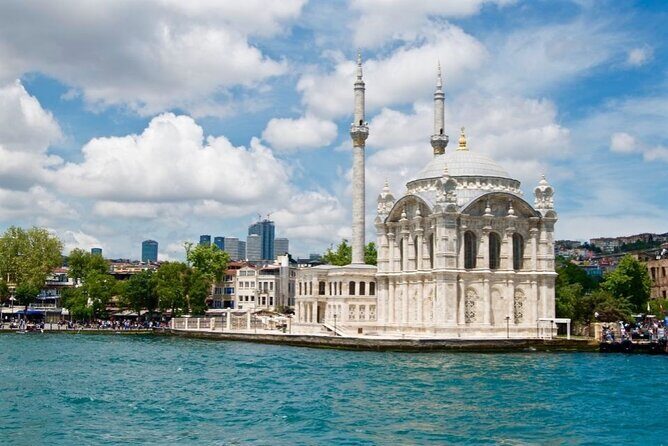
Ortaköy Mosque—officially the Büyük Mecidiye Camii—is situated at the waterside of the Ortaköy pier square in Beşiktaş. The materials also describe Ortaköy pier square as one of the most popular locations on the Bosphorus, so you’ll want to pay attention to how this area looks from your side of the water.
I like this stop because it’s a good “people and place” moment. The mosque is tied to a pier square, so you get a sense of waterfront gathering and daily rhythm, not just monumental buildings.
Right around this segment, you’re also given scale details about a major suspension bridge: it was inaugurated on October 29, 1973 on the fiftieth anniversary of the Turkish Republic, and the bridge has a total length of 1560 meters (and a width of 33.4 meters). The key takeaway for you is not just numbers—it’s how large infrastructure frames the view.
And yes, there’s more. The route also references Bebek, described as a long-time summer area for Ottoman aristocrats with summer houses and palaces, and it’s still a popular residential area today. On the water, that shift from historic elite summer use to present-day living becomes part of the story you’re seeing.
From Bebek to Rumelihisarı: fortress strategy at the narrowest point
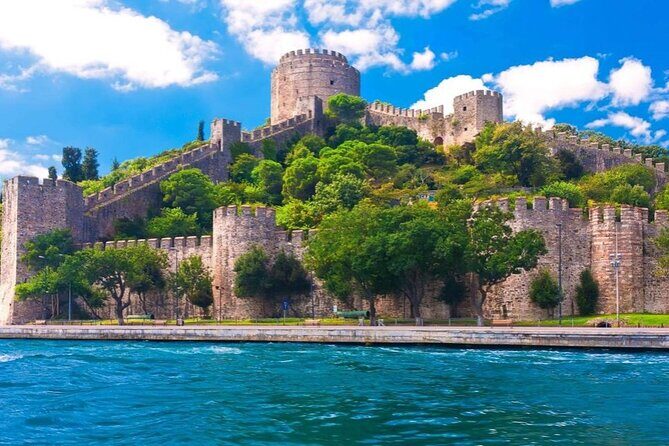
At the narrowest point of the Bosphorus, you’ll see Rumelihisarı Fortress (Rumelihisarr Castle) on the European shore. This one has a very clear “why it mattered” explanation: it was built by Sultan Mehmet, the Conqueror, and the foundation stone was laid on March 26, 1452 with a view to controlling ship passage and serving as a base for an attack on the city.
I love stops like this because they give you something concrete to look for. Instead of just admiring a wall, you understand what that location controlled. You’ll also notice how the geography supports the strategy: narrow water makes defense and control feel logical.
If you’re the type who cares about how cities work, this is where your brain can stop being a tourist-brain and start being an observer.
Fatih Sultan Mehmet Bridge and crossing the strait’s second big moment
Another major landmark on the route is the Fatih Sultan Mehmet Bridge, also known as the Second Bosphorus Bridge. The facts that matter are straightforward: it spans the Bosphorus strait, and when completed in 1988 it was the 5th-longest suspension bridge span in the world, today it ranks 24th.
This is a good stop for resetting your sense of scale. After fortresses and palaces, a bridge is what modern engineering adds to the skyline. It also gives you a chance to frame the waterway as a whole—again, not just a pretty view, but a functional connection between sides.
From the yacht, you’ll be able to see how the bridge relates to both shore lines. That helps you understand why Istanbul’s Bosphorus views feel so “layered,” with multiple eras and functions stacked in one corridor.
Anadoluhisarı Fortress: across the water, a romantic castle with a Turkish landmark role
On the opposite bank is Anadoluhisarı Fortress by the Göksu stream. It’s described as a romantic castle that adorns the Asiatic shore of the Bosphorus, built in 1395 by Sultan Bayazit, the Thunderbolt, and named Güzelcehisar. Later it was extended by Mehmet, the Conqueror.
There’s also a very specific statement about what it serves as today: it’s described as the first possession of Turks on the Bosphorus, and it acts as a landmark of Turkish rule.
I like how the cruise format makes this comparison easy. You’re not just looking at one side’s fortress story. You can see the idea of paired control—European-side and Asiatic-side structures—reading like a connected strategic narrative across the strait.
If you’re short on time and want a quick, meaningful sense of how the Bosphorus was shaped, this stop delivers.
Beylerbeyi Palace: a 19th-century royal house viewed from the water
Beylerbeyi Palace sits on the Asiatic shore between the villages of Kuzguncuk and Cengelköy. It was built by Sultan Abdülaziz in 1865, and the description gives it a vivid visual cue: seen from the Bosphorus it floats like a white vision in a fairy tale.
I’m always a fan of landmarks described through how they look from a distance. It’s practical for a cruise, because that’s exactly how you experience them—at speed, with changing angles, and with the water constantly behind the scene.
The palace is also labeled as the most extravagant royal house of the 19th century, with millions spent. Even if you don’t go into the interior, you still understand why it gets attention: it’s a statement building.
This is a strong “I want the grand reveal” moment, especially after the fortress-heavy stretch.
Kızkulesi (Maiden’s Tower / Leander’s Tower): the legend check
The final stop listed is Kızkulesi, also called Maiden’s Tower, and in some European references Leander’s Tower. It’s about 180 meters away from the shores of Üsküdar.
Here’s where the cruise gets fun from a story perspective. The European naming comes from a legend where Leander drowned while attempting to swim the Bosphorus to reach his beloved Hero. But the provided info also corrects the point: Leander never crossed even in that legend, and the reference is to the Hellespont and Dardanelles.
I like this kind of myth-busting detail because it makes the landmark more interesting than just another tower. It’s not only a photo stop. It’s a story you can carry with you as you compare versions of the tale.
As a practical matter, this stop is also about distance. Since it’s offset from the shore, you’ll see it as a distinct feature, like a focal point sitting on the water rather than blending into the shoreline.
Price and value: what $383.27 gets your group
The price is listed at $383.27 per group, up to 8 people, for about 2 hours. That makes this a value play if you’re traveling with friends, family, or a small group.
Here’s how I think about it: if you were booking separate tickets on bigger group boat tours, you’d likely pay more per person to get the same major-view payoff. With a private setup, the cost can land in a more reasonable range once you split it across up to 8.
Also, you’re not just buying time on a boat. You’re buying included hotel pickup and drop-off, plus taxes, plus the yacht itself. Tips aren’t included, so you’ll want to budget for that separately if you’re the tipping type.
And since the route hits multiple headline landmarks, you avoid the “one neighborhood per ticket” problem. You get one Bosphorus corridor of scenery instead of hopping between separate attractions.
Who should book this cruise (and who might skip it)
I’d point you toward this experience if you:
- want a relaxing private way to see the Bosphorus without lots of walking
- have limited time and want major landmarks on both sides of the strait
- like skyline and waterfront viewing where the boat angle is the feature
- prefer a crew-led flow rather than planning your own boat route
I’d suggest you rethink if you:
- need long on-foot time at each location (this is a cruise-first format)
- are traveling on a day when weather is likely to be rough, since the experience requires good weather
- are expecting a detailed museum-style explanation at every stop, because this is built around sightseeing from the water
Should you book this Bosphorus yacht cruise?
If your goal is to see Istanbul’s Bosphorus landmarks efficiently, this cruise makes a lot of sense. The private group size, friendly crew, and included pickup/drop-off are the kind of practical comforts that keep your attention on the views. And the itinerary choices are strong: Galata Tower, Dolmabahçe Palace, Ortaköy area, Rumelihisarı, bridge moments, Anadoluhisarı, Beylerbeyi Palace, and Kızkulesi all connect into a clear “Bosphorus corridor” story.
One more thing: pick the day carefully. With a weather-dependent experience, you’ll enjoy it more on a clear, calm day when those waterfront details show up sharply.
If you want a short, high-impact Bosphorus experience that feels private rather than crowded, I think this one is an easy yes.
FAQ
How long is the Bosphorus sightseeing cruise?
It runs for about 2 hours.
What is the price for this private yacht tour?
The price is $383.27 per group, up to 8 people.
Is this tour private?
Yes. It’s a private tour/activity, so only your group participates.
What’s included in the price?
Included items are the yacht, taxes, and hotel pick up & drop off.
What’s the meeting point and where does the tour end?
The tour starts at Kadirhas Üniversitesi Mini Futbol SahasıCibali, Kadir Has Ünv. No:134, 34083 Fatih/İstanbul, Türkiye, and ends back at the same meeting point.
What do I need to know about tickets and weather?
You’ll use a mobile ticket. The experience requires good weather, and if it’s canceled due to poor weather, you’ll be offered a different date or a full refund.