REVIEW · ISTANBUL
Gobekli Tepe & Mountain Nemrut Tour-2 Days 1 Night From Istanbul
Book on Viator →Operated by Travel See Life · Bookable on Viator
Nemrut and Göbekli Tepe in two days.
This tour works because it links two star archaeological stops with the daily-life setting around them, so you see the big ideas and the region that shaped them. I especially like the smooth logistics: hotel pickup, roundtrip domestic flights, airport transfers, and timed visits that keep you from wasting a day in transit. I also love the small-group feel (max 15), which makes the guide time feel personal when you ask questions. One thing to consider: you’ll be on the move across long distances and mountain viewpoints, so if you get motion sickness or dislike stairs, plan accordingly.
I’ll be honest: this is not a relaxed “sleep in and wander” trip. It’s a focused history sprint with real payoff at sunset on Nemrut and again at Göbekli Tepe, plus a very human, faith-linked side trip in Şanlıurfa.
In This Review
- Key highlights you’ll actually care about
- How This 2-Day Route Packs Nemrut and Göbekli Tepe
- Day 1: Airport-to-Nemrut timing for that big sunset moment
- Karakuş Tumulusu, Cendere Bridge, and Arsemia: the perfect warm-up
- Nemrut Mountain: what you’ll see and how to enjoy it
- Day 2 in Şanlıurfa: museums, fish lake, and the Abraham sites
- Göbekli Tepe: why it feels like a time-jump
- Balıklıgöl and Abraham’s cave: the faith layer you’ll notice
- Transfers, flights, and value: why the price can make sense
- Who should book this Nemrut and Göbekli Tepe combo?
- Quick practical tips before you go
- Should you book it?
- FAQ
- How long is the tour?
- What is the meeting time?
- Do you get pickup from your hotel?
- Are flights included?
- What’s included for meals?
- What sites will I visit?
- Is admission to Nemrut included?
- Is admission to Göbekli Tepe included?
- What group size should I expect?
- What if the weather is bad?
- What cancellation deadline applies?
Key highlights you’ll actually care about
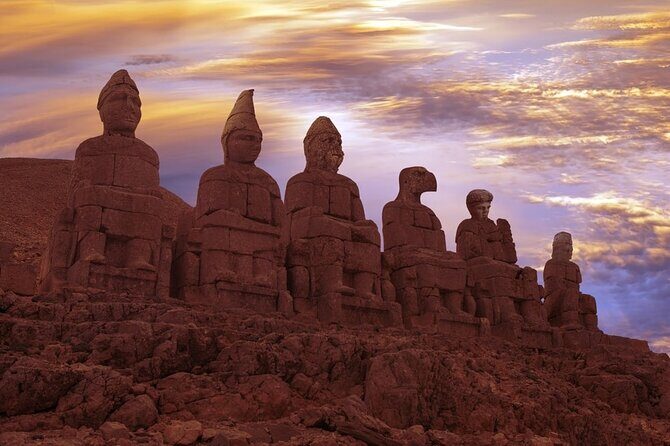
- Nemrut at sunset: You’re set up for the famous golden-hour views from the terraces before heading back down.
- Göbekli Tepe + Şanlıurfa in one run: You don’t just see a site; you pair it with museums and religious landscapes nearby.
- Flight-based routing: Domestic roundtrip flights reduce wasted time compared to road-only transfers.
- Site variety in Day 1: Karakuş Tumulus, Cendere Bridge, and Arsemia break up the travel before Nemrut.
- English guiding: The tour is offered in English, and the guide quality seems to matter a lot in the feedback (names like Sercan and Kerem come up often).
How This 2-Day Route Packs Nemrut and Göbekli Tepe
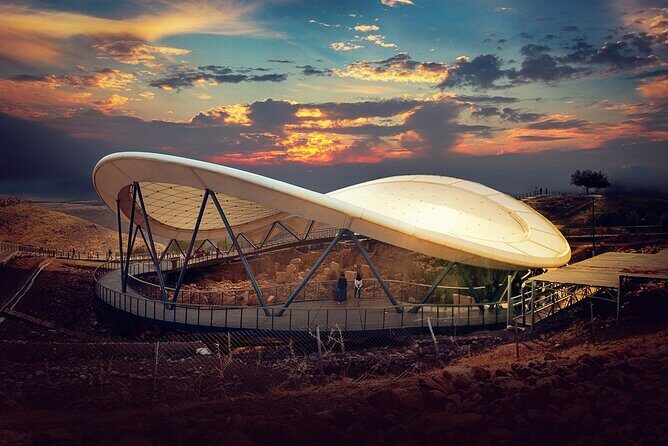
If you’re chasing the archaeology headlines, this tour is built for you. You’ll hit Nemrut for the statues and sunset mood, then switch gears to Göbekli Tepe, the world-famous ritual complex linked to human history reaching back about 12,000 years.
What makes this route more than a checklist is the way it frames the sites in context. On Day 2, you also get museum time in Şanlıurfa and a stop at Balıklıgöl and Abraham-related sites, so the day ties together artifacts, legends, and geography.
The pace is intense, but it’s intentional. You’re not traveling to “maybe see” a few ruins; you’re touring them with admissions handled and timing structured around the key moments like Nemrut’s sunset.
You can also read our reviews of more evening experiences in Istanbul



Day 1: Airport-to-Nemrut timing for that big sunset moment
Day 1 starts early. You’re picked up from your hotel around 08:30, transferred to Istanbul Airport, then you fly to Adıyaman (departure around 11:10, arrival about 13:00). After you land, you meet the group and head out for the archaeology day.
By the time you reach Mount Nemrut, the trip turns cinematic in the best way. Nemrut’s summit is where large statues sit around a presumed royal tomb from the 1st century BC, and the tour is set up so you can watch the East and West Terraces during the sunset window.
Practical note: Nemrut is a mountain viewpoint. You’ll want good closed-toe shoes, water, and a layer even if it’s warm in the city. The tour gives you time to take photos in the nearby valleys after the main visit, which helps if you’re the type who needs a few angles before the day moves on.
Karakuş Tumulusu, Cendere Bridge, and Arsemia: the perfect warm-up
Before Nemrut, you won’t be stuck with only one long “ruins parade.” You’ll move through several key stops that each tell a different piece of the region’s story.
Karakus Tumulusu is a funerary monument connected to Commagene royalty—Queen Isias and princesses Antiochis and Aka I—built by Mithridates II of Commagene between 30–20 BCE. The name Karakuş means black bird, and the monument is known for a structure topped with an eagle. You also get those distinctive groups of three Doric columns topped with steles and animal reliefs, plus an inscription tied to a royal tomb holding three women.
Then comes Cendere Bridge (Severan Bridge). This late Roman bridge crosses the Cendere Çayı (Chabinas Creek) near the ancient city of Arsameia (today Eskikale). It’s the kind of stop that’s easy to breeze past, but the guide angle makes it land: archeologists Osman Hamdi Bey and Osgan Efendi described and pictured it back in 1883.
Next is Arsemia Antik Kenti. This ancient site is described as a summer residence of the Commagene kings, and one highlight is a relief showing Heracles (or possibly Artagnes, a Persian deity identified with Heracles by the Greeks) shaking hands with King Mithridates of Commagene. It’s also noted for what’s considered the greatest Greek inscription of Anatolia.
Why I like this mix: by the time you arrive at Nemrut, you’ve already warmed up to the region’s themes—royal power, religious symbolism, and monumental stonework. These stops make the summit feel even more specific, not just dramatic.
Nemrut Mountain: what you’ll see and how to enjoy it
Nemrut is famous for its statues—some 8–9 meters high—paired with symbols of Greek, Armenian, and Iranian gods. The guide will walk you through names you may recognize in other parts of the region, including Zeus and Apollo, along with figures tied to local interpretation like Heracles–Artagnes–Ares and Apollo–Mithras–Helios–Hermes.
A key detail that helps you understand what you’re looking at: the heads of statues were removed at some point in history and are now scattered around the site. That means you’re not seeing statues in one clean, whole composition—you’re seeing the site as it exists now, which can actually make it feel more real and more historical.
The tour’s timing is built around the view. You’ll spend enough time to watch the sunset from the terraces and then take photos in the neighboring valleys before heading back.
Tip for your photos: don’t just shoot the statues. Shoot the terraces against the horizon too. Nemrut is as much about the mountain setting and the light as it is about the sculpture.
Day 2 in Şanlıurfa: museums, fish lake, and the Abraham sites
After a breakfast break, you start exploring Şanlıurfa (Urfa). The city’s past is long, running through multiple civilizations—Babylonians, Hurrites, Hittites, Assyrians, Greeks—so it helps that Day 2 mixes museum time with real places in town.
You’ll visit the Urfa Archaeological Museum and the Aleppo Bahçe Mosaic Museum, with exhibits connected to the broader Harran and Göbeklitepe area. Then you also visit holy sites around Ainzelha, described as a lake with millions of domesticated fish. That’s not only scenic; it gives you a living, continuing tradition that you can link to the rest of your day.
The tour includes a stop at a cave where the prophet was born, then time in the local covered bazaar. This part matters because it slows the pace a bit compared to constant driving, and it gives you a chance to see everyday textures—shops, streets, and the kind of places you’d miss if you only cared about ruins.
Lunch is included, and it’s described as kebabs. After that, the day moves back into archaeology mode.
You can also read our reviews of more tours and experiences in Istanbul


Göbekli Tepe: why it feels like a time-jump
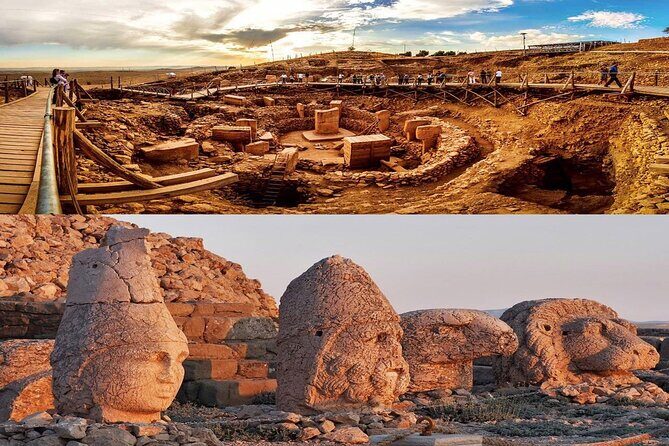
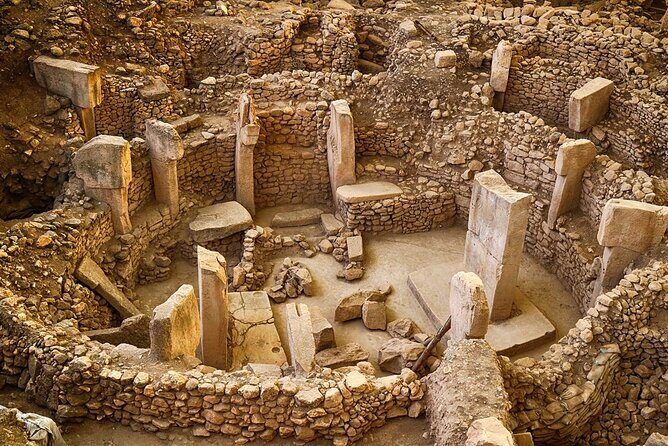
This is the headline stop, and for good reason. Göbekli Tepe is dated as far back as about 12,000 years ago, built before writing or pottery, and widely treated as the world’s oldest ritual complex. Even if you don’t love lectures, the physical layout and the scale of carved stonework make it easy to grasp why this site changed how people think about early human history.
The visit is timed for about 2 hours, which usually gives you enough time to see the main structures without turning it into a rush-and-swipe stop. You’ll walk away with a clearer sense of what “ritual complex” means when you’re looking at stone pillars and carved details meant to be seen.
One practical advantage of doing Göbekli Tepe inside a broader day: it’s not isolated. When you’ve just come from museums and local sites tied to the region’s religious stories, Göbekli Tepe can feel more like part of a long human thread rather than a stand-alone shock.
Balıklıgöl and Abraham’s cave: the faith layer you’ll notice
After Göbekli Tepe, you head to Balıklıgöl, which includes the Abraham’s cave and the Pool of Prophet Abraham, believed to be where Abraham was thrown into the fire by Nimrod.
This is where the tour becomes different from a pure archaeology itinerary. You’re looking at an archaeological region, but you’re also standing inside a landscape that people still attach meaning to. The sights are religious, yes—but they’re also practical meeting points and cultural anchors in modern life.
The tour’s time for this stop is about 1 hour 30 minutes, so you get enough time for the cave and the pool area without feeling like you must choose between photos and understanding.
Transfers, flights, and value: why the price can make sense
The price is listed at $1,189.57 per person. On paper, that sounds steep until you match it to what’s included: domestic roundtrip flights, airport transfers, museum tickets, and multiple admissions across both days. You’re also getting breakfast and two included lunches.
So where does the value land? In your time and your stress level. Instead of coordinating Istanbul-to-the-region by yourself, you’re using a flight-based plan with pickups and handoffs handled. You also won’t spend hours figuring out ticket lines for major sites.
Another value piece is group size. With a maximum of 15 travelers, it’s not the kind of huge coach crowd where you feel like a passenger, not a person. That matters on days like Day 1 and Day 2 when you’re listening, asking questions, and moving through places that reward attention.
If you want one balanced watch-out: this is a tight two days. If you want to linger in markets longer than planned or you want slower photo time, you might feel a little squeezed. Still, the structure helps most people get to the big moments, which are hard to time on your own.
Who should book this Nemrut and Göbekli Tepe combo?
This tour makes the most sense for you if:
- you want Nemrut sunset plus Göbekli Tepe without building a do-it-yourself flight and drive schedule
- you like history but also want a taste of modern Şanlıurfa life through bazaars and museum stops
- you’re comfortable with a moderate pace and moderate physical fitness
It may not be ideal if:
- you’re very sensitive to motion sickness (the roads to the region and mountain areas are described as windy)
- you dislike early mornings or long days with changing locations
- you want lots of free time not attached to a planned site visit
On the plus side, guides and local experts can really make this kind of trip feel alive. The strongest positive feedback centers on guides who explain the stories behind each stop in a way that makes you look longer at what you’re seeing. Names like Sercan and Kerem show up in that context, and if your group gets a team like that, you’ll likely feel the benefit right away.
Quick practical tips before you go
- Bring layers for the mountain viewpoint at Nemrut, even if the city is warm.
- Wear shoes with traction for uneven stone areas.
- If you’re prone to motion sickness, consider taking your usual prevention before the windy stretches.
- Plan for a long day of photos and listening—bring water and use the included breaks.
- Save energy for the sunset window. That’s the moment you’ll remember.
Should you book it?
Yes, if you want a smart two-day hit of Nemrut + Göbekli Tepe + Şanlıurfa and you value having flights, transfers, and admissions handled. This isn’t the cheapest way to see ruins, but it is a high-effort route delivered with organization.
No, if you want a relaxed pace, heavy free time, or a trip where you can “wander whenever.” This tour is built around scheduled highlights, and it rewards you most when you’re ready to move.
If you’re deciding between doing these sites separately versus together, booking this combo usually wins on time. The biggest gain is not just seeing the places—it’s how the days fit together into one coherent journey.
FAQ
How long is the tour?
It runs for about 2 days (about 2 days / 1 night).
What is the meeting time?
Start time is listed as 8:00 am.
Do you get pickup from your hotel?
Yes. Hotel pickup and airport transfers are included, and pickup is available from locations within the specified area.
Are flights included?
Yes. The tour includes domestic roundtrip flights as well as all airport transfers.
What’s included for meals?
Breakfast is included, plus lunch (2) during the tour. Dinner is not included.
What sites will I visit?
You visit Mount Nemrut, Karakus Tumulusu, Cendere Bridge, Arsemia Ancient City, Sanliurfa Archaeology and Mosaic Museum, Göbekli Tepe, and Balıklıgöl (with Abraham’s cave and the pool).
Is admission to Nemrut included?
Yes. Entry to Nemrut Mountain National Park is included.
Is admission to Göbekli Tepe included?
Yes. Entry/admission to Potbelly Hill (Göbekli Tepe) is included.
What group size should I expect?
The tour has a maximum of 15 travelers.
What if the weather is bad?
The experience requires good weather, and if it’s canceled due to poor weather you’ll be offered a different date or a full refund.
What cancellation deadline applies?
You can cancel up to 3 days in advance for a full refund; canceling less than 3 full days before the start time means you won’t get refunded.