REVIEW · ISTANBUL
Hagia Sophia & Basilica Cistern Guided Tour Incl. Tickets
Book on GetYourGuide →Operated by TOURMANIA · Bookable on GetYourGuide
That first look at Hagia Sophia can be magical. This Hagia Sophia + Basilica Cistern guided tour is built to get you inside the big-ticket sights faster, then slow you down with context so you understand what you’re seeing. I like that the day pairs the underground Subterranean Palace with the scale and symbolism of Hagia Sophia, so your brain stays engaged instead of getting stuck in line-waiting mode.
Two things I really like: priority admission to Hagia Sophia (so you skip the ticket-office slog), and the fact that the guide explains what changed when the Byzantines became the Ottomans. You’ll hear the story behind the mosaics and architecture, and the tour also includes the Basilica Cistern’s famous details, like the Medusa heads viewed from the wooden walkways.
One possible drawback: the tour is only 2 hours, so there’s not much time for long hangs in either monument. If you want to linger, take tons of photos without stopping, or move slowly, you may feel a bit rushed.
In This Review
- Key points before you go
- Priority entry and a tight 2-hour plan that actually works
- The walk begins at Alman Çeşmesi (and why the meeting point matters)
- Basilica Cistern: the Subterranean Palace, Medusa heads, and the feeling of stepping back in time
- Hagia Sophia: from emperor’s church to Ottoman mosque, with mosaics you can’t unsee
- A Hippodrome-style reality check: obelisks and everyday city life
- The group size and guide style: what you can learn in 2 hours
- Price and what $99 buys you in Istanbul time
- What’s good for you (and what to consider before booking)
- Should you book this Hagia Sophia & Basilica Cistern guided tour?
- FAQ
- How long is the Hagia Sophia and Basilica Cistern guided tour?
- Does the tour include tickets and priority admission?
- Where do we meet, and where does the tour end?
- Is the tour in English, and is it a small group?
- What should I bring, and what’s not allowed?
- Is this tour wheelchair accessible?
- Is hotel pickup included, and is food provided?
Key points before you go
- Priority entry helps you spend more time inside and less time waiting.
- You get the Basilica Cistern story, including Byzantine architecture and why it’s called the Subterranean Palace.
- Wooden walkways over water put you in position to see the Medusa heads.
- Hagia Sophia is explained as a layered site, mixing church elements and later mosque additions.
- The tour adds practical context with a Hippodrome stop and what those obelisks meant in daily life.
- Small group size (up to 10 people) keeps the pace manageable and questions easier.
Priority entry and a tight 2-hour plan that actually works
Istanbul’s top sights are popular for a reason, but popularity has a downside: you can easily lose an hour just standing around. This tour is priced at $99 per person, and the value is tied to that one word the itinerary keeps circling—priority. You’re not only paying for a guide; you’re paying to reduce the time cost of two major landmarks in one morning or afternoon block.
The other reason the timing makes sense is the structure. You start in Sultanahmet (a central, walkable zone for these monuments), you cover Basilica Cistern first, then move up to Hagia Sophia while the day is still fresh. Ending back at the meeting point means you’re not stuck trying to solve transit logistics right after you leave the crowds.
The duration is short, so I’d treat it like a fast, guided “orientation + highlights” session. If that fits your style, you’ll feel like you got your money’s worth quickly. If you’re the type who wants to sit in silence for 45 minutes at a time, you might prefer an all-day plan.
You can also read our reviews of more tours and experiences in Istanbul

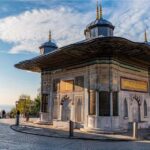

The walk begins at Alman Çeşmesi (and why the meeting point matters)
Your guide meets you with a sign (Tourmania) at Alman Çeşmesi in the Sultanahmet area. This is a smart choice because Sultanahmet is where you’ll be spending your time anyway. You’re not burning energy on extra travel time, and you’re more likely to see the area with some flow rather than feeling like you’re being shuttled in and out.
You should plan on moderate walking and bring the usual comfort kit: comfortable shoes, water, hat, and sunscreen. There are also photo stops built into the route. That matters because it means the guide can set the scene visually, not just verbally, before you step into the big rooms.
Also note the constraints. No smoking on tour. Flash photography is not allowed inside Hagia Sophia. Backpacks and large bags must be left at the entrance, and you’ll want to keep your hands free for pictures and railings and the quick “turn and look” moments.
Basilica Cistern: the Subterranean Palace, Medusa heads, and the feeling of stepping back in time
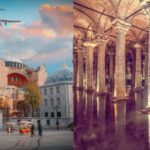
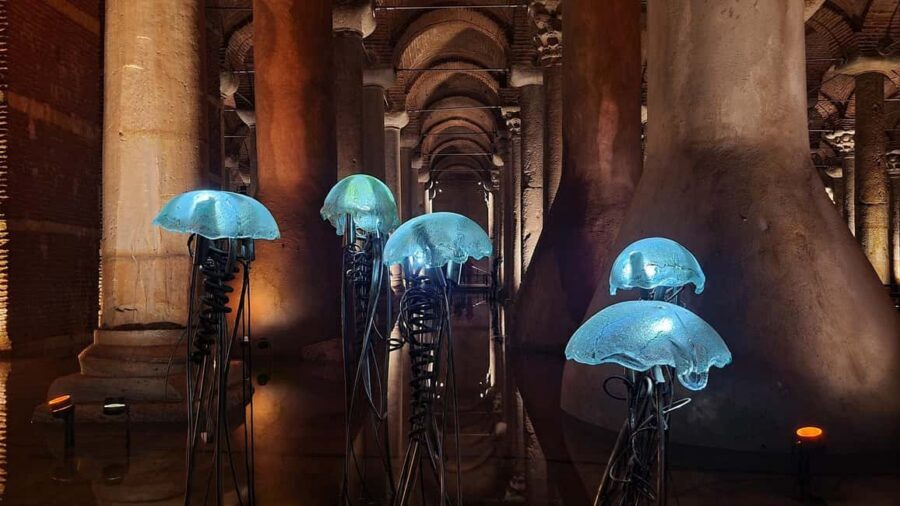
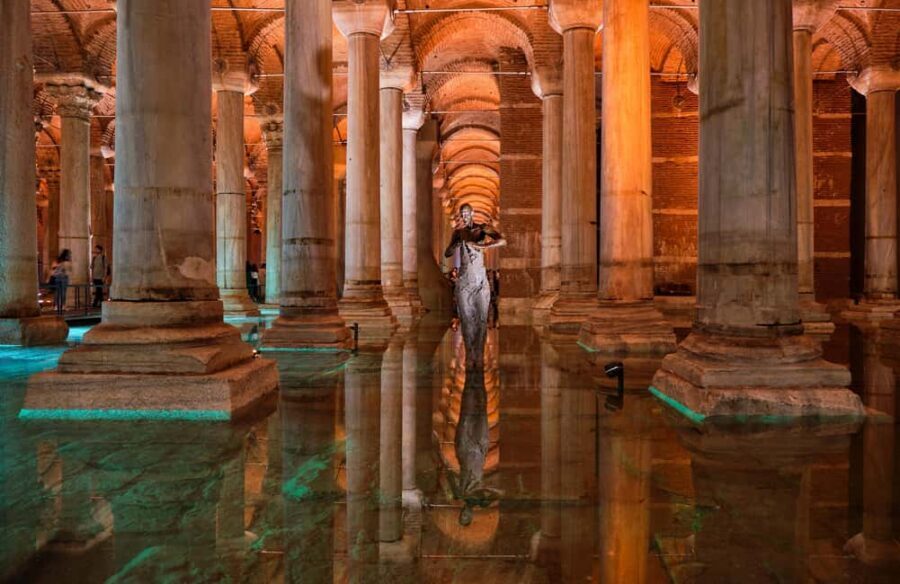
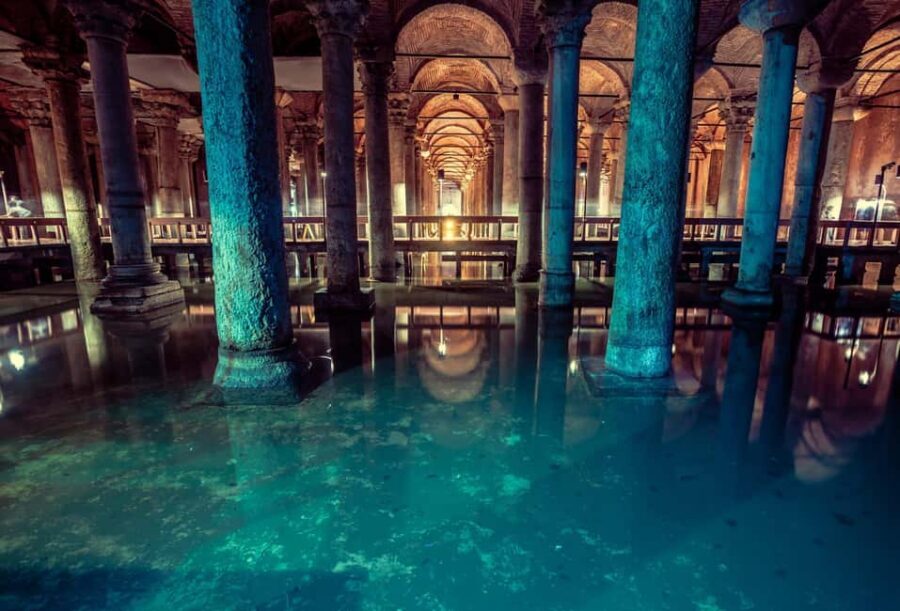
The tour starts with the Basilica Cistern, also nicknamed the Subterranean Palace. Even if you’re not an architecture nerd, the setting does something immediately: you go from street level Istanbul to a cool, echoing underground world. That contrast is part of the point of doing this tour, because it sets you up to understand why this place mattered.
What I think you’ll enjoy most is how the guide ties the space to the people who built it. You’re not just looking at columns—you’re hearing about Byzantine architecture, the purpose of underground storage, and how design choices created a working system that also became a long-term landmark.
The walking experience here is very specific. You’ll cross wooden walkways over the water, which keeps you positioned for the best views. And yes, you’ll get to see the famous Medusa heads. The heads are iconic on photos, but seeing them in-person from the walkway makes the scale and framing feel real.
A practical note: underground spaces can feel darker and more enclosed. If you’re someone who struggles with tight indoor environments, it’s worth taking the tour’s suitability warning seriously—this one is not suitable for claustrophobia.
Hagia Sophia: from emperor’s church to Ottoman mosque, with mosaics you can’t unsee
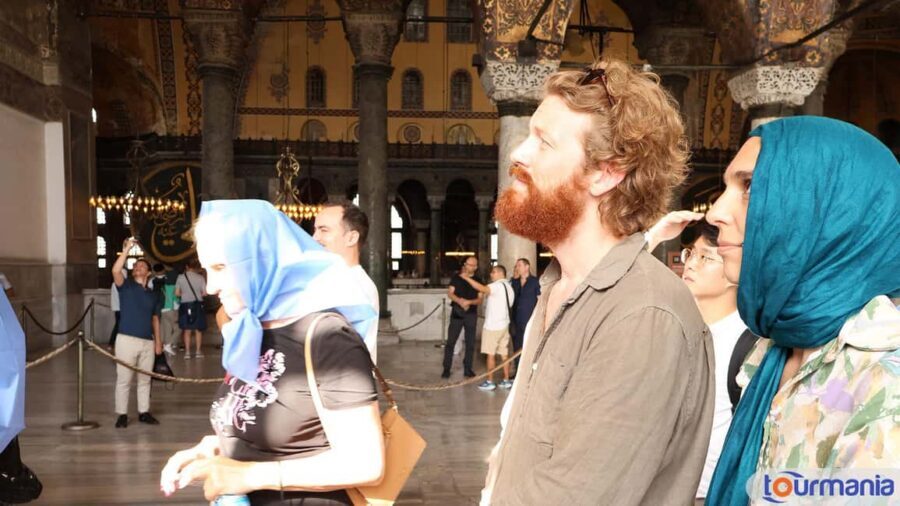
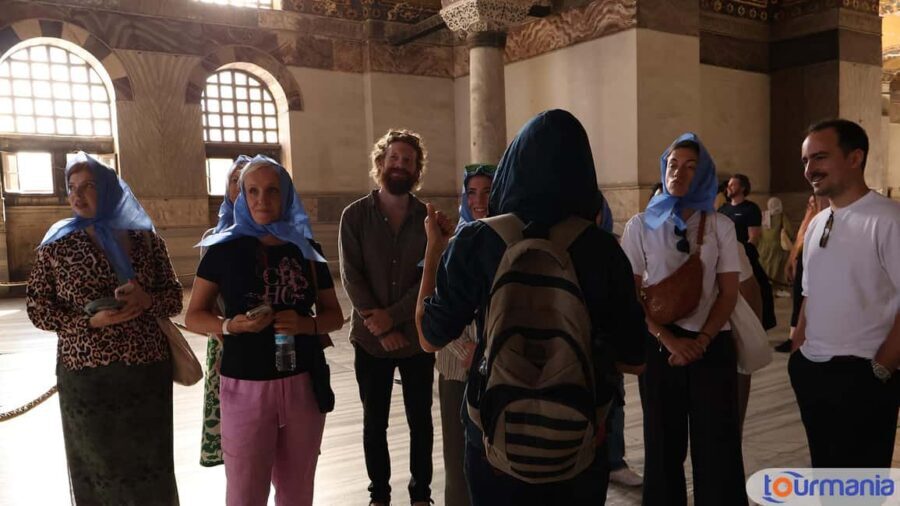
After the cistern, you head to Hagia Sophia with pre-reserved tickets and priority admission that helps you avoid the longest ticket-office lines. This is the main win for people who want a stress-free top sight experience. You’ll still encounter crowds inside, but you remove one of the most annoying bottlenecks.
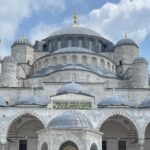
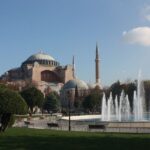
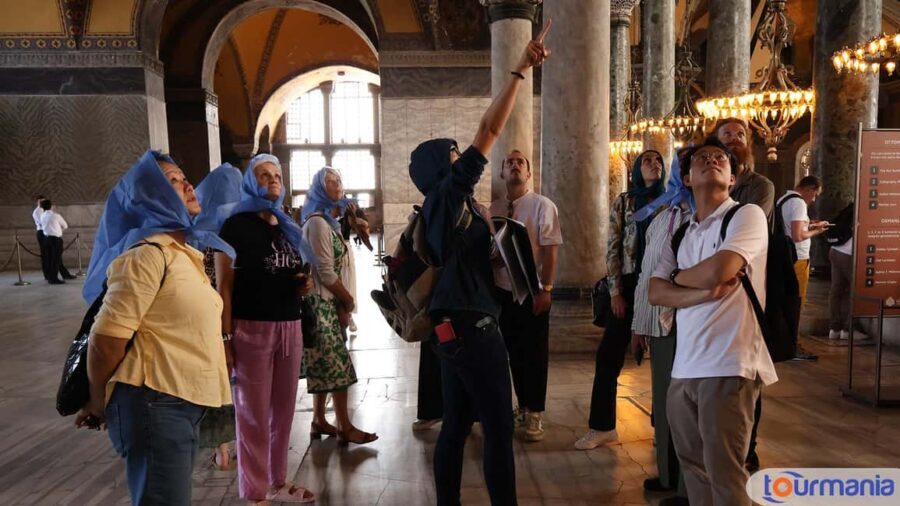
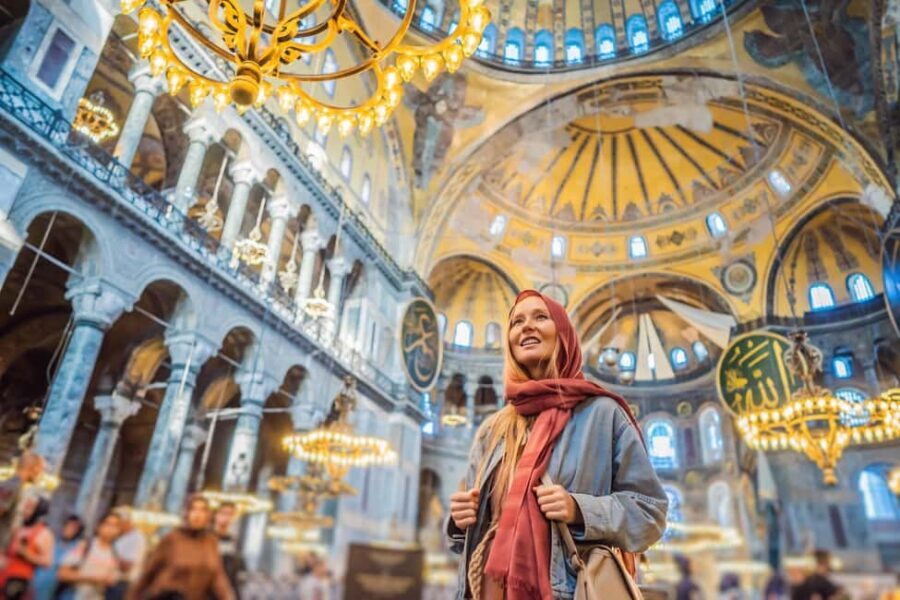
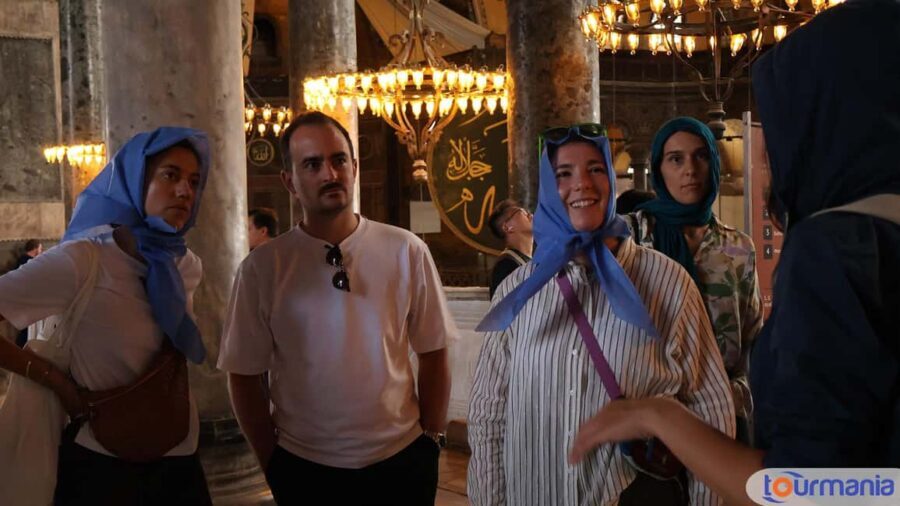
Once you’re inside, the guide’s job is to keep the building from feeling like a museum artifact. Hagia Sophia is huge, and it’s visually layered. The tour explains how it was converted into a mosque after the Ottoman conquest of Constantinople, so you understand why you see different elements in the same space.
Here’s what you’ll be focusing on:
- The dome and the big architectural feel that makes Hagia Sophia hard to forget.
- Minarets and the mosque features added over time.
- The mix of mosque and church elements that coexist in one building.
- Countless mosaics, paintings, and Roman columns, which show the site’s deep pull from earlier eras.
The tour also includes standout details that most people miss when they rush. You’ll learn about İznik tiles—how those impressive surfaces were added over time. And you’ll also hear the story connected to the Virgin Mary mosaic, plus how the Ottomans treated sacred space and memory.
One detail I like in this tour’s approach: the guide doesn’t treat the courtyard like leftover space. You’ll get context on why the Ottomans chose to bury their sultans in the courtyard, which makes the area feel purposeful instead of like a side note.
If you’re planning your own follow-up visit after the tour, this is the kind of background that helps you navigate. You won’t just know where to look—you’ll know what to look for.
A Hippodrome-style reality check: obelisks and everyday city life
The itinerary includes a stop around the Byzantine Hippodrome, with time for photos and guided context. This part is easy to underestimate because it doesn’t look as dramatic as Hagia Sophia. But it adds a key piece to the puzzle: what you see at monuments wasn’t just ceremonial. It was part of how the city ran day-to-day.
You’ll learn about the obelisks and their importance. The guide’s explanations help you connect these stones to civic life—games, gatherings, and the rhythm of public space. In other words, this stop helps you understand Istanbul as a living city across centuries, not only as a lineup of famous buildings.
Even if you only have a short window, this context matters. It makes the next walk through Sultanahmet feel smarter, because you start reading the city like a map of power and culture.
You can also read our reviews of more guided tours in Istanbul


The group size and guide style: what you can learn in 2 hours
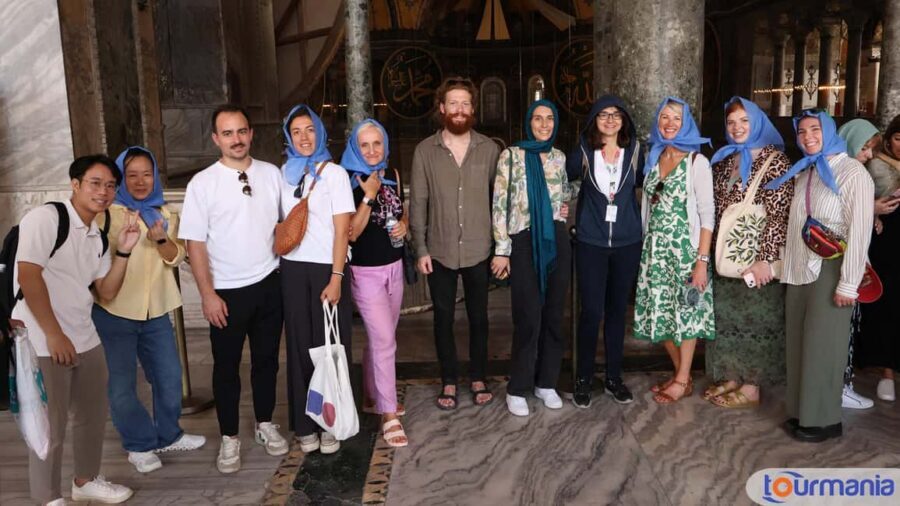
This is a small group capped at 10 participants and led by an English-speaking guide. That limit changes the experience more than you might think. You get enough room to ask questions, and you’re less likely to lose time waiting for someone to catch up.
The reviews attach real names to the quality here. One guide called Samed is praised for being attentive, giving enough time for everything, and using visual aids to explain the story. Another guide, Elif, is highlighted for being friendly and for explaining history in a way that fits the flow of the tour. Those details suggest a style built for clarity, not lectures.
Also, because the tour finishes with you equipped with context, you’ll likely feel more confident wandering after. That’s a big part of the value of a short guided “hits + meaning” itinerary: you leave with a mental framework, not just photos.
Price and what $99 buys you in Istanbul time
Let’s talk value plainly. $99 for 2 hours isn’t cheap on paper, but it’s also not just a ticket bundle. You’re paying for three main things:
- Priority admission (the time savings are real at these sites).
- A guide to connect details like mosaics, tile work, conversion history, and architectural features.
- A streamlined walking route that avoids extra coordination.
Food and drinks aren’t included, so you still need to plan that part separately. But the tour is designed to reduce the expensive part of travel time: standing in lines and trying to piece the story together with limited time.
If you’re trying to see both monuments in a tight schedule, this tour can be a cost-effective way to get a lot of meaning per hour. If you have no interest in guided context, or if you’re the type who loves wandering independently with zero structure, you might not get the full value out of the guide portion.
What’s good for you (and what to consider before booking)
This tour fits best if you:
- Want to see two top landmarks without line stress.
- Like explanations that connect Byzantine and Ottoman layers.
- Prefer a short, focused tour that ends in Sultanahmet Square ready for self-guided exploring.
- Can handle moderate walking and want a manageable pace.
It’s less ideal if you:
- Use a wheelchair or have mobility impairments (the tour is not suitable).
- Have back problems (also noted as not suitable).
- Struggle with enclosed spaces (the tour is not suitable for claustrophobia).
- Need flash photography (not allowed in Hagia Sophia).
Should you book this Hagia Sophia & Basilica Cistern guided tour?
Book it if you want a straightforward way to hit Hagia Sophia and the Basilica Cistern with priority entry and a guide who helps you understand what you’re seeing. The $99 price makes sense when you treat it as a time-saver plus a story package, not just a transportation solution.
Skip it (or choose a different format) if you want lots of unstructured time inside the monuments, need special accessibility support, or don’t care about historical context. For many first-time Istanbul visitors, though, this is a smart “big moment” combo: cistern atmosphere first, then Hagia Sophia’s layered grandeur, then a quick Hippodrome lens to round out the day.
FAQ
How long is the Hagia Sophia and Basilica Cistern guided tour?
The tour duration is listed as 2 hours. Starting times depend on availability.
Does the tour include tickets and priority admission?
Yes. The tour includes priority admission tickets to both Hagia Sophia and the Basilica Cistern.
Where do we meet, and where does the tour end?
You meet at Alman Çeşmesi (your guide holds a sign of Tourmania). The tour ends back at the same meeting point.
Is the tour in English, and is it a small group?
It’s a live English tour guide, and the group is limited to 10 participants.
What should I bring, and what’s not allowed?
Bring comfortable shoes, a hat, a camera, sunscreen, and water. Smoking isn’t allowed. Flash photography is not allowed inside Hagia Sophia. Backpacks and large bags must be left at the entrance.
Is this tour wheelchair accessible?
No. The tour is not suitable for wheelchair users or people with mobility impairments.
Is hotel pickup included, and is food provided?
No hotel pickup or drop-off is included, and food and drinks are not included.