REVIEW · ISTANBUL
Istanbul Archaeological Museums Entry Ticket & Audio Guide
Book on Viator →Operated by Istanbul Tourist Pass® · Bookable on Viator
Ancient artifacts meet modern QR tickets. The Istanbul Archaeological Museums are huge, packed with objects tied to Greek, Egyptian, Mesopotamian, and Anatolian worlds—and you get to choose what you focus on as you go. It’s a smart way to see major highlights like the Alexander Sarcophagus and also spend time in quieter wings that many people rush through.
I like that your ticket is set up as a mobile QR entry, so you can save time right away. I also like having an English audio guide option, because it helps you connect what you’re seeing to ancient rituals and everyday life instead of staring at labels for an hour.
Here’s the main thing to weigh: this is not a traditional guided tour. If your audio doesn’t work on the day or the QR code has issues at the entrance, you may need quick help—so plan to have a charged phone and a backup way to access the audio link.
In This Review
- Key things to know before you go
- Istanbul Archaeological Museums: why this place feels worth it
- Your QR entry ticket: fast access, real-world checks
- Audio guide reality check: what it can do for you
- Inside the complex: building a route that matches your time
- The headline sights: Crying Women, Lykia, and Alexander Sarcophagus
- Enameled Kiosk Museum: where early Ottoman art fits the bigger story
- Old Eastern Works Museum: Anatolia and beyond
- Pricing and value: what you’re really paying $31.36 for
- Logistics that matter: timing, meeting point, and how to arrive smart
- Who should book this and who should skip it
- Should you book? My decision rule
- FAQ
- Is this a guided tour?
- What’s included in the ticket?
- How do I use my ticket at the museum?
- Where do I start this experience?
- How long does the visit take?
- What language is the audio guide?
- Can I get a refund if I cancel?
Key things to know before you go
- Skip-the-line style entry using a QR code sent by email
- Audio guide in English (the museum no longer offers guided tours)
- Self-paced visit from about 20 minutes to roughly 1.5 hours, depending on your pace
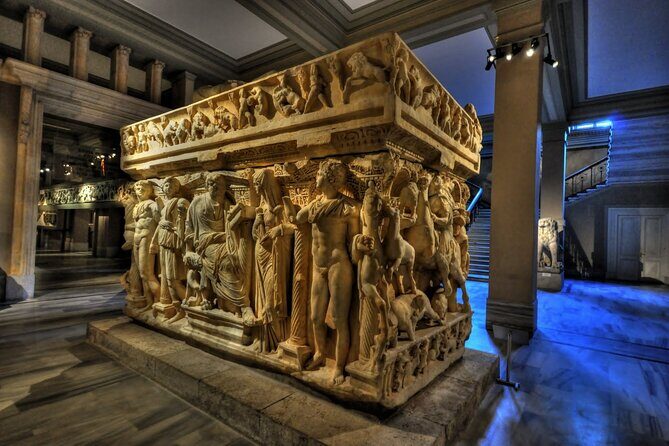
- Major sculpted tomb highlights such as the Crying Women Tomb, Lykia Tomb, and Alexander Sarcophagus
- Often-missed museum buildings like the Enameled Kiosk Museum and Old Eastern Works Museum
Istanbul Archaeological Museums: why this place feels worth it
The Istanbul Archaeological Museums are one of those rare stops where you don’t have to guess what the big deal is. The collection covers pre-Islamic periods across Greek, Egyptian, and Mesopotamian cultures, plus the Anatolian region—so you’re not stuck in one “theme” the whole time.
What makes it especially good for a DIY visit is that the displays are organized enough that you can build your own route. If you’re here for famous names like the Crying Women Tomb or the Alexander Sarcophagus, you can go straight to the pieces that catch your eye. If you’d rather move slower, you can spend more time with objects tied to rituals and daily life, not just kings and battles.
And one more practical upside: the museum complex includes places beyond the first main rooms. Two add-on spaces mentioned with this ticket—Enameled Kiosk Museum and Old Eastern Works Museum—are where you can feel the “different eras, different styles” effect without needing a formal tour.
You can also read our reviews of more tours and experiences in Istanbul



Your QR entry ticket: fast access, real-world checks
This experience runs on a digital QR ticket. After booking, you receive entry ticket QR codes and an audio guide link via separate email from the supplier (Istanbul Tourist Pass®). In theory, that means less time arguing about paper tickets and more time walking in.
In practice, the key is getting your QR code ready before you reach the entrance. Some people have run into trouble where a barcode or QR code didn’t work and they were directed to buy tickets on the spot. That’s usually a technical or presentation problem, not a judgment call on your part—still, it’s avoidable if you prepare.
My advice:
- Open your QR email right before you leave your hotel, then check it still loads on your phone.
- Keep your phone charged. This is a phone-on-entry situation, not a just-in-case situation.
- Have your confirmation details handy in case the staff ask you to verify the code.
If you hit a roadblock, the good news is that local support appears to be part of how this is handled. At least one positive experience notes that getting help to download the QR code happened quickly once the operator stepped in.
Audio guide reality check: what it can do for you
The audio guide is listed as professional and in English. Since the museum no longer offers guided tours, this audio is doing the job that many visitors expect a guide to do—explaining what you’re looking at and why it matters.
That said, the audio guide is only helpful if you can access it on site. One harsh complaint was basically: no audio available, which turned a great museum visit into a frustrating label-reading marathon. Another issue involved trouble with the provided QR code and needing to deal with the operator link.
So think of the audio guide as your built-in context layer, but treat it like tech:
- Test the audio link before you arrive at the museum entrance.
- Use headphones you can rely on. If you’re the kind of person who hates sharing earbuds in public spaces, bring your own.
- If your museum phone battery is usually shaky, charge early and bring a power bank.
If everything works, you’ll be able to follow along at your pace and spend more time looking and less time figuring out what each stop is trying to say.
Inside the complex: building a route that matches your time
This visit is designed to be self-paced, with a duration estimate ranging from about 20 minutes to 1.5 hours. That range is realistic because the complex is big, and you can’t do everything properly in one sweep.
Here’s a practical way to plan your time based on what you care about:
If you have about 20–30 minutes
Go for the headline tomb and sarcophagus highlights first. This is where your attention will feel rewarded fastest—Crying Women Tomb, Lykia Tomb, and the Alexander Sarcophagus are listed as major points of interest.
If you have 45–60 minutes
Add time in the related spaces and shift from “wow object” mode to “why it matters” mode. This is where the audio guide can help you connect motifs to ancient rituals and daily life, not just to names.
If you have 1–1.5 hours
Include the additional museum areas mentioned here: the Enameled Kiosk Museum and the Old Eastern Works Museum. This is also when you’ll feel the advantage of a less rushed visit. Many people only see the first big rooms, then leave. If you stay, you get a more complete sense of how many different cultures and periods are represented.
The headline sights: Crying Women, Lykia, and Alexander Sarcophagus
These three are singled out for a reason. They’re the kind of pieces that make you pause, look again, and wonder how something so detailed survived.
The Crying Women Tomb is explicitly named as a highlight, which is useful if you like planning your route with confidence. You’ll want to slow down here because dramatic funerary sculpture tends to reward close viewing, and the audio can give you interpretive context so you’re not guessing.
The Lykia Tomb is another named highlight. In a self-guided visit, having these anchor stops matters. They help you avoid the common problem of wandering through a large museum without feeling like you finished anything.
Then there’s the Alexander Sarcophagus—also a listed must-see. If you’re short on time, this is the one that most strongly justifies spending time in the complex, because it’s the most widely recognized “headline” item in the set you were given.
Tip for making these three work: don’t sprint between them. Use the audio guide as your pacing tool. If you’re constantly moving, you miss the way sculptures and carvings reveal small story details.
You can also read our reviews of more guided tours in Istanbul




Enameled Kiosk Museum: where early Ottoman art fits the bigger story
One of the best values in this ticket setup is that you’re not locked into only the most famous “main rooms” feeling. The Enameled Kiosk Museum is specifically mentioned, and it’s tied to early Ottoman art.
That’s important because it changes the emotional tone of your visit. You go from ancient carved objects into a later period’s visual language. Even if you’re only a casual museum fan, it helps the collection feel like an ongoing timeline instead of disconnected “random artifacts.”
Also, many tourists skip the second-layer spaces because they’re trying to hit “the classics” and leave. If you want a visit that feels more personal and less like a checklist, this is where you can get that.
Old Eastern Works Museum: Anatolia and beyond
The Old Eastern Works Museum is another named stop and it’s described as holding artifacts from Anatolia and beyond. That phrasing matters because it signals variety—this isn’t just one narrow focus.
If you’re the type who likes context, this is a good area to slow down and listen. The audio guide is meant to make ancient objects easier to understand, including how people used symbols and forms connected to rituals and daily life.
And if you’re someone who gets museum fatigue, this is also a good place to cut your losses. You can linger only as long as you’re enjoying it, then move on—because the whole experience is built around self pacing.
Pricing and value: what you’re really paying $31.36 for
At $31.36 per person, you’re not paying for a private driver or a staffed guided tour. You’re paying for two main things:
- Skip-the-line style entrance (mobile QR)
- A professional English audio guide designed to replace the usual guide experience
That can be excellent value if you’re comfortable doing things on your own. Museums are often overpriced for what you actually use inside, but here you get two “tools” that help you use your time better: fast entry and interpretive audio.
However, because the museum offers no guided tours, you should be honest with yourself about your needs. If you want someone leading you step-by-step, this isn’t that.
Also note the included benefit of free internet with an eSIM for limited time only. That can be a big deal if your phone needs connectivity to open the audio link or keep your QR ticket accessible. Don’t count on it blindly, but if it’s offered during your visit, it can reduce stress.
Finally, a quick reality check on value: this option has mixed feedback overall, with multiple complaints centered on audio access or QR code problems. That doesn’t automatically mean your experience will fail—but it does mean the value is best for people who can troubleshoot a little and keep a calm plan B.
Logistics that matter: timing, meeting point, and how to arrive smart
The museum complex is listed with a start at Istanbul Archaeological Museums, Cankurtaran, 34122 Fatih/İstanbul. It says the meeting point and the activity end back at the meeting point, which fits the self-paced format.
It’s also listed as near public transportation, which is good. It means you’re not locked into a long walk from a remote pickup spot, and you can adjust your schedule if you’re coming in from Sultanahmet or Karaköy.
Duration is approximate, from 20 minutes to 1 hour 30 minutes. That means the museum time is flexible, but you should still give yourself buffer. If you arrive stressed or late, your QR and audio setup can become an extra problem instead of a shortcut.
My practical suggestion: plan to be at the entrance with enough time to open the QR code, confirm it’s readable, and start the audio link without rushing.
Who should book this and who should skip it
This is a strong fit if:
- You’re happy with self-guided museum time
- You want to hit major highlights like the tombs and sarcophagus without waiting in a long line
- You can use a phone for entry and you don’t mind bringing your own headphones
- You like museums where you can choose between headline pieces and quieter rooms
You might want to skip this setup if:
- You need a human guide to explain everything and you dislike tech-based audio
- Your phone is unreliable at the worst times (low battery, weak signal, links that don’t load)
- You expect the museum to provide headsets or staff-led instruction (headsets rental availability wasn’t assured in negative feedback)
If you’re somewhere in the middle, go in with a calm mindset: treat it as ticket + audio tools, not as a fully staffed guided tour.
Should you book? My decision rule
Book it if your priority is time savings and you’re comfortable exploring at your own pace with an English audio guide. The list of highlights alone—Crying Women Tomb, Lykia Tomb, Alexander Sarcophagus—makes the museum worth planning for, and the skip-the-line QR approach is exactly how you keep that visit enjoyable.
Skip it (or consider an alternative format) if you strongly prefer a staff guide, or if you can’t risk a tech snag on a day when you’ll be standing at an entrance. The most serious downside here isn’t the museum—it’s the reliance on QR/audio working as intended.
If you do book, make it easy on yourself: test the audio link before you go, keep your QR ready offline-to-the-extent-possible (at least loaded on screen), and bring headphones you trust.
FAQ
Is this a guided tour?
No. The museum no longer offers guided tours. This experience is a self-paced visit with an audio guide included.
What’s included in the ticket?
You get a skip-the-line entry ticket for the museum and a professional audio guide in English. Limited-time free internet with an eSIM is also listed as included.
How do I use my ticket at the museum?
You receive entry ticket QR codes by separate email from the supplier (Istanbul Tourist Pass®). The ticket is described as a mobile ticket.
Where do I start this experience?
The listed start is at Istanbul Archaeological Museums, Cankurtaran, 34122 Fatih/İstanbul, Türkiye. The activity ends back at the meeting point.
How long does the visit take?
The duration is approximate, ranging from 20 minutes to 1 hour 30 minutes depending on your pace.
What language is the audio guide?
The audio guide is listed as English.
Can I get a refund if I cancel?
Yes. Free cancellation is available up to 24 hours in advance for a full refund. If you cancel less than 24 hours before the start time, the amount paid is not refunded.