REVIEW · ISTANBUL
Istanbul: Cistern of Theodosius Entry Ticket and Audio Guide
Book on GetYourGuide →Operated by Istanbul Tourist Pass® · Bookable on GetYourGuide
Underground, the city gets quieter. This self-paced visit lets you step into the Cistern of Theodosius (also called the Serefiye Cistern) and understand it as real engineering, not just a spooky photo spot. I like that you skip the ticket line and get inside smoothly, and I also really enjoy the clear, fact-packed narration from the included audio guide.
One thing to keep in mind: if you buy online, double-check you can access your ticket info the day of your visit. I saw a report of trouble receiving tickets even after purchasing early, so I’d plan for a quick moment at the entrance to confirm everything works with your QR code.
In This Review
- Key Things to Know Before You Go
- Cistern of Theodosius: what you’re actually walking into
- Skip the line and use that entrance QR code
- How the audio guide shapes your pace (and your understanding)
- The engineering you’ll notice: columns, marble, and waterproof walls
- The Byzantine-to-Ottoman timeline inside one underground space
- Where the light/projection moment fits into the visit
- Timing your visit for calm, not chaos
- Price and value: is $30 the right deal?
- Who this ticket suits best (and who should consider something else)
- The bottom line: should you book this Cistern of Theodosius entry ticket?
- FAQ
- How much is the Cistern of Theodosius entry ticket with audio guide?
- How long does the visit last?
- What’s included with this ticket?
- Is this a guided tour?
- Do I skip the ticket line?
- How do I access the ticket at the entrance?
- Is a 3D show included?
Key Things to Know Before You Go
- Skip-the-line entry so you lose less time queuing in Istanbul
- QR access at the entrance for faster entry once you arrive
- Audio guide narration that keeps history readable, not overwhelming
- Byzantine + Ottoman story tied directly to how water was managed
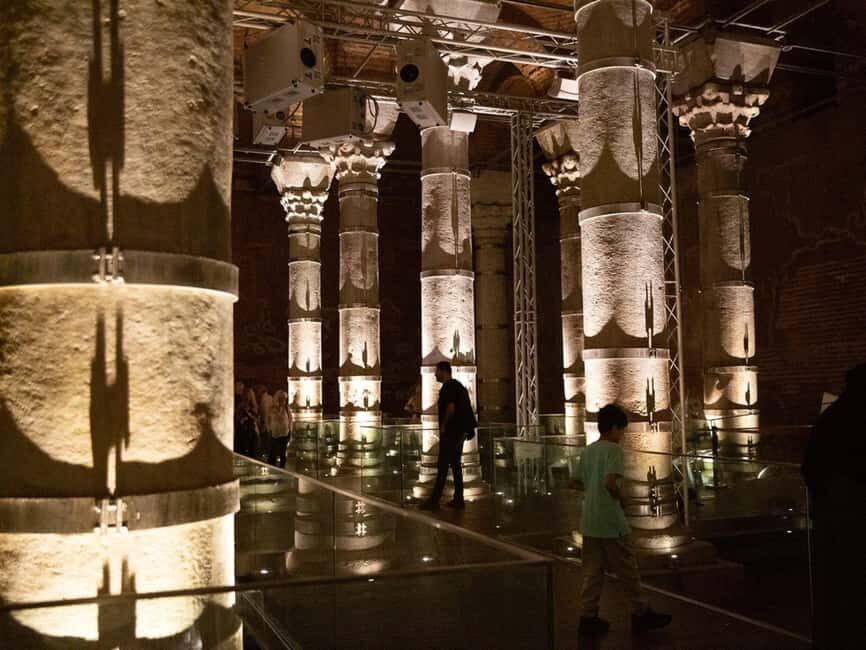
- Light/projection moments inside the cistern that many visitors find memorable
Cistern of Theodosius: what you’re actually walking into
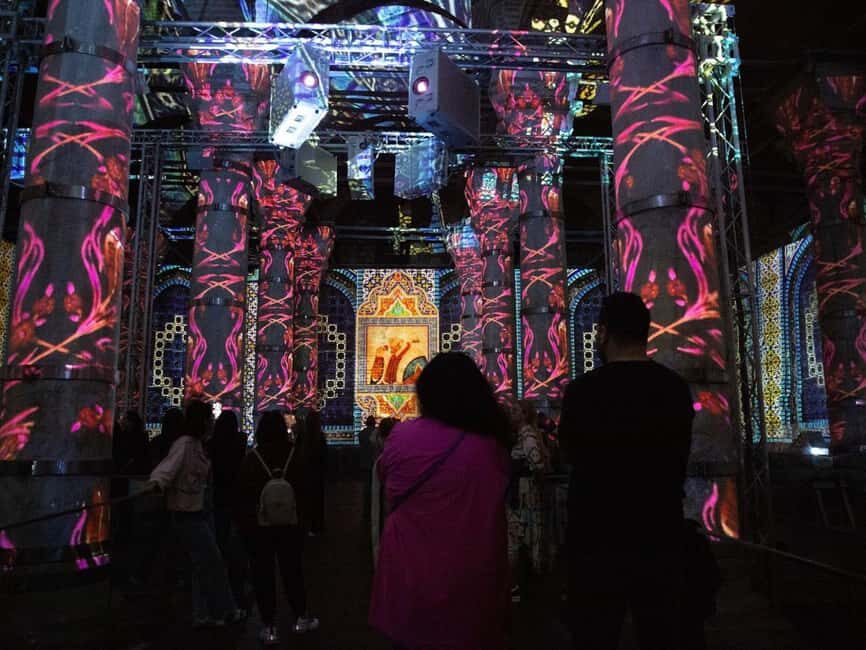
Istanbul is famous for big, loud sights. This one is different. The Cistern of Theodosius sits below streets and daily life, and it feels calmer the moment you enter. It’s an underground water storage space that still shows off the thought and muscle it took to build and maintain it.
The cistern was built during the reign of Emperor Theodosius II (408–450 AD) and later expanded in Ottoman times. In plain terms, it was a backup water system—especially important during shortages or sieges. When you hear that framing in the audio guide, the whole room makes more sense. You stop thinking of it as a set for photos and start seeing it as city infrastructure from centuries ago.
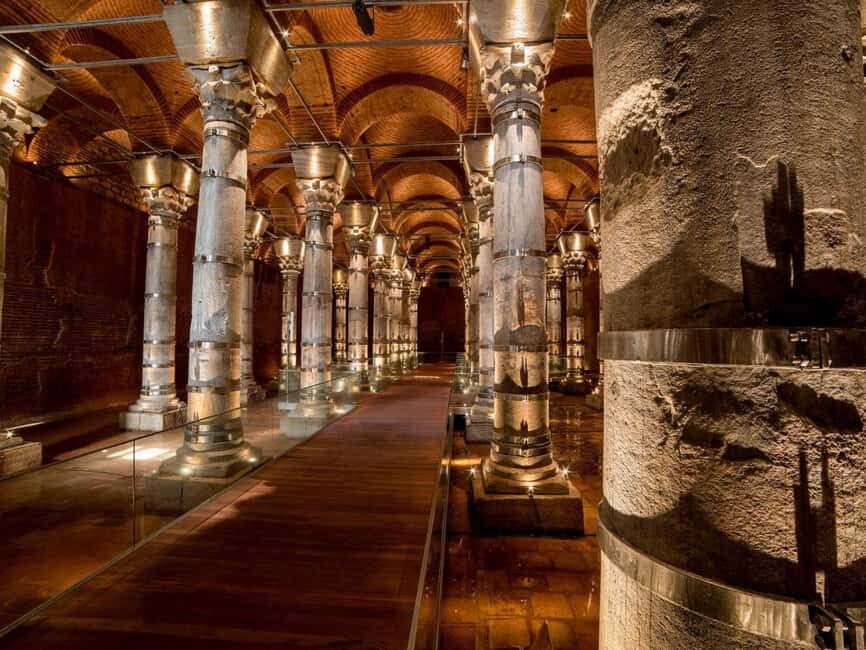
And yes, the scale is impressive even before you notice the details. The cistern covers about 24 by 40 meters, with a ceiling around 11 meters high. It’s the kind of place where your brain automatically slows down, because your body is suddenly in a cool, echoing space.
You can also read our reviews of more tours and experiences in Istanbul



Skip the line and use that entrance QR code
This is where the ticket value starts. Instead of waiting in a standard queue, you get a skip-the-line style entry. That matters in Istanbul, because lines can swallow your energy fast—especially if you’re squeezing the cistern into a day that already includes multiple stops.
At the entrance, you’ll get a QR code for quick access. The practical benefit: you’re not hunting for a specific person or scanning multiple screens. You just check in with your code and move on. If you hate waiting, you’ll feel it immediately once you step inside.
A small but smart tip: give yourself a little buffer. Even if entry is fast, you’ll want time to orient yourself and start the audio guide without rushing through the first room.
How the audio guide shapes your pace (and your understanding)
This isn’t a guided tour where someone talks at you in a group. You explore on your own schedule with the audio guide. That’s a big deal here, because the cistern isn’t one of those places where one “perfect angle” tells the whole story.
The narration is designed to explain what you’re looking at: history, architecture, and the cistern’s role over time. It also includes a broader historical connection, including a segment that links the site’s story to the founding of the Turkish Republic. That doesn’t turn the cistern into a classroom—it just gives your visit a clearer timeline, so the place stops feeling like a random ruin.
I also like the pacing flexibility. You can take your time under the columns, then speed up if you’re mostly there for atmosphere and photos. The cistern works either way because it’s visually structured—there’s plenty to look at while you’re standing still.
The engineering you’ll notice: columns, marble, and waterproof walls
Once you’re inside, the cistern starts showing off its “how did they do this?” qualities. The architecture is specific and practical, not decorative.
Here are some of the key details you’ll want to notice as you walk:
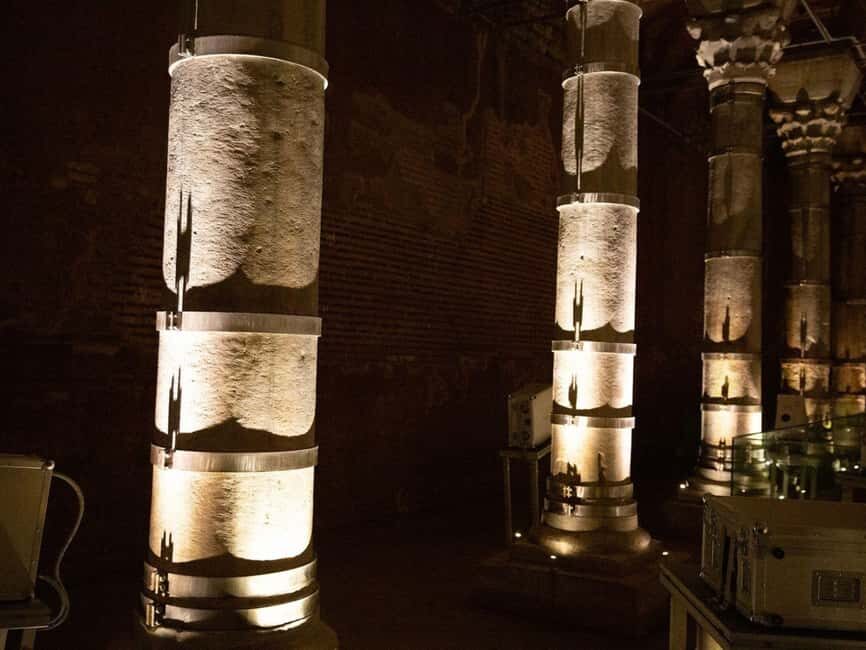
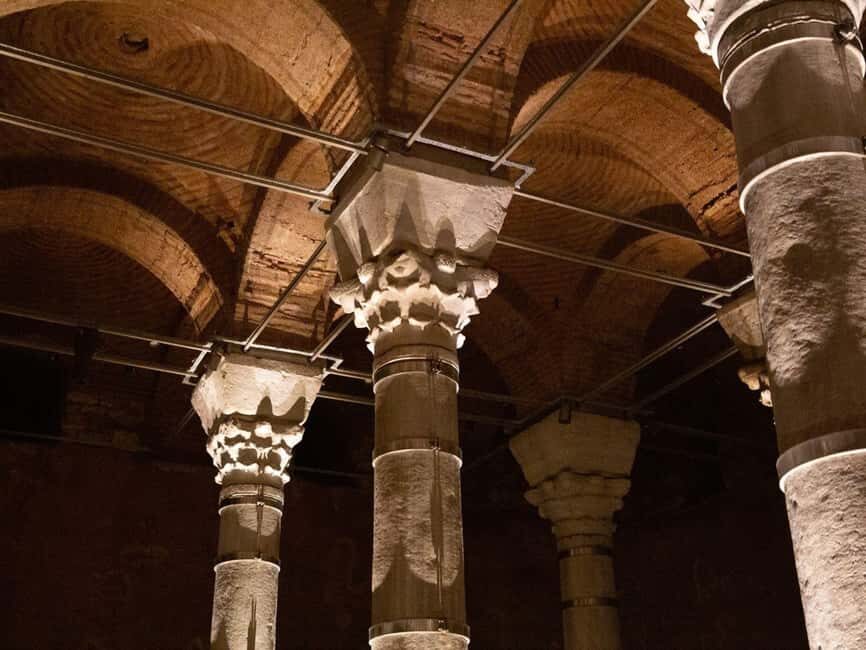
- The cistern is supported by 32 columns made of Marmara Island marble. That’s a strong clue that marble wasn’t just for big monuments; it was used where weight and stability mattered.
- The walls are coated with watertight plaster to prevent leaks. This is one of those facts that makes you think differently about preservation.
- The design includes thick walls and curved corners to withstand pressure. That tells you the builders understood forces and stresses, not just aesthetics.
- There are 45 sail vaults. Vaults like these help distribute weight and support the ceiling.
What this means for you: if you’re even slightly curious about building design, the audio guide turns the cistern into a lesson you can control. You’re not stuck with a rigid explanation. You can stop, look up, and let the “why” catch up to the “what.”
The Byzantine-to-Ottoman timeline inside one underground space
The cistern is called the Cistern of Theodosius because it’s tied to Theodosius II, a ruler whose reign produced big infrastructure projects. Later, the Ottomans expanded it, keeping the concept of water storage but adapting it to later needs.
So you’re not just seeing one era. You’re seeing continuity. That’s why the cistern doesn’t feel like a museum piece frozen in time. It feels like something that stayed useful—because the city kept needing water security.
Even the surrounding area has its own timeline. The site nearby once included the Arif Pasa Estate (late 18th or early 19th century), which housed municipal offices. Then in 2010, demolition of nearby buildings uncovered the cistern, and restoration followed. An archaeological park was created around it afterward, helping preserve what had been buried.
If you like history that’s connected to real city development, this part of the story is worth staying attentive to. It helps you understand why the cistern became visible again, and why the area around it now functions like a protected site instead of disappearing back under construction.
You can also read our reviews of more guided tours in Istanbul




Where the light/projection moment fits into the visit
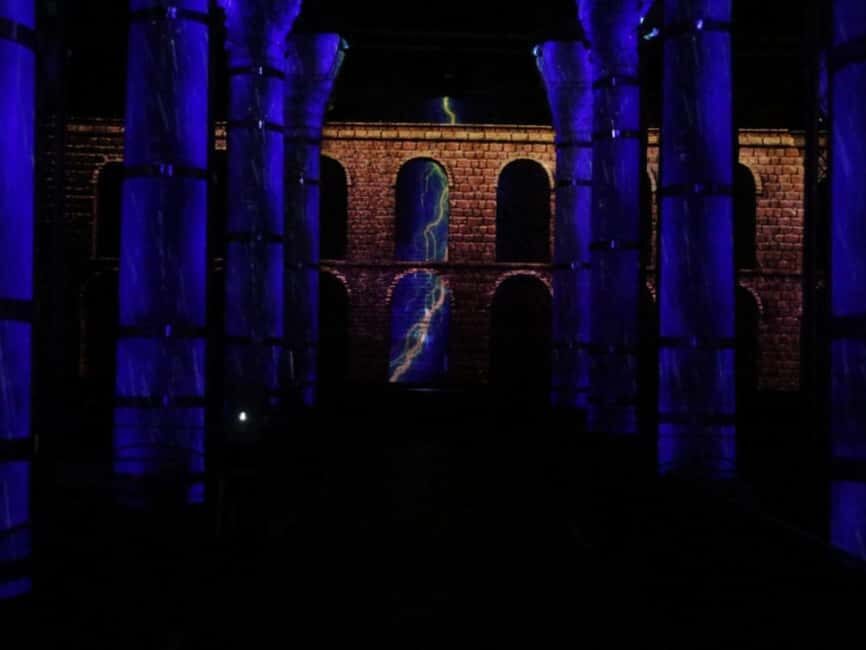
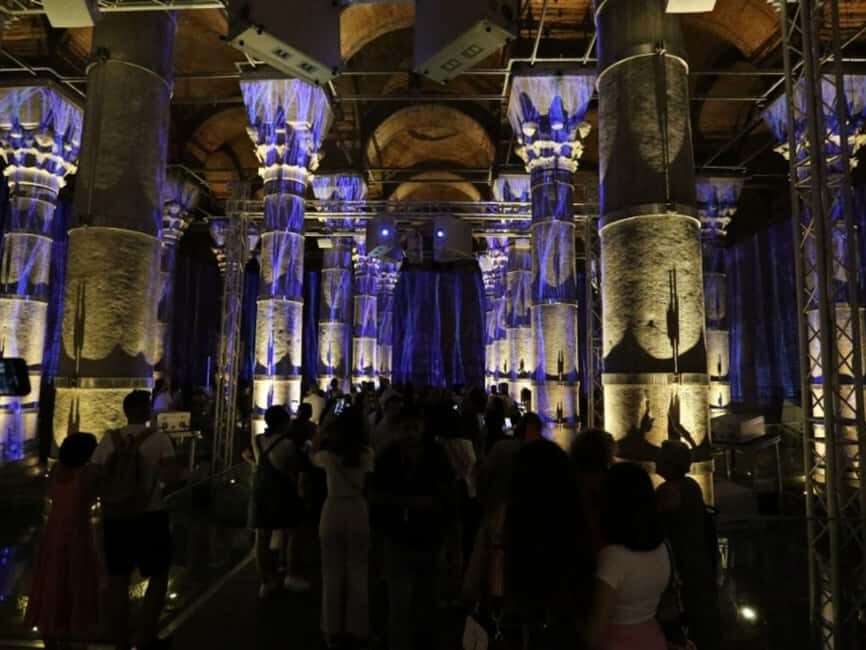
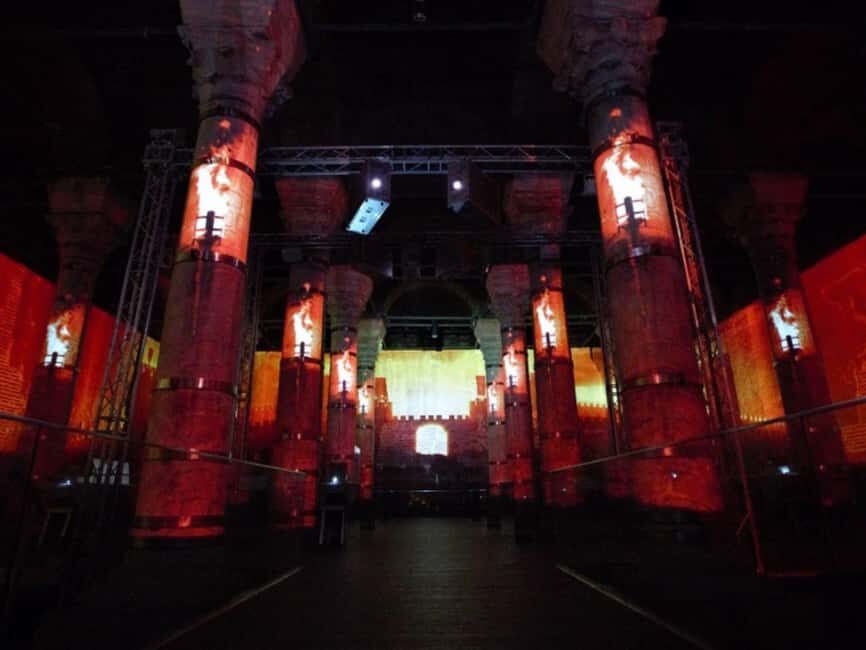
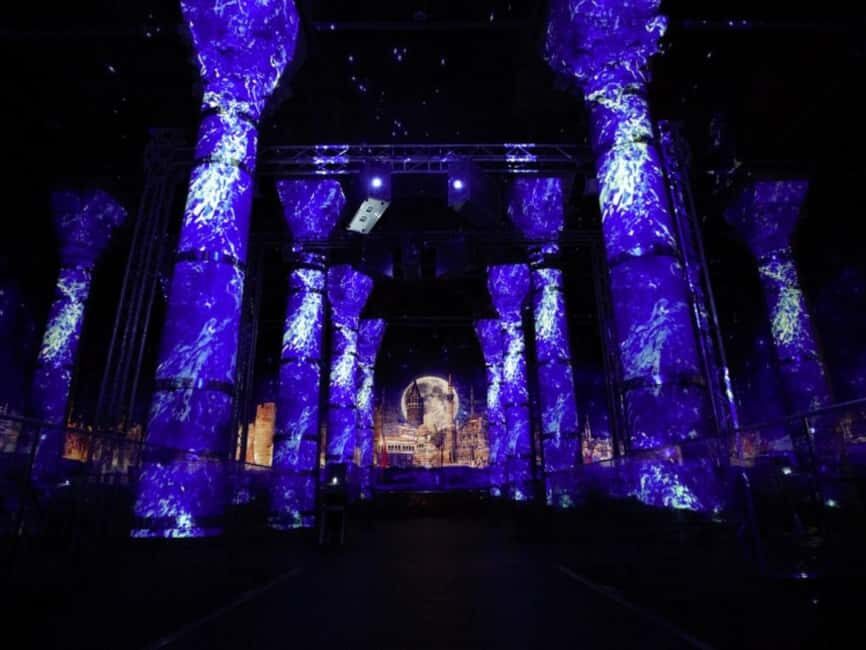
One of the most praised elements is the on-site light show. I can’t promise what exact timing you’ll experience, because the data here doesn’t spell out schedules, but the fact that multiple people mention it tells me it’s part of the cistern’s visitor experience in a noticeable way.
If you’re aiming for atmosphere, plan for some time when the room is most likely to be staged—rather than rushing straight through. Even a short pause can change the mood. In an underground space with strong geometry and stone columns, lighting effects can make the architecture feel more dramatic without adding any physical clutter.
Timing your visit for calm, not chaos
You’re choosing this cistern because you want a quieter kind of Istanbul. Still, the day-to-day reality of crowds exists.
The good news is that people often appreciate this cistern for being less hectic than the most famous water basilica-style stop. The practical win comes from the way entry is handled—skip-the-line access helps you arrive and get inside without the stress spiral.
To time it well:
- Think of the cistern as a calm anchor in your day, not a rushed stop.
- Arrive with enough time to start the audio guide right away.
- If you’re sensitive to crowds, give yourself a buffer so you’re not arriving at the busiest moment you can’t control.
This is a self-paced visit, and that flexibility matters more than you might think. The cistern rewards slow walking because you’ll naturally notice more as you move under the columns.
Price and value: is $30 the right deal?
At about $30 per person, this ticket is aimed at one main value: convenience plus explanation. You’re paying for entry and an audio guide, and you’re also getting skip-the-line access.
Here’s how I think about value for this kind of site:
- If you’re the type who reads your way through history, the audio guide earns its keep. It gives you the “why” behind what you see.
- If you hate waiting, skipping the ticket line is worth real money in sanity.
- If you only want a quick look and you’re fine with minimal context, you might question whether the audio is worth it. But even then, the cistern’s engineering details are easier to appreciate with narration.
Also, this option is not a guided tour. That’s not a downside—it’s a value alignment. You keep control over pacing, which is ideal for architecture sites where your attention naturally shifts as you look around.
Who this ticket suits best (and who should consider something else)
This experience works best if you:
- want a self-paced visit instead of a group tour pace
- enjoy architecture and engineering details, like columns, vaults, and waterproofing design
- want clearer context for Byzantine and Ottoman water management
- prefer avoiding long lines and prefer smooth entry
It might not be ideal if you want a live guide answering questions on the spot. Since this is not a guided tour, you won’t get spontaneous Q&A or deep tailoring. Also, if you were hoping for extra multimedia experiences like a 3D show, that’s not included.
The bottom line: should you book this Cistern of Theodosius entry ticket?
If you want a calm, story-driven visit that doesn’t force you into a group schedule, I’d book it. The combo of skip-the-line entry plus the audio guide is the sweet spot: you get access without stress, and you get enough context to make the cistern feel meaningful.
Book it especially if you’re planning a one-day Istanbul itinerary and want one stop that’s quiet, architectural, and easy to pace. Just do one simple thing before you go: make sure you can access your ticket info and QR access smoothly at the entrance, so your day stays on your schedule instead of getting stuck in admin.
FAQ
How much is the Cistern of Theodosius entry ticket with audio guide?
The price is listed as $30 per person.
How long does the visit last?
The ticket is valid for 1 day, and the cistern is explored at your own pace with the audio guide.
What’s included with this ticket?
It includes the Cistern of Theodosius entry ticket and an audio guide for the cistern.
Is this a guided tour?
No. This is not a guided tour. You explore the cistern on your own pace using the audio guide.
Do I skip the ticket line?
Yes, the ticket is designed to let you enter without waiting in the ticket line.
How do I access the ticket at the entrance?
You get a QR code at the entrance for quick access.
Is a 3D show included?
No, a 3D show is not included with this activity.