REVIEW · ISTANBUL
ISTANBUL Full-Day PRIVATE Guided Tour: For the Top Historic Sites
Book on Viator →Operated by Istanbul Private Guided Tour: For Major Historical Attractions · Bookable on Viator
If you want Istanbul fast, this day delivers.
This private, English-language tour strings together the Ottoman and Roman highlights in one focused 6 to 7 hour loop, starting at Hagia Sophia and ending back there. I like the private format because you can set the pace, ask questions, and get context you’d miss if you just wander. And I also like the hands-on help with the Grand Bazaar, including practical tips for haggling and what’s worth your attention, whether you’re with kids or traveling solo. One drawback to keep in mind: you’ll pay extra for some major entrances, and the day includes time in market areas where shopping can take over if you don’t steer it.
Here’s the reality check: you’ll be walking between stops and following dress code rules for the mosques. That’s totally doable with moderate fitness and comfy shoes, but plan ahead so you’re not scrambling with clothing or feeling rushed once you reach the entrances.
In This Review
- Key highlights to look forward to
- A private historic-peninsula day (starting and ending near Hagia Sophia)
- The Blue Mosque: free entry, strict dress code, and the blue-tile effect
- Hagia Sophia Grand Mosque: a 1,500-year story told in layers
- Topkapi Palace: Ottoman power in a complex, with one practical caveat
- Basilica Cistern: the 10-meter descent and the movie-set mood
- Hippodrome: small time, big Roman leftovers
- Grand Bazaar: haggling help, demonstrations, and how to avoid wasting time
- Walking, dress code, and the practical stuff that makes or breaks the day
- Price and value: $79 is the guide, tickets are extra
- Who this tour suits best (and who should choose differently)
- Should you book this private Istanbul landmark tour?
- FAQ
- FAQ
- Where does the tour start and end?
- How long is the private tour?
- Is this tour private or shared?
- What language is the guide?
- Are museum entrance fees included?
- Which stops are free to enter?
- What is the dress code for visiting the mosques?
- Is Topkapi Palace always open?
- Is the Grand Bazaar always open?
- Is transportation included?
- What does the tour include besides the guide?
Key highlights to look forward to
- Private guide, your pace: guides like Fuat Peker and Zel are praised for keeping the day organized without feeling stiff
- Mosque and museum contrast: Hagia Sophia is still partly used as a mosque, partly as a museum
- Topkapi in a tight window: you get a guided route through key rooms, with a note that some sections restrict guide access
- Basilica Cistern’s dramatic atmosphere: you descend about 10 meters and step into a “pillar city” with lights
- Grand Bazaar with real-world guidance: help with bargaining and spotting the most formal shops vs. charlatans
- Major sights without marathon scheduling: you check off Blue Mosque, Hagia Sophia, Topkapi, Basilica Cistern, Hippodrome, and Grand Bazaar in one day
A private historic-peninsula day (starting and ending near Hagia Sophia)
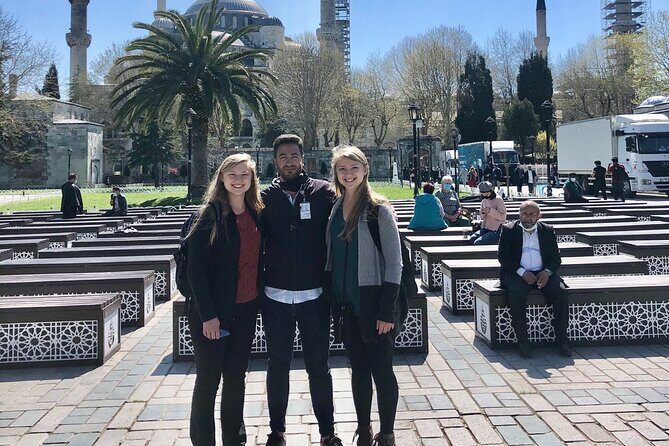
This is the kind of tour that works because it’s built around how Sultanahmet sites actually fit together. You start at the Hagia Sophia area (Sultan Ahmet, Ayasofya Meydanı), then work through the most famous landmarks people come to see, all in one structured day. The private setup matters here: you can slow down in Topkapi if you want more artifacts, or speed up if you’re chasing photos before the light changes.
Because you’re on your own with a licensed private guide, you’re not stuck with one-size-fits-all commentary. In the best cases, guides like Fuat Peker and Sude Yaviz are praised for being calm, respectful, and willing to answer questions without rushing families or solo travelers. One traveler even credited a guide with helping avoid scammers and making the whole day feel safe.
You can also read our reviews of more guided tours in Istanbul


The Blue Mosque: free entry, strict dress code, and the blue-tile effect
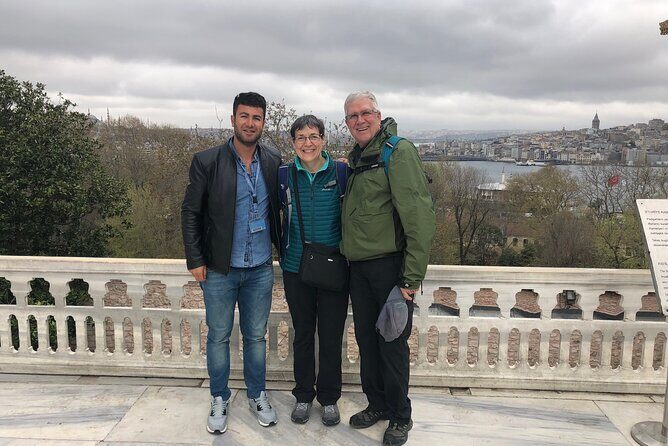
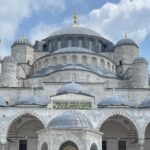
Your day begins with the Blue Mosque, an Ottoman imperial mosque built in the 17th century. The headline is the look: around 20,000 blue ceramic tiles cover a lot of the interior surfaces, giving the space that unmistakable cool-blue tone. If you only knew it by its nickname, you’ll still be surprised by how much the décor shapes the atmosphere once you’re inside.
Plan for the dress code before you arrive. Women need a headscarf and long clothing that covers the knee (long dress or pants). Men need long pants that cover the knees. The good news is that entry is free, and you’re typically in and out in about 30 minutes, which keeps the morning moving.
Tip: if you care about seeing the architecture clearly, go in with a plan for where you want to look first—tiles, stained glass, then ceiling details—so you don’t waste time taking in everything at random.
Hagia Sophia Grand Mosque: a 1,500-year story told in layers
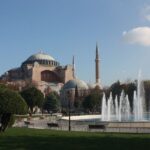
Hagia Sophia is the big one. Built by the Eastern Roman Empire in the 6th century, it has stood for about 1,500 years, and it’s gone through major identity changes. For roughly a thousand years it served as a cathedral, then after the Ottoman conquest in 1453 it became a mosque. Today it’s partly used as a mosque and partly as a museum, which is why you’ll see a mix of older Christian-era motifs alongside Ottoman-era additions.
This stop usually lasts about 40 minutes, and unlike the Blue Mosque, admission isn’t included. Dress code rules apply again: women need a headscarf and clothing that covers the knee; men need pants that cover the knees.
What makes this stop worth paying extra for is the way the building tells its timeline in physical form. The dome is the obvious anchor, but the guide helps you notice the less obvious details—like what kinds of symbols and motifs come from which period—without turning it into a lecture marathon.
Topkapi Palace: Ottoman power in a complex, with one practical caveat
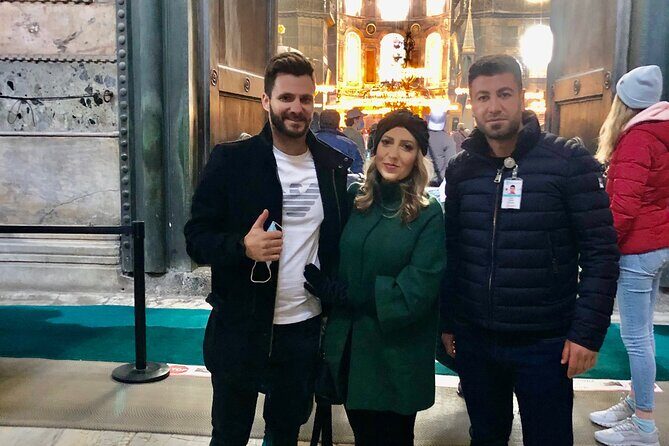
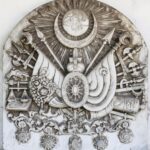
Topkapi Palace is where the Ottoman empire lived in practical terms. This imperial palace complex hosted the empire for about 400 years, and it was built under Sultan Mehmet II after the conquest of Constantinople in the 15th century. Most of the value here comes from walking room-to-room with someone who can point out what you’re looking at and why it mattered.
Expect about 2 hours for Topkapi. Admission is not included, and there’s an important planning note: Topkapi Palace is closed on Tuesdays. Also, tour guides aren’t allowed to accompany you in some of the palace’s larger private exhibition rooms, so you may spend brief stretches exploring parts of the complex with your group while the guide handles access and timing.
That restriction isn’t a dealbreaker, but it’s something to know so you don’t expect the guide to be right next to you at every single doorway. In practice, the guide still sets the route and helps you hit the most meaningful areas first.
Basilica Cistern: the 10-meter descent and the movie-set mood
Basilica Cistern is a mood shift. It was built as an underground water reservoir in the 6th century by the Roman Empire to supply the city. It’s no longer an active tank, but it’s preserved and now used as a museum.
This stop includes a dramatic physical transition: you go down roughly 10 meters underground, and suddenly you’re in a forest of pillars under colored lights. Even if you’re not into filming trivia, it helps to know it’s been used as a setting for big-screen productions such as From Russia with Love (1963) and Inferno (2016).
You’ll usually spend about 30 minutes here, and admission is not included. The drawback is simple: it’s atmospheric, but you won’t want to rush. If you hate enclosed spaces, give yourself time to acclimate at the stairs so it doesn’t feel like a quick stop.
You can also read our reviews of more private tours in Istanbul


Hippodrome: small time, big Roman leftovers
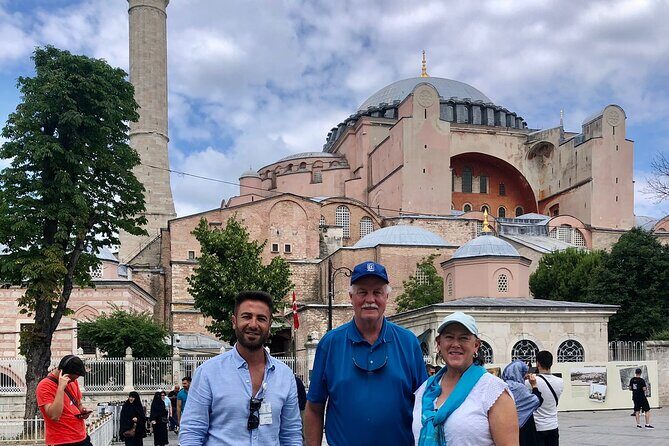
The Hippodrome stop is shorter—about 20 minutes—but it’s free and worth it if you like seeing Roman history survive inside today’s city. The square called the Hippodrome today dates back to the 4th century, built by Emperor Constantine the Great after he made the city a new capital.
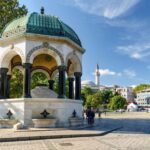
You’ll see several notable remnants, including the Egyptian obelisk, the serpent column from Greece, the German fountain, and another walled obelisk from the city. The main value here is contrast: you get a snapshot of how the city entertained itself with chariot racing at the height of the empire, then you look around and see how modern life surrounds the past.
Grand Bazaar: haggling help, demonstrations, and how to avoid wasting time
Then comes the Grand Bazaar, the 500-year-old Ottoman-era market complex built in 1461. It’s enormous—about 3,500 shops—so a guided plan matters. Entry is free, and you usually get about 1 hour here. There’s also a practical note: the Grand Bazaar is closed on Sundays.
This is a good place to spend money only if you go in with rules. The tour’s value isn’t just about shopping; it’s about knowing how to shop. Expect help with haggling, and you may see demonstrations of craft (the bazaar is known for art demonstrations and handmade items). One theme you’ll hear in positive guide experiences: the guide can point you toward more formal shops and help you steer clear of scams.
What to watch for: a negative review mentioned getting pulled into sales-style presentations for ceramics or carpets. Even if your guide keeps it respectful, market time can expand quickly if you say yes to every demonstration. If you want pure sightseeing, set expectations early: you’re here for the highlights and maybe one souvenir, not for a long sales pitch.
If you do shop, the basics you can apply instantly:
- Ask what the material is (wool, silk, cotton) because prices can swing a lot.
- Treat big numbers as a starting point, not the final truth.
- Keep your budget tight so you’re not negotiating while tired.
Walking, dress code, and the practical stuff that makes or breaks the day
This is a walking-heavy day, and it’s not built for flip-flops and optimism. Guides typically lead you through multiple major stops, some of them indoors with queues and ticket checks. Plan on moderate physical fitness and bring comfortable shoes. One review described the day as intense on the legs, with a reported total around 14,750 steps—so take that as a “wear the right shoes” warning.
Dress code is repeated for the mosque stops:
- Women: headscarf + long clothing covering the knee
- Men: long pants covering the knee
Also, the experience requires good weather, which makes sense because the sites are spread out enough that you’ll spend real time moving outdoors.
Price and value: $79 is the guide, tickets are extra
At $79 per person, the headline price is for a private licensed guide plus a structured route through major Roman and Ottoman landmarks. You’re not paying for museum entrance fees, lunch, transportation, or gratuity.
Here’s the honest budgeting picture. Admission fees for the paid stops add up, and a review-based estimate put total entrances around $130 per person, with Topkapi often mentioned at about $60. Even if your final total ends up different, you should expect to pay extra for:
- Hagia Sophia
- Topkapi Palace
- Basilica Cistern
So the value question becomes: does a private guide save you enough time, confusion, and “wait in line” frustration to justify the base price? For many people, yes—especially first-timers. Reviews frequently praise the ability to move efficiently and reduce waiting time. Also, when you get context at each stop, you spend your limited time seeing more of what matters rather than just wandering.
What you’ll still handle on your own:
- Museum ticket purchases (not included)
- Lunch (not included)
- Transportation between sights (not included)
- Tip for the guide (gratuity is not included)
Who this tour suits best (and who should choose differently)
This tour fits best if you want a high-efficiency highlights day and you’re happy to walk through a concentrated historic district. It’s also a strong choice for:
- First-time Istanbul visitors who want their bearings fast
- Families with teenagers who need a guide to keep things interesting without losing the thread
- People who like both Roman and Ottoman layers in one sweep
- Anyone who wants help with Grand Bazaar bargaining rather than fumbling around alone
It may be less ideal if you want a slow, ultra-lecture-style history lesson. One concern raised in feedback was that the history emphasis felt lighter than expected, and that shopping demonstrations can take extra time. If you’re the type who wants only monuments and no market distractions, message your guide (or set expectations) about how much time you want inside shops and demonstrations.
Should you book this private Istanbul landmark tour?
Book it if your priority is seeing the top sites in one day with a guide who can keep you organized, explain what you’re looking at, and help with the bazaar part of the experience. The private format is the big win, and guides in this program have been praised for being punctual, friendly, and good at matching the day to your group.
Consider passing or choosing a different style if:
- You hate shopping-oriented stops and want strictly monument-focused time
- You’re trying to minimize entrance-ticket spending
- You prefer a very long, deeply academic history pacing with minimal movement
If you’re ready for a structured, high-impact day—mosque interiors, Ottoman palace rooms, an underground Roman reservoir, plus the Grand Bazaar—this is a solid way to spend your Istanbul time without turning it into a multi-day logistics project.
FAQ
FAQ
Where does the tour start and end?
It starts at Hagia Sophia Grand Mosque in Sultan Ahmet (Ayasofya Meydanı No:1, 34122 Fatih/İstanbul). It ends back at the same meeting point.
How long is the private tour?
The duration is about 6 to 7 hours.
Is this tour private or shared?
It’s a private tour. Only your group participates.
What language is the guide?
The tour is offered in English.
Are museum entrance fees included?
No. Museum entrance fees are not included for sites where admission is required.
Which stops are free to enter?
Blue Mosque is listed as free to enter, and Hippodrome is also listed as free. Other major sites have admission fees that are not included.
What is the dress code for visiting the mosques?
Women need a headscarf and long dresses or pants that cover the knee. Men need long pants to cover the knees.
Is Topkapi Palace always open?
No. Topkapi Palace is closed on Tuesdays.
Is the Grand Bazaar always open?
No. The Grand Bazaar is closed on Sundays.
Is transportation included?
Transportation is not included. The meeting point is near public transportation.
What does the tour include besides the guide?
The tour includes a Roman and Ottoman historical focus and the major stops: Blue Mosque, Hagia Sophia, Topkapi Palace, Basilica Cistern, Hippodrome, and Grand Bazaar. Lunch is not included.