REVIEW · ISTANBUL
Istanbul: Hagia Sophia Skip-the-Line Ticket with Audio Guide
Book on GetYourGuide →Operated by Istanbul Tourist Pass® · Bookable on GetYourGuide
You feel the size of Hagia Sophia fast.
This skip-the-line ticket is built for an independent visit that mixes big-ticket architecture with practical pacing. You’ll get access to the Hagia Sophia Grand Mosque entry, plus a professional English audio guide you can run on your own time (headphones in hand).
What I like most is how it respects your schedule. You get skip-the-line entry, and you also get a crafted audio guide that helps you notice details you might miss on a quick walk-through. There’s also an optional add-on for the Hagia Sophia History & Experience Museum, which helps turn what you see into a story.
One consideration: the ticket can’t skip security. You still have to pass mandatory checks, and there could be an entrance line even with the skip-the-line product.
In This Review
- Key things to know before you go
- Skip-the-line: what you gain (and what you still can’t avoid)
- Getting in smoothly with QR codes and the audio guide link
- Hagia Sophia Grand Mosque: the Justinian-to-Ottoman story in one building
- The crafted audio guide: better than staring at plaques
- Golden Horn and Bosphorus views: when the site opens up
- Hagia Sophia History & Experience Museum: what the add-on adds
- A quick heads-up on kids and museum entry
- Price and value: is $36 a good deal?
- What kind of traveler should pick this?
- Should you book this Hagia Sophia skip-the-line audio experience?
- FAQ
- How does the skip-the-line ticket work if security lines are still required?
- What do I receive after booking?
- Is the audio guide available in English?
- Can I add the Hagia Sophia History & Experience Museum to my visit?
- How long is the ticket valid?
- Are there any age rules for children in the museum?
- Is it wheelchair accessible?
Key things to know before you go
- Skip-the-line entry to Hagia Sophia, but security checks are still required
- English audio guide link sent by email, designed for self-exploration
- Optional museum ticket includes the History & Experience Museum inside Ibrahim Pasha Palace
- Golden Horn and Bosphorus views are part of the experience you’re likely to catch on-site
- Kids’ passport checks apply for museum admission to validate age
Skip-the-line: what you gain (and what you still can’t avoid)

This ticket is all about saving time at the main entry point. You’ll use the QR code from your email to enter Hagia Sophia with skip-the-line access, so you’re not stuck at the most obvious queue.
That said, the product is honest about the part you can’t control: you cannot skip the security line. Plan for the reality of mandatory checks and the chance of an entrance line. In other words, you’re speeding up the experience, not deleting logistics.
For most people, that’s the right trade. A skip-the-line add-on makes the difference between arriving, getting oriented, and actually having enough energy to enjoy the building. If you’re the kind of traveler who likes to linger, it’s a big win.
You can also read our reviews of more tours and experiences in Istanbul



Getting in smoothly with QR codes and the audio guide link
After you book, you’ll receive two separate QR codes (entry tickets) and a separate audio guide link via email. The key point is that the entry QR codes and the audio guide link don’t arrive in the same way, so don’t assume one email contains everything.
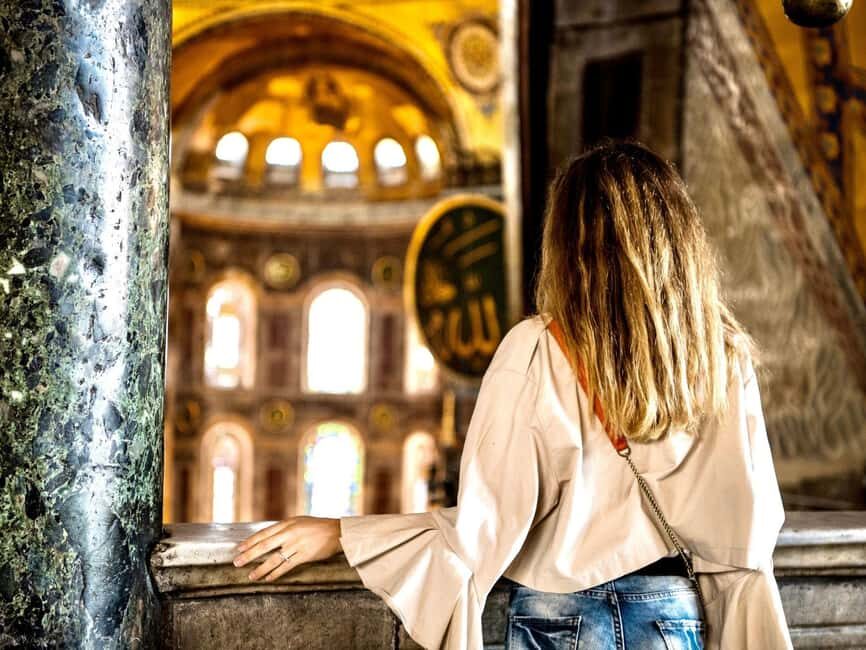
Bring your headphones. The audio guide is designed to be used while you walk the site at your own pace. It’s a helpful match for Hagia Sophia, because the place is visually dense: mosaics, domes, structural geometry, and centuries of change all compete for your attention.
Also, keep your expectations aligned with how the experience works: this is self-guided. There’s no mention of a live docent here, so the audio is the main “guide” component. If you want to ask questions mid-visit, you might prefer a group tour with a person talking in real time.
Hagia Sophia Grand Mosque: the Justinian-to-Ottoman story in one building
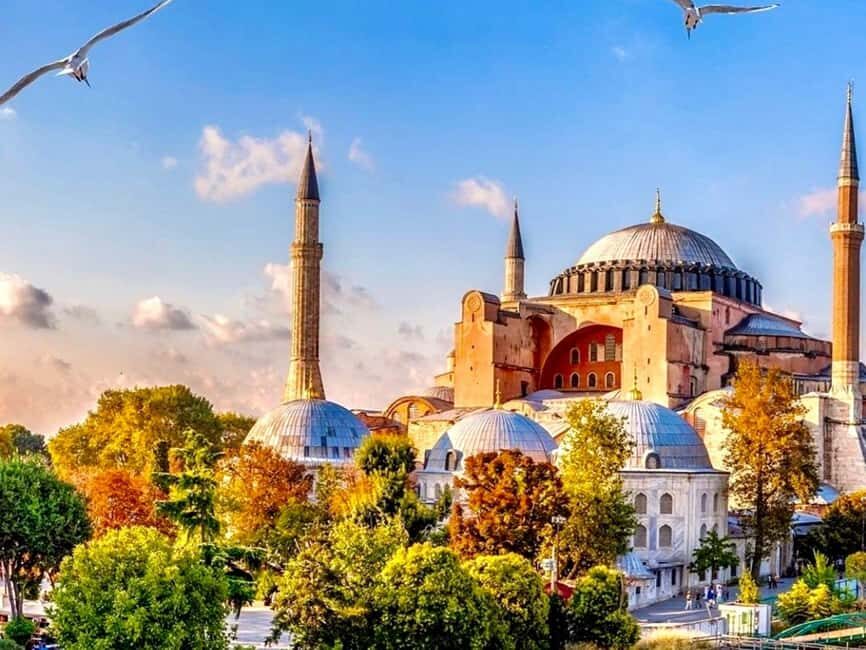
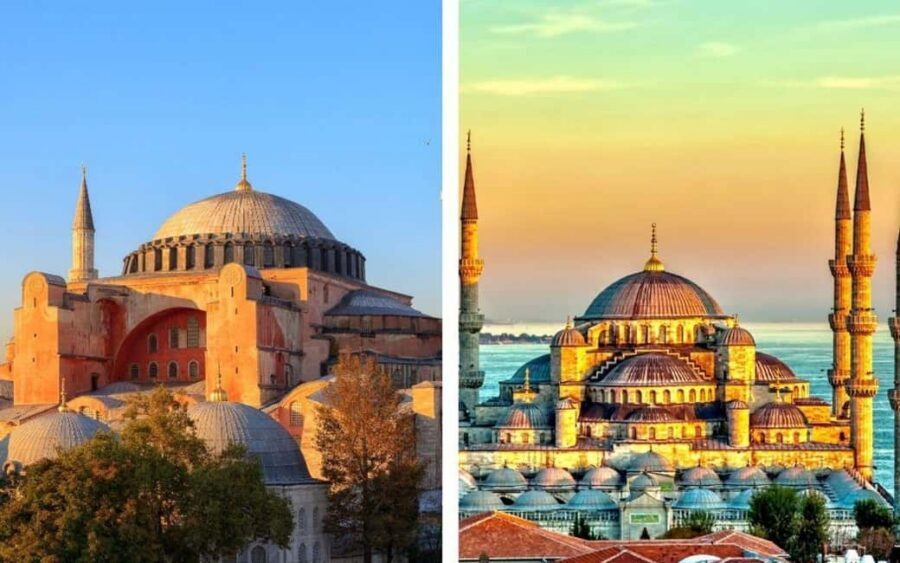
Hagia Sophia started as a cathedral in 532 AD, built by Emperor Justinian. Later, it transformed into a mosque, and the building became a visible symbol of the meeting point between Byzantine and Ottoman cultures.
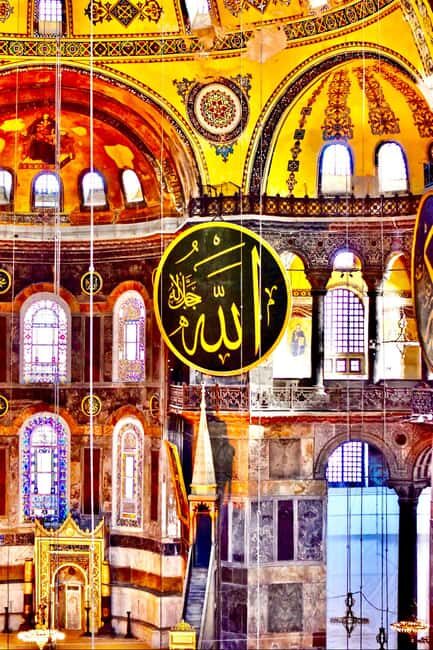
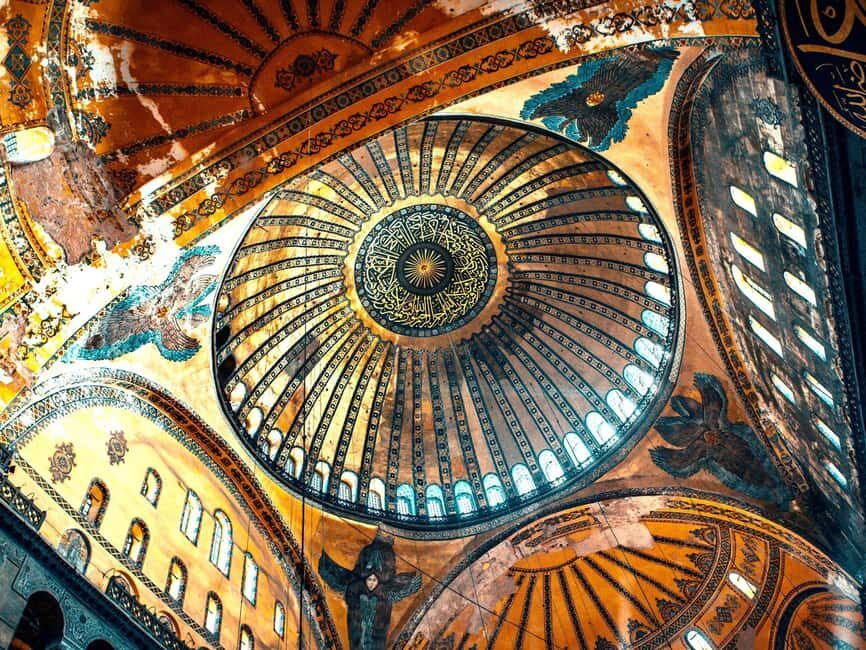
That timeline matters when you’re standing inside, because the design choices weren’t made for one single era only. The dome’s sheer scale, the intricate details, and the famous mosaics all feel like they’re pointing to different periods at once. The audio guide helps you connect those dots while you’re there, so you’re not just looking at an impressive interior—you’re interpreting it.
You’ll also learn what to pay attention to as you move. The tour notes include “lesser-known stories and secrets,” which is usually traveler code for: you’ll get prompts to look at specific elements instead of only photographing the first view that hits you.
One more practical element: Hagia Sophia is listed as the second biggest church of Istanbul. If you care about context, that’s a helpful benchmark. It also explains why you can feel small inside even when you’re standing under an area that looks straightforward from outside.
The crafted audio guide: better than staring at plaques
This is a professional audio guide in English, delivered through a link you’ll receive separately by email. The goal is simple: you should be able to self-explore confidently, without needing to track down extra interpretation on-site.
When audio works well, it does two things:
1) It gives you a running commentary so you don’t have to guess what you’re seeing.
2) It tells you what to look for next, which keeps the visit moving at a human pace.
Here, the highlights include uncovering stories and secrets, plus using the guide to experience Hagia Sophia as a cultural bridge. For me, that’s the real value of audio: it turns a “wow building” into an experience with meaning.
Also note that the experience is designed for headphones. That helps you focus, especially in a crowded environment. It’s not silent, but you control the narrative.
Golden Horn and Bosphorus views: when the site opens up

The ticket’s highlights specifically call out breathtaking views of Istanbul over the Golden Horn and the Bosphorus. You’re not going to get those views only from one angle, so it helps to plan a slow walk instead of rushing straight through.
These viewpoints are part of why Hagia Sophia still feels modern even though the building is from the 6th century. The dome and interior are the headline, but Istanbul’s water and shoreline keep reminding you where you are: a city built on movement, trade, and empire.
Use the audio guide to pace yourself. When it prompts attention to certain sections, that’s often when better sightlines open up. It’s a nice way to avoid the common mistake of spending your best energy on the first room you enter.
You can also read our reviews of more guided tours in Istanbul




Hagia Sophia History & Experience Museum: what the add-on adds
If you choose the option that includes the Hagia Sophia History & Experience Museum, you get a more structured way to understand what you just saw inside the mosque.
The museum is located within the Ibrahim Pasha Palace. That setting matters because the palace location gives you a transition space between the monumental interior and a hands-on, story-driven format. Instead of relying only on what the building shows, you get exhibits designed to explain the evolution of the landmark.
This museum runs over three floors and uses state-of-the-art technology, including video shows and audio narratives. There are immersive exhibits and 13 curated areas, each focused on a different facet of Hagia Sophia’s past—from its origins to its transformation into a mosque.
The experience is described as interactive storytelling, with never-before-seen artifacts. Even if you’re not a museum person, this kind of format can be useful here because Hagia Sophia’s history is layered. The building itself is impressive, but the museum gives you a way to organize it in your head.
If you’re short on time, you might skip the museum. But if you like to understand context, this is the add-on that turns your visit from architectural sightseeing into a fuller “I get it now” moment.
A quick heads-up on kids and museum entry
For museum admission, children are asked to present valid passports to validate their age. Children under 8 with a valid passport or ID can enter for free. If you’re traveling with kids, this is one of those details that can save time at the entrance.
Price and value: is $36 a good deal?
At $36 per person, the ticket is priced like a convenience product. You’re paying for skip-the-line entry plus a professional English audio guide, with the option to include the History & Experience Museum.
So the question isn’t just whether it costs more than the base ticket. It’s whether you’ll use the value components:
- If you’ll enjoy audio at your own pace, you’re using the guide.
- If you hate waiting (and most of us do), skip-the-line matters.
- If you’re picking the museum option, you’re effectively adding a whole extra layer of storytelling beyond the mosque entry.
If you’re the type of visitor who wants only the main site and moves fast, you might feel the museum add-on is extra. But if you like to stop, read cues, and connect what you see to why it matters, the package can feel like good value for the time it saves and the context it adds.
What kind of traveler should pick this?
This ticket works best for you if:
- You want a self-guided visit but still want help noticing key details.
- You value time savings and hate wasting energy in queues.
- You like audio commentary you can control with headphones.
- You’re curious about the multi-era story of the site and might choose the museum add-on.
It may not be the best fit if you need a live guide for Q&A, or if you prefer purely free-form walking with no prepared interpretation. Also, if your schedule is extremely tight, remember there’s still security, and you’ll need time for the museum only if you choose that option.
Should you book this Hagia Sophia skip-the-line audio experience?
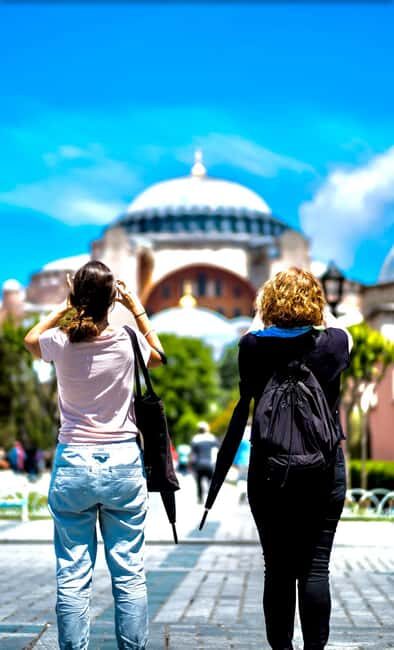
I’d book it if you want an efficient entry plus a guided narrative in English without committing to a full-day group tour. The combination of skip-the-line access and a crafted audio guide is the kind of practical comfort that makes a legendary site feel doable.
Choose the museum add-on if you care about context and want the history broken into organized spaces across 13 areas over three floors in the Ibrahim Pasha Palace. Skip it if you’re trying to keep your day light and you’d rather spend more time inside the mosque itself.
If you’re okay with a self-guided format—and you can plan for security lines—this is a solid way to see Hagia Sophia without turning your visit into a waiting game.
FAQ
How does the skip-the-line ticket work if security lines are still required?
The ticket helps you skip the ticket line, but it does not allow you to skip the mandatory security lines. You should still expect security checks and possibly some waiting at the entrance.
What do I receive after booking?
You receive entry ticket QR codes and an audio guide link via separate emails from the supplier Istanbul Tourist Pass.
Is the audio guide available in English?
Yes. The ticket includes a professional audio guide in English.
Can I add the Hagia Sophia History & Experience Museum to my visit?
Yes. There is an option that includes the Hagia Sophia History & Experience Museum, located within Ibrahim Pasha Palace.
How long is the ticket valid?
The ticket is valid for 1 day. You’ll need to check availability to see the starting times.
Are there any age rules for children in the museum?
Yes. Children are asked to present valid passports at the museum entrance to validate age. Children under 8 with a valid passport or ID can enter for free.
Is it wheelchair accessible?
Yes, the experience is wheelchair accessible.