REVIEW · ISTANBUL
Istanbul: Hagia Sophia Skip-the-Ticket Line & Audio Guide
Book on GetYourGuide →Operated by Herms · Bookable on GetYourGuide
Big domes, bigger crowds.
This Hagia Sophia experience pairs skip-the-ticket-line entry with a complimentary English digital audio guide, so you spend less time wrestling ticket booths and more time understanding what you’re seeing. I especially like the focus on Byzantine mosaics tied to later Islamic calligraphy, and the chance to catch those eerie marble details—like submerged columns and the upside-down Medusa heads. The main catch: the skip is for the ticket-buying line, not a guaranteed bypass of security or the busiest entry flow.
You’ll go on your own, using the tourist entrance near Topkapi Palace. Your QR-code ticket arrives by email one day before, and you can aim for a time slot that helps you beat the worst queues. One more thing to know up front: this ticket covers the upper galleries and viewing areas, not the ground-floor prayer hall.
In This Review
- Key things to know before you go
- Hagia Sophia, timed to your day (not a group schedule)
- Getting in at the tourist entrance near Topkapi Palace
- The skip-the-line reality check: what it really saves
- Inside the upper galleries: mosaics, calligraphy, and that dome feeling
- Submerged columns and upside-down Medusa heads: the eerie highlights
- Using the audio guide app without losing your spot
- Dress, security, and photography rules that can trip you up
- How long you should plan for (and when to arrive)
- Price and value: is $41 a smart buy?
- Who this experience is best for (and who should reconsider)
- Should you book this skip-the-ticket-line plus audio guide?
- FAQ
- Is this a guided tour with a live guide?
- Where do I enter Hagia Sophia with this ticket?
- How do I receive my tickets?
- Does the skip-the-line ticket skip security and entry?
- What’s included with the experience?
- Are headphones included for the audio guide?
- What areas of Hagia Sophia does the ticket cover?
- Can I take photos inside?
- What should I wear to enter?
- What is the cancellation policy?
Key things to know before you go
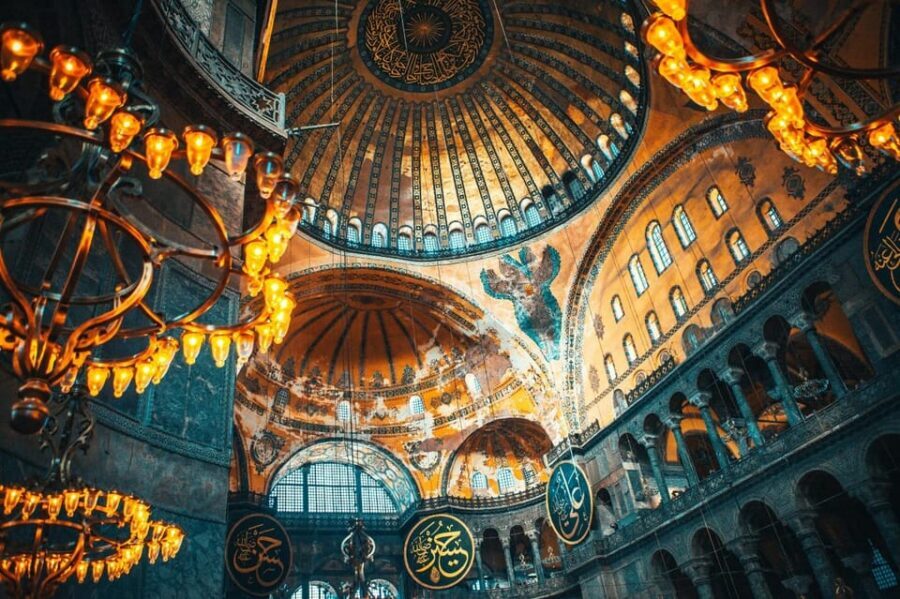
- Skip the ticket line, not the whole visit: you still need to pass checks and enter through the site flow.
- Upper-gallery focus: your ticket is for the upper levels and viewing areas.
- Audio guide does the heavy lifting: English narration helps you read mosaics, dome structure, and the site’s layered identity.
- Look for the marble oddities: submerged columns and upside-down Medusa heads are built into the story.
- No headphones included: plan to use your own earbuds or phone speaker for the app.
Hagia Sophia, timed to your day (not a group schedule)
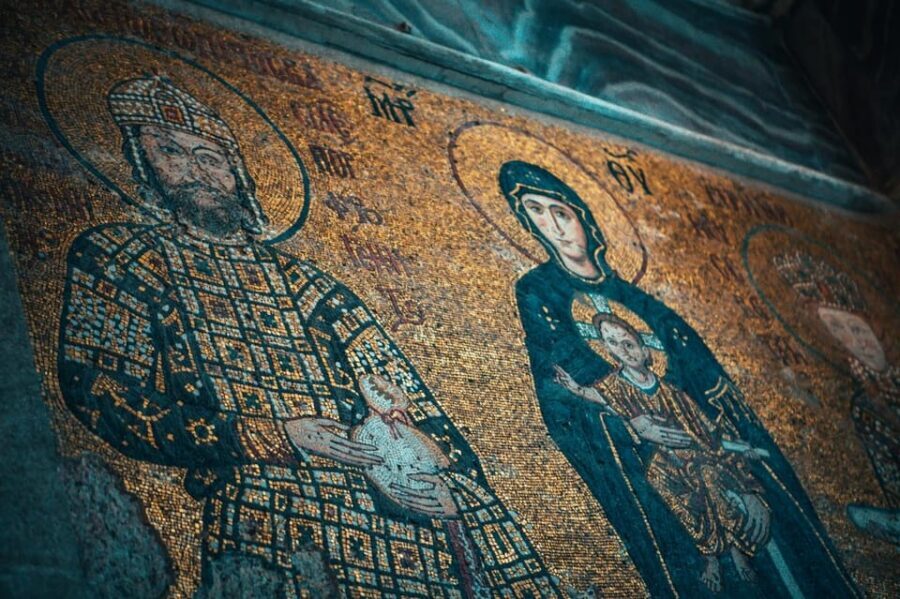
Hagia Sophia is the kind of place where your first reaction is physical. Even before you “get” the history, you feel the scale—stone, light, and that massive dome pulling your eyes upward.
This experience helps because it’s self-paced. Instead of matching your day to a live group tour, you arrive at your chosen start time with a QR code already waiting in your email. That flexibility matters in Istanbul, where the city pace can change fast depending on traffic, weather, and crowds.
You’re also paying for context. The included English audio guide is designed to tell you what you’re looking at, not just recite a few facts. For a site with centuries of changing rulers and purposes, that guidance is the difference between seeing “pretty walls” and actually following the story.
A practical note: the ticket is aimed at the upper galleries and viewing areas, which is still fantastic for viewpoints. Just don’t plan on spending the whole time in the ground-level prayer hall area, because that access isn’t included with this ticket package.
You can also read our reviews of more tours and experiences in Istanbul



Getting in at the tourist entrance near Topkapi Palace
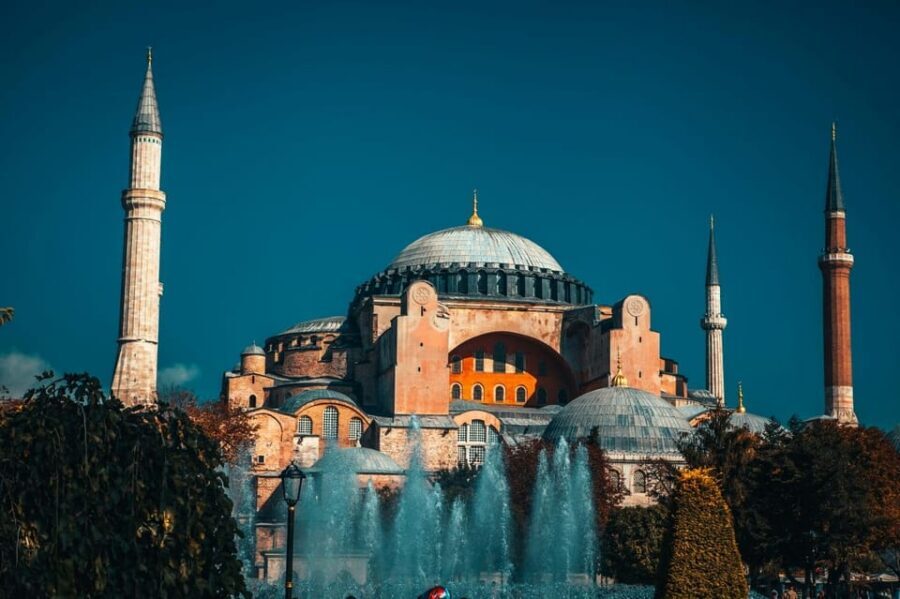
You’ll enter on your own at Hagia Sophia (Ayasofya). Your QR-code ticket is emailed one day before your date, so you can’t rely on a last-minute internet scramble at the airport or hotel lobby.
Foreign visitors use the newly opened tourist entrance near Topkapi Palace. From there, the route includes a gentle ramp to reach the upper-floor galleries. This setup is meant to get you moving through the correct access point without a complicated back-and-forth around the complex.
I like that the meeting approach is simple: show up with the right QR code, scan it, and follow the visitor flow. No “find your guide in the crowd” stress. Just make sure your phone screen is bright and your QR code is ready before you reach the gate.
If you’re using a wheelchair, the site is listed as wheelchair accessible, and ramps/stairs can be uneven. The instructions also point to using the Turkish Citizen Entrance for full accessibility (because it has a ramp). If accessibility is critical for you, it’s worth mentally planning an alternate route before you arrive.
The skip-the-line reality check: what it really saves

Here’s the part that can change your expectations: this package is marketed as skip-the-ticket-line, and that’s what it tends to accomplish.
In plain terms, you should expect reduced time spent at the ticket-buying bottleneck. But you can still have waiting time for security checkpoints and for entering the building itself during peak periods. The site also warns that the ticket does not provide priority access, and in the busiest periods entry may take longer than usual.
So when is it worth it? When you’re arriving in the thick of the day and you’d rather not lose time just to buy admission. If you’re going early—especially around opening time—you might find the regular ticket booths and lines are lighter, which can cut the value of the “skip” part.
A good rule of thumb: if your schedule is tight, don’t gamble on being lucky. If your plan is flexible and you can arrive early, you might be able to manage with on-site tickets. This is the kind of decision where saving an hour can be worth more than saving a few dollars.
Inside the upper galleries: mosaics, calligraphy, and that dome feeling
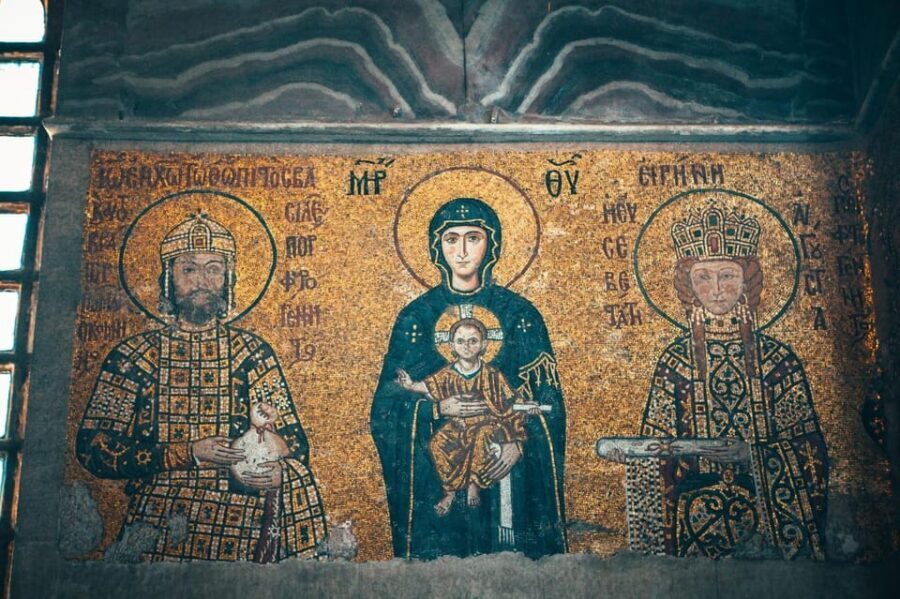
Once you’re up at the upper levels, the visit becomes a visual puzzle you can actually solve—especially with the audio guide running.
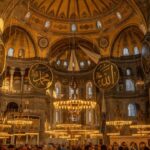
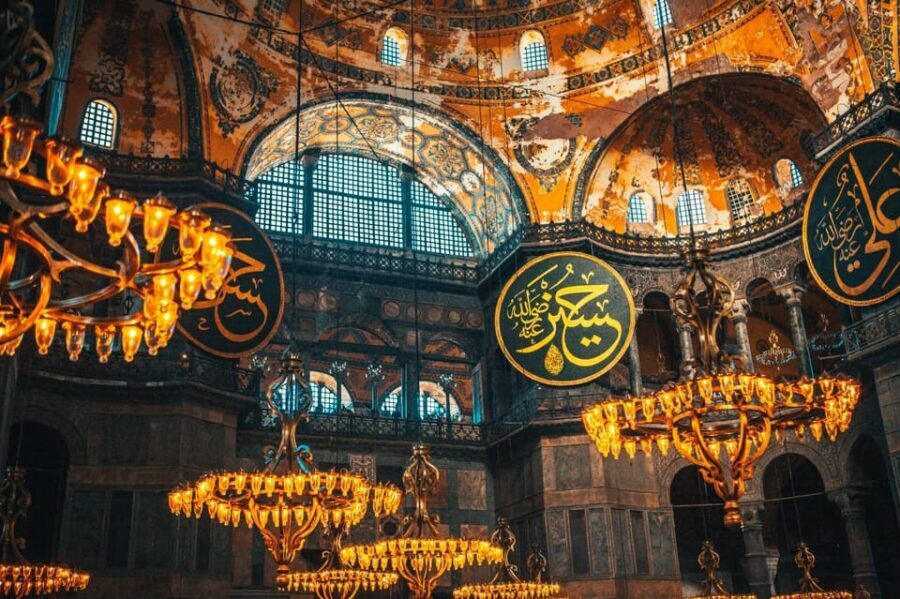
Hagia Sophia is famous for its dome, and your viewpoint from the upper galleries helps you see how the space is designed to carry the eye. The audio guide aims to connect that architecture to the people who built it and the reasons they built it.
Then come the mosaics: this is where the guide shines. You’ll get narration tied to Byzantine mosaics, and you also hear about the later overlay of Islamic calligraphy. That blend is the heart of the building’s story: the same walls, repeatedly reinterpreted.
I also like that the experience encourages you to look for “themes,” not just isolated artworks. The audio guide structure is meant to help you notice the transition points—what looks Greek/Byzantine, what looks Islamic, and what changes when the purpose of the building changes.
One limitation to keep in mind: you’re not entering the ground-level prayer hall with this ticket. That affects the exact angles and what portions of the interior you’ll get to linger in. But the upper galleries still provide strong views of major decorative areas, and they’re a very workable way to experience the building in a single visit.
Submerged columns and upside-down Medusa heads: the eerie highlights
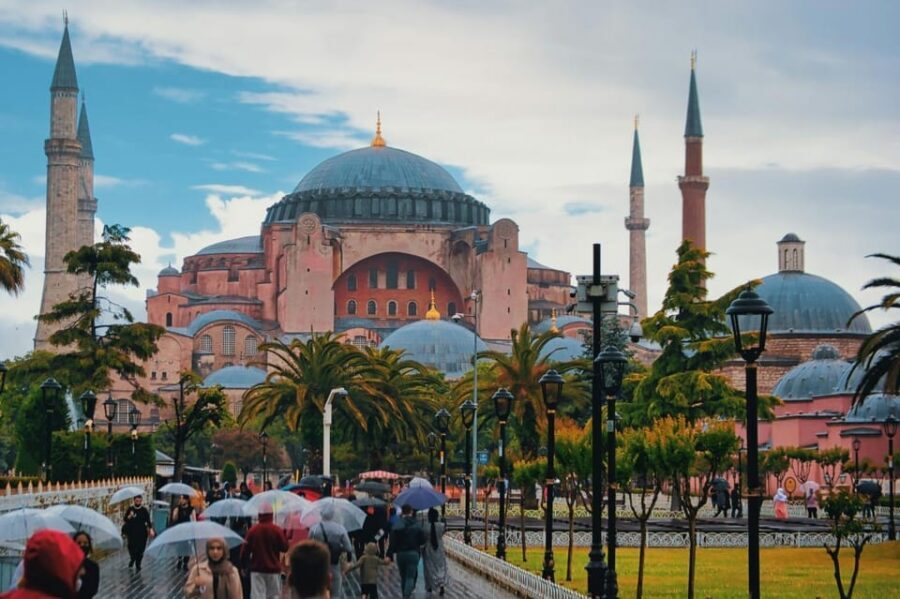
The Hagia Sophia “wow” moments aren’t only the obvious ones. You’ll also encounter details that feel like they were designed to stop you mid-step.
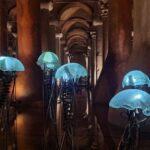
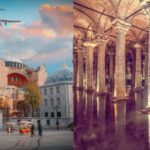
The highlights specifically call out ancient, submerged columns crafted from marble. This is one of those features that sounds strange until you’re standing near it—an object that feels out of time, like a clue from the building’s past that nobody fully explains on first glance.
Then there are the upside-down Medusa heads—beautifully carved, and just mysterious enough to make you stare. Their placement gives you that unsettling feeling of art that refuses to behave like decoration alone. The audio guide helps by giving context so you don’t just spot them; you understand why they matter.
These are the kinds of details that turn a quick visit into a memorable one. Without narration, you might miss them or feel like you’re searching for “the important parts.” With the audio guide, you get nudged toward them like the site is talking back.
You can also read our reviews of more guided tours in Istanbul




Using the audio guide app without losing your spot
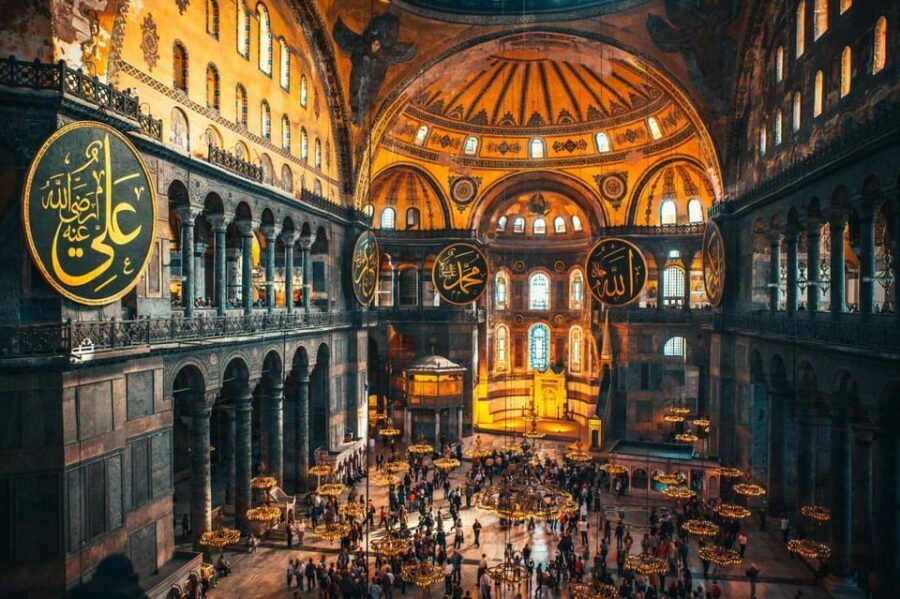
The audio guide is included in English and delivered through a digital app. Your QR code gets you into the site, and the guide is meant to sync you with the narration so you’re not flipping between random travel websites.
I’d treat the app like a tool, not a background soundtrack. When it tells you to look up or look closer, do it. That’s when you start connecting the dome, the mosaic areas, and the calligraphy into a single mental map.
A word of caution: the audio app can be imperfect. Some bookings note that the app was a little glitchy. If that happens, don’t panic. You can still explore visually, and you can also pay attention to the building’s signage and the way the space is organized.
Also, headphones aren’t included. If you want clear audio, bring your own earbuds. If you forget them, you might hear less in crowded areas where people are talking, praying, or moving.
Dress, security, and photography rules that can trip you up
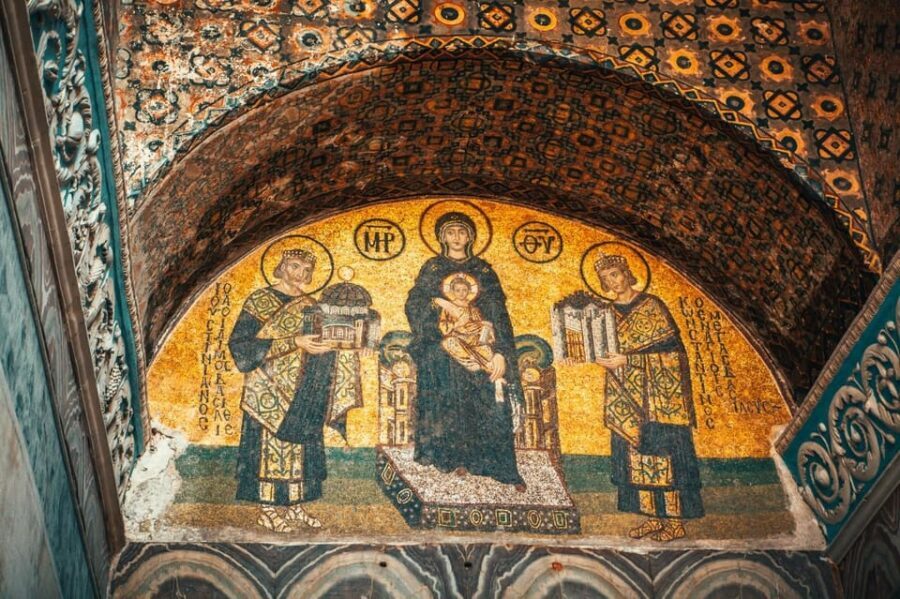
Hagia Sophia isn’t just a museum to wander through. It’s a functioning religious site, and the rules are real.
Women must cover their heads, shoulders, and knees. Men must cover their knees and shoulders. Headscarves and body wraps are available at the ticket booth for a small fee, which is a lifesaver if you show up in the wrong outfit.
Photography inside isn’t allowed, and flash and tripods are prohibited. You’ll also want to avoid photographing worshippers. If you care about taking photos, focus on visitor areas where photography is permitted, and be ready to follow the no-photography zones without arguing with staff.
Security lines can be slow during peak time. The restrictions also include no weapons or sharp objects, no luggage or large bags, and no smoking indoors. There’s no cloakroom, so don’t plan to stash a backpack you won’t carry.
And one more social rule that helps you avoid problems: keep your voice down. Loud conversations and disruptive behavior are explicitly discouraged, and you’ll be asked to remain still during prayers and avoid restricted areas.
How long you should plan for (and when to arrive)
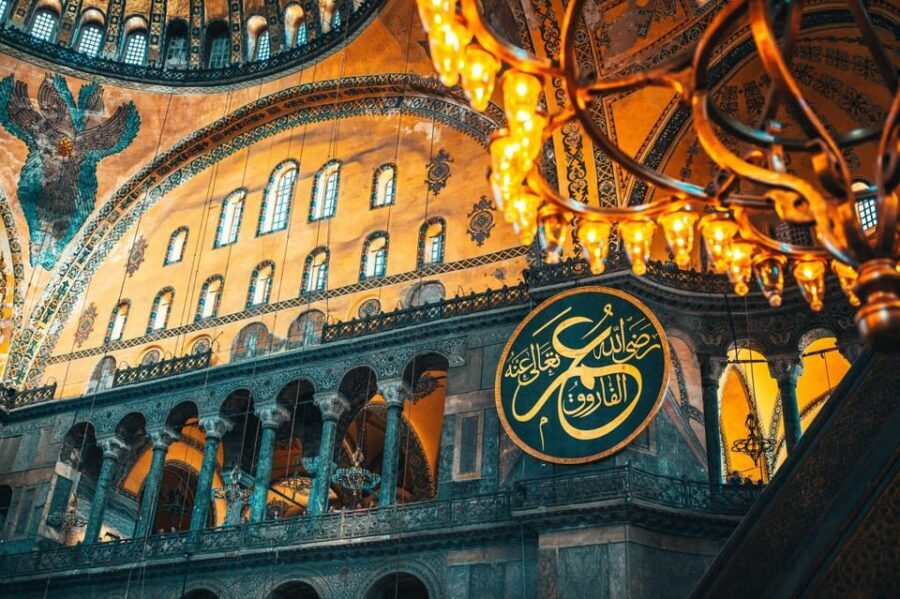
The duration listed is 1 day, but your real time on-site depends on crowd levels and how carefully you want to absorb the mosaics and architectural details.
Some visitors report the visit itself can feel fairly short—around 40 minutes—especially if you stick to the upper galleries and move smoothly. Other people naturally linger longer because Hagia Sophia rewards slow looking.
Timing is your biggest control lever. If you can go earlier in the morning, you can often cut down waiting and enter feeling less rushed. One practical tip that comes up often: visiting earlier helps with both line stress and getting through the flow calmly.
If you arrive later, be ready for longer entrance queues in the sun. That doesn’t mean you shouldn’t go, but it does mean you should bring patience—and water if you’re waiting outside.
Price and value: is $41 a smart buy?
At $41 per person, the question isn’t whether you’ll love Hagia Sophia. You almost certainly will. The question is whether this package removes the most painful friction for your day.
This ticket does three things you’d otherwise pay for with time and effort:
- It includes Hagia Sophia entry.
- It includes skip-the-ticket-line for the ticket-buying part.
- It includes the digital audio guide in English.
It does not include live guidance, headphones, or additional museum tickets. It also doesn’t include entry to the ground-level prayer hall area. And the “skip” should be understood as skip from ticket purchase, not a full bypass of all lines.
So I think the value is strongest when:
- You’re short on time in Istanbul.
- You’re visiting during busier hours.
- You want the audio context so you can actually read the building.
If you’re able to arrive at a time when the regular lines are mild, you might decide the extra cost isn’t necessary. In that case, you can still get a great visit—you’ll just do more of the line-and-wait work yourself.
Who this experience is best for (and who should reconsider)
This experience fits best if you:
- Want an organized way to enjoy Hagia Sophia without a live guide.
- Appreciate architecture and want explanations for mosaics and layered symbolism.
- Prefer self-paced visiting, with an app doing the narration.
It’s less ideal if you:
- Need access to the ground-level prayer hall area (since this ticket is for upper galleries and viewing areas).
- Expect a guaranteed, full skip of every line at the site.
- Hate using apps and might struggle if the audio app has technical issues.
If your travel style is independent, this works well. You show up, scan, get in, and follow your own timing—then use the audio guide as your “inner guide” while you look up at the dome and sideways at those strange carved details.
Should you book this skip-the-ticket-line plus audio guide?
If you’re going to Hagia Sophia for a once-in-a-trip moment, I’d book this. The combination of QR-code entry timing, skip-the-ticket-line help, and an English audio guide makes your visit feel efficient without turning it into a rushed checklist.
Book it especially if you’re visiting at busy times or you’d rather protect your morning than gamble on on-site lines. Consider it less urgent if you’re arriving very early, you’re comfortable with possible app glitches, and you’re okay spending more time on ticketing logistics.
Either way, plan for crowds, dress for the rules, and be ready to see why Hagia Sophia still hits people hard centuries later—because the building keeps telling different stories, depending on where you stand and what you choose to notice.
FAQ
Is this a guided tour with a live guide?
No. This is not a guided tour. You enter Hagia Sophia on your own at the time you choose using your tickets.
Where do I enter Hagia Sophia with this ticket?
Foreign visitors enter through the newly opened tourist entrance located near Topkapi Palace.
How do I receive my tickets?
Your QR-code tickets are sent to your email one day before your visit.
Does the skip-the-line ticket skip security and entry?
The skip is for the ticket-buying line. You can still face security checkpoints and the normal entry flow during busy periods.
What’s included with the experience?
Included are the Hagia Sophia entry ticket, skip-the-ticket-line access, and a complimentary digital audio guide app (English). Access to the History and Experience Museum is included only if you select that option.
Are headphones included for the audio guide?
No. Headphones are not included.
What areas of Hagia Sophia does the ticket cover?
The ticket grants access to the upper gallery and viewing area only. Entry to the ground-level prayer hall is not included.
Can I take photos inside?
Photography inside is not allowed. Flash and tripods are prohibited, and you should avoid photographing worshippers.
What should I wear to enter?
Women must cover their heads, shoulders, and knees, and men must cover their knees and shoulders. Headscarves and body wraps are available at the ticket booth for a small fee.
What is the cancellation policy?
Free cancellation is available up to 24 hours in advance for a full refund.