REVIEW · ISTANBUL
Istanbul: Hagia Sophia Ticket with Audio Guide & Blue Mosque
Book on GetYourGuide →Operated by Cosmic Tickets & Audios · Bookable on GetYourGuide
Two mosques, one ticketed day. This pass is built for self-guided exploring: you get skip-the-ticket-line entry to Hagia Sophia and an audio guide for the highlights at your own pace. Then you walk just across the square for the Blue Mosque audio guide, included so your visit feels like a connected story instead of two random stops.
I especially like the flexibility. Your Hagia Sophia ticket lets you enter any time during opening hours, so you can dodge the worst crowds and still see the mosaics, dome, and the big architectural shifts. I also like that the audio guides cover the essentials in multiple languages, so you do not have to rely on a guide to make sense of what you’re looking at.
The main catch to plan around is the unavoidable security queue. The ticket desk line may be shorter, but security at both sites is mandatory and can take up to an hour in busy periods.
In This Review
- Key points before you go
- Hagia Sophia and the Blue Mosque: Two stops, one square rhythm
- How the skip-the-line ticket works in real life
- Best visiting times: when to arrive to feel calmer
- What you can see inside Hagia Sophia (and what you cannot)
- Audio guides: how to make them work without frustration
- Blue Mosque: why the second audio matters
- Dress code and the headscarf reality check
- Logistics that affect your day: QR code timing and meeting point
- Is it good value at $35 per person?
- Who this works best for
- Should you book this Hagia Sophia and Blue Mosque pass?
- FAQ
- FAQ
- What time can I visit Hagia Sophia?
- Can I enter Hagia Sophia at any time during opening hours?
- What time can I visit the Blue Mosque?
- Is there a security line if I have a skip-the-line ticket?
- What areas of Hagia Sophia does the ticket include?
- Do I need to bring anything?
- What should I wear, and can I buy coverage if needed?
Key points before you go
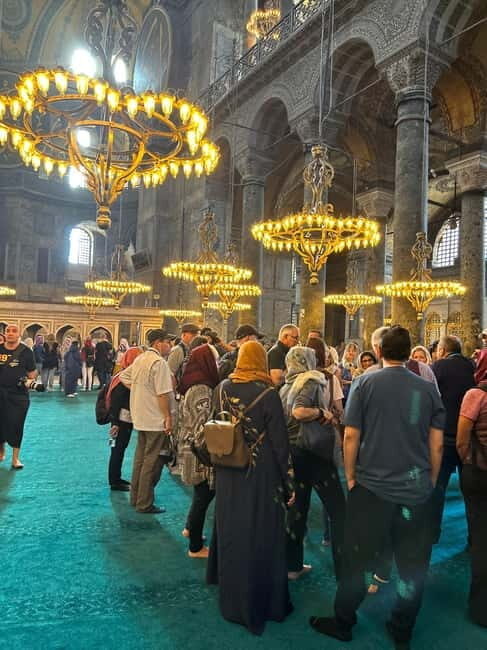
- Skip the Hagia Sophia ticket line, not the security line
- Flexible Hagia Sophia entry during opening hours
- Audio guides included for Hagia Sophia and a free audio guide for the Blue Mosque
- Friday timing rules matter for both buildings
- Your Hagia Sophia ticket covers visiting areas and upper gallery, not the downstairs prayer area
- Dress code is enforced (no shorts, no sleeveless tops; cover shoulders and knees)
Hagia Sophia and the Blue Mosque: Two stops, one square rhythm
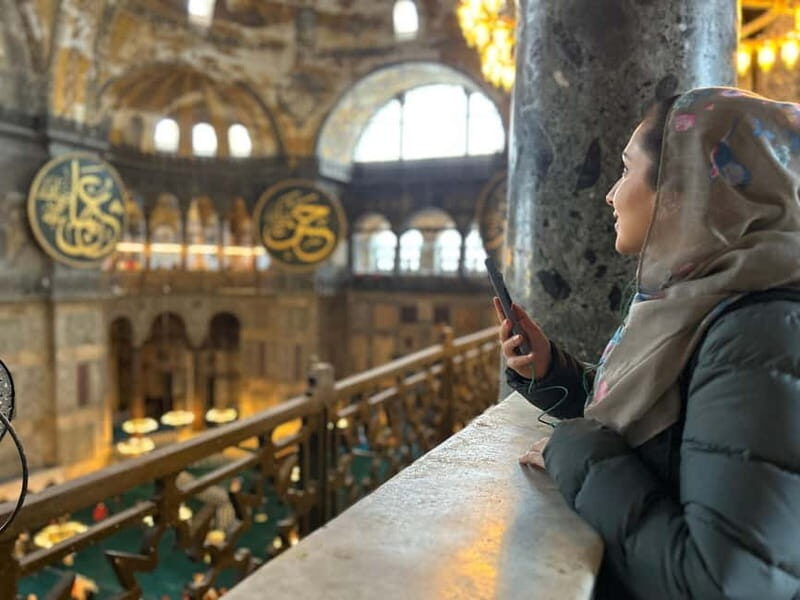
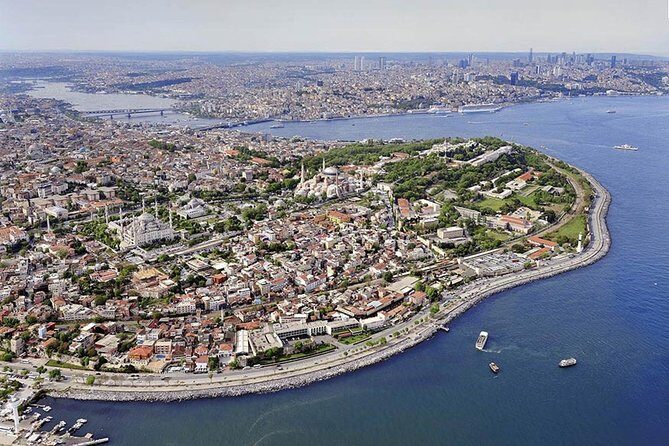
This experience is all about location and time. Hagia Sophia and the Blue Mosque sit across the square from each other, so your day can move like a smooth loop: enter Hagia Sophia, absorb the architecture, then cross the open space for the Blue Mosque.
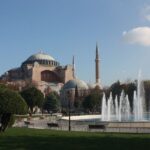
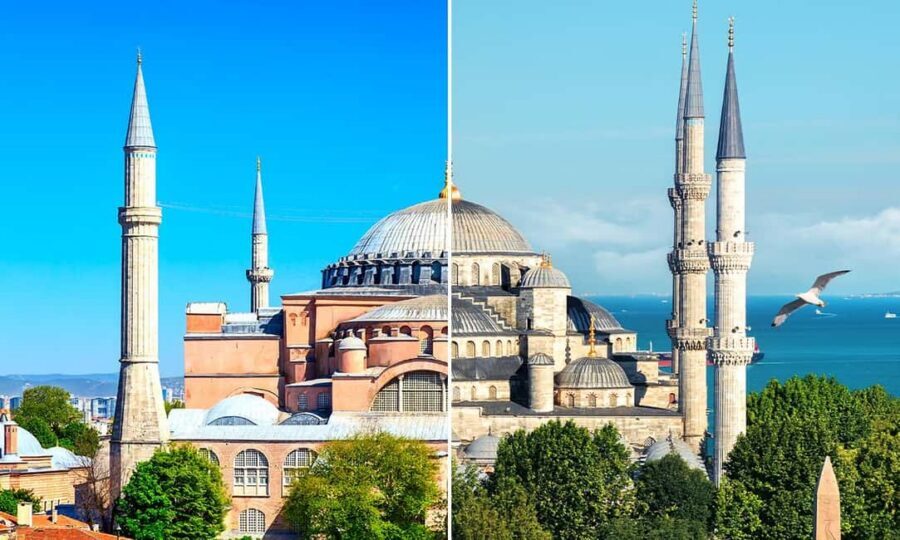
Hagia Sophia is the older anchor. It began as a Byzantine cathedral in 537 AD, then shifted roles through centuries as an imperial mosque. Today it’s a symbol of Istanbul’s layered identity, and the building itself tells that story through what you see under the dome, on the walls, and in the layout.
The Blue Mosque follows later, built over a millennium after Hagia Sophia, in the 17th century. Sultan Ahmed I is the key figure here, and the audio guide is designed to help you understand why this mosque was created as a major statement of spiritual and artistic importance.
You can also read our reviews of more tours and experiences in Istanbul


How the skip-the-line ticket works in real life
The promise is simple: you skip the ticket-line part at Hagia Sophia. That can be a big deal when the counter line is long and you’re trying to get inside before the light and crowd levels change.
But here’s what you should expect. Even with a skip-the-line ticket, you still face mandatory security screening at Hagia Sophia. It is not skippable, and in high season it can take up to an hour. So you are buying time savings where it exists most often (the ticket desk), not a guaranteed instant entry.
At the same time, that time savings can still be worth it. When you’re visiting during peak hours or on a weekend, the biggest friction point is often the ticket counter. If you arrive mid-morning to early afternoon, you may find the place crowded enough that you would otherwise burn time just standing still.
Best visiting times: when to arrive to feel calmer
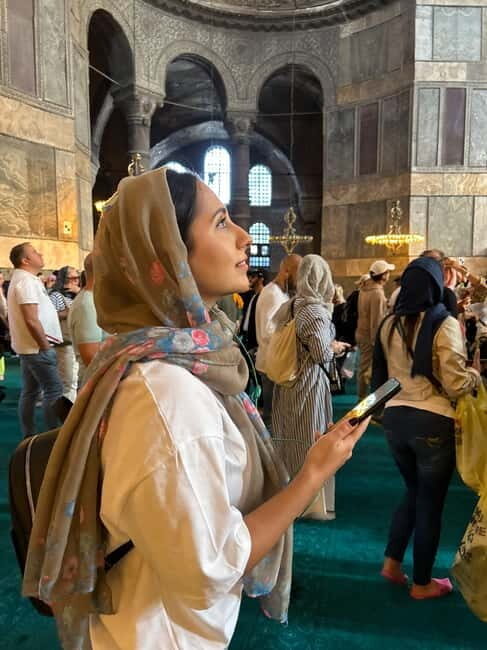
Timing is everything for both buildings.
For Hagia Sophia, visiting hours run 9:00 AM to 7:30 PM. On Fridays, the Hagia Sophia Mosque is closed from 12:30 PM to 2:30 PM.
For the Blue Mosque, visiting is restricted by daily flow: early in the morning up to 11:00 AM, and then after 2:00 PM. On Fridays, Blue Mosque access is only after 2:00 PM.
My practical advice: go early or late. Before 10:00 AM and after 3:00 PM is usually the sweet spot. Between 10:00 AM and 3:00 PM, it’s crowded, especially on weekends and public holidays. If your goal is photos, pace, and actually reading what you’re looking at, build your day around those quieter windows.
What you can see inside Hagia Sophia (and what you cannot)
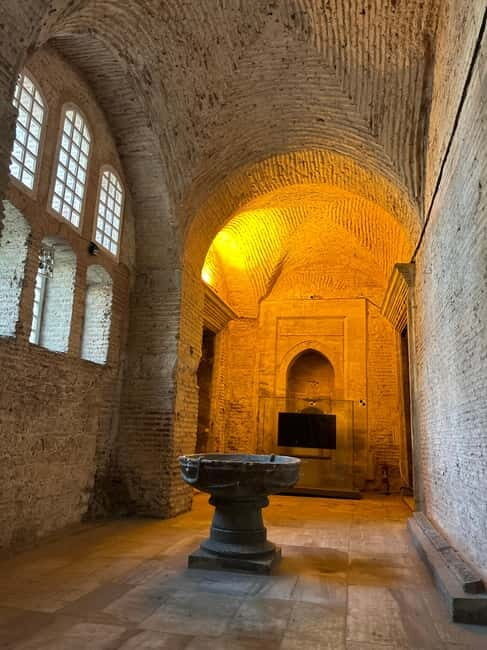
Your Hagia Sophia ticket includes access to the visiting area and the upper gallery. It does not include the prayer area downstairs.
That matters, because Hagia Sophia’s space is active and segmented. You may notice people in different sections, and it can feel confusing if you’re expecting to move everywhere freely. Plan for boundaries. If you try to head into restricted areas, you may be turned back.
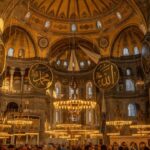
The payoff is that you can still experience the main wow moments: the domed scale, the layered design, and the mosaics and wall elements that explain how the building functioned across centuries. The upper gallery is also a useful place to reset your perspective and take in the size of the interior.
Audio guides: how to make them work without frustration
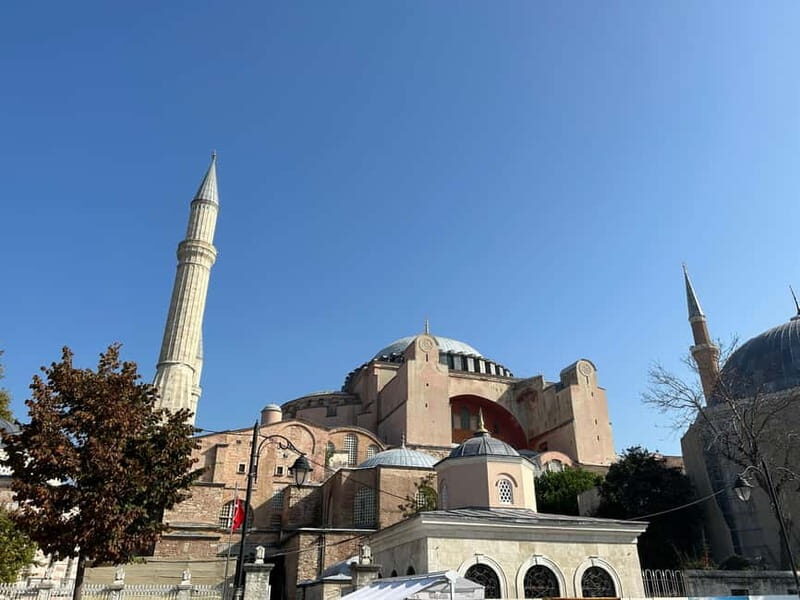
This is a smart add-on because Hagia Sophia can be overwhelming at first glance. Audio helps you slow down and attach meaning to what you see: how the dome and supporting elements work visually, and why certain art elements matter in the story of the building.
You get Hagia Sophia’s audio guide and a free Blue Mosque audio guide. The audio is available in English, German, French, Italian, and Spanish.
Practical tip: bring headphones and a charged smartphone. Since you’re relying on audio, a dead battery or missing headphones turns a great plan into a rushed scramble.
One small consideration: audio quality can vary. Even with a good guide, some audio tracks may sound less clear depending on your device volume or the environment. I’d still treat this as a valuable tool, but I’d also be ready to pause and look quietly when a section requires your attention.
You can also read our reviews of more guided tours in Istanbul



Blue Mosque: why the second audio matters
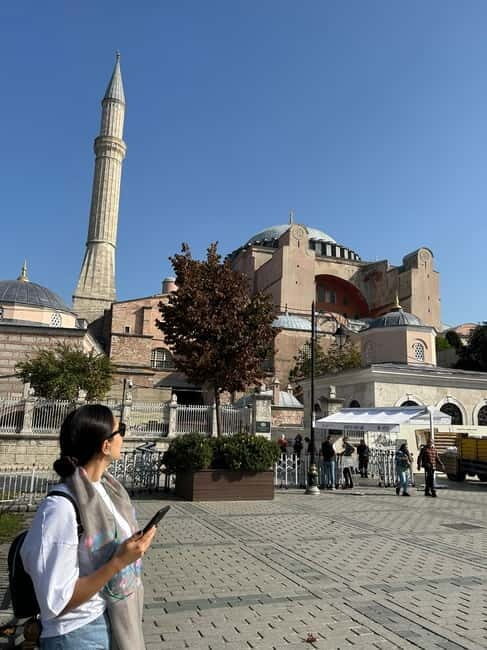
The Blue Mosque experience works best when you treat it as a follow-up, not a repeat. Hagia Sophia sets the “how space can feel” standard, and the Blue Mosque brings the later era into focus.
You’ll be able to visit the Blue Mosque without paying entry, since entry inside the Blue Mosque is free with this experience. You’re not buying a timed guided tour. You’re using the audio to understand what you’re seeing, then taking your own time for the visual details that stand out in this mosque.
A note on timing here: because access is limited to morning (up to 11:00 AM) and after 2:00 PM, your day plan should account for it. If you miss the morning window, you’ll need to wait until after 2:00 PM anyway.
Dress code and the headscarf reality check
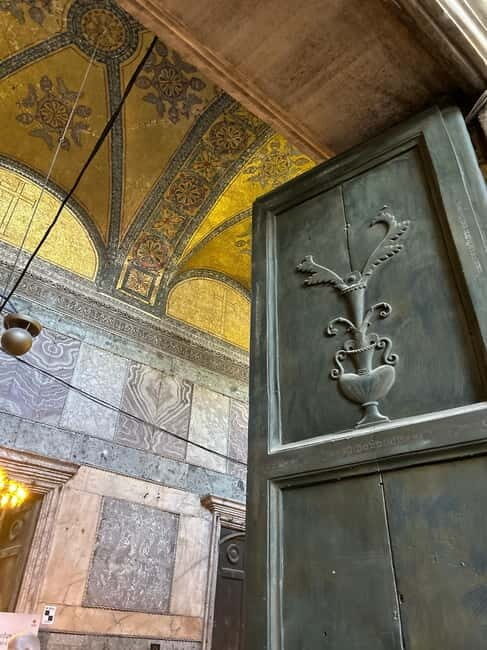
This is not optional. Both sites enforce a dress code, and staff may ask you to adjust.
What you should plan to wear:
- Women must cover their hair and shoulders.
- Men and women must cover their knees.
- No shorts, no short skirts, and no sleeveless shirts.
What if you arrive unprepared? Scarves are available for 3 Euro at the Ticket Kiosk. If you end up needing coverage for shorts, a body cover is also listed at 3 Euro.
I’d rather you spend the few minutes planning your clothes than trying to figure it out at the kiosk while the security line is moving. A simple shawl or light scarf makes this day easier.
Logistics that affect your day: QR code timing and meeting point
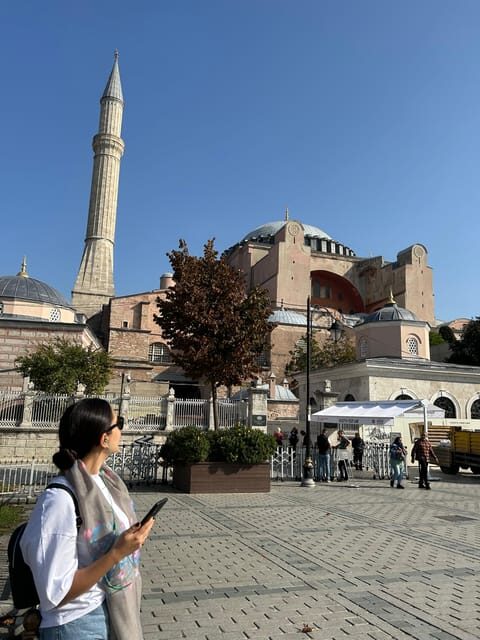
You receive your QR code ticket from the supplier Cosmic Tickets after 6 PM the day before your visit. If you book close to the date (same-day bookings), the QR code is sent immediately.
You’ll start at the meeting point to exchange the ticket details, and the activity ends back at the same meeting point after you’re done.
One more important acceptance note: you cannot use a GetYourGuide voucher to enter Hagia Sophia. You need the ticket you receive by email with the QR code from this supplier.
Where this matters most is timing. If you’re hoping to walk up without planning, this setup doesn’t work that way. It’s designed for you to have your QR code ready before you go.
Is it good value at $35 per person?
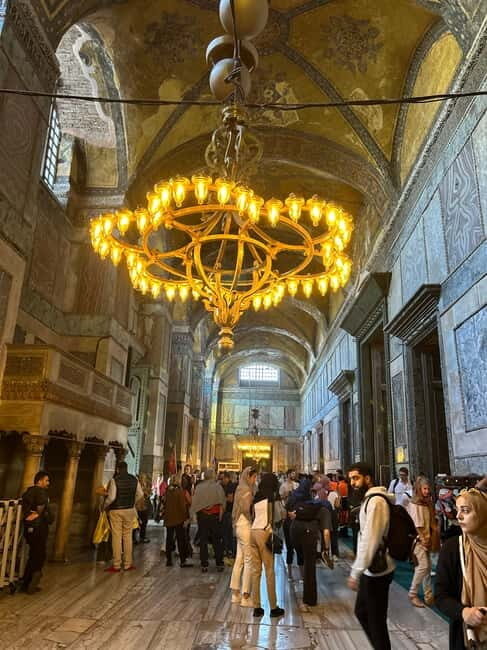
At $35 per person, the value depends on two things: how long you’d otherwise wait for a ticket, and whether you want audio guidance for both landmarks.
Here’s the value equation I’d use:
- If Hagia Sophia’s ticket line is long when you arrive, the skip-the-ticket-line piece can save real time.
- If you like audio that explains what you’re seeing, the included Hagia Sophia audio plus the free Blue Mosque audio is practical.
- If you’re traveling on a tighter budget and you’re happy with audio that you could get elsewhere inside the sites, you might feel the audio portion isn’t as necessary. In fact, some visitors note that the Hagia Sophia audio may be available free to general visitors, so the paid audio component can feel redundant.
So I’d call this a good deal for people who value predictable entry and a ready-made explanation in your language. If you’re flexible and willing to wait, you might decide you do not need the skip-the-line component.
Who this works best for
This experience is a great fit if you:
- want a self-guided day without booking a live guide
- like to read and listen at your pace
- care about seeing both sites in one loop across the square
- are traveling with headphones and a charged phone ready to go
It’s less ideal if you strongly prefer guided storytelling from a live person, because this is audio-based. Also, if you want access to every area inside Hagia Sophia including the downstairs prayer zone, this ticket type does not cover that.
Should you book this Hagia Sophia and Blue Mosque pass?
Book it if you want an efficient, low-stress plan: Hagia Sophia with flexible entry and an audio guide, then the Blue Mosque with a free audio guide right across the square. The skip-the-ticket-line value is strongest when crowds are heavy, and the audio guides help you make sense of what can look chaotic at first.
Skip or reconsider if:
- you’re visiting during a quieter time when the ticket line isn’t a problem
- you do not care about audio
- you specifically want downstairs prayer area access at Hagia Sophia
FAQ
FAQ
What time can I visit Hagia Sophia?
Hagia Sophia visiting hours are 9:00 AM to 7:30 PM. On Fridays, the Hagia Sophia Mosque is closed from 12:30 PM to 2:30 PM.
Can I enter Hagia Sophia at any time during opening hours?
Yes. The Hagia Sophia ticket is flexible, so you can enter anytime during opening hours.
What time can I visit the Blue Mosque?
The Blue Mosque is open early in the morning up to 11:00 AM and after 2:00 PM. On Fridays, it’s only open after 2:00 PM.
Is there a security line if I have a skip-the-line ticket?
Yes. There is a mandatory security queue at both sites, and it is not skippable. In high season, security checks can take up to an hour.
What areas of Hagia Sophia does the ticket include?
This ticket gives you access to the visiting area and the upper gallery, not the prayer area downstairs.
Do I need to bring anything?
Yes: bring headphones and a charged smartphone. You should also bring a headscarf if you need one for the dress code.
What should I wear, and can I buy coverage if needed?
Shorts, short skirts, and sleeveless shirts are not allowed. Scarves are available for 3 Euro at the Ticket Kiosk, and a body cover for 3 Euro is available if you wear shorts. Women must cover their hair and shoulders, and men and women must cover their knees.