REVIEW · ISTANBUL
Istanbul: Private Guided Tour
Book on GetYourGuide →Operated by Ephesus Tour Company · Bookable on GetYourGuide
Six hours can change how Istanbul feels.
This private guided day strings together the city’s biggest landmarks with just enough structure to keep you oriented, without turning it into a blur. I like that it’s a licensed, English/Spanish live guide plus pickup from the European Side, so you spend less time figuring out logistics and more time noticing details like how Byzantine and Ottoman power overlap.
Two things I really like: first, the guide focus on context, especially at Topkapi Palace, where you’ll learn how the Ottoman sultans ran the world you’re standing in. Second, you get real hands-on time at the Grand Bazaar and the Hippodrome, so the day isn’t only big-photo stops—it also includes atmosphere and small, specific sights you can point to.
One consideration before you book: Hagia Sophia’s line can’t be skipped, and there’s also the chance that crowd flow (or a demonstration) adds extra walking. Add in that entrance fees and lunch are not included, and you’ll want to budget a bit beyond the $100 price.
In This Review
- Key takeaways
- Private Istanbul Highlights in 6.5 Hours: What You Actually Get
- Hagia Sophia and Sultanahmet Square: Byzantine Power Meets Ottoman Reverence
- Blue Mosque Area and the Mosque Look You Should Know
- Topkapi Palace: Sultans, Courtyards, and How the Empire Worked
- The Hippodrome Walk: Egyptian Obelisk to Constantine Column
- Grand Bazaar Time: Shopping With a Guide and Real Bartering Practice
- How the Day Stays Smooth: Pickup, Taxi Moves, and Timing
- Price and Value at $100: When It’s Worth It
- Who This Tour Fits (and Who Should Skip It)
- Should You Book This Private Tour?
- FAQ
- How long is the Istanbul private guided tour?
- Where does pickup happen?
- What are the main stops on the tour?
- Is the tour private?
- What is included in the price?
- Are entrance fees included?
- Is lunch included?
- What about the Grand Bazaar and closure days?
- What if Hagia Sophia or Topkapi are closed?
- Is the tour wheelchair or mobility-friendly?
Key takeaways
- Private guide, licensed by the Ministry of Tourism for a smoother, more accurate visit
- Hagia Sophia + Sultanahmet Square gives you the Byzantine-to-Ottoman story in one block
- Topkapi Palace time is long enough (about 2 hours) to actually connect the dots
- Hippodrome relics you can still see: Egyptian Obelisk, Serpentine Column, Constantine Column, and Wilhelm II’s fountain
- Grand Bazaar shopping with a guide, including time to barter and browse
- Closure swaps: Hagia Sophia Monday / Topkapi Tuesday / Grand Bazaar Sunday get replaced with cistern or Spice Bazaar
Private Istanbul Highlights in 6.5 Hours: What You Actually Get
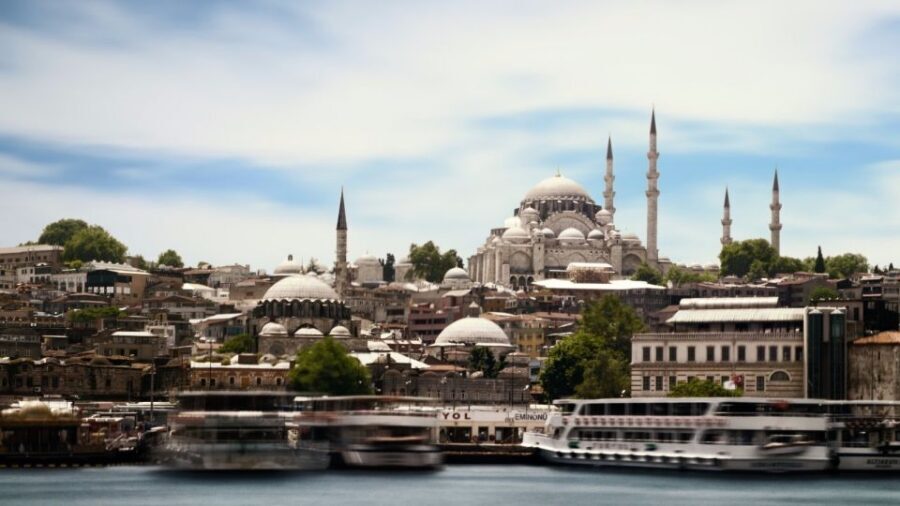
A day like this works because it’s built around a simple goal: hit the core icons that define Istanbul’s identity, then give you enough time to understand them. You start on the European Side, and you’re not left to bounce between neighborhoods with maps and guessing games.
The pace is busy in a good way. You’ll have guided time at the big-ticket monuments and still get a block of free-feel time for market wandering. And since it’s private, you can ask questions, slow down for photos, or push for extra explanation at the spots that grab you.
You should also know what’s not included: entrance fees and lunch are extra, and you’ll want comfortable shoes for uneven sidewalks and lots of walking. Transport is handled by taxi when necessary, which keeps the route flexible without turning the whole day into a van ride.
You can also read our reviews of more guided tours in Istanbul



Hagia Sophia and Sultanahmet Square: Byzantine Power Meets Ottoman Reverence
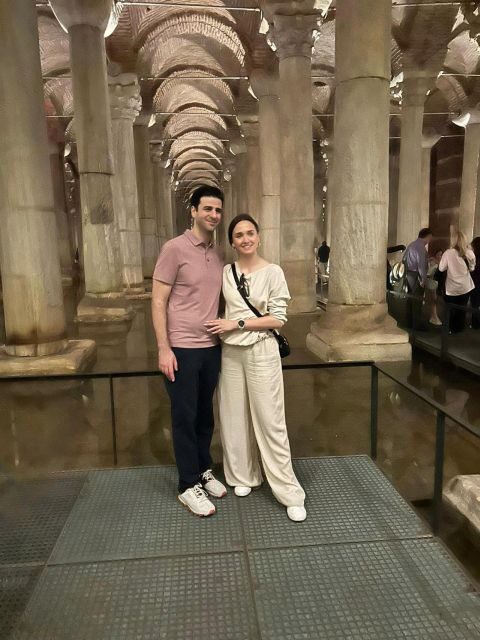
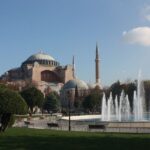
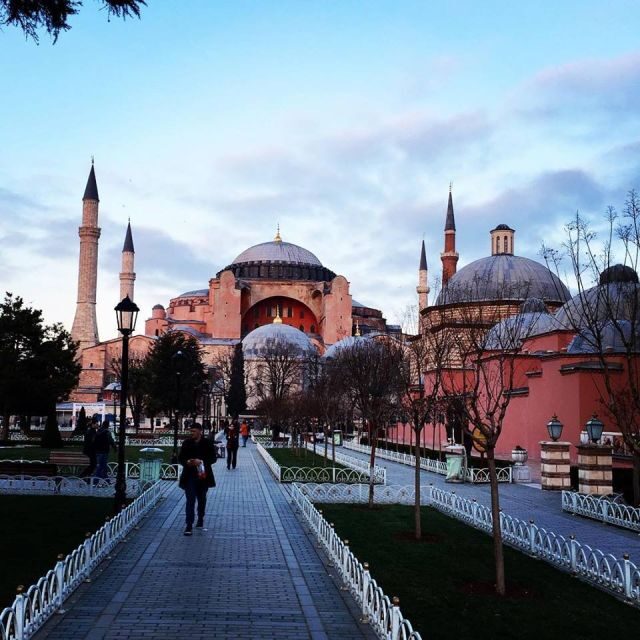
This is the part of Istanbul that stops people mid-step. Hagia Sophia is a former basilica with a scale that still feels unreal, even if you’ve seen photos a hundred times. On this tour, you’ll have about 45 minutes with a guide, which is enough time to orient yourself and learn what you’re looking at rather than just moving from one viewpoint to another.
Right after that, you’ll move through Sultanahmet Square, a short guided stop that helps you understand why these buildings are clustered where they are. It’s not just about the photo angle—it’s about how the area functioned across empires and how power presented itself in stone.
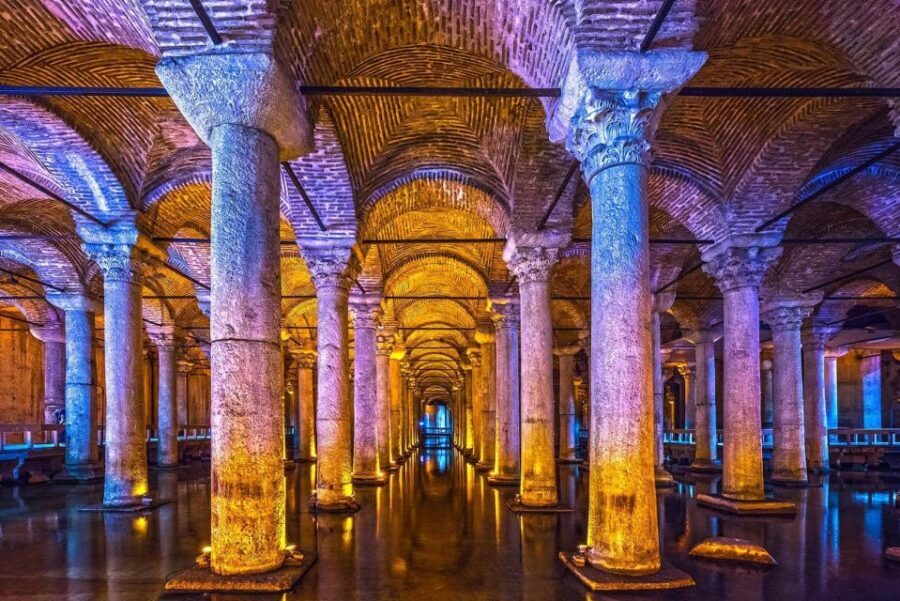
A practical heads-up: the tour helps with flow, but there’s no possible way to skip the Hagia Sophia line. If you hate waiting, factor that into your mood. Also note the closure rule: Hagia Sophia is closed on Monday, and on those days it’s replaced by the Yerebatan underground basilica cistern.
If you want a tip for your first minutes inside: don’t try to look everywhere at once. Start by finding the big structural cues your guide points out, then let the smaller details land after. It’s an easy way to feel like you’re truly seeing the place, not just passing through.
Blue Mosque Area and the Mosque Look You Should Know
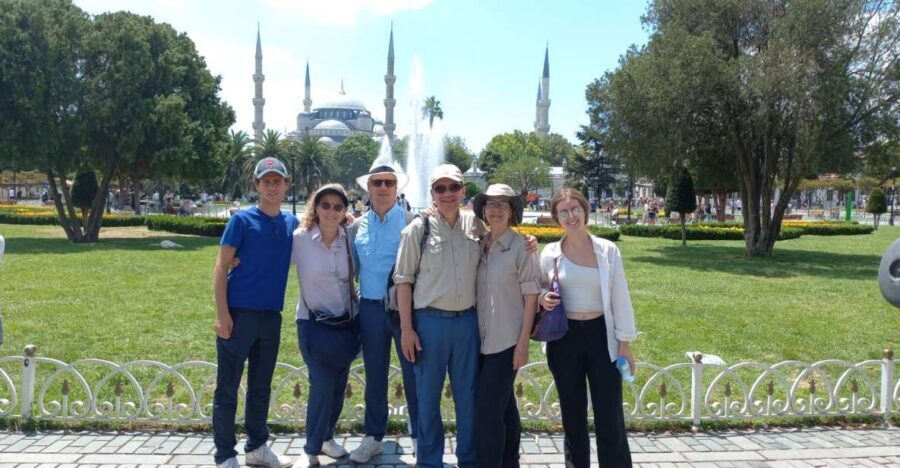
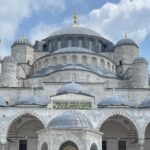
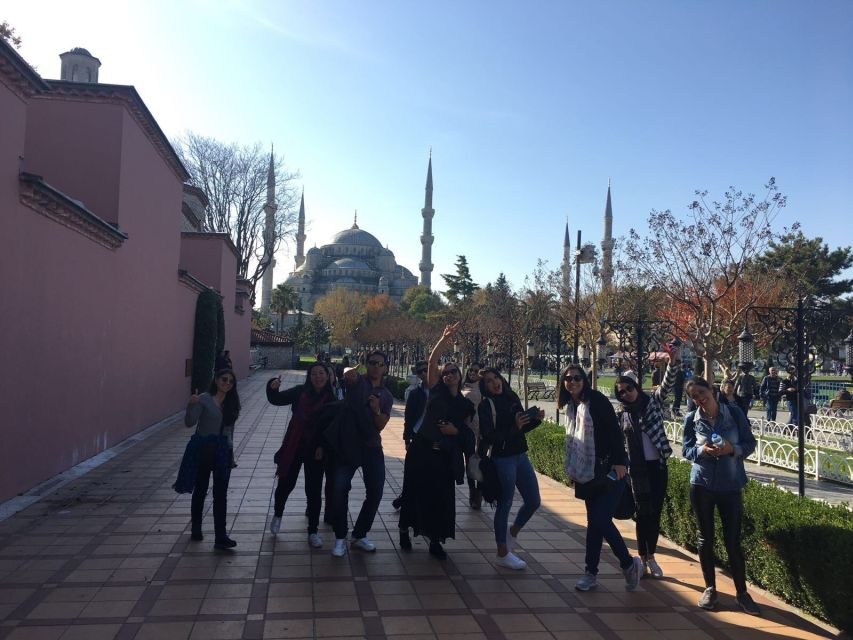
The tour is designed to take in the iconic mosque experience—the Blue Mosque (Sultanahmet Mosque) is part of the program. What makes it memorable is the famous blue tile work, and your guide’s job is to help you read the building beyond the obvious wow-factor.
Even if you’ve been told to go for the tiles, you’ll get more out of it by paying attention to the space and how it’s used. A private guide makes a difference here, because you can ask how Ottoman religious design adapted the earlier Byzantine world you just saw at Hagia Sophia.
Time-wise, this block fits naturally into the same Sultanahmet area. The key is that it’s not a random add-on. It’s part of the story your day is telling: the city doesn’t switch eras—it layers them.
Topkapi Palace: Sultans, Courtyards, and How the Empire Worked
If you’re only going to learn one Ottoman lesson in Istanbul, make it here. Topkapi Palace isn’t just a collection of rooms; it’s where you can understand how the empire organized authority, daily life, and ceremony.
You’ll get about 2 hours at Topkapi with guided time, which is long enough to stop “speed-reading” your way through the palace. The guide typically helps connect the palace spaces to the Ottoman sultans and the political system surrounding them—exactly what you want if you’re the type who likes context more than trivia.
One note from the tour’s practical rules: Topkapi Palace is closed on Tuesday. On those days, it’s replaced with the Yerebatan underground basilica cistern. That replacement isn’t the same kind of day, but it does keep you in the historic-core zone and offers a different kind of architecture to react to.
Here’s how to get your money’s worth once inside: don’t just chase the prettiest photos. Let the guide show you which areas are the “anchor points”—the parts that explain how the palace functioned, not only how it looked.
The Hippodrome Walk: Egyptian Obelisk to Constantine Column
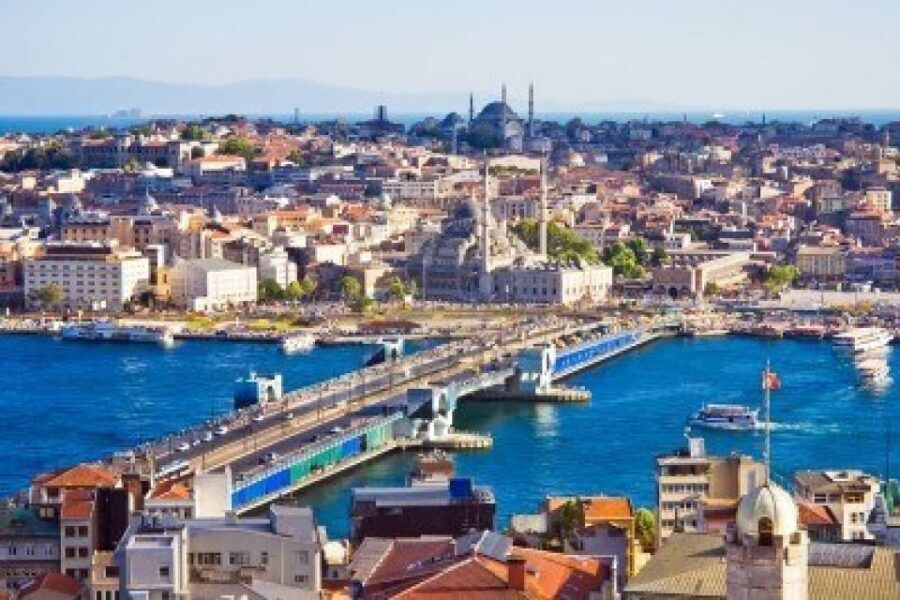
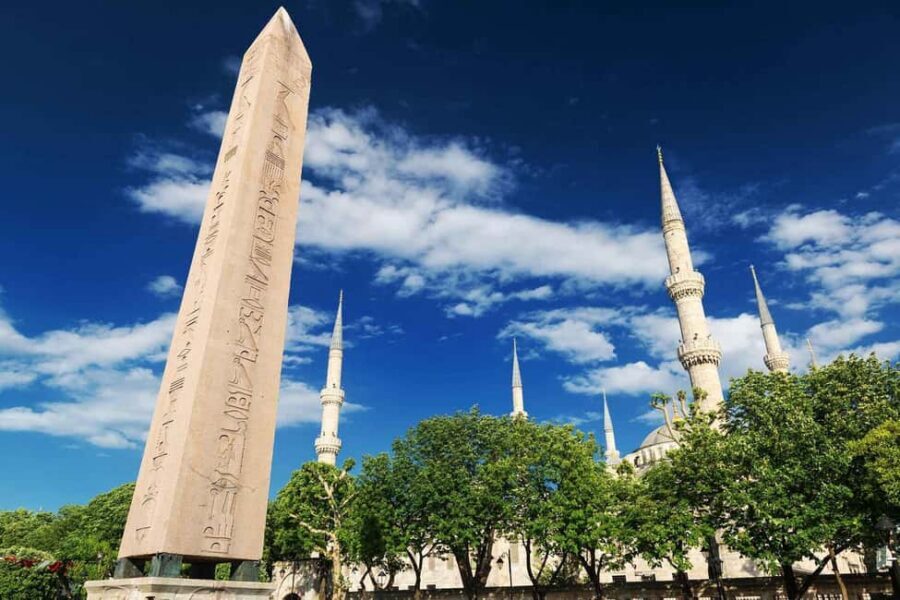
This is one of my favorite parts of the tour because it feels like you’re walking through history without the wall-to-wall museum pressure. The Hippodrome was a Roman-era circus built in 203 A.D. by Emperor Septimius Severus, and even though it’s not a fully intact arena, you can still see original structures.
The guide-led highlights include:
- Egyptian Obelisk
- Serpentine Column
- Constantine Column
- The German Fountain of Wilhelm II, made from 8 marble columns
What you should do here is slow down and point at what you’re seeing. The Hippodrome can look like open space to first-timers, but the pieces still standing are the clues. Once you learn what each monument originally represented, the area stops feeling empty.
This stop is also a nice rhythm-break between palace time and market energy. You’re outside, you can breathe, and you can keep your eyes active for shapes, inscriptions, and the way monuments were repurposed through time.
If you’re a “I like maps” person, ask your guide to frame how the Hippodrome fits into the wider city layout. Even simple orientation makes it easier to visualize where crowds gathered and how spectacle worked in ancient Istanbul.
You can also read our reviews of more private tours in Istanbul


Grand Bazaar Time: Shopping With a Guide and Real Bartering Practice
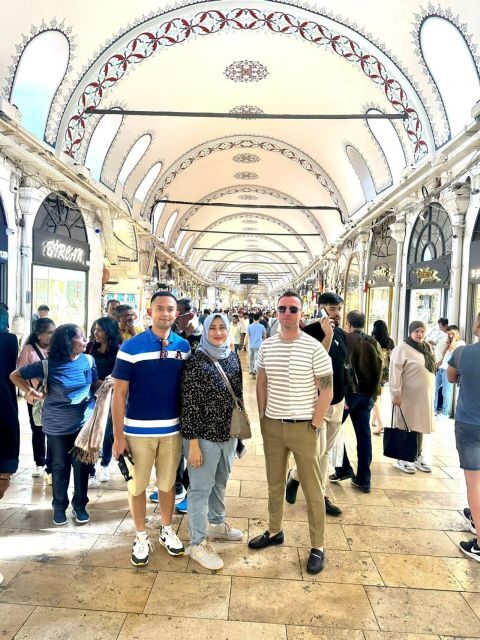
The Grand Bazaar is where Istanbul becomes tactile. You’re entering one of the largest and oldest covered markets in the world, and the vibe is what you hope for: hundreds of small shops packed under one roof.
On this tour, you’ll get about 1.5 hours at the bazaar, and the guide’s role matters. A guide can help you avoid getting lost in the maze, but more importantly, they can steer you toward categories you’ll actually enjoy—handmade carpets, Turkish coffee, and other everyday craft goods.
If bartering is your thing, this is your time to practice. You don’t need to become an expert negotiator. The win is learning how prices and conversations move in the bazaar environment.
A big logistical rule: the Grand Bazaar is closed on Sundays. When that happens, the tour replaces it with the Spice Bazaar. That substitution keeps the shopping theme, but expect a different energy—less of the same “everything under one famous roof” feeling, more focused on spice and food.
One smart approach during your market time: set a small target. Decide what you want before you walk in—like one item, one scarf, one tin of coffee spices—so you don’t burn the whole 90 minutes drifting.
How the Day Stays Smooth: Pickup, Taxi Moves, and Timing
The tour is built around pickup and getting you moving efficiently. You’ll be collected from the European Side and dropped back there at the end. Transport is handled by taxi, but only when necessary, so you’re still doing plenty on foot inside the historic zone.
This works best if you treat the day like a guided walk with stops, not a sit-down sightseeing bus route. Bring patience for street-level realities—crowds, narrow sidewalks, and occasional disruptions.
One very practical lesson from real-world experience: if there’s a demonstration or blocked movement, you may end up walking more than expected. Also, don’t assume there will always be quick taxi or transit options right next to you. The guide can usually work around it, but the city is the city.
Comfort strategy is simple:
- Wear comfortable shoes
- Expect stairs and uneven ground
- Keep a little cash or card for entrance fees and market purchases
And one more reason a private guide helps: you can ask for pacing adjustments. If your legs are burning, you can ask your guide to slow the walking segments without feeling like you’re holding up a large group.
Price and Value at $100: When It’s Worth It
At $100 per person for about 6.5 hours, this sits in the “good value if you want structure” category. You’re paying for three things: a licensed guide, private routing through multiple icons, and pickup/drop-off on the European Side.
What you’re not paying for is a lot of the variable costs: entrance fees and lunch. That means your total day cost will depend on what you choose to do once you arrive. If you’re the type who hates surprises, plan for extra spending rather than expecting everything to be included.
Where the value really shows is in how much you’re trying to see without losing the story. Going solo across Hagia Sophia, Topkapi, the Hippodrome, and a big market is doable—but it’s slower and easier to misunderstand. With a guide, you get the why behind the what, and that’s what makes a “checklist day” feel like a learning day.
Also, this is a private group. That’s not a luxury detail here—it changes how the day flows. You can ask questions at the exact moment they make sense.
If you’re comparing options, ask yourself one question: do you want to spend your limited time in Istanbul interpreting buildings and negotiating market chaos, or do you want someone to handle the “reading between the lines” for you? If you prefer the second, this price can make sense fast.
Who This Tour Fits (and Who Should Skip It)
This private tour is a strong match if you:
- Want the big icons without doing research all week
- Like a guide who explains the Ottoman and Roman layers of the city
- Enjoy shopping but want help not getting overwhelmed
It’s less ideal if you have mobility concerns. The tour is not suitable for people with mobility impairments, and you should expect a lot of walking on uneven surfaces.
Language-wise, the tour is guided in English and Spanish. In addition, some guides have been noted for strong German too, but you shouldn’t plan around that. If you want a specific language, confirm when you book.
If you’re traveling with kids or older adults, consider how they handle lines and walking. Even though the guide can manage pacing, the sites themselves don’t magically become less crowded.
Should You Book This Private Tour?
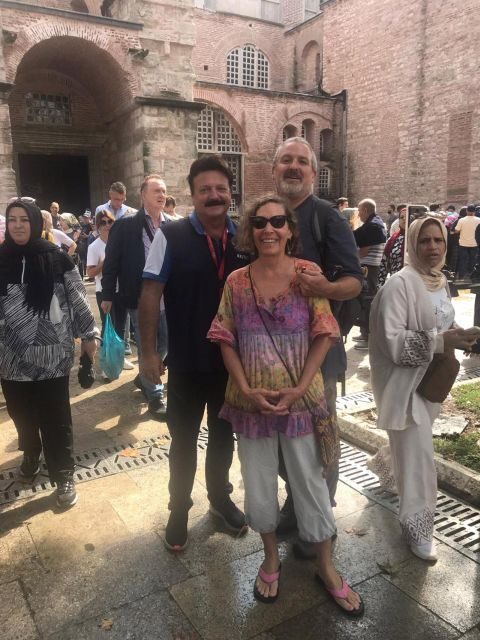
Book it if you want a single day that hits the essentials—Hagia Sophia, Topkapi, the Hippodrome, and Grand Bazaar—with real explanation and a guide who can keep you from getting lost in the middle of everything. For many people, that’s the fastest way to build a real sense of Istanbul without the stress.
Skip it or choose a different format if you strongly dislike lines, can’t handle lots of walking, or hate markets. You’ll be doing both historic monuments and an active bazaar environment, and you’ll want to be in the right mood.
If you do book: go in with comfortable shoes, budget for entrance fees and lunch, and be ready for at least some waiting at Hagia Sophia. After that, the payoff is a day that teaches you how Istanbul’s eras talk to each other.
FAQ
How long is the Istanbul private guided tour?
The duration is 6.5 hours.
Where does pickup happen?
Pickup and drop-off are provided from the European Side of Istanbul.
What are the main stops on the tour?
You’ll visit Hagia Sophia, Topkapi Palace, Sultanahmet Square, the Hippodrome area with monuments, and the Grand Bazaar.
Is the tour private?
Yes. It’s a private group.
What is included in the price?
Included are a fully-guided day tour, a professional Ministry of Tourism licensed guide, and transport by taxi when necessary.
Are entrance fees included?
No. Entrance fees are not included.
Is lunch included?
No. Lunch is not included.
What about the Grand Bazaar and closure days?
The Grand Bazaar is closed on Sundays, and it’s replaced with the Spice Bazaar on those days.
What if Hagia Sophia or Topkapi are closed?
Hagia Sophia is closed on Monday and Topkapi Palace is closed on Tuesday. When closed, they are replaced with the Yerebatan underground basilica cistern.
Is the tour wheelchair or mobility-friendly?
No. It is not suitable for people with mobility impairments.