REVIEW · ISTANBUL
Kucuksu Pavilion Skip-the-Line Ticket with Audio Guide
Book on GetYourGuide →Operated by Istanbul Tourist Pass® · Bookable on GetYourGuide
Küçüksu Pavilion is one of those places where the setting does half the storytelling. You get skip-the-line entry plus an English audio guide, so you can explore at your own speed while learning how the pavilion fits into Istanbul’s Ottoman and Bosphorus-era drama. The ticket is simple, focused, and made for self-guided pacing.
What I like most is that you can see the pavilion’s Ottoman and Western design blend up close, then understand it through the audio guide. I also love the fact that it’s built around the Bosphorus perspective, with the pavilion’s garden setting making the experience feel calmer than the big-ticket sights.
The main drawback to consider: this is not a guided tour. If you strongly prefer a live guide to answer questions on the spot, you might find the audio format less satisfying.
In This Review
- Key takeaways before you go
- Küçüksu Pavilion: what you’re actually visiting
- Stop 1: Skip-the-line entry and how it changes your day
- Stop 2: Orientation at the pavilion grounds (the streams, the garden, the mood)
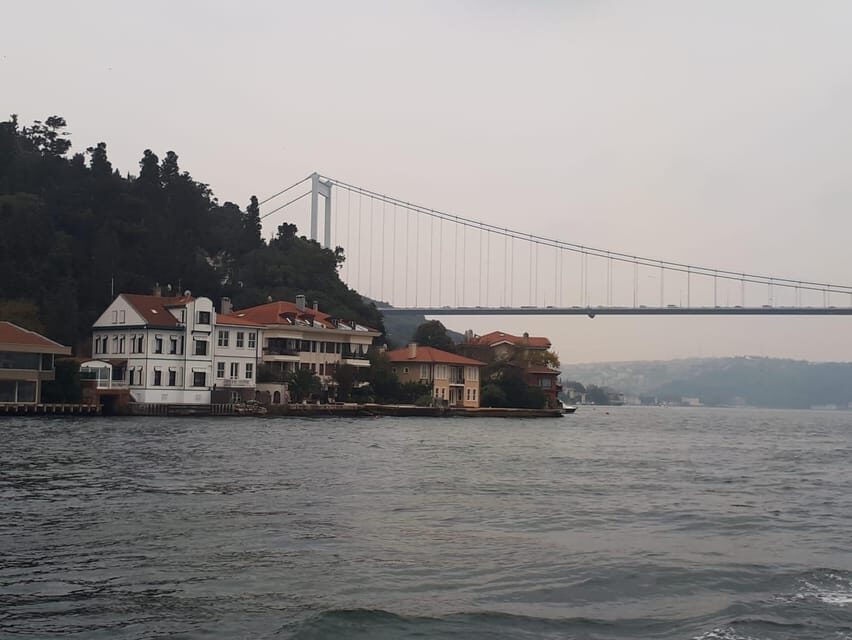
- Stop 3: The Bosphorus angle—why the views matter here
- Stop 4: Architecture you can read—brick, stone, and two floors
- Stop 5: Ottoman meets Western—how to spot the blend
- Stop 6: The museum story (from 1751 to 1983)
- What the included English audio guide does well
- The on-site rhythm: a realistic way to plan 1 day
- Value check: is $14 worth it for this experience?
- Who should book Küçüksu Pavilion with this ticket?
- Should you book this skip-the-line audio ticket?
- FAQ
- Where is Küçüksu Pavilion located?
- How much does the ticket cost?
- How long is the experience?
- What’s included with the ticket?
- Is a guided tour included?
- What languages is the audio guide available in?
- Do I need to join a group?
- Do I have to book a specific time?
- Can I cancel for a full refund?
- Is there a pay-later option?
Key takeaways before you go
- Skip-the-line entry helps you start exploring without wrestling with queues.
- English professional audio guide keeps you moving at your pace.
- Bosphorus views are part of the experience, not just a photo opportunity.
- Two-storey brick-and-stone architecture gives the site real physical presence.
- Museum context (since 1983) adds clarity to what you’re seeing.
- Self-guided format means you control timing, but you won’t get a live storyteller.
Küçüksu Pavilion: what you’re actually visiting

Küçüksu Pavilion sits in Istanbul’s Marmara Region, and it’s all about the Bosphorus connection. The pavilion is located between two streams, which helps explain its atmosphere: it feels like a place designed for taking in views, air, and landscape, not just walking through rooms.
This is not a random building. It was first built during Sultan Mahmud I’s reign and opened in 1751. Later, it took its current form in 1856–1857, and much later it became a museum in 1983—so the place carries layers of change, from imperial retreat to public interpretation.
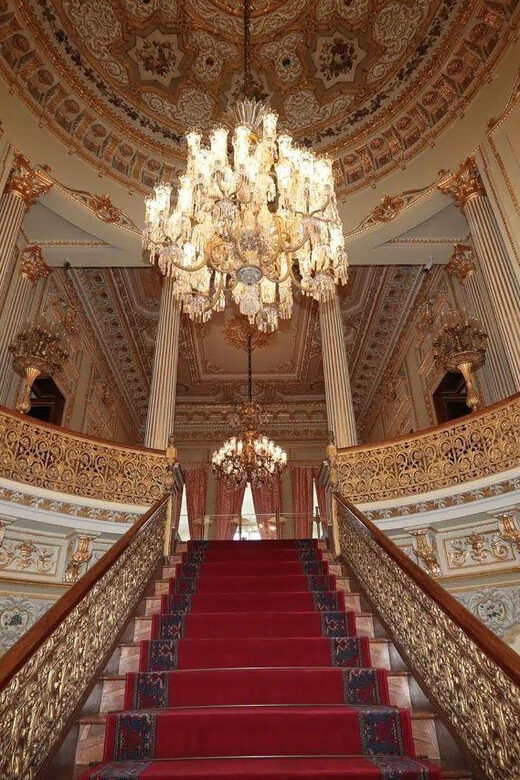
The architecture is also part of the point. You’ll encounter a mix of Ottoman and Western design, which matters because it’s a visual clue to how Istanbul’s identity was shifting over time.
You can also read our reviews of more tours and experiences in Istanbul



Stop 1: Skip-the-line entry and how it changes your day
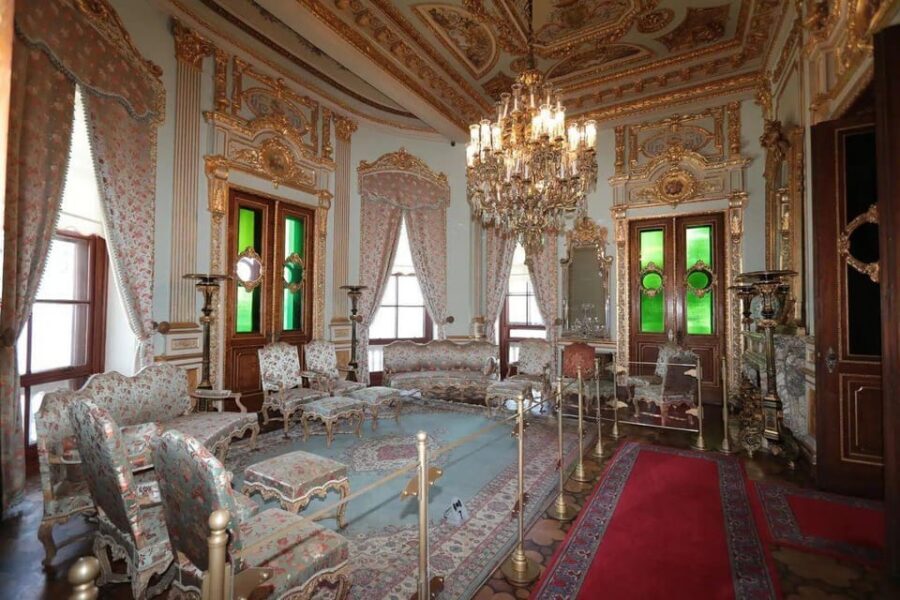
The big practical win here is the skip-the-line ticket. Instead of burning energy on waiting, you can spend that time learning and looking—exactly what an audio guide works best for.
Because the ticket is valid for 1 day, you’re not forced into a rigid schedule. You’ll still want to check availability for starting times, since your entry is tied to those options, but the overall setup supports flexible pacing once you arrive.
And because there’s no guided tour included, being able to bypass waiting makes the experience feel more efficient. You’re paying to get through the gate smoothly and then use the audio guide to do the heavy lifting.
Stop 2: Orientation at the pavilion grounds (the streams, the garden, the mood)

Before you rush into details, take a slow moment with the setting. The pavilion’s location between two streams is unusual, and it gives the whole area a softer rhythm than many palace-style sites.
The garden and the historical ambiance are key to what you’ll feel as you wander. You’re not just looking at a building—you’re stepping into an environment designed for leisure and viewing. Even if you’re traveling quickly, this is one of those places where five extra minutes makes the experience click.
This is also where the audio guide helps most. Instead of trying to memorize dates and facts while you walk, you can let the guide pace your attention—exterior first, then architectural and historical context, then interior details.
Stop 3: The Bosphorus angle—why the views matter here
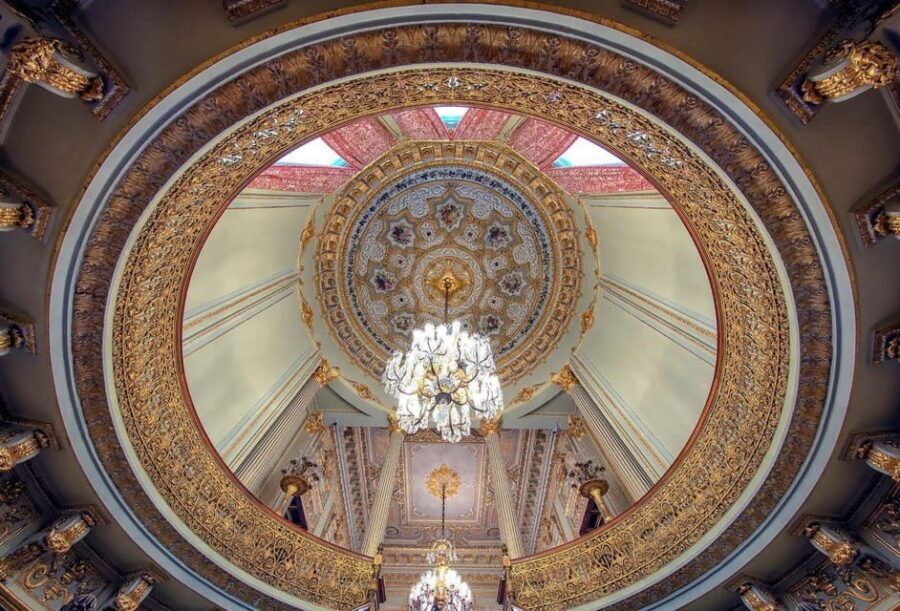
The pavilion’s popularity isn’t only about what’s inside. It’s also about why it was built there in the first place: the Bosphorus shores.
The information tied to the pavilion emphasizes that the structure came from fascination with the Bosphorus. That’s not a vague marketing line. It explains the thinking behind the placement and the way the pavilion is experienced—like you’re meant to look outward, not only inward.
You’ll get Bosphorus views as part of your visit, and that changes how you interpret the building. It starts to feel like a tool of presentation, weather, and empire-scale perspective, not just a pretty historic stop.
Stop 4: Architecture you can read—brick, stone, and two floors
Küçüksu Pavilion is a two-storey building made with brick and stone. That detail matters because it helps you notice how “real” and substantial the building feels, even as it sits in a garden.
The pavilion’s evolution also helps you look smarter. It was originally constructed in Sultan Mahmud I’s era and then reshaped into its current form in 1856–1857. With those dates in your head, you can pay attention to differences in style and the way the building communicates Ottoman tradition alongside Western influence.
Since the audio guide is included and in English, you don’t have to guess what you’re seeing. You can take in the exterior, then use the guide to connect architectural choices to historical context.
You can also read our reviews of more guided tours in Istanbul




Stop 5: Ottoman meets Western—how to spot the blend

One of the stated highlights is the blend of Ottoman and Western design. That might sound broad, but it gives you a clear way to look: don’t treat the pavilion as purely Ottoman-style or purely European-style. Instead, watch for the mixture.
The audio guide is the best way to make sense of that blend while you’re on-site. You’ll get explanations as you move through the pavilion, and that lets you identify elements without relying on guesswork.
I like this approach because it avoids turning the visit into a checklist. Instead, you gradually build a mental picture of how design can reflect changing ideas over time—especially in a city like Istanbul, where cultures have been crossing paths for centuries.
Stop 6: The museum story (from 1751 to 1983)
Even though the pavilion began as a structure tied to the imperial court, it became a museum in 1983. That’s a big deal for your experience, because it changes your role from spectator to learner.
As a museum, it’s set up for visitors to interpret the past. The audio guide format fits this well. You can listen, look, pause, and rewind in your head as needed—since you’re not on a group schedule, you can take the time you need.
If you’re the kind of traveler who hates running out of steam, this museum angle helps. You can spend longer on the parts that spark curiosity—dates, design choices, or why the pavilion mattered—without feeling like you’re holding up anyone else.
What the included English audio guide does well
A self-guided audio guide can go one of two ways: either it helps you feel oriented, or it turns into background noise. Here, the audio guide is included as a professional experience in English, and that usually means it’s built to actually support your visit.
Because the ticket is also skip-the-line, you’re less likely to start your audio experience already stressed. You can begin while your attention is fresh, then use the guide as a companion while you walk between exterior viewpoints, garden spaces, and the pavilion itself.
Practical tip: use the audio guide like you’re studying, not like you’re streaming a podcast. Pause when you see a relevant feature, then keep moving. The pavilion’s story spans multiple time periods, and pausing helps the timeline stick.
The on-site rhythm: a realistic way to plan 1 day
This ticket is for 1 day, but a “day” at Küçüksu Pavilion should feel calm and flexible. Since there’s no guided tour included, your schedule is basically: enter, listen, look, then linger.
Here’s a simple rhythm that fits the way the site is set up:
- Start with your entry and immediate orientation.
- Walk through the garden setting and take in the stream atmosphere.
- Shift your focus to Bosphorus views and architecture.
- Use the audio guide to connect Ottoman and Western design.
- Finish with museum context and a last slow look around.
If you want the best balance of views and understanding, plan for multiple short listening moments rather than one long listen. The pavilion is visually interesting enough that you’ll naturally slow down, and the guide helps you slow in the right places.
Value check: is $14 worth it for this experience?
At about $14 per person, this ticket is positioned as a straightforward value play: skip-the-line entry plus a professional English audio guide.
Here’s how I’d think about value: you’re not paying for a complex multi-stop itinerary or a live guide. Instead, you’re paying for two things that directly improve your experience—less waiting and better context while you explore.
If you enjoy self-guided travel and you’re okay learning through audio rather than live interpretation, the pricing makes sense. If you require hands-on Q&A or you get frustrated without someone explaining as you go, you might feel like you’re missing a layer—because guided tours are specifically not included.
Who should book Küçüksu Pavilion with this ticket?
This works best for you if:
- You want a self-guided historic experience without the pressure of a group.
- You like audio interpretation and prefer to set your own pace.
- You’re interested in Istanbul’s Ottoman-era story and design transitions.
- You care about Bosphorus views as part of the visit, not just a bonus.
It might not be ideal if:
- You strongly prefer a live guide.
- You need lots of interaction and real-time answers rather than listening.
- You’re trying to cram in too many stops in one day, since the value here is in slow looking and listening.
Should you book this skip-the-line audio ticket?
I think you should book this ticket if you want a focused, easy-going visit to Küçüksu Pavilion with real context built in. The combination of skip-the-line access and an English audio guide makes it simple to do well, even if you’re not the type to research every detail beforehand.
If you’re the kind of traveler who loves guided narration and expects a group tour format, you may feel like something is missing—because guided tours are not included. But if your style is walking, noticing, listening, and then deciding what to linger on, this is a smart use of a day in Istanbul.
FAQ
Where is Küçüksu Pavilion located?
It’s in Istanbul’s Marmara Region, Turkey.
How much does the ticket cost?
The price is $14 per person.
How long is the experience?
The ticket is valid for 1 day.
What’s included with the ticket?
You get a professional audio guide in English and a skip-the-line entry ticket for Küçüksu Pavilion.
Is a guided tour included?
No. Guided tours are not included.
What languages is the audio guide available in?
The audio guide is available in English.
Do I need to join a group?
This experience is set up for self-guided exploration with an audio guide, not a guided group tour.
Do I have to book a specific time?
The ticket is valid for 1 day, but you should check availability to see starting times.
Can I cancel for a full refund?
Yes, you can cancel up to 24 hours in advance for a full refund.
Is there a pay-later option?
Yes, you can reserve now and pay later.