REVIEW · ISTANBUL
Private Luxury Yacht Cruise in Istanbul Bosphorus
Book on Viator →Operated by Bosphorus Tours Istanbul · Bookable on Viator
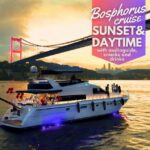
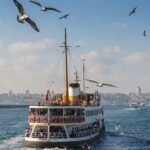
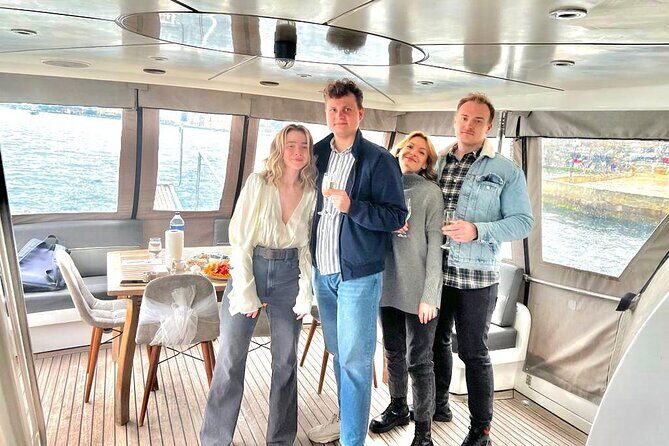
The Bosphorus looks different from a yacht. A private luxury charter gives you up to two hours on the water, with the kind of uninterrupted views you just can’t get from the shore. I also like the practical comfort factor: bottled water and snacks onboard mean you can stay out there without hunting for food.
One thing to consider: if you’re expecting narration from a guide, double-check timing ahead of departure. A slow start can eat up real time on a trip that’s only about two hours.
In This Review
- Key Highlights You’ll Care About
- Private Luxury Yacht Cruise in Istanbul: How It Fits Your Day
- Meeting at Arap Cami: The One Logistics Detail You Should Not Ignore
- Onboard Comfort: Snacks, Drinks, and What “Private” Really Changes
- Bosphorus Bridge Views: The Strait’s Biggest Connection (and Photo Moment)
- Maiden’s Tower: Legend, Rock, and Story-Driven Sightseeing
- Dolmabahçe Palace from the Water: Power, Diplomacy, and 19th-Century Glamour
- Rumeli Castle (Rumeli Hisarı): A Fortress at the Strait’s Narrow Point
- Beylerbeyi Palace: A More Relaxed Take on Dolmabahçe’s Style
- Ortaköy and the European Coast: Villages Lining the Strait
- Choosing Your Departure Time: Morning, Afternoon, or Evening
- A Smart Warning If You’re Counting on a Guide
- Who This Yacht Cruise Is Best For
- Should You Book This Bosphorus Yacht Cruise?
- FAQ
- How long is the Istanbul Bosphorus private yacht cruise?
- What is the maximum group size for this private cruise?
- How much does it cost?
- Where do we meet for the cruise?
- Is hotel pickup included?
- What’s included onboard?
- Is this tour private?
- Do I receive a mobile ticket?
- What if weather is poor?
Key Highlights You’ll Care About
- Private boat, up to 15 people: You set the vibe, from birthdays to small groups who just want space.
- Snacks and drinks included: Tea/coffee, soft drinks, bottled water, nuts, and snacks keep the cruise easy.
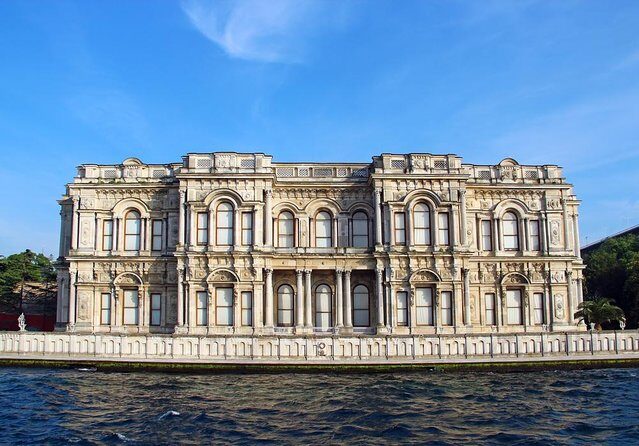
- Big Istanbul landmarks from the water: Bosphorus Bridge, Maiden’s Tower, Dolmabahçe Palace, Rumeli Castle, and Beylerbeyi Palace.
- Flexible departure options: Morning, afternoon, or evening departures help you match light and your schedule.
- No hotel pickup: You’ll start at Arap Cami in Beyoğlu, so plan to reach the meeting point on your own.
Private Luxury Yacht Cruise in Istanbul: How It Fits Your Day
If you want Istanbul’s highlights without a checklist sprint, a Bosphorus yacht cruise is a smart move. In this trip, you’re not just passing landmarks—you’re watching how the city connects across the strait. The Bosphorus is where Europe and Asia face each other, and from the water the geography makes immediate sense.
I like that the cruise is short but complete. At about two hours, you get real sightseeing time without committing to an all-day outing. That matters in Istanbul, where you may already have plans on land—palaces, mosques, bazaars, or just time to wander neighborhoods.
The value also depends on how you group up. The price is listed per group (up to 15 people). If you fill most of the capacity, the per-person cost drops fast. Even at smaller group sizes, the “private boat” element is usually what you’re paying for: fewer shared moments, more control over your pace, and a nicer overall experience than a crowded public cruise.
There’s also a practical upside: the trip includes coffee/tea, soft drinks, bottled water, nuts, and snacks. You’re not stuck calculating when you’ll eat next. You can focus on watching the shoreline drift by and soaking in the views.
You can also read our reviews of more boat tours in Istanbul


Meeting at Arap Cami: The One Logistics Detail You Should Not Ignore
Your meeting point is Arap Cami, Makaracılar Cd. No:5, 34421 Beyoğlu/Istanbul. The location is in Beyoğlu, and it’s marked as near public transportation. That’s good news, because it means you can reach the start without relying on a hotel transfer.
Still, this kind of cruise runs on boat timing. I’d treat it like a reserved event: arrive early enough to get oriented, because you don’t want to rush down to the water at the last second.
Also note what is not included: hotel transfers. So your day needs a plan for getting yourself (and any companions) to Beyoğlu on time. If you’re staying elsewhere, build in transit buffer time. Istanbul traffic can be unpredictable, even when your route looks simple on a map.
Finally, you’ll use a mobile ticket. Have it accessible offline or with a reliable data signal so you can show it quickly when you arrive.
Onboard Comfort: Snacks, Drinks, and What “Private” Really Changes
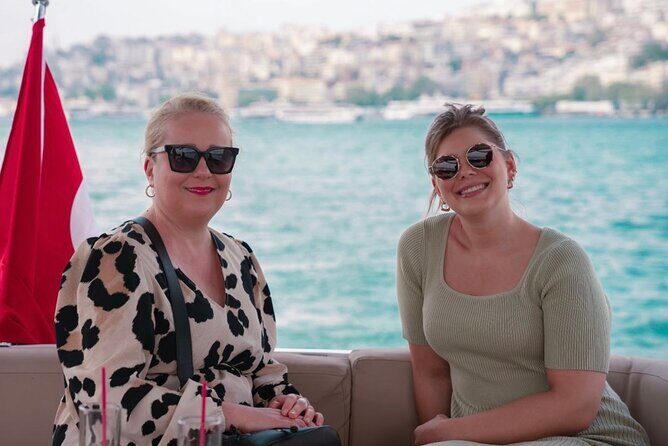
This cruise is private, meaning only your group participates. With a maximum of 15 people, it’s a size where you can actually hear each other and keep the atmosphere relaxed. On many group boats, you’re squeezed next to strangers. Here, your group stays your group.
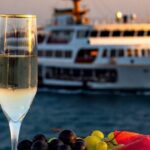
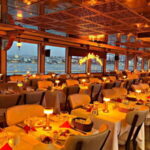
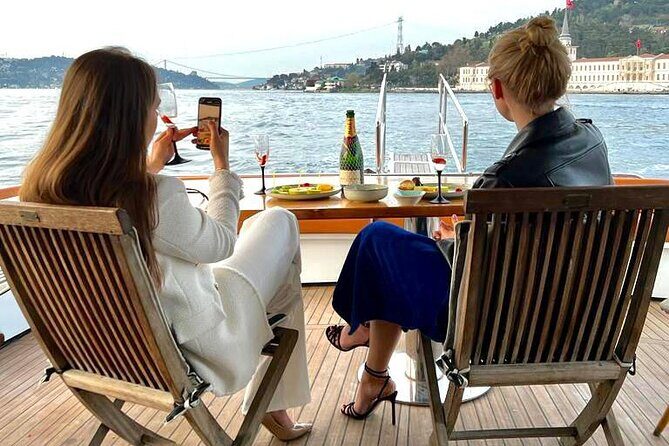
Included onboard refreshment is straightforward but effective: bottled water, soft drinks, coffee/tea, nuts, and snacks. That’s exactly what you want for a short outing. It keeps things comfortable if you’re out on the water longer than expected or if you’re traveling with picky eaters who don’t want a restaurant stop before sailing.
And the onboard setup typically matters more than people think. When food and drink are handled, you stop spending mental energy on logistics. You can stay present—watching the shoreline changes from European coast to the Asian side, and seeing how the fortresses and palaces sit right on the waterline.
If service animals are part of your planning, this experience says they’re allowed. That’s worth knowing ahead of time.
Bosphorus Bridge Views: The Strait’s Biggest Connection (and Photo Moment)
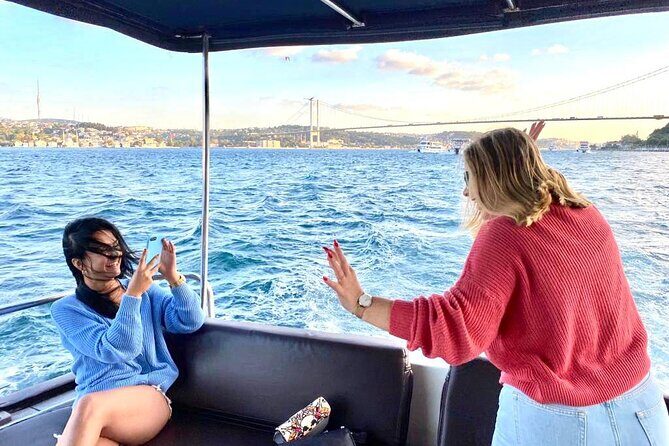
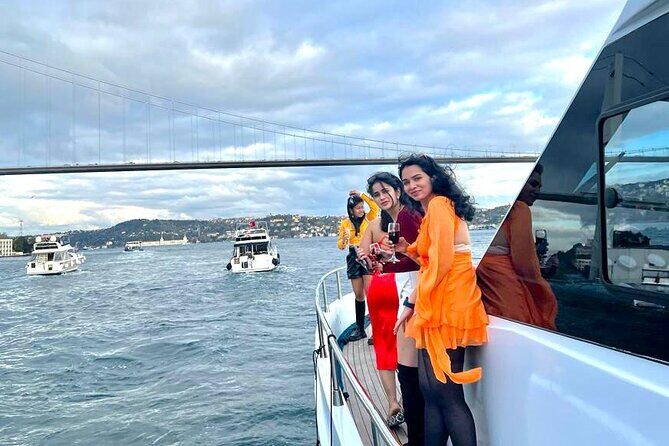
One of the first big landmarks you’ll see from the water is the Bosphorus Bridge, also called the First Bosphorus Bridge. It spans the strait between Ortaköy on the European side and Beylerbeyi on the Asian side. From the deck, this isn’t just a bridge—it’s a giant visual anchor.
What makes it special on a cruise is how you perceive distance. From land, bridges can look far or abstract. From the water, the bridge sits right in your world, and you feel the narrowness of the Bosphorus in a way that’s hard to replicate.
It’s also a great timing marker for your own expectations. If you’re someone who likes to know what you’ll see early versus late, the bridge helps set the rhythm: you know you’re in the central strait, with major sights coming one after another.
Potential drawback? On any Bosphorus outing, visibility depends on conditions. If the day is hazy or windy, the bridge may still impress, but fine details on distant facades can soften. That’s why people often choose departure times based on forecast and light.
Maiden’s Tower: Legend, Rock, and Story-Driven Sightseeing
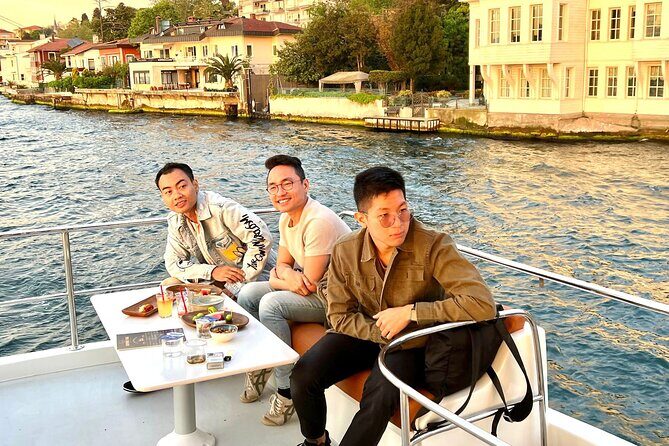
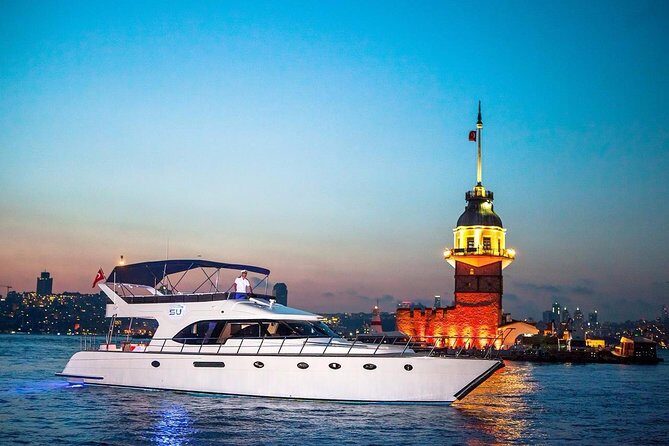
Then comes Maiden’s Tower, known in Turkish as Kız Kulesi. Even if you’ve never read its story, it’s the kind of stop that makes your cruise feel like a moving museum exhibit.
The legend goes like this: a Byzantine emperor heard a prophecy that his daughter would die at age 18 by a snake. To prevent it, he had the tower built on a rock in the Bosphorus, isolated from land so a snake couldn’t reach her.
What you’ll feel from the water is the “isolation” element. The tower sits apart, and that separation is part of why the legend stuck. It looks like a small island idea that became a symbol.
There’s also a historical thread you may hear while passing: references to Romanesque-style structures and the Genoese era, including mentions of Christea Turris (Tower of Christ) around 1348 during a Genoese colony expansion in Constantinople. You may also hear about Galata Tower being the tallest building in Istanbul at 219.5 ft (66.9 m) when it was built in 1348.
Here’s the practical takeaway: Maiden’s Tower isn’t just a photo. It’s a story anchor. If you’re the kind of person who enjoys a place with a narrative, this stop is one of the best reasons to be on the water.
You can also read our reviews of more private tours in Istanbul

Dolmabahçe Palace from the Water: Power, Diplomacy, and 19th-Century Glamour
Next up is Dolmabahçe Palace, a palace-museum on the Istanbul waterfront. It was built in the 19th century during Sultan Abdulmecid’s time. Later, after the Republic was established, the palace served as a Presidential Residence until 1949. After that, it continued hosting diplomatic meetings until 1984, when it became a museum.
From the deck of a yacht, the palace reads differently than it does on land. You see it as part of the shoreline system—like the city’s official façade facing the strait. The water frames the buildings, and you can spot how the palace’s presence feels designed for visibility and ceremony.
Is it ideal if you’re hoping to hop out and tour interiors? Not really—this is a cruise view. But it’s a strong “context” stop. Seeing Dolmabahçe from the water helps you understand why this location mattered to leaders. The Bosphorus wasn’t just transportation. It was power.
Possible drawback: if you’re expecting a museum-style deep dive on one specific building, a 2-hour cruise can’t replace a full palace visit. Think of this as building your understanding and making the later museum stop more meaningful.
Rumeli Castle (Rumeli Hisarı): A Fortress at the Strait’s Narrow Point
Rumeli Castle—Rumeli Hisarı—is one of the most “war-era” sights on the route. It’s an Ottoman fortress dating to 1452, built by Sultan Mehmed II (Mehmed the Conqueror) in preparation for the conquest of Constantinople.
The fortress is positioned along the Bosphorus shoreline at the narrowest point, about 660 meters. That detail matters because it explains the logic of the site. When you’re at the waterline in that narrow stretch, the castle feels like it was placed to control movement, not just to look impressive.
From a cruise perspective, you get a nice mix: you’re not only looking at architecture. You’re also seeing how the Bosphorus geometry affects the story. The strait’s narrowness turns the castle into more than a backdrop—it becomes part of the strategic picture.
If you like sites tied to turning points, this is a strong stop. It also tends to photograph well because fortress silhouettes have clear shapes, even if the lighting isn’t perfect.
Beylerbeyi Palace: A More Relaxed Take on Dolmabahçe’s Style
Beylerbeyi Sarayı (Beylerbeyi Palace) comes into view next. It was commissioned by Sultan Abdülaziz to function as an imperial summer residence. The palace included 24 rooms, 6 halls, and a hamam, built to host visitors with comfort and ceremony.
This palace is often described as a smaller-feeling counterpart to Dolmabahçe, but with the advantage of fewer crowds. The point for you on the cruise is different: you’re not walking inside here. You’re taking in its presence along the waterfront, where the building’s purpose—to receive dignitaries—matches its location.
From the water, Beylerbeyi tends to read as more “residential” and less monumental than some other imperial sights. That makes it a nice balance if your day includes big-ticket landmarks on land. It gives you a softer contrast view.
Practical note: because this cruise is about views, you’ll get the most enjoyment if you’re the type who likes to connect what you see externally with what the place was for—summer residence, entertaining officials, and living comfort rather than full ceremonial functions.
Ortaköy and the European Coast: Villages Lining the Strait
Toward the end of the cruise route, you’ll see the Bosphorus coastline on the European side as a string of neighborhood “villages,” each with its own personality. Ortaköy sits in the middle of two other areas—between Beşiktaş (more down-to-earth) and Kuruçeşme (often described as chicer).
Even though you’re on the water, Ortaköy’s position helps you build a mental map. You start to understand why people treat the Bosphorus coast as a sequence: it’s not one uniform shoreline. It’s districts stacked like chapters.
This is also one of the more enjoyable parts for a shorter cruise because it’s visually continuous. Palaces and fortresses can feel like “big moments.” Ortaköy gives you calmer, more human-scale viewing as the coastline rolls by.
If you’re planning to spend more time in Istanbul after the cruise, this section helps you decide where you might want to walk later. The names become meaningful, not just dots on a map.
Choosing Your Departure Time: Morning, Afternoon, or Evening
You’ll have multiple departures: morning, afternoon, or evening. Pick based on what you care about most—light, comfort, or a calmer start to your day.
Morning can be great if you want crisp visibility and you’re trying to avoid later-day crowds on land. Afternoon tends to be flexible for people who want to fit the cruise between other sightseeing blocks. Evening can feel special because the water and shoreline take on a more atmospheric look.
One practical tip: bring a light layer. Even when the forecast seems mild, Bosphorus breezes can change the feel quickly once you’re on open water. This is especially true if your outing is planned for early or late in the day.
Also, the experience requires good weather. If the day turns rough, you may be offered a different date or a refund. So check the forecast shortly before you go, and don’t plan anything stressful back-to-back that leaves no buffer.
A Smart Warning If You’re Counting on a Guide
This one is important for your expectations. If you’re paying for any kind of guidance or narration option, confirm how that’s scheduled before you depart. On a 2-hour cruise, delays can shrink what you actually see and learn.
If you want commentary, ask what time the guide joins and how the plan fits the fixed sailing window. If you want to avoid disappointment, treat this like theater: start time matters, and late arrivals can cost you half the experience.
Who This Yacht Cruise Is Best For
This cruise is a strong fit if you want a private, comfortable way to see major Bosphorus landmarks without turning your day into a transit marathon.
It’s especially good for:
- Small groups who want their own space on the water
- People who like “high-impact sightseeing” in a short time
- Anyone who values comfort (snacks, drinks, and a relaxing pace)
- First-time visitors who want a simple overview of the Bosphorus corridor
It’s less ideal if you’re hoping for:
- Extensive time at each stop on land (this is a cruise)
- A long full-day tour with museum-style pacing
- A relaxed plan that ignores weather or timing
Should You Book This Bosphorus Yacht Cruise?
If your goal is to see iconic Istanbul from the water in about two hours, I’d say it’s a worthwhile option—especially because it’s private and includes snacks and drinks. The best part is the way the route ties together stories and geography: bridge connection, a legend on a rock, imperial palaces, and fortress strategy.
But don’t treat it like a guaranteed guided museum tour. If guidance matters to you, confirm timing for any guided add-on. Also remember the meeting point is in Beyoğlu at Arap Cami, with no hotel transfer, so be realistic about getting there on time.
If you plan carefully—good weather window, arrival buffer, and clear expectations about guidance—this can be one of the easiest and most scenic ways to experience the Bosphorus.
FAQ
How long is the Istanbul Bosphorus private yacht cruise?
It’s approximately 2 hours on the water.
What is the maximum group size for this private cruise?
The private charter fits up to 15 people.
How much does it cost?
The price is $348.46 per group.
Where do we meet for the cruise?
The meeting point is Arap Cami, Makaracılar Cd. No:5, 34421 Beyoğlu/İstanbul, Türkiye.
Is hotel pickup included?
No. Hotel transfers are not included.
What’s included onboard?
Coffee and/or tea, snacks, bottled water, soft drinks, and nuts are included.
Is this tour private?
Yes. It’s a private tour/activity, and only your group will participate.
Do I receive a mobile ticket?
Yes. The tour uses a mobile ticket.
What if weather is poor?
This experience requires good weather. If it’s canceled due to poor weather, you’ll be offered a different date or a full refund.