REVIEW · ISTANBUL
2 Day Ephesus and Pamukkale Tour From Istanbul
Book on Viator →Operated by Travel Store Turkey · Bookable on Viator
Two days can feel like a time machine. This Ephesus and Pamukkale trip mixes UNESCO-class ruins with thermal wonders, with the big convenience being the round-trip flights from Istanbul plus transfers and a guide. You also get an overnight stay in Selçuk or Kuşadası, which helps you avoid doing this as a rushed day trip.
I especially like the small group size (max 15) and the guide-led history. In the comments, people even called out standout operators and guides such as Erkan and Geovanna, and that matches what you want here: someone who can connect the dots at Ephesus beyond just pointing at stones.
One consideration: the schedule is intense. Expect very long travel windows (early pickup to late return), so you’re not getting 2 leisurely days in Turkey. And at Pamukkale, you’ll want to take crowds and slippery surfaces seriously, plus the Virgin Mary House may feel like a skip for anyone who’s not into pilgrimage sites.
In This Review
- Key Highlights You’ll Actually Feel
- How The Flights-and-Overnight Plan Changes Your Trip
- Ephesus: Walking Through the Ancient City’s Main Streets
- Temple of Artemis: The Seven Wonders, Minus the Fantasy
- House of the Virgin Mary: Pilgrimage, Gardens, and Quiet Time
- Isa Bey Mosque: A Seljuk Masterclass Near Ephesus
- Şirince Village: Greek-Style Streets and Fruit Wine Reality
- Pamukkale Travertines: The Cotton Castle Effect, With Crowds
- Hierapolis: Roman Ruins Next to the Thermal City
- Cleopatra’s Pool: Warm Water, Ancient Fragments, Limited Swimming
- Price and Value: What You’re Really Paying For
- Timing and Comfort: The Long Day Truth
- Who Should Book This Two-Day Ephesus and Pamukkale Tour
- My Booking Verdict: Book or Do It in Pieces?
- FAQ
- What is the duration of the tour?
- Is pickup available in Istanbul?
- Is the tour offered in English?
- Are entrance fees included?
- Is overnight accommodation included, and where do I stay?
- Are meals included besides lunch?
- Can I cancel for a full refund?
Key Highlights You’ll Actually Feel
- Fly from Istanbul with baggage included (15 kg checked + 8 kg cabin), so you’re not planning flights on your own
- Stay overnight in Selçuk or Kuşadası and travel between sites with transport that keeps you moving
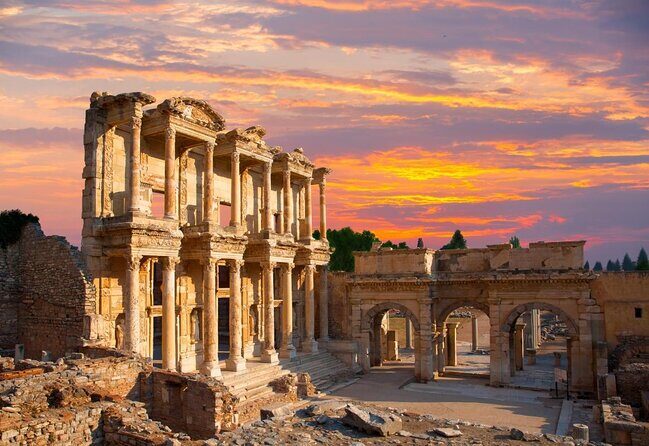
- Ephesus guided for real context, including major hits like the Library of Celsus and the Great Theatre
- Pamukkale travertine terraces + Hierapolis UNESCO ruins in one tight, well-organized run
- Cleopatra’s Pool includes time in warm mineral water, though swimming time can be limited
- Lunches are included, but drinks/breakfast are not, so plan for water purchases
How The Flights-and-Overnight Plan Changes Your Trip
This tour is built around a simple idea: don’t waste your vacation day wrestling with buses, trains, and hotel logistics. You get pickup from any Istanbul City Center hotel, then you fly out to connect with the Ephesus and Pamukkale circuit. Transfers are arranged again on the Izmir/Pamukkale side, and you stay overnight in Selçuk or Kuşadası before returning to Istanbul.
That structure is a real value driver for most people. You’re not spending your limited time comparing hotels, checking bus schedules, and trying to coordinate admissions. You also receive a mobile ticket, which is handy when you’re moving quickly and don’t want paper tickets in your day bag.
The trade-off is time. One recurring theme in feedback is the feeling of being “on the move” for a long stretch. The practical takeaway: if you’re the type who needs a slow morning and a late breakfast, this may not feel relaxing. If you’d rather get the big sights done with minimal planning, the package makes sense.
You can also read our reviews of more tours and experiences in Istanbul

Ephesus: Walking Through the Ancient City’s Main Streets
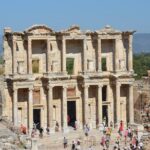
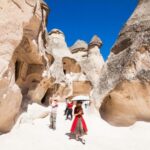
Ephesus is one of those places where your brain keeps trying to picture the scale. It’s near Selçuk, and it’s one of the best-preserved ancient cities you’ll find anywhere. Once a major Greek and later Roman hub for trade, culture, and religion, it still shows off big names and big building projects: the Library of Celsus, the Great Theatre, and the Temple of Hadrian, all tied together by the marble-lined streets and architectural remains you can actually walk through.
What I like about how this day is set up is that it’s not only about walking among ruins. A good guide can help you understand what you’re seeing: why the city mattered, how religious life intersected with civic life, and what kinds of people passed through these spaces. If you’re a first-timer, that context makes the stones hit harder.
Here’s how to prepare. Ephesus is outdoors, and in the hotter months you can feel it fast. Bring solid walking shoes, plan for sun protection, and be ready for the day to run longer than you’d expect. Also note a practical detail: drinks aren’t included (breakfast isn’t either), so have a plan for water or you’ll be stuck buying it at the wrong times.
Temple of Artemis: The Seven Wonders, Minus the Fantasy
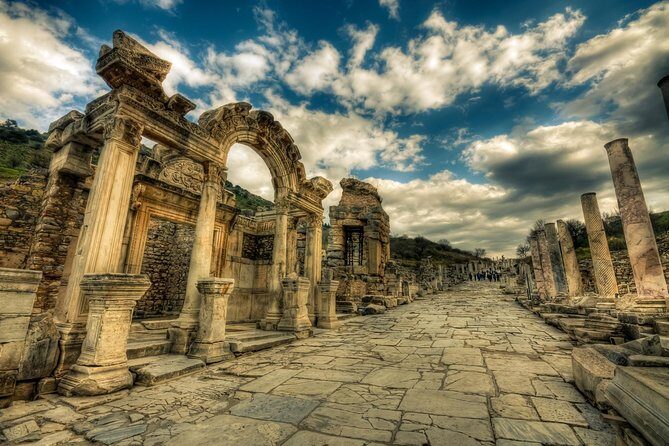
The Temple of Artemis is tied to one of the Seven Wonders of the Ancient World. The story behind it matters: built around 550 BCE and designed as a huge marble statement to the goddess Artemis. But here’s the reality you’ll face in person—today you mostly deal with remnants, including a single standing column.
This stop is short, and it works best as a contrast. You get the “wow” of the myth and the historical size, and then you see the archaeological outcome. If you’re someone who loves iconic legends, you’ll enjoy the context. If you’re hoping for a full restoration of the wonder, don’t set that expectation. Think of it as a quick historical stop that sharpens your understanding of what Ephesus once represented.
House of the Virgin Mary: Pilgrimage, Gardens, and Quiet Time
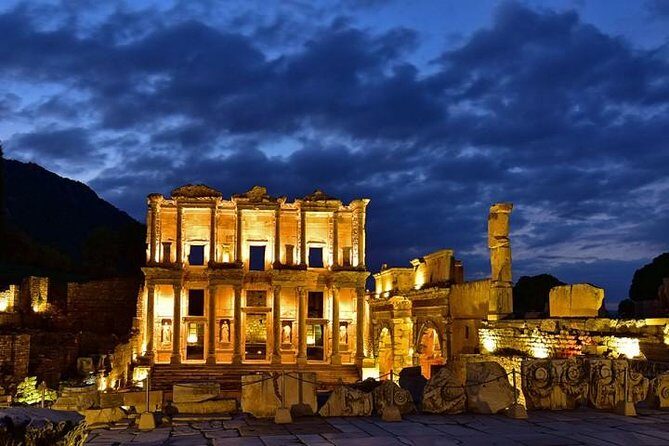
The House of the Virgin Mary (Meryemana) is one of the most distinctive stops on the Ephesus day. According to Christian tradition, Mary’s remains are associated with this site, tied to the idea that the Apostle John brought her here after the crucifixion. The setting also has religious pull beyond Christianity; the site is described as being widely accepted by both Christian and Muslim communities.
This is also a slow, reflective pause compared with the more monumental ruins. You’ll be able to explore the small stone house area, the surrounding gardens, and a chapel. It’s the kind of place where your pace naturally drops, and photos tend to look better because the environment is calmer than the main archaeological zone.
Should you love it? If you care about pilgrimage sites and religious traditions, you’ll probably find it meaningful. If you prefer strictly archaeological masterpieces, you might wonder why it’s here. Either way, it’s not a time-waster if you treat it as a different kind of experience: quiet history rather than dramatic architecture.
Isa Bey Mosque: A Seljuk Masterclass Near Ephesus
Not every stop on this route is about temples and ruins. İsa Bey Mosque brings the medieval layer in a big way. Built in 1375, it’s known for its Seljuk architecture, including intricate stone and marble work and detailed calligraphy. One of the features you’ll notice is the asymmetrical design, which gives the mosque a distinctive look compared with more symmetrical styles.
You also get a sense of “living history.” It’s described as partially ruined, but still an active place of worship. That matters because it’s not just a staged museum stop. If you like architecture, this stop is a strong ingredient.
Practical note: this is still a religious site, so dress modestly and plan to follow on-site guidance for how to move and where to stand.




Şirince Village: Greek-Style Streets and Fruit Wine Reality
After the big Ephesus hits, you’ll get a change of pace in Şirince (Şirince Village). This hilltop Aegean village is known for traditional architecture—whitewashed houses, narrow cobblestone streets, and wooden shutters. It’s also famous for vineyards and fruit wines made from local fruit like peaches and cherries.
This stop works well for two reasons. First, it gives your feet a break from heavy archaeological walking. Second, it lets you experience a place that doesn’t feel built only for tour groups. You’ll find artisan shops and small cafes, and the views from the village help you reset between ancient days.
Keep it practical: treat wine tasting as optional. The village experience is more about the atmosphere, the streets, and taking your time between bigger stops.
Pamukkale Travertines: The Cotton Castle Effect, With Crowds
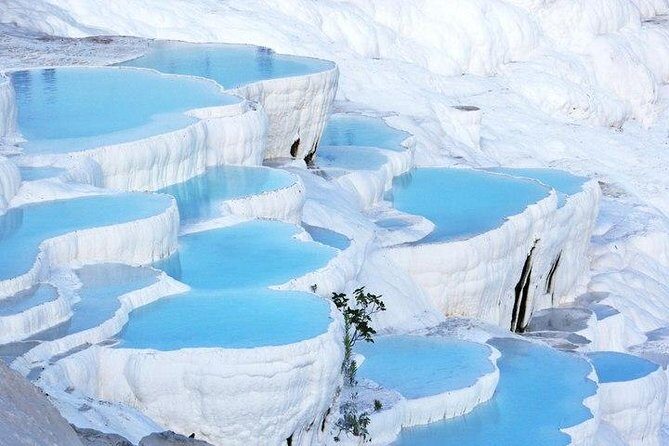
Then comes the reason most people remember this tour. Pamukkale means “Cotton Castle,” and the terraces look like frozen waterfalls because calcium-rich thermal water flows down the hillside and leaves pale travertine layers behind.
This is where reality differs from many photos. The terraces are stunning, but they can be crowded, especially around peak hours. And the surfaces can be slick. One important caution from feedback: the area can be hard on your footing, and it’s easy to slip if you move fast or wear the wrong footwear.
I’d plan on slow steps, not speed. Bring shoes you trust, and give yourself a little extra margin for positioning photos. If you’re easily stressed by crowds, you may find the experience a bit more intense than you expected.
Hierapolis: Roman Ruins Next to the Thermal City
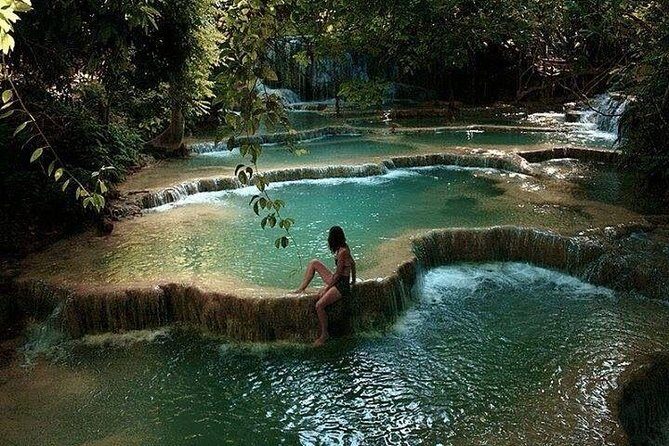
Pamukkale isn’t just terraces. Right next to it sits Hierapolis, a UNESCO site tied to Roman-era spa culture and built around hot springs thought to have healing properties. Hierapolis gives you the archaeological structure that rounds out Pamukkale’s natural wonder.
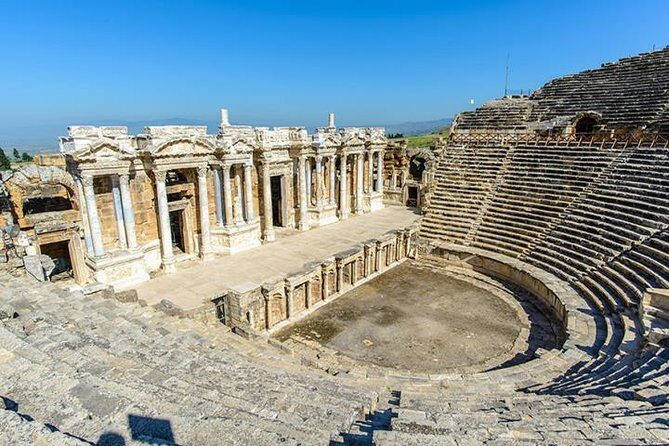
You’ll see highlights such as a well-preserved Roman theatre, temples, a necropolis area, and the Plutonium, a cave associated with Pluto. The layout makes a nice pairing: ruins give you human scale and religious meaning, while the springs and terraces give you the geological drama.
If you’re the type who enjoys wandering with a purpose, the Hierapolis portion helps you connect Pamukkale’s “spa” reputation to the Roman world that turned it into a destination.
Cleopatra’s Pool: Warm Water, Ancient Fragments, Limited Swimming
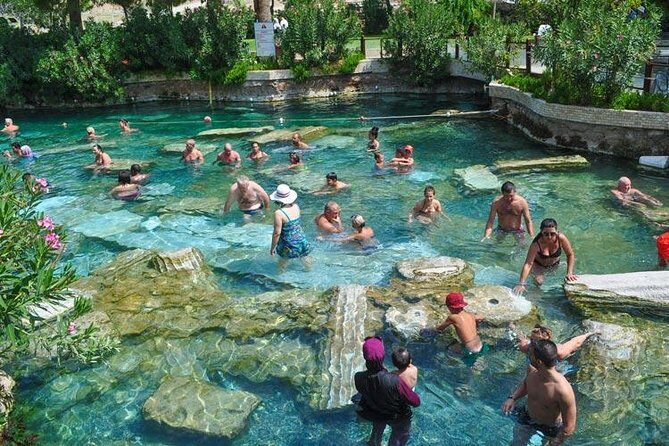
Cleopatra’s Pool is a thermal spring with mineral-rich water that’s described as staying around 36°C (96°F) year-round. It includes submerged ancient marble column fragments, and there’s a legend that it was linked to Mark Antony and Cleopatra.
This is a fun stop because it blends myth and science in the same place. You’re relaxing in warm water while looking at archaeological remains under the surface. That contrast is part of why the stop feels special.
Now, the practical part. From feedback, some people found the pool crowded and the water depth limited, so full swimming may not be realistic. Treat it like a soak and a look, not a long swim session. Also keep safety in mind: mineral water and slippery surfaces don’t mix with rushing.
Price and Value: What You’re Really Paying For
The price is $843.35 per person for about 2 days. That’s not cheap, but it’s not just a “driver and tickets” price either. What you’re buying is a package that includes:
- Overnight accommodation
- Round-trip flights with baggage from Istanbul
- Istanbul airport transfers
- Izmir and Pamukkale airport transfers
- Guide-led tour time
- Lunch (2 meals)
- Transport between the sites
- Entrance fees (the plan notes entrance tickets are included)
So the value question isn’t only whether Ephesus and Pamukkale are worth the money. Of course they are. The real question is: do you want to do the coordination yourself?
If you plan independently, you’ll still pay for flights, a hotel, and entry fees. But the savings can disappear fast once you add time, stress, and the cost of wrong timing. This tour sells convenience and reduced decision fatigue. You pay extra for that simplicity.
Where value can wobble is on included comfort details. Breakfast is not included, and drinks aren’t included either. Lunch is included, but based on feedback, it can be basic (think buffet style rather than a sit-down feast). Hotel quality also varies, because it’s not one fixed property listed here; it’s Selçuk or Kuşadası.
Timing and Comfort: The Long Day Truth
This tour has a big “watch the clock” factor. Feedback includes an early pickup around 4:00 AM and a return around midnight, meaning you can feel the trip as closer to a long travel sprint than a calm weekend.
The important point isn’t that the itinerary exists. It’s how your energy gets spent. When travel days are packed with air connections, waiting time, and group logistics, the sightseeing portion can feel shorter than you’d like.
My practical advice:
- If you’re someone who likes to sleep in and take photos slowly, build in buffer time in Istanbul afterward.
- If you’re okay with early starts and tight schedules, you’ll probably feel the trip hit its targets.
- If you want the deepest version of Ephesus or the longest version of Pamukkale, you might be happier with a more flexible plan and extra time on-site.
Also, one note to keep your expectations straight: this type of tour format can include quick shop stops as part of the day. If that’s a dealbreaker for you, decide ahead of time how long you’ll tolerate “cultural workshops” and what you’ll do if you feel time slipping.
Who Should Book This Two-Day Ephesus and Pamukkale Tour
This tour is a good match if you:
- Want big, famous sights without planning flights and transfers
- Like learning with a guide and want the context on Ephesus and Hierapolis
- Travel as a small group and prefer organized timing
- Don’t mind early mornings if the payoff is worth it
It may not be the best fit if you:
- Need a relaxed pace and lots of free time in each location
- Want to linger long enough for slow, deep archaeology photography sessions
- Are highly sensitive to crowds or slips at Pamukkale
- Don’t care about pilgrimage-style stops like the Virgin Mary House
My Booking Verdict: Book or Do It in Pieces?
I’d book this if you want a turnkey way to get Ephesus and Pamukkale without stress, and you’re comfortable with a schedule that moves fast. The combination of flights, hotel, transfers, guide, entrances, and lunches is exactly what makes the tour practical for first-timers.
I’d skip or reconsider if you hate early starts, want more time at fewer sites, or care a lot about meal quality and hotel consistency. In that case, a self-planned approach often works better: fly into the region, then build your own day trips with more control over timing, food, and pacing.
If you go, go prepared: bring good shoes, plan for heat, and treat Pamukkale as a beautiful but safety-conscious experience.
FAQ
What is the duration of the tour?
It’s listed as approximately 2 days.
Is pickup available in Istanbul?
Yes. You can be picked up from any hotel in Istanbul City Center.
Is the tour offered in English?
Yes, it’s offered in English.
Are entrance fees included?
Yes. The tour includes entrance fees, and admission tickets are noted as included for the main visits.
Is overnight accommodation included, and where do I stay?
Overnight accommodation is included, and you stay in Selçuk or Kuşadası.
Are meals included besides lunch?
Lunch is included (2 lunches). Breakfast is not included, and drinks are not included.
Can I cancel for a full refund?
Yes. It offers free cancellation up to 24 hours in advance for a full refund.