REVIEW · ISTANBUL
3-Hour Private Bike Tour in Istanbul
Book on Viator →Operated by OSMAN ALTAY - YOUR TOUR GUIDE AND LOCAL PARTNER · Bookable on Viator
Pedal through Istanbul’s sharpest story turns. This 3-hour private bike tour strings together major landmarks and everyday neighborhoods in one smooth loop, with stops around the Golden Horn and the old city core. You get an English guide, a mobile ticket, and a route designed for real streets, not just postcard angles.
Two things I like right away: the guide’s route planning and the fact that you ride past places people actually live, shop, and pray. In the best version of this tour, Osman Altay keeps you away from the worst hill drags and uses waterfront stretches when possible, so you spend more time rolling and less time grinding. The second big plus is the storytelling: you’ll connect what you see at Fener, Sultanahmet, and Süleymaniye to the city’s Byzantine and Ottoman layers.
The one consideration: Istanbul’s hills are real. Even with smart biking choices, this tour asks for moderate physical fitness, and you’ll want decent balance and a willingness to ride through traffic-adjacent streets and crowds near the center.
In This Review
- Key highlights to look for
- Why this 3-hour Istanbul bike tour is a smart move
- Meeting at Balat and getting your ride plan
- Fener and Balat: seeing faiths side by side
- Eminönü and Sirkeci: the Istanbul hub you can feel on a bike
- Gülhane Park and Topkapı Palace: Ottoman power at street level
- Hagia Sophia and Sultan Ahmet Mosque: the big icons, up close
- The Hippodrome area and Beyazıt Square: where public life used to crowd in
- Grand Bazaar area and Süleymaniye Mosque: shopping streets meet grand design
- Vefa Bozacısı and Cibali: food and streets that feel more local
- Price and value: is $119.14 per person worth it?
- Who this Istanbul bike tour fits best
- Should you book this 3-hour private bike tour?
- FAQ
- How long is the 3-hour private bike tour in Istanbul?
- What is the price per person?
- Is the tour offered in English?
- Where does the tour start?
- Is this a private tour?
- Do I need good weather for the tour?
Key highlights to look for
- Private, 3-hour pace with only your group, so you can ask questions and adjust your stops.
- Osman Altay’s hill-smart route (from the ride experiences shared): less suffering, more scenery.
- A Golden Horn-focused ride that mixes waterfront views with landmark photo breaks.
- Big icons, short breaks: Hagia Sophia, Sultan Ahmet Mosque (Blue Mosque), and the Hippodrome area in one circuit.
- Neighborhood texture in Fener/Balat, Vefa, and Cibali, including churches, synagogues, mosques, and local eateries.
- A refreshment finish: Osman has been known to offer something to drink and eat at the end.
Why this 3-hour Istanbul bike tour is a smart move
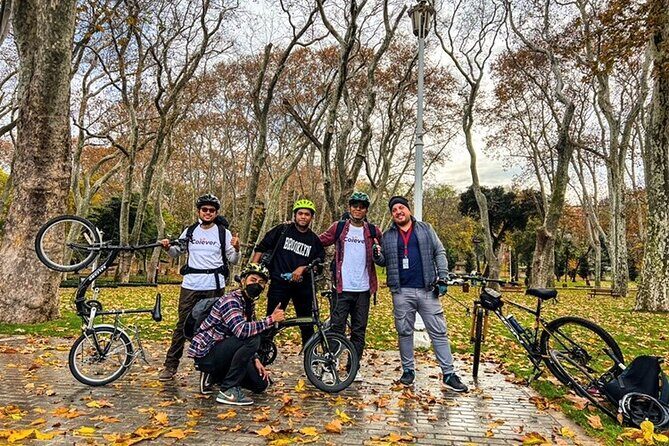
Istanbul is huge, and the old sights are scattered. A bike tour is one of the few ways you can cover a lot of ground without feeling like you spent the day in taxis or standing in lines.
This one works because it mixes two types of stops. You’ll get major monuments around Sultanahmet, but you’ll also ride through nearby neighborhoods with everyday life—where the city feels less like a checklist and more like a place you could live.
And because it’s private, the guide can shape your pace. In the best case, Osman adjusts the route based on how you’re doing and how you want the story to unfold, instead of forcing everyone into the same rigid schedule.
You can also read our reviews of more cycling tours in Istanbul


Meeting at Balat and getting your ride plan
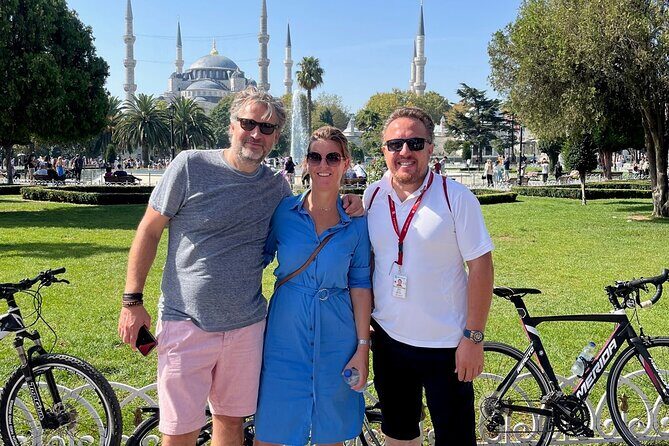
Your tour starts back at the meeting point in Balat (Vodina Cd. No:116, 34087). Balat is a strong start for bike tours because it’s close to the Golden Horn corridor and to the older streets that lead toward the center.
From shared ride experiences, Osman usually meets you at a small local office and provides a bike. One rider noted receiving a hybrid road-mountain bike, which makes sense for a mix of paved street segments and occasional uneven patches. If you’re sensitive about comfort, you’ll feel better if you wear cushioned socks and keep your water bottle handy.
This is listed as being near public transportation, so you’re not stuck if you want to arrive early or add a tram/metro leg before the start time.
Fener and Balat: seeing faiths side by side
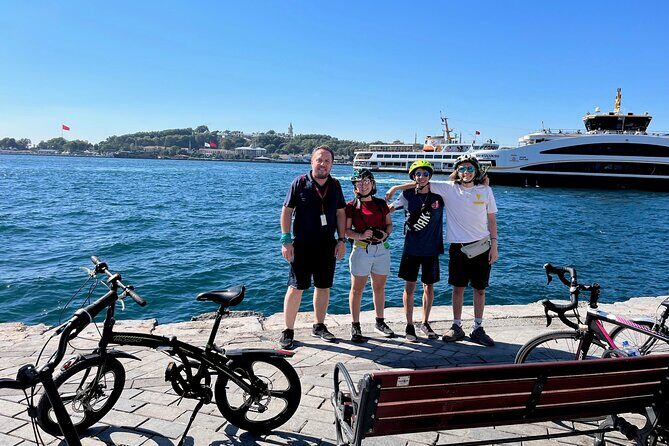
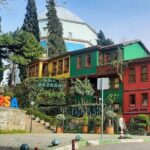
The first major neighborhood stop is Fener & Balat, along the Golden Horn. This area is famous for being a layered pocket of Istanbul where you can see churches, synagogues, and mosques in close proximity—different communities, different eras, one city block at a time.
A top point here is the Phanar Greek Orthodox Patriarchate. It traces its roots back to the 4th century, and it’s often called the Ecumenical Patriarchate of Constantinople, which matters because it anchors the Eastern Orthodox Christian world.
The upside for you on a bike: you’re not rushing through museum-style hallways. You’re moving at street speed, so you pick up the rhythm of the neighborhood—shops, homes, and the way streets open toward the water.
A small drawback to keep in mind: this part of town can be busy, and bike traffic and pedestrians share the space. If you’re new to riding in crowded areas, take a deep breath and let the guide handle the tight moments.
Eminönü and Sirkeci: the Istanbul hub you can feel on a bike
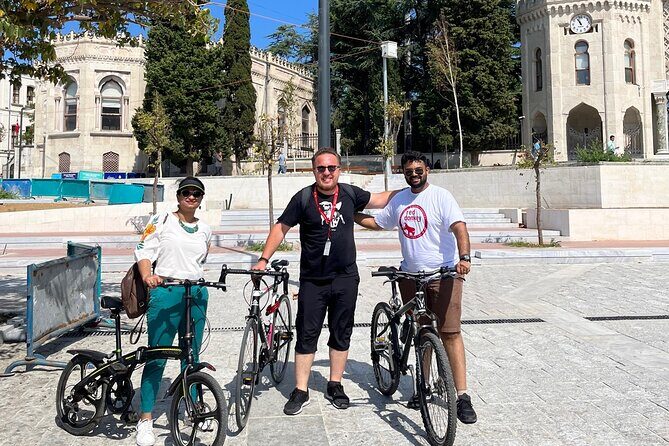
From Fener/Balat you roll toward Eminönü, the busy crossroads by the Golden Horn and the Bosphorus. This area is where commerce and movement are constant, and it’s also close to big landmarks tied to transport history.
A quick stop lands at Sirkeci Station. The station was built in 1890 by the Oriental Railway as the eastern terminus of the famed Orient Express. If you like rail history, this is one of those places where the architecture tells a story without you needing extra explanations.
Then you’re in the zone for the next layers. The location is useful because it keeps you near Gülhane Park and Topkapı Palace, which are the kind of landmarks you’ll want to look at from outside if time is tight—and you will be tight, because the tour is 3 hours.
Gülhane Park and Topkapı Palace: Ottoman power at street level
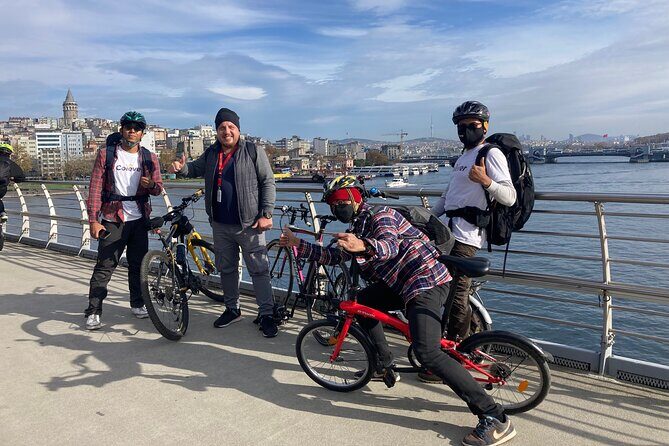
Gülhane Park sits near Topkapı Palace and Sultanahmet Square. It started as outer gardens for the sultans, and today you can walk into it as a public park. One reason this stop matters for your bike tour: it breaks the ride with calmer greenery so you can reset your legs and refocus.
Close by is Topkapı Palace, the residence of Ottoman Sultans and the administrative center of the empire. It was built on the site of the Byzantine acropolis in Sarayburnu, ordered by Fatih Sultan Mehmed after the conquest of Istanbul (1453–1478).
Even if you don’t go inside, this is valuable. From a bike tour, you get the scale and placement of the palace relative to the surrounding neighborhoods. That helps you later when you look at Sultanahmet and realize how all the power centers line up around water, roads, and sightlines.
You can also read our reviews of more private tours in Istanbul


Hagia Sophia and Sultan Ahmet Mosque: the big icons, up close
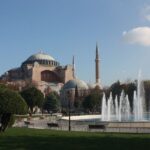
Two of the tour’s main monument moments are Hagia Sophia and Sultan Ahmet Mosque (the Blue Mosque).
Hagia Sophia is one of the most important world monuments in architecture, and it’s tied to a truly unusual timeline: it was built three times on the same site. It began as Megale Ekklesia (Great Church), and by the 5th century it was known as Hagia Sophia (Sacred Wisdom). It served as a cathedral across the Eastern Roman Empire, including moments like coronations.
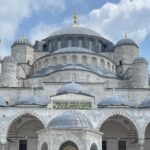
Then comes Sultan Ahmet Mosque, built in the 17th century by Sultan Ahmet I, with Sedefkar Mehmet Ağa associated to its design. It’s called the Blue Mosque because of intense blue Iznik tiles. The complex is larger than just the prayer space, with things like madrasahs, pavilions, shops, a fountain area, and more.
This is the point where biking pays off. You can stop, look, and orient your brain without spending the day walking from one end of the city to the other. The guide’s role matters most here: you want the story behind the visuals, not just a photo stop.
The Hippodrome area and Beyazıt Square: where public life used to crowd in
Next you reach the Hippodrome area, historically called Hippodrome in Constantinople and Atmeydanı under the Ottomans. This square region ties directly to civic life—public events, gathering, and spectacle.
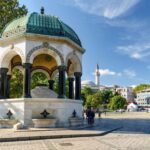
The area includes structures such as the Knitted Obelisk, Serpent Column, Theodosius Obelisk, and the German Fountain. These are the kinds of objects you’d miss if you only peek from a bus window.
A little farther along is Beyazıt Square, built by Emperor Theodosius in 393 AD as the city’s largest square. In that era, it was known as Form Tauri Square, named for bronze bull heads on a triumphal arch.
Bike advantage: you can move quickly between these open zones without losing the feeling of being in one connected historic district. You get to see the monuments from street angles, not just from one single overused viewpoint.
Grand Bazaar area and Süleymaniye Mosque: shopping streets meet grand design
The tour also brings you to the Grand Bazaar area. The bazaar’s foundation traces back to the mid-15th century under Fatih Sultan Mehmet. Structures were laid in 1461, tied to funding for Hagia Sophia. Over time it grew into a major commercial center known for jewelry and precious goods traded by Istanbul merchants.
On a bike tour, this isn’t about shopping for hours. It’s about seeing how the bazaar connects to the surrounding power and pedestrian flow. Even a short stop can help you understand why people historically came here: it’s both practical and symbolic.
Then comes Süleymaniye Mosque, built by Mimar Sinan between 1551 and 1558 for Suleiman the Magnificent. The dome height and the minarets give you instant scale, and the mosque is a key example of Classical Ottoman architecture. If you’re already seeing Hagia Sophia and the Blue Mosque on the same day, this helps you compare architectural goals across eras.
One practical note: mosques and major historic areas can mean crowds and closures at times. Your best move is to follow Osman’s timing and keep your focus on what you can see clearly from the scheduled stops.
Vefa Bozacısı and Cibali: food and streets that feel more local
After the big-name monuments, you shift into quieter, more everyday zones.
In Vefa, the star stop is Vefa Bozacısı, a centuries-old place to try boza, a traditional fermented Turkish drink. This is the kind of stop that makes a short tour feel complete because it slows you down and gives you a taste of local routine.
You also pass Vefa Kilise Mosque, which is described as a former Byzantine church. That’s a strong theme of this tour: the city keeps changing labels but the building fabric keeps holding clues.
Next is Cibali, a smaller Golden Horn district known for Ottoman houses, local markets, and historic remnants like the Cibali Gate, part of Istanbul’s ancient city walls. This is where your ride starts to feel more personal. It’s not just about famous landmarks—it’s about the way Istanbul layers the old into the current.
And in the ride experiences shared, the tour can end with a small drink and food courtesy of Osman. That matters because after 3 hours of biking and stop-and-look moments, you’ll be ready for something simple and satisfying.
Price and value: is $119.14 per person worth it?
At $119.14 per person for about 3 hours, you’re paying for three things: a private guide, a bike-ready plan, and a route that strings together multiple major areas.
If you compare it to doing the same sights solo, you’re saving time on transit and reducing decision fatigue. Without a guided loop, you’d likely spend extra effort figuring out the best order for Hagia Sophia, the Blue Mosque, Hippodrome, and the Golden Horn neighborhoods—plus you’d still have to deal with hills and traffic on your own.
Is it a budget option? Not really. But for what you’re getting—private time, English guidance, a hill-aware ride pace, and targeted story stops—it’s a fair value for travelers who want structure without feeling herded.
One thing to remember: the tour is short. That’s the trade. You’ll see a lot from the street and from quick stops, but you won’t be doing long interior visits across every landmark unless your guide has room in the timing.
Who this Istanbul bike tour fits best
This tour is a strong match if you:
- want to cover both major monuments and neighborhood streets in one day
- like learning city history tied to real corners and buildings
- prefer a private setting where Osman can adapt the route
- feel comfortable with moderate fitness and the idea of some hills
It might be less suitable if you:
- avoid cycling in crowded central areas
- expect a fully relaxed ride with no hill effort
- need long museum-style interior time at each stop
Should you book this 3-hour private bike tour?
I think you should book it if your goal is a smart, time-efficient Istanbul day that blends icons with lived-in neighborhoods. The route choices and Osman Altay’s hill-smart approach are the main reason this tour feels worth it, because they protect your energy and keep the day moving.
If you want to spend every moment inside major attractions, this may feel too fast. But if you’d rather get your bearings, see the key landmarks, and still taste local life in Vefa and Cibali, this is a very solid way to do it.
FAQ
How long is the 3-hour private bike tour in Istanbul?
It’s approximately 3 hours.
What is the price per person?
The price is $119.14 per person.
Is the tour offered in English?
Yes, it’s offered in English.
Where does the tour start?
The meeting point is Balat, Vodina Cd. No:116, 34087 Fatih/İstanbul, Türkiye.
Is this a private tour?
Yes. It’s a private tour/activity, so only your group participates.
Do I need good weather for the tour?
Yes. The experience requires good weather, and if it’s canceled due to poor weather, you’ll be offered a different date or a full refund.