REVIEW · ISTANBUL
Istanbul Sahaba Tombs Tour
Book on Viator →Operated by Trip Now Travel & Events · Bookable on Viator
Sahaba tombs turn Istanbul into a living map. This private religious tour takes you to the resting places of the Prophet Mohammed’s companions, linking their stories to Istanbul—once known as Constantinople. I like the private focus and the hotel pickup convenience, so you spend your energy where it matters.
I also love that the tour doesn’t stay vague. You’ll hear specific tomb names tied to particular people, from Vehb Bin Huseyre and Amr Bin As to Halid bin Zeyd, known as Abu Ayyub Al Ensari. And the schedule is set up with free entry at the listed stops, which helps the price feel more reasonable for a 4 to 5 hour outing.
One consideration: this is not a quick highlights loop for photos. You’re moving through several mosque and tomb areas across different parts of old Istanbul, so plan for some walking and a more reflective pace than a standard sightseeing tour—especially if you’re sensitive to crowds or crowded stairways.
In This Review
- Key things I found most worth your time
- Why the Sahaba tombs feel different in Istanbul
- Hotel pickup and the practical rhythm of a 4 to 5 hour tour
- Eyup Sultan Mosque and the underground tomb area
- A tip for your visit
- Egrikapi and the city walls: Abdullah El-Hudri and the tomb cluster
- Abu Ayyub Al Ensari: why Halid bin Zeyd is treated as a centerpiece
- Hazreti Kab Mescidi and Hz. Cabir Camii: hadith through place
- Muhammad El Ensari Turbesi and Yeraltı Camii: the route keeps building meaning
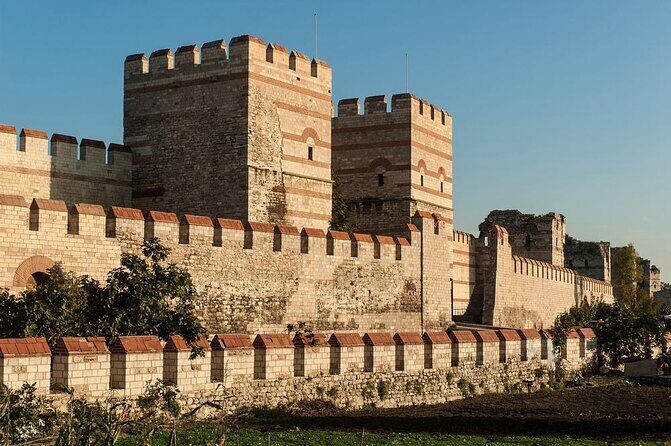
- Walls of Constantinople: turning a view into an explanation
- Price and value: is $173.64 per person worth it?
- What to pack and how to be comfortable
- Who this tour suits best
- Should you book the Istanbul Sahaba Tombs Tour?
- FAQ
- How long is the Istanbul Sahaba Tombs Tour?
- Is hotel pickup included?
- Is there an English-speaking guide?
- How many people are in the group?
- Are the admission tickets included?
- Is lunch included?
- What fitness level do I need?
- What happens if the tour is canceled due to weather?
- Is the booking refundable if I cancel?
Key things I found most worth your time
- Underground tomb stops like the underground mosque area connected to multiple Sahabas’ burial sites
- Eyup Sultan Mosque region with a cluster of names and shrines that feel tightly connected to the story you’re learning
- Egrikapi viewpoint by the old city walls, where the setting helps the mission to Constantinople click into place
- Abu Ayyub Al Ensari highlight, because Halid bin Zeyd’s tomb is treated as one of the most well known Sahaba sites in Istanbul
- A guided sequence of short stops, which keeps the day focused without turning it into a marathon
Why the Sahaba tombs feel different in Istanbul
If you care about faith history, Istanbul hits in a special way. You’re not just seeing grand architecture—you’re visiting sites connected to people who shaped early Islamic memory. What makes this tour compelling is the way it frames the Sahabas’ presence in Istanbul, then Constantinople. Instead of reciting dates, you get context for why these figures are associated with the city and what that means in everyday religious life.
I like how the tour is built around named individuals. It gives you handles to remember: Vehb Bin Huseyre, Amr Bin As, Sufyan Bin Uyeyne, and others you’ll hear about stop by stop. When you can name the person and connect them to a location, the experience becomes less like reading a sign and more like following a thread.
And yes, there’s a quieter feeling in many of these areas. People come to pray, reflect, and pay respect. One guide-focused review I read summed it up as mystical moments, and that tone matches what this kind of religious site visit can feel like when you’re guided through it with care.
You can also read our reviews of more tours and experiences in Istanbul.


Hotel pickup and the practical rhythm of a 4 to 5 hour tour
This is the kind of tour that respects your time. You get air-conditioned vehicle support and hotel pickup, which matters in Istanbul because transit time can quietly swallow your day. The tour is scheduled for about 4 to 5 hours, with short, timed visits built into the route so you’re not stuck waiting around.
The day also tends to be action without feeling rushed. Stop 1 starts with the Eyup Sultan area and a longer visit (about an hour), then it shifts into shorter shrine visits—some as brief as 10 minutes. Those short stops are actually useful: you get to see a site, understand why it’s meaningful, and move on before fatigue kicks in.
For your planning: wear comfortable shoes. These places can involve uneven ground, steps, or doorways that require slow movement. The tour notes a moderate fitness level, which is a fair way to say you should be comfortable walking at a steady pace for a few hours.
Eyup Sultan Mosque and the underground tomb area
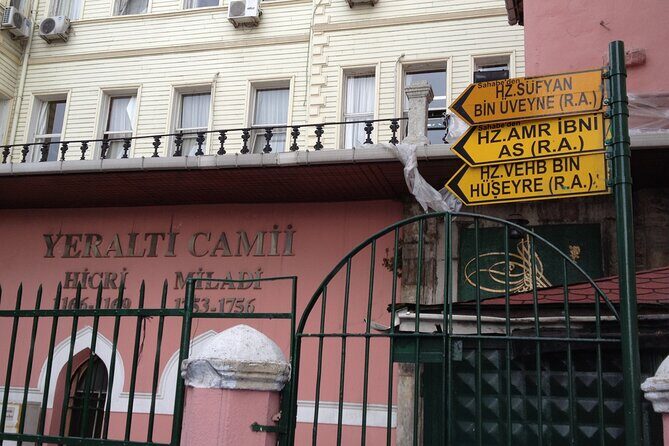
Your first major stop is the Eyup Sultan Mosque area, which is one of the most important religious zones for this theme in Istanbul. The route starts in the Karakoy side of things, then moves into the underground mosque area where you’ll visit three Sahaba-related tomb locations: Hz. Vehb Bin Huseyre (RA), Amr Bin As (RA), and Sufyan Bin Uyeyne (RA).
That underground setting changes the mood fast. In daylight-heavy Istanbul, stepping into a quieter, lower-ceiling space can feel like the site is asking for a more careful tone. A good guide helps you connect what you’re seeing to the larger story—so it doesn’t become just “three names in a row,” but rather a sequence that makes sense.
From there, the tour moves onward to nearby areas in the Egrikapi zone. This is where the itinerary becomes more like a guided route across old Istanbul’s layers. You’re heading between tombs that sit in different positions relative to major landmarks, so the guide’s explanation is what ties it together.
A tip for your visit
If you want to enjoy this stop without feeling rushed, arrive ready to listen. Don’t treat it like a checklist. The meaning comes through the order—who’s mentioned first, why these sites are grouped, and how the guide connects the Sahabas to the city’s identity.
Egrikapi and the city walls: Abdullah El-Hudri and the tomb cluster
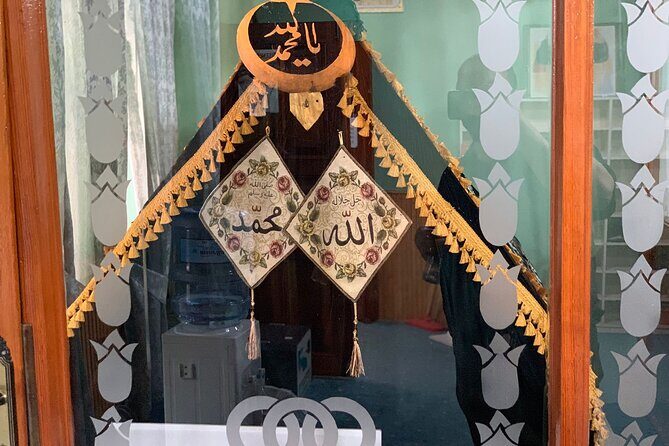
After the Eyup Sultan Mosque area, you head to Egrikapi for a key tomb location: Abdullah El-Hudri (RA). This one is noted as being located right in front of the old city walls of Istanbul. That detail matters. Being near the walls helps you visualize the city in earlier eras, which is exactly what the tour is aiming for: understanding the setting for the Sahabas’ mission and presence.
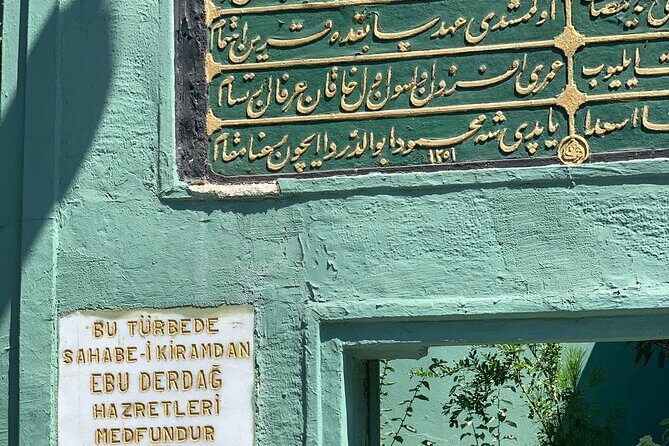
Then the tour continues through a cluster of tombs in the same broader zone. Expect visits to sites including Haceti Hafir (RA), Abdulsiddik Bin Amir (RA), Sube (RA), Edhem (RA), Arpaci Hayreddin (RA), Abdulrahman (RA), and Abu Derdag (RA). That’s a lot of names, but this is where a guide earns their keep. If your guide gives you a simple connection between the people and the locations, your brain has something to hold onto.
What I like here is that the itinerary doesn’t overpromise. It’s not trying to cram in a full museum experience. Instead, it uses proximity and setting—the walls, the mosque zone, the tomb locations—to help you “see” history as place-based, not just timeline-based.
One drawback to keep in mind: because so many stops are close together, it can feel name-heavy. If you’re the type who likes to process slowly, ask your guide to repeat key names or focus on a smaller set of the most important tombs for you.



Abu Ayyub Al Ensari: why Halid bin Zeyd is treated as a centerpiece
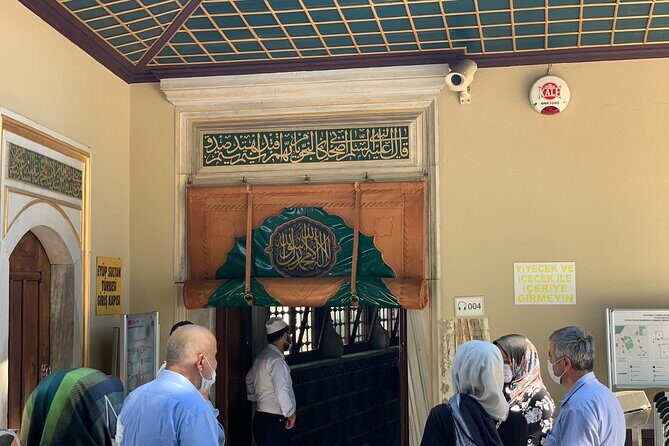
Next, you move to the Ayyub Sultan area for what’s often the star of the show: the tomb of Halid bin Zeyd, known as Abu Ayyub Al Ensari (RA). The tour specifically calls him the most well known Sahaba associated with Istanbul, and it highlights the connection that the Prophet Mohammed stayed in his house.
Even if you already know the general tradition, having the explanation tied to the physical site can make a difference. This is the moment where the tour stops being “a list of graves” and becomes a statement about continuity—how early figures remain present in local devotional geography.
This is also where I’d watch your time. The Eyup Sultan region is meaningful, but it can feel crowded at certain hours. A guide helps you navigate respectfully and stay focused on what you came to see.
Hazreti Kab Mescidi and Hz. Cabir Camii: hadith through place
After the Abu Ayyub Al Ensari visit, the tour moves to Hazreti Kab Mescidi to visit Kab Bin Malik’s Mazar. It’s a shorter stop, but the point is important: the route isn’t only about one famous site. It’s a broader map of remembrance, linking different Sahaba-related locations across the city.
Then there’s a stop connected to Hz. Cabir Camii and the Mazar of Hz. Cabir. Here, you’ll hear a detail that stands out: Hz. Cabir is described as having spread 1540 hadith. That’s the kind of specific information that gives you a clearer sense of why visitors connect this person’s name to religious learning, not just burial traditions.
Because this is a religious tour, the tone is generally respectful and quiet. You’re not arriving to a performance—you’re arriving to pay tribute. The value is in the way names, places, and learning connect, even if each stop is brief.
Muhammad El Ensari Turbesi and Yeraltı Camii: the route keeps building meaning
Next is Muhammad El Ensari Turbesi, where you’ll visit the Muhammad el Ensari Tomb. The stop is short (around 10 minutes), but it continues the pattern: you keep moving through a set of associated tomb sites without losing the thread of the larger theme.
Then the tour goes to Yeralti Camii, also written as Yeraltı Camii, where you’ll visit the mazars of three Sahabas. The idea here is similar to the underground segment you saw earlier: an architectural and spatial setting that reinforces the sense of reverence.
If you’re wondering why two “underground” related sites appear in the tour plan, the answer is simple: the route is designed around how these burial sites are physically expressed in Istanbul. You’re learning through place, and the underground spaces are part of the story’s visual language.
Walls of Constantinople: turning a view into an explanation
The final step you’ll use to connect everything is the Walls of Istanbul visit. The tour positions this stop as a way to understand the Sahabas mission to Istanbul, tying the tomb sites back to the larger city context.
Even if you’re not a history buff, the walls help you think in scale. They give you a mental boundary for the older city layout, which is exactly what your guide’s explanations need. You’re essentially seeing the setting that makes those spiritual and historical connections easier to grasp.
Also, this last stop is helpful for your memory. After multiple tomb areas, you end with a landmark-style view. It’s easier to remember what you saw at the end of a route than a list of smaller locations.
Price and value: is $173.64 per person worth it?
At $173.64 per person for roughly 4 to 5 hours, this tour feels like a fair deal if you care about the theme and want a focused experience. Here’s why:
- You’re paying for guided sequencing, not just transportation. With multiple tomb and mosque stops, a guide’s job is to make connections you could miss if you went alone.
- Hotel pickup and an air-conditioned vehicle reduce stress. Istanbul transit can drain energy fast, and this tour helps protect your time.
- The plan includes multiple short visits and several free-entry stops listed in the schedule. That means you’re not paying extra at every stop.
- It’s capped at a maximum of 14 travelers, with a private religious framing. Smaller groups usually translate to a less chaotic experience.
What’s not included is lunch, so budget for a meal on your own after the tour. If you’re comparing to DIY options, also factor in the time cost of finding the sites and respecting the flow of religious areas. For many people, this price buys comfort plus clarity.
What to pack and how to be comfortable
This is a religious sites route, so dress and comfort matter. The tour data doesn’t list specific dress rules, but in practice you’ll want to follow mosque norms: modest clothing and comfortable footwear.
Bring:
- Water, especially if you’re touring on a warmer day
- A light layer, since mosque interiors can feel cooler
- Any small prayer items you personally use
Also, if you have limited time or want photos, keep your expectations realistic. This is not designed as a photo marathon. It’s designed for respect and learning, and you’ll enjoy it most if you treat each stop as a short conversation with place and meaning.
Who this tour suits best
This tour is ideal if you:
- Want a private religious itinerary with an English-speaking guide
- Are Muslim or just curious about early Islamic figures and their remembered presence in Istanbul
- Prefer a guided route that strings multiple locations together with explanations
- Enjoy stopping briefly at meaningful sites rather than spending hours in long museum rooms
If you’re looking for nightlife, skyline views, or major museum interiors, you’ll probably feel it’s not your match. But if you want a focused, respectful route through Sahaba-related sites, you’ll likely find it very satisfying.
Should you book the Istanbul Sahaba Tombs Tour?
If your goal is a meaningful, guided visit to Sahaba-related locations across Istanbul, I’d say this is a strong choice. The combination of hotel pickup, an English-speaking guide, and a route built around many named sites makes it easier to understand what you’re seeing. The main reason to hesitate is purely practical: it’s multiple religious stops over several hours, so you need comfort with walking and a reflective pace.
If that sounds like your style, book it. You’ll come away with names, place-based context, and a calmer kind of memorable Istanbul.
FAQ
How long is the Istanbul Sahaba Tombs Tour?
It runs about 4 to 5 hours.
Is hotel pickup included?
Yes. Hotel pickup is offered.
Is there an English-speaking guide?
Yes, the tour includes an English-speaking guide.
How many people are in the group?
The tour has a minimum of 2 people and a maximum of 14 travelers.
Are the admission tickets included?
The itinerary lists free admission tickets for multiple stops.
Is lunch included?
No, lunch is not included.
What fitness level do I need?
The tour requires a moderate physical fitness level.
What happens if the tour is canceled due to weather?
It requires good weather. If canceled due to poor weather, you’ll be offered a different date or a full refund.
Is the booking refundable if I cancel?
This experience is non-refundable and cannot be changed for any reason.