REVIEW · ISTANBUL
Bosphorus Night Cruise with Luxury Yacht
Book on Viator →Operated by Tour Book Turkey · Bookable on Viator
Night views on the Bosphorus move fast.
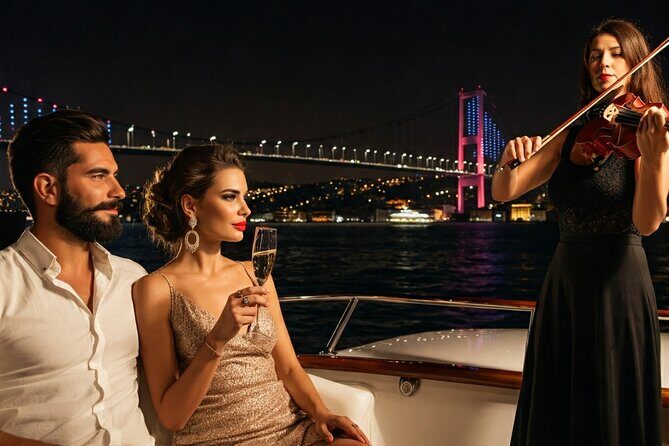
This 2-hour luxury yacht cruise is a focused way to see Istanbul’s signature sights from the water, with night lighting bouncing off the strait as your guide explains what you’re looking at. I especially like the easy pace (no museum lines, no sprinting across neighborhoods) and the close-up skyline you get along the European and Asian shores.
Two things I really enjoy here are the friendly, high-touch crew and the practical onboard perks. You’ll be offered snacks and drinks, and staff are happy to help with photos, which matters when the views are that good. In one review, the team named Ozzie and Aleyna came up as part of what made the ride feel smooth and welcoming.
One possible drawback: this is weather-dependent and short, so you won’t get time for sightseeing on land. If you’re hoping for an in-depth visit inside major palaces, this cruise is more about the best angles and the night atmosphere than about doorways and ticket lines.
In This Review
- Key highlights before you go
- Why the Bosphorus at night feels different
- Luxury yacht setup: what your 2 hours are really buying
- The Bosphorus strait views: the whole point of the cruise
- Dolmabahçe Palace: Ottoman grandeur from the waterfront
- Çırağan Palace: marble splendor and a darker story
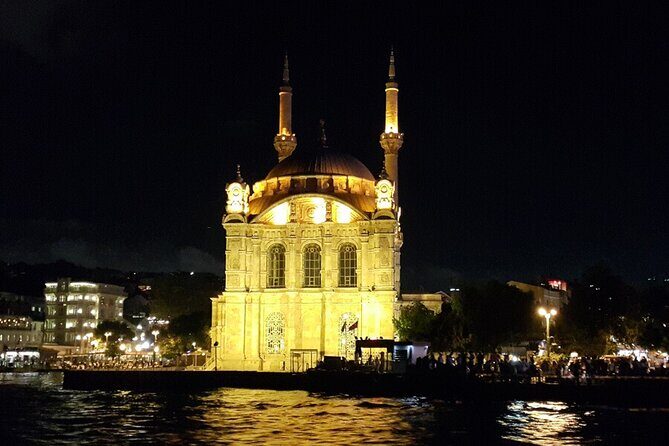
- Ortaköy and Bebek: neighborhoods you can read by light
- Bosphorus Bridge and Fatih Sultan Mehmet Bridge: the city’s engineering skyline
- Rumeli Hisarı and Anadolu Hisarı: the narrowing that shaped defense
- Küçüksu Palace and Beylerbeyi Palace: quieter palace drama under the bridge
- Maiden’s Tower and the Galataport finale
- Who this cruise suits best (and who should skip it)
- Should you book this Bosphorus Night Cruise?
- FAQ
- Where does the cruise start and end?
- How long is the Bosphorus night cruise?
- What is the price per person?
- Is there a mobile ticket?
- How many people are on the boat?
- Is the meeting point easy to reach?
- Is the cruise suitable for most people?
- What weather conditions are required?
- What happens if the tour is canceled due to poor weather?
- How does cancellation work?
Key highlights before you go
- A true Bosphorus view, not a roadside view: you’ll see the strait separating Asia and Europe in motion.
- Snacks and drinks included: a small but real comfort on a night outing.
- Small group for this type of outing: up to 30 people, which usually keeps the vibe relaxed.
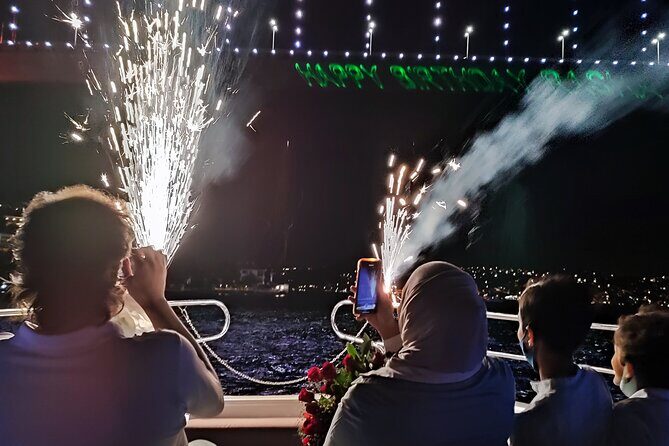
- Bridges timed for night lighting: the Bosphorus Bridge and Fatih Sultan Mehmet Bridge show up clearly from the water.
- Palaces and towers in one loop: Dolmabahçe, Çırağan, Beylerbeyi, and Maiden’s Tower are all part of the visual story.
- Good onboard organization: reviews point to on-time pickup and smooth sailing, plus helpful staff for photos.
Why the Bosphorus at night feels different
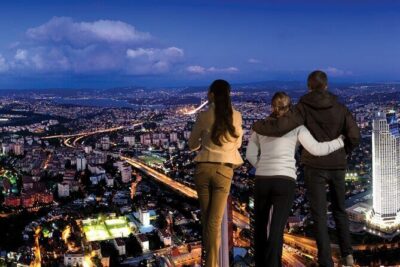
The Bosphorus is one of those places that makes Istanbul make sense. It’s an international waterway that links the Sea of Marmara and the Black Sea, and it physically splits the city into two continents. Seeing it at night is like watching the city’s geography turn into a moving map.
A few cool facts help you “read” the scenery while you’re cruising. The strait runs roughly northeast to southwest and is about 30 kilometers long. Depth averages around 60 meters, with the deepest point reaching up to 120 meters. Its width changes a lot—about 3,500 meters at its widest—so some stretches feel wide and open, while others feel tight and dramatic.
There are also currents: surface water tends to run from the Black Sea toward the Marmara, while underwater currents go the other way. On calm nights, that matters less for you as a passenger—but it explains why the Bosphorus has always been strategically important. From the water, you’ll also notice how many of Istanbul’s historic sites sit exactly where ships and travelers once had to pay attention.
You can also read our reviews of more boat tours in Istanbul
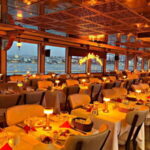

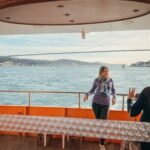
Luxury yacht setup: what your 2 hours are really buying
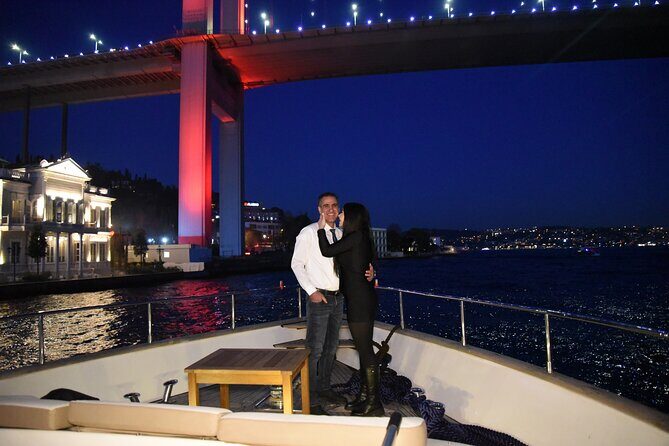
Let’s talk value, because $54.44 for 2 hours can feel like either a steal or a splurge depending on what’s included. Here, you’re not paying just for transportation. You’re paying for an organized night route plus onboard comfort.
This experience runs about 2 hours and is capped at maximum 30 travelers, which is a sweet spot for a cruise like this. Small enough to feel personal, large enough that the boat doesn’t feel empty or underpowered. You’ll also use a mobile ticket, and the meeting point is near public transportation, which helps when you’re tired and trying not to get lost.
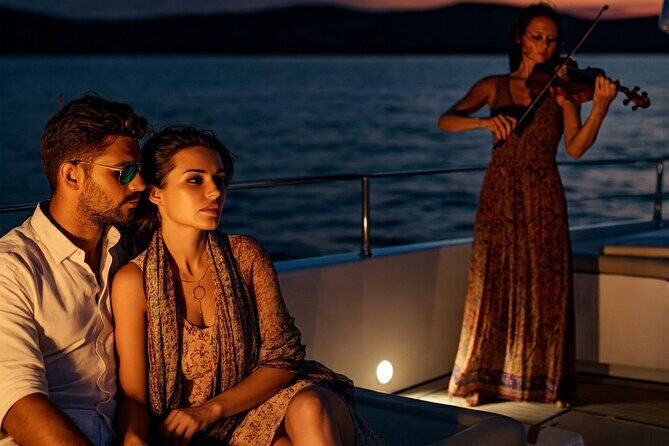
The vibe onboard is guided and easy. Reviews repeatedly highlight friendly crew behavior, smooth sailing, and staff who keep things flowing. A few people also mention the guide providing informative narration during the ride. And yes, snacks and drinks are part of the experience, with some reviewers calling the refreshments particularly nice.
You should expect a practical night plan: you’ll be on the water for the whole cruise, then you’ll return back to the same meeting point. That means no long detours, no time wasted waiting for ferry schedules, and no “did we miss the last shuttle” panic.
The Bosphorus strait views: the whole point of the cruise
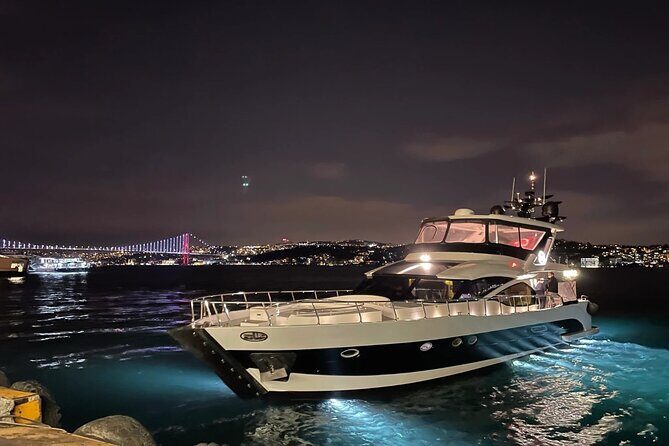
If you’ve only ever looked at Istanbul from roads or waterfront promenades, the Bosphorus night cruise changes the perspective fast. The whole structure of Istanbul—where palaces, forts, and famous bridges line up—becomes obvious when you’re moving through the strait.
As you head along the route, you’ll see why the Bosphorus is often described as a gateway between East and West. It’s not just a pretty channel. It’s a working international waterway, and that reality shows up in the number of strategic sites along both shores.
At night, the city lights do a simple thing: they make the water look deeper and more reflective. The result is that landmarks that are sometimes lost in daylight haze become clearer. You’ll get repeated “stop-and-look” moments even if you already know the names from photos.
And because this cruise focuses on views from the water, you’re also less likely to get tired from constant walking. You’ll still want a camera ready, but you won’t be spending your energy navigating crowds on land.
Dolmabahçe Palace: Ottoman grandeur from the waterfront
Dolmabahçe Palace sits on a large area of about 250,000 square meters in Beşiktaş, right by the Bosphorus. It’s positioned between Dolmabahçe Street and the waterfront, with a classic waterfront relationship: the palace literally faces the water route that shapes Istanbul.
Historically, the area started as a cove where ships anchored in ancient times. Over time, it became the sultan’s favorite residence, and the palace carries that centuries-long shift from practical anchorage to royal spectacle.
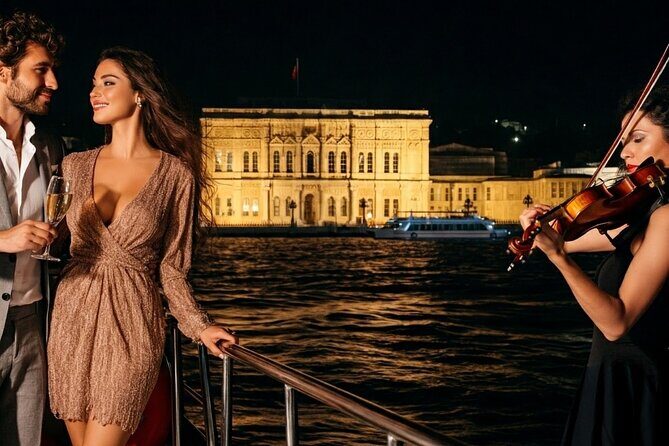
From the Bosphorus at night, Dolmabahçe tends to register differently than it does in daylight. Instead of “here’s a building,” you get “here’s a palace lit like a stage backdrop.” It’s also the kind of landmark where the sheer scale becomes obvious when seen across water rather than up close on a street.
One practical note: because this is a cruise, you’re seeing it from the outside. If you want interiors, plan that as a separate visit. But as a night visual, Dolmabahçe is exactly the kind of stop that makes the cruise feel worth it.
Çırağan Palace: marble splendor and a darker story
Çırağan Palace is another waterfront heavyweight, and its backstory is part of what makes it so memorable. It was commissioned by Sultan Abdulaziz and designed by the architect Sarkis Balyan. The palace sits on the site of an earlier wooden summer palace built by Selim III in 1800.
Construction finished in 1871, and the palace is made of marble with a total area of about 80,000 square meters. On the Bosphorus at night, you’ll feel the scale because it’s built to face the water, like a statement meant for everyone approaching by sea.
Here’s the human part that adds weight: after Abdulaziz was deposed, he was imprisoned there with his family for years. Later, after Murat V was deposed, he was also imprisoned at Çırağan with his family for 29 years. Later still, it was used as a House of Parliament after the 1908 constitutional changes, then damaged by fire in 1910. The grounds eventually shifted to a sports use, and in the early 1990s it was restored and reopened as a luxury hotel.
Seeing it from the water at night doesn’t give you the full museum context, but it does make the “royal and political” layers feel real. It’s hard to look at Çırağan and not think about how the Bosphorus connected power, movement, and fate.
You can also read our reviews of more tours and experiences in Istanbul


Ortaköy and Bebek: neighborhoods you can read by light
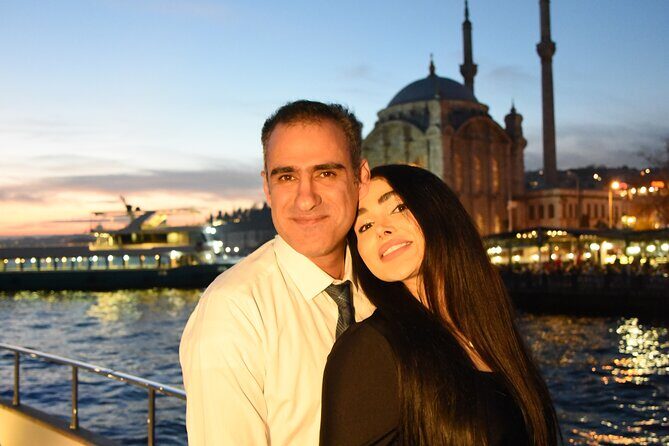
Two European-side stops make a lot of sense back-to-back: Ortaköy and Bebek.
Ortaköy is a lively Beşiktaş neighborhood on the European side, and it includes the Ortaköy Bazaar with souvenir shops, cafes, bars, and restaurants. The bazaar is described as lively throughout the day, but early morning can be slower, with more movement starting after 10:00 am. On a night cruise, you’re not going to shop or stroll the market, but you’ll see how this area lines the water with human-scale energy.
Ortaköy also connects directly to the Bosphorus Bridge area, which matters for photos. The bridge views from this side often feel more “framed,” because the shoreline shape and street lights create a natural border around the scene.
Then comes Bebek, another historic Bosphorus neighborhood on the European shore. The word Bebek is linked to an Ottoman-era reputation for being attractive by the water. Today, Bebek is known for historical buildings like Bogazici University and waterside mansions, plus plenty of restaurants. From the cruise, these show up as a mix of older architecture silhouettes and modern life along the shore.
If you love strolling neighborhoods but want to avoid the “what street is that again” problem, these views are a nice compromise. You’ll understand where people live and gather without doing a long walking day.
Bosphorus Bridge and Fatih Sultan Mehmet Bridge: the city’s engineering skyline
Bridges are often best enjoyed from the place where they belong: the water.
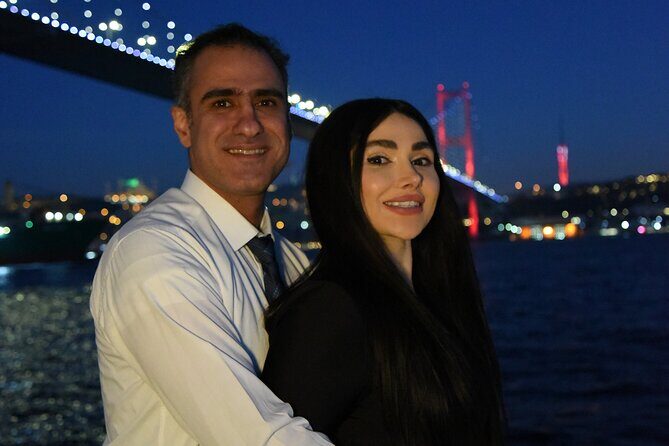
The Bosphorus Bridge has its feet on the European side in Ortaköy and on the Asian side in Beylerbeyi. It was the first bridge built across the Bosphorus, and it became a major connector alongside ferries. The idea dates back decades, but construction began in 1970 and the bridge opened on 29 October 1973, coinciding with the 50th anniversary of the Republic proclamation. It’s also tied to major events like the Istanbul Eurasa Marathon.
From your boat, you’ll get a clear sense of why this bridge is such a symbol. It doesn’t just cross the strait; it visually anchors the shoreline. At night, cables and lighting patterns show up crisply, which is great if you like photography but don’t want to stand in heavy traffic.
Later, you’ll see the Fatih Sultan Mehmet Bridge, the second Bosphorus crossing. Construction started in 1986 and it opened on 3 July 1988. This bridge is a steel suspension bridge and is listed as the 14th largest steel suspension bridge in the world. It carries a significant chunk of the city’s trans-Bosphorus traffic and has become part of the Istanbul skyline.
Taken together, these bridge moments are part of the cruise’s charm: Istanbul isn’t stuck in the past. It’s evolving, and the bridges prove it.
Rumeli Hisarı and Anadolu Hisarı: the narrowing that shaped defense
The Bosphorus isn’t uniform. Certain points are tighter, and the city built defenses there.
Rumeli Hisarı (Rumeli Fortress) sits in Sariyer on the European side. It was constructed directly across from Anadolu Hisarı, starting in 1453 by order of Sultan Mehmet the Conqueror. The fortress was completed in about three months, which says a lot about how urgent the defensive needs were. Before the conquest of Istanbul, it protected against naval attacks. After the conquest, it became an inspection point for maritime traffic on the Bosphorus.
Inside the fortress, small wooden houses formed over time, but restoration work in 1953 removed those houses. Today, it’s known for summer concerts, and it serves as an open-air theater and museum. From the water, it reads like a fortress built to command the strait—especially when the walls sit dark against nighttime illumination.
On the Asian side, Anadolu Hisarı (Anadolu Fortress) is at the narrowest point of the Bosphorus in Beykoz. It was built in 1395 by Beyazit I. The fortress includes a citadel and outer castle walls. After the conquest of Istanbul, it lost much of its strategic role and became a military hospital. Over time, waterfront houses and old mansions appeared around the ruins.
Restoration ran from 1991 to 1993, and the area was converted into a museum, but it’s noted as not open to the public. Only the outer walls can be visited, and the road passes through the site. That means the cruise view is your best “full picture” without needing to plan a separate land visit.
If you like Istanbul because it stacks eras—Ottoman, medieval, modern—these two fortress moments give you that vertical timeline in a single trip.
Küçüksu Palace and Beylerbeyi Palace: quieter palace drama under the bridge
After the fortresses, the route shifts back toward palace atmosphere.
Küçüksu Palace is a small Ottoman summer palace ordered by Sultan Abdulmecit and designed by architect Nikogos Balyan. It sits on the Bosphorus coast road between Üsküdar and Beykoz. The palace was prized for its views, and during the Ottoman period, multiple sultans used it for relaxation. Because of the fine quality of items like furniture, paintings, and carpets, it later opened as a museum during the Republican period.
From the water, Küçüksu doesn’t need massive scale to feel special. Small palaces can be more intimate, and at night their quiet lighting often contrasts with the larger, louder landmarks.
Then comes Beylerbeyi Palace, meaning Lord of Lords. It’s an Ottoman summer palace complex built in the 1860s on the shores of the Bosphorus, and today it lies right under the Bosphorus Bridge. It was designed by Sarkis Balyan and blends elements of renaissance and baroque styles with influences from the East and West.
The main building is a two-store stone structure on a high basement, built on land of about 2,500 square meters and including six halls, 24 rooms, plus one hamam and one bathroom. The palace layout includes the Imperial Mabeyn on the south side and Valide Sultan’s Apartment on the north side.
There’s also the garden and lily pond, which adds a calmer layer to the night scenes. From the cruise you’ll mostly see the exterior and waterfront setting, but the setting matters. This is the kind of landmark where you can feel the intention: it’s built for leisure time, not just power displays.
Maiden’s Tower and the Galataport finale
The final romantic punch comes near Üsküdar: Maiden’s Tower (Kız Kulesi). It sits on a tiny island about 200 meters from the shore. It’s famous for legends, and one is especially well known: an oracle predicted that a sultan’s daughter would be killed by a snake bite on her 18th birthday. The sultan tried to protect her by building the tower and hiding her there. On her 18th birthday, she received a basket of fruit, and the snake hidden inside caused the fatal bite.
Whether you take legends literally or not, Maiden’s Tower has that “myth made visible” quality. From the water at night, it often feels like the city’s story condensed into one lit silhouette.
Then your cruise wraps up around Galataport in Karaköy, a modern port and social hub. It’s described as blending Istanbul’s historical charm with contemporary architecture. The area includes restaurants, cafes, shops, and cultural venues, and it has an underground terminal that manages cruise ship traffic. On the way back, this is a nice contrast: after fortress walls and palace facades, you see the port district where modern visitors gather.
The cruise ends back at the start point, so you don’t have to plan a separate return.
Who this cruise suits best (and who should skip it)
This is a strong fit if you want a relaxed, scenic introduction to Istanbul without turning your evening into a checklist.
You’ll likely love it if:
- You want night views of bridges, palaces, and forts in one shot.
- You like an organized plan with helpful staff and onboard snacks and drinks.
- You prefer a short outing, around 2 hours, instead of a full day on foot.
You might want to skip it if:
- You want to walk inside major attractions. This is mostly about what you can see from the water.
- Your trip days are all about long, land-based sightseeing blocks.
Should you book this Bosphorus Night Cruise?
For most people, I think the value makes sense. You’re paying for a small-group luxury yacht experience with drinks and snacks, plus narration that turns landmarks into a clearer story. At $54.44 per person, it’s also a practical way to spend an evening in a city where time can disappear fast.
Book it if you can travel with decent weather. The experience requires good weather, and if it gets canceled due to poor conditions, you should expect a different date or a full refund. Also, the cruise operates on a minimum traveler requirement, so it may shift dates if that minimum isn’t met.
If you want one easy decision rule: if your goal is night views and “seeing the layout of Istanbul,” book it. If your goal is deep interior access and long land time, plan a palace and museum day separately and enjoy this cruise as the best nighttime bonus.
FAQ
Where does the cruise start and end?
The cruise starts at Ömer Avni, İskele Yolu No:30, 34427 Beyoğlu/İstanbul, Türkiye, and it ends back at the same meeting point.
How long is the Bosphorus night cruise?
It lasts about 2 hours.
What is the price per person?
The price is $54.44 per person.
Is there a mobile ticket?
Yes, this experience uses a mobile ticket.
How many people are on the boat?
The tour has a maximum of 30 travelers.
Is the meeting point easy to reach?
The meeting point is near public transportation.
Is the cruise suitable for most people?
Most travelers can participate.
What weather conditions are required?
The experience requires good weather.
What happens if the tour is canceled due to poor weather?
If it’s canceled due to poor weather, you’ll be offered a different date or a full refund.
How does cancellation work?
Free cancellation is available, and you can cancel up to 24 hours in advance for a full refund.