REVIEW · CANAKKALE
Canakkale: Half-Day Troy Tour
Book on GetYourGuide →Operated by Crowded House Tours · Bookable on GetYourGuide
Troy feels real, not textbook.
This half-day tour is interesting because you get to walk through a site where 9 different cities were built on top of each other, then connect the physical ruins to the Trojan War myths you already know. I especially like the focus on what you can see up close: the defensive walls, everyday house remains, and the staging areas tied to sacrificial altars and an open-air theater. If you want value for time, it’s a tight 3-hour format that uses your morning (or afternoon) efficiently from Çanakkale to the excavation hill.
One drawback to plan for: it’s not set up for wheelchair access, and you’ll be walking around uneven archaeological terrain for much of the guided portion, so wear shoes you can trust.
In This Review
- Key things that make this Troy tour worth your time
- Why Troy still pulls people in
- Getting from Çanakkale to Troy: the 30-minute ride and the 3-hour plan
- First stop: the outer works and the 3,700-year-old city walls
- Walking the layered ruins: nine cities built one on top of another
- Excavation on site: what 150+ years of archaeology adds to the story
- Myths you’ll hear while you walk: Achilles, Hector, and Helen
- Sacred spaces and the open-air theater: where ritual meets public life
- The value question: is $93 per person fair for a half day?
- Comfort, pace, and what the day actually feels like
- Gift shop reality check: plan your shopping before the tour ends
- Who should book this Troy half-day tour
- Should you book the Çanakkale: Half-Day Troy Tour?
- FAQ
- How long is the Canakkale Troy half-day tour?
- Where do they pick you up in Çanakkale?
- What’s included in the price?
- Is lunch included?
- Is the Museum of Troy included?
- Is this tour suitable for wheelchair users?
Key things that make this Troy tour worth your time
- Hotel pickup around Çanakkale harbour makes it low-stress to start
- A professional English-speaking guide ties myths to what you’re actually seeing
- Layer-by-layer Troy: nine cities on one site, including Homer’s Iliad context
- Walls, houses, altars, and the theater give you multiple angles on daily life and myth
- Excavation stories from Schliemann to today help the site make sense fast
Why Troy still pulls people in
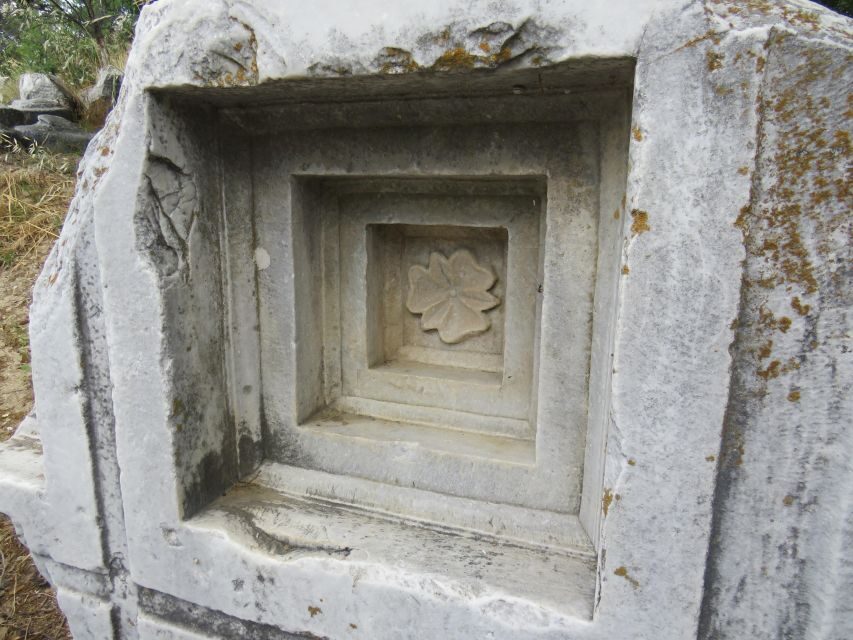
When people say Troy is famous, they’re usually talking about Homer and the Trojan War. But what makes this tour click is that the story isn’t floating in the air. It’s anchored to visible stone lines, street-level remnants, and the way the settlement grew and changed over centuries.
You’re not just viewing ruins. You’re walking the edges of an ancient city that dates back thousands of years, then learning how archaeologists have pieced together what each layer might have meant. The effect is that the myths become easier to hold in your mind, because the tour gives you landmarks to attach them to—like where people defended themselves, where ordinary life happened, and where public or ritual spaces likely stood.
You can also read our reviews of more tours and experiences in Canakkale.


Getting from Çanakkale to Troy: the 30-minute ride and the 3-hour plan
Your tour starts with pickup from your hotel in Çanakkale, around the harbour area. You’re typically asked to wait in the lobby about 5 minutes before pickup time, and then you’ll head out in an air-conditioned, non-smoking vehicle.
The drive is about 30 minutes to Troy. This matters because it keeps your day from turning into a travel slog. With the full experience designed around roughly 3 hours total, you can realistically fit it into a tight itinerary—without needing to dedicate a whole day to the site.
From there, the guided time at Troy is about 2 hours, followed by the return ride to Çanakkale. It’s a classic half-day flow: go in, see what counts, leave before you feel museum-burnout.
First stop: the outer works and the 3,700-year-old city walls
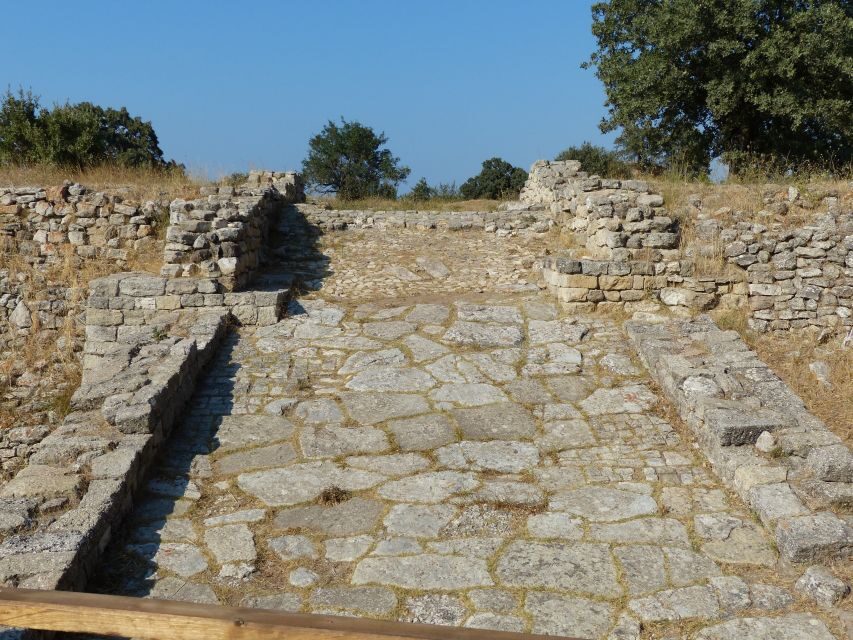
One of the best parts of any Troy visit is when the scale suddenly becomes obvious. Troy’s defensive walls give you that immediate “this was built to last and protect people” feeling. Walking along these remains is a smart introduction because it frames everything else you’ll see.
You’ll learn how Troy was organized defensively, and you’ll connect that to the broader Trojan War narrative. Even if you don’t care about military history, walls help you understand how settlements survive in harsh realities: trade, conflict, and survival. That’s the kind of context that makes a ruin feel less like scattered stones and more like a place that had to function day after day.
Walking the layered ruins: nine cities built one on top of another
What makes Troy unusually powerful as a site is the layering. The tour explains that nine different cities were discovered built on the same hill, with settlements going back to before 3500 B.C. This is not a small detail—it’s the core reason Troy matters even beyond the Iliad.
As you move through the area, you’ll see the remains of settlements laid one over another. The tour also emphasizes that you can walk past ruins of everyday houses dating back more than 3,000 years. That’s where the experience becomes more human: instead of only thinking about heroes, you start picturing daily life—steps between homes, the texture of where people lived, and the idea that each new city grew out of what came before.
There’s also a big mental payoff here. You’ll learn how Homer’s Iliad makes Troy famous, but the tour frames that 10-year Trojan War as just one story in a much longer timeline of changing settlements. It’s a helpful corrective: Troy was never only one moment. It was an evolving place.
Excavation on site: what 150+ years of archaeology adds to the story
Troy doesn’t just have ancient remains—it has ongoing interpretation. During your visit, you’ll hear about excavations that have been happening for more than 150 years and still produce treasures today. That’s important because it explains why Troy feels both ancient and still “alive” in the scholarly world.
You’ll learn about the discovery of Troy by Heinrich Schliemann in the 1870s, and how archaeologists moved from 19th-century theories to more modern approaches. Even if you’re not an archaeology person, this piece of context helps you understand why certain parts of the site are interpreted the way they are today.
Practical takeaway: when a guide can connect current findings to earlier discovery, you’re less likely to feel lost among stones and sections. The tour gives you a storyline you can follow instead of a map you have to decode alone.

Myths you’ll hear while you walk: Achilles, Hector, and Helen
This is a myth-driven tour, but it’s not myth-only. The guide is there to connect the legends to physical locations across the site. You’ll hear the Trojan War story through the lens of what the Romans and Greeks remembered, what Homer popularized, and what archaeologists have been able to locate.
The big names you’ll associate with the ground in front of you are Achilles, Hector, and Helen. The guide’s job is to take those names and pin them to why the city mattered—its defenses, its social spaces, and how people might have lived (and fought) there.
I like this approach because it avoids the trap of treating mythology like a separate “tour track.” Instead, you walk, you listen, and the legends start behaving like a set of mental bookmarks. If you already know the Iliad, you’ll get more meaning from it. If you don’t, you’ll still understand what the myths are claiming and why they stuck.
Sacred spaces and the open-air theater: where ritual meets public life
A strong part of this tour is that it doesn’t only stay on walls and houses. You’ll also stand before ancient sacrificial altars and the city’s open-air theater.
Why these stops matter: they widen the story from survival and warfare to community. Sacrificial altars signal ritual and belief. An open-air theater suggests public gatherings, performances, and civic life. Even when you’re not sure exactly how everything worked, these are the kinds of spaces that tell you a settlement wasn’t only about defense—it also had culture and religion built into its rhythm.
It’s also a great photography moment. Looking at these spaces gives you sight lines and scale cues that are hard to get from walls alone.
The value question: is $93 per person fair for a half day?
At $93 per person for about 3 hours, this tour feels best when you value two things: (1) a guided, story-led walkthrough and (2) the convenience of being transported from Çanakkale with entrance fees handled.
Here’s what’s included:
- Pickup from your Çanakkale hotel (around the harbour)
- Professional English-speaking guide
- Entrance fees to Troy
- Air-conditioned, non-smoking vehicle
What’s not included:
- Lunch
- A visit to the Museum of Troy
So the value depends on your priorities. If you want a guided route that gets you oriented quickly and helps you understand the layers as you walk them, this can be a good use of time. If you’re the type who wants to linger, read every sign, and combine the ruins with museum artifacts, you’ll likely feel the half-day limit.
Comfort, pace, and what the day actually feels like
The experience runs on a simple schedule: pickup, drive, guided walking time, then the return. The ride is in an air-conditioned vehicle, and the tour includes transportation both ways, which helps you avoid the hassle of arranging your own transport for what can be a time-sensitive visit.
In terms of pacing, the goal is to give you enough time to cover the main structure of Troy without turning it into an all-day commitment. Some people appreciate that. If you prefer slow travel and long stops, you might wish there were a bit more time on the site.
But for most visitors—especially those balancing multiple days in the Marmara region—this pacing is a realistic match for a half-day excursion.
Gift shop reality check: plan your shopping before the tour ends
This one is easy to miss and it can affect your satisfaction if shopping matters. There can be a short break connected to a souvenir shop stop. The key thing to know is that if you want to buy from the official shop, it’s worth doing your shopping during the brief break before the guided portion, not after it ends.
This isn’t about being picky. It’s about time. Half-day tours move on quickly, and a shopping window can close faster than you expect.
For photos: bring a way to keep your phone or camera dry if it’s windy or bright. The site is outdoors, and your best shots will come when you can move carefully and take a few seconds to frame walls and excavation lines.
Who should book this Troy half-day tour
This tour is a strong fit if:
- You want to understand the layered settlement idea without studying maps for hours
- You enjoy myth and want it tied to real places on the ground
- You’re short on time in Çanakkale and want a focused excursion that includes transport and entrance fees
- You prefer a structured walking route with an English guide
It’s not a great fit if:
- You need wheelchair access (it isn’t suitable for wheelchair users)
- You want a full day including the Museum of Troy, since the museum visit isn’t part of this package
- You dislike walking on uneven archaeological ground
Should you book the Çanakkale: Half-Day Troy Tour?
If you’re aiming for a smart, time-efficient Troy visit, I’d say yes—especially if you care about connecting legends to real landmarks and you like learning as you walk. The combination of hotel pickup, an English guide, entrance fees, and a structured route through walls, houses, altars, and an open-air theater makes it feel practical rather than rushed.
I’d pause before booking if you’re hoping for a museum-heavy day or you’re someone who needs long, unstructured time on site. With a half-day format, you’re choosing breadth over deep lingering.
If Troy is on your list for this trip, this tour is a solid way to see the essentials with context—so you leave with a story you can still picture the next day.
FAQ
How long is the Canakkale Troy half-day tour?
The tour lasts about 3 hours total, with around 2 hours of guided time at Troy.
Where do they pick you up in Çanakkale?
Pickup is included from your hotel in Çanakkale, around the harbour area. You’ll be asked to wait in your hotel lobby about 5 minutes before your scheduled pickup time.
What’s included in the price?
The price includes hotel pickup, a professional English-speaking guide, entrance fees to the ancient city of Troy, and all transportation in an air-conditioned, non-smoking vehicle.
Is lunch included?
No. Lunch is not included, so plan to eat before or after your tour.
Is the Museum of Troy included?
No. The visit to the Museum of Troy is not included in this activity.
Is this tour suitable for wheelchair users?
No. It is not suitable for wheelchair users.