REVIEW · ISTANBUL
Full-Day Small-Group Guided Tour to Famous Mosques in Istanbul
Book on Viator →Operated by Turkey Escapades · Bookable on Viator
Mosques, history, and great logistics. This full-day small-group circuit threads the story of Istanbul’s power and faith through five legendary mosque sites with enough time to see what matters (and not just rush photos).
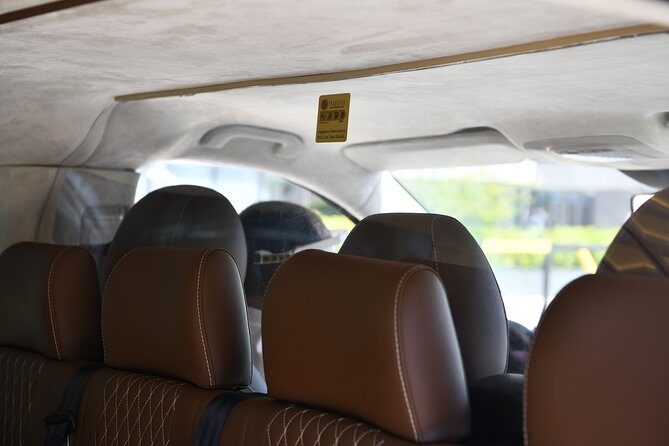
I love that the day is built around smart pacing: a comfortable air-conditioned vehicle plus a guide who explains the big architectural moves in plain English. I also love the value angle—lunch and admission are handled, so you’re not juggling tickets while you’re trying to take in the sites. One thing to consider: you’ll likely rack up serious walking—plan on around 10,000 steps.
In This Review
- Key highlights you’ll feel right away
- Why this Istanbul mosque day feels efficient
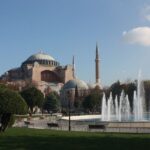
- Hagia Sophia Grand Mosque: the shape of empire, from church to mosque
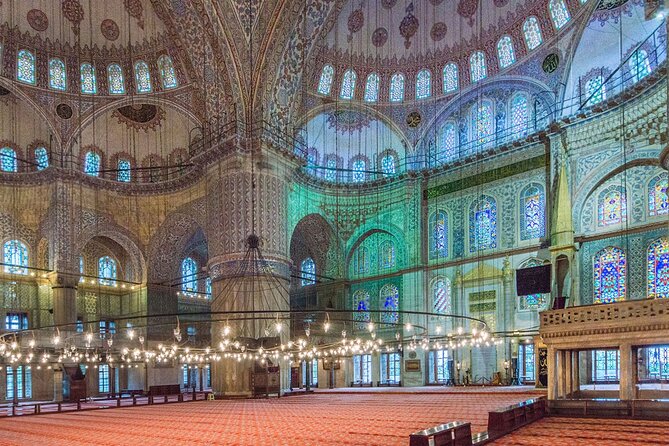
- Blue Mosque: the Iznik tiles and the six-minaret statement
- Hippodrome of Constantinople: where crowds once gathered for spectacle
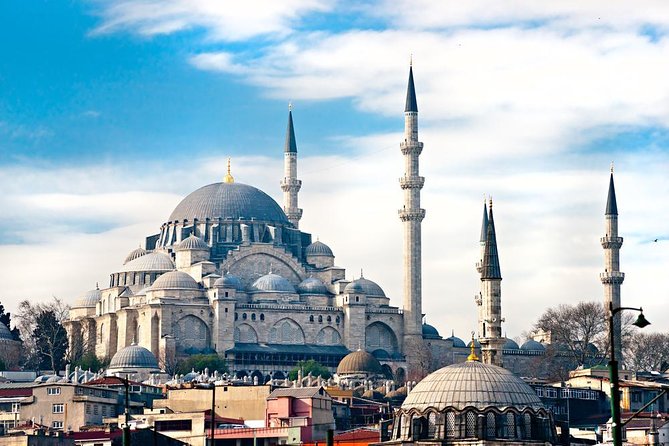
- Süleymaniye Mosque: Mimar Sinan’s huge central dome and imperial scale
- Fatih Mosque complex: the mausoleum on the hill, plus Ottoman institutions
- What you actually get for $83: value that’s more than the number
- Walking reality: how to prepare for the steps
- Best for whom: who will enjoy this tour most
- Should you book this Istanbul mosque tour?
- FAQ
- How long is the tour?
- What sites are included in the full-day tour?
- Is lunch included?
- Do I need to buy admission tickets?
- Is pickup available?
- What language is the guide?
- What is the group size limit?
- Is there free cancellation?
Key highlights you’ll feel right away
- A tight mosque lineup with Hagia Sophia, the Blue Mosque, Süleymaniye, and Fatih Mosque in one day
- Free admission included at each stop, so you can focus on viewing instead of paperwork
- Small-group size (max 8) for calmer questions and easier meeting points
- Comfort breaks that matter: pickup offered and an air-conditioned vehicle between sites
- Real architectural “spotting” tips (tiles, domes, minarets, and Ottoman complexes) you can use on the spot
- Lunch included so your day doesn’t collapse at mid-afternoon
Why this Istanbul mosque day feels efficient
Istanbul is the kind of city where one neighborhood can swallow your whole morning. This tour helps you avoid that trap by stitching together the key religious landmarks on the old peninsula into a single, logical route. You’re not just looking at buildings—you’re seeing how the same spaces were reshaped over centuries.
The format also helps. With a small group (up to 8), you’re less likely to get tangled up with a huge crowd at every gate. And because the tour includes an English-speaking guide, you’re not stuck translating in your head while you’re standing under domes and minarets that took generations to plan.
If you’re the type who likes to understand what you’re looking at—rather than just snapping pics—this is a great match. You’ll learn the “why” behind what you see, like how Hagia Sophia shifted roles after the Ottoman conquest, or why the Blue Mosque’s design was such a political statement.
You can also read our reviews of more tours and experiences in Istanbul.


Hagia Sophia Grand Mosque: the shape of empire, from church to mosque
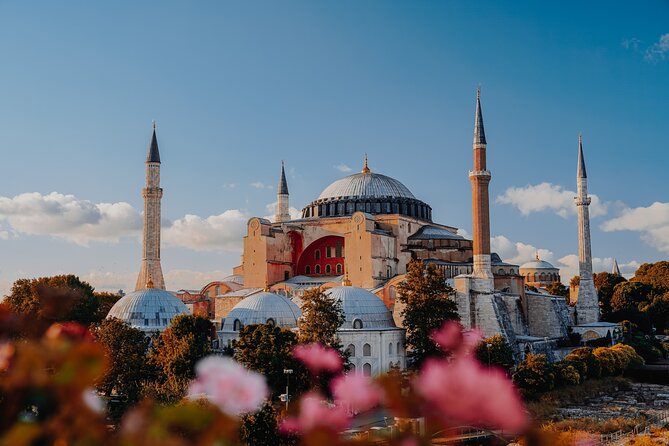
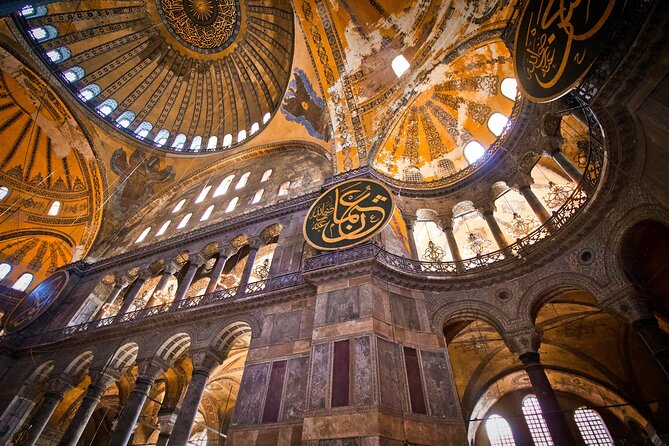
Hagia Sophia is one of those places where you feel the weight of time the second you walk in. This stop is given a full hour, which is just enough to take in the scale and then slow down for the details.
Here’s the quick context that makes it click:
- It was built as a church in 325.
- It was rebuilt in 537.
- After the conquest of Istanbul in 1453, Fatih Sultan Mehmet converted it into a mosque.
- It served as a museum starting in 1935, and then—after a decree dated July 10, 2020—it was formally declared a mosque again.
That timeline isn’t trivia. It’s the whole reason the building feels like it has layered personalities. You can stand in one spot and sense the old Christian structure and the later Ottoman use at the same time. The result is a kind of architectural conversation across time.
What I like most is that you don’t have to be a scholar to appreciate the scale. Even if you only catch a few key explanations from your guide, you still leave with a clearer mental map of what happened when—and why this place became so symbolic.
Practical tip: expect a mix of worship space and sightseeing areas. Dress and behavior matter. If you’re unsure, follow what you see locals doing and ask your guide when needed.
Blue Mosque: the Iznik tiles and the six-minaret statement
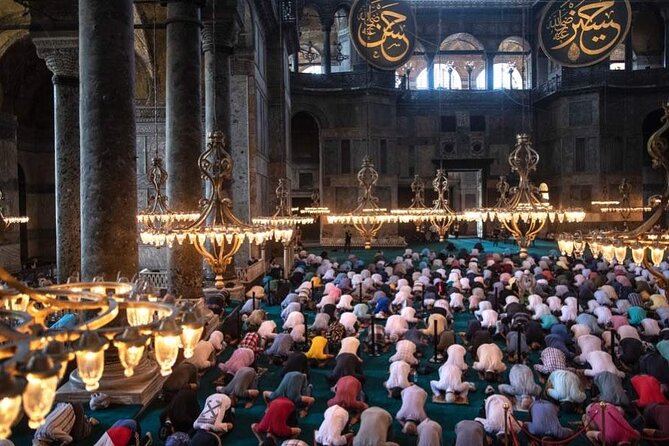
The Blue Mosque (Sultan Ahmet Mosque) is famous for a reason: it’s visually loud in the best way, and your eyes naturally get pulled upward. You get about 40 minutes here, which is a good length for both outside views and enough time inside to notice the tilework.
This is where the details really matter:
- The interior is lined with over 20,000 handmade Iznik ceramic tiles in more than 50 designs.
- The tile designs increase in flamboyance as you move upward.
- The mosque has multiple domes that create a strong upward gaze toward the center.
- It features six minarets, which was controversial at the time because the only other mosque claimed to have this number of minarets is in Mecca.
That “six minarets” detail is a helpful lens. It turns the mosque from a pretty landmark into a statement of Ottoman ambition. The design choice wasn’t random. It was meant to project confidence and power.
Inside, the dome effect is real. You’ll notice how the domes and arches guide your attention toward the center and make the space feel taller than it looks at first glance. If you’re the kind of person who normally walks through famous sites without really noticing how they’re constructed, this stop changes that. You’ll start spotting patterns—where the designs intensify, and how the light bounces off the ceramics.
One consideration: the Blue Mosque is one of the most photographed places in Istanbul. That can mean more waiting and more people. Your best strategy is to treat the inside like a short “slow session”: arrive ready to look, not just to pass through.
Hippodrome of Constantinople: where crowds once gathered for spectacle
The Hippodrome doesn’t have the same worship focus as the mosques, but it does add the missing “public life” layer. You get around 20 minutes here, which is just enough to understand the site without forcing it to be a full museum visit.
The Hippodrome of Constantinople was a public arena used for:
- chariot races
- gladiatorial games
- official ceremonies and celebrations
- protests and even torture to convicts
It functioned across Roman (203–330 CE), Byzantine (330–1453 CE), and Ottoman (1453–1922) periods. That’s what I like about this quick stop: it shows that the peninsula wasn’t only sacred spaces. It was also the stage for public power.
The key takeaway for you is perspective. When you move from the Hippodrome to the nearby religious landmarks, you start to notice how different types of institutions—imperial spectacle versus religious authority—played out in the same broader geography.
Practical tip: bring the mindset that this is a “sense-making stop.” You’re not coming here to spend an hour reading stone. You’re coming to understand context.
Süleymaniye Mosque: Mimar Sinan’s huge central dome and imperial scale
Süleymaniye Mosque is often the one that surprises people—in a good way. You’ll get about 30 minutes, and that time works because the design does most of the work for you: the space feels structured, large, and intentional.
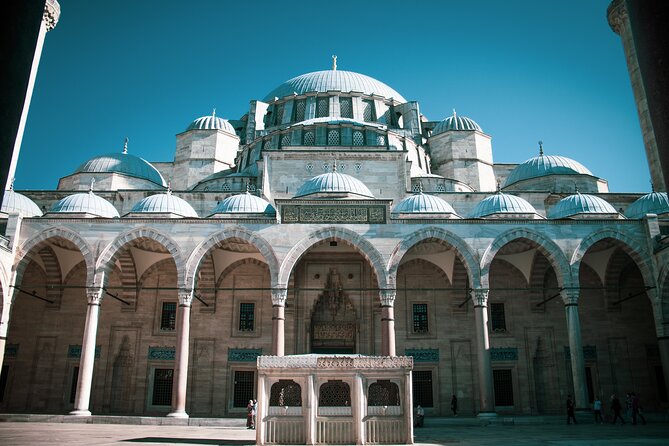
Süleymaniye is known as the Mosque of Sultan Suleyman the Magnificent. It was built between 1550 and 1557—over a seven-year period—by Mimar Sinan, who served as the chief architect of the Ottoman Empire. The central dome reaches 53 meters high, which is a standout figure for your mental “wow” scale.
Then there’s the setting: it’s one of the most renowned imperial mosques in Istanbul and sits in the historical old peninsula area. That matters because you don’t just see the mosque—you also feel it belongs to a whole Ottoman neighborhood of meaning.
Don’t miss the tombs next to the mosque. The complex is tied to Sultan Suleyman and his favorite wife Hurrem Sultan, whose tombs are located by the mosque. It’s the kind of detail that makes the visit feel less like sightseeing and more like stepping into a designed memorial space.
How to get the most out of your time: start with a quick wide look to register the scale, then circle your attention toward the dome and interior structure. Even without stopping for long, you’ll notice how everything funnels your focus inward.



Fatih Mosque complex: the mausoleum on the hill, plus Ottoman institutions
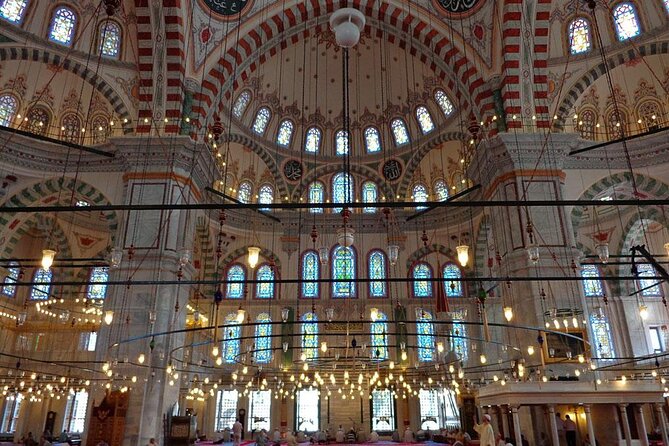
Next comes Fatih Mosque and Complex, tied directly to Fatih Sultan Mehmet—the Ottoman conqueror of Istanbul. This stop takes about 40 minutes, which is helpful because the mosque itself is only one part of what you’re meant to notice.
A few facts that make it meaningful:
- The mosque was constructed between 1462 and 1470.
- It stands on a hill, which gives it a strong presence.
- It’s the site of Fatih Sultan Mehmet’s mausoleum.
- The complex includes religious and civic institutions like medreses, hospices, baths, a hospital, a caravanserai, and a library.
That list is the reason this stop feels different. You’re not only seeing a worship building. You’re seeing how the Ottoman system blended religion, education, health, and commerce into one planned area.
If you’re hoping to understand how empires maintained influence, this is one of the best lenses. A mosque complex like this wasn’t only for prayer. It was also infrastructure for daily life.
Practical note: because you’re moving between multiple sites in a day, energy matters. Fatih is a great place to slow down and really look at the complex layout before you head to the last stretch.
What you actually get for $83: value that’s more than the number
At $83 per person for a roughly 7-hour guided day, this tour competes well—mostly because it removes friction.
You get:
- lunch
- an air-conditioned vehicle
- all fees and taxes
- an English-speaking guide
- a mobile ticket
- pickup offered
And importantly, admission tickets at each featured stop are listed as free within the tour structure, including Hagia Sophia, the Blue Mosque, Hippodrome, Süleymaniye, and Fatih Mosque.
Why that matters for you: famous Istanbul sights can turn into a pay-and-wait experience if you’re organizing everything yourself. Here, you’re paying once, then spending your energy on the actual viewing.
Also, the small-group limit (max 8) doesn’t sound like much on paper, but it changes the day. It’s easier to keep together, ask quick questions, and avoid the “lost in the crowd” feeling that can ruin a sightseeing plan.
Walking reality: how to prepare for the steps
Let’s be honest: mosque days can mean lots of feet. The practical expectation here is around 10,000 steps. Even if the tour includes a vehicle, you’re still on foot between stops, and these are spread out enough that your body will notice.
Plan for:
- comfortable, well-broken-in shoes
- light layers (you’re moving between indoor and outdoor areas)
- a quick stop rhythm that doesn’t rely on you feeling perfect every minute
The good news is your guide is part of the solution. The day is set up so you’re not scrambling on your own. Plus, you’ll get explanations that make the walking feel purposeful.
Best for whom: who will enjoy this tour most
This tour is a strong fit if you:
- want a guided day focused on major mosque landmarks rather than random stops
- like architectural context (tiles, domes, minarets, complex layouts)
- prefer small-group pacing over large-bus chaos
- want lunch handled and tickets managed as part of the package
It also works well for first-timers who want a guided “map” of the old peninsula without needing to build a route from scratch.
If you’re someone who hates walking or wants long lingering time at only one site, you might feel slightly rushed on a day like this. But if you’re willing to move steadily and you like variety, this schedule makes sense.
Should you book this Istanbul mosque tour?
I think it’s worth booking if you want the biggest hits in a single day, with a guide that helps you read what you’re looking at. The best reasons are practical: the small group, included lunch, and a route that covers the major mosque sites without forcing you into ticket math or complicated planning.
Book it if your priority is understanding Istanbul’s layers—Byzantine to Ottoman to modern religious life—through places like Hagia Sophia and the Blue Mosque. If you’re chasing a relaxed, slow pace or you’re easily exhausted by long walking days, consider whether a shorter or more flexible option would suit you better.
Either way, do show up with comfortable shoes and a curious mindset. This is the kind of tour where one good explanation can turn a famous building into something you actually remember.
FAQ
How long is the tour?
The tour lasts about 7 hours.
What sites are included in the full-day tour?
You’ll visit Hagia Sophia Grand Mosque, the Blue Mosque, the Hippodrome, Süleymaniye Mosque, and the Fatih Mosque and Complex.
Is lunch included?
Yes. Lunch is included.
Do I need to buy admission tickets?
No. Admission tickets for the listed stops are included as free as part of the tour.
Is pickup available?
Pickup is offered.
What language is the guide?
The tour includes an English-speaking guide.
What is the group size limit?
The maximum group size is 8 travelers.
Is there free cancellation?
Yes, free cancellation is available. You can cancel up to 24 hours in advance for a full refund.