Istanbul changes fast from step to step. This tour strings together Galata Tower-area landmarks, stair-soaked neighborhoods, and church visits, then finishes with a classic market stop at Egyptian Bazaar. You also get story-heavy stops like the Ecumenical Patriarchate and Balat’s UNESCO-protected streets, with enough variety to keep your brain from getting bored.
Two things I really like: the flow is smart (short museum and architecture breaks, then practical movement by ferry), and the guide support matters. You get an English-speaking guide plus planned stops where the group can make sense of what you’re seeing, including donations for churches and time for photos. One thing to plan for: Galata Tower entry isn’t included, so you’ll want to add that ticket on your own before the view part of the day.
In This Review
- Key Highlights Worth Your Time
- Galata Tower and Kamondo Stairs: Start With the City’s Fire-Tower Story
- SALT Galata and the Karaköy Ferry Jump: A Culture Break That Doesn’t Feel Stuffy
- Patriarchate of Constantinople to Balat: From Big Institutions to Small Streets
- Balat Stairways, the Bulgarian Iron Church, and the UNESCO Street Feel
- Golden Horn Views and Egyptian Bazaar: Finish With Water, Then Snacks
- Price and Timing: Is $105 Good Value for This Route?
- Who This Tour Fits Best
- Should You Book Hidden Gems of the Istanbul: From Galata Tower to Balat?
- FAQ
- Is the Galata Tower entry ticket included?
- How long is the tour?
- What’s included with the tour besides the guide?
- What language is the tour offered in?
- Where do I meet the guide, and where does the tour end?
- Does the tour include museum or building entrance fees besides Galata Tower?
Key Highlights Worth Your Time

- Galata Tower as a former fire watch: It wasn’t just built to be seen; it was used for long-term fire watching and is tied to Istanbul’s skyline story.
- Kamondo Stairs in Art Nouveau style: A quick stop that feels like a mini time machine from the 1850s.
- SALT Galata’s research and exhibition spaces: You’re not just walking past a building; you get structured time inside.
- A ferry ride that actually changes the scenery: Instead of only crossing streets, you cross water via Karaköy.
- Balat’s layered neighborhood identity: Byzantine heritage, a long Jewish presence, and Sephardic history show up in the streets and buildings.
- Egyptian Bazaar with a built-in food moment: Dessert and drinks are included near the end, so you don’t have to hunt for a snack.
Galata Tower and Kamondo Stairs: Start With the City’s Fire-Tower Story
This day begins in Beyoğlu at Tünel Meydanı Sok., a good launch point because you’re close to public transit and the walking starts right away. The first big moment is Galata Tower (Galata Kulesi), where the time you spend feels “classic Istanbul” in the best way. You’ll learn it’s considered among the oldest towers in the world, and it appears on the UNESCO World Heritage Temporary List (2013). That matters because it signals serious heritage value, not just a tourist landmark.
Here’s the angle that makes it more interesting than a simple photo stop: the tower was used as a long-term fire watchtower, and it was known as the Galata Fire Tower. So when you’re up near the tower view (and even when you’re still on the ground area), you’re thinking like an observer watching for smoke and trouble. The structure becomes a piece of how the city kept itself safe.
You’ll have about 45 minutes, but the key practical detail is that entry ticket for Galata Tower isn’t included. If you want the actual climb/view experience, plan to buy that separately. If you’re the type who hates adding errands, this is your only real “heads up” for the tour.
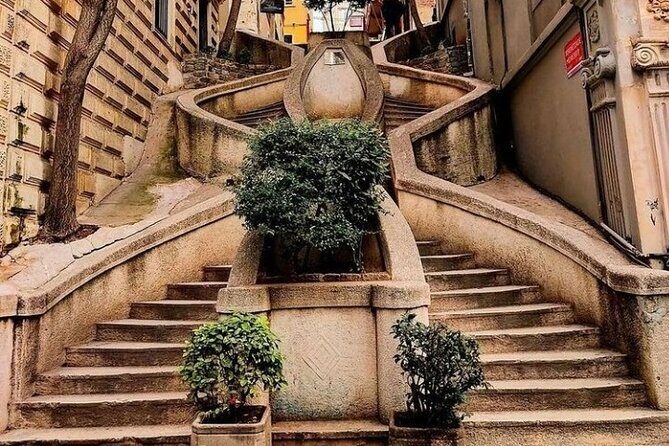
Then you walk to Kamondo Stairs, a short stop but one that pays off visually. These stairs are in Art Nouveau style and were completed in the 1850s, built by the House of Camondo. Fifteen minutes is enough to take photos, pause, and actually notice the design, instead of rushing past it. If your Istanbul day usually turns into “look, photo, move,” this stair stop is built for noticing.
You can also read our reviews of more tours and experiences in Istanbul.



SALT Galata and the Karaköy Ferry Jump: A Culture Break That Doesn’t Feel Stuffy
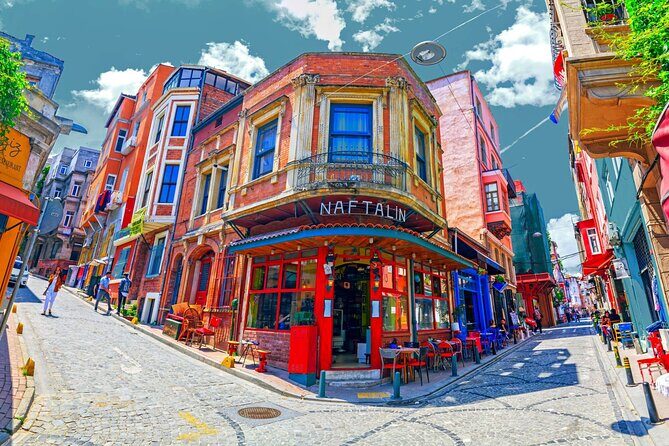
After Galata and the stairs, you get a change of pace with SALT Galata. This stop gives you about 20 minutes, which works well because it’s long enough to orient yourself, but short enough that you don’t lose the rest of the day to museum time. SALT Galata includes multiple spaces tied to research and public events: the Salt Research Gregory Michael Kiez Hall, the Salt Research Ferit F. Şahenk Hall (with researcher use by registration), and an auditorium for talks and conferences.
There’s also a permanent exhibition that focuses on the institution’s 145-year history, using documents connected to the Ottoman Bank Museum Collection. That kind of detail helps you understand why this building exists and why it’s part of the city’s modern identity, not only its Ottoman past.
One more smart piece: the tour doesn’t just keep you on land. At Karaköy Rihtim, your group takes a ferry. You’ll have about 20 minutes here, and for most people this is a relief. Istanbul walking can stack up quickly, and a ferry crossing breaks it up while also giving you new lines of sight.
Patriarchate of Constantinople to Balat: From Big Institutions to Small Streets
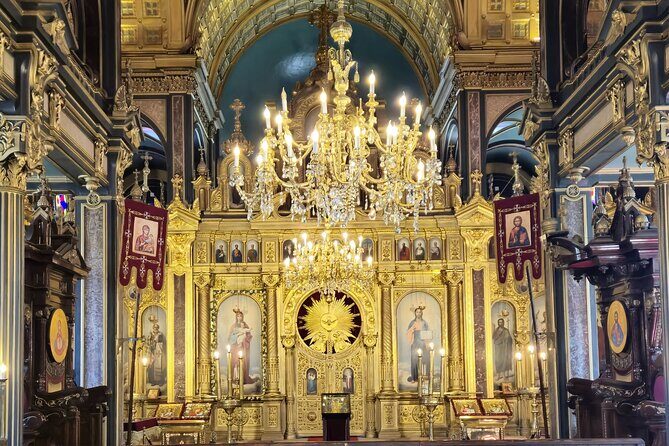
Next is a stop that feels weighty and calm at the same time: the Patriarchate of Constantinople. You’ll spend around 30 minutes, and you’ll learn how it fits into the Eastern Orthodox Church structure. The Ecumenical Patriarchate of Constantinople is one of the autocephalous churches (often described as fifteen to seventeen) and it’s headed by the Ecumenical Patriarch of Constantinople.
This stop can be a great “context builder” for the day. Balat later brings you colorful neighborhood streets, but this one reminds you Istanbul isn’t only visual variety. It’s religious and institutional history, too. Even if you’re not a church-history person, the guided explanation helps you place the building in a bigger map of beliefs and leadership.
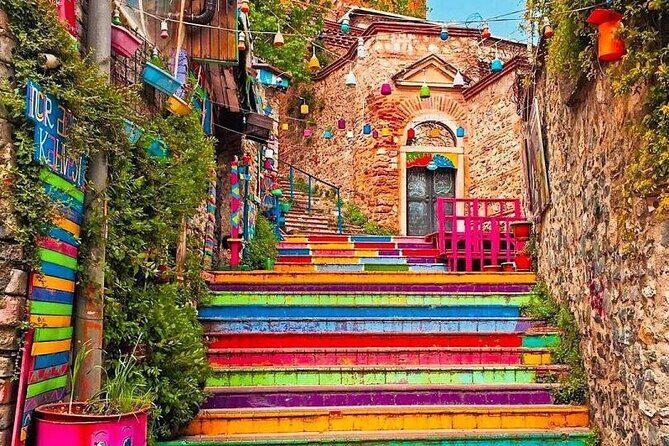
Then you shift into Balat’s world of stairways and colors. First, there are the Balat colored stairs for about 15 minutes. That quick segment is designed for a smooth transition—enough time to feel the neighborhood vibe without turning the day into an all-day uphill effort.
Balat Stairways, the Bulgarian Iron Church, and the UNESCO Street Feel
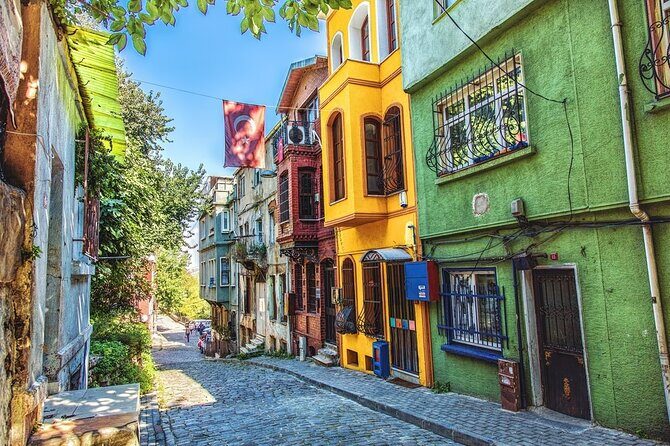
Balat is where the tour starts to feel like a walking storybook, but in a grounded, specific way. You’ll spend about 20 minutes at the “Colorful Stairs” area and learn how Balat sits on multiple historical layers. It has Byzantine heritage, it’s also known as an old Jewish neighborhood with a still-large Jewish population, and Sephardim (people exiled from Spain in the 15th century) settled here. So you’re not just seeing old buildings; you’re seeing a living record of migration and community.
The UNESCO angle is practical here: parts of Balat are protected as a UNESCO World Heritage Site, and some buildings have been restored. That explains why you might see buildings with a more careful look side-by-side with older structures.
The tour also highlights something that’s easy to miss when you’re only chasing color: fires shaped the neighborhood’s building style. Many wooden structures burned, so masonry became the preferred choice. You’ll also learn how the buildings are usually not single-story—houses often appear in clusters, built in twos or threes. That detail helps you understand the “tight” feeling of the streets, not just the look of them.
Next comes Saint Stephen’s Bulgarian Orthodox Church, also known as the Bulgarian Iron Church, with about 25 minutes. This is one of those stops that’s different from the usual “stand in front of a historic building.” It’s famous for being made with prefabricated cast iron elements in a Neo-Byzantine style. You’re seeing how technology and religious architecture intersected for a minority community in the city.
The church belongs to the Bulgarian Christian minority, and having that context makes it feel more respectful, not just “cool architecture.” If you like understanding why a place exists—not only how it looks—this is a highlight.
One more practical thought for Balat: stair areas are part of the design of the day. Wear shoes you trust. You don’t need hiking boots, but you do need something with decent grip. A camera strap can also be your friend, because you’ll want both hands free.
Golden Horn Views and Egyptian Bazaar: Finish With Water, Then Snacks
After Balat, the route shifts to an open-sky viewpoint at the Golden Horn. You’ll spend about 20 minutes here watching the European and Anatolian sides of Istanbul from the estuary. This is one of the best “reset moments” on a walking-heavy day, because you get a wide perspective after lots of buildings and close streets.
It also helps you connect the dots. Golden Horn is like a visual bridge between neighborhoods. Even if you don’t know the city by street name, the water gives you an instant sense of direction and scale.
Then you end at the Egyptian Bazaar (with the tour finishing near Spicy Bazaar). You’ll have about 30 minutes, and this stop is more than shopping theater. It’s one of the oldest bazaars in Istanbul, and the best part is that you get time to try something without scrambling for a “good enough” snack. The tour includes free tasting of Turkish dessert and drinks.
That included food moment is a smart value play. Markets can be overwhelming, and having a guide-managed time window means you can taste, then choose what (if anything) you want to buy. If you’re traveling with picky eaters, this helps too: dessert and drinks tend to be crowd-friendly.



Price and Timing: Is $105 Good Value for This Route?

This is priced at $105 per person for about 4 to 6 hours. On paper, that sounds simple. In practice, you’re paying for three things that add real value: a professional English-speaking guide, planned time inside key sites (like SALT Galata and the Patriarchate), and transportation by ferry.
Also included: church donations, plus free tasting of drinks and dessert near the end. When those elements are bundled, you avoid the common Istanbul problem where you pay for a tour, then still spend the day paying extra for each separate transfer or major “must-do” stop.
The one cost-like catch is the Galata Tower entry ticket, which is not included. If you want the tower’s view experience, budget for that separately.
The other timing reality is walking plus stairs. The itinerary keeps stops fairly tight—15 to 30 minutes most of the time—so you’re not stuck in one location for hours. But it is a day with steps, so plan for comfort over fashion.
Who This Tour Fits Best
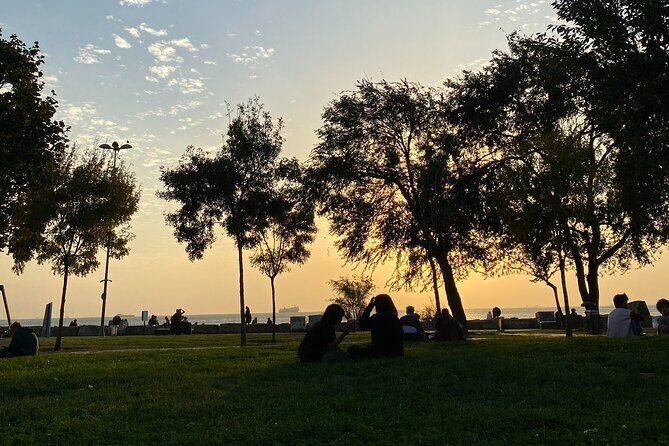
I think this works best if you want Istanbul that feels like neighborhoods, not just monuments. You’ll enjoy it if you like architecture, historical institutions, and the way one community history connects to another. It also suits you if you’re short on time and want a planned route that doesn’t require constant navigation.
If you’re the type who hates group pacing, this is a private tour for your group only, which helps. If you’re traveling with kids, it could work, but you’ll likely need to make shoes-and-pauses your plan.
If mobility is an issue, be cautious with the stair-focused stops like Kamondo Stairs and the Balat stair areas. The tour notes that most travelers can participate, but the physical layout still matters.
Should You Book Hidden Gems of the Istanbul: From Galata Tower to Balat?
I’d book it if you want a guided day that mixes views, culture, churches, and neighborhood streets, with the day ending in a market where dessert is part of the plan. The ferry ride and the structured stops at places like SALT Galata and the Patriarchate add value beyond a photo-walk. Plus, the overall pacing keeps you moving without turning the experience into a sprint.
Skip it (or plan differently) only if you strongly dislike stairs or you know you won’t do the Galata Tower entry. Since the tower ticket is extra, make sure it’s truly on your list.
If you do book, choose comfortable shoes and treat the stair areas like the main event, not detours. Istanbul rewards that mindset.
FAQ
Is the Galata Tower entry ticket included?
No. Galata Tower entry ticket is not included, so you’ll need to arrange that separately if you want to enter.
How long is the tour?
It runs for about 4 to 6 hours.
What’s included with the tour besides the guide?
The tour includes transportation by ferry, donations for churches, and a free tasting of drinks and Turkish dessert.
What language is the tour offered in?
The tour is offered in English.
Where do I meet the guide, and where does the tour end?
You start at Tünel Meydanı Sok. (Şahkulu), Beyoğlu and end at the Egyptian Bazaar (Rüstem Paşa area), near Spicy Bazaar.
Does the tour include museum or building entrance fees besides Galata Tower?
Yes for some stops. Admission tickets are included for several listed sites during the route, but Galata Tower is the one clearly marked as not included.