REVIEW · ISTANBUL
Istanbul: Basilica Cistern Skip-the-Line Entry & Audio Guide
Book on GetYourGuide →Operated by Istanbul Tourist Pass® · Bookable on GetYourGuide
A cave of water myths and math. The Basilica Cistern is one of Istanbul’s strangest places: a cathedral-size underground reservoir built to keep the city supplied. With skip-the-line entry plus a guided walkthrough (and an audio guide), you get the key stories fast—especially the Medusa Heads—without burning time in queues.
What I love most is how the guide connects the site to real details like the aqueduct routes and the cistern’s 4th-century origins, and how you’re given a short, focused plan rather than wandering in the dark. I also like the practical extras, like the limited-time eSIM so you can message and map while you explore Sultanahmet. One thing to consider: even with the ticket line skipped, there’s still mandatory security before you enter, and the cistern can get noisy if a school group is nearby.
If you’re short on time, this is a strong “one hit” stop. The visit is timed for about 1 to 75 minutes, which means you’ll get a guided taste of the cistern’s underground world and then have time to look around and take photos. The highlight list also nods to Istanbul’s wider setting, including Hagia Irene and views tied to the Golden Horn and Bosphorus. The potential drawback is that parts of the site can be under restoration, and some modern installations may feel a bit out of place for this setting.
In This Review
- Key things that make this Basilica Cistern visit work
- What you’re really doing: a fast, guided “cistern moment” in Istanbul
- Entering the Basilica Cistern: skip the long line, but not security
- The 52 steps down: why the entrance experience matters
- Justinian’s underground water system: the “math and myth” part
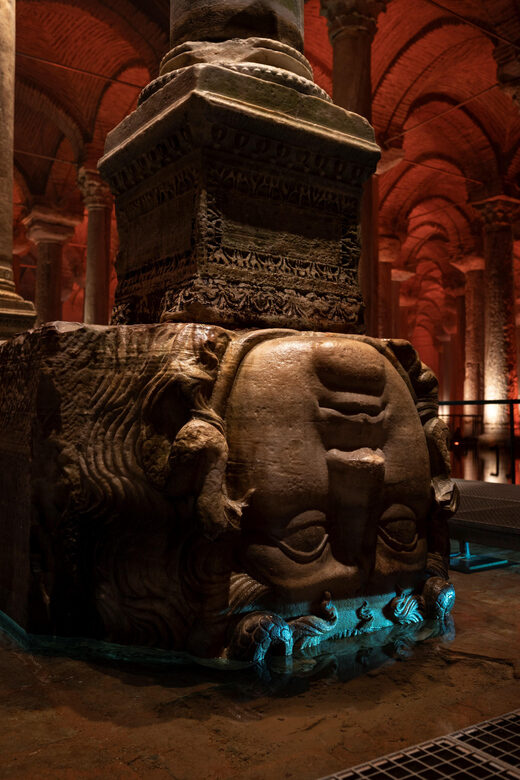
- Medusa Heads explained: what you’re seeing and why it catches attention
- Spot the James Bond scene: From Russia with Love in real stone
- Hagia Irene and views tied to the Golden Horn and Bosphorus
- What it feels like inside: light, sound, and restoration issues
- Duration and pacing: 1 hour to 75 minutes done the smart way
- Price reality: Is $54 good value for a skip-the-line cistern tour?
- Who should book this Basilica Cistern experience?
- Should you book the Basilica Cistern skip-the-line + audio guide?
- FAQ
- How long is the Basilica Cistern skip-the-line experience?
- Does this include skip-the-line entry to the Basilica Cistern?
- Is an audio guide included, and is it English?
- Is an eSIM included?
- What do I need to bring?
- Can I skip the security line?
- Where does the tour start and end?
Key things that make this Basilica Cistern visit work
- Skip-the-ticket-line entry so you can get inside sooner and spend more time looking around
- A real guide story that turns Medusa Heads and Greek mythology into something you can actually picture
- Justinian-era water engineering, explained with practical details like aqueduct lengths and water capacity
- James Bond moment, where you can recognize a famous scene from From Russia with Love
- Cooling underground escape, often a welcome break from Istanbul heat and humidity
- Free eSIM (limited time) so you can stay connected while you roam Istanbul
What you’re really doing: a fast, guided “cistern moment” in Istanbul
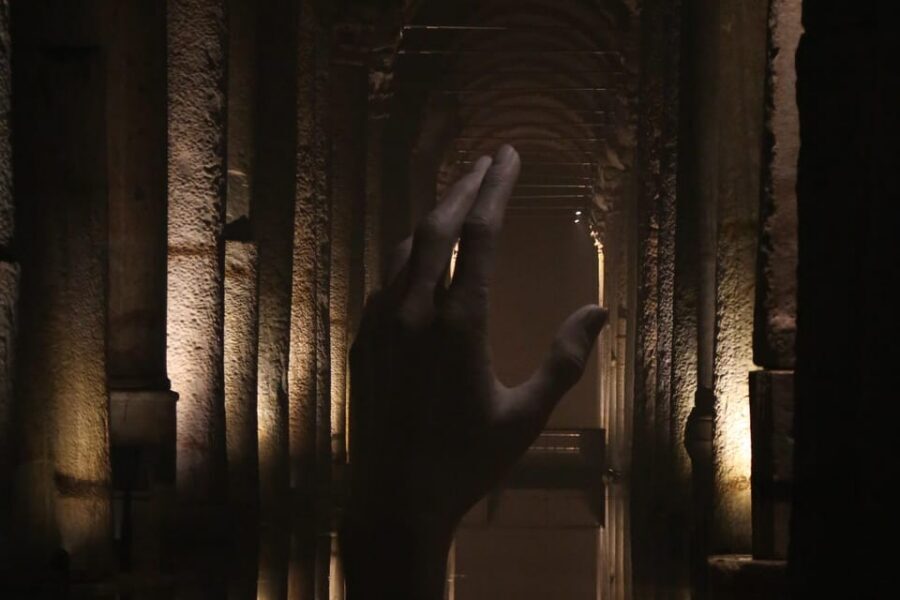
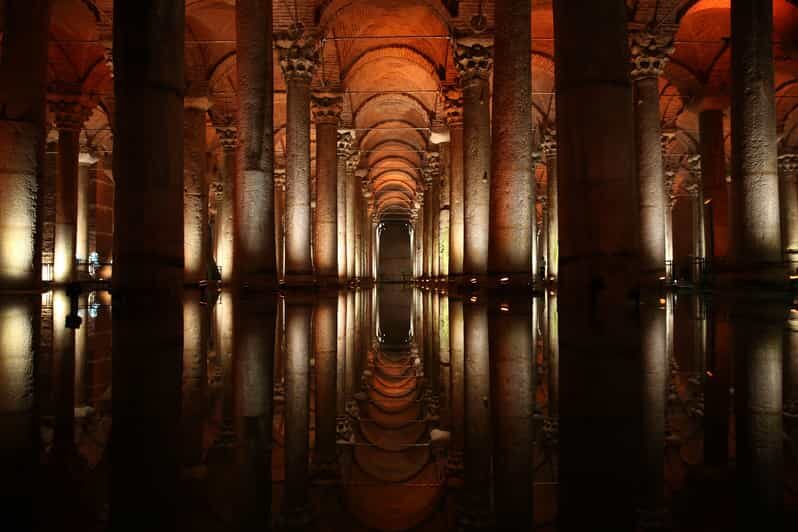
The Basilica Cistern is famous for its columns and cinematic lighting. But what makes it special is the purpose hiding under the drama. This wasn’t a decorative underground hall. It was built as infrastructure—an emergency-proof water storage system for the Great Palace in Byzantine times.
With this experience, you get a guided setup that helps you read what you’re seeing. A good guide doesn’t just point at columns; they tell you how the whole system worked and why certain details matter. The highlights here focus on two big attention magnets: the Medusa Heads and a popular James Bond reference from From Russia with Love. If you’re the type who likes museums that make you feel smarter in 60 minutes, this delivers.
And the timing matters. A lot of Basilica Cistern visits feel like “stand in line, walk through, leave.” Here, the goal is to reduce waiting and keep you moving, while still giving you room to explore at your own pace once the guided portion ends.
You can also read our reviews of more guided tours in Istanbul



Entering the Basilica Cistern: skip the long line, but not security
You’ll meet your group at a meeting point that can vary by option. There’s no hotel pickup, so plan to get yourself there on time. The good news: the ticketing approach is designed for speed.
Here’s the practical reality to plan around:
- You’ll receive Entry Ticket QR Codes via a separate email linked to Istanbul Tourist Pass.
- You cannot skip security lines, even if you skip the entry line.
- There may still be a line at the entrance, and it’s mandatory for all visitors.
So, think of this as skip-the-line entry, not a VIP pass that bypasses everything. You still want to arrive a little early, especially during busy hours, because security time can vary.
Tip I’d follow: pick an earlier start time if you want a calmer experience. One of the strongest review patterns was getting in before the crowds, which makes photos easier and keeps the guide’s pacing smooth.
The 52 steps down: why the entrance experience matters
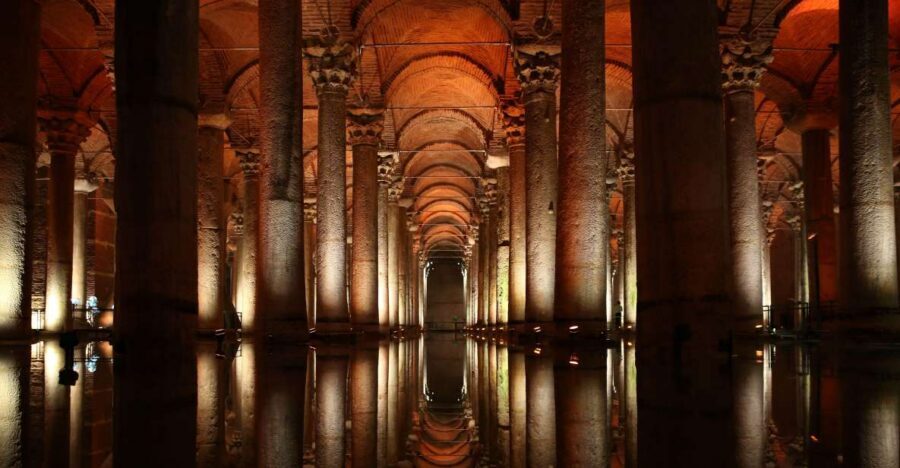
Once you’re through the mandatory security, you’ll descend the fifty-two stone steps into the cistern. That step-down isn’t just a gimmick. It’s part of how you understand the space.
The cistern is surrounded by a firebrick wall about 4 meters thick, coated with waterproofing mortar. Translation: this was engineered to hold water reliably, not just impress visitors.
And because you’re going underground, the atmosphere changes fast. Reviews commonly call out that it can feel surprisingly cool—a real relief when Istanbul is hot and humid. If you go in summer, this is one of the easier places to take a break without sacrificing “worth it” factor.
Justinian’s underground water system: the “math and myth” part
This is where the guided piece shines. The Basilica Cistern was built in the 4th century, then enlarged in 532 AD under Emperor Justinian I. It stored up to 80,000 cubic meters of water, delivered through about 20 kilometers of aqueducts coming from the Black Sea region.
Your guide should help you connect several key details, such as:
- How water was delivered through 971 meters of Valens Aqueduct
- How it was supplemented by 115 meters of Mağlova Aqueduct
- The water route starting at the Eğrikapı Water Distribution Center in the Belgrade Forest
If you’re used to tourist sites that only show you the final product, this feels different. You’re seeing a working system that existed long before modern plumbing. It’s the kind of story that sticks because it’s specific: you’re not just hearing “they built aqueducts,” you’re hearing lengths, capacity, and purpose.
You’ll also likely get the big picture of why the cistern was tied to palace life—water storage was everything in Byzantine urban planning. When you understand the “why,” the “wow” becomes easier to appreciate without needing extra imagination.
Medusa Heads explained: what you’re seeing and why it catches attention
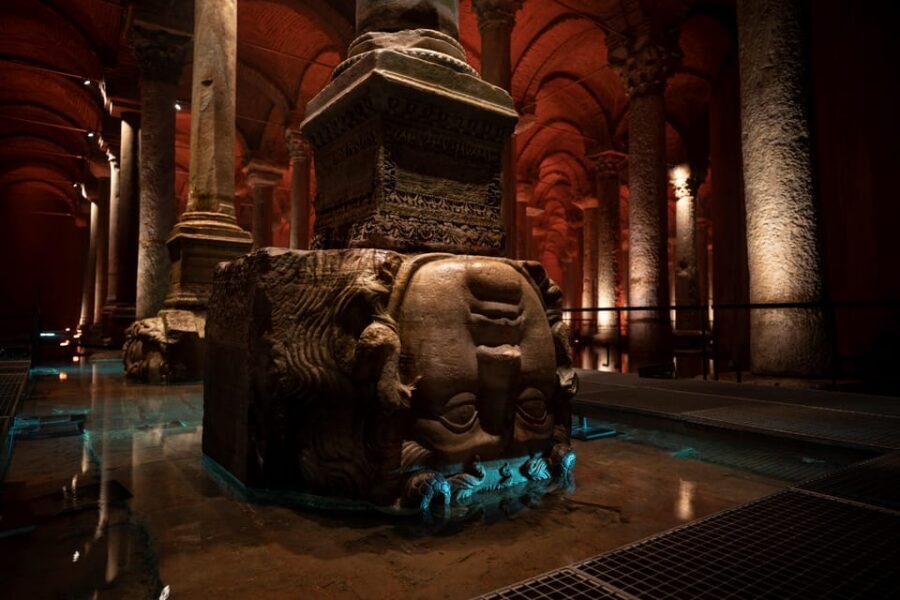
The Medusa Heads are the star detail that most people come for, but many first-time visitors don’t know what they’re looking at beyond the myth name.
In the guidance here, you should hear the Greek mythology connection as well as what makes those carvings so memorable. The guide storytelling is built around turning a recognizable face motif into a narrative you can place in context—myth, art, and reuse in later structures.
This is also one reason to choose a guided format over a self-guided wander. Without explanation, you’ll see the shapes. With explanation, you understand why the scene is still talked about.
Photo tip: the Medusa Heads are in a spot where lighting can be tricky. If the guide points you toward the better angles, you’ll save time instead of guessing.
You can also read our reviews of more tours and experiences in Istanbul


Spot the James Bond scene: From Russia with Love in real stone
The highlight list includes a fun cinematic angle: recognizing a scene from From Russia with Love. This matters more than you’d think.
When you already have a mental image from a film, the cistern’s columns and perspectives feel less random. You start noticing alignments—how the architecture can frame story-like shots. It turns the visit from “cool underground” into “I know what they were going for.”
If you’re a film fan, this is the easiest way to make the visit feel personal. If you’re not, it still helps you orient yourself visually, which makes the architecture easier to follow.
Hagia Irene and views tied to the Golden Horn and Bosphorus
This isn’t only an underground stop. The experience is marketed to connect the cistern to the wider Sultanahmet-area context, including Hagia Irene (called out as the second biggest church of Istanbul in the highlight list) and views tied to the Golden Horn and Bosphorus.
Because the data here doesn’t spell out exact photo-stop locations and times, I’ll keep expectations honest: you should treat this as a narration-and-setting kind of addition rather than a second major paid attraction.
Still, that context helps. The Basilica Cistern makes more sense when you understand it as part of the city’s historical spine—religious landmarks, viewpoints, and the broader geography that makes Istanbul such a layered place.
What it feels like inside: light, sound, and restoration issues
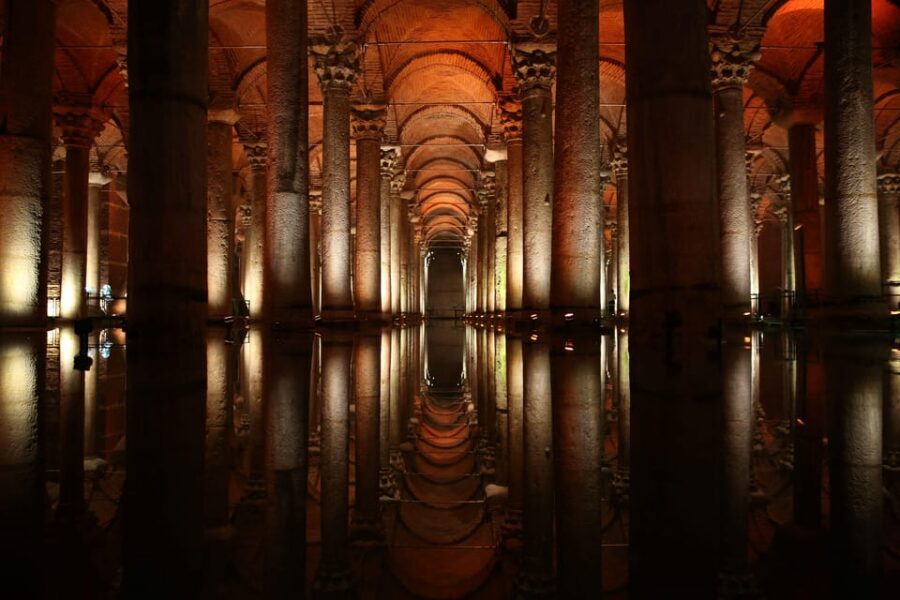
Even with skip-the-line entry, the Basilica Cistern has a few factors that can change your experience:
- It can get noisy, especially with school groups behind you. One guide approach mentioned was adjusting to noise so the storytelling stayed understandable.
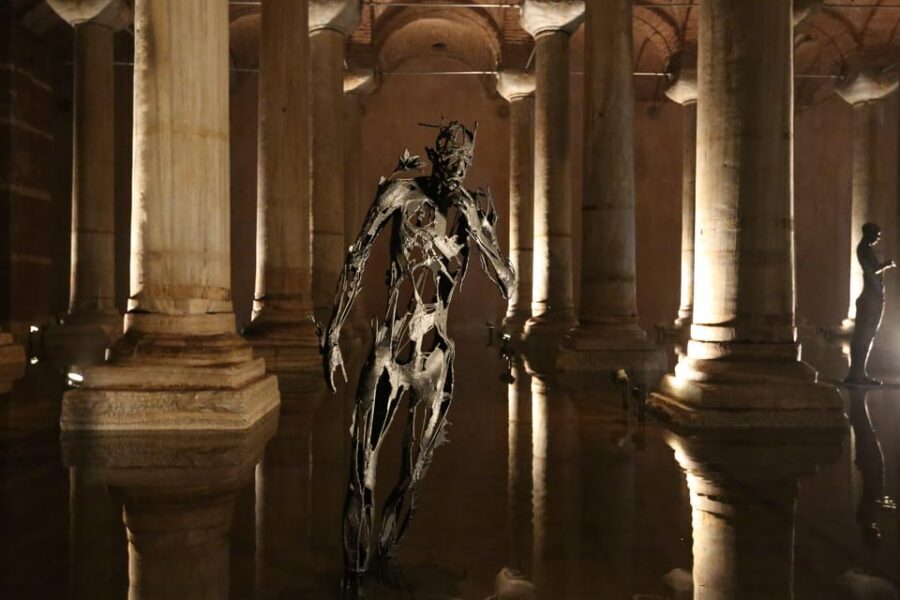
- Some visitors noted modern sculptures or installations that can feel slightly out of place depending on what’s on display at the time.
- There may be restoration/renovation work, with parts of the sight under repair.
So, don’t expect a pristine “museum vacuum.” Expect a real working site that also functions as a major attraction.
Practical approach: if sound bothers you, consider taking your guided portion seriously and then switching to quieter, slower exploration immediately after. That’s when you’ll get the best photos and the clearest sense of scale.
Duration and pacing: 1 hour to 75 minutes done the smart way
The guided portion is designed to fit into a 1 hour to 75 minutes window. That pacing is ideal if you have a packed day—Sultanahmet sites are close, but they’re not short.
What you get is a structured “first look” that covers the big architecture, the purpose, and the standout stories (Medusa, Bond, and the water system). After that, you typically have time to explore and take pictures on your own.
If you want to linger, you can usually do that during your free time. But because this is a timed group visit, don’t count on an all-day hangout.
Price reality: Is $54 good value for a skip-the-line cistern tour?
At $54 per person, this is not the cheapest way to see the Basilica Cistern. But it can be good value if you care about three things:
- Time saved from the ticket line
- A guide-led explanation of the cistern’s engineering and key stories
- Added extras, like the audio guide and the limited-time eSIM
If you’re visiting during peak hours, skip-the-line access can be worth a lot just in stress reduction. And the guide portion is what turns the cistern from “big underground room” into “understandable system with stories.”
It’s less great value if you prefer totally independent pacing and you don’t need help interpreting what you’re looking at. In that case, you might find yourself paying for narration you’d rather read or watch later.
For most people doing a first-time Istanbul overview, the price is easier to justify because the site is one where good interpretation really improves your experience.
Who should book this Basilica Cistern experience?
This works especially well if you:
- Want a short, high-impact Istanbul stop
- Like tours that connect myth to real architecture
- Prefer a group format with time savings
- Appreciate small “extras” like an audio guide and an eSIM option
It may not be ideal if you:
- Hate crowds and need quiet at all costs (noise can happen)
- Plan to visit only for photos and don’t care about explanations
- Are sensitive to construction visuals, since some areas can be under restoration
Should you book the Basilica Cistern skip-the-line + audio guide?
I’d book it if you want the smart version of the Basilica Cistern: skip the ticket stress, get the key stories, then look around. The combination of guided context (Medusa, Bond, and how the water system worked) plus practical extras like the eSIM makes this feel like more than just an admission ticket.
I’d hesitate if you’re extremely picky about sound, construction, or modern installations. In that case, you might prefer a more flexible approach and go at a calmer time slot.
Bottom line: for most first-timers, this is a clean way to hit a must-see site without wasting your Istanbul day standing in lines.
FAQ
How long is the Basilica Cistern skip-the-line experience?
It runs about 1 hour to 75 minutes, depending on the start time you choose.
Does this include skip-the-line entry to the Basilica Cistern?
Yes. You get a skip-the-line entry ticket for the Basilica Cistern if that option is selected.
Is an audio guide included, and is it English?
An audio guide is included, and the English option is mentioned as available.
Is an eSIM included?
Yes, internet with an eSIM is included for a limited time.
What do I need to bring?
Bring your passport or ID card.
Can I skip the security line?
No. Even with skip-the-line entry, security lines are mandatory for all visitors.
Where does the tour start and end?
The meeting point can vary by option, and the activity ends back at the meeting point.