REVIEW · ISTANBUL
Istanbul: Bosphorus and Golden Horn Cruise with Audio Guide
Book on Viator →Operated by Bosporus Cruise · Bookable on Viator
Istanbul’s skyline looks different from the water. This Bosphorus and Golden Horn cruise strings together the city’s biggest sights into one relaxing ride, with an English audio guide and a route that shows you both Europe and Asia. I especially like how quickly you get those classic “city between two continents” moments as you pass the Bosphorus Strait and its landmark bridges.
I also like that it includes several high-drama stops in one go, from Dolmabahçe Palace vibes to the romantic silhouette of Maiden’s Tower. The main drawback to consider is that the experience can get crowded and the audio can be uneven on some boats, so you’ll want to plan for logistics and sound quality before you settle in.
In This Review
- Key things to know before you board
- Why this Bosphorus cruise is a smart first-time Istanbul move
- Getting to the meeting point without losing your spot
- Bosphorus Strait and Golden Horn: the view that explains the city
- Galata Tower and Dolmabahçe Palace from the waterline
- Ortaköy and the Bosphorus bridges: the fun, lived-in stretch
- Rumeli and Anatolian Fortresses: defense architecture, now with café energy
- Beylerbeyi Palace and Maiden’s Tower: the Asian-side highlights
- Audio guide reality: what to do if sound quality is spotty
- Weather, timing, and what to wear on the Bosphorus wind
- Price and value: what you’re really paying for
- Group size, comfort, and why logistics matter on a boat
- The sales and entertainment factor: decide your tolerance level
- Should you book this Bosphorus and Golden Horn cruise?
- FAQ
- How long is the Bosphorus and Golden Horn cruise?
- What does the tour cost?
- Is there an audio guide, and is it in English?
- Where do I meet for the cruise?
- Do I return to the meeting point at the end?
- How big is the group on this tour?
- What ticket type do I receive?
- When should I book?
- Is the cruise dependent on weather?
- Can I cancel for a full refund?
Key things to know before you board
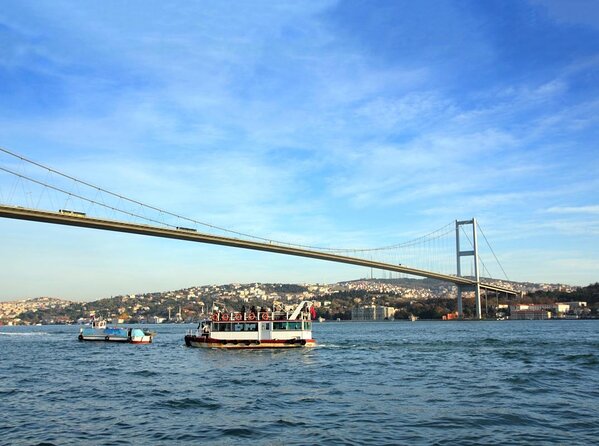
- One cruise, two continents: You’ll see the Bosphorus divide Europe and Asia, plus the bridges that connect them.
- A long list of iconic sights: Galata Tower, Dolmabahçe Palace, Ortaköy, the fortress areas, Beylerbeyi Palace, and Maiden’s Tower.
- English audio guide, delivered onboard: It’s not the quiet, personal setup some people expect, so volume clarity can matter.
- Up to 100 people: Expect a busier, more “tour-group” feel than a private boat.
- Wind and cold can sneak up: Even in shoulder seasons, the Bosphorus breeze can make it feel chilly fast.
- Selling and photo requests are part of the vibe: If you hate that, keep your expectations realistic.
Why this Bosphorus cruise is a smart first-time Istanbul move
If you want a quick hit of Istanbul’s most famous waterfront scenes, this is the kind of tour that makes sense. The route focuses on the Bosphorus Strait and the Golden Horn, which means you get the city’s best views without spending the whole day on foot.
You’ll also get a strong sense of Istanbul’s geography. The Bosphorus connects Europe and Asia, and the Golden Horn (Haliç) is the big natural harbor that frames the city’s European side. It’s a lot of “wow” for about two hours—the sweet spot for a sightseeing day that doesn’t want to turn into a marathon.
You can also read our reviews of more tours and experiences in Istanbul.


Getting to the meeting point without losing your spot
Your meeting point is listed at Cankurtaran, Ayasofya Meydanı No:2 (near Fatih). In practice, the area is close to major historic sights, and that’s good news—you can line it up with other Sultanahmet plans.
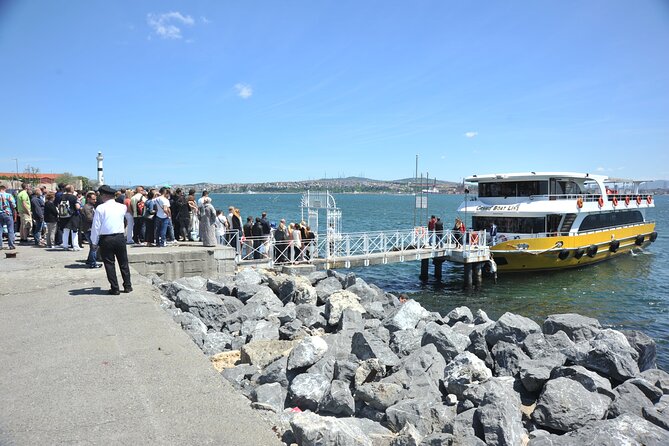
The caution is simple: boats with big groups need clean timing. Some departures can involve a longer trek to the pier area, and when the group is large, it can feel chaotic for a few minutes. I’d treat this like a meet-at-the-platform situation: arrive early, keep your ticket handy on your phone, and don’t try to join at the last second.
Bosphorus Strait and Golden Horn: the view that explains the city
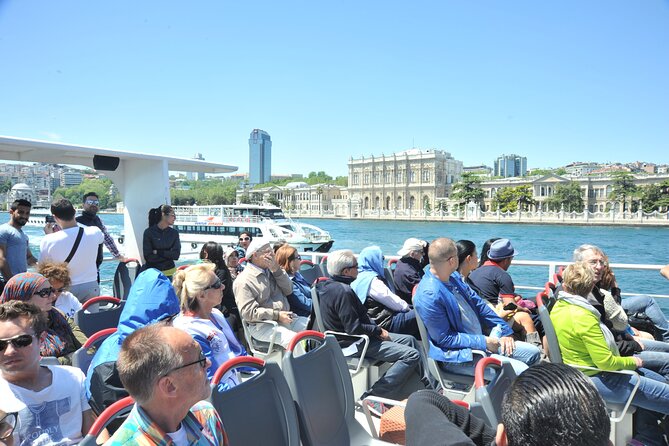
The cruise’s core is the Bosphorus Strait, the waterway that splits Istanbul into Europe and Asia. From the boat, you see the city’s waterfront architecture in a way that feels clearer than from the street—because the water acts like a moving “camera frame.”
Then the route brings in the Golden Horn (Haliç), which is considered a major natural harbor and sits like a dividing arm on the European side. This part matters because it’s where the city’s water geography shows up in the skyline. You’ll get those broader city-and-coast perspectives that make the Bosphorus feel less like a “pretty shoreline” and more like Istanbul’s historic engine.
Galata Tower and Dolmabahçe Palace from the waterline
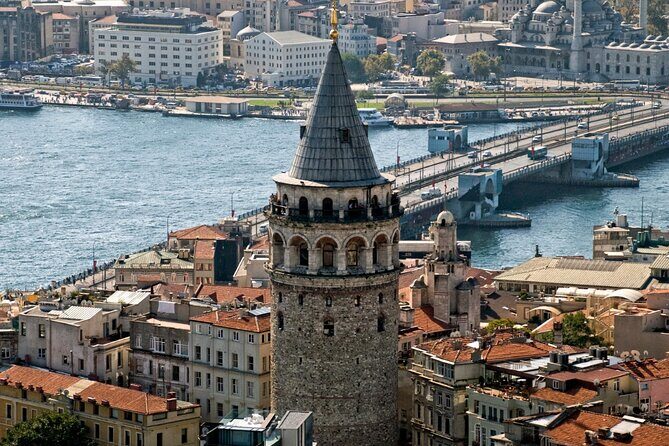
Galata Tower is a signature Istanbul landmark, and cruising past gives you that “oh, that’s the one” recognition fast. From its elevated position, it’s associated with standout views over areas like Beyoğlu and Karaköy, and from the boat you can catch it as part of the wider waterfront scene rather than as a single postcard.
Dolmabahçe Palace is the big architectural flex of the European shore. As you pass, you’ll see why it’s tied to the Ottoman Empire’s 19th-century advancements—its grand, formal presence is the kind of thing that reads better from the water than it does from a crowded street.
One practical note: this is the part of the cruise where you’ll want your attention on the water. If you’re distracted, it’s easy to miss the moment when the buildings line up for the best photos.
Ortaköy and the Bosphorus bridges: the fun, lived-in stretch
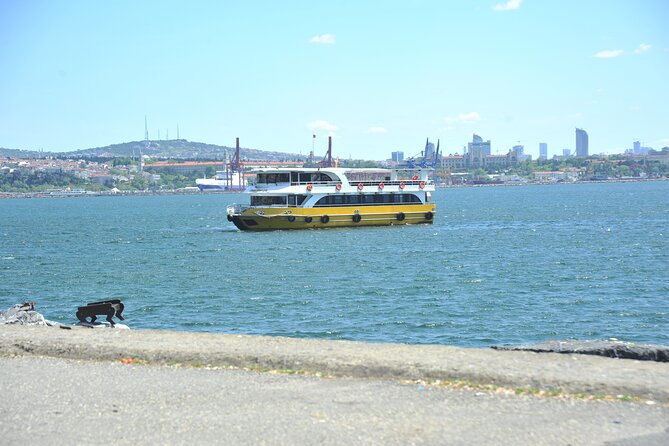
Ortaköy is one of those neighborhoods that instantly feels alive. It sits right on the Bosphorus under the Bosphorus Bridge, and the cruise passes through the area in a way that highlights how local life and waterfront scenery mix together.
This stretch also ties into the “between two continents” theme. As you watch the bridges connecting Europe and Asia—plus the city’s broader waterfront—things start to click. Istanbul isn’t just scenic; it’s built around movement, trade, and crossings.
If you’re the type who loves quick photo stops without leaving the boat, this part tends to land well. The only drawback is that the boat can be busy during the most famous sections, so you’ll want to grab your viewing spot early and stay put.



Rumeli and Anatolian Fortresses: defense architecture, now with café energy
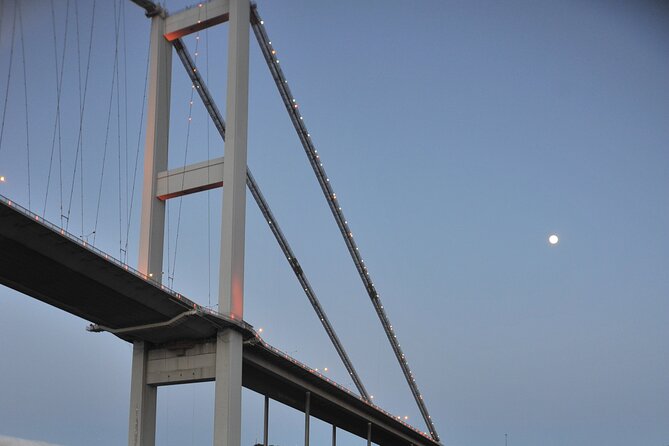
The cruise route includes fortress areas tied to the Ottoman era. You’ll pass Rumeli Fortress, which was erected on orders of Fatih Sultan Mehmet and is now used as a facility with cafes and restaurants. That change in use is exactly what makes this stop feel real: old defense structures didn’t vanish—they got repurposed.
Then there’s the Anatolian Fortress area, also built on orders of Sultan Bayezid. It adds another layer to the skyline story, sitting on the Asian side near the Rumeli Fortress area. The point here isn’t to “tour the fortress” in detail; it’s to understand how both shores were visually and strategically connected.
If you like history that shows up in the shapes of buildings, this section tends to be satisfying. Just don’t expect a walk-through unless you’re doing another land-based stop.
Beylerbeyi Palace and Maiden’s Tower: the Asian-side highlights
On the Asian side, Beylerbeyi Palace is one of the chic, eye-catching stops on the route. It’s located in Beylerbeyi and commissioned by Sultan Abdulaziz as a summer palace for the imperial family. Even from the water, the combination of setting near the Bosphorus Bridge and the palace’s refined presence comes across clearly.
Then you’ll see Maiden’s Tower (Leander’s Tower), sitting on a small islet across from Üsküdar. It’s one of Istanbul’s most romantic symbols, and it has that “stand-alone in the sea” look that makes photos and video feel effortless. The cruise timing matters here: if your departure is near dusk, the light can make the tower look even more magical.
This is also the best time to be patient about sound and crowds. The boat can get louder and less orderly as people try to film and point. If you’re traveling for calm, bring that expectation with you.
Audio guide reality: what to do if sound quality is spotty
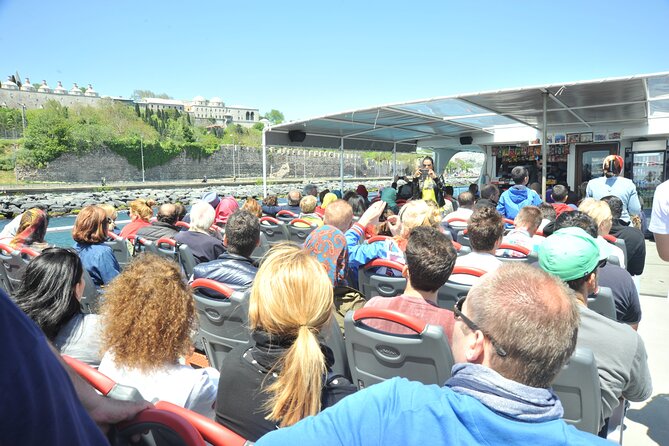
This tour includes an audio guide offered in English, but it’s typically delivered through onboard speakers rather than private headphones. That setup can be hit-or-miss depending on wind, crowd noise, and speaker placement.
Based on what people have described, you might run into situations where the audio feels low volume, distorted, or out of sync with what you’re looking at. You could even have trouble hearing on one side of the boat.
Here’s how to stack the odds in your favor:
- Sit where you think the loudspeaker coverage is best, not necessarily where you like the view.
- When the narration is starting a new landmark, pause your photos for a few seconds and confirm you can hear it.
- If the sound feels off, don’t assume you missed everything. Use the boat’s sightline: the key landmarks are large and distinct.
This cruise is still worth it for the views, but the audio experience is the part you should treat as “potentially excellent,” not guaranteed perfect.
Weather, timing, and what to wear on the Bosphorus wind
This activity requires good weather. If conditions aren’t right, you’ll be offered a different date or a full refund, so plan around flexibility.
Also, don’t underestimate wind. Even in months that feel comfortable on land, the Bosphorus breeze can make the boat feel colder than you expect. A warm layer helps a lot, and it’s one of the simplest ways to turn “comfortable” into “actually enjoyable.”
Timing can change the mood too. Some departures are ideal for watching Istanbul’s lights come on, and a later sailing (like a 7pm departure) can make the golden-hour to night transition part of the show.
Price and value: what you’re really paying for
At $21.72 per person, this cruise is priced like a value sightseeing option. For that money, you get a dense hit of waterfront landmarks across both sides of the city—Galata Tower, Dolmabahçe Palace, Ortaköy, fortress areas, Beylerbeyi Palace, and Maiden’s Tower—without the cost and energy of multiple transit-heavy days.
But value depends on your tolerance for a big-group boat experience. If you hate crowding, constant sales pitches, or sitting where sound doesn’t reach clearly, then the low price can feel less like a deal and more like a tradeoff.
Think of it this way: you’re buying time-saving scenery. If the audio lands perfectly, it feels like a bargain. If it doesn’t, you still have the waterfront, but the “learn while you look” part may be weaker.
Group size, comfort, and why logistics matter on a boat
With a maximum of 100 travelers, you should plan for a packed vibe on board. Reviews and feedback often point to limited seating and crowding during peak sight sections, so a “move around freely and take your time” mindset might get interrupted.
Also pay attention to how the boarding process works. Some people describe a scramble from a nearby meeting area to the pier, which can feel stressful if you arrive late or expect a smooth line.
The best strategy: arrive early, don’t overplan your arrival snack, and keep your phone ticket ready. Once you’re onboard, focus on grabbing a consistent viewing angle rather than constantly switching spots.
The sales and entertainment factor: decide your tolerance level
Several onboard experiences can feel commercial. That can include constant product selling and photo requests, sometimes even promotional interactions that interrupt the quiet of sightseeing.
If you’re the type who likes to watch the landmarks with zero distractions, this might annoy you. If you can treat it like background noise—expect it, ignore it, and keep your eyes on the water—then it won’t ruin the cruise.
A good rule: set your expectations for a sightseeing boat, not a refined private charter. This isn’t about silence. It’s about seeing a lot from one ride.
Should you book this Bosphorus and Golden Horn cruise?
Book it if you want a high-views, low-effort way to see Istanbul’s waterfront hits in about two hours. It’s especially strong for first-timers who want the Bosphorus geography explained by real landmarks: Europe/Asia, bridges, palaces, towers, and fortresses.
Consider skipping or upgrading if audio clarity matters a lot to you. If you rely on narration to understand what you’re seeing, and you’ve had trouble with speaker-based systems before, you may prefer a smaller boat tour or a different format.
Also book it only if you can dress for wind and handle crowds. If that sounds like your style, this cruise can be a smooth way to get your bearings fast—then you can use the rest of your day to go deeper on the spots you liked most.
FAQ
How long is the Bosphorus and Golden Horn cruise?
It’s listed at about 2 hours.
What does the tour cost?
The price is $21.72 per person.
Is there an audio guide, and is it in English?
Yes. The experience includes an audio guide, and it’s offered in English.
Where do I meet for the cruise?
The meeting point is Cankurtaran, Ayasofya Meydanı No:2, 34122 Fatih, Istanbul.
Do I return to the meeting point at the end?
Yes. The activity ends back at the meeting point.
How big is the group on this tour?
The maximum group size is 100 travelers.
What ticket type do I receive?
You’ll have a mobile ticket.
When should I book?
On average, this tour is booked about 13 days in advance.
Is the cruise dependent on weather?
Yes. This experience requires good weather. If it’s canceled due to poor weather, you’ll be offered a different date or a full refund.
Can I cancel for a full refund?
You can cancel up to 24 hours in advance for a full refund. If you cancel less than 24 hours before the start time, the amount paid is not refunded.