REVIEW · ISTANBUL
Istanbul: Dolmabahce Palace & Harem Skip-the-Line Entry
Book on GetYourGuide →Operated by Istanbul Tourist Pass® · Bookable on GetYourGuide
This palace has a serious wow-factor. You get skip-the-line e-tickets for Dolmabahçe Palace and the Harem, and you can tour at your own pace with an audio guide in 25 languages. I especially like the palace’s dramatic interior details: the famous Baccarat and Bohemian chandeliers and the gold work on the ceilings. The main thing to remember is that skip-the-line doesn’t erase everything—there’s still a mandatory security check, and a couple of hiccups (like QR code scanning issues) can add waiting.
If you enjoy Ottoman history but don’t want your day glued to a rigid group schedule, this format is a good fit. You’ll also get the context for what makes Dolmabahçe different from Topkapi, including architectural and furniture contrasts, and you’ll hear about the palace’s role as the last Ottoman court headquarters.
In This Review
- Before you go: the one constraint that matters
- Key highlights to plan around
- Dolmabahçe Palace and Harem: why this Ottoman address matters
- Entering faster: QR codes, security checks, and timing reality
- Inside Dolmabahçe Palace: chandeliers, gold ceilings, and room-by-room clues
- Comparing Dolmabahçe and Topkapi without turning it into homework
- The Harem section: what you get in the same 2-hour visit
- Audio guide strategy: get the link working before you arrive
- Optional live guides: worth it, but know the limits
- How I’d pace your 2 hours so you don’t feel rushed
- Price and value: why $55 can be a good deal (or not)
- Who should book this experience
- Should you book Dolmabahçe Palace & Harem skip-the-line entry?
- FAQ
- What’s included in the ticket?
- How do I get my entry tickets?
- Where do I find the audio guide?
- Is the palace open every day?
- How long is the visit?
- Is a live guide included?
- What languages are available for the audio guide?
- Does skip-the-line mean there’s no waiting at all?
Before you go: the one constraint that matters

Plan around closures. The Dolmabahçe Palace Museum is closed only on Mondays, and during the winter season (Nov 1 to Mar 31) opening hours are roughly 9:00 AM to 4:00 PM. If you show up without checking the day, you’ll be the sad person outside the gates.
Key highlights to plan around
- Skip-the-line e-tickets for both Dolmabahçe Palace and the Harem section, delivered as QR codes by email
- Audio guide in 25 languages, linked from your tickets (not something you can pick up on-site)
- The biggest collection of Baccarat and Bohemian chandeliers, including a record-sized Bohemian chandelier
- Gold-heavy interiors with ornate ceilings that reward slow walking
- Dolmabahçe vs. Topkapi context, including differences in architecture and furniture
- Optional private guide available, with some guides noted for excellent explanations—though guide access inside can be limited
You can also read our reviews of more tours and experiences in Istanbul

Dolmabahçe Palace and Harem: why this Ottoman address matters

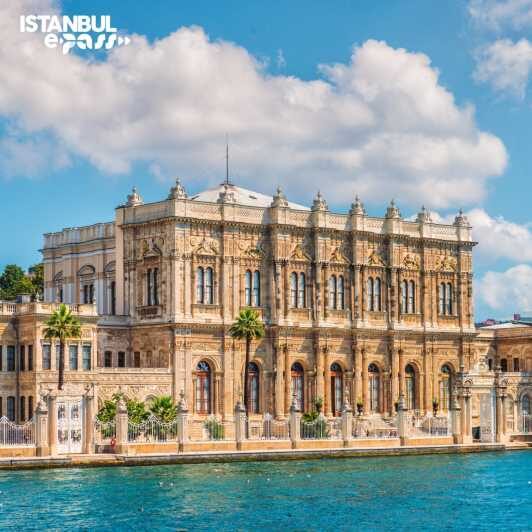
Dolmabahçe Palace is the grand statement the Ottoman sultans put on display in the 1800s. It’s often described as the biggest royal residence of the sultans and the imperial family, and the scale really shows once you’re inside.
The palace’s story starts with Sultan Abdülmecid I, who ordered its construction, and it opened in 1856. That timeline matters because Dolmabahçe reflects a later phase of Ottoman power and taste—more “imperial spectacle” than the earlier style you might associate with Topkapi.
Here’s one reason I like this experience: it doesn’t just throw rooms at you. With the audio guide, you’re nudged to notice how Dolmabahçe differs from Topkapi—architecture style and even furniture choices. That kind of comparison turns a sightseeing stop into real understanding.
And don’t miss the Atatürk angle. The highlights explicitly mention Mustafa Kemal Atatürk’s cherished legacy connected to the palace. Even if you’re only casually aware of Turkish history, it’s a reminder that this building didn’t stay frozen in Ottoman time. The palace served as the empire’s headquarters until 1922, and then Turkey’s modern story takes over.
Entering faster: QR codes, security checks, and timing reality
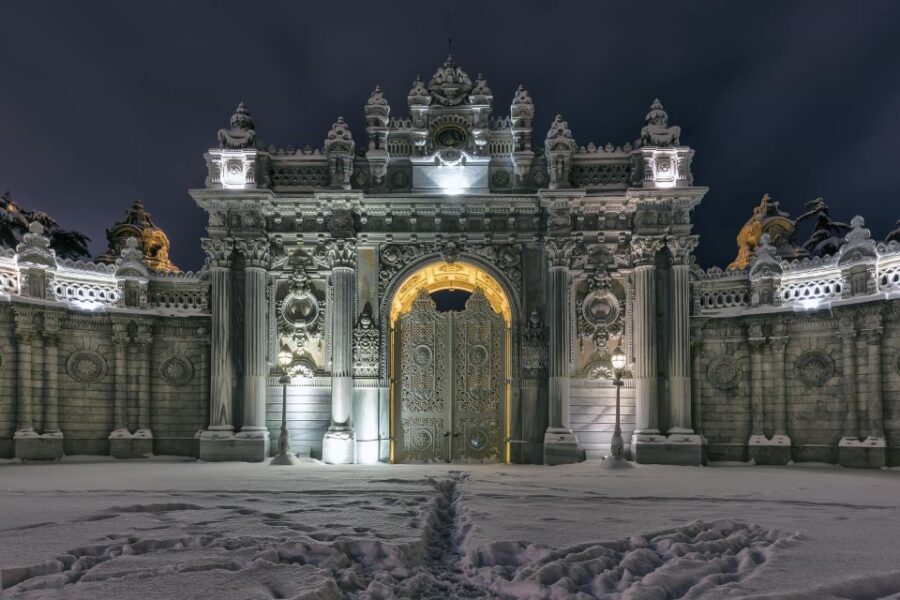
Let’s talk logistics, because this is where “skip-the-line” can either feel amazing or mildly annoying.
Your entry depends on QR codes sent by a separate e-mail from the supplier (through Istanbul Tourist Pass®). That means you should search your inbox (and spam folder) before you leave for the palace. If you rely on a saved screenshot on your phone and it’s not there, you’re creating your own delay.
Also, you must go through a mandatory security check. The tour information is blunt about it: waiting times can occur, especially at busy hours. In other words, plan for the normal friction of a major museum site.
A couple of practical cautions from real-world experience:
- One visitor reported the skip-the-line process wasn’t a true straight bypass. They had to go to an information desk to obtain an actual ticket, which reduced the advantage.
- Another reported a QR code that didn’t work at the entrance, leading to about a 20-minute wait at the office until it was fixed.
So I’d treat skip-the-line as a time saver, not a magic spell. The best move is arriving earlier rather than later, and keeping your QR code ready and readable on your phone.
One more timing detail: the tour is listed as 2 hours. That’s a helpful target, but it doesn’t mean you’ll only see two hours’ worth of rooms—it means you should pick a smart pace. In a palace like this, your feet will do the storytelling, one corridor at a time.
Inside Dolmabahçe Palace: chandeliers, gold ceilings, and room-by-room clues
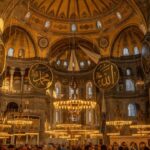
Dolmabahçe is famous for light, and not in a vague way. The highlights say you’ll see the greatest collection of Baccarat and Bohemian chandeliers on the planet, including the biggest Bohemian chandelier ever. Translation: there will be moments where you look up without meaning to.
The audio guide (25 languages) is important here. It’s prepared specifically for this experience, and the design goal is to help you read what you’re seeing. Instead of wandering and guessing, you get context about what the space was built to do and how it functioned as a court environment.
What I would prioritize visually:
- Ornate ceilings with gold work: This isn’t subtle. The palace interiors are packed with gilded decoration, and it’s especially rewarding when you’re not rushing.
- Chandelier “shock and awe” moments: Look up early, then again later. Your perspective changes once you understand where key rooms sit.
- Architectural and interior design choices: The audio guide specifically notes how the palace was built on the order of Abdülmecid I and opened in 1856, so you can connect style to era.
One thing to know before you arrive: photography inside is restricted. Multiple visitors noted that pictures aren’t allowed inside the palace. That’s not a deal-breaker, but it does change how you should experience the spaces. If you can’t take photos, your job is to remember through observation. Slow down in the rooms with gold ceilings and chandeliers—those are the “memory anchors” of the visit.
Comparing Dolmabahçe and Topkapi without turning it into homework
If you’ve seen Topkapi Palace already (or you plan to), don’t treat Dolmabahçe as just another palace. The audio guide is built to point out differences, and that’s exactly how you’ll get more value from the ticket.
The tour information calls out “distinct differences between the Dolmabahce Palace and the Topkapi Palace,” including:
- architectural style
- furniture differences
Even if you’re not an architecture nerd, this comparison helps your brain stop grouping Ottoman palaces into one big blur. You start noticing how design choices reflect changing tastes, political realities, and court life.
A good approach: listen to the audio guide’s Dolmabahçe-vs-Topkapi commentary right when you move from one type of space to another. Don’t save it all for later, or you’ll forget what you were standing next to.





The Harem section: what you get in the same 2-hour visit
The ticket includes entry to the Harem section, which is where the palace’s everyday court life stories tend to show up. Even with an audio guide, I like having the Harem on the same pass because it prevents your visit from becoming a single-note showcase of decoration.
There are two practical points to keep in mind:
- The audio guide covers the palace visit timeline and helps you navigate the experience on your own.
- The Harem portion depends on opening status. One visitor reported that the Harem wasn’t open during their visit.
If the Harem is open, you’ll likely find it shifts the mood from grand ceremonial spaces to more intimate areas. That contrast can make Dolmabahçe feel less like a museum display and more like a place where real lives unfolded—within the strict world of a royal household.
Also, don’t ignore the non-royal perks. Reviews mention the garden and a café, including a note about a refreshing frozen drink just before the Haremlek entrance. In a place this grand, those breaks keep the day pleasant instead of exhausting.
Audio guide strategy: get the link working before you arrive
The audio guide is included, but it’s not handed to you at the palace. The tour info is clear: the audio guide is provided via a link with your tickets, and it cannot be obtained at the palace.
That means your best move is simple:
- open the link and test it before you head inside
- bring headphones (or at least earbuds you trust)
- download or cache if your phone tends to struggle with audio in heavy Wi-Fi/crowd conditions
The audio guide is available in a long list of languages, including English, German, Russian, Persian, Arabic, French, Italian, Chinese, Dutch, Spanish, Hindi, Turkish, Japanese, and Korean among others. If you’re visiting as a mixed-language group, this is a big advantage. You can each listen in your own language without everyone waiting on one device.
What about quality? One visitor said the audio guide wasn’t bad, and others paired it with self-paced wandering and found it enjoyable. In my view, it works best when you treat it like a guided walking companion, not a lecture you must finish.
Optional live guides: worth it, but know the limits
The base experience includes audio and skip-the-line entry. A live guide is listed as not included, but the highlights say you can hire a private tour guide for an extra fee.
If you do go the private-guide route, one theme appears in real accounts: guide access inside can be limited. At least one visitor noted that a guide wasn’t allowed to walk along with the group inside the palace, and another described situations where the guide’s role was mostly outside with guests walking through on their own afterward. So don’t assume a private guide means full freedom inside every room.
That said, people who had guides were enthusiastic. Names that came up include Zey, Ilke, Ozzy, and Furkan, with praise for history explanations and patience with questions. If you’re the type who wants context while you’re looking at details, hiring a private guide can still be a strong upgrade—just manage expectations about movement and where they can actually guide you.
If you don’t hire a guide, the audio guide becomes your main “voice of reason.” Either way, your ability to slow down and pay attention is what makes the difference.
How I’d pace your 2 hours so you don’t feel rushed
Two hours at Dolmabahçe is enough if you plan like a grown-up and not like a door-to-door salesman for your own feet.
Here’s the pacing method I’d use:
1) Start with the must-see visual zones: prioritize chandeliers and gold ceilings first. Those are the “wow” elements that are easiest to enjoy early.
2) Use the audio for context: don’t let it run in the background. Pause or listen closely right when the guide references differences or historical purpose.
3) Plan your Harem time: if the Harem is open, make it a second major focus instead of an afterthought.
4) Leave room for a short reset: even a quick garden break or a stop at the café can keep the visit pleasant.
Also, be realistic about pacing during busy hours because security lines can add friction. If you arrive at your time slot late, your “2 hours” will feel like 90 minutes.
Price and value: why $55 can be a good deal (or not)
At $55 per person for about 2 hours, the value depends on how you like to tour.
This price bundles two things that matter:
- skip-the-line entry for both Dolmabahçe Palace and the Harem section
- an audio guide in 25 languages
If you’re visiting in peak season, skip-the-line access usually feels like money well spent. If your group includes people who don’t speak the same language, the 25-language audio guide is also real value. You avoid the awkward “one guide explanation for everyone” problem.
The main value risks are also practical:
- If your QR code has issues at the entrance, you could lose time.
- If the Harem happens to be closed on your day, you may not get the full ticket promise.
So I’d call it a fair price for a structured self-guided experience. If you’re the kind of traveler who wants constant human Q&A and deep storytelling inside every room, you might feel underfed unless you add a private guide.
Who should book this experience
This works best for you if:
- you want self-paced sightseeing rather than a strict group schedule
- you like history context but don’t want to stand still waiting for one person’s questions
- your group includes multiple languages and you want everyone to listen in their own language
- you’re short on time and still want both Dolmabahçe Palace and the Harem
It might be less ideal if:
- you need zero-friction entry at any cost (because security lines still exist)
- you strongly prefer a fully guided route inside every room
- you’re visiting on a Monday (the museum is closed)
Should you book Dolmabahçe Palace & Harem skip-the-line entry?
Yes, I’d usually book it—especially if you value speed and language support. The big wins are skip-the-line e-tickets and an included 25-language audio guide that helps you understand what you’re looking at, not just admire it.
Before you click confirm, do two quick checks: make sure it’s not a Monday, and locate your QR-code email so you can scan smoothly at the entrance. If you’re going during busy hours, plan to arrive a bit early so the security process doesn’t eat your palace time.
If you want the best possible experience, consider adding a private guide for the parts where you’d enjoy human explanations—just remember that access inside may be restricted, so the audio guide will still be your backbone.
FAQ
What’s included in the ticket?
You get skip-the-line entry tickets for Dolmabahçe Palace and the Harem section, plus an audio guide in 25 languages.
How do I get my entry tickets?
You receive entry ticket QR codes via a separate e-mail from the supplier.
Where do I find the audio guide?
The audio guide is provided through a link with your tickets. It cannot be obtained at the palace.
Is the palace open every day?
No. The Dolmabahçe Palace Museum is closed only on Mondays.
How long is the visit?
The duration is listed as 2 hours. You’ll also see starting times based on availability.
Is a live guide included?
No. A live guide is not included, though a private tour guide option is available as an additional service.
What languages are available for the audio guide?
The audio guide is available in 25 languages, including English, German, Russian, Persian, Arabic, French, Italian, Chinese, Dutch, Spanish, Hindi, Turkish, Japanese, and others.
Does skip-the-line mean there’s no waiting at all?
Not exactly. You still need to go through a mandatory security check, and waiting times may occur, especially during busy hours.