REVIEW · ISTANBUL
Istanbul Full Day Walking Tour with Guide
Book on Viator →Operated by Estambul Tours · Bookable on Viator
Istanbul looks best when you walk it. This full-day route stitches together Ottoman power and Byzantine grandeur with enough time in each place to actually see what you paid for. You get a guide to keep the sights in context, and the pacing is built for a long day without feeling like a sprint.
I particularly like the high-touch guidance on the palace and church-mosque switch story, plus the way the tour includes practical stops that help you orient fast—like the old racecourse area and the market. One small catch: the big-ticket admissions for Topkapi and Hagia Sophia are not included, so your total cost will be higher once you add tickets.
Plan for a 6–8 hour day on mostly foot-friendly streets, plus mosque dress code rules. If you’re bringing your own scarf and you’re okay with a little walking and waiting, this is a great way to pack in the classics without losing your mind in lines or confusion.
In This Review
- Key things to know before you go
- Price and what you’re really paying for
- Meeting at the German Fountain: how the day flows
- Topkapi Palace: the courtyards, treasures, and the parts most people miss
- Blue Mosque: photo rules, tile beauty, and what to wear
- Dress code: don’t wing it
- Sultanahmet Square: the Hippodrome at street level
- Hagia Sophia: mosaics, the mosque story, and your photo window
- Admission isn’t included
- Grand Bazaar: shopping time plus a money tip that actually helps
- How to shop without getting overwhelmed
- What this tour feels like in real life
- Who should book this, and who might not
- Should you book this Istanbul full-day walking tour?
- FAQ
- How long is the Istanbul Full Day Walking Tour?
- Is the tour in English?
- What is included in the $80 price?
- Which attractions require extra tickets?
- Where does the tour meet and where does it end?
- Do I need to follow a dress code for the Blue Mosque?
Key things to know before you go
- Topkapi is more than rooms: you’ll see courtyards, palace sections, the treasure display, and the weapons room.
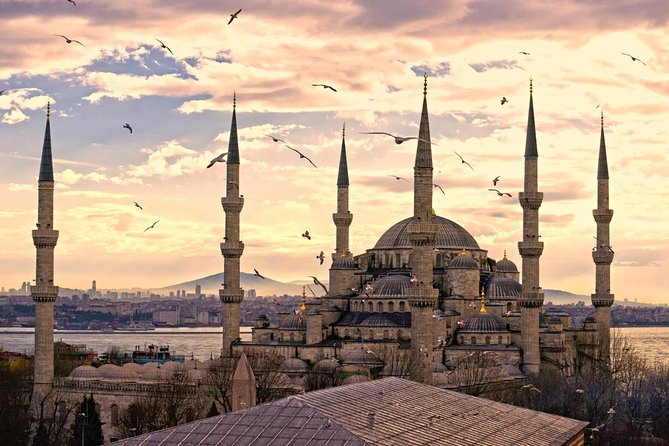
- Blue Mosque timing and rules matter: photos are allowed inside without flash, and the dress code is real.
- Sultanahmet Square is a free history map: you’ll spot the obelisks/columns that mark where the ancient spectacle happened.
- Hagia Sophia includes guided context: the visit includes time for photos and video while you learn what you’re seeing.
- Grand Bazaar time is built in: you get free time to shop, plus a useful tip about exchanging money there.
- Small group feel (max 12): you’ll move with a guide and still have enough breathing room to look around.
Price and what you’re really paying for
The tour is $80 per person, with all fees and taxes included, plus a professional English-speaking guide. You’ll also have public transportation if needed, which matters in a city where “walking distance” can turn into “why is this taking so long” once you factor in crowds and streets.
Now the part that changes the budget: Topkapi Palace is $60 USD extra, and Hagia Sophia is 25 euro extra. Blue Mosque, Sultanahmet Square (Hippodrome), and most of the market area time are free as part of your route. So this isn’t just a walking tour with no entry tickets—you’re paying for a guided day that covers two of the headline sights, while you handle those specific admissions.
If you’re comparing options, think about value like this: you’re paying for someone to explain what you’re looking at in Topkapi, Hagia Sophia, and the surrounding landmark area, while you also get structured time windows so you don’t waste your day guessing. That’s where the $80 earns its keep.
You can also read our reviews of more tours and experiences in Istanbul.


Meeting at the German Fountain: how the day flows
Your day starts at the German Fountain (Binbirdirek, At Meydanı Cd, 34122 Fatih/İstanbul) in the Old Istanbul Racecourse area. The walk circles through Sultanahmet, and the tour ends back at the meeting point, which is convenient if you plan to keep exploring afterward.
Pickup is offered, but the key detail is this: if you choose to meet the guide in Sultanahmet Square, the meeting point is still the German Fountain. That helps avoid the classic Istanbul problem where you meet someone three streets away and then spend 20 minutes trying to reconnect.
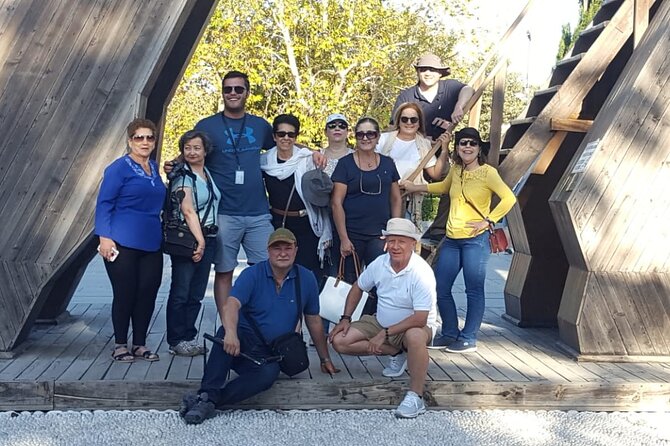
Also notice the group size: a maximum of 12 travelers. On a day with major attractions, that small limit usually means less time herding people and more time with the guide. In feedback about the tour, guides like Burcu and Ugurcan come up with a theme of patience and not rushing—exactly what you want when you’re dealing with long lines and lots of stairs.
Topkapi Palace: the courtyards, treasures, and the parts most people miss
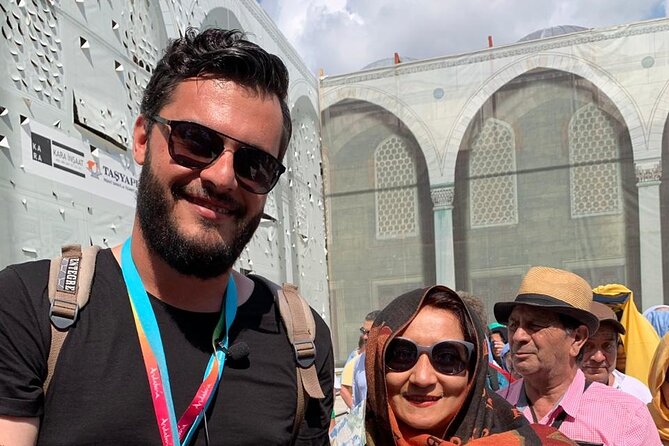
Topkapi is where the day really gains speed. You’ll spend about 2 hours in the palace, using a guided path through the spaces that explain how the Ottoman court lived and ruled. The route focuses on a key idea: this wasn’t a museum-like stop. It’s a living layout of authority—doors, patios, and gated areas that reveal what mattered most.
You’ll go through three doors and patios, then reach a last courtyard with standout views back toward the city—described here as views that include the first Bosphorus bridge and the Galata Tower. That kind of viewpoint break is useful. It resets your brain between indoor rooms, and it helps you understand where the palace sits on the peninsula.
Inside, your guide takes you through the palace’s major zones: the treasure rooms, palace sections, and the spaces tied to religious and personal life. The highlights built into the tour description are specific and worth your attention:
- In the treasure room, you’ll see famed imperial items such as the Topkapi Dagger and an 84-carat diamond.
- In the weapons room, the displays include swords associated with prophets and sultans.
- In the kitchen area, there’s mention of famous Chinese porcelains, which is a great reminder that the Ottoman court wasn’t isolated. Trade and prestige travel far.
One of the most memorable details in this palace visit is the explanation of Harem as a no-go zone, where residence was restricted to the sultan, the sultan’s mother, wives, favorites, concubines, and eunuchs. Even if you never fully picture a “closed world,” the guide’s framing helps you see why certain areas were off-limits and how control worked.
Practical caution: Topkapi time is 2 hours, which is good for a full-day schedule, but it’s still a lot of ground. Wear comfortable shoes, and if you prefer slow museum pacing, plan to focus on what the guide points out rather than trying to read everything yourself.
Blue Mosque: photo rules, tile beauty, and what to wear
After Topkapi, you’ll head to the Blue Mosque for about 40 minutes. It’s one of those places where the guide matters because the building is visually loud, but the meaning is subtle.
The tour framing includes the key architectural identity: it was built under Sultan Ahmet in Ottoman times and is known for being the first mosque with six minarets. You’ll also get the reason it’s called the Blue Mosque: the walls are covered with blue tiles that create a recognizable signature look.
One practical piece I’m glad is spelled out clearly: you can take photos inside without flash. That makes a difference. You won’t be standing there guessing whether you’re about to annoy someone or break a rule mid-shot.
The guide also points out the rhythm of worship there. The ezan call happens five times a day, and the courtyard has fountains for ablution, which is tied to the requirement to wash before prayer. Even if you’re there as a non-participant, knowing what the courtyard is designed for changes how you experience the space.
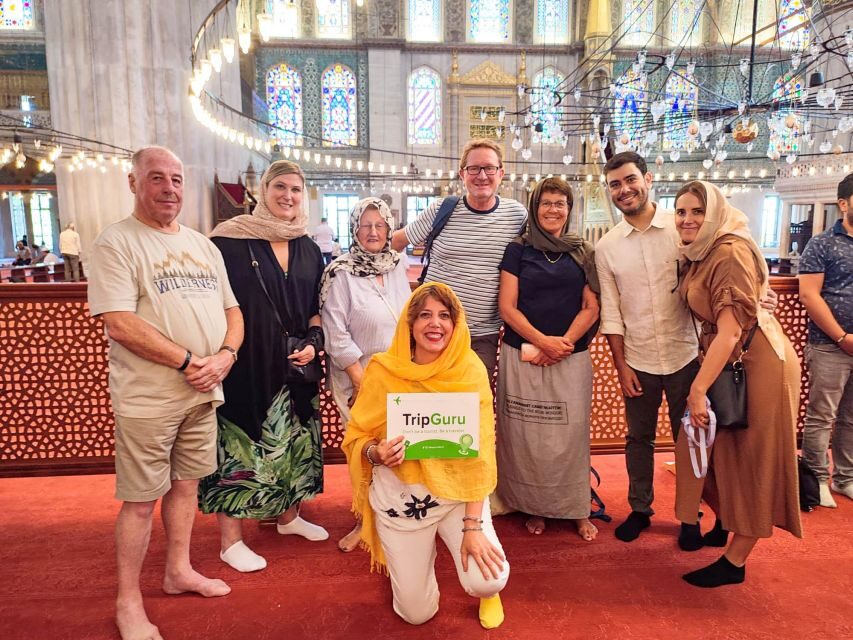
Dress code: don’t wing it
The dress code isn’t vague. For the Blue Mosque visit:
- Women should cover shoulders and heads using a scarf/pashmina, and wear long skirts or long pants.
- Men need to wear pants.
- Shorts above the knee aren’t allowed.
If you forget your scarf, you might find options on-site, but it’s far less stressful to bring one. Also, wear breathable clothing. You’ll get sun and indoor cool-down moments on the same day.
Time reality: 40 minutes goes fast if you stop every five seconds to re-check camera settings. Use that time for one or two strong interior photo moments, then look longer with your eyes.



Sultanahmet Square: the Hippodrome at street level
Sultanahmet Square, also tied to the Hippodrome of Constantinople, is a short stop—about 30 minutes. This part works like a “history orientation” break. You get the bigger story of what happened here before the current city shape locked in.
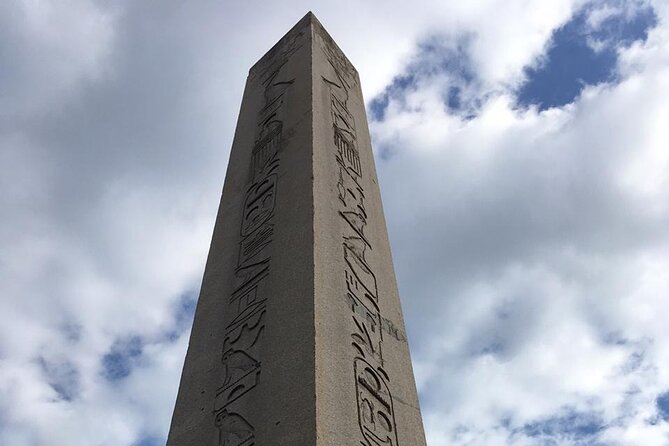
The Hippodrome was built for spectacles: horse carts competed, and fights happened between gladiators or against wild animals. Emperors joined events, with chariot racing tied to public life and family time. The scale is part of the point: the racecourse held 100,000 spectators in a rectangular layout.
Today, you won’t feel that stadium energy in the same way, because the seating is gone and only parts remain. What you do see are the landmark objects your guide highlights:
- Obelisk of Theodosius
- Column of Constantine
- Serpentine Column
- German Fountain
This stop is free, which helps your budget, and it’s also useful for understanding why the next parts of the day are clustered where they are. When you can place Hagia Sophia and the Blue Mosque in a landscape story, you stop treating each site like a separate postcard.
Hagia Sophia: mosaics, the mosque story, and your photo window

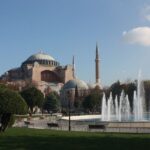
Next up is Hagia Sophia Grand Mosque, with about 1 hour and guided explanations. The tour description stresses the building’s repeated identity shifts, and that’s exactly what you should focus on while you’re inside.
You’re entering the third Hagia Sophia to stand on this spot, dating back to 532 AD. The guide frames it as a key Byzantine landmark for nearly 1,000 years, including preserved Christian frescoes and mosaics. Then the narrative shifts to Ottoman and modern Turkish history: after the conquest of Constantinople it became a mosque, and later the Turkish republic used it as well. In 1932 it became a museum, then in 2020 it became a mosque again. That timeline isn’t just trivia. It changes how you read the interior surfaces and how you understand what you’re seeing.
The visit also includes time for photos and video while the guide explains what’s important. That’s valuable because Hagia Sophia can feel overwhelming: you look up, you get dazzled, and then you forget what you were actually looking at. A guide helps connect the architectural scale to the religious and political transitions that happened here.
Admission isn’t included
Just like Topkapi, Hagia Sophia admission (25 euro) is not included in the tour price. Build that into your day so you don’t end up making a rushed decision at the door.
Also, be ready for prayer times. You’re visiting a working mosque, so you may notice limits during worship. The key is to respect what’s in progress and follow the guide’s instructions.
Grand Bazaar: shopping time plus a money tip that actually helps
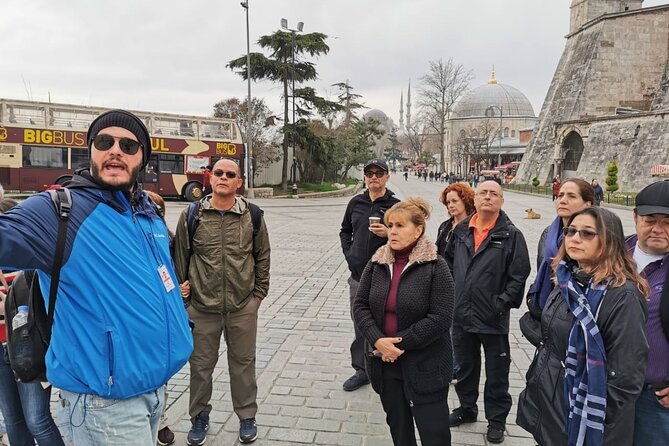
You’ll finish with the Grand Bazaar, with about 2 hours of free time. This is a smart ending point because you’ll be tired, and shopping is easier when you’re not trying to absorb new architecture every 10 minutes.
The bazaar is described as one of the largest and oldest covered markets in the world, with 61 covered streets and more than 4,000 shops. Built in Ottoman times, it became the largest and best-known market in the Ottoman Empire. The practical payoff for you: it’s a concentrated place to buy Turkish goodies without wandering all over the old city.
One detail worth flagging: money exchange is cheaper here, according to the tour description. That can be useful if you still need to exchange some currency for the rest of your trip. Just keep expectations realistic: exchange rates vary, so treat this as a tip to compare rather than a guarantee.
How to shop without getting overwhelmed
Two hours in the Grand Bazaar is enough to browse and buy a few things, but not enough to fully explore every lane. Use a simple strategy:
- Set a couple of target categories (tea, spices, small souvenirs).
- Decide your budget before you enter.
- If someone tries to speed you into a deal, slow down and shop the next stall.
The tour’s structure gives you freedom at the end, and that’s part of why some people appreciate the finish point: it’s a good time to capture memories and then do your last-round shopping before leaving.
What this tour feels like in real life
This is a walking-focused day clustered around Sultanahmet, with short stops and set time windows: about 2 hours at Topkapi, 40 minutes at Blue Mosque, 30 minutes at Sultanahmet Square, 1 hour at Hagia Sophia, and 2 hours at the Grand Bazaar. Add transit between sites and you land in that 6–8 hour range.
Because the tour is limited to 12 travelers, you’re not stuck waiting for a huge group to regroup. That helps a lot at places like Hagia Sophia and Topkapi where time matters. In feedback tied to the tour, guides such as Burcu and Ugurcan are praised for helping people create memorable moments and for not rushing, even when there’s an elderly family member on board.
If you like a steady flow—rather than a “wander and hope” approach—this fits well.
Who should book this, and who might not
This tour suits you best if you want:
- A guided day through Istanbul’s core sights in one compact area
- Clear rules and photo timing at religious sites
- A guide who can explain why places look the way they do, not just where they are
You might think twice if:
- You dislike walking and prefer fully seated sightseeing
- You don’t want to manage two separate admissions (Topkapi and Hagia Sophia)
- You need a very slow pace and lots of free time at each major site
Still, the inclusion of public transportation when needed helps smooth out the edges for a long day.
Should you book this Istanbul full-day walking tour?
If you want a practical “greatest hits” route with a guide who keeps things moving without treating you like luggage, I’d book it—especially at this price point. The guided context at Topkapi and Hagia Sophia is where the day pays off, and the small group limit makes the difference.
Just go in with the right math: the $80 is only part of the total because Topkapi and Hagia Sophia tickets are extra. If you plan for that up front and pack for the Blue Mosque dress code, you’ll get a smooth day that ends in the Grand Bazaar with time to enjoy Istanbul shopping and a useful money-exchange tip.
FAQ
How long is the Istanbul Full Day Walking Tour?
It runs about 6 to 8 hours.
Is the tour in English?
Yes, it’s offered in English.
What is included in the $80 price?
The price includes all fees and taxes, a professional guide, and public transportation if needed.
Which attractions require extra tickets?
Topkapi Palace admission is not included (60 USD per person), and Hagia Sophia admission is not included (25 Euro per person).
Where does the tour meet and where does it end?
It starts at the German Fountain in the Old Istanbul Racecourse (Sultanahmet) and ends back at the same meeting point.
Do I need to follow a dress code for the Blue Mosque?
Yes. Women should cover shoulders and heads with a scarf and wear long skirts or long pants. Men need to wear pants, and shorts above the knee are not allowed.