REVIEW · ISTANBUL
Istanbul Haunted Night Tour
Book on Viator →Operated by Istanbul's Haunted Walking Tour · Bookable on Viator
That first footstep in the dark changes everything. This Istanbul Haunted Night Tour strings together famous landmarks—plus a few places you’d likely miss—using ghost legends tied to real dates, emperors, and everyday power struggles. It’s set for the European side at night, so the stones feel closer and the stories land faster.
I especially love the way it turns the city’s big names—like the Hippodrome—into a walk you can follow without getting lost. I also like the hands-on element: you use EMF detectors, a green laser tool, dowsing rods, and an EVP recorder during the evening. One heads-up: this is a “scary history” style tour. If you want nonstop action or guaranteed haunt-radar results, you might find the pacing more atmospheric than intense.
In This Review
- Key takeaways before you go
- A 2-hour haunted walk with clear starting-point directions
- Where the story begins: the Column of Constantine
- Into the 19th-century graveyard: Ahmet Tevfik Pasa MezarI
- Hippodrome remains and the “outside prison” scene
- Kucuk Ayasofya (Little Hagia Sophia) and the Justinian-era connection
- The back side of Sphendone: best seats, coups, and grim fates
- Serpent Column: war spoils to execution scene
- German Fountain, chariot gates, and a deadly payback
- Sultan Ahmet Tomb: fratricide law and enduring haunt themes
- Sultanahmet Square: coffee ban consequences
- Bab-ı Hümayun (Imperial Gate): intimidation as architecture
- The ghost-hunting gear: what you get (and how to read it)
- Price, group size, and English-language value
- Who should book this haunted night walk
- Quick pacing reality check: short stops add up
- Should you book Istanbul Haunted Night Tour?
- FAQ
- How long is the Istanbul Haunted Night Tour?
- Where does the tour start and end?
- Is the tour offered in English?
- What’s included for the ghost-hunting part?
- How big is the group?
- Can I get a refund if my plans change or weather is bad?
Key takeaways before you go
- Night-only pacing: you’ll see the Sultanahmet area in a completely different mood after sunset.
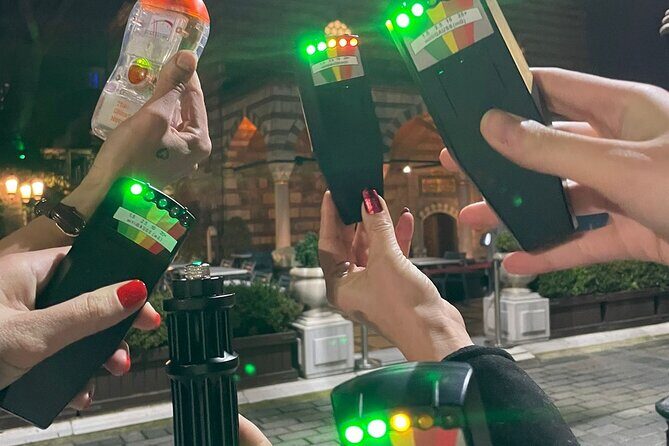
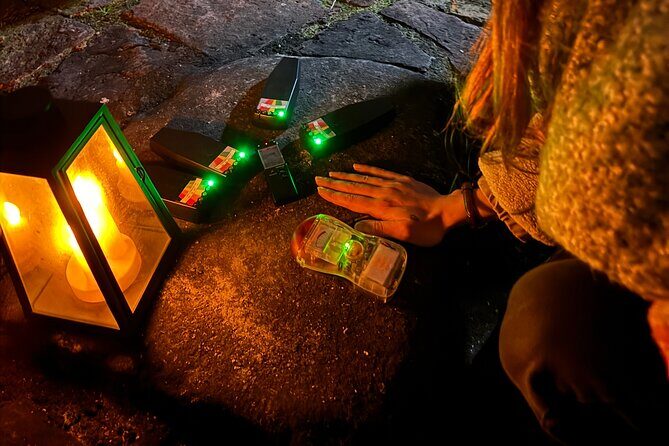
- Hands-on ghost tools: EMF, EVP, dowsing rods, and Maddusa’s Web green laser are part of the experience.
- Short stop system: most stops are about 8–10 minutes, so you stay moving and keep momentum.
- Pay once, then walk: the price includes the tour and (at least) one included site ticket, with the rest being free to view from public areas.
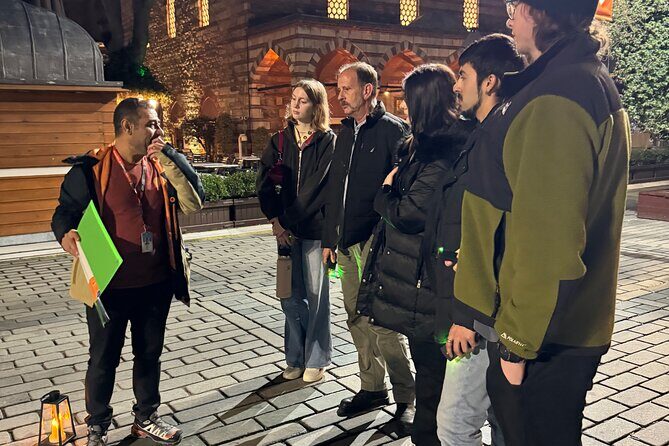
- Small group size: capped at 20 travelers, which helps the guide keep the story thread.
- English-guided storytelling: offered in English with guides that can be names like Sara, Brent, or Mehmet depending on the group.
A 2-hour haunted walk with clear starting-point directions
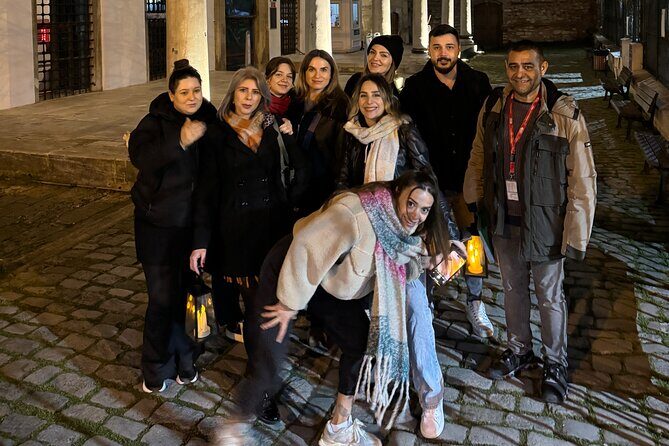
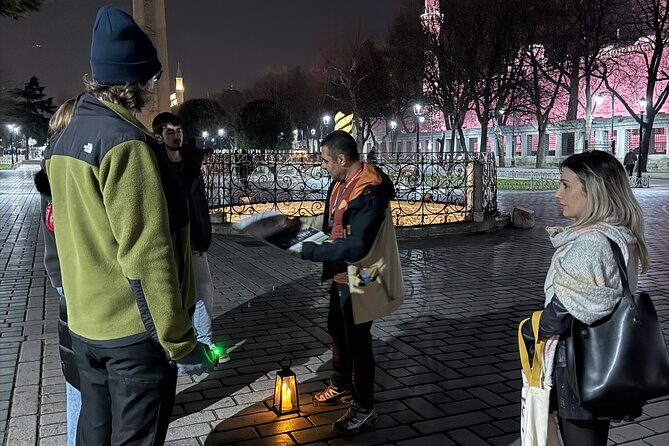
This tour runs about 2 hours, starting at 8:00 pm. The timing matters. You get the darker side of Istanbul when streets calm down and landmarks feel less like postcards and more like the stage for a plot twist.
Meeting point is the Column of Constantine, Molla Fenari, Vezirhan Cd. No:16 D:18, 34120 Fatih/İstanbul. That’s a strong anchor because you’re beginning at a Roman-era power symbol right from the jump. The ending point is the Bab-ı Hümayun gate at Topkapi Palace (Cankurtaran, 34122 Fatih/İstanbul), with the guide walking you back close to where you started and pointing you to whatever you want next.
The price is $48.06 per person, which is fair for two reasons. First, you’re paying for a guided story route plus included “ghost-hunting” gear. Second, most stops don’t require paid entries, so you’re not stacking surprise costs while you’re out walking. If you’re the type who likes a themed walk that still hits real sites, the value works.
You can also read our reviews of more evening experiences in Istanbul



Where the story begins: the Column of Constantine
Stop 1 is the Forum of Constantine, tied to the year 330, when Constantine shifted the Roman Empire’s capital. You’re not just looking at an old monument. You’re standing near a political engine that helped reshape the city’s future—and the guide uses that context to set up the night’s tone.
What makes this stop effective is the contrast: it’s Roman power, but the tour frames it with dark secrets and terror connected to the forum’s role in the past. Even if you’re not chasing the supernatural angle, this is a strong “orientation” stop because it gives you a mental timeline for what comes next.
Into the 19th-century graveyard: Ahmet Tevfik Pasa MezarI
The next stop is Ahmet Tevfik Pasa MezarI, described as a graveyard of a Sultan and his advisors from the 19th century. This is where the tour pivots from ancient Rome toward Ottoman-era political violence—especially betrayal and assassination themes.
Why I like this kind of stop: it prevents the stories from feeling like one long Roman costume drama. You get a different era’s flavor, but the same theme: power, fear, and the way people disappear when history turns.
This stop is also short, about 10 minutes, so you’ll be hearing the story in a focused burst rather than wandering around wondering what you’re looking at. If you like fast, guided context, you’ll feel carried along.
Hippodrome remains and the “outside prison” scene
Stop 3 is the Sphendone Remains, where you visit the vaulted remnants on the south side of the Hippodrome. The tour discusses an ancient prison on the site—one associated with holding wild animals for circus events—and then moves into the uncomfortable side: torture methods and disfiguration as common practices.
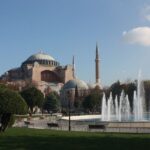
Stop 4 is the Hippodrome itself. This place was the sporting and social center of Constantinople for over 1,000 years, hosting chariot races and public executions. The tour also calls out that the Hippodrome was a place where citizens could see the emperor face to face, which turns it from a “we watched racing” site into a “we watched power” site.
Two things you should know going in:
- You won’t be doing deep museum time. This is a walk-and-story format.
- The tone is intentionally heavy—think public punishment and massacre—so it can feel intense if you’re sensitive to violent history.
If you’re into seeing how Istanbul layers eras—Roman, Byzantine, Ottoman—and how people reused the same urban bones for new stories, the Hippodrome segment is one of the best parts of the route.
Kucuk Ayasofya (Little Hagia Sophia) and the Justinian-era connection
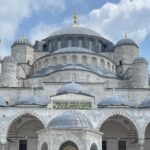
Stop 5 brings you to Kucuk Ayasofya – Gazi Suleyman Pasa Mosque, with an included admission ticket. The tour connects this site’s identity across time: it was once the Church of Saints Sergius and Baccus, and later renamed under Ottoman rule as the Little Hagia Sophia Mosque.
The guide also ties the area to a palace home to Justinian before he became emperor in the 6th century. Then the story moves to the 16th century, when a high-ranking eunuch is described as embezzling money and evading taxes—then being found and executed.
This is one of those stops where the “ghost” framing works because you’re not just hunting spooky vibes. You’re walking into a place with changing names and political shifts. The physical setting helps the story feel more grounded, even when you’re leaning into the supernatural theme.

The back side of Sphendone: best seats, coups, and grim fates
After the Hippodrome, you circle back to Sphendone Remains for stop 6. This section focuses on the idea of the best seats in the house—then turns into a discussion of death tied to the area over many centuries. The tour also describes a coup that successfully dethroned a powerful emperor and the fate of the emperor and his sons above these walls.
This is where the tour’s structure really shines: short stops, quick story beats, and clear focus. At this point, you should feel like you’re building a timeline in your head, not collecting random spooky facts.
If you want to take photos, do it quickly and thoughtfully. Night lighting can look great, but rushing for pictures can make you miss the story details.
Serpent Column: war spoils to execution scene
Stop 7 is the Serpent Column, where the tour talks about the column as a spoils-of-war object and then shifts to the brutal execution of a Byzantine emperor associated with the spot.
This stop is short—about 8 minutes—but it’s the kind of location that invites a narrative because it’s visually distinctive. Even if you’ve seen the column in a daytime photo, the night framing changes your attention from “what is it” to “what happened here.”
German Fountain, chariot gates, and a deadly payback
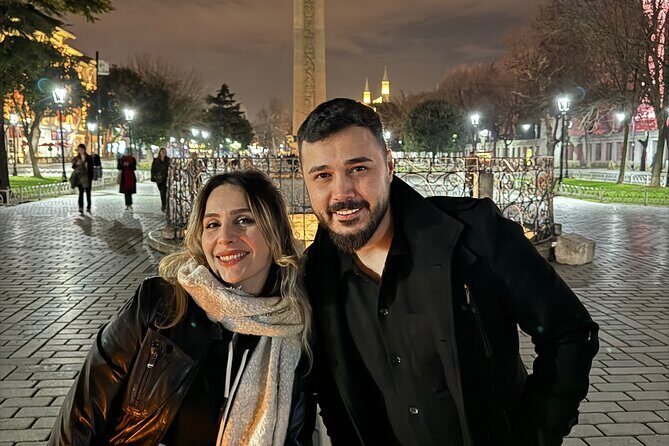
Stop 8 covers the German Fountain. The guide explains its connection to the Hippodrome’s starting gates for chariot races. Then it moves into a grim Ottoman-era incident: soldiers returning from war were reportedly not paid, and the tour places a deadly event at this location where an old tree once stood.
This stop works as a “human scale” chapter. Big empires and emperors are loud, but unpaid soldiers and sudden violence are the kind of event that still feels real. It’s another reminder: the stories aren’t only about haunting—they’re about consequence.
Sultan Ahmet Tomb: fratricide law and enduring haunt themes
Stop 9 is the Sultan Ahmet Tomb, tied to Ottoman law described as the allowance of fratricide—sultans killing brothers and children who threatened the throne. The tour links this to the idea that those bodies “haunt” the mausoleum.
This is classic Istanbul storytelling: political logic turned into tragedy, then turned into legend. Even if you don’t buy into literal ghosts, you might buy into the emotional truth of how power leaves marks that people can’t fully erase.
Sultanahmet Square: coffee ban consequences
Stop 10 is Sultanahmet Square, where the tour brings up an early 17th-century rule banning coffee for public drinking and frames the consequences as deadly.
This is brief—about 5 minutes—but it’s memorable because it’s weird in a very human way. Not every horror story is a sword fight. Sometimes it’s a law, a habit, and a system that reacts hard.
Bab-ı Hümayun (Imperial Gate): intimidation as architecture
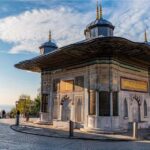
Stop 11 is the Imperial Gate Bab-i-Humayun, the main gate to the imperial palace. The tour explains that the gate wasn’t just grand—it was meant to scare and intimidate people entering.
Then the story adds one more life-and-death angle: the head gardener of the palace gardens having a special race that the tour frames as literally a matter of survival. Whether or not you find the story spooky, you’ll probably find the logic of power behind the architecture very persuasive.
This is also your endpoint, at the Topkapi Palace gate. When the tour ends, you’re in a prime spot to keep exploring on your own, especially if you’re staying around Sultanahmet.
The ghost-hunting gear: what you get (and how to read it)
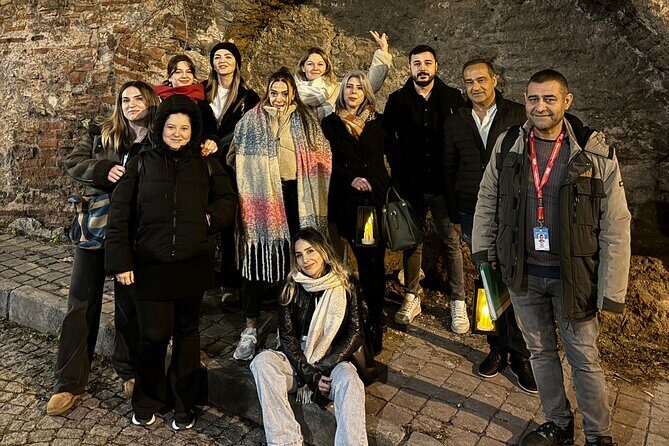
Included equipment is a big part of why people choose this tour. You’re provided EMF detectors, dowsing rods, an EVP recorder, and Maddusa’s Web green laser.
Here’s the practical way to think about it:
- It’s interactive. The tour clearly builds moments for you to use the tools during the walk.
- It’s also theatrical. You should treat the tools as part of the storytelling package rather than a scientific guarantee.
- If you enjoy doing hands-on experiments, even silly ones, you’ll likely have fun with the process.
This gear can add energy for people who don’t want a purely lecture-style ghost tour. And if you’re traveling with friends, it’s an easy way to keep the group engaged without long quiet stretches.
Price, group size, and English-language value
At $48.06, you’re paying for:
- a 2-hour guided route through major sites,
- included story-based stops,
- and the ghost-hunting tools.
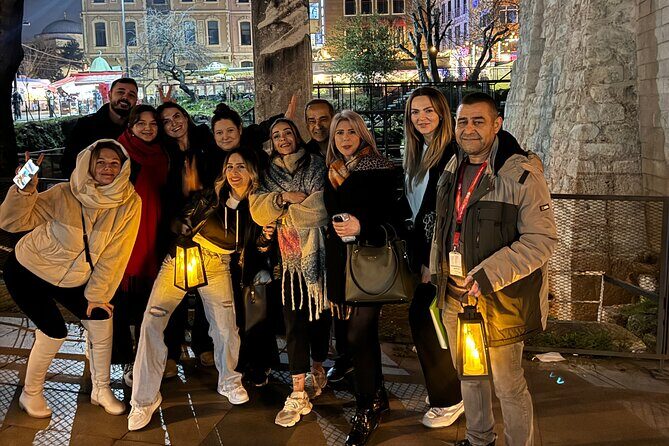
The group is capped at 20 travelers, which is a sweet spot for this format. Too small and you might lose the lively group energy; too big and you’d spend the night stuck waiting for the guide to finish talking.
English is included, and confirmation happens at booking. Also, the tour is something people plan ahead for: on average, it’s booked around 15 days in advance. If your dates are fixed, I’d book earlier rather than testing your luck.
If you’re traveling with a service animal, this tour allows them, and it’s near public transportation, which is helpful for an evening start.
Who should book this haunted night walk
This tour fits best if you:
- love walking routes that connect big landmarks with specific stories,
- enjoy dark historical anecdotes alongside spooky themes,
- want something more active than reading a plaque and moving on,
- and like the idea of using EMF/EVP-style tools during the night.
It may not be the best match if you:
- need a calm, light tour with minimal scary content,
- want long time inside buildings or museums,
- or prefer a strictly evidence-based approach to “ghost hunting.”
Quick pacing reality check: short stops add up
The itinerary is built around rapid, guided bursts. Most stops are 8–10 minutes, with one longer segment around the Hippodrome at 20 minutes. That means you’ll be walking, listening, and regrouping regularly.
Bring comfortable shoes. Night temps can change quickly, and the tour only works when the group can keep moving. Also, good weather is required. If conditions are bad, the tour may be rescheduled or refunded.
Should you book Istanbul Haunted Night Tour?
Yes, if you want a fun night plan that mixes Constantinople and Ottoman stories with a hands-on ghost twist. The value looks strong because you’re getting a guided, themed route across major landmarks, and you’re not paying separately for most entries. The included ticket for Kucuk Ayasofya is a nice bonus.
I’d especially recommend it for first-timers who want an easy way to understand why Sultanahmet feels like one long historical layer-cake. And if you’ve done other themed tours around the world, this one has a clear edge: the guide-led story chain is tight, and the EMF/EVP tools make it feel like an event, not just a lecture.
FAQ
How long is the Istanbul Haunted Night Tour?
The tour is about 2 hours.
Where does the tour start and end?
It starts at the Column of Constantine area (Molla Fenari, Vezirhan Cd. No:16 D:18, 34120 Fatih) and ends at Bab-ı Hümayun, the main gate to Topkapi Palace (Cankurtaran, Topkapı Sarayı, 34122 Fatih). The guide will walk back close to the starting area and can point you to where you want to go next.
Is the tour offered in English?
Yes, it is offered in English.
What’s included for the ghost-hunting part?
You’ll use EMF detectors, Maddusa’s Web green laser, dowsing rods, and an EVP recorder.
How big is the group?
The tour has a maximum of 20 travelers.
Can I get a refund if my plans change or weather is bad?
Yes. You can cancel for free up to 24 hours in advance for a full refund. If the experience is canceled due to poor weather, you’ll be offered a different date or a full refund.