REVIEW · ISTANBUL
Istanbul Hodjapasha Whirling Dervishes Show & Exhibition
Book on Viator →Operated by Hodjapasha Cultural Centre · Bookable on Viator
Some things feel almost hypnotic.
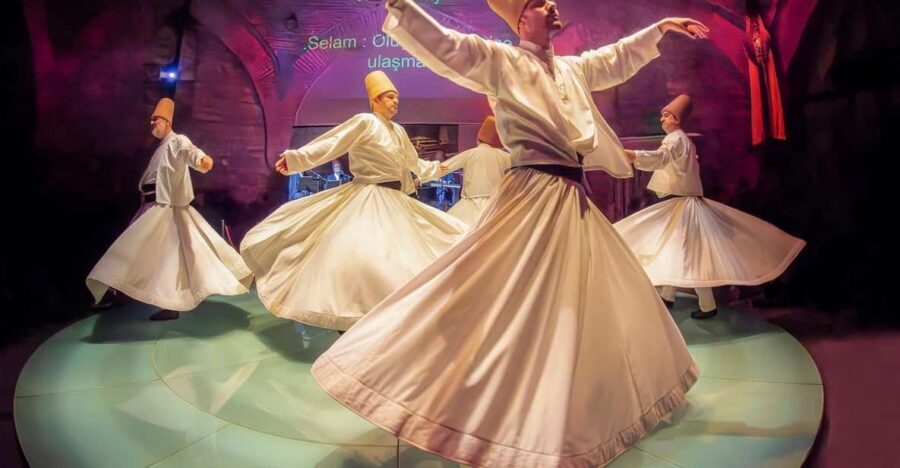
This Hodjapasha Whirling Dervishes Show & Exhibition is built around a one-hour ritual experience, paired with an exhibition area that helps you understand the symbolism behind what you’re seeing. You’ll get a clear sense of Sufi traditions, including references to Rumi, plus a calm setting where the focus stays on the ceremony.
Two things I really like: you’re given a multi-national booklet and bottled water, and the venue keeps things organized with assigned seating. The main consideration is expectation-setting: this is more ceremony than entertainment, and the whirling can feel repetitive if you’re looking for big showmanship.
In This Review
- Key things to know at Hodjapasha
- Hodjapasha’s ceremony vibe: intimate, rules-based, and very focused
- Getting to Hodjapasha: central location, public transit nearby, taxi tip
- The one-hour ritual: what to expect during your seated ceremony
- The exhibition before the show: Rumi, origins, and “how to read” the ritual
- No photos, no applause: why the rules matter more than you think
- Authenticity: what this does well, and how to avoid disappointment
- Price and value: is $32 worth it?
- Who should book this, and who should think twice
- After the show: where to eat and how to plan your evening
- Should you book the Hodjapasha Whirling Dervishes Show & Exhibition?
- FAQ
- How long is the Hodjapasha Whirling Dervishes Show & Exhibition?
- Where is the meeting point for the show?
- What’s included in the ticket price?
- Is food included?
- Is the show offered in English?
- Is there a minimum age requirement?
- Is hotel pickup or drop-off included?
- Are there any limits on group size?
Key things to know at Hodjapasha
- Read first, watch better: the foyer/exhibition area gives context before the ritual starts.
- Rules keep the mood: audience behavior is restrained, with no photos and no applauding.
- Small and intimate: the venue feels close and personal rather than arena-sized.
- A guided “what you’re seeing” flow: stages are explained with illuminated information around the room.
- Not a snack stop: plan dinner elsewhere since food isn’t included.
Hodjapasha’s ceremony vibe: intimate, rules-based, and very focused
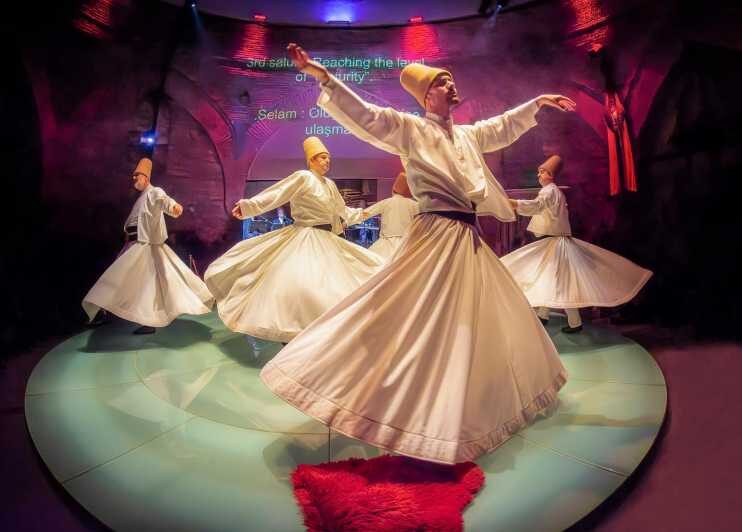
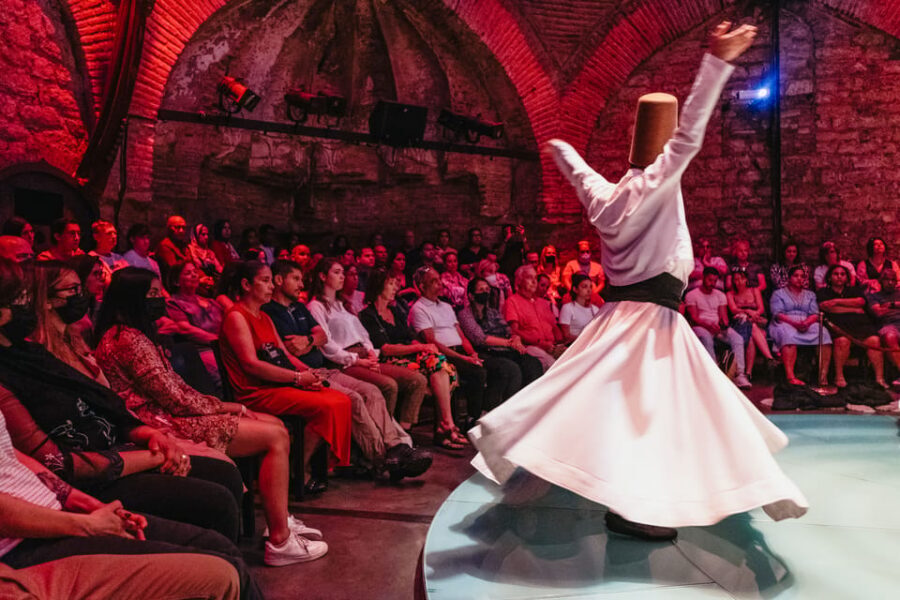
The Hodjapasha Cultural Centre experience is designed to be quiet inside and structured around a spiritual ritual. That means you’re not just sitting there for a performance; you’re participating in an atmosphere with clear expectations.
One of the best parts is how the ceremony stays respectful and contained. In your seat, you can watch the sequence unfold closely, and the lighting and sound are set up so you can actually follow what’s happening.
Another plus: you get assigned seating before you begin. That removes the awkward shuffle, and it helps you settle in for the full hour instead of constantly wondering where to look next.
If you want an upbeat, crowd-pleaser show, this may feel slow. Several movements repeat, and the pacing can be meditative rather than dramatic.
You can also read our reviews of more museum experiences in Istanbul

Getting to Hodjapasha: central location, public transit nearby, taxi tip
The meeting point is at Hodjapasha (Hoca Paşa Mahallesi, Ankara Caddesi, Hocapaşa Hamamı Sk. No:3 D:B, 34110 Fatih/İstanbul). Your ticket experience starts there and ends right back at the same spot.
The venue is near public transportation, so you can plan to use tram or short walks instead of relying on a car. That’s a big value in Istanbul, where traffic and last-mile drop-offs can steal time.
Also, pay attention to where taxis drop you. A helpful practical detail is that taxis stop on the main street, not inside the little lane right by the venue. Build in a few minutes for the final walk so you don’t arrive stressed.
Once you’re in the neighborhood, it’s easy to tack on time for food and strolling afterward. The area around the venue has restaurants and cafés, so you’re not stuck hunting for dinner in the dark.
The one-hour ritual: what to expect during your seated ceremony
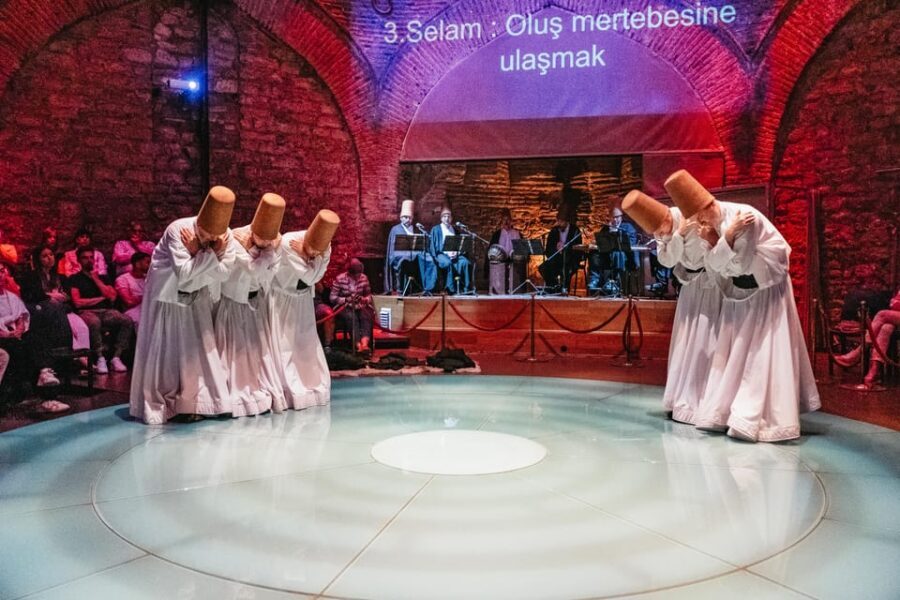
Your time on site is about one hour, and your admission ticket covers entry for the ceremony itself. Seats are close to the stage, so you can watch details like posture, arm position, and the way the ceremony progresses.
Here’s the key expectation to set: the whirling doesn’t always feel like it starts immediately at full intensity. Some visitors find the main action begins later in the hour, which can matter if you show up expecting a constant burst of spinning from minute one.
The structure generally follows a staged progression. You’ll see the ceremony move through phases while musicians and singers provide the soundscape. It’s not a “song after song” concert format, so don’t come for variety in a pop sense. Come for a single, disciplined ritual flow.
Two practical comfort tips help:
- Dress for indoor cool-down. Even in Istanbul, venues can feel cooler when the lighting is low.
- Use the first minutes to get your bearings. Once the sequence clicks, the repetition becomes part of the effect rather than a problem.
If you’re traveling with kids, keep it in mind: a calm ceremony with a lot of repetition can be tough for younger attention spans. This is better suited to adults and teens who want a cultural and spiritual experience.
The exhibition before the show: Rumi, origins, and “how to read” the ritual
Don’t skip the exhibition area. The best version of this experience is the one where you arrive ready to interpret what you see.
Before the ceremony space, you’ll find an area where you can read about the origin of the whirling practice and the meaning behind the steps. The information is presented in a way that matches the ceremony’s flow, so it doesn’t feel like random museum text.
The multi-national booklet is part of this. It’s there to help you follow along even if you don’t have Turkish context. In addition, there are references to Sufi traditions and Rumi poetry, which gives you a more grounded understanding of why the ceremony exists beyond visual curiosity.
Many visitors also highlight that the venue uses illuminated explanations during the ceremony, almost like stage-by-stage notes. That’s useful because it turns the hour into something you can track, rather than just watch blindly.
If you’re short on time, you can still benefit by spending at least 20 minutes in the exhibition before seating. That’s usually the sweet spot between “I skimmed” and “I can actually tell what I’m looking at.”
No photos, no applause: why the rules matter more than you think
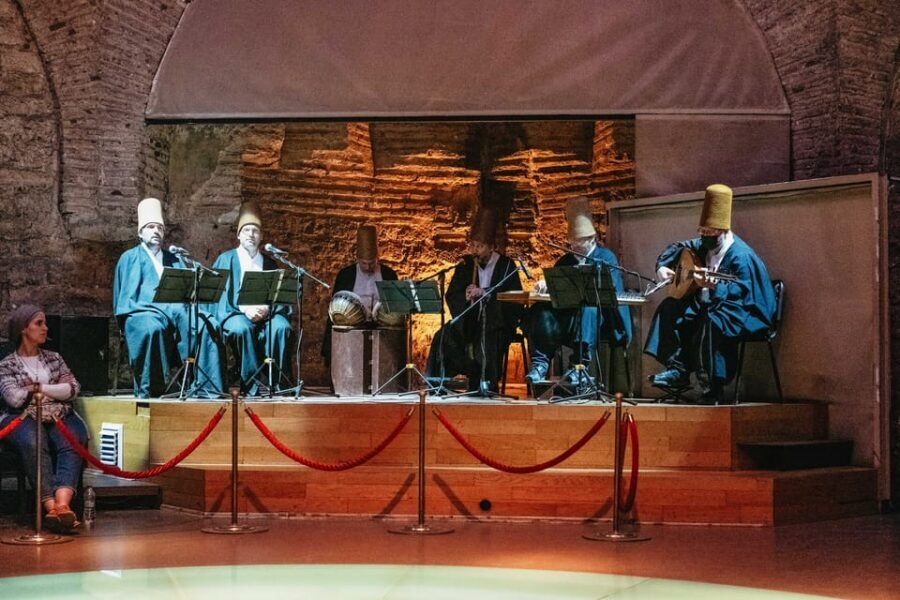
One reason this experience feels different is the behavior rules. You’re asked not to take photos or videos, and applause is not part of the ritual. That keeps the room focused and reduces distraction.
From a visitor standpoint, that can be a blessing. It helps you stay present and reduces the usual modern urge to perform back at the performers. It also makes the ceremony feel more intentional.
From a practical standpoint, it also changes how you’ll experience time. You won’t be multitasking. You’ll have to sit with the movement and the sound as they unfold.
If you’re the type who loves capturing moments on your phone, plan ahead: leave the expectation at the door. Instead, treat the memory as something you’ll carry in your head.
You can also read our reviews of more tours and experiences in Istanbul



Authenticity: what this does well, and how to avoid disappointment
Let’s be honest about expectation. This is presented as a cultural and mystical ceremony at a dedicated venue, and it’s staged for an audience. Some people feel that makes it less “authentic” than a private, everyday religious practice.
But you can still get real value from it if you approach it with the right mindset. Think of it as a structured introduction to how Sufi devotion can look and feel in motion, not as a documentary of one single unfiltered community rite.
Where this venue really helps is context. The exhibition and the explanatory elements help you connect the repetitive movements to meaning, including the spiritual intent behind the turning.
A simple rule for avoiding disappointment:
- If you want a spiritual snapshot with cultural context, you’ll likely find it compelling.
- If you want high-energy entertainment with constant surprises, you may feel bored.
And yes, the movement is repetitive. Some visitors actually say that physical discipline is part of what makes it impressive—the ability to keep focus for an extended time.
Price and value: is $32 worth it?
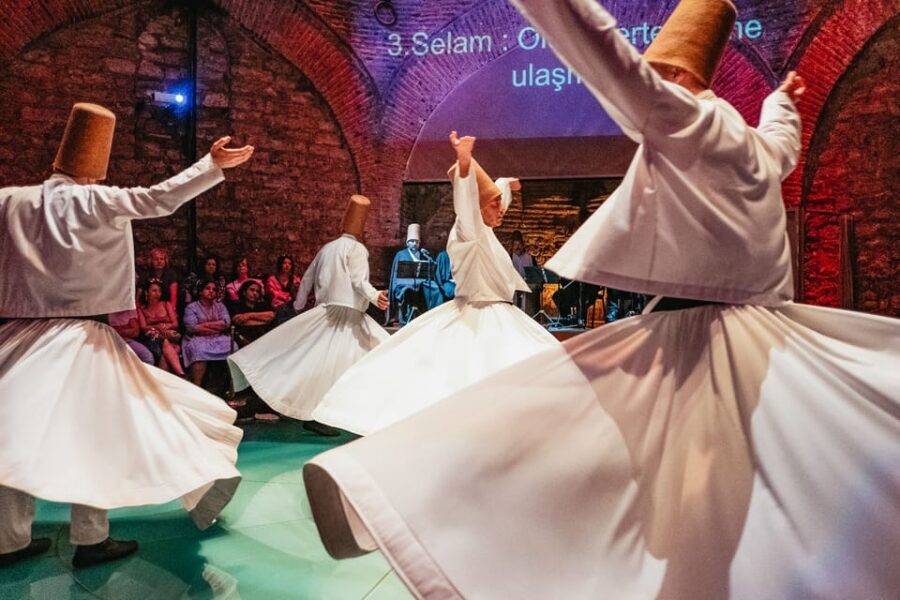
At $32 per person for about an hour, you’re paying for a specific blend: admission plus a guided context layer (booklet and exhibition) in a central setting.
Here’s why the price can feel fair:
- You get the ritual experience without extra add-ons.
- Bottled water is included.
- You get reference material that helps you understand what you’re watching.
What you should factor in:
- Food isn’t included, so you’ll likely spend separately nearby.
- It’s one hour, so you want to treat it as a planned block, not a random stop.
Also, the show tends to be booked ahead—on average, about 17 days in advance. That’s a hint that demand is real. If you’re traveling during peak season, I’d lock it in early so you’re not stuck with awkward timing.
Who should book this, and who should think twice
This is ideal if you want:
- A cultural experience you can follow, not just stare at
- Sufi and Rumi context alongside the ceremony
- A quiet, intimate setting with clear rules
It’s less ideal if you:
- Need constant novelty or interactive entertainment
- Are bringing very young kids who get restless in low-light environments
- Expect photography-style show moments
If you’re religious, non-religious, or somewhere in between, you can still enjoy it. The experience is built as a respectful ritual for observation, and many people find that approach makes it moving rather than awkward.
If you’re a “I read the backstory first” kind of traveler, you’ll especially appreciate the exhibition area. You’ll understand the steps faster and feel more connected to the flow.
After the show: where to eat and how to plan your evening
The venue sits in an area with restaurants and cafés, so you’re set up for an easy dinner plan right after. Some visitors mention that there’s also a food street vibe outside the main area, which makes it convenient to grab something without going far.
Spice Market is also described as close by, which makes it easy to extend the night with a short food-and-snacks walk. If you like small browsing stops, you can turn the whole outing into an evening rather than a single ticket event.
Practical timing tip: build a little buffer after your one-hour ceremony. Since the room atmosphere is calm and structured, you’ll likely want a few minutes to reset before eating.
Should you book the Hodjapasha Whirling Dervishes Show & Exhibition?
Book it if you want a structured cultural and spiritual experience that’s easy to understand thanks to the exhibition and booklet. At $32, it’s also a straightforward “one hour in, one hour out” plan that doesn’t require extra logistics.
Skip or reconsider if you’re mainly chasing entertainment value. This is ceremony-forward, and the repetition can feel slow if you’re not in the right mood.
My rule of thumb: if you can spare time to read the exhibition for 20 minutes before the show, you’ll get much more out of it. If you walk in cold and impatient, you might leave feeling like you just watched a circle for an hour.
If you match the vibe, though, this one is genuinely memorable in a calm, respectful way.
FAQ
How long is the Hodjapasha Whirling Dervishes Show & Exhibition?
The ceremony lasts about 1 hour.
Where is the meeting point for the show?
The meeting point is at Hodjapasha, Hoca Paşa Mahallesi Ankara Caddesi, Hocapaşa Hamamı Sk. No:3 D:B, 34110 Fatih/İstanbul, Türkiye.
What’s included in the ticket price?
Your ticket includes admission, a multi-national booklet, and bottled water.
Is food included?
No. Food is not included.
Is the show offered in English?
Yes, it’s offered in English.
Is there a minimum age requirement?
Yes, the minimum age is 7 years.
Is hotel pickup or drop-off included?
No. Hotel pickup and drop-off are not included.
Are there any limits on group size?
Yes. The activity has a maximum of 170 travelers.