REVIEW · ISTANBUL
Istanbul Private Guiding Service
Book on Viator →Operated by Ephesus Tour Company · Bookable on Viator
Istanbul rewards slow looking, not frantic rushing. This private highlights walk brings you to the core sights of Istanbul’s old center with a local guide who helps you understand what you’re seeing as you walk.
I especially like the straight-to-the-point route: Blue Mosque, Grand Bazaar, Hagia Sophia, and Topkapi Palace in about five hours. I also like that it’s private, so your guide can match your pace and keep the time where it matters, not in traffic.
One consideration: it’s mostly walking, and Hagia Sophia can have long lines since it’s open to the public, with no skip-the-line option built in. If you’re sensitive to crowds, plan your day smartly.
In This Review
- Key things to know before you go
- A 5-hour private highlights walk in Sultanahmet
- Blue Mosque: the blue Iznik-tile interior and what to look for
- Grand Bazaar: shopping streets plus a plan to avoid getting lost
- Hagia Sophia Grand Mosque: what to expect when lines form
- Topkapi Palace: Ottoman power, holy relics, and the Imperial Treasury
- What the $85 price buys you (and what you’ll pay extra)
- Timing, crowds, and walking comfort tips that actually matter
- Should you book this Istanbul private guiding service?
- FAQ
- What is included in the Istanbul private guiding service?
- Is pickup included?
- Are entrance fees included for all the stops?
- Can I skip the line at Hagia Sophia?
- Which days are key sites closed?
- How many people do I need to book?
Key things to know before you go
- Private, on-foot route: no vehicle in the historic area, so you’ll see the sights at walking speed
- Blue Mosque is free: you won’t need an entrance ticket for that stop
- Hagia Sophia line reality: expect waiting, because it’s a public site and skip-the-line isn’t included
- Topkapi Palace is timed by the calendar: closed to visitors on Tuesdays
- Grand Bazaar has a weekly closure: closed on Sundays
- Guides matter: people rave about guides who explain what you’re looking at and help with photo spots and pacing
A 5-hour private highlights walk in Sultanahmet
This tour is designed for people who want the big names without turning the day into a checklist. You start with pickup offered (so you’re not always starting from the cold and confused), then you move through the historic core on foot. Since transfers aren’t included, you’ll want to be ready to meet your guide at the pickup point or in a convenient meeting area.
The format is private—only your group participates. That matters in Istanbul, where the main sights are close together but also easy to misunderstand if you’re just drifting. A guide gives you the fast context you need: what each building was for, what to look at beyond the obvious, and how to move through each stop without wasting time.
The price is $85 per person for about five hours with a professional local guide. Entrance fees are not included (except Blue Mosque), so think of this as paying for expertise and time management more than paying for “site passes.” In practical terms, you’ll likely spend extra for Hagia Sophia and Topkapi Palace tickets, while Blue Mosque is free.
Group discounts are offered, and a minimum of two people per booking is required. So if you’re traveling solo, this can still work if you can pair up with someone from your party or group.
You can also read our reviews of more private tours in Istanbul


Blue Mosque: the blue Iznik-tile interior and what to look for
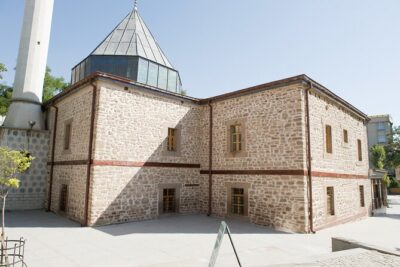
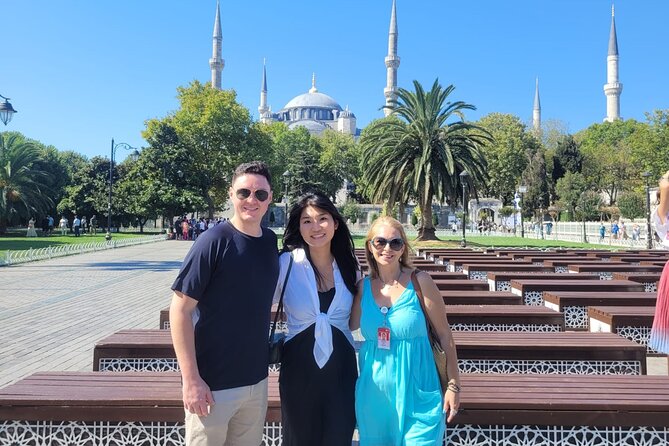
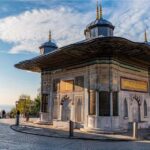
Your first stop is the Sultanahmet Imperial Mosque, better known as the Blue Mosque. It sits across from Hagia Sophia and was built in the 16th century by architect Mehmet. The nickname comes from the interior decoration, especially the famous blue Iznik tiles.
Why this stop works well at the start of the tour: the Blue Mosque gives you a baseline for Ottoman-era design language before you move into the layered stories of Hagia Sophia and Topkapi. Your guide can point out details that are easy to miss if you’re just taking photos and moving on—like how the tilework creates a cool visual rhythm inside the mosque.
The timing is also solid: about 30 minutes. That’s enough time to enter, orient yourself, and enjoy the interior without rushing. And here’s a clear value point—admission is free for this stop, so you’re not paying extra to get the payoff.
One thing to consider is that worship spaces can feel different depending on the time of day. If you want calm for photos and looking, you’ll want to keep your expectations realistic and be ready for crowds or shifting schedules. This is normal for Istanbul’s headline sights, not a flaw in the tour.
Grand Bazaar: shopping streets plus a plan to avoid getting lost
After the mosque, you head into the Grand Bazaar, a place that can feel like it’s running your life. This is a labyrinth of streets and passages with more than 4,000 shops, and each trade tends to cluster together. You’ll hear the building itself explained like a map: goldsmiths, carpet sellers, and Turkish arts and crafts like handpainted ceramic plates and hand-honed copperware.
The key here is that you’re not just going shopping. You’re getting a guided way to understand how the bazaar is organized. Without that, it’s very easy to lose your bearings and spend your hour bouncing between stalls randomly.
You’ll have about one hour in the bazaar. That’s a smart length because you can see how the market works, pick a few things to focus on, and still have energy left for Hagia Sophia and Topkapi. If you’re the type who enjoys wandering, one hour might feel short. But for most people trying to hit the main highlights, it’s just right.
The bazaar also has a weekly closure: it’s closed to visitors on Sundays. If your trip lands on a Sunday, this stop won’t run, so it’s worth checking the day before you commit.
For shopping, bring the mindset of browsing first. Many items here are decorative and commemorative, but you’ll also find practical crafts. If you find a shop you like, it’s better to return for a second look than to buy in the rush of your first minutes inside.
Hagia Sophia Grand Mosque: what to expect when lines form
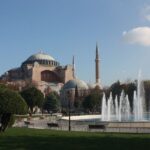
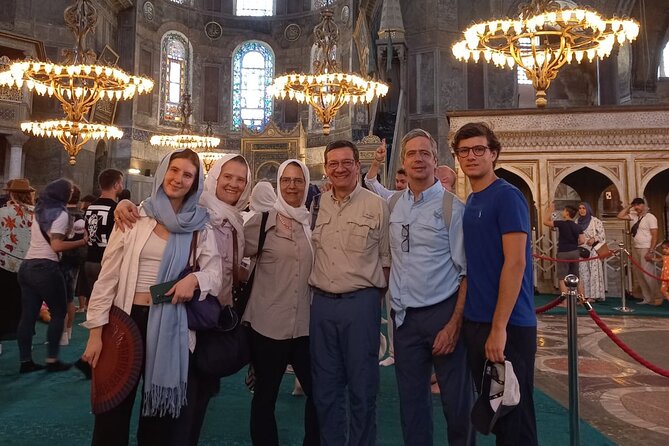
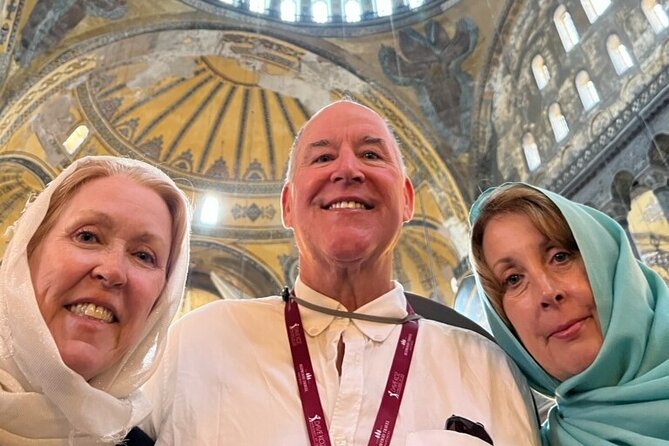
Hagia Sophia is the “how did they build this?” stop. It started as a basilica built by Constantine the Great in the 4th century, then was reconstructed by Justinian in the 6th century. Today it’s known as the Hagia Sophia Grand Mosque.
You get about one hour at this stop. That’s enough for the main highlights if you’re not stuck waiting too long. And waiting is the big point: this is not a museum setup with timed entry the way some attractions are. It’s open to public sight, which means lines can be long, and the tour does not offer a skip-the-line option.
So I want you to plan mentally for the line as part of the experience. Bring patience, not a strict stopwatch. If you’re traveling with kids, this is where you’ll feel the most impact—so you’ll want to keep snacks and water in mind if your day requires it (food and drinks aren’t included on the tour).
What a good guide does at Hagia Sophia is help you look past the scale. The structure is impressive, yes, but the value is in understanding why the building’s story matters: the way it reflects shifts in power and culture across centuries. That’s hard to fully absorb without someone translating the symbolism while you’re inside.
Also, expect it to be a photo magnet. If you care about getting good pictures, ask your guide about the best angles as you’re entering, not after you’re already stuck in a crowd.
Topkapi Palace: Ottoman power, holy relics, and the Imperial Treasury
Next up is Topkapi Palace, home of the Ottoman sultans from the 15th to the 19th centuries. This stop is also about more than rooms—it’s about what these objects and spaces were meant to project.
You’ll spend about one hour here, which is a good reality check. Topkapi is huge. One hour won’t make you “see everything,” but it will give you the essentials if you know where to focus.
Your guide will help you aim at the highlights that make Topkapi feel different from a standard palace visit. Expect to hear about an exquisite collection of crystal, silver, and Chinese porcelain, along with robes worn by sultans and their families. You’ll also get pointed toward the Imperial Treasury, including famous jewels and the Holy Mantle and relics connected to the Prophet Mohammed.
One major scheduling detail: Topkapi Palace is closed to visitors on Tuesdays. If your trip day includes Tuesday, don’t treat Topkapi as guaranteed—your plan should have a backup.
Entrance fees are not included for Topkapi, so factor that into your total spending. Still, the one-hour format plus guided context is often a better value than trying to do this alone with a short attention span and a crowd around you.
If you’re tempted to rush, resist. Topkapi rewards looking slowly at details—materials, display choices, and the way the palace curated its image. Your guide can keep it from turning into overload.





What the $85 price buys you (and what you’ll pay extra)
Let’s talk value in plain terms. You pay $85 per person for a private 5-hour guided walk with a professional local guide, with pickup offered. That’s the service you’re buying: interpretation, pacing, and a route that moves you through the main highlights efficiently.
What’s included:
- Professional local guide
- Pickup offered
- Mobile ticket (so you’re not juggling printouts)
- Group discounts
- Private format (only your group)
What’s not included:
- Food and drinks
- Entrance fees (with the exception that Blue Mosque admission is free)
- Transfers
This is why the tour can feel like a strong deal for some travelers and a smaller deal for others. If you love “explain it to me” experiences, the guide value is the core bargain. If you only want to access buildings and don’t care about context, you might prefer a self-guided plan and buy tickets on your own.
Also, since this is a walking tour with no vehicle in the tour area, you’re paying for logistics support more than for comfort. It’s a great choice if you enjoy moving through neighborhoods and seeing how different sights connect.
Two more practical notes:
- Children must be accompanied by an adult, so plan accordingly for family timing.
- Most travelers can participate, but think about your own walking tolerance before you book.
Finally, since you’re near public transportation, it’s easier to stitch together plans before or after your tour day. Just don’t count on it to replace the guided pacing during the main stops.
Timing, crowds, and walking comfort tips that actually matter
Istanbul’s crowds are not evenly distributed. You’ll feel it most at the big indoor or iconic entry points, and it can change quickly by day.
One very practical tip from real experience: try to avoid Friday and Saturday if you can. Those days can bring immense crowds. Even with a guide, you’ll spend more time squeezing through lines and photo gaps.
Also watch your calendar for closures that can affect the day:
- Grand Bazaar is closed to visitors on Sundays.
- Topkapi Palace is closed to visitors on Tuesdays.
Hagia Sophia is open to public sight, so you’re not just planning for a ticket. You’re planning for how long people may be waiting to enter. And remember: there is no skip-the-line option as part of the tour. If your trip is tight, build extra buffer into your schedule.
Because this is entirely on foot in the core sightseeing zone, comfort matters. You’ll want footwear that works for standing and walking on uneven historic surfaces. Bring a small plan for hydration since food and drinks aren’t included.
The best part of choosing a private guide on a day like this is the flexibility. If the group around you gets thick, a guide can adjust the moment-by-moment flow so you don’t burn time. In at least one case, guides like Burak have been praised for managing pacing and helping people find good photo spots—exactly what you want when you’re trying to turn a busy day into a satisfying one.
Should you book this Istanbul private guiding service?
I’d book this if you want a guided, efficient route through the Istanbul highlights without spending your day figuring things out on your own. It’s especially worth it if you care about context at Hagia Sophia and Topkapi, and if you’d rather spend your time looking and understanding than reading in a museum-quiet way.
I’d think twice if:
- Your schedule includes Sunday (Grand Bazaar) or Tuesday (Topkapi), since key stops may be off the table.
- You’re traveling on Friday or Saturday and you know crowds hit you hard.
- You hate lines and want a true skip-the-line experience at Hagia Sophia (the tour doesn’t provide it).
If you’re flexible on timing and you like the idea of a local guide shaping your route, this tour is a strong value. You’re paying for the guide and the structure, and you’ll feel that the moment you walk into places like the Blue Mosque and see how the explanations make the details click.
FAQ
What is included in the Istanbul private guiding service?
You get a professional local guide, pickup offered, and a mobile ticket. Entrance fees and food and drinks are not included.
Is pickup included?
Pickup is offered, but transfers are not included. So you’ll want to be ready to meet your guide at the pickup point.
Are entrance fees included for all the stops?
No. Blue Mosque admission is free, but Hagia Sophia and Topkapi Palace entrance tickets are not included.
Can I skip the line at Hagia Sophia?
No. There is no option to skip the line, and there might be long lines because it is open to public sight.
Which days are key sites closed?
Grand Bazaar is closed to visitors on Sundays. Topkapi Palace is closed to visitors on Tuesdays.
How many people do I need to book?
A minimum of 2 people is required per booking. The tour is private, so only your group participates.