REVIEW · ISTANBUL
Istanbul Sunset Cruise With Luxury Yacht On Bosphorus
Book on Viator →Operated by Acetes Travel Istanbul and Turkey Tours · Bookable on Viator
That golden-hour Bosphorus light hits different.
I love how this cruise turns two hours into a fast, scenic sampler of Istanbul’s big landmarks without shoe-leather stress. I also like that you get guided context while you’re floating past the city’s palaces, mosques, towers, bridges, and fortresses. One thing to consider: it’s sightseeing from the water, so you won’t get long time on land for detailed wandering at each site.
Here’s the practical appeal: you’ll be comfortable, fed, and pointed at the right sights as the sun drops. If your guide is Mert or Alpy, you’ll likely hear a lively, structured running commentary plus helpful local tips at the end. Because it depends on timing and sunset conditions, plan around the reality that weather can matter.
In This Review
- Key highlights worth planning for
- Why a Bosphorus sunset cruise beats a packed day on land
- The luxury yacht setup: comfort, snacks, and photo-friendly pacing
- Your running route: what you’ll see on the European shore
- Galata Tower: the skyline anchor
- Dolmabahçe Palace: Western-leaning Ottoman grandeur
- Ortaköy: the meeting point under the bridge
- Bridges and fortified choke points: where the Bosphorus gets serious
- Rumeli Fortress: built for defense at the tightest point
- Fatih Sultan Mehmet Bridge: the second Asia-Europe link
- Galata Bridge and the Golden Horn entrance
- The Asian shore portion: quieter drama and palace views
- Anadoluhisarı: the narrowest-point fortress logic
- Küçüksu Pavilion: a royal garden with a Byzantine thread
- Beylerbeyi Palace: woodwork and gold embroidery workmanship
- Kuleli Naval Station and Cengelkoy: coastal rhythm and military edges
- Maiden’s Tower: the romantic icon—and how the cruise handles it
- How the guides make it worth it: Mert and Alpy style
- Drinks, snacks, and the small comfort wins that matter
- Timing: why 2 hours at sunset is the sweet spot
- Price and value: what $31.24 buys you on the Bosphorus
- Who should book this cruise?
- Should you book the Istanbul Sunset Cruise on a luxury yacht?
- FAQ
- Where does the Bosphorus cruise start?
- How long is the cruise?
- What’s included in the price?
- Is there hotel pick-up or drop-off?
- Do I need audio headphones to hear the guide?
- Is the group size large?
- What if the weather is bad?
Key highlights worth planning for
- Live guide narration as you pass major landmarks on both the European and Asian shores
- Included drinks and snacks: Turkish coffee, lemonade, water, nuts, chips, crackers, pretzels, plus 2 glasses of wine
- Classic sunset photo route around palaces, bridges, fortresses, and waterfront mansions
- Small-group feel with a maximum of 25 people, and some departures run noticeably smaller
- WhatsApp-style communication to confirm details and help you find the meeting point
- Covers a lot of Istanbul fast: Galata, Dolmabahçe, Ortaköy, Bosphorus Bridge area, Rumeli Fortress, Beylerbeyi, Maiden’s Tower, and more
Why a Bosphorus sunset cruise beats a packed day on land
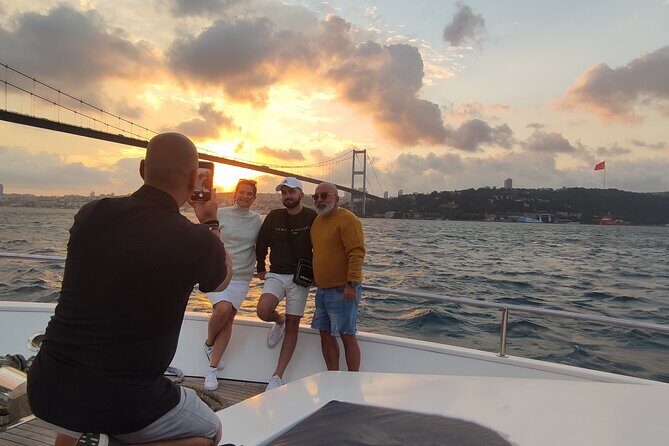
Istanbul can pull you in ten directions at once. A sunset cruise solves that problem by giving you a single, moving viewpoint. From the Bosphorus, you see how the city actually works—two continents, one strait, and a waterfront built for power, trade, and story.
This tour also gives you the timing advantage. Sunset on the Bosphorus means softer light on ornate facades and dramatic silhouettes of towers and bridges. You’re not just looking at famous names—you get a sense of how the architecture lines up along the water.
The best part for most people is that you don’t have to figure out the route while you’re hungry, tired, and juggling tram/bus schedules. You show up at the meeting point, step onto a yacht, and let the water do the sightseeing.
You can also read our reviews of more boat tours in Istanbul
The luxury yacht setup: comfort, snacks, and photo-friendly pacing
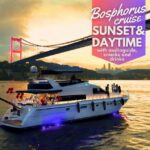
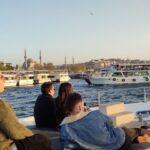
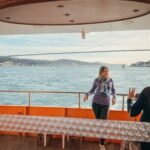
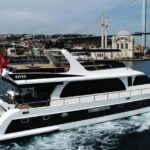
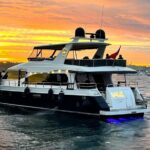
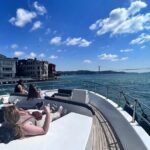
You’re cruising on a luxury yacht designed for passenger comfort, not cramped deck shuffling. Expect a relaxed flow for a roughly 2-hour experience, with time to take photos as you glide past landmark after landmark.
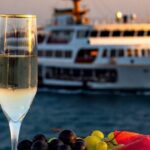
Food and drink are part of the point. You’ll get Turkish coffee, lemonade, and water, plus snacks like nuts, chips, crackers, and pretzels. Wine is included too: 2 glasses per guest. One useful detail from the tour’s setup—if you want to bring more, they’ll serve it.
What this means for your evening: you can stay in “vacation mode.” You’re not scanning menus or hunting for a place to sit after a long day. The snack table also helps if you’ve timed your day around sunset but still need something in your system.
Quick practical note: because the narration is live (not audio), your spot on the yacht matters. If you want the clearest history and context, position yourself where you can hear your guide as the boat moves.
Your running route: what you’ll see on the European shore
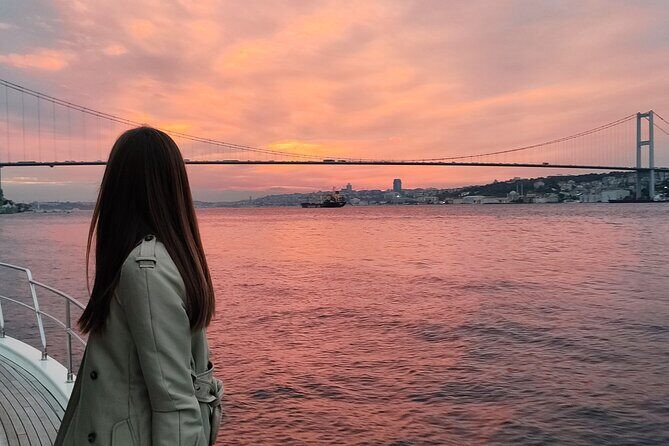
This is where Istanbul often looks the most cinematic, because the coastline is packed with landmarks that face the water.
Galata Tower: the skyline anchor
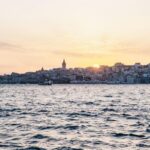
You’ll get views of Galata Tower, which is one of the city’s most recognizable vertical markers. Even from a distance, it helps you orient the city fast. When you can “place” a landmark early, the rest of the architecture makes more sense.
Dolmabahçe Palace: Western-leaning Ottoman grandeur
Next up is Dolmabahçe Palace, built in 1856 for Ottoman Sultan Abdülmecit. The standout here is its Western-style traces—you’ll notice how the palace reads differently than older Ottoman waterfront landmarks. From the Bosphorus, you also see why it’s considered a major Istanbul landmark: the setting is the presentation.
A reality check: you’ll be seeing it from water level and from a moving perspective. That’s great for photos and atmosphere, but it’s not a substitute for going inside if you’re the type who wants rooms and artifacts.
You can also read our reviews of more tours and experiences in Istanbul

Ortaköy: the meeting point under the bridge
Ortaköy is a favorite because it feels like Istanbul at street level and waterfront level at the same time. You’re under the European foot of the Bosphorus Bridge, and the district’s mix of mosque, church, and synagogue makes the area visually layered.
Even if you never step off the boat, you’ll feel why people arrange dates and evenings here. There’s a pier square vibe and a strong food-and-coffee culture, plus the famous kumpir shops. This is also a good mental waypoint—once you see Ortaköy, you can plan dinner nearby later.
Bridges and fortified choke points: where the Bosphorus gets serious
As you continue, the cruise passes several engineering landmarks that tell you Istanbul’s long-term strategy: control the strait, control movement.
You’ll see the Bosphorus Bridge area, then catch views of forts and walls that sit like punctuation marks along the water.
Rumeli Fortress: built for defense at the tightest point
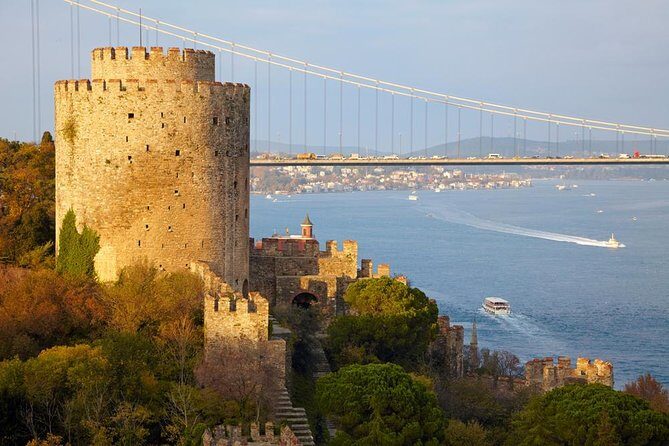
Rumeli Fortress faces the Asian shore counterparts across the strait, at a point where the Bosphorus narrows visually. It’s known for its big towers and city walls—things you can spot even without a close-up. The effect is immediate: it looks like the city was always protecting its throat.
Fatih Sultan Mehmet Bridge: the second Asia-Europe link
The Fatih Sultan Mehmet Bridge is another major visual marker along the route. It connects Asia and Europe in addition to the Bosphorus Bridge, and from the water you’ll see both the scale and the layout of the crossing.
Galata Bridge and the Golden Horn entrance
You’ll also pass views connected to the Golden Horn (Haliç) and the Galata Bridge spanning it. This part matters because it’s the other big water system feeding Istanbul’s story. Seeing it from the Bosphorus side helps you understand the geography: the city’s historic heart isn’t just on land—it’s shaped by water.
If you like connections and cause-and-effect, this section is fun. It turns Istanbul from a set of landmarks into a water-based map.
The Asian shore portion: quieter drama and palace views
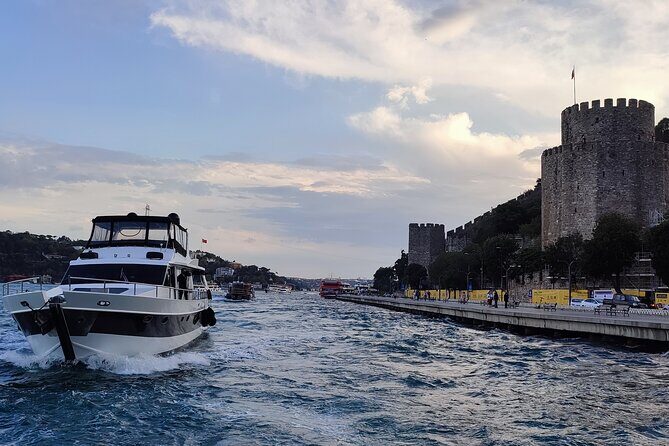
Once the route shifts to views on the Asian side, the vibe can feel a touch calmer—less like a stage and more like a long waterfront story.
Anadoluhisarı: the narrowest-point fortress logic
Anadoluhisarı was built in 1393–1394 as part of Ottoman preparations for a siege on the Byzantine city of Constantinople. From the water, it’s easy to appreciate the logic of the location: it sits at the narrowest point, where the Bosphorus strait is about 660 meters wide.
This stop is one of those “instant understanding” moments. You’re not just looking at a fortress name—you’re seeing why someone would build there.
Küçüksu Pavilion: a royal garden with a Byzantine thread
You’ll see Küçüksu Pavilion (Küçüksu Kasrı), tied to the Byzantine period and later associated with Ottoman garden life. It’s mentioned as one of the sultan’s private gardens during the Ottoman era, and Murad IV reportedly loved it enough to call it Silver Cypress.
From the cruise perspective, you’re mainly taking in the form and setting. Still, the garden/pavilion story adds texture if your guide mentions the evolution of the site.
Beylerbeyi Palace: woodwork and gold embroidery workmanship
Beylerbeyi Palace is another standout on the Asian side. It’s known for impressive structure plus wood carving and gold embroidery workmanship. From the Bosphorus, you get the overall “presence,” and the guide’s narration helps you connect that presence to why it mattered.
If you’re into architecture, this is where the cruise earns its keep. The visuals are good, but the added context is what turns it from seeing buildings into understanding them.
Kuleli Naval Station and Cengelkoy: coastal rhythm and military edges
You’ll also pass areas like Kuleli Naval Station and the Cengelkoy region. These names aren’t always on first-time itineraries, but from the water you’ll get a sense of Istanbul’s mix: beauty and defense, leisure and function.
The key is to stay curious without expecting every detail to be visible from the yacht. The cruise is your “overview,” not your full museum replacement.
Maiden’s Tower: the romantic icon—and how the cruise handles it
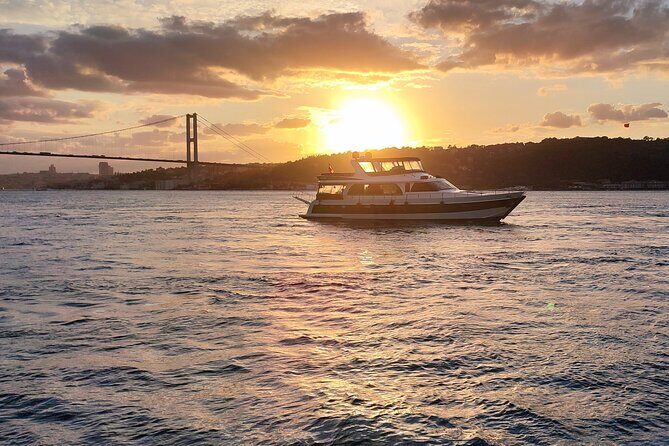
If you’ve heard of Maiden’s Tower, you’ve heard of the story. This landmark has a reputation for romance, and it’s also a working site: it was restored in 2000 and started serving as a restaurant.
From the cruise, you’ll see it as the “symbol” it has become. The interesting part is how access is described: you can only reach it by boat and there’s mention of paying the toll on the boat, rather than needing to eat at the restaurant just to visit and view it.
A practical consideration: from your yacht, you’ll get the big iconic view, but if you want to go inside or step on land, you’ll need a separate plan. This cruise is built for the sunset vista, not for an island detour.
How the guides make it worth it: Mert and Alpy style
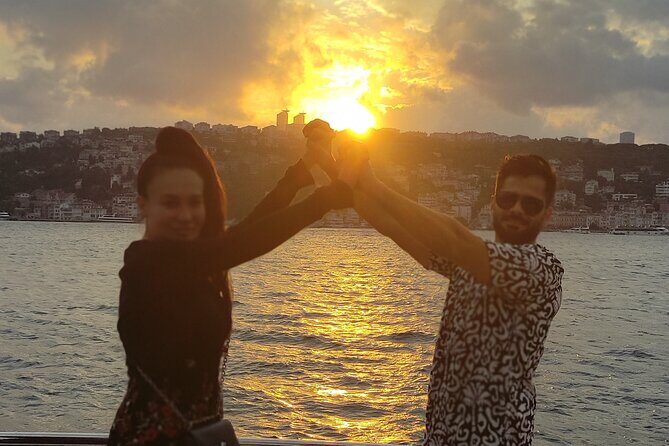
The difference between a decent cruise and a memorable one is the narration. This tour is built around live guide commentary. No audio guides—so you’re listening to a person explain what you’re seeing as it happens.
I noticed how helpful the guide support can feel in real life. For example, Mert was praised for detailed explanations and for sending restaurant recommendations at the end. Alpy was praised for being fun and informative while pointing out the best parts of the route at sunset.
What you should do: treat the narration like a “moving walking tour,” just without the walking. If you hear a detail about a palace style or why a fortress sits where it does, jot the name down. It makes your later self-guided exploration easier.
Drinks, snacks, and the small comfort wins that matter
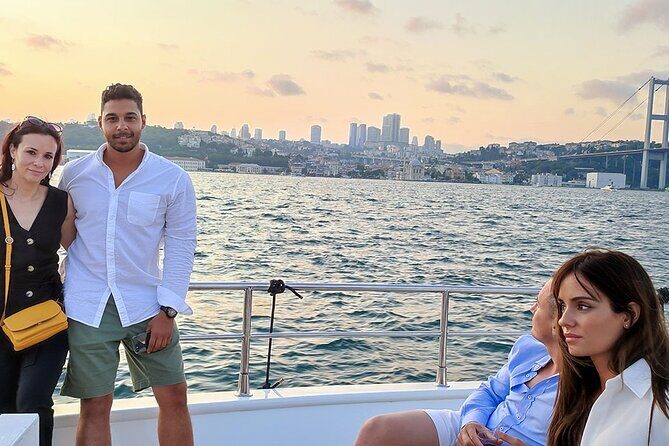
Food on a boat can be a make-or-break detail. Here, the basics are handled well. You get a snack mix—nuts, chips, crackers, pretzels—plus drinks including Turkish coffee and lemonade.
Wine is included with 2 glasses per guest. That’s a meaningful value add because it sets the mood for sunset without you having to hunt for a bar. Also, the vibe is relaxed enough that you can bring extra alcohol if you want, and they’ll serve it.
One more detail from real experiences: it’s common to feel the service team is quick and friendly, and you might even be offered Turkish tea. Don’t count on a specific drink beyond what’s included, but it’s the kind of hospitality touch that makes the boat feel less transactional.
Timing: why 2 hours at sunset is the sweet spot
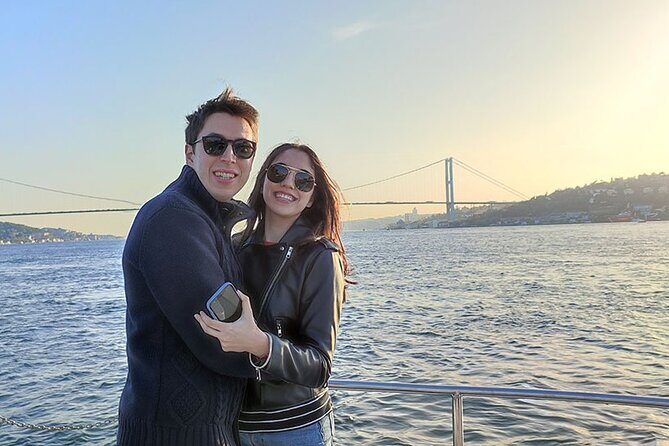
Two hours can sound short until you do the math. A lot of Istanbul sightseeing becomes slower once you account for transit and walking. A cruise compresses prime viewpoints into a single block of time.
The route also has a natural rhythm: you start with landmark recognition, then move into palaces and neighborhoods, then hit bridges and fortresses, and finally close with the iconic skyline moment around sunset light. If you want photos, this pacing is ideal because you’re not standing still too long, and the scenery keeps changing.
The main timing variable is weather. This experience requires good weather, so if conditions aren’t right, you may be offered a different date or a full refund. I’d build flexibility into your schedule if you can.
Price and value: what $31.24 buys you on the Bosphorus
At about $31.24 per person, you’re paying for three things at once: prime sunset access, guided interpretation, and included refreshments.
Many Istanbul activities cost that much or more and still leave you handling drinks and snack costs separately. Here, you get Turkish coffee, lemonade, water, snacks, and two glasses of wine included. Even if you don’t finish the cruise with a full meal, the onboard food keeps the experience comfortable.
Also, you’re not just paying for scenery. You’re paying for someone to connect what you see: why fortresses are where they are, why Dolmabahçe reads the way it does, and how the bridges reflect Istanbul’s ongoing role as a crossroads.
Who should book this cruise?
This tour makes the most sense if you:
- Want a high-impact evening that covers both sides of Istanbul without frantic walking
- Like architecture and city geography and want it explained while you watch it
- Prefer small-group comfort (max 25, often smaller) rather than big bus-style tours
- Want an easy start to your night because it ends back at the meeting point, so you can keep exploring nearby
If you need hands-on time at museums or you want lots of walking stops, you may feel limited. This is a “see from the water, learn as you go” type of experience.
Should you book the Istanbul Sunset Cruise on a luxury yacht?
I’d book it if you want a genuinely enjoyable Bosphorus evening where the city comes to you. The mix of sunset views, included drinks (including wine), and live guide narration makes it good value, especially if you’re short on time.
Skip it only if you’re expecting long land excursions at each landmark. This cruise is strongest as an overview and a photo-friendly introduction to Istanbul’s big waterfront story—one you can build on later with walking tours or museum visits of your favorite stops.
If the weather looks decent and you’re ready to spend two hours relaxing while Istanbul slides by, this is a solid pick.
FAQ
Where does the Bosphorus cruise start?
The tour starts at Arap Cami, Yelkenciler Cd. No:69, 34421 Beyoğlu/İstanbul, Türkiye.
How long is the cruise?
It’s listed as about 2 hours.
What’s included in the price?
Included are 2 glasses of wine per guest, Turkish coffee, lemonade, water, plus snacks such as nuts, chips, crackers, and pretzels. The tour also includes an experienced guide and the luxury yacht.
Is there hotel pick-up or drop-off?
No. There is no hotel pick-up or drop-off. You’ll meet at the starting point and the tour ends back at the meeting point.
Do I need audio headphones to hear the guide?
No. The experience uses live narration from the guide rather than audio guides.
Is the group size large?
The maximum group size is 25 travelers.
What if the weather is bad?
The experience requires good weather. If it’s canceled due to poor weather, you’ll be offered a different date or a full refund.