REVIEW · ISTANBUL
Istanbul to Seven Churches of Asia Minor 4 Nights in 4 Star Hotels
Book on Viator →Operated by Private & Small Group Ephesus & Istanbul & Turkey Tours · Bookable on Viator
Seven churches, one well-paced route. This Christian-focused tour strings together Bible references and real archaeological sites across western Turkey, starting from Istanbul and ending back there with private transfers. You’ll move through places tied to Revelation chapters and letters to early congregations, with a guide who keeps the connections clear as you walk among the ruins.
I like two things a lot: entrance fees are included with pre-paid tickets so you can spend less time waiting, and the tour is built around comfortable 4- and 5-star hotels with breakfast each morning. Even with a full itinerary, it feels designed for adults who want meaning, not just bus rides.
One possible drawback: you’ll have limited included meals. Lunch isn’t included (and drinks are extra), so plan for shopping breaks and budget accordingly. If you hate being on a schedule, this one may feel like more movement than you want.
In This Review
- Key reasons this tour works
- The Istanbul to Aegean route: why the flow matters
- The Bible-led guiding that connects Revelation to ruins
- Day 1: arriving in Izmir and getting comfortable fast
- Day 2: Pergamon and Thyatira, plus the Smyrna panoramic ride
- Pergamon Ancient City (for Revelation 2:12 ties)
- Tepe Mezari / Thyatira (Akhisar) (for Revelation 2:18–24 ties)
- Dinner and overnight
- Day 3: Sardis, Philadelphia, Laodicea, and Pamukkale’s white terraces
- Sardis (Sardes) (Revelation 3:1–4)
- Philadelphia Siesean Kilisesi (Alasehir) (Revelation 3:7)
- Laodicea (the last of the seven churches)
- Hierapolis & Pamukkale: the “cotton fortress”
- Day 4: Ephesus ruins, St. John sites, the Virgin Mary House, and Artemis Temple
- Ancient City of Ephesus and the Basilica of St. John
- Meryemana (The Virgin Mary’s House)
- St. John’s Basilica and quick Artemis Temple stop
- Arriving in Kusadasi: hotel, dinner, overnight
- Day 5: finishing with Kusadasi park views and flights back to Istanbul
- Value check: what you’re paying for at $1,189 per person
- Practical tips to enjoy the pace (and not get grumpy)
- Who should book this Seven Churches tour
- Should you book this Istanbul to Seven Churches of Asia trip?
- FAQ
- FAQ
- What’s the duration and how many nights are included?
- Where does the tour start and end?
- Are entrance fees included?
- What meals are included?
- Which hotels are used?
- Is transportation included between sites?
- Does the tour include flights?
- What are the luggage limits?
- Is pickup offered in Istanbul?
- Is there a vegetarian option?
Key reasons this tour works
- Pre-paid entrance tickets help you beat time lost to lines at major sites
- Small group size (max 15) keeps the pace manageable and questions welcome
- Bible-oriented guiding ties Revelation references to what you see on the ground
- 4 nights in solid hotels (Izmir, Pamukkale, Kusadasi) means real recovery time
- Domestic flights included reduce long overland travel from Istanbul to the Aegean
The Istanbul to Aegean route: why the flow matters
This trip is not just a checklist of churches. The route is practical: fly from Istanbul to Izmir, then base yourself in three hotel areas while you crisscross the ancient region. That structure matters because the Seven Churches sites are spread out, and doing them all independently can turn into a lot of backtracking.
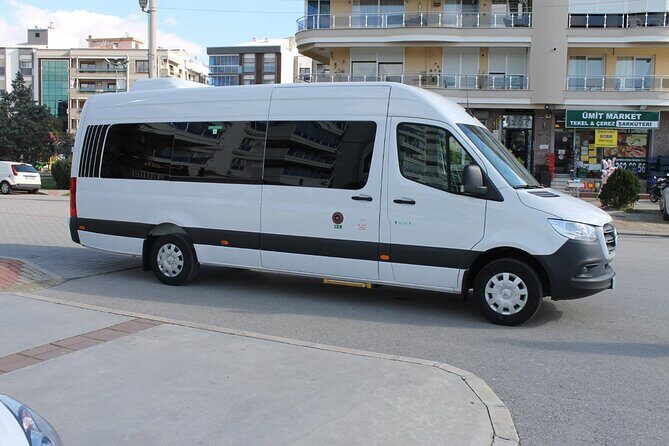
Instead, you’ll travel by air for the big leg, then use an air-conditioned minivan for the rest. That means less time fighting schedules and more time getting your bearings as the day’s sites build on each other. You also get private transfers in Istanbul at the start and end, which is a nice stress reducer when you’re landing or leaving.
You can also read our reviews of more tours and experiences in Istanbul.

The Bible-led guiding that connects Revelation to ruins
What makes this tour feel different is the way the guide maps the scenery to the letters in Revelation. You’re not only looking at stone and columns. You’re being pointed to specific messages tied to the places you visit.
For example, Pergamon is tied to Revelation 1:11 and 2:12, and you’ll also hear about the Altar of Zeus being referenced as the Throne of Satan. Thyatira (Akhisar/Tepe Mezari) connects to Revelation 1:11 and 2:18–24, including the purple-dye trade connection through Lydia. Philadelphia is Revelation 1:11 and 3:7, and it’s presented as the one congregation not censured. Laodicea is Revelation 3:1-4 and you’ll get a sense of it as a crossroads city, not just a ruin field.
I also appreciate that the tour is run by a professional, Bible-oriented guide, and the names you might encounter include Melih and Mustafa. When you get a guide who can explain why a site matters, the walking time feels earned.
Day 1: arriving in Izmir and getting comfortable fast
Your first day begins with a flight from Istanbul to Izmir (about one hour). You get an admission ticket included for the airport flight day experience, and then when you arrive in Izmir, a representative meets you and handles a private transfer to your hotel.
A practical detail that matters: your luggage limits are set at 15 kg for checked bags and 8 kg for cabin. If you pack heavy, this limit will shape your choices, so it’s worth weighing bags before you go.
For hotels in Izmir, you’ll stay in options such as DoubleTree by Hilton Alsancak or Hilton Garden Inn Bayrakli, or a similar 4- or 5-star property. Either way, the point is simple: after travel, you want a room where you can recover. This itinerary gives you that.
Day 2: Pergamon and Thyatira, plus the Smyrna panoramic ride
Day 2 is a classic Aegean heavy-hitter day: Pergamon first, then the Thyatira area, plus a panoramic look at Smyrna. It’s also where you start seeing how the tour keeps switching between grand viewpoints and more spiritual, letter-based context.
Pergamon Ancient City (for Revelation 2:12 ties)
You’ll drive to Pergamum (Pergamon) and spend about three hours exploring the acropolis. This is where the scale of the place starts doing the talking. You’ll see the Asklepieion, and you’ll also visit the Altar of Zeus area, linked in Revelation to the Throne of Satan.
That mix is the reason this stop works for Bible-history travelers. It’s not just a church label. It’s a layered Roman-era religious landscape layered over older traditions.

Tepe Mezari / Thyatira (Akhisar) (for Revelation 2:18–24 ties)
Next you continue to the Thyatira area, called Akhisar now, around Tepe Mezari. You’ll visit remains of a basilica and some Roman-period architectural fragments. The purple-dye angle is specifically part of the story—Lydia, known as the seller of purple in Philippi, is connected to Thyatira.
You’ll also enjoy a panoramic ride of Smyrna. That’s a smart move in a day like this. You may not have time for a full Smyrna deep dive, but you get context for the region and the coastal setting.
Dinner and overnight
After the sightseeing, you’ll have dinner and overnight. Since dinner is included only twice on the full trip, this included meal is worth using as a reset point.
Possible consideration for Day 2: it’s packed, and Pergamon plus Akhisar plus a panoramic ride can feel like a lot of moving. Wear comfortable shoes and keep water in mind, since lunch isn’t included.
Day 3: Sardis, Philadelphia, Laodicea, and Pamukkale’s white terraces
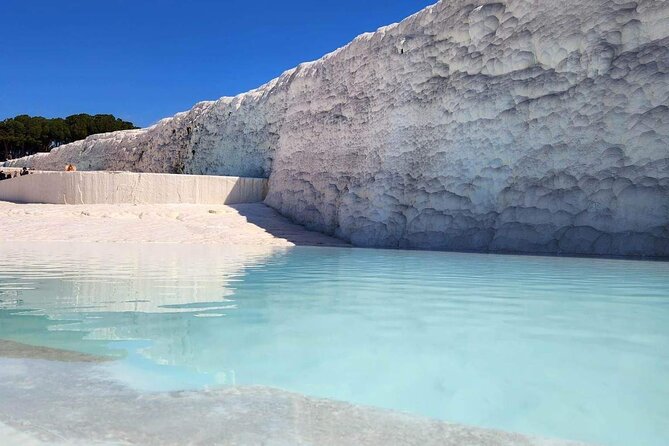
Day 3 covers the remaining churches, then sends you to Pamukkale for the famous mineral-water experience. If you want a day that blends Bible themes with a jaw-dropping landscape, this is it—though “wow” here is literal: white terraces, thermal pools, and the feeling of walking in an ancient healing zone.
Sardis (Sardes) (Revelation 3:1–4)
You depart early for Sardis, which is described as a dying church in the Revelation text connections. In the site area, you’ll see the Temple of Artemis and the Temple of Cybele (which later became a Byzantine church).
You’ll also visit a restored gymnasium and reconstructed synagogue. That combination helps you understand the place as a cultural hub, not only a Christian-letter stop. You’ll also see the last sections of the Persian Road from Susa to Sardis, built by Cyrus the Great, plus the “golden” river Pactolus. Lunch is included en route, which is a nice rhythm break mid-day.
Philadelphia Siesean Kilisesi (Alasehir) (Revelation 3:7)
Then you continue to Philadelphia, now called Alasehir. This is presented as the one congregation not censured. The focus here is a Byzantine brick basilica with a high arch and some 11th-century frescoes.
This stop is a good reminder that “church ruins” aren’t always big dramatic columns. Sometimes the meaning lives in smaller, carefully preserved remnants.
Laodicea (the last of the seven churches)
Next is Laodicea, tied to the final church message of the set. You’ll hear how the city was founded by Seleucids and named for Laodicea, plus how it sits on routes along the Lycus tributary of the Meander River. It’s described as a crossroads of two roads with major commercial and logistical importance.
That matters because it changes how you interpret the warning tone often associated with this church connection. It’s not happening in isolation; it’s happening in a place built for trade.
Hierapolis & Pamukkale: the “cotton fortress”
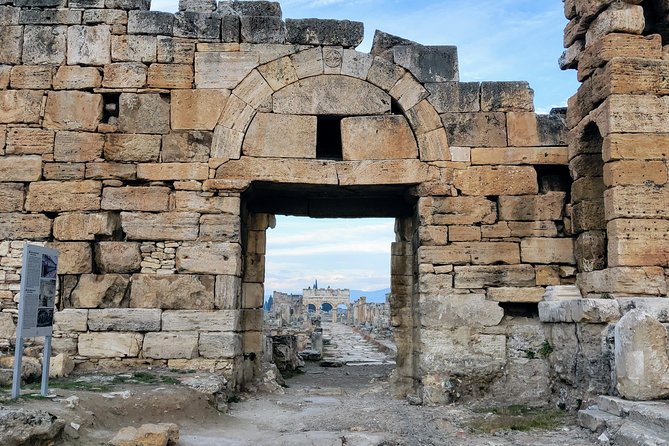
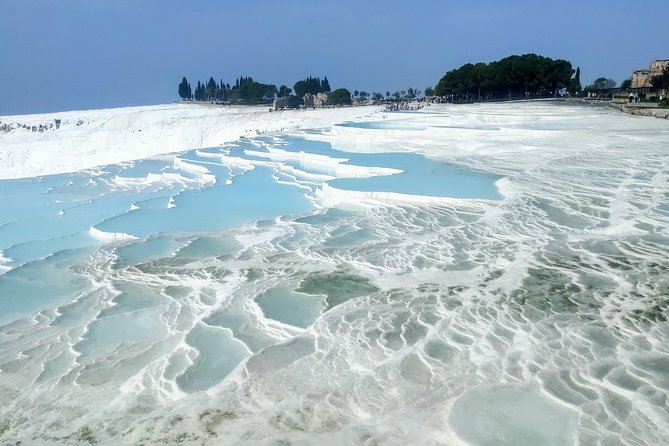
The day ends with the drive to Hierapolis, actually Pamukkale, where hot mineral water cascades over steep cliffs into pools and channels. The therapeutic waters are linked to founders of Hierapolis and Laodicea dating back to 190 BC.
In Hierapolis, you’ll visit the Martyrium of the Apostle Philip, connected to Philip’s martyrdom during persecutions ordered by Domitian. The “religious geography” point here is strong: healing, pilgrimage, and martyrdom are all braided into one place.
For hotels in the Pamukkale area, you’ll stay at properties such as Colossae Thermal or Pam Thermal Hotel, or similar.
Practical consideration: Pamukkale stops are intense visually but not long by museum standards. Expect about two hours at Hierapolis/Pamukkale in the plan. If you love lingering, you’ll have to do some prioritizing.
Day 4: Ephesus ruins, St. John sites, the Virgin Mary House, and Artemis Temple
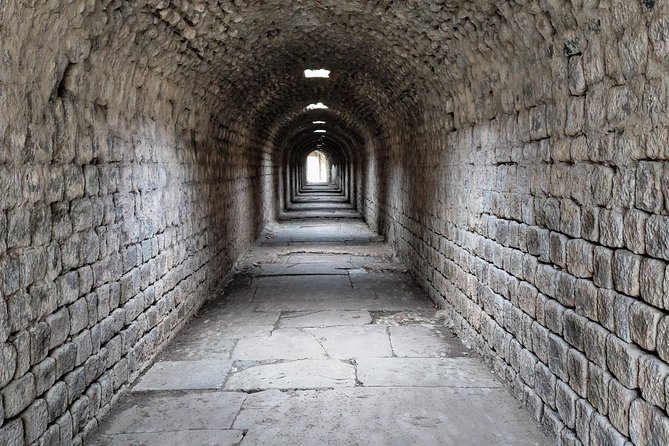
Day 4 is where the trip becomes truly big-ticket. Ephesus is the one stop that can feel like its own vacation.
Ancient City of Ephesus and the Basilica of St. John
You’ll drive to Ephesus and visit the ancient city, including the Basilica of St. John. The tour frames this around Paul’s connection: he preached to the Ephesians and lived there for three years, and this church received an epistle from him. It also notes Paul’s relationship to the region in the period leading up to later traditions.
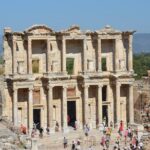
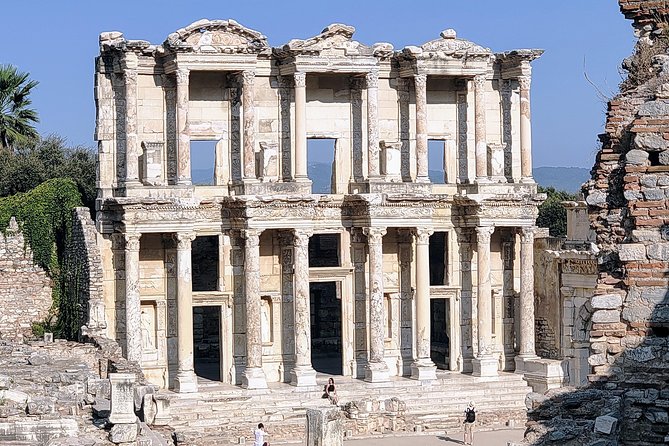
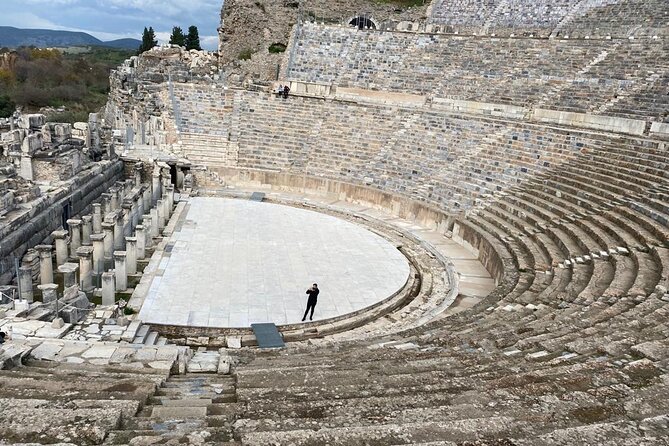
As you tour the ruins, you’ll pass through marble streets lined with major public buildings: the Baths of Scholastica, the Library of Celsus, the Temple of Hadrian, and the Theatre. You’ll also visit the Temple of Diana of the Ephesians, mentioned as one of the seven wonders of the ancient world.
This is a stop where your guide’s pacing matters. Too fast and you miss the “why.” Too slow and you lose the rhythm of the rest of the day. A good guide should balance grandeur with explanation.
Meryemana (The Virgin Mary’s House)
After Ephesus, you’ll go to the House of Virgin Mary, located on the Aladag Mountains about five miles away. The story here is tied to the third Ecumenical Council in 431 AD, including the tradition that Mary came to Ephesus with St. John in 37 AD and lived there until her death in 48 AD.
There’s also modern pilgrimage context: after the house was discovered, the Archbishop of Izmir declared it a place of pilgrimage in 1892, and Pope Paul VI visited and prayed there on July 26, 1967.
This stop often lands differently for different people. If you’re there for Bible-based spirituality, it gives you a clear thread. If you’re there for history, it shows how old traditions keep shaping travel routes.
St. John’s Basilica and quick Artemis Temple stop
You’ll also visit the Basilica of St. John (short stop), followed by a stop at the Artemis Temple. It’s quick before you drive back toward Kusadasi. The timing is tight, so you may want to take photos quickly and rely on your guide for the highlights so you’re not stuck scanning alone.
Arriving in Kusadasi: hotel, dinner, overnight
You’ll arrive in Kusadasi and check into your hotel such as Efe Boutique or similar. Dinner and overnight are included here, giving you a proper end-of-trip evening.
Day 5: finishing with Kusadasi park views and flights back to Istanbul
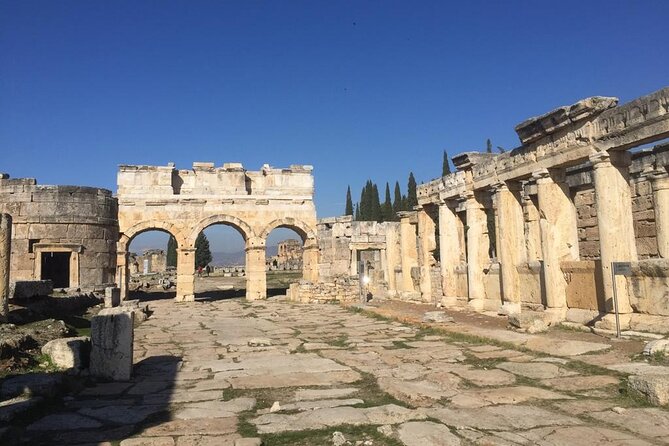
Your final day starts with pickup from the Kusadasi hotel and a private transfer to Izmir airport for your flight to Istanbul. There’s also a stop at Kusadasi Gazi Begendi Park included in the schedule (about one hour).
Then you fly back to Istanbul, and you’re taken to your Istanbul hotel via private transfer. The plan keeps it simple: no extra sightseeing marathon at the end, just a clean wrap-up.
Value check: what you’re paying for at $1,189 per person
For $1,189 per person, you’re not just buying sightseeing tickets. You’re buying a lot of behind-the-scenes logistics that can be expensive or stressful when you do it yourself.
Here’s what the price covers, based on what’s included:
- 4 nights in 4- and 5-star hotels (Izmir, Pamukkale, Kusadasi)
- Professional Bible-oriented guide in English
- Domestic flight from Istanbul to Izmir and back
- Private transfers in Istanbul (hotel to airport and airport to hotel)
- Air-conditioned transportation via minivan/minibus
- Entrance fees with pre-paid tickets to help skip lines
- 4 breakfasts and 2 dinners
What’s not included (and you should plan for):
- Lunch and drinks
- Dinners in Izmir (only 2 dinners are included total)
This pricing makes sense if you want comfortable hotels and the guide-led connections without having to coordinate a multi-city trip on your own. It also makes sense if you’d rather pay for included entrance fees than risk surprise add-ons at each site.
If you’re traveling light and you’re okay paying for lunch and drinks, you’ll likely feel this is good value. If you want full board meals and lots of free time, you may find the included-meal count a little light.
Practical tips to enjoy the pace (and not get grumpy)
A few reality-based tips that help on this route:
- Pack for walking: you’ll move through large archaeological sites, plus hillside/terrace areas around Pamukkale.
- Plan your day around gaps: since lunch isn’t included, you’ll want to be ready to grab food during the “en route” portions or on your own.
- Use the included dinners wisely: you only get two included dinners, so don’t ignore them as optional. They’re built in as a recovery point.
- Bring a small buffer for weather: the Aegean coast can change how you feel quickly, and you’ll be outside for major ruins time.
- Ask about the vegetarian option when booking. It’s available if you tell them ahead of time.
Also note: the tour says it’s suited to “most travelers,” uses an English guide, and caps at 15 travelers. That cap matters because it keeps the group feeling coordinated rather than chaotic.
Who should book this Seven Churches tour
This is a great fit if:
- You want to connect Scripture references to the places you’re standing in.
- You like guided interpretation more than solo exploring.
- You prefer comfortable hotels and included entrances over planning every stop yourself.
- You’re okay with a structured schedule and traveling between three base areas.
It may be less ideal if:
- You want lots of free time to wander at your own pace without a set plan.
- You expect lunch and drinks to be included.
- You dislike early starts and back-to-back sites.
Should you book this Istanbul to Seven Churches of Asia trip?
I’d book it if your goal is Bible-linked sightseeing with solid hotels, included entrances, and clear route planning. The combination of Istanbul-to-Izmir flights, small group size, and a professional guide creates a strong “I won’t have to figure this out” experience—exactly what you want when the sites are spread out and historically layered.
Don’t book it if you’re chasing maximum independence or you’re sensitive to a schedule with limited included meals. This tour is built for focused days with interpretation, not for long unstructured wandering.
FAQ
FAQ
What’s the duration and how many nights are included?
The trip runs about 5 days and includes 4 nights in hotels.
Where does the tour start and end?
It starts in Istanbul (with pickup from your Istanbul hotel) and ends in Istanbul (with private transfer to your hotel after returning from Izmir).
Are entrance fees included?
Yes. Entrance fees are included, and the guide will have pre-paid tickets to help skip lines.
What meals are included?
You get 4 breakfasts and 2 dinners included. Lunch is not included, and drinks are not included.
Which hotels are used?
In Izmir, hotels may include DoubleTree by Hilton Alsancak or Hilton Garden Inn Bayrakli (or similar). In Pamukkale, options include Colossae Thermal or Pam Thermal Hotel (or similar). In Kusadasi, it’s around Efe Boutique (or similar).
Is transportation included between sites?
Yes. You travel by brand new air-conditioned minivan/minibus.
Does the tour include flights?
Yes. There are domestic flights from Istanbul to Izmir return included.
What are the luggage limits?
The plan lists 15 kg for checked baggage and 8 kg for cabin baggage.
Is pickup offered in Istanbul?
Yes. Pickup is offered from your hotel in either the European or Asian side of Istanbul, with a suggested pickup time sent after confirmation.
Is there a vegetarian option?
Yes. A vegetarian option is available if you advise at the time of booking.