REVIEW · ISTANBUL
Istanbul Unveiled: A Quest for the Unique and Unusual Jewels
Book on Viator →Operated by Serif Yenen Travel & Tourism Co. · Bookable on Viator
Hidden Istanbul lives underground.
That idea drives this 6-7 hour walk through Constantinople’s layers, where you’ll move from famous landmarks to places most visitors never see. I like that the day is built around cisterns and special access, with a guide who connects the geography to the history as you go—tea in the afternoon, boza later, and Roman waterworks to wrap it up.
Two things I really liked: first, the way the tour strings together the “big” sites (like the Hippodrome) with the lesser-known stops that explain how daily life worked back then. Second, the quality of guidance—Serif Yenen’s English is easy to follow, and he keeps the pacing calm even when the sites require stairs and careful walking. If you’re picky about food, you’ll appreciate that he tends to help make lunch work for different needs.
One thing to consider: this is not a sit-and-watch day. You’ll have to be comfortable with walking, and you’ll descend into Istanbul’s cisterns, which can feel tight and cool compared with street-level temperatures.
In This Review
- Key Things to Know Before You Go
- Underground Istanbul: Why This Tour Feels Different
- Starting at Küçük Ayasofya: Tea, Gardens, and a Quick Sense of Place
- Little Hagia Sophia: Justinian’s “Before the Big One”
- Eresin Hotel Sultanahmet: Byzantine Great Palace Ruins With Special Permission
- Nakkas Oriental Rugs and Textiles: The Cistern Connection Below the City
- Hippodrome and Seven Hills: Big Public Life, Then a View to Reset Your Brain
- Binbirdirek Cistern (Cistern of Philoxenos): Mark Twain’s Favorite Kind of Stop
- Roman Power Without a Museum Feeling: Constantine’s Column and Theodosius’ Forum
- Lokanta Lunch and Boza: Local Food That Fits the Day
- Kalenderhane Camii Exterior: When Byzantine and Islamic Styles Meet
- Şehzade Mehmet Mosque: Ottoman Craft by Mimar Sinan
- Valens Aqueduct (Bozdogan Kemeri): A Roman Finish That Actually Feels Like Engineering
- Price and Value: What You’re Really Paying For at $490
- Who This Tour Suits Best (And Who Might Prefer Something Else)
- Should You Book Istanbul Unveiled?
- FAQ
- How long is the Istanbul Unveiled tour?
- Is this tour private?
- What language is the tour offered in?
- What’s included in the price?
- Where does the tour start and where does it end?
- Do I need strong physical fitness?
Key Things to Know Before You Go
- Underground Byzantine cisterns are the centerpiece, including Binbirdirek Cistern (Cistern of Philoxenos).
- Special-permission stops include a private look at Byzantine Great Palace ruins and an underground cistern exhibition tied to the Hippodrome.
- Serif Yenen-style guiding links monuments, stories, and practical geography so it all clicks faster.
- You get tea/coffee, boza tasting, and lunch, plus an Istanbul map and entrance fees.
- The day is about offbeat variety: Byzantine, Roman, Ottoman, and local food in one route.
Underground Istanbul: Why This Tour Feels Different
Most Istanbul days feel like a checklist: one mosque, one square, one “photo stop,” then repeat. This one has a different rhythm. You spend time looking at how people handled water, public entertainment, and religious change—then you bounce back up to viewpoints and major landmarks.
What makes it work is the story arc. You’ll start with a quieter religious site and tea, shift into the Byzantine world through palace ruins and cisterns, then move into the Roman forums and Ottoman masterpieces. Even if you know the usual sights, the route helps you understand how Constantinople functioned day to day: water systems, public spectacle, and power shown in stone.
And yes, there’s a very practical payoff: because the stops are clustered around historic areas, you’re not bouncing across the whole city for each thing. You’ll also benefit from hotel drop-off at centrally located accommodations after the tour, which saves you the hassle of getting back on your own.
You can also read our reviews of more tours and experiences in Istanbul.


Starting at Küçük Ayasofya: Tea, Gardens, and a Quick Sense of Place
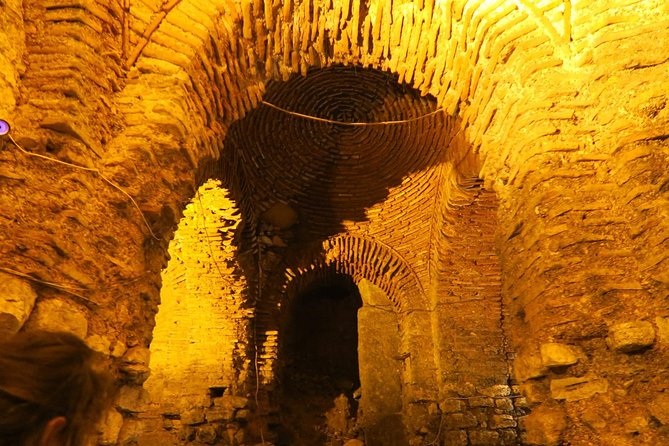
You begin at Küçük Ayasofya (Little Hagia Sophia), in the garden cafe area. It’s a smart opening. You’re not immediately dropped into a museum crowd. Instead, you get traditional Turkish tea while your guide sets the baseline: where Istanbul’s eras sit on the map, and how the city’s geography shaped its history.
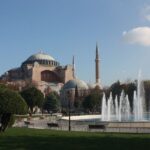
This is also where the tour gives you context you’ll reuse later. Küçük Ayasofya is a predecessor to the iconic Hagia Sophia, constructed under Emperor Justinian’s auspices before Hagia Sophia was built. You’ll hear how it preserves Byzantine architectural features, even though later rulers and uses changed what people expected from a major religious building.
What to watch for: the garden cafe setting is peaceful, but it can be the point in the day where you’re tempted to order slowly and “forget the schedule.” If you tend to take your time, just keep an eye on your guide’s regrouping cues so you don’t drift behind.
Little Hagia Sophia: Justinian’s “Before the Big One”
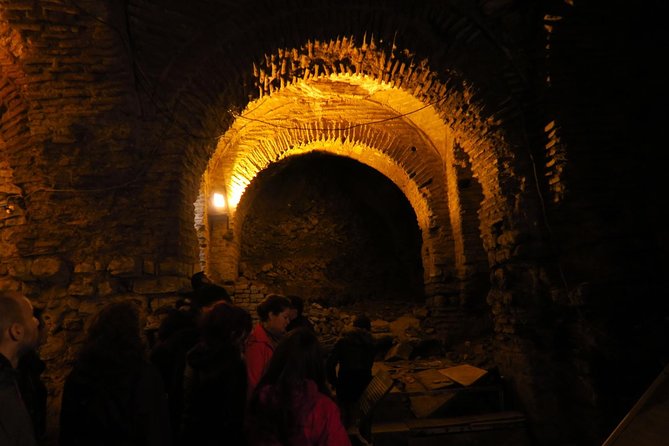
Küçük Ayasofya (Little Hagia Sophia) is a short stop, but it’s a strong one. The tour frames it as an architectural bridge: Byzantine design elements paired with a story about Justinian’s ambitions and the evolution toward the later masterpiece.
The attraction here isn’t just architecture—it’s perspective. When you later see other imperial-era monuments, you’ll have a stronger sense of what “came first” and why later buildings looked the way they did. It’s the kind of place that feels calm on the surface, yet carries that sense of turning points.
Good for: anyone who likes history that explains itself visually, not history that throws dates at you.
Eresin Hotel Sultanahmet: Byzantine Great Palace Ruins With Special Permission
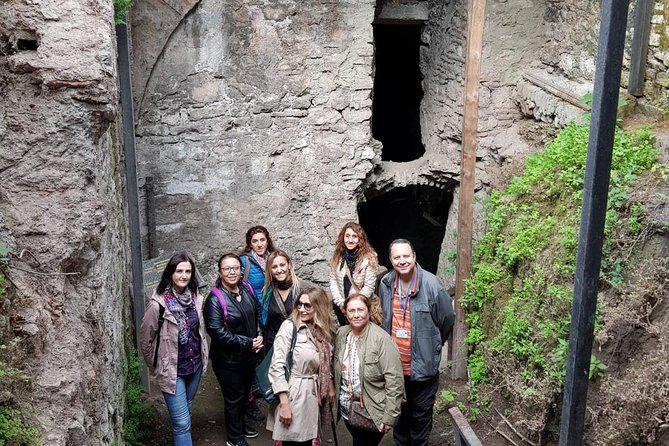
One of the day’s surprises is a visit to the ruins of the Byzantine Great Palace, arranged as a private stop accessible with special permission. It’s not the typical “stand behind a rope and take a quick look” experience.
This part matters because palaces can feel abstract if you never see where power actually sat. Seeing palace ruins in a more controlled setting gives you a clearer mental model: how the city organized elite life, and how architecture became political messaging.
Why it’s a highlight: the access itself. When a tour earns special permission, you usually get a calmer, more focused view than you would on a general public route.
Possible drawback: because it’s a special-access site, what you see can feel more “interpretive” than “complete.” You may see fragments and foundations rather than a polished reconstruction. If you prefer totally restored sites, this may feel more atmospheric than dramatic.
Nakkas Oriental Rugs and Textiles: The Cistern Connection Below the City
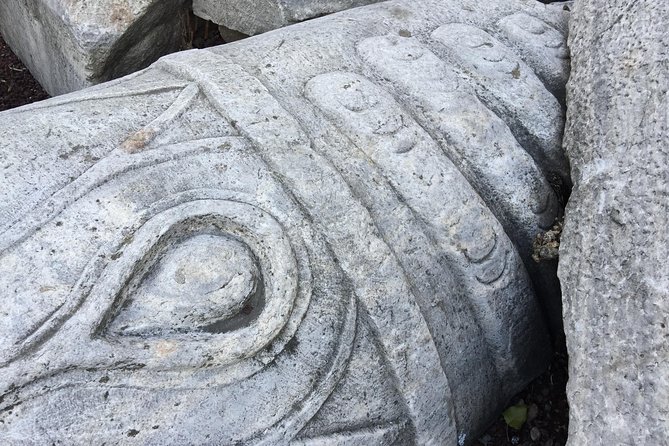
After Sultanahmet, you’ll head toward Nakkas Oriental Rugs & Textiles. The shopping isn’t the point. The point is what comes with it: an underground Byzantine cistern visit requiring special access permission.
This cistern is tied to an exhibition dedicated to the ancient Hippodrome. That’s a clever pairing. The Hippodrome was where public entertainment and political life intersected. Having an underground space connected to that story helps you understand Constantinople as a city that hid engineering and meaning in surprising places.
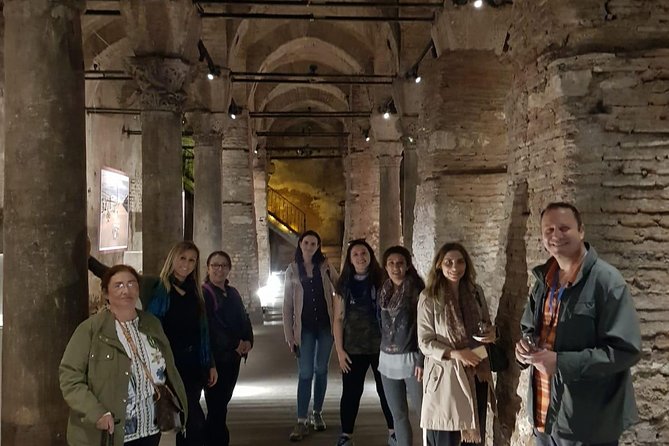
You descend into the cistern area and see how the city handled water storage long before modern plumbing. The scale of these underground spaces can be unsettling at first—cool air, echoing sound, and that “how did they build this?” feeling—then it clicks once your guide connects it to daily life.
Tip for your body: bring your most stable shoes. Descents and uneven surfaces are part of the experience here.


Hippodrome and Seven Hills: Big Public Life, Then a View to Reset Your Brain
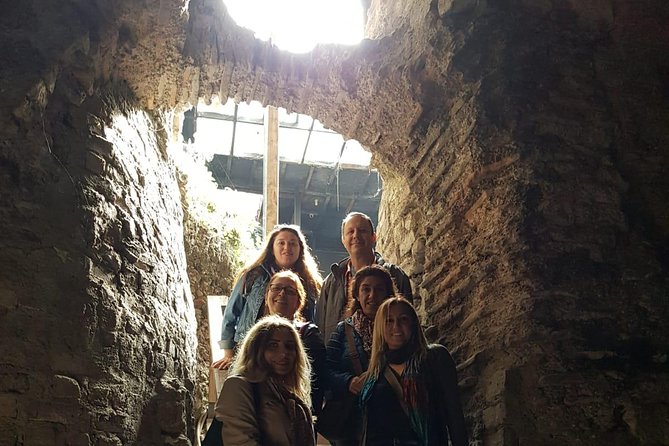
The Hippodrome stop is where the tour gives you the recognizable public-life layer. In ancient Constantinople, it was the center for chariot racing and major gatherings. Even if you only know the Hippodrome from scattered references, the guide uses it as a key to understand civic emotion: crowds, spectacle, and power performed in public.
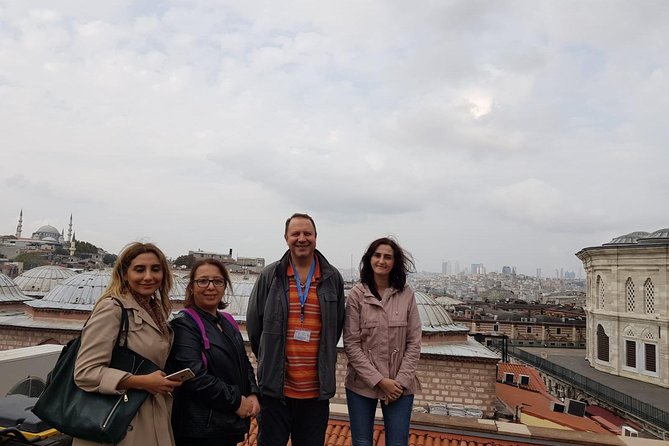
Then you move to a panoramic terrace viewpoint at Seven Hills Hotel. It’s a short stop, but it’s useful. After the underground parts, you need sky and sightlines to reorder the mental map. You’ll get views that help you locate what you’ve already seen and what’s coming next.
Why this works: the tour alternates between “close-up” spaces (cisterns, ruins) and “overview” moments (terrace). That mix keeps the day from becoming one long cave-and-stone experience.
Binbirdirek Cistern (Cistern of Philoxenos): Mark Twain’s Favorite Kind of Stop
Binbirdirek Cistern is the kind of place that can be overshadowed when people focus only on the most famous cisterns. That’s exactly why it’s rewarding. You get a sense of Istanbul’s subterranean life without the crush.
It’s also one of the biggest cisterns in the city, described as the second largest. You’ll learn it’s also known as the Cistern of Philoxenos. And here’s a fun historical footnote your guide is likely to bring up: Mark Twain visited and wrote about his impressions.
That Twain connection matters because it turns an engineering site into a human story. You’re not only looking at stone and water channels; you’re stepping into the mindset of travelers who felt curious and a little stunned.
What to expect physically: again, it’s underground and it’s cool. If you run cold easily, wear a light layer you can manage.
Roman Power Without a Museum Feeling: Constantine’s Column and Theodosius’ Forum
Next comes a strong “street-level history” stretch centered around surviving monuments.
You’ll stop at the Column of Constantine (Cemberlitas Sutunu). This is tied to the Forum of Constantine and the moment when Istanbul was declared the new capital of the Roman Empire around 1,700 years ago. The tour keeps the focus grounded: this is not just a tall column, it’s a message in stone—authority, identity, and an empire reshaping itself.
Then you’ll head to the Forum of Theodosius. Built by Emperor Theodosius I in the late 4th century, it used to be the center of public life with arcades, shops, and markets. At the forum’s core was the Column of Theodosius, decorated with reliefs that spiral upward. The column helps you picture how emperors used art as proof of military victory and legitimacy.
Even though you won’t see a fully preserved plaza, the remains still help you imagine the scale of crowds and processions. The tour is at its best here when it helps you connect what’s left to what once stood all around it.
Practical note: these stops are outside. Bring sunscreen and water, especially in warmer months.
Lokanta Lunch and Boza: Local Food That Fits the Day
Lunch is at a nearby lokanta, described as a Turkish-style eatery known for quick service and a menu that works well for local shopkeepers. That matters for you because a fast, practical lunch is how you keep the tour on pace without sacrificing quality.
After lunch, the tour shifts to something delightfully specific: boza tasting at Vefa Bozacisi. Boza is a fermented drink with a distinctive tang and texture. It’s one of those foods/drinks that makes you feel like you’re sampling everyday culture rather than tourist-only treats.
If you’re the kind of traveler who enjoys small, memorable tastes, boza can be a high point because it’s unusual for many visitors and it’s tied to local tradition.
What to expect: boza tasting is a short stop. Don’t treat it like a sit-down meal—think of it as a cultural snapshot you’ll remember later when you talk about Istanbul’s food.
Kalenderhane Camii Exterior: When Byzantine and Islamic Styles Meet
Kalenderhane Camii is a short, outside-only stop, but it’s a good one for architecture fans and curious photographers.
The building began as the Theotokos Kyriotissa Church and later became a mosque. The tour points out the overlap of Byzantine and Islamic architectural styles—domes, brickwork, and structural choices that show how the same space can serve different religious needs across centuries.
Because the visit is exterior only, you won’t get a full interior tour. Still, the building’s presence works well in the flow of the day: after Roman and Ottoman markers, you see how architectural language changes without completely wiping out earlier layers.
Şehzade Mehmet Mosque: Ottoman Craft by Mimar Sinan
The Şehzade Mosque is an Ottoman highlight with real artistic credibility. You’ll learn it was designed by the renowned architect Mimar Sinan and commissioned by Sultan Süleyman the Magnificent in memory of his son.
The tour emphasizes the elegant domes and calligraphy—things that make Ottoman architecture feel both grand and controlled. This stop is also a nice reset after cisterns and stone columns. Instead of underground engineering, you’re looking at crafted forms and refined details.
Even if you’re not a “mosque inside” visitor, the atmosphere outside and the architectural harmony are enough to make this one feel meaningful.
If you’re planning photos: bring your camera patience. This is one of the better places to slow down and look closely, not just snap.
Valens Aqueduct (Bozdogan Kemeri): A Roman Finish That Actually Feels Like Engineering
You end at the Aqueduct of Valens. Also called Bozdogan Kemeri, it’s a major Roman-era water structure from the 4th century that helped supply Constantinople with water. The aqueduct stretches across the skyline and bridges the valley between hills.
Ending here works because it’s functional history. Many monuments are about power or worship; this is about infrastructure—how a city makes life possible for people above and beyond the elite.
The visual payoff is strong, too. The aqueduct is easier to enjoy as a clean line in the cityscape, so it gives you a final “I get it now” moment. You leave with an image you can picture even after the trip ends.
Price and Value: What You’re Really Paying For at $490
At $490 per person for a 6-7 hour private-group experience, this is not the cheapest way to see Istanbul. But the value isn’t just the number. It’s what’s included and what’s hard to arrange.
You get:
- Entrance costs (so you’re not scrambling for tickets mid-day)
- A professional guide
- Coffee/tea, lunch, and boza tasting
- An Istanbul map
- Multiple stops where timing and access matter, including cistern visits and palace ruins tied to special permission
The “special access” angle is where the price starts to make sense. Regular routes usually can’t offer the same behind-the-scenes feeling for cisterns and ruins. Combine that with included food and drink, and the day is closer to an all-in cultural program than a basic sightseeing walk.
One more thing: you’ll want to compare against other tours that are cheaper but skip the underground portion or don’t include meals. If you care about cisterns and engineering stories, this price feels more fair.
Who This Tour Suits Best (And Who Might Prefer Something Else)
This tour is a strong fit if you:
- Want Istanbul’s Byzantine side with practical context
- Like underground spaces and engineering stories
- Appreciate a guide who explains how one monument connects to the next
- Want a mix of major landmarks and fewer-seen sites without planning routes yourself
You might prefer a different style of tour if you:
- Hate stairs or tight indoor areas
- Want mostly restored sites with minimal uneven surfaces
- Prefer a lighter, mostly exterior route without descents
If you’re on the fence, think about your comfort level rather than your interest level. The history is excellent, but the day is physical.
Should You Book Istanbul Unveiled?
If your Istanbul “musts” include cisterns, Roman columns, and Ottoman architecture in a single day, I’d book it. The combination of underground engineering, special access stops, and included tea/boza/lunch makes the day feel planned, not patched together.
Also, I’d book if you value guidance that’s more than facts—Serif Yenen’s style shows up in the way he handles pacing and keeps explanations connected. That matters when you’re looking at fragments of ancient structures and trying to build the whole picture.
Just go in knowing you’ll walk and you’ll descend. Bring solid shoes, expect cooler indoor spaces, and you’ll leave with a Istanbul you won’t forget—one that goes under your feet as well as in front of your eyes.
FAQ
How long is the Istanbul Unveiled tour?
The tour lasts about 6 to 7 hours.
Is this tour private?
Yes. It’s described as private, and only your group will participate.
What language is the tour offered in?
The tour is offered in English.
What’s included in the price?
Entrance costs, a professional guide, coffee and/or tea, an Istanbul map, boza tasting, and lunch are included.
Where does the tour start and where does it end?
It starts at Küçük Ayasofya Mosque in Fatih and ends around the Aqueduct of Valens in the Kalenderhane area.
Do I need strong physical fitness?
The tour notes that travelers should have a strong physical fitness level and recommends comfortable walking shoes, since there is walking and you will descend into cisterns.