REVIEW · ISTANBUL
Mount Nemrut and Gobekli Tepe Tour 2-Day 1-Night from Istanbul
Book on Viator →Operated by We Go Turkiye Travel · Bookable on Viator
Mount Nemrut and Gobekli Tepe in one trip is rare. This route is a smart hit of big-scale ancient sites plus real modern-day Turkish life in Kahta and Sanliurfa. You get a guided sweep of Commagene landmarks before sunrise views at Nemrut, then jump to the oldest known ritual complex you’ll ever stand near at Göbekli Tepe.
What I like most is the mix: Nemrut’s terraces and statues for dramatic sunset scenery, and Göbekli Tepe’s mind-bending age for that wow-factor. I also like that you’re not just touring ruins; you’re given context with museum stops and the holy-site setting around Balıklıgöl and Abraham’s cave.
One consideration: the days start early and the plan is packed, with domestic flights and long transfers. If you’re hoping for a slow, relaxed pace, this may feel like you’re always on the move.
In This Review
- Key points before you go
- Why This Eastern Turkey Route Works So Well
- Day 1: Nemrut Dagi National Park and Commagene Stonework
- First stop: Karakuş Tumulusu (Blackbird Tumulus)
- Cendere Bridge (Severan Bridge) and the road of history
- Arsemia Antik Kenti (Arsameia)
- Mount Nemrut: the main event
- Day 2: Sanliurfa Museums, Balıklıgöl, and Göbekli Tepe’s World-Changing Age
- Sanliurfa archaeology and mosaics
- Covered bazaar time and lunch
- Göbekli Tepe: the oldest ritual complex feeling
- Abraham’s cave and the Pool of Prophet Abraham (Balıklıgöl)
- Timing, Flights, and How Much You’ll Really Fit In
- Price and Value: What $1,634.25 Really Buys
- Who Should Book This Tour (and Who Might Prefer a Slower Pace)
- Should You Book This Mount Nemrut and Göbekli Tepe Tour?
- FAQ
- What time does the tour pick me up in Istanbul?
- Where does the tour go on Day 1?
- Where does the tour go on Day 2?
- Are meals included?
- Do I get an overnight stay?
- Is transportation included from Istanbul?
- Are museum and site tickets included?
- What group size should I expect?
- What language is the tour offered in?
- What should I know about weather and cancellation?
Key points before you go
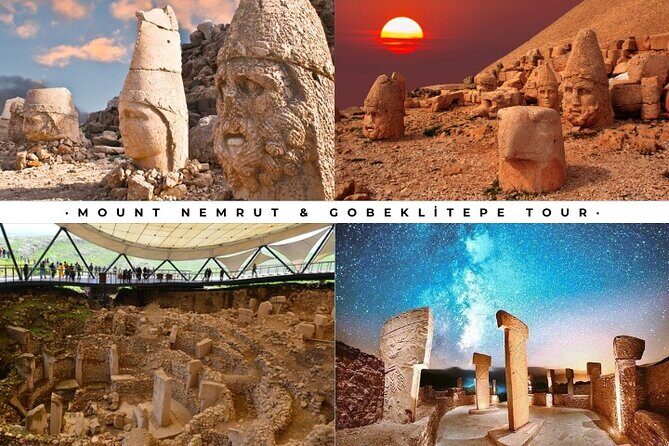
- Sunset views from Nemrut’s East and West Terraces at the top of the mountain
- Göbekli Tepe as a pre-writing, pre-pottery ritual complex dating back to around 12,000 years
- Sanliurfa museums (Urfa Archaeological Museum and Aleppo Bahce Mosaic Museum) with finds from the Göbekli Tepe area
- Balıklıgöl and Abraham’s cave in a living, sacred setting—not just archaeology
- Small group (max 15) with English guidance and a tour guide who explains each stop
Why This Eastern Turkey Route Works So Well
You’re doing something most people skip because it’s far and it’s logistically tricky: combining Nemrut (the grand Commagene kingdom) with Göbekli Tepe (the early human world that still rewrites the story). The value here isn’t only that you see two famous names—it’s that the trip is built around how those places make you think.
Nemrut gives you scale. Huge stone figures on a mountaintop tomb-sanctuary, arranged like a stone stage for worship. Then Göbekli Tepe flips the script: a ritual complex from around 12,000 years ago, built before writing and pottery, with carved pillars that change how you picture early society.
For me, the strongest part is how the itinerary keeps you grounded in place. You’re not only chasing “the next photo.” You’re also spending time in Sanliurfa with museums, covered bazaar walking, and lunch with kebabs, which helps the ancient world feel less like a museum diorama and more like a region with living roots.
You can also read our reviews of more evening experiences in Istanbul



Day 1: Nemrut Dagi National Park and Commagene Stonework
Day 1 is all about the Commagene kingdom and the dramatic setting of Nemrut Dagi National Park. The morning starts with pickup from central Istanbul hotels and other central stays (including Galata Port), then a transfer to the airport. You fly from Istanbul to Adıyaman, connect with your guide on arrival, and head out by mid-day to start the ancient-site circuit.
First stop: Karakuş Tumulusu (Blackbird Tumulus)
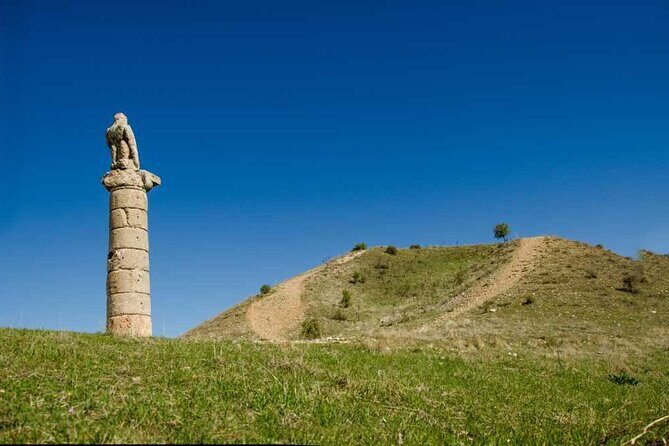
You’ll start with Karakuş Tumulusu, named from the black-bird theme tied to an eagle-topped element. This funerary monument is connected to Queen Isias and her daughters (Princesses Antiochis and Aka I of Commagene), built by Mithridates II of Commagene. The monument is surrounded by tall Doric columns (about 9 meters each) and relief figures, including a bull, lion, and eagle.
What makes this stop worth your time is the way it teaches you to “read” the site. Even from the basics, you get a sense of how power, family, and religion were stitched together in Commagene funerary architecture.
Cendere Bridge (Severan Bridge) and the road of history
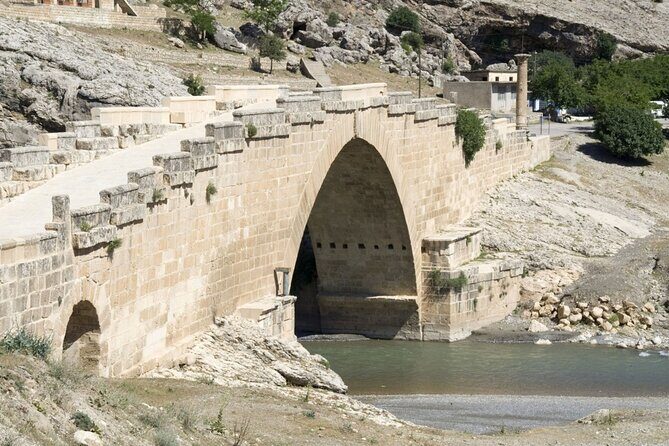
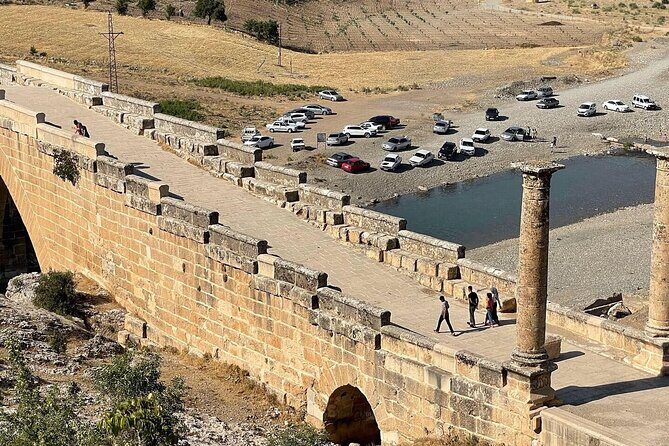
Next comes Cendere Bridge, also spelled Severan Bridge. It’s a late Roman bridge near ancient Arsameia, spanning the Cendere Çayı. You’ll get an explanation of its place in the landscape—plus the cool fact that archaeologists Osman Hamdi Bey and Osgan Efendi described and pictured it in 1883.
This is one of those stops that’s short but satisfying. It’s less about standing in front of a statue and more about seeing how old infrastructure shaped travel routes and settlement patterns.
Arsemia Antik Kenti (Arsameia)
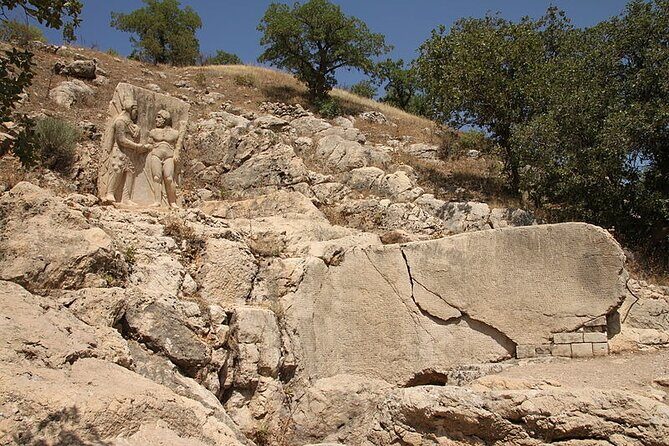
Then you move to Arsemia Antik Kenti, once the summer residence of the Commagene kings. Here you’ll find a relief tied to Heracles (or potentially Artagnes, a Persian deity identified with Heracles by Greeks) shaking hands with King Mithridates of Commagene. The area is also known for one of the largest Greek inscriptions of Anatolia.
If you’re the type who likes to connect dots, this is a good pause. You go from tomb sculpture (Karakuş) to Roman bridge engineering (Cendere) to royal residence messaging (Arsemia). Same region, different layers.
You can also read our reviews of more tours and experiences in Istanbul


Mount Nemrut: the main event
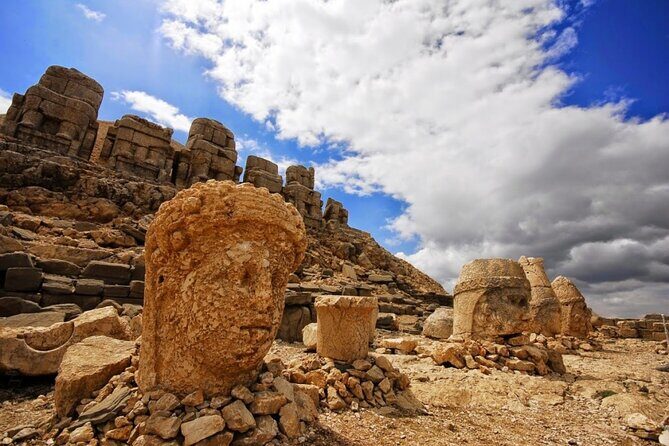
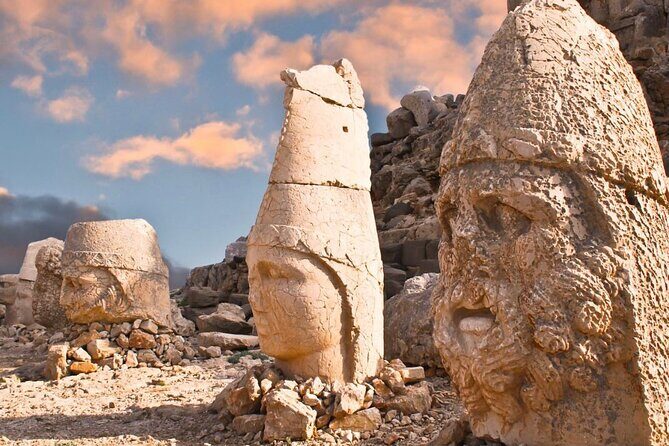
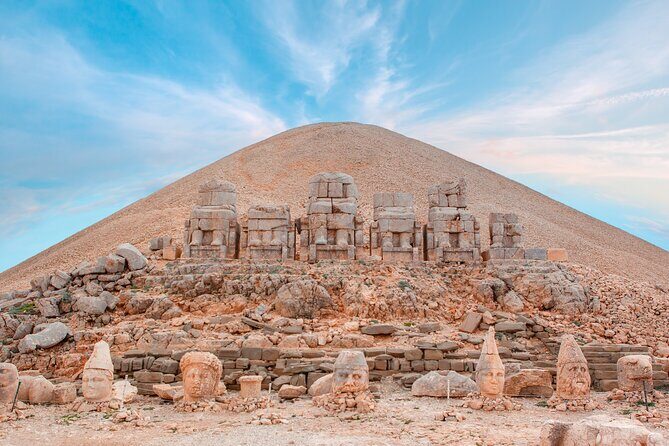
After these stops, you finally get to Mount Nemrut, the 2,134-meter peak famous for huge statues around a tomb-sanctuary from the 1st century BC. The figures include lions and eagles, and a mix of gods and royal identities—Greek, Armenian, and Iranian—such as Heracles-Artagnes-Ares, Zeus-Oromasdes, and Apollo-Mithras-Helios-Hermes.
The itinerary is built around the way the site looks at different moments. You’ll visit both the East and West Terraces, and you’ll have time to enjoy sunset views. The heads of statues are missing and scattered, which adds a strange, haunting feel—you’re looking at fragments of a larger “whole” that time broke apart.
Practical tip: this is a photo-stop, but don’t rush it. The tour includes time to take pictures in the neighboring valleys before heading back to your hotel in Kahta.
Day 2: Sanliurfa Museums, Balıklıgöl, and Göbekli Tepe’s World-Changing Age
Day 2 starts with breakfast and then a full shift into Sanliurfa culture and archaeology. You’ll explore sites that help explain what you’re seeing, not just where you’re seeing it.
Sanliurfa archaeology and mosaics
You’ll visit the Sanliurfa Archaeology and Mosaic Museum, including the Urfa Archaeological Museum and the Aleppo Bahce Mosaic Museum. The focus is on a large collection tied to Harran and the Göbeklitepe area. It’s a smart pairing: you don’t just visit Göbekli Tepe—you get context from finds that relate to the broader region.
You’ll also spend time at Ainzelha, described as a lake with millions of domesticated fish. The idea isn’t only scenery; it’s the spiritual “lived-in” layer that surrounds this region’s long story.
Covered bazaar time and lunch
Between the holy-site elements and the museum stops, you’ll walk through the local covered bazaar. This is where you’ll see daily life, shop fronts, and the pace of the city without needing a separate “free time” day. You also get lunch with kebabs, which is helpful because you won’t be hunting for meals with the tour moving fast.
Göbekli Tepe: the oldest ritual complex feeling
Then comes Göbekli Tepe—one of the world’s most important archaeology sites and believed to be the oldest ritual complex. The tour explains it as dating back about 12,000 years, built before writing or pottery. Standing there, you’re not just admiring carvings—you’re facing a site that pushes archaeologists to rethink early human history.
The allotted time (about 2 hours) is enough to slow down for key areas without feeling like you’re stuck in a classroom. If you’re trying to understand why it matters, give yourself a moment to notice how much planning the site implies.
Abraham’s cave and the Pool of Prophet Abraham (Balıklıgöl)
Finally, the tour returns to the Balıklıgöl area. You’ll visit Abraham’s cave and the Pool of Prophet Abraham, believed to be the place where Prophet Abraham was thrown into fire by Nimrod.
This is a different kind of experience than Göbekli Tepe. One is about prehistory’s big questions; the other is about faith stories and sacred landscape. Together, they help you feel how people keep returning to certain places for thousands of years, for very human reasons.
Timing, Flights, and How Much You’ll Really Fit In
This tour is designed for travelers who want results without renting a car or planning daily connections. But you should go in knowing it’s intensive.
Day 1 is built around a morning pickup at 6:30 am in Istanbul, an airport transfer, and a domestic flight to Adıyaman. You arrive around late morning, then tour continues from mid-day onward with multiple stops. That means you’ll likely feel the early start—especially if you’re not used to waking up for airport flights.
The good news: the itinerary includes all transfers and museum tickets. You won’t be working out entry logistics on your own while you’re in a new region with limited time.
Also note the physical element: it’s rated as needing moderate physical fitness. You’ll be walking on uneven ground and climbing between terrace-like viewpoints at Nemrut. It’s not described as extreme hiking, but you should still plan for real footwork.
Group size helps. With a maximum of 15 travelers and English as the offered language, you’re usually able to hear explanations and keep the flow without being swallowed by a huge bus crowd.
Price and Value: What $1,634.25 Really Buys
The total price listed is $1,634.25 per person, which is not a cheap weekend. The key question is what you’re paying for beyond “seeing two places.”
Here’s what’s included:
- Domestic roundtrip flights
- All transfers (including airport connections and between sites)
- 1 night accommodation in a 3-star hotel in Kahta
- Breakfast
- Lunch (2)
- Museum tickets for included stops
That matters because the Nemrut and Sanliurfa region is not close to Istanbul, and traveling between the sites takes time. When flights and long transfers are bundled like this, the price starts to look more like a “package cost” rather than “transport + random tickets + stress.”
What isn’t included is mostly dinner and personal expenses. In plain terms: this works best if you’re okay with planning dinner on your own.
Is it worth it? If you want a guided, time-efficient route that covers Nemrut’s big sunset setup and Göbekli Tepe plus Sanliurfa in two days, it’s a strong deal. If you want to linger in one city, this price might feel like you’re paying for speed.
Who Should Book This Tour (and Who Might Prefer a Slower Pace)
I’d point this tour toward you if you want:
- Big ancient sights with explanations, not just drop-and-look time
- A trip that includes Nemrut sunset terraces and Göbekli Tepe in one package
- Built-in meals (breakfast and 2 lunches), plus ticketing support
- A small group format (max 15) with English guidance
This also fits well if you’re comfortable with early starts and a “see a lot” rhythm. The itinerary is packed by design, and it’s that density that creates the payoff.
You might want a different option if you hate tight scheduling. With flights, multiple sites on Day 1, and Göbekli Tepe plus Balıklıgöl on Day 2, you won’t have much room for wandering off-script. There’s time for photos at Nemrut, but you’ll still feel the structure.
Should You Book This Mount Nemrut and Göbekli Tepe Tour?
If you’re choosing between “I’ll do it later” and “I want it all without planning headaches,” I’d book it. The tour’s value comes from bundling the hardest parts—flights, transfers, and museum tickets—and using the day well: Nemrut for the stone-and-sunset drama, then Sanliurfa and Göbekli Tepe for the world-changing prehistory and the faith stories around Abraham’s cave.
My only pushback is pacing. Go in with realistic expectations: you’re collecting a lot of experiences in two days. If you can handle that, you’ll come away with the kind of contrast that makes eastern Turkey feel like two different time machines in one trip.
FAQ
What time does the tour pick me up in Istanbul?
Pickup starts at 6:30 am from central Istanbul accommodations, including hotels, apartments, hostels, and Galata Port (Karaköy).
Where does the tour go on Day 1?
You visit Nemrut Dagi National Park area highlights, including Karakuş Tumulusu, Cendere Bridge (Severan Bridge), Arsemia Antik Kenti, and then Mount Nemrut.
Where does the tour go on Day 2?
You explore Sanliurfa, including its archaeology and mosaic museum, Ainzelha (fish lake area), and then Göbekli Tepe. You also visit Abraham’s cave and the Pool of Prophet Abraham in the Balıklıgöl area.
Are meals included?
Yes. Breakfast is included, and the tour includes lunch (2 times). Dinner is not included.
Do I get an overnight stay?
Yes. You stay 1 night in a 3-star hotel in Kahta, Adıyaman.
Is transportation included from Istanbul?
Yes. The price includes all transfers and domestic roundtrip flights.
Are museum and site tickets included?
Museum tickets for the included stops are part of the package, and the itinerary indicates admission tickets are included for key sites like Nemrut and Göbekli Tepe.
What group size should I expect?
The tour has a maximum of 15 travelers.
What language is the tour offered in?
The tour is offered in English.
What should I know about weather and cancellation?
This experience requires good weather. If it’s canceled due to poor weather, you’ll be offered a different date or a full refund. Free cancellation is available up to 24 hours in advance for a full refund.