REVIEW · ISTANBUL
Private Guide in Istanbul in Spanish
Book on Viator →Operated by Umut Polat · Bookable on Viator
Few places move as fast as Istanbul.
This private Spanish-guided 6-hour loop hits the city’s most iconic sights in a smart order, with hotel/port pickup and a mobile ticket for smoother entry. You’ll walk through the Sultanahmet area, then end in the Grand Bazaar zone, with context for what you’re seeing rather than a quick drop-and-go photo stop. The big win here is having someone translate the religious, political, and everyday-life meaning behind each landmark.
What I like most is the guide quality—Umut Polat explains clearly and speaks Spanish fluently, so the story lands without effort. Second, the pacing is practical: some sites are free (like the Blue Mosque, Hippodrome, and Grand Bazaar), so you can focus your ticket budget on the two paid stops. One possible drawback: Hagia Sophia and Basilica Cistern don’t have tickets included, and Hagia Sophia’s visitor access is split between museum space and the mosque area.
In This Review
- Key highlights worth your attention
- A Spanish-guided route through Istanbul’s old center
- Blue Mosque: dress rules and 17th-century tile power
- What’s valuable about starting here
- One caution
- Hippodrome to Sultan Ahmet Square: obelisks and old power displays
- The payoff for your understanding
- Don’t expect a museum here
- Hagia Sophia: museum access, mosque level, and what to expect inside
- Why a guide is useful at Hagia Sophia
- Ticket note you should plan for
- Basilica Cistern: the water-world under the city
- The restoration story is the real conversation starter
- What to expect from your time there
- Ticket note you should plan for
- Grand Bazaar: 4,000 stores, 58 streets, and a plan that keeps you sane
- What the layout tells you
- A reality check on crowds
- How to enjoy it without wasting your energy
- Price and time: why this is strong value for Istanbul’s top sights
- Who this private tour fits best (and who might want something else)
- Should you book this Spanish private Istanbul tour?
- FAQ
- Is the guide Spanish-speaking?
- Is this a private tour?
- How long is the tour?
- How much does it cost?
- Do you get hotel or port pickup?
- What’s the starting and ending point?
- Are tickets included for all stops?
- Is lunch included?
- What’s the local fitness level required?
- What’s the cancellation policy?
Key highlights worth your attention
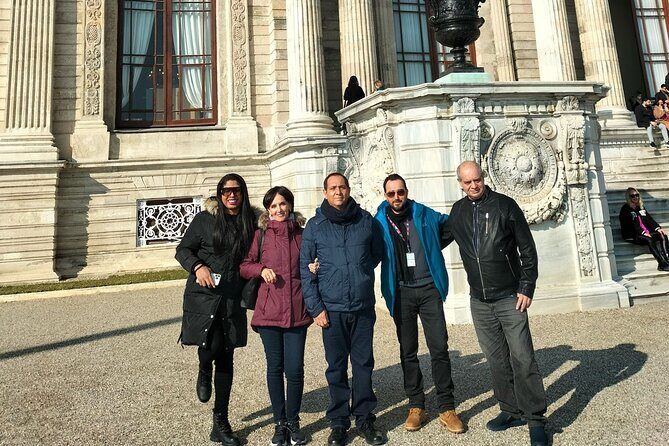
- Spanish guide with real context: Clear explanations in Spanish, led by Umut Polat
- Private group up to 12: Only your group participates, with room for questions
- Smart ticket mix: Some sights are free; you’ll pay separately for Hagia Sophia and the Basilica Cistern
- Basilica Cistern’s restoration detail: 50,000 tons of mud removed during cleanup (1985–1987)
- Grand Bazaar scale: About 58 streets and 4,000 stores, with shopping grouped by type
- Religious site dress rules: Especially important for the Blue Mosque area
A Spanish-guided route through Istanbul’s old center
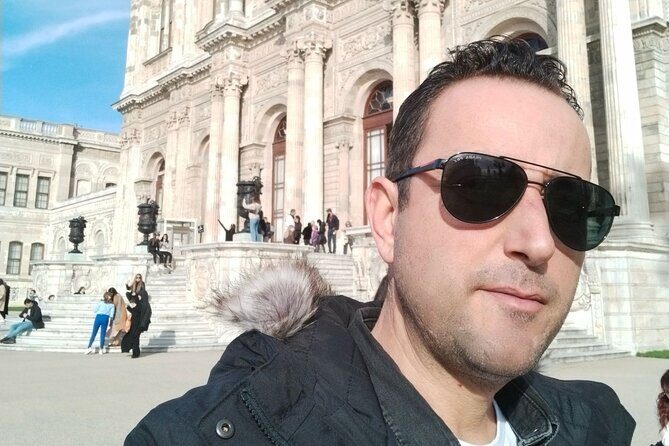
Istanbul is a stack of eras, and this tour helps you read the stack. You start in the Sultanahmet district and build toward the Grand Bazaar, so your day has a natural “from monumental to everyday” rhythm.
Because it’s a private experience for up to 12 people, you’re not stuck in a noisy queue where the guide can’t pause. You also get hotel or port pickup, and the guide uses a practical mix of transport as needed to get you moving without wasting hours.
The other smart detail is the ticket structure. The tour includes all fees and taxes, but it doesn’t mean every monument ticket is free. You’ll see which places are free on the day and which ones you’ll need to purchase separately. That matters because Istanbul’s top sites can add up fast if you’re not expecting it.
You can also read our reviews of more guided tours in Istanbul


Blue Mosque: dress rules and 17th-century tile power
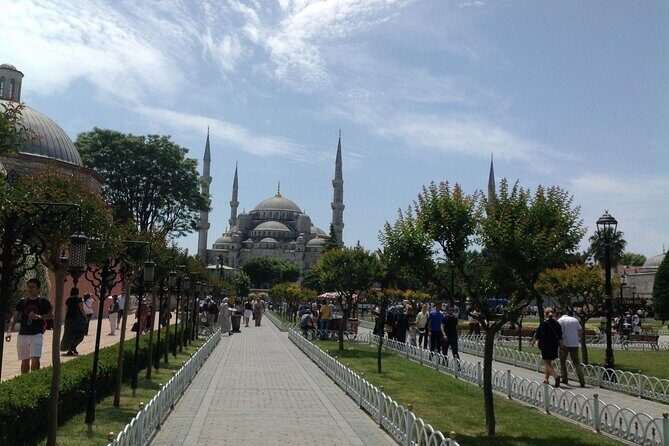
The Sultan Ahmed Mosque—better known as the Blue Mosque—is one of those places where your first instinct is to look up. The reason the nickname sticks is the sheer scale of its decoration: it’s famous for more than 20,000 blue tiles. Standing there, you can see how the color isn’t random. It’s part of a visual plan that makes the space feel cool, calm, and ceremonial at the same time.
This stop also comes with a clear on-the-ground rule set. If you’re visiting as a woman, you’ll need to cover shoulders, hair, legs, and arms. For men, the requirement is that pants cover the knees. Don’t treat this as optional. It’s the kind of requirement that can slow you down if you show up dressed for a casual day in shorts and a T-shirt.
What’s valuable about starting here
Starting with the Blue Mosque helps you set the tone for the rest of the day. You see a masterpiece of Ottoman-era religious design first, then the route leads you to Christian and Islamic layers—so the city’s timeline feels less confusing.
One caution
If you forget the dress rules, you might spend time sorting out clothing on-site. Even if headscarves or coverings are sometimes available, it’s still easier to come prepared.
Hippodrome to Sultan Ahmet Square: obelisks and old power displays
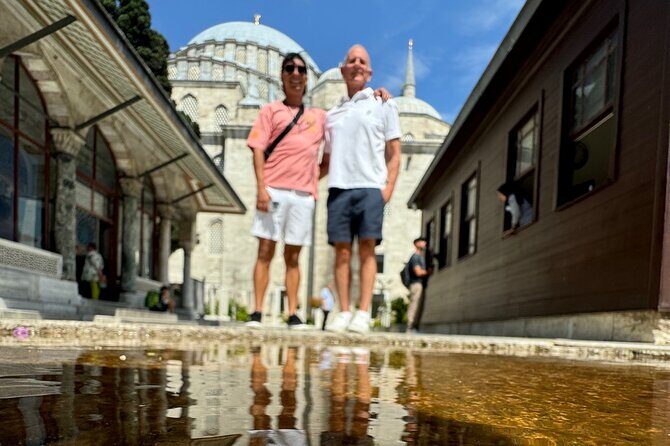
From the Blue Mosque area you move to the Constantinople Hippodrome, which today is a square called Sultan Ahmet Square. The Hippodrome is a great reminder that this neighborhood wasn’t only sacred—it was also civic space, where sports and public life gathered.
Here’s what makes this stop interesting: it’s not just “a square with monuments.” The Hippodrome was decorated with art and trophies brought from across the empire. Some of the famous pieces you’ll hear about are Egyptian and Byzantine in origin, showing how rulers used visible objects to signal control.
The guide will point you toward the Serpent Column, which is the surviving name tied to the Tripod of Plataea. You’ll also see mention of an obelisk from Egypt, plus another obelisk built later by Emperor Constantine VII. There’s a sharp story behind why the site looks the way it does today: during the Fourth Crusade, gilded bronze coverings were stolen, leaving stone blocks exposed.
You can also read our reviews of more private tours in Istanbul


The payoff for your understanding
This stop is short, but it gives you context you’ll use the whole day. When you know that rulers pulled in art from everywhere, you start noticing that many Istanbul landmarks are political statements as much as they are religious ones.
Don’t expect a museum here
This is more “walk and read the monuments” than “tour through rooms.” Plan to look closely, but don’t expect the same level of indoor interpretation as at Hagia Sophia or inside the Basilica Cistern.
Hagia Sophia: museum access, mosque level, and what to expect inside
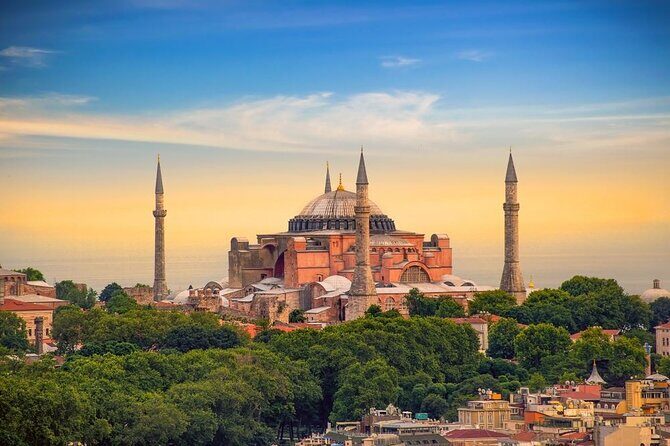
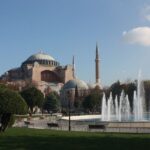
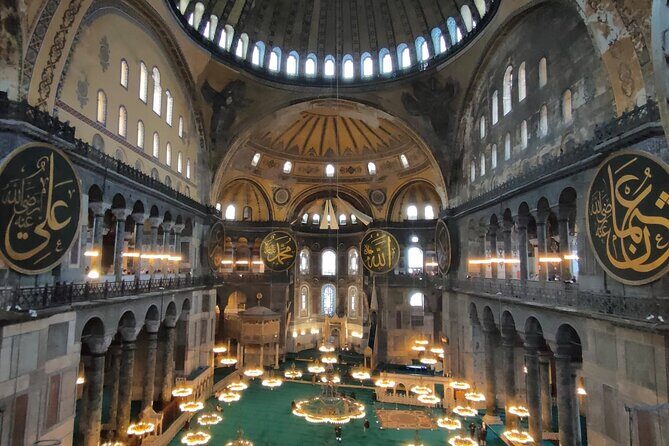
Next comes Hagia Sophia Grand Mosque, one of the most famous buildings on earth for a reason. The big story here is transformation over time: it began as an ancient Christian basilica, became an Orthodox church, later a mosque, then a museum, and since August 1, 2020, it’s again a mosque.
But here’s the practical part you should know before you go: tourists are not allowed to enter the ground-floor mosque area, while the first floor is a museum space open to visitors. This matters because people often assume they’ll see everything at once. In reality, access is split, so your visit focuses more on the museum level and the overall interior atmosphere rather than full access to all areas.
Why a guide is useful at Hagia Sophia
Even when you know the famous name, it’s easy to feel overwhelmed by scale and detail. A good guide helps you connect what you’re seeing—architecture, religious function, and historical change—without turning it into a long lecture.
Ticket note you should plan for
Admission to Hagia Sophia is not included in the tour price. If you budget ahead, you won’t feel surprised when you reach the ticket point.
Basilica Cistern: the water-world under the city
The Basilica Cistern is the kind of place that changes your pace. You go from bright open space into a dim underground hall, where the ceiling and columns create a quiet, echoing feeling.
This cistern isn’t small or accidental. It’s described as the largest of the 200 ancient cisterns built under Istanbul. Its job was simple but vital: it provided water for the Great Palace of Constantinople. So yes, it’s atmospheric—but it’s also infrastructure, built to keep daily power running.
The restoration story is the real conversation starter
A standout detail: between 1985 and 1987, the cistern was cleaned, and 50,000 tons of mud were removed during restoration. That number makes the history feel physical. You’re not just looking at an ancient space—you’re seeing what was recovered and stabilized so it could be visited.
What to expect from your time there
You’ll spend about an hour. That’s enough to walk the main area, take in the column forest, and soak up the underground mood. You won’t feel rushed, but it’s still a timed stop—so if you want extra photo time, plan to move deliberately.
Ticket note you should plan for
Admission to the Basilica Cistern is not included either, so treat it as part of your day’s paid add-ons.
Grand Bazaar: 4,000 stores, 58 streets, and a plan that keeps you sane
You finish at the Grand Bazaar, the big shopping machine of Istanbul. It’s described as the largest bazaar in the city and among the largest and oldest in the world, with more than 58 streets and about 4,000 stores.
The scale is huge—so huge that it can be tough to enjoy it if you arrive with no strategy. This is where a guide helps, even if you don’t plan to buy much. You get help with navigation and with understanding how the bazaar is organized.
What the layout tells you
Shops are grouped by type of activity in a union-plan style. So you’ll see clusters like jewelry and goldsmiths, spice stores, carpets, and even leather jacket areas. That grouping makes the bazaar feel less random than people expect. It’s also why it’s easier to browse without getting lost every 30 seconds.
A reality check on crowds
The Grand Bazaar sees enormous foot traffic—figures given range from 250,000 to 400,000 visitors daily. That doesn’t mean you’ll be packed the whole time, but you should expect busy corridors, especially near popular streets.
How to enjoy it without wasting your energy
Give yourself permission to wander, then pick one lane you care about: spices, textiles, leather, or jewelry. If you try to “see everything,” you’ll just get tired.
Also, if you want the market experience rather than just shopping, pay attention to the workshop vibe of different sections—how goods are presented and how the sellers talk about their products.
Price and time: why this is strong value for Istanbul’s top sights
The price is $228.29 per group for up to 12 people, with a duration of about 6 hours. That structure can be a bargain if you’re traveling with family or friends, because the cost is per group rather than per person.
Here’s the value math that makes sense for real life:
- You get a Spanish-speaking guide for the full route, with history and meaning explained as you go. That alone can be the difference between seeing buildings and understanding them.
- You get pickup from your hotel or port, which can save time in a city where getting across neighborhoods can turn into a mini project.
- Several stops are free for the tour day: the Blue Mosque, the Hippodrome area, and the Grand Bazaar don’t require paid admission in this tour structure.
- The two major ticketed stops—Hagia Sophia and the Basilica Cistern—are clearly the ones you’ll pay separately. Knowing that ahead keeps your spending under control.
The only “cost consideration” is that you should budget for those two admissions when planning your day.
In short: if you want the highlights in one smooth session, and you care about understanding what you’re looking at, this is priced like a practical group tour rather than a fancy add-on.
Who this private tour fits best (and who might want something else)
This works especially well if you:
- Want a private experience in Spanish, not a loud multi-language scramble
- Plan to see multiple top Istanbul sites in one day and hate logistics puzzles
- Appreciate explanations that connect religion, empire, and everyday life—without turning your day into a classroom
- Travel with a small group (up to 12) and want one guide for everyone
It’s also a good match if you have moderate physical fitness. The stops are spread out with walking through complex urban areas, so comfortable shoes matter.
Where it might not fit as well:
- If you want a long, unhurried shopping day in the bazaar, 6 hours may feel short.
- If you already know the basics and mostly want photos, you might feel you’re paying for guided meaning rather than pure sightseeing time.
Should you book this Spanish private Istanbul tour?
I’d book it if you want an efficient old-city hit with a real guide voice in Spanish—especially with Umut Polat leading. The combination of major landmarks, a private group size, and the free entry stops makes it a straightforward value play.
You should also book if your priority is understanding: the Blue Mosque tile details, the Hippodrome’s obelisk stories, the Hagia Sophia access split (museum vs mosque areas), and the Basilica Cistern’s 50,000-ton restoration fact all reward a guide who can connect the dots.
Skip it or consider a different format if you’re mainly looking for hours of bazaar wandering or you strongly prefer self-paced entry with no guided structure. Otherwise, this is a smart way to see Istanbul’s headline sights in one solid day.
FAQ
Is the guide Spanish-speaking?
Yes. The tour includes a Spanish-speaking guide. The experience is also indicated as offered in English.
Is this a private tour?
Yes. It’s a private tour/activity, and only your group participates.
How long is the tour?
The duration is about 6 hours.
How much does it cost?
It costs $228.29 per group (up to 12 people).
Do you get hotel or port pickup?
Pickup is included. You’ll be picked up from your hotel or the port, and the guide will meet you at the front door or port.
What’s the starting and ending point?
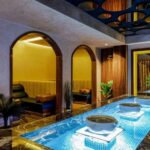
It starts at Kurna SpaCankurtaran, Tevkifhane Sk. No. 1, 34122 Fatih/İstanbul and ends at GRAND BAZAR BEYAZIT, Çadırcılar Cd. No:171, 34126 Fatih/İstanbul. After the tour, the guide can also take you to your hotel.
Are tickets included for all stops?
No. Admission is included for some stops (like the Blue Mosque, Hippodrome, and Grand Bazaar), while Hagia Sophia and the Basilica Cistern have admission tickets not included.
Is lunch included?
No, lunch is not included.
What’s the local fitness level required?
The tour requires moderate physical fitness.
What’s the cancellation policy?
There is free cancellation. You can cancel up to 24 hours in advance for a full refund. If you cancel less than 24 hours before the start time, the amount paid isn’t refunded.