REVIEW · ISTANBUL
Private Half-day Tour: Imperial Istanbul – Hagia Sophia, Basilica Cistern and Grand Bazaar
Book on Viator →Operated by Neon Tours · Bookable on Viator
Three stops, one smart route.
This private half-day loop through Istanbul’s imperial highlights is interesting because it links big-picture change over centuries: a Roman church turned Ottoman mosque turned museum, then a 6th-century underground “Sunken Palace,” and finally the 14th-century Grand Bazaar maze. I like the hotel pickup (European side only) and the way a guide helps you read the Hagia Sophia instead of just staring at it. One consideration: the tour includes bazaar time and, in practice, some groups may get steered toward shopping-style stops, so you should be clear about what you do and don’t want.
What really makes it work is the human side. I like how guides are praised for staying friendly, answering questions, and making entrances feel smooth—names that come up include Gerhan, Ilker, Katarina, and Gülay. You’ll also like the practical pacing: enough structure to see the top sites, with a guide to help you navigate the bazaar without losing an hour to wandering.
In This Review
- Key things to know before you go
- A private 4-hour “imperial Istanbul” route that saves decision fatigue
- Grand Bazaar time: how to browse the 58 corridors without losing the plot
- Hagia Sophia as a story: from Justinian to museum shelves
- Basilica Cistern, the Sunken Palace: the 6th-century underground pause
- How the timing feels: smooth entrances, plus one common risk
- Shopping and “craft stops” in the bazaar zone: how to keep control
- Who should book this tour, and who should skip it
- Should you book Imperial Istanbul: Hagia Sophia, Basilica Cistern and the Grand Bazaar?
- FAQ
- How long is the private half-day tour?
- What’s included in the price?
- Where does the tour start and end?
- What time does the tour start?
- Is the tour private?
- Which language is the tour offered in?
- What happens if Hagia Sophia or the Grand Bazaar is closed?
- Is this tour suitable for children?
- What if I need to cancel?
Key things to know before you go
- Private, half-day timing: About 4 hours, with hotel pickup and drop-off and transport by private vehicle.
- Hagia Sophia details matter: Plan on 2 hours and included admission, with Byzantine mosaics explained.
- Cistern is the curveball: You get 1 hour for the Basilica Cistern, also known as the Sunken Palace.
- Closure swaps are real: Mondays may swap Hagia Sophia for the Chlora Museum; Sundays may reduce Grand Bazaar time.
- Shopping energy can happen: Some experiences include vendor or showroom detours—tell your guide your boundaries early.
- Moderate fitness helps: The route involves walking on stone and hills, so bring good shoes.
A private 4-hour “imperial Istanbul” route that saves decision fatigue
At $250 per person for a private tour, you’re paying for three things: a dedicated guide, door-to-door convenience, and paid entry where it matters. It’s not a bargain-price day, but it’s not meant to be. The value shows up when your time is limited and you’d rather spend your energy on the sites than figuring out logistics and entrances.
Your tour runs for about 4 hours starting at 9:00 am. Pickup and drop-off are included, and the start point is the Ottoman Hotel ImperialSultanahmet area, with the trip ending back at the same meeting point. It’s English-language, and it’s designed for only your group, which is a big deal inside the Grand Bazaar where crowds and confusion can drain your attention fast.
Another practical perk: admissions aren’t all on you. Hagia Sophia and the Basilica Cistern are included, while the Grand Bazaar ticket is free. That’s a quiet cost saver that matters when you’re trying to keep your “Istanbul math” under control.
You can also read our reviews of more tours and experiences in Istanbul.
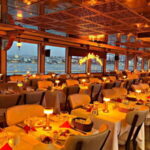


Grand Bazaar time: how to browse the 58 corridors without losing the plot
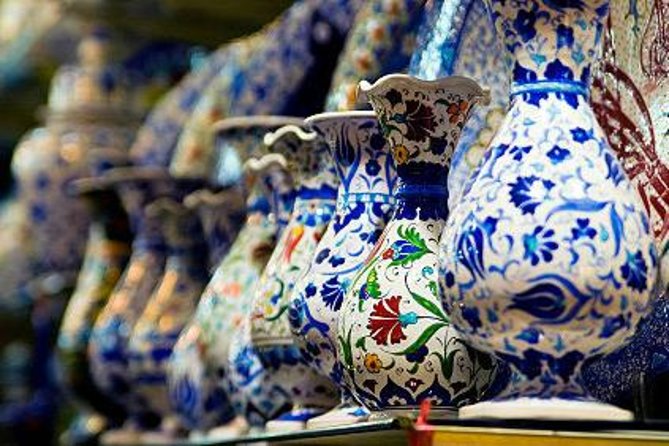
The Grand Bazaar is one of the world’s best-known shopping worlds, but it’s also easy to get overwhelmed. Here, you’re given a full hour at the bazaar (and admission is free). The bazaar is described as operating for over six centuries, with 58 corridors and 4,000+ shops—and those numbers are not just bragging rights. They’re a warning label.
I like how this tour treats the bazaar like a navigation problem, not a free-for-all. A good guide helps you spot what’s worth your time—jewelry, leather goods, pottery, spices, and colorful carpets come up often—while steering you away from aimless wandering. In the feedback, guides are praised for knowing which vendors feel more reputable and for helping you find your way around the maze.
Now for the part you should plan for: bazaar shopping can come with sales pressure. Some people report being taken to specialty rug or carpet-focused places, and one person noted that the conversation turned into a sales pitch after a guide arranged a detour. That doesn’t automatically mean it will happen to you, but you should treat it as possible.
How to make it comfortable: tell your guide right up front that you want browsing time, not a hard-sell showroom stop. If you’re not buying, say so early. A firm but polite no keeps the mood friendly and saves time you’ll want for Hagia Sophia and the cistern.
Also note the closure rule: the Grand Bazaar is closed on Sundays. If it’s a Sunday, you’ll get extra time distributed to the other locations instead. That may work fine, but it’s not the same as getting a longer bazaar session, so it’s worth checking the day you’re going.
Hagia Sophia as a story: from Justinian to museum shelves
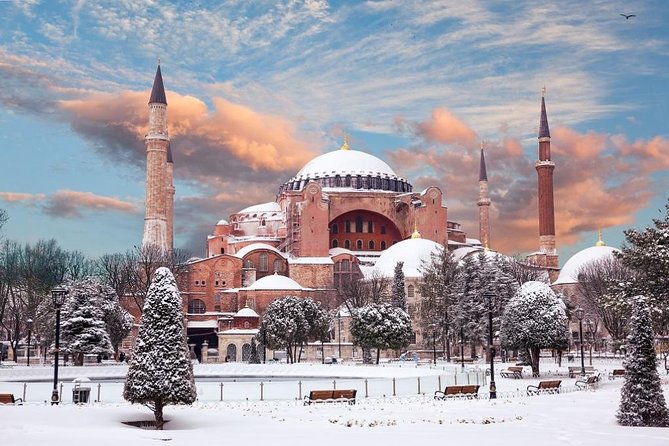
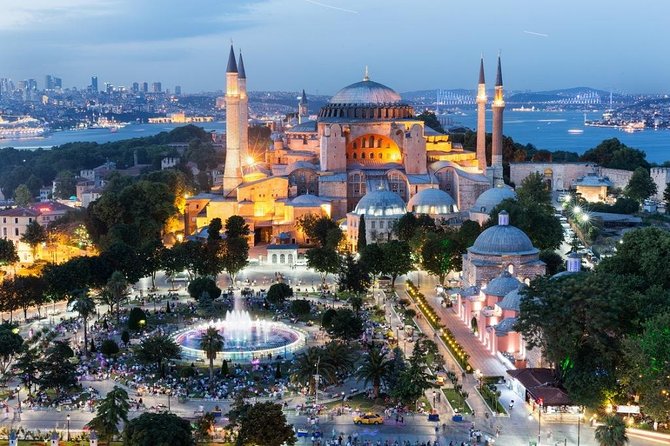
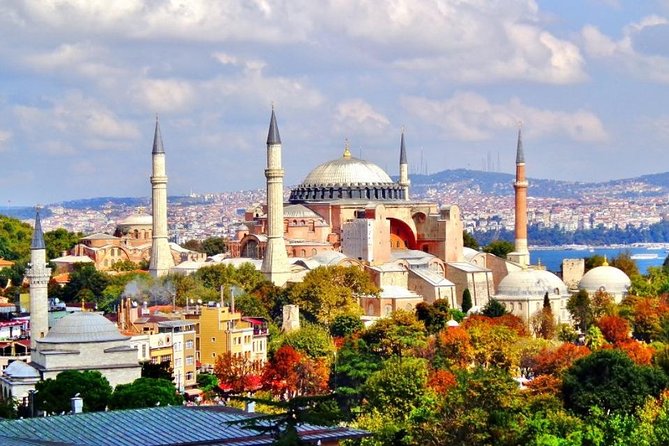
Hagia Sophia is the star here, and the tour gives it 2 hours with included admission. It matters that your guide connects the architecture to the timeline: built in the 6th century by Roman Emperor Justinian, it was one of the largest basilicas in the Christian world, later converted into a mosque after Ottoman rule, and is now one of the most magnificent museums.
The tour also points you toward the detail that makes Hagia Sophia more than a photo stop: Byzantine mosaics. Rather than treating them as decoration, your guide’s job is to help you see what you’re looking at and why it’s important. That kind of context is exactly why guides are repeatedly praised for being able to answer dates and historical questions.
One key practical note: Hagia Sophia is closed on Mondays. If your tour lands on a Monday, your visit is exchanged with the Chlora Museum (as stated in the tour info). That substitution matters. You’ll still get a major Byzantine-heritage experience, but it won’t be the exact Hagia Sophia visit you had in mind. If Hagia Sophia is your top priority, avoid Mondays when you can.
Basilica Cistern, the Sunken Palace: the 6th-century underground pause
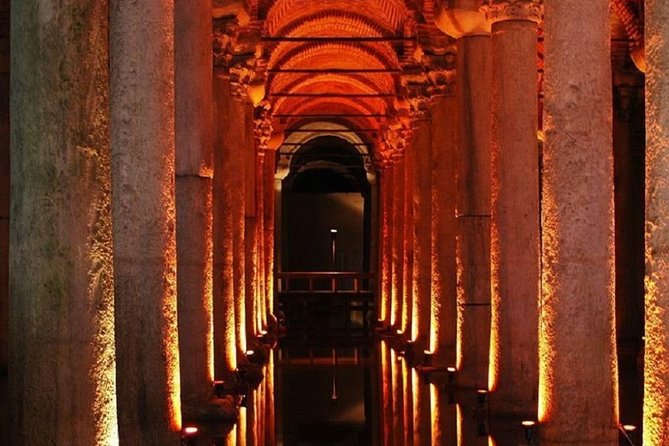
After the bright energy of Hagia Sophia (and often the chaos of the bazaar), the Basilica Cistern is a different pace entirely. You get 1 hour here with included admission.
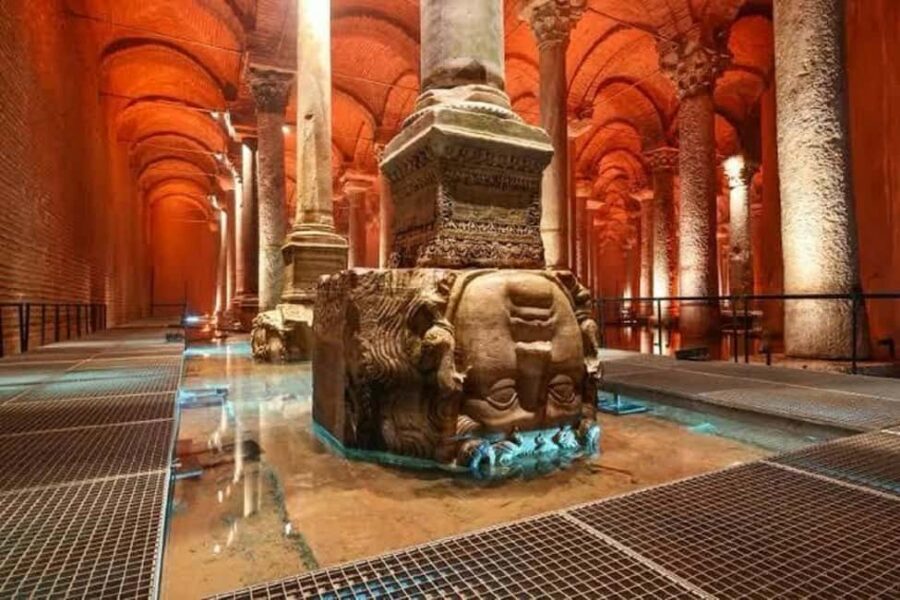
The cistern is described as the largest of hundreds beneath Istanbul, built in the 6th century during Byzantine Emperor Justinian I’s reign. It sits about 500 feet (150 m) southwest of Hagia Sophia on the historical peninsula of Sarayburnu. That distance note is helpful because it means you’re not spending your day on long transfers—this is a concentrated cluster of major sites.
The name “Sunken Palace” (Yerebatan Sarayi) isn’t just poetic. It’s a way of framing what you’ll experience: an underground space that feels like a different Istanbul layer. Your guide explains the cistern’s massive scale, and that makes a big difference. Alone, it’s easy to treat it as a cool room. With guidance, you start understanding why it was built there and why it became such a landmark.
There’s also a backup plan: the cistern stop might be replaced with Serefiye Cistern. That’s useful when closures or scheduling conflicts pop up. You’ll still get the underground-cistern concept, but it won’t be the exact same cistern every time.
How the timing feels: smooth entrances, plus one common risk
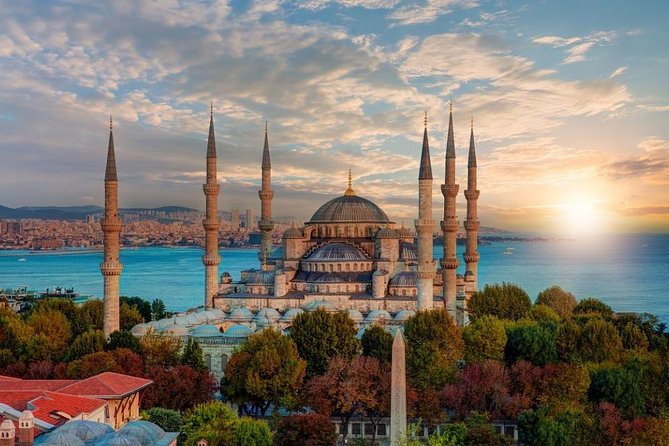
On paper, the day looks tidy: around 4 hours total, with time at three core sites. In reality, the pacing can swing a bit based on closures and how your group moves.
In the positive feedback, guides are praised for getting people into sights quickly and keeping things organized—one person even asked to stay in town longer after feeling the guide moved fast. That’s a reminder that some tours push to minimize waiting, which is good. But it can feel rushed if you need slower walking.
Here’s the balance I’d aim for: use the guide’s speed when it helps, but don’t let it force you. If you want more bazaar time, ask early. If you want extra moments at Hagia Sophia mosaics, speak up before you’re already inside.
Also watch for the “shopping detour effect.” Some experiences include pottery or rug displays. If you’re the type who hates sales pressure, you should set expectations at the start: browsing only, no showroom time, no pressure. That one conversation can protect the whole day.
Finally, closures can change the structure. Grand Bazaar closes Sundays, and Hagia Sophia closes Mondays. On those days, the tour swaps or redistributes time. One person was disappointed when a public holiday led to a closed Grand Bazaar, even though the tour was still booked—so if the bazaar is your #1 reason for booking, build in flexibility or accept that the day could shift.



Shopping and “craft stops” in the bazaar zone: how to keep control
The Grand Bazaar is where you can find real handmade craft in the mix with tourist pricing. A guide can help you get your bearings and avoid sketchy corners, and that’s one of the strongest reasons this tour gets good marks. People mention getting help navigating and even learning enough to shop more confidently.
But the flip side is what a few people flagged: vendor pitches can feel too pushy, especially if you didn’t ask for a rug or carpet-focused detour. That can turn a fun browsing hour into an uncomfortable negotiation.
So here’s my practical rule: treat any showroom or vendor stop as optional until you confirm it matches your interests. You can ask:
- Is this extra stop included in the tour flow, or is it optional?
- Will there be sales pressure, or is it a short information visit?
- If we don’t want to buy, can we return to the main bazaar route?
A good guide will adjust. And if you get a guide who won’t, you’ll at least know early and can protect your energy for the parts that matter most to you—Hagia Sophia and the cistern.
Who should book this tour, and who should skip it
This is a great fit for you if:
- You want a first-timer-friendly overview of Istanbul’s imperial landmarks in a single half day.
- You like having a guide interpret details like the Hagia Sophia timeline and the meaning behind the sites.
- You want private comfort—pickup, drop-off, transport—so you’re not trying to coordinate yourself.
It may be less ideal if:
- You want lots of free, unguided bazaar wandering with zero shopping pressure. Even with a private guide, bazaar time can carry commercial energy.
- You’re expecting other major attractions beyond this trio. If you’re hoping for a broader “blue mosque day” type of plan, this specific route doesn’t promise that.
Family note: the tour is not recommended for children aged 4 and under. Also, children 18 and under must be accompanied by an adult. And because the route involves walking, it’s best with moderate physical fitness. One of the more helpful pieces of feedback noted that guides can help seniors navigate stone walks and hills—so if that’s you, private structure helps.
Should you book Imperial Istanbul: Hagia Sophia, Basilica Cistern and the Grand Bazaar?
Book it if you want a time-efficient, guide-led hit of Istanbul’s biggest “imperial” sites with included admissions where it counts. The top reason is simple: you’re not just seeing buildings; you’re getting explanations that connect Justinian-era construction, Ottoman transformation, and the underground engineering of the cistern into one coherent story.
Don’t book it blindly if bazaar shopping is your make-or-break priority. Sunday closures and occasional public-holiday disruptions can shift the plan. And be honest with yourself about shopping tolerance. If you hate sales pressure, set boundaries at the start so the bazaar hour stays fun.
My decision checklist:
- Are your dates a Monday or Sunday? If yes, expect substitutions (Chlora Museum on Mondays; extra time elsewhere on Sundays).
- Do you want a guided museum experience more than you want free shopping chaos? If yes, this fits.
- Are you open to shopping-related detours only if they feel respectful and optional? If you’re not, tell the guide early.
If you do those three things, this private half-day tour is a strong way to use limited time and still leave Istanbul feeling like you understood what you saw.
FAQ
How long is the private half-day tour?
The tour lasts about 4 hours.
What’s included in the price?
Hotel pickup and drop-off, a local guide, and transport by private vehicle are included. Hagia Sophia and Basilica Cistern admissions are included, and the Grand Bazaar admission ticket is free.
Where does the tour start and end?
It starts at Ottoman Hotel ImperialSultanahmet in Sultanahmet (Cankurtaran, Caferiye Sk.) and ends back at the same meeting point.
What time does the tour start?
The start time is 9:00 am.
Is the tour private?
Yes. It’s private, meaning only your group participates.
Which language is the tour offered in?
The tour is offered in English.
What happens if Hagia Sophia or the Grand Bazaar is closed?
Hagia Sophia is closed on Mondays and is replaced with the Chlora Museum. The Grand Bazaar is closed on Sundays and extra time is dispersed to the other locations.
Is this tour suitable for children?
It’s not recommended for children aged 4 and under. Children 18 years and under must be accompanied by an adult.
What if I need to cancel?
You can cancel up to 24 hours in advance for a full refund. If you cancel less than 24 hours before the start time, the amount paid is not refunded.