REVIEW · ISTANBUL
Private istanbul tour with transportation
Book on Viator →Operated by istanbul sightseeing tours · Bookable on Viator
Old Istanbul is a lot easier this way.
This private 5–6 hour route lines up the big hitters of Sultanahmet and the old center, with an English-speaking guide and an air-conditioned car to cut down on wasted transit time. I like that it starts with context you can feel right away, then keeps moving so you get serious sightseeing without it turning into a marathon you regret. Bonus: you’ll be picked up at Galaport’s New Cruise Ship Terminal, so cruise days don’t have to start with guesswork.
Two things I especially like: first, the guides have a knack for keeping the pace brisk but not frantic. People who went with guides like Emre and Kenan highlight that they explain what you’re seeing and still leave you time for photos. Second, it’s designed for real-world stops, not just a checklist—like a full hour at the Grand Bazaar and a full hour at a cistern, plus time at the Hippodrome. One consideration: Hagia Sophia’s entry ticket isn’t included, and while many other stops are listed as free, you should still budget for the big ticket inside Hagia Sophia and any on-the-spot add-ons.
You also get flexibility. The tour runs in English plus five other languages, and it’s only for your group (up to 4), which is perfect if you want to ask questions without feeling rushed or competing with a crowd.
In This Review
- Key points worth knowing
- Private Istanbul Old City Route: Built for First-Time Efficiency
- Galata Köprüsü Over the Golden Horn: Why Start Here
- Sultanahmet’s Blue Mosque: Six Minarets and Iznik Tile Details
- Hippodrome at At Meydanı: Obelisks and Byzantine Civic Life
- Grand Bazaar Time: How to Shop Without Losing Your Morning
- Binbirdirek Cistern: Roman Waterworks in a Quiet Hour
- Hagia Sophia Grand Mosque: The One Ticket You’ll Want to Budget For
- Topkapi Palace and the Ottoman Layer of the Old City
- Pickup at Galaport and Private Transportation: Where the Comfort Shows
- Cost and Value: What You Pay For (and What to Budget)
- Best For Who: Families, Cruise Days, and Photo Hunters
- Should You Book This Tour? The Practical Verdict
- FAQ
- What is the duration of this private Istanbul tour?
- Where does pickup happen?
- What are the pickup hours?
- How many people are in the group?
- What languages are available?
- Are there admission fees at the stops?
- Does the price include lunch?
- Is private transportation included?
- What if the tour is canceled because minimum travelers are not met?
Key points worth knowing
- Galaport pickup means a smoother start if you’re in on a cruise day.
- Private transport with AC keeps you comfortable between stops, especially in hotter months.
- Most stops are listed free (bridge, Blue Mosque, Hippodrome, Grand Bazaar, cistern), but Hagia Sophia is ticketed separately.
- Grand Bazaar time is built in, so you can shop with a plan instead of wandering blind.
- Guides matter: people singled out Emre for fast pace + great photo spots, and Kenan for clear explanations.
Private Istanbul Old City Route: Built for First-Time Efficiency
This is the kind of Istanbul tour that makes sense when you want the highlights, but you also want them explained in human language. The structure is simple: hop between iconic sights around the historic peninsula, get a guide who can connect the dots (Byzantine to Ottoman, empires to everyday life), then move on before crowds become a problem.
A big part of the value is the private transportation. Istanbul traffic and parking can turn even a short day into a timing headache. Here, the car reduces the distance you’re exposed to heat, waiting, and the general chaos of finding the right place at the right time. You also get a guide the whole time, so you’re not doing the expensive-and-annoying part of self-guided sightseeing: standing around reading signs while your feet get cold (or sweaty).
The length matters too. The tour is listed at about 5 hours (and described as about 6 hours in some versions). Either way, it’s long enough to feel like a real day, not just a photo sprint. It’s also short enough that you won’t feel trapped if you want to move quickly through a sight and spend more time on another.
You can also read our reviews of more private tours in Istanbul
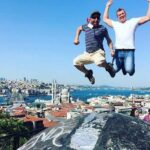

Galata Köprüsü Over the Golden Horn: Why Start Here

Starting at Galata Bridge (Galata Köprüsü) is a smart warm-up. It’s one of Istanbul’s most famous spans over the Golden Horn, and it sets the tone: this city is all about water, movement, and layers of rebuilding.
You’ll hear how the bridge originally had a wooden construction under Sultan Abdulmejid II, then underwent repeated restorations until a parallel bridge was built in 1987. There’s also a story twist: a fire broke out, and some of the undamaged wooden boards were moved to shore. It’s the kind of detail that makes a bridge more than a backdrop.
One more reason I like this stop: it’s not just about history. It’s also about atmosphere. The bridge is described as called the awake bridge, with lights that stay on, connected to sea fan traffic. Whether you interpret that literally or treat it as local storytelling, you get a sense for how locals and sea life share the same space.
This stop is short—about 15 minutes—and that’s intentional. It’s a breather before the real indoor-ticket-and-tile portion of the day.
Sultanahmet’s Blue Mosque: Six Minarets and Iznik Tile Details
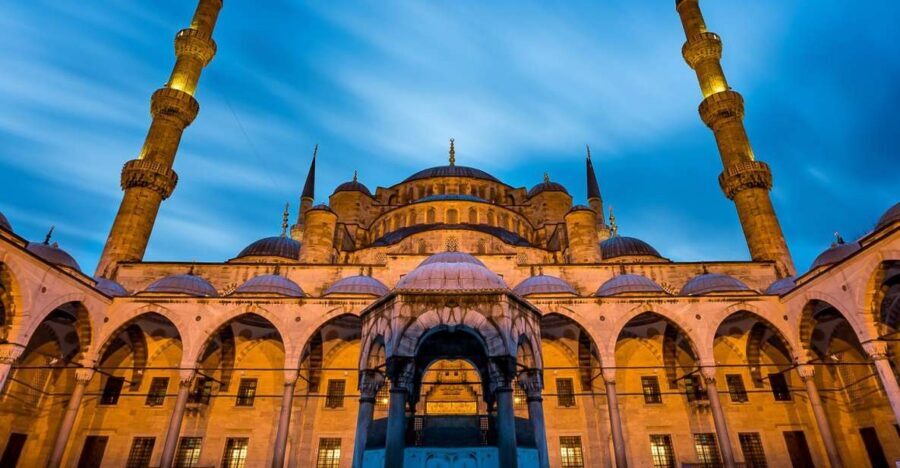
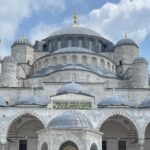
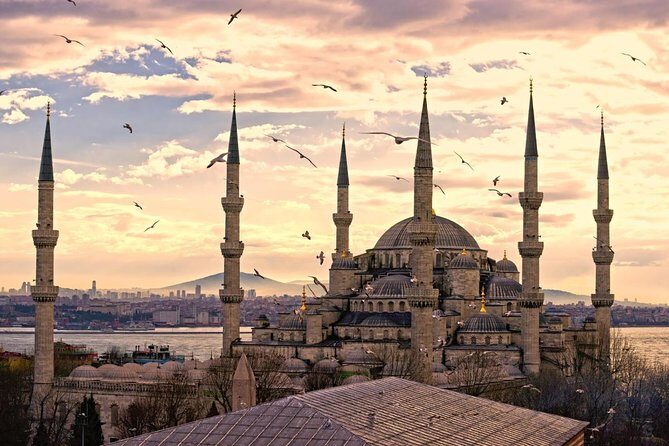
Next up is the Blue Mosque (Sultanahmet Mosque). If you’ve seen photos, you might think you already know what it looks like. I don’t think that’s true. The scale hits differently in person, and the guide can help you notice things your phone won’t point out.
You’ll learn it was built during Sultan Ahmet I’s reign, dated 1609–1616, and that it’s the only mosque in Turkey known for six minarets. The name Blue Mosque comes from the European nickname tied to the hand-dyed Iznik tiles in blue, green, and white. When you’re inside, that tile work becomes the main event.
There are also hard numbers that make it easier to grasp what you’re looking at: the central dome is 43 meters high and 33.4 meters in diameter, and the mosque has 260 windows. A guide can turn those numbers into something you can actually see and feel—like why the light looks the way it does.
Entry is listed as free here, which is a nice bonus. Still, do expect that your hour can feel like two different experiences: first, the big wow factor; second, the slower appreciation once you know where to look.
Hippodrome at At Meydanı: Obelisks and Byzantine Civic Life
The Hippodrome (At Meydani) gives you the outdoor sense of what Byzantine city life used to orbit around. This was the backdrop for chariot races and the center of civic activity—so while it may not look like much at a glance, it’s a key piece of the puzzle.
The guide will point out the surviving ornaments: the Obelisk of Theodosius, the bronze Serpentine Column, and the Column of Constantine. The obelisk is described as Egyptian-style, erected in 1547 BC, and once stood about 60 meters tall. Even if the current size makes it feel smaller than your imagination, the story gives it weight.
There’s also the German Fountain within the hippodrome area—constructed in Germany to mark German Emperor Wilhelm II’s second visit to Istanbul, imported and opened on January 1, 1901. It’s one of those “wait, how did that get here?” moments that makes Istanbul feel like a museum that kept living.
Time here is about 45 minutes. That’s enough to look, learn, and still keep your day moving. This is a great stop for anyone who likes history but gets impatient with slow pacing.
Grand Bazaar Time: How to Shop Without Losing Your Morning
The Grand Bazaar (Kapalı Çarşı) is massive, old, and full of small worlds inside it. You’re looking at one of the largest covered markets in the world, with more than 58 covered streets and over 1,200 shops. It’s been open since 1461.
Your guide’s value shows up here. Instead of letting you get swallowed by the maze, they can help you understand how the market is organized—stalls grouped by type of goods, like areas for jewelry, spices, carpets, leather coats, and gold items.
The bazaar is also built around two bedestens, domed structures for storage and safe keeping. The first is described as constructed between 1455 and 1461 under Sultan Mehmed the Conqueror. You’ll hear that the bazaar includes 12 major buildings and 22 doors, which is useful because it helps you orient yourself even if you wander a bit.
This stop runs about 1 hour. That’s long enough to buy one meaningful souvenir (or at least taste the experience), but not so long that it turns into shopping fatigue. One theme from past outings: guides often keep it from becoming a pressure-cooker of sales pitches, and instead focus on staying on schedule.





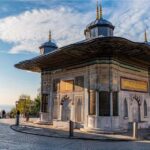
Binbirdirek Cistern: Roman Waterworks in a Quiet Hour

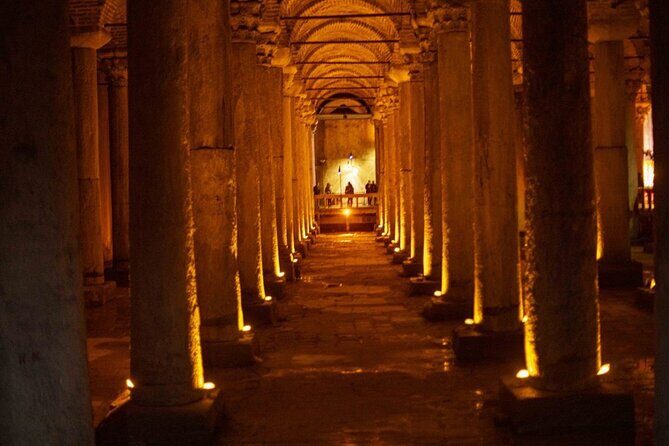
When the schedule includes a cistern, your day gets a breather. Binbirdirek Cistern (about 1 hour) is a Roman-period water reservoir built by Theodosius II between 428 and 443. It stored water supplied by the Valens Aqueduct.
This stop works because it flips your mindset. You go from grand empire monuments and a market labyrinth into something more hushed and physical. The point isn’t just to look down; it’s to understand the engineering that made city life possible. Water storage was one of the unglamorous reasons a huge city could function.
Entry is listed as free for this stop, which is a nice way to balance the one ticket you’ll later pay for at Hagia Sophia.
Hagia Sophia Grand Mosque: The One Ticket You’ll Want to Budget For
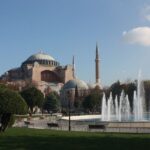
Hagia Sophia is the headline—1,400 years old, originally a Byzantine cathedral, and now functioning as the Hagia Sophia Grand Mosque. The description you’ll hear is exactly what makes people slow down: mosaics, relics, and iron work, plus the sheer architectural scale.
You’ll learn it was built under Byzantine Emperor Justinian in the 6th century, and for nearly a thousand years it was described as the largest enclosed space in the world. Even if you’ve seen photos, it’s the scale and light that make it hard to treat like just another stop.
You’ll also get the historic shift in a way that makes sense, not like a lecture. When a place changes function across empires, it’s not just politics—it changes how people experience the space daily.
Important practical detail: Hagia Sophia’s museum entry ticket is not included in the tour price. Some stops earlier are listed as free, so it’s easy to assume you’ll have no extra costs. Don’t count on that. Plan on paying for this one.
Time here is about 1 hour. That’s enough for a meaningful visit if you don’t get lost in every corner at once.
Topkapi Palace and the Ottoman Layer of the Old City
The tour is built around major icons, including Topkapi Palace, even though the day also focuses on other big sites. If Hagia Sophia and the Blue Mosque bring you the Byzantine and Ottoman spiritual layers, Topkapi is where the Ottoman story feels more personal—power, court life, and the way rulers presented themselves to the world.
In the practical version of this tour, guides tend to time these stops so you don’t just see buildings—you get guided meaning behind them. One reason this matters is simple: Topkapi and its surroundings are easy to appreciate from the outside, but far more rewarding when someone connects what you’re seeing to how the city worked.
If you’re short on time in Istanbul, this mix is a good compromise. You get variety—mosque interiors and palace atmosphere—without spending your whole day trapped in a single complex.
Pickup at Galaport and Private Transportation: Where the Comfort Shows

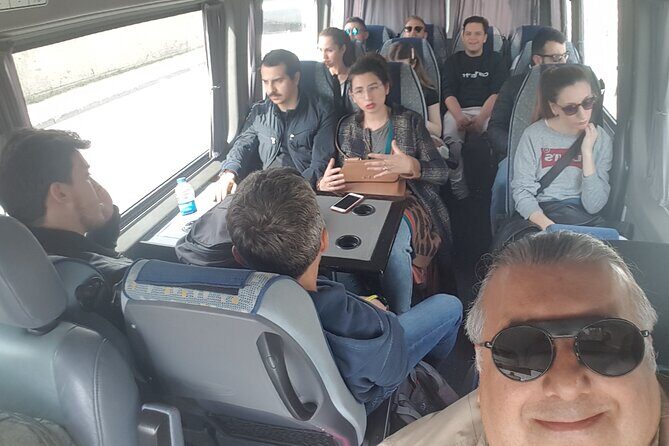
Here’s where this tour earns its keep if you’re coming from a cruise. Pickup is at the New Cruise Ship Terminal at Galaport, and the pickup window is listed as 8:30 AM to 4:30 PM (daily). That timing is a big deal because Istanbul can be unpredictable: traffic, walking distances, and crowd control all affect when you actually start sightseeing.
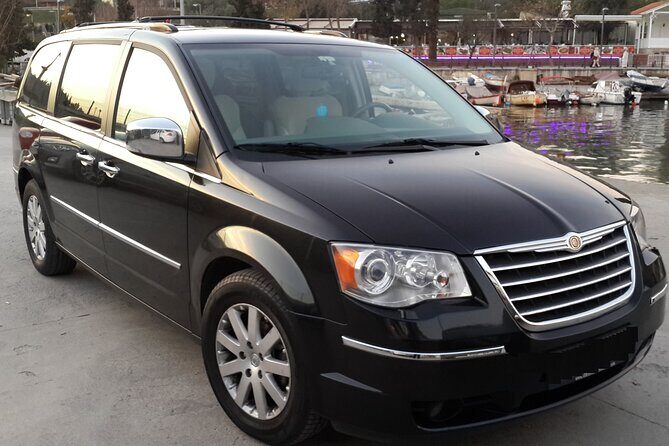
The air-conditioned vehicle also matters more than people think. Even in comfortable seasons, you’ll feel the benefit once you step out for photos and then get back into cool comfort. You’re doing several different types of sightseeing—outdoor bridge views, interior mosque time, market walking—so having transport between stops keeps your energy up.
This is also a real private tour. Only your group participates, up to 4. In practice, it makes a difference if your travel style is: ask questions, move at a steady pace, and keep the day efficient.
Cost and Value: What You Pay For (and What to Budget)
The price is $479.31 per group for up to 4 people, with private guide and private transportation included. When you divide it out at full group size, you’re roughly around $120 per person. If you’re two people, it’s higher per person, but you still get a guided day with transport instead of coordinating several tickets and rides.
Here’s what’s included:
- Private transportation
- Private Tour Guide
- Air-conditioned vehicle
And here’s what’s not included:
- all fees and taxes
- museum entry tickets
- lunch
One of the biggest practical value points is that your guide can help you spend your time where it counts. In past outings, guides like Emre and Kenan were specifically praised for respecting time and not wasting it on unnecessary detours. That’s not a small detail. Istanbul has plenty of ways to waste time—this tour tries to avoid that.
Also plan your spending for Hagia Sophia’s entry ticket. Even if other stops are listed as free, Hagia Sophia is the one you should assume will add to your day’s total.
Best For Who: Families, Cruise Days, and Photo Hunters
This tour fits best if you want a strong introduction to Istanbul without doing everything yourself. It’s especially useful if you:
- are on a cruise day and want a clear pickup point at Galaport
- care about seeing major landmarks like Hagia Sophia, the Blue Mosque, and the Grand Bazaar in one organized route
- prefer a private setting so you can ask questions and keep your own pace
- like photography and want help finding the better angles (people specifically called out guides for photo spots)
It’s also a good option if language matters. The tour is offered in English and five other languages. One guide experience that stood out involved Kenan explaining things clearly in detail, and another guide experience involved Gunesh providing explanations in Portuguese—useful if you want the story told right, not guessed.
Should You Book This Tour? The Practical Verdict
I’d book this private Istanbul Old City tour if you want the essentials done well—without turning your day into navigation work. The biggest wins are private transport with AC, a guide who keeps the pace moving, and a route that covers major sights in a logical order.
Skip it or consider alternatives if you’re traveling super-budget and you don’t want to pay for a private guide, or if you’re the kind of traveler who wants to spend half the day wandering markets at your own rhythm. This tour is efficient by design, and efficiency doesn’t always match a loose, drifting style.
My call: if you have limited time, especially on a cruise, this is a strong way to get oriented fast and leave with more than just selfies.
FAQ
What is the duration of this private Istanbul tour?
It runs about 5 hours (listed as approx.), and it’s also described as a 6-hour private tour depending on pace and timing.
Where does pickup happen?
Pickup is at the New Cruise Ship Terminal at Galaport.
What are the pickup hours?
Pickup is available Monday to Sunday, 8:30 AM to 4:30 PM, during the listed operating dates.
How many people are in the group?
It’s a private tour with only your group participating, up to 4 people.
What languages are available?
The tour is offered in English plus five other languages.
Are there admission fees at the stops?
Many stops are listed as free entry, but Hagia Sophia’s entry ticket is not included. The tour also lists all fees and taxes as not included.
Does the price include lunch?
No. Lunch is not included in the tour price.
Is private transportation included?
Yes. The tour includes private transportation, a private tour guide, and an air-conditioned vehicle.
What if the tour is canceled because minimum travelers are not met?
If it’s canceled due to the minimum not being met, you’ll be offered a different date/experience or a full refund.