REVIEW · ISTANBUL
Skip line Old Town tour with Bosphorus Yacht Ride
Book on Viator →Operated by Puteshestvuy s namy travel · Bookable on Viator
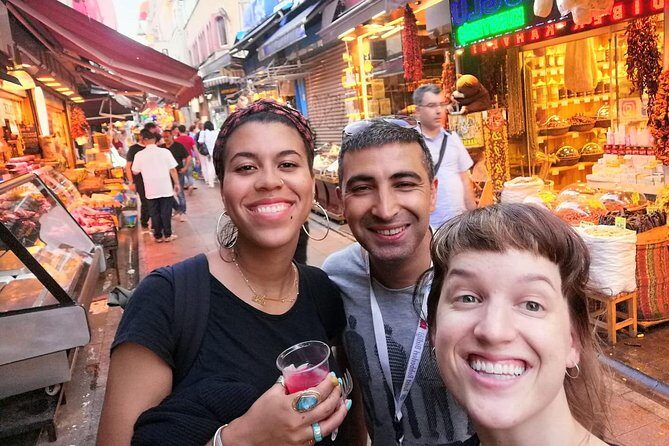
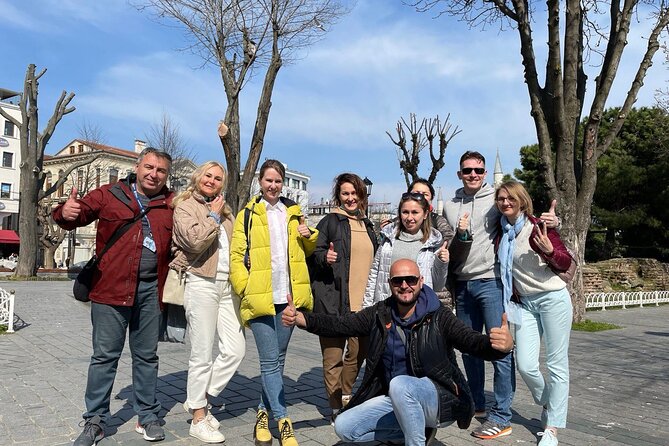
A yacht makes Istanbul’s old streets click. This tour strings together the big names of the historical peninsula with a real Bosphorus cruise, so you get both the walking-history feel and the water-view payoff. I especially liked the small group setup (max 12) and the friendly, helpful guide experience—Tugba was singled out for doing a great job keeping things smooth and upbeat.
The flow is also built for people who don’t want museum marathons. You skip the museum-style deep dives, hit iconic places like Hippodrome and Hagia Sophia, and then cool off with the Basilica Cistern stop (skip-the-line, if you choose to enter). One thing to consider: the Basilica Cistern ticket isn’t included, and the whole experience depends on good weather.
In This Review
- Key highlights to know before you go
- Why this 3:00 pm plan feels smart in Istanbul
- Sultanahmet District: getting oriented fast (and not missing the essentials)
- Hippodrome Square: the “center stage” of Byzantine Istanbul
- Hagia Sophia area (Ayasofya): the meaning behind the icon
- The 1556 Hammam stop: Mimar Sinan meets Haseki Hürrem
- Milion Stone: the “road-measuring” clue to Constantinople
- Basilica Cistern: cool air, skip-the-line sanity, and one ticket choice
- Galata Bridge break: one hour for food, walking, and photos
- The 2-hour Bosphorus yacht ride: where the city really changes
- Value check: $82.54 for a guided story plus boat time
- Who this tour suits best
- Should you book this Bosphorus Yacht + Old Town tour?
- FAQ
- Where does the tour start and end?
- What time does the tour begin?
- How long is the experience?
- What’s included in the price?
- What isn’t included?
- Do I need to bring a ticket for the Basilica Cistern?
- How big is the group?
Key highlights to know before you go
- Max 12 travelers keeps the pace human and the guide easy to ask questions.
- Yacht time is 2 hours on the Bosphorus, with views you just can’t get from the street.
- Skip-the-line Basilica Cistern helps if you’re visiting during peak hours.
- Galata Bridge break (1 hour) is built in for a breather, photos, and a quick bite.
- On-board basics included: WiFi, restroom, bottled water, and a guide onboard.
- Guide named Tugba showed up in guest feedback as especially friendly and effective.
Why this 3:00 pm plan feels smart in Istanbul
I like this tour’s timing because it mixes daylight sightseeing with the kind of light you want on the Bosphorus. You start at 3:00 pm in Sultanahmet (Alemdar, near the main sights), then move through the historic heart and finish with a boat ride when the city starts to glow. It’s a good match for a short trip, because you cover a lot without trying to “win” the day in a museum.
Also, you’re not stuck inside for hours. The itinerary is built around street-level viewing and guided context, with the one big interior detour being the Basilica Cistern. That structure works well if you’re the type who wants meaning, not paperwork.
One more practical reason it’s a good choice: the group is capped at 12 people. That means you’re not playing human pinball between strangers, and the guide can actually manage the pace—especially around crowded landmarks.
You can also read our reviews of more tours and experiences in Istanbul.


Sultanahmet District: getting oriented fast (and not missing the essentials)
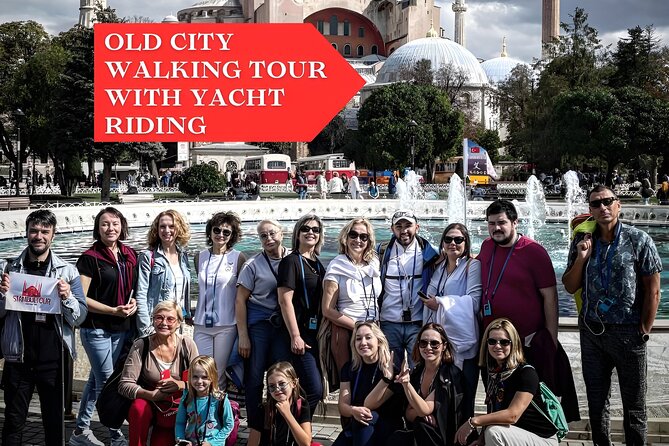
Your tour begins in Sultanahmet, the old core that sits like a hub between the Golden Horn, the Bosphorus, and the Sea of Marmara. This matters because Istanbul’s “layers” can feel chaotic if you’re wandering alone. With a guide, the story becomes chronological: what used to be called Byzantion, then Dersaadet, then Istanbul—plus all the monumental remnants that still dominate the skyline.
In the walking part, I like how the tour frames the peninsula as more than a postcard area. It’s the oldest settled zone in Istanbul, and it’s packed with major artifacts—so even short stops feel purposeful. You don’t need to memorize dates; you just need the map in your head, and this gives you one.
A small consideration: Sultanahmet can be crowded, especially later in the afternoon. So the value of the guide is real here—your time stays focused, and you don’t lose it weaving through bottlenecks.
Hippodrome Square: the “center stage” of Byzantine Istanbul
Next up is Hippodrome Square, one of Istanbul’s oldest major public spaces. The name comes from the Greek word for a horse-racing venue, and during the Byzantine Empire this was the place for chariot and horse events. Today it’s more of a walking area, but you still get a sense of how big public spectacle used to be right at the city’s heart.
The stop is about 20 minutes, which is exactly the right length. You’re not trying to “learn the whole stadium,” but you are getting the context that makes the surrounding sights easier to interpret. When you know this was a public arena, it changes how you look at the square and the buildings around it.
If you like your landmarks with clear purpose, this is a good one. If you prefer long sit-down explanations, you might wish it was longer—but you’ll get your time later in the day with Hagia Sophia and the cistern.
Hagia Sophia area (Ayasofya): the meaning behind the icon

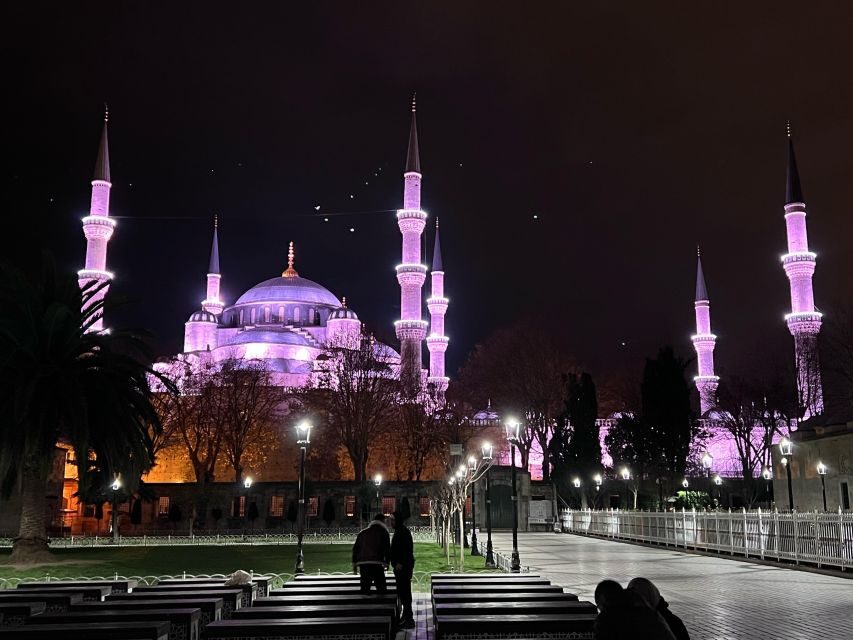
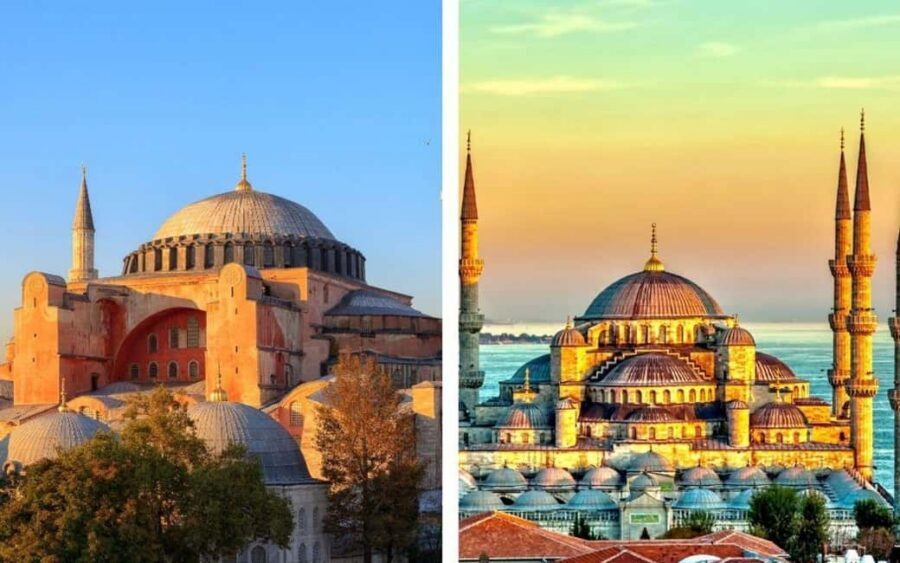
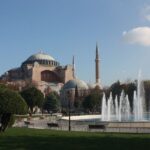
The tour includes a stop at Ayasofya, known worldwide as Hagia Sophia. What I like about this stop is how it’s described: it’s a symbol of Byzantium’s “golden age,” and the name is connected to the Greek word for wisdom (Sofia). That small detail turns the monument from a famous building into a real cultural clue.
The tour gives you about 1 hour here, and that’s plenty for a guided orientation, photos, and regrouping without feeling rushed. Even if you’re not doing a museum-style visit, the surrounding area gives you big visual context—scale, placement, and the way the building dominates the skyline.
One practical tip: take advantage of your time for photos before the light shifts too far. As the day moves on, crowds can also thicken, so having a schedule helps.
The 1556 Hammam stop: Mimar Sinan meets Haseki Hürrem
There’s also a stop at a historically significant hammam connected to the Hagia Sophia complex. This one is described as the first double (male and female) hammam in Istanbul, built in 1556 by Mimar Sinan on the order of Haseki Hürem, known in the West as Roxolona. It’s one of those details that makes Istanbul feel less like a list of famous sites and more like a living system of people, rituals, and architecture.
Why it’s valuable: hammams are not just “bathrooms.” They were social spaces and part of how the city functioned day-to-day. Even a short stop helps you understand why Ottoman Istanbul cared about public life and designed it into impressive stone complexes.
Time here isn’t stated clearly as a numbered duration, but the way it’s placed after Hagia Sophia makes sense: you’re seeing the same general cultural zone from another angle. If you enjoy architecture with human stories, you’ll probably appreciate this more than you expect.



Milion Stone: the “road-measuring” clue to Constantinople
Milion Stone is quick but fun if you like the nerdy side of cities. This ancient marble structure sat at the center of Constantinople and served as a reference point where the length of roads across the empire was counted from. It’s compared to the Milliarium Aureum in Rome, which is a neat reminder that big empires loved their measurement systems.
The stop is about 10 minutes, so think of it as a waypoint where the guide connects Istanbul to a larger world of ancient governance. You won’t spend hours here, and you shouldn’t. The point is the context: Istanbul wasn’t just a destination. It was a center for movement, administration, and reach.
If you’re a “photo-and-move” person, this is a relief stop. If you want deep explanation, the guide can likely answer questions, but the tour is still geared toward covering many sights.
Basilica Cistern: cool air, skip-the-line sanity, and one ticket choice
This is the best “break from the street” moment. The Basilica Cistern is an underground reservoir of Constantinople, built on the site of the Basilica St. Sophia, sitting 10–12 meters down. The cool, shaded interior is exactly what you want if the day’s warm, and the scale feels bigger once you step inside.
The tour specifically notes skip-the-line access for this stop, which is a big deal in Istanbul. But here’s the key consideration: the Basilica Cistern admission ticket is not included. So you’re making a choice—worth it for most people, but you should know ahead of time that you’ll pay an extra entrance fee.
I also like that the stop is described as both practical and educational: it’s not just a cool room, it’s a reservoir with a story. In other words, it’s a true “introduction by explanation,” not just wandering.
Galata Bridge break: one hour for food, walking, and photos
After the cistern, you’ll hit Galata Bridge and get a longer 1-hour break. This bridge connects Istanbul’s older and newer parts separated by the Golden Horn, and the layout is unusual: it’s two-tier. The lower level is a pedestrian zone with cafes and restaurants, while the upper level carries the road and tram tracks. In the middle there’s also a movable section so ships and ferries can pass.
This is a smart reset. You’ll have time to walk, take photos, and—if you want—grab something to eat near the bridge. Then you regroup at the same meeting spot to head back out for the Bosphorus yacht portion.
The drawback here is also simple: Galata Bridge areas can be busy. If you’re prone to decision fatigue, pick your snack spot quickly and get back on schedule. The tour’s rhythm is the value.
The 2-hour Bosphorus yacht ride: where the city really changes
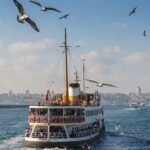
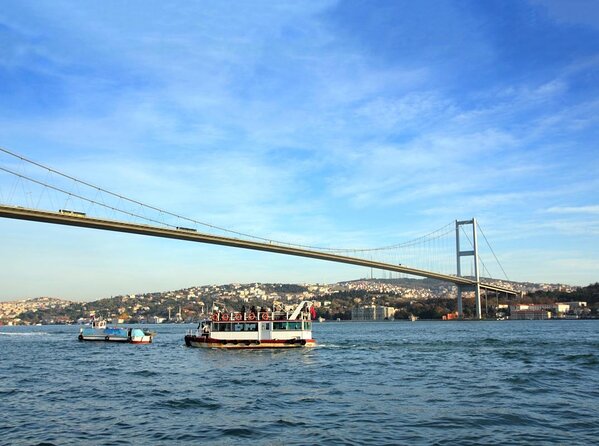
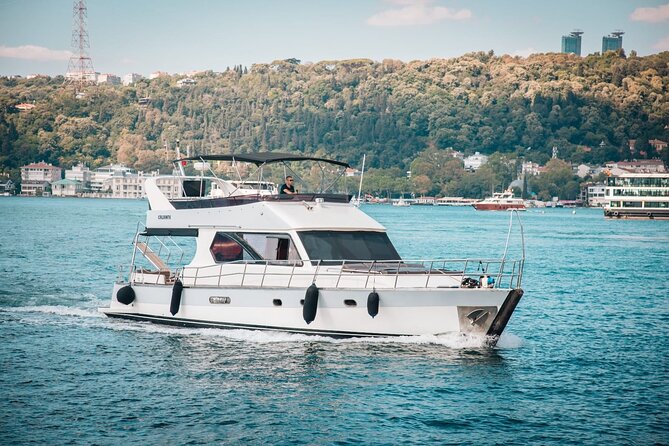
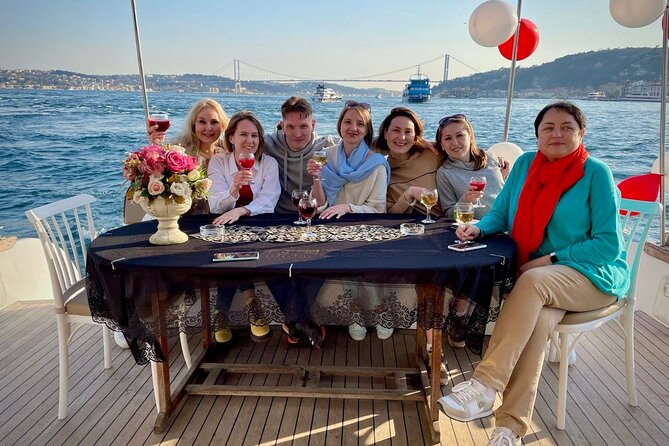
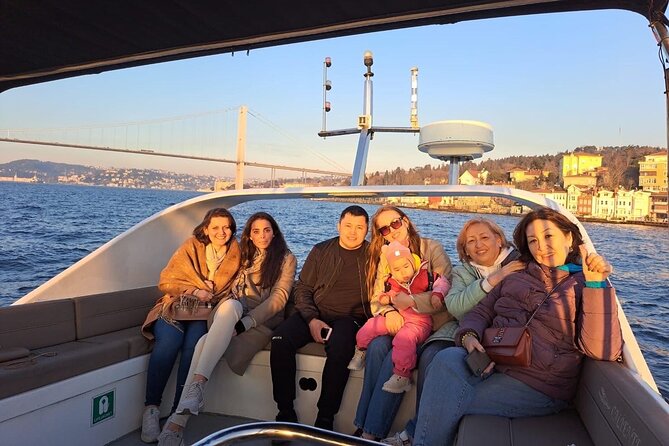
Now for the part you came for. After your break, you board a snow-white yacht for a Bosphorus cruise that lasts about 2 hours. The vibe is described as atmospheric and intimate, aided by the small-group size. You get onboard WiFi, a restroom, and bottled water, which sounds basic, but it matters once you’re on the water with a lot to look at.
I love Bosphorus rides because Istanbul stops feeling like “architecture you stare at” and starts feeling like “a city built around motion.” From the water, you understand the geography instantly: Europe and Asia face each other across the strait, and the coastline explains the neighborhoods.
What you’ll see from the cruise narration includes several highlights:
- Dolmabahçe Palace area, said to have been built on a mound because construction needed to work with the waterfront and bay.
- Dolmabahçe Mosque in Kabataş, commissioned by Bezmialem Valide Sultan and designed by Garabet Balyan, with work completed after her death by Sultan Abdülmecid.
- Ortaköy, a famous Bosphorus-side district associated with the Ortaköy Mosque.
- The Bosphorus Bridge, presented as the main connector between the European and Asian sides.
- Bebek, described as a luxurious beach-side neighborhood that’s especially pleasant for a morning walk and evening lights.
- Eminönü (Perama), the commercial waterfront area near the Golden Horn and southern Bosphorus entrance.
- Rumeli Hisarı fortifications, important during the siege of Constantinople and built for defensive strategy.
- Beylerbeyi Palace on the Anatolian shore, linked to the last Ottoman-era period.
- Maiden’s Tower (Kız Kulesi) on a small natural island, rising about 23 meters above the strait.
Even if you don’t know every name today, the cruise makes the connections. The city reads like a timeline mapped onto water.
A practical note: light and wind matter on the Bosphorus. Bring something for cooling down if you run warm one minute and chilly the next. You’ll appreciate being comfortable when you’re trying to take photos for a long stretch.
Value check: $82.54 for a guided story plus boat time
Let’s talk money in plain terms. At $82.54 per person, you’re paying for a mixed format: guided walking across the historical peninsula plus a 2-hour yacht ride. That’s not just “transport.” It’s two different ways of experiencing Istanbul—landside orientation and waterfront spectacle—handled by a guide.
You also get onboard WiFi, a restroom, and bottled water. Those sound minor until you’re actually out there, and the convenience reduces what you need to plan yourself. Plus, the guide is on board, which means your questions don’t evaporate once you step onto the yacht.
What’s not included: snacks are listed as not included, and soda/pop and alcoholic beverages aren’t included. Still, in guest feedback, people highlight light snacks and good hospitality. So expect some kind of refreshment vibe, but don’t treat it like a full meal plan.
The Basilica Cistern entrance ticket is also not included. If you like interior sites and want the full “cool underground stop,” budget for it. If you skip it, you still get the rest of the day.
If you’re comparing to museum tickets plus a separate Bosphorus cruise, this package can feel like better value because it saves you coordination time and keeps the day coherent.
Who this tour suits best
This is a great fit if you want high impact without museum overload. If you like iconic landmarks but don’t want to sit in lines or spend half your day inside ticketed sites, the pacing makes sense. It’s also good for first-time Istanbul visitors who need a guided framework so the city doesn’t feel like random neighborhoods.
It’s also ideal for couples and small groups who want a calmer cruise experience. The max of 12 people supports that. If you hate crowded boat tours where you can’t see anything, this is likely a relief.
If you’re a hardcore “only museums” person, you might feel this tour is too outward-focused. But the cistern helps, and the architecture stops are substantial even without long museum time.
Should you book this Bosphorus Yacht + Old Town tour?
I’d book it if you want an efficient Istanbul hit with a guided storyline and a real Bosphorus payoff. The combination of Sultanahmet highlights and the 2-hour yacht ride is hard to beat for a 5–6 hour block. Plus, the small group size and the friendly guide energy (Tugba is a name that comes up) make it feel easy to enjoy.
I would pause if you’re not comfortable paying extra for the Basilica Cistern entrance or if your trip has uncertain weather. The experience requires good weather, and if conditions are poor, plans can change or be refunded.
If you want your Istanbul day to feel like both city-meets-sea and guided-meets-photogenic, this one fits.
FAQ
Where does the tour start and end?
The tour starts in Sultanahmet at Alemdar, 34110 Fatih/İstanbul, Turkey. It ends at Karaköy (Turyol) Azapkapı, 34421 Beyoğlu/İstanbul, Turkey.
What time does the tour begin?
The start time is 3:00 pm.
How long is the experience?
The duration is approximately 5 to 6 hours.
What’s included in the price?
Included items are WiFi on board, a restroom on board, bottled water, and a guide on the board.
What isn’t included?
Not included are snacks, alcoholic beverages, and soda/pop. The Basilica Cistern admission ticket is also not included.
Do I need to bring a ticket for the Basilica Cistern?
The Basilica Cistern stop is listed as skip line, but its admission ticket is not included. So you should plan for an extra entry ticket cost if you go inside.
How big is the group?
The tour has a maximum of 12 travelers.